
Inspiration
The inspiration for SecureBridge AI came from a major shift happening in the AI world — the rise of sovereign/local AI systems like OpenClaw.
As AI models start running directly on personal devices (laptops, browsers, and phones), they give users more privacy and control.
What it does
SecureBridge AI is a Zero-Trust Gateway for AI agents that enables local AI systems (like OpenClaw) to securely interact with external APIs and services without exposing sensitive credentials.
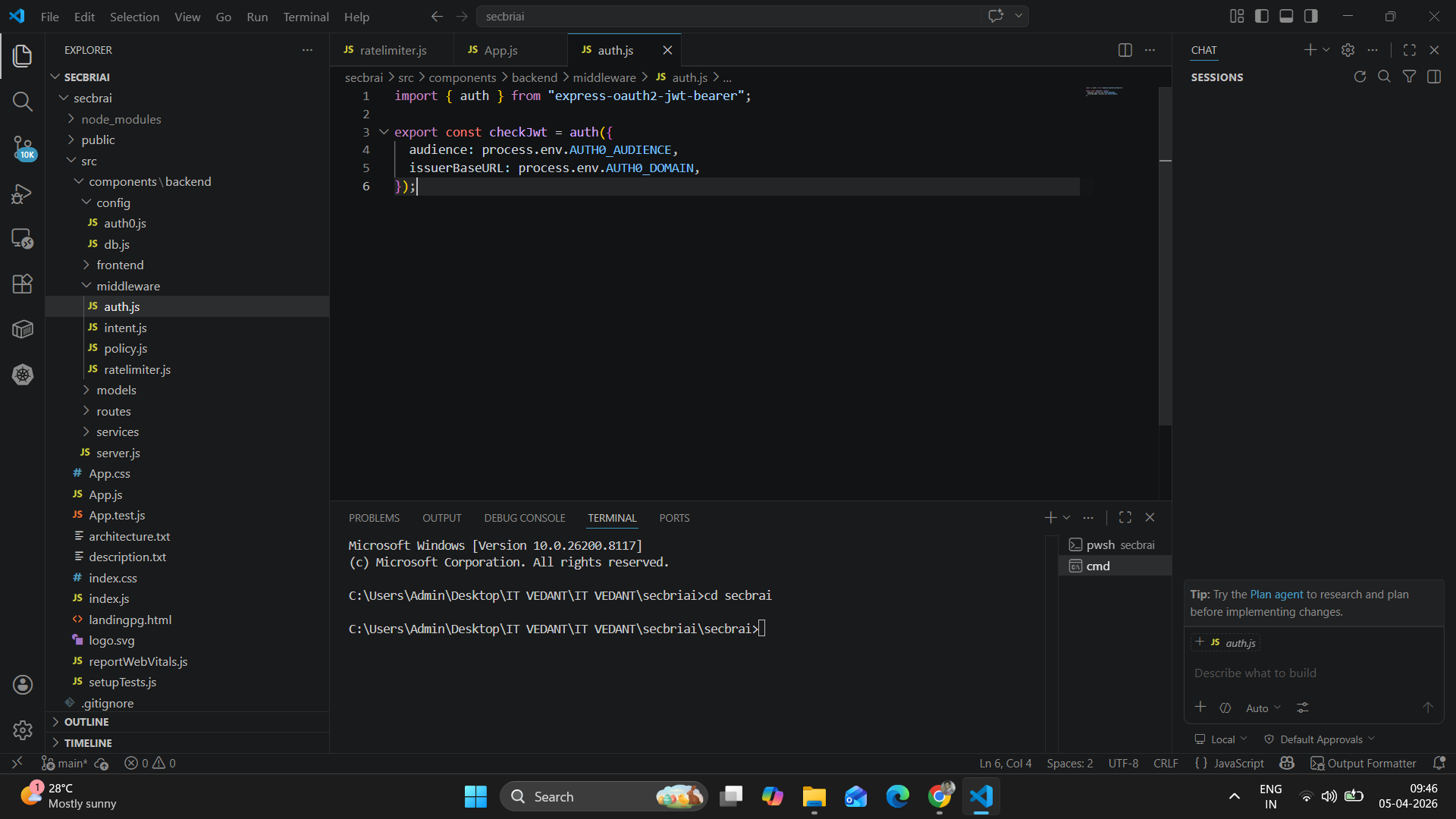
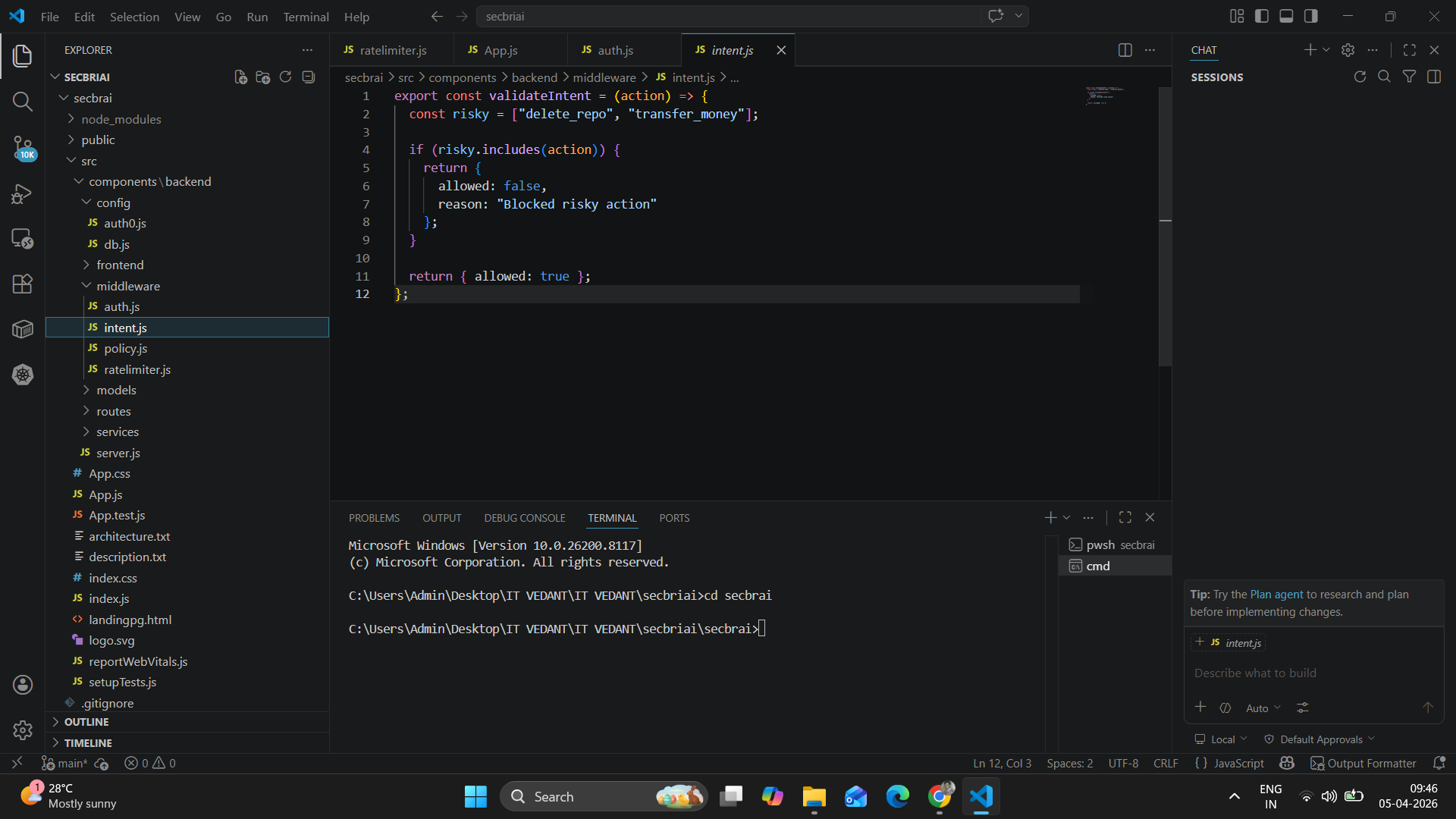
Instead of allowing AI to directly access APIs, SecureBridge acts as an intermediary layer that: Authenticates requests using Auth0 Token Vault Enforces authorization policies Validates AI intent before execution
How we built it
- Designing the Architecture I started by designing a secure gateway model where: AI agents do not directly access APIs All requests pass through a controlled backend layer (SecureBridge),2. Backend Development (Core System) I developed the SecureBridge Gateway using Node.js and Express:Created REST APIs to handle AI requests,API Communication Layer-I implemented a module that:Fetches tokens from Auth0,Calls external APIs (e.g., GitHub, SaaS services),Returns responses back to the AI,Built a policy engine to validate permissions ## Challenges we ran into Secure Token Management-One of the biggest challenges was ensuring that API tokens were never exposed.I had to carefully design the system so that credentials were not stored locally ,Integrating Auth0 Token Vault required understanding OAuth flows and secure token handling
What we learned
We learned that AI agents should not be treated as anonymous systems. They need identity, authentication, and permissions, just like human users.This was a key shift in thinking — moving from AI as a tool to AI as an actor.Through integrating Auth0 Token Vault, I understood:How OAuth flows work in real-world systems

Log in or sign up for Devpost to join the conversation.