-
-
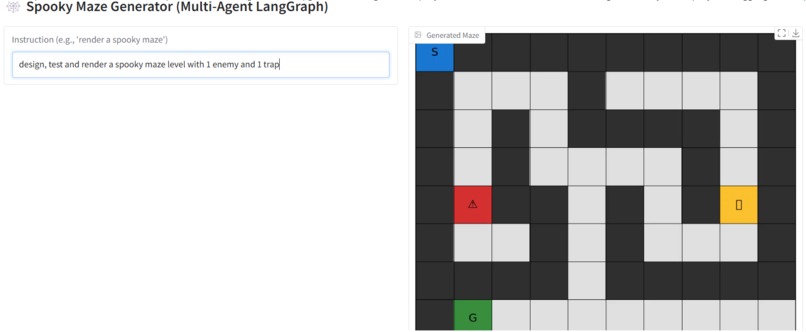
Example_input_output_gradio
-
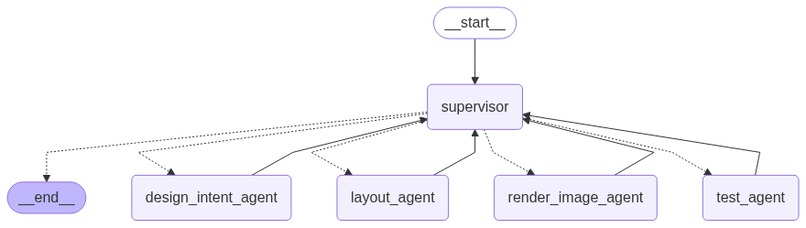
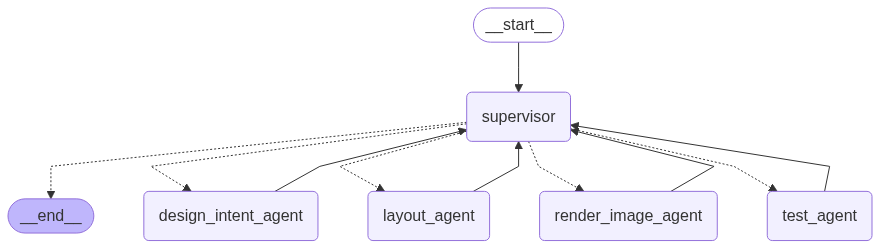
Multi Agent LangGraph Supervisor Architecture
-
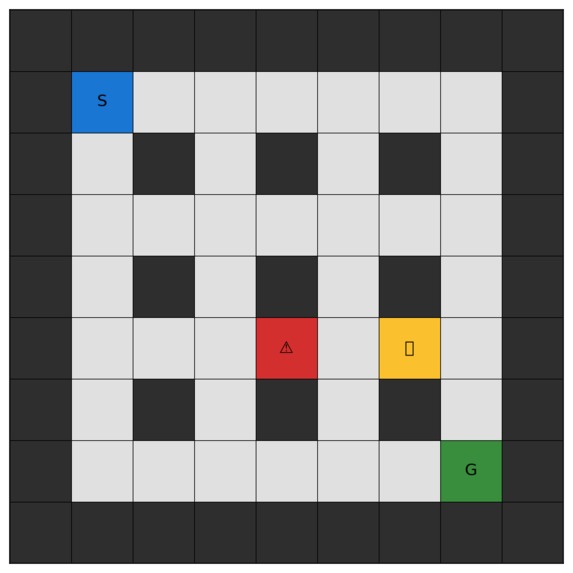
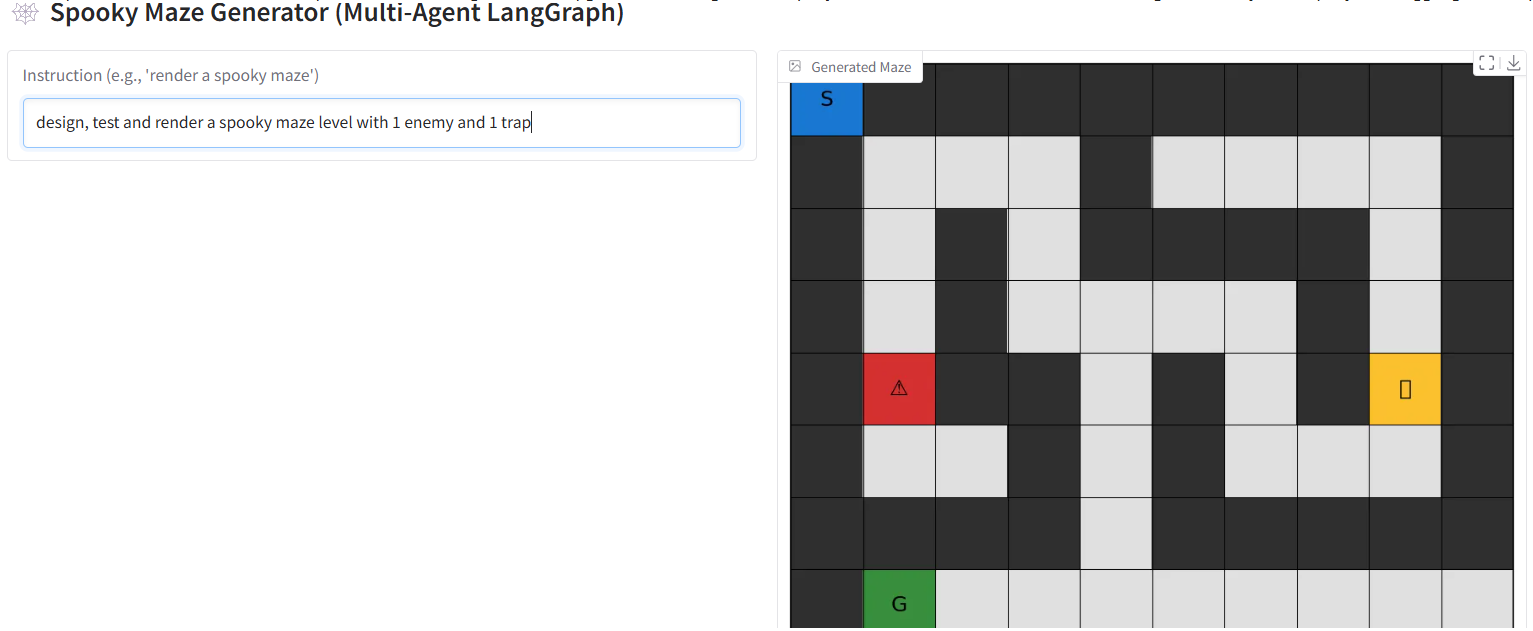
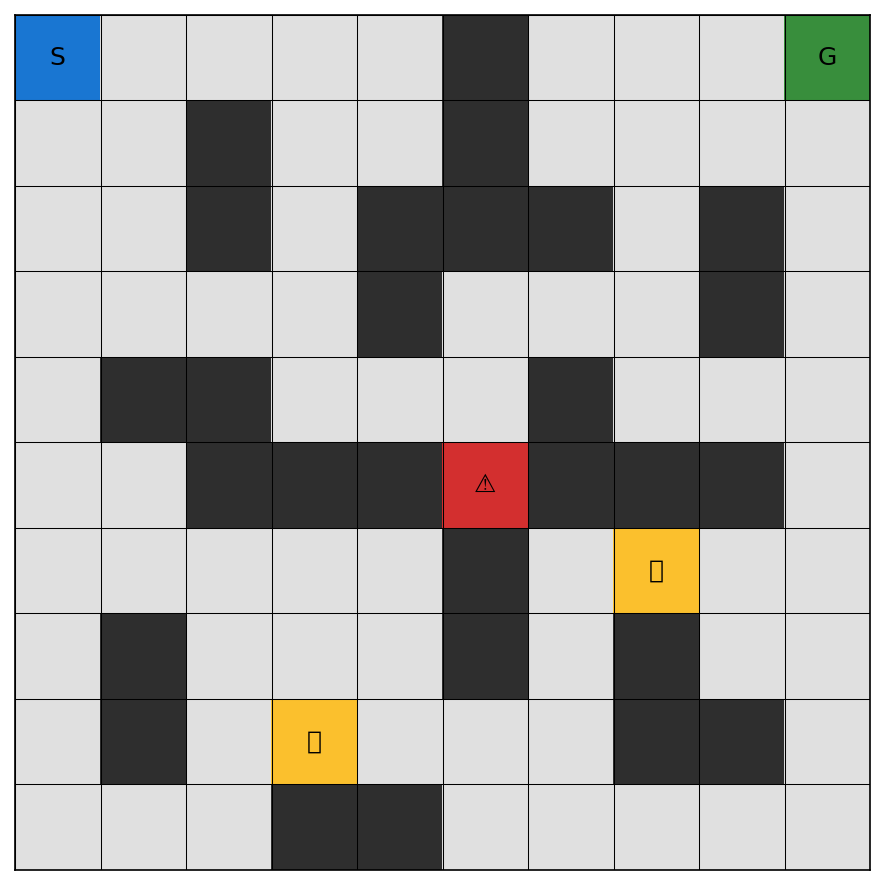
Sample output maze with 1 enemy and 1 trap
-
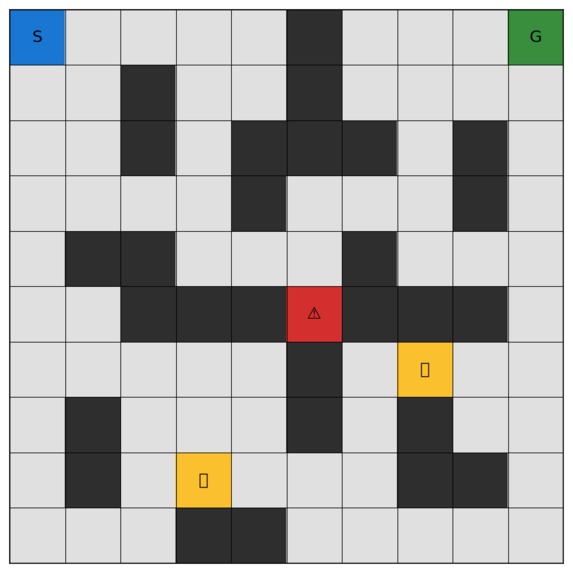
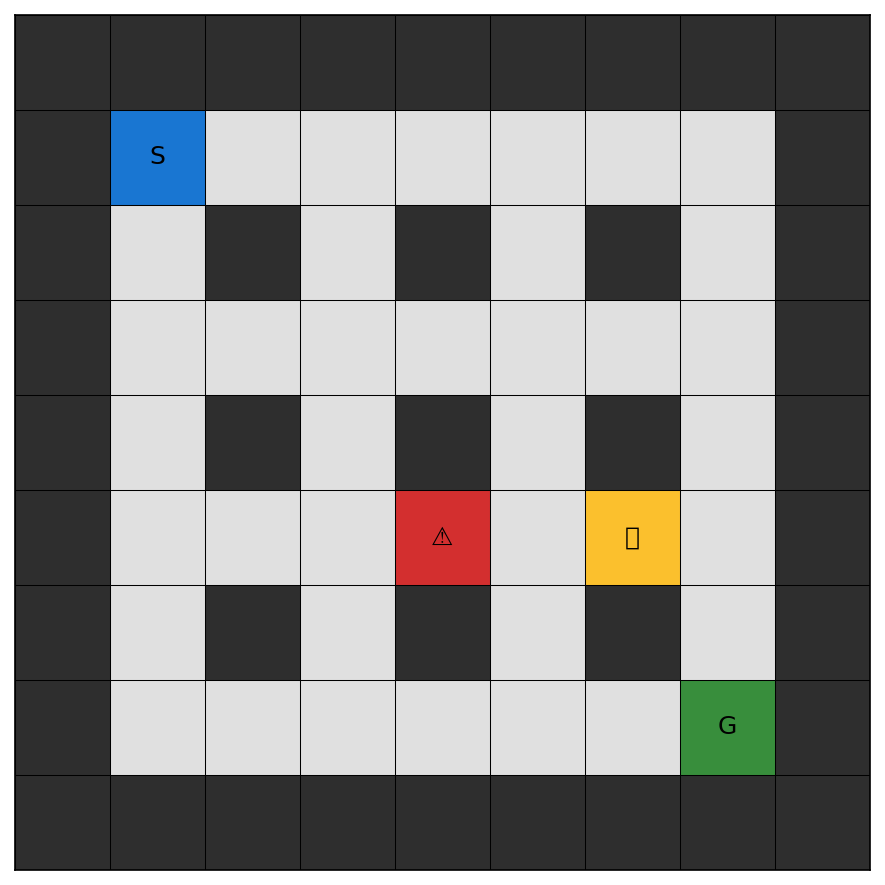
Sample output maze with 1 enemy and 2 traps
-
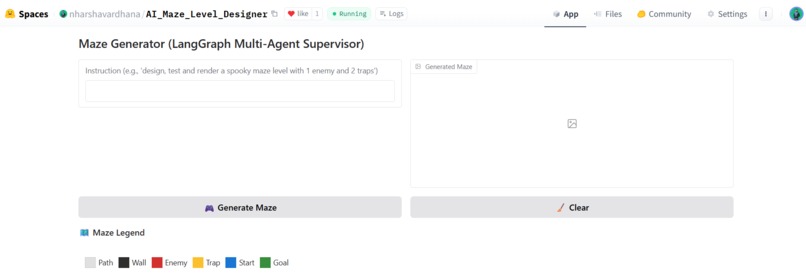
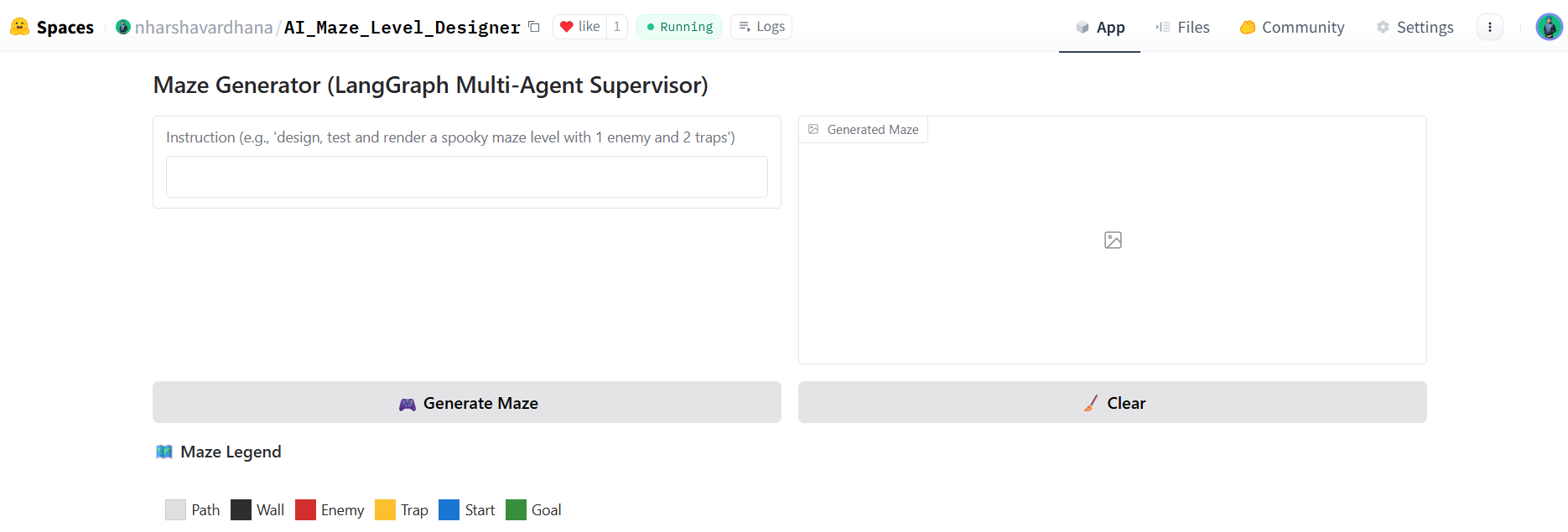
Hugging Face Spaces - Gradio
Inspiration
I was inspired by the idea of transforming natural language into interactive game levels. Game developers often spend significant time crafting levels manually. What if you could just describe your idea and have AI build it for you? This project explores how multi-agent AI systems can help game designers prototype levels faster and more creatively.
How We Built It
This project is powered by a LangGraph-based multi-agent architecture, where each agent handles a specific part of the pipeline:
- 🧑⚖️ Supervisor Agent – Manages communication between all agents and determines the flow of operations.
- 🎯 Design Intent Agent – Parses natural language input to extract the intent (e.g., maze size, theme, number of enemies/traps).
- 🧭 Layout Agent – Uses NumPy to generate a tile-based 2D maze layout with logical placement of elements.
- 🧪 Test Agent – Validates if the maze is solvable using BFS (Breadth-First Search) and ensures fair gameplay.
- 🖼️ Render Image Agent – Converts the generated maze into a PNG image using matplotlib.
We also developed a simple Gradio interface for easy user interaction and deployed the entire pipeline on Hugging Face Spaces.
What We Learned
- LangGraph enables building clean, interpretable multi-agent workflows.
- Decomposing responsibilities into agents makes debugging and iterating easier.
- Interpreting human intent into a structured design still requires thoughtful prompt engineering and fallback logic.
Challenges Faced
- Context Switching Between Agents – Ensuring each agent had the correct context and dependencies was non-trivial.
- Path Validation – Designing a robust solver that works across all generated layouts took tuning.
- Visualization – Making sure the final rendered maze was intuitive and informative required careful matplotlib customization.


Log in or sign up for Devpost to join the conversation.