Inspiration
Modern image-to-3D pipelines are powerful—but fragile. Small variations in lighting, camera angle, or material interpretation can dramatically change reconstruction results, making fabrication unpredictable.
We wanted a way to make 3D creation deterministic yet intuitive—where the same intent reliably produces the same outcome.
AI3D Printable Primitives is built on the idea that JSON should be the creative artifact: a precise, inspectable, forkable specification that controls camera, lighting, and materials—while still allowing fast, playful creation through simple 3D primitives.
What it does
AI3D Printable Primitives is a JSON-first 3D creation stack for producing consistent, fabrication-ready outputs.
Demo loop:
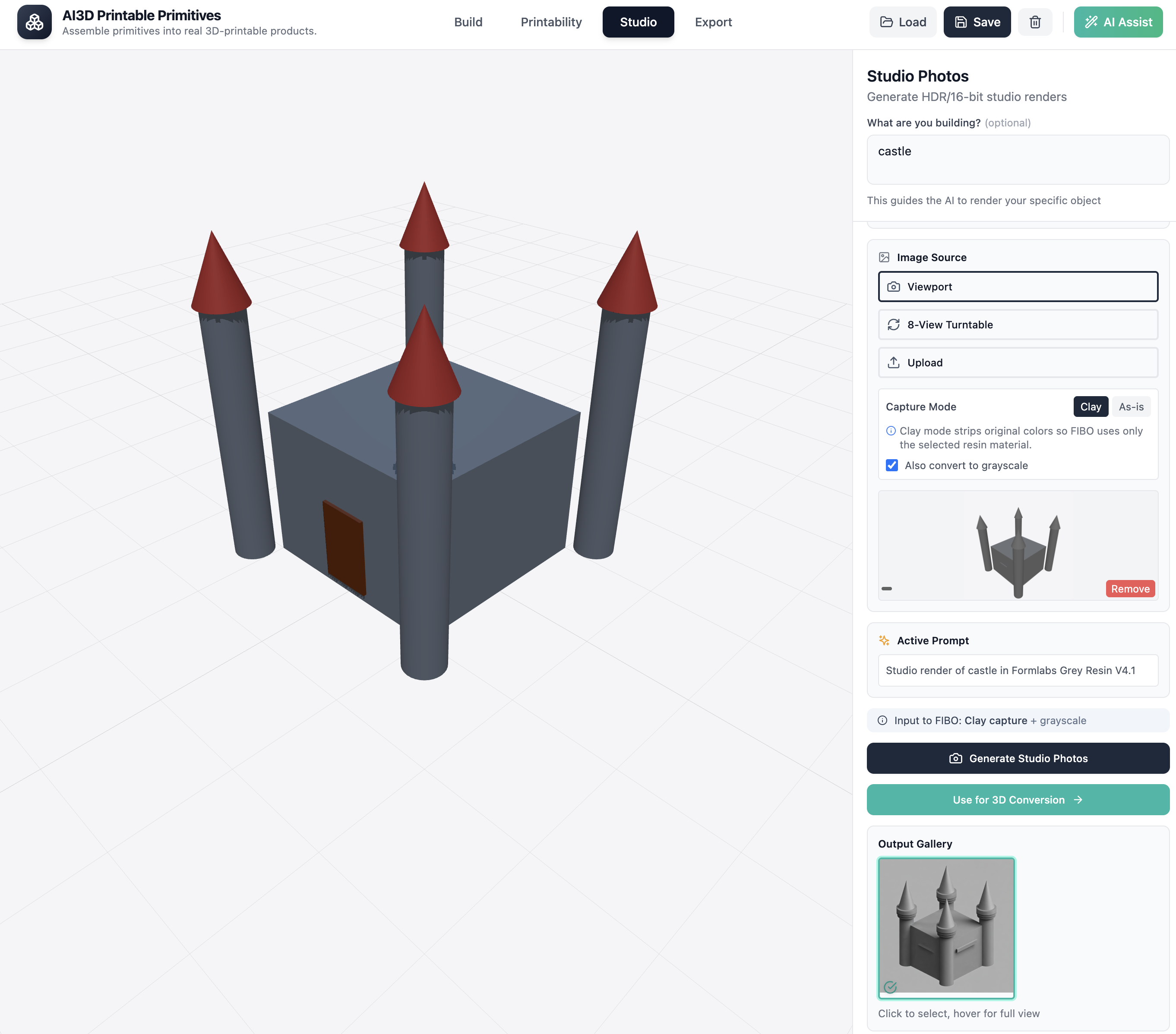
- Assemble simple primitives to define geometry
- Apply a FIBO scene-spec JSON that locks camera, lighting, and materials
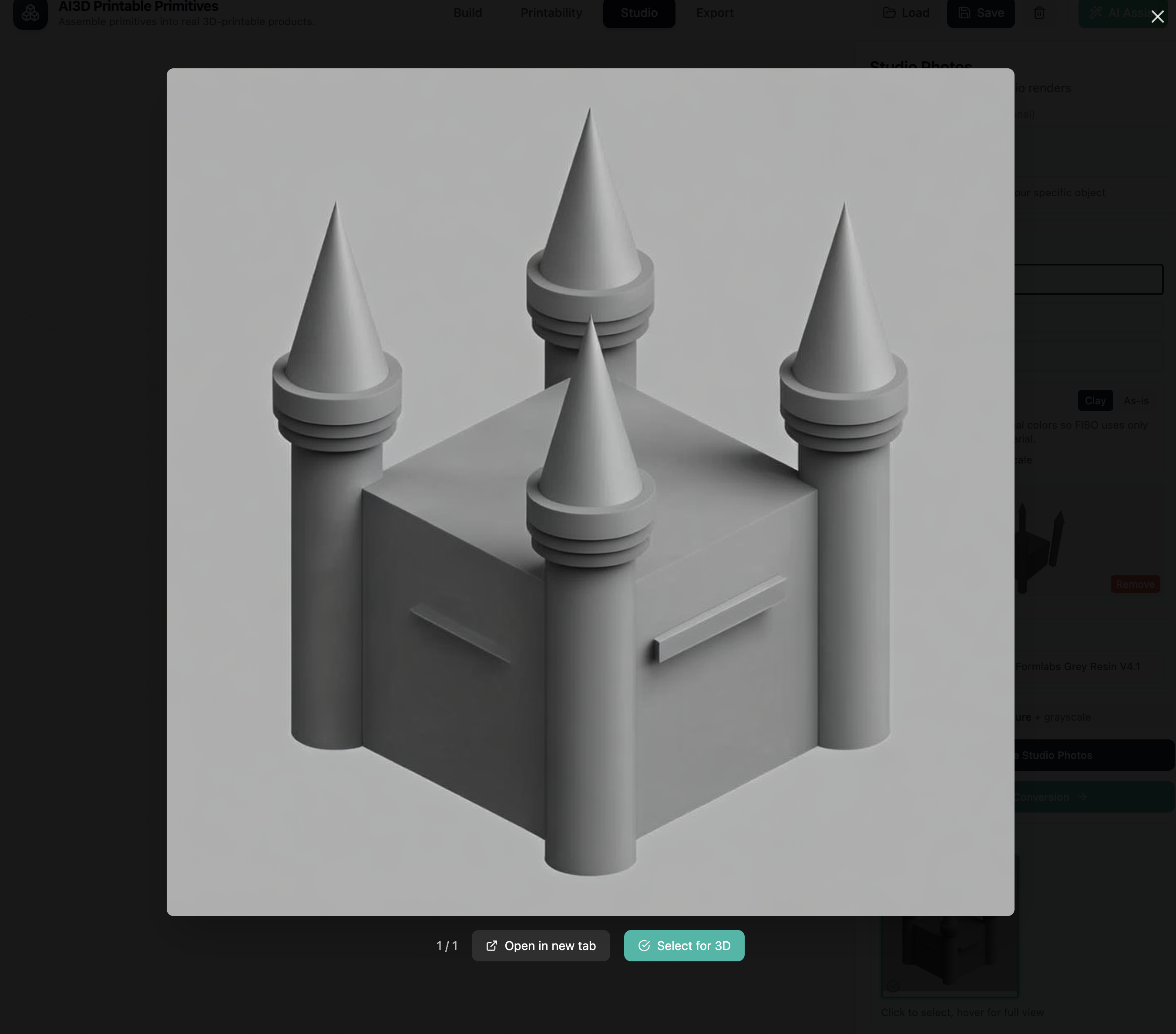
- Generate a deterministic HDR studio image
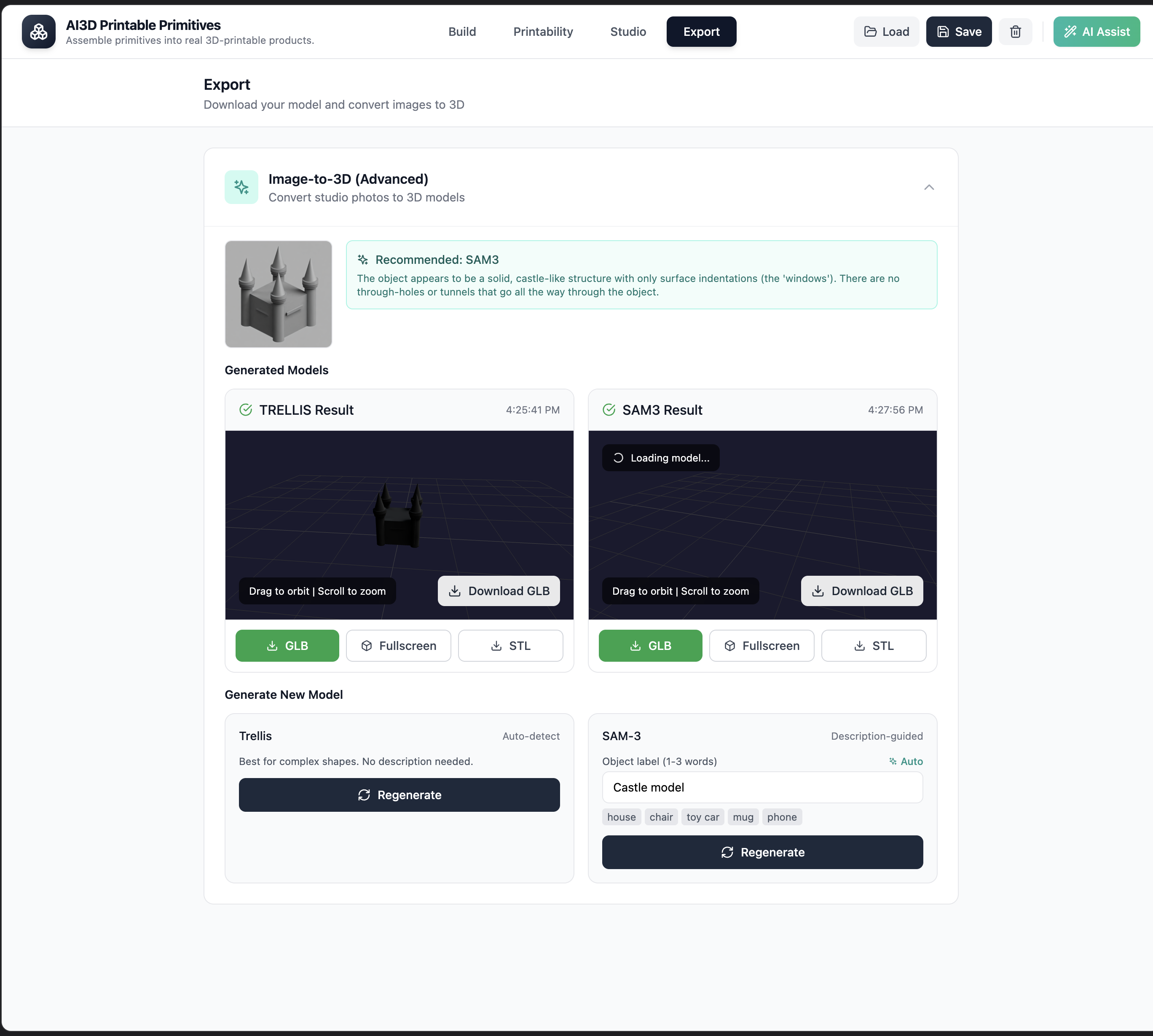
- Feed that image into any image-to-3D system to obtain a printable 3D model
By canonicalizing visuals before reconstruction, the same design intent produces repeatable downstream results, independent of the image-to-3D model used.
How we built it
We structured the system around three core layers:
Primitive-based 3D authoring
Fast, accessible shape construction using simple geometric primitives.FIBO JSON scene specifications
Deterministic control over:- Camera position and framing
- Studio lighting and dynamic range (HDR)
- Material overrides (e.g. resin-accurate previews)
- Camera position and framing
Image-to-3D interoperability
The generated HDR image becomes the canonical input to any downstream image-to-3D pipeline.
This separation of geometry intent from visual specification allows the same JSON to be reused, diffed, versioned, and applied across many designs.
Challenges we ran into
The hardest problem was enforcing true determinism.
Many AI image systems subtly leak input colors, textures, or lighting bias. To solve this, we carefully structured FIBO JSON constraints so that:
- Materials fully override input appearance
- Camera framing remains locked across generations
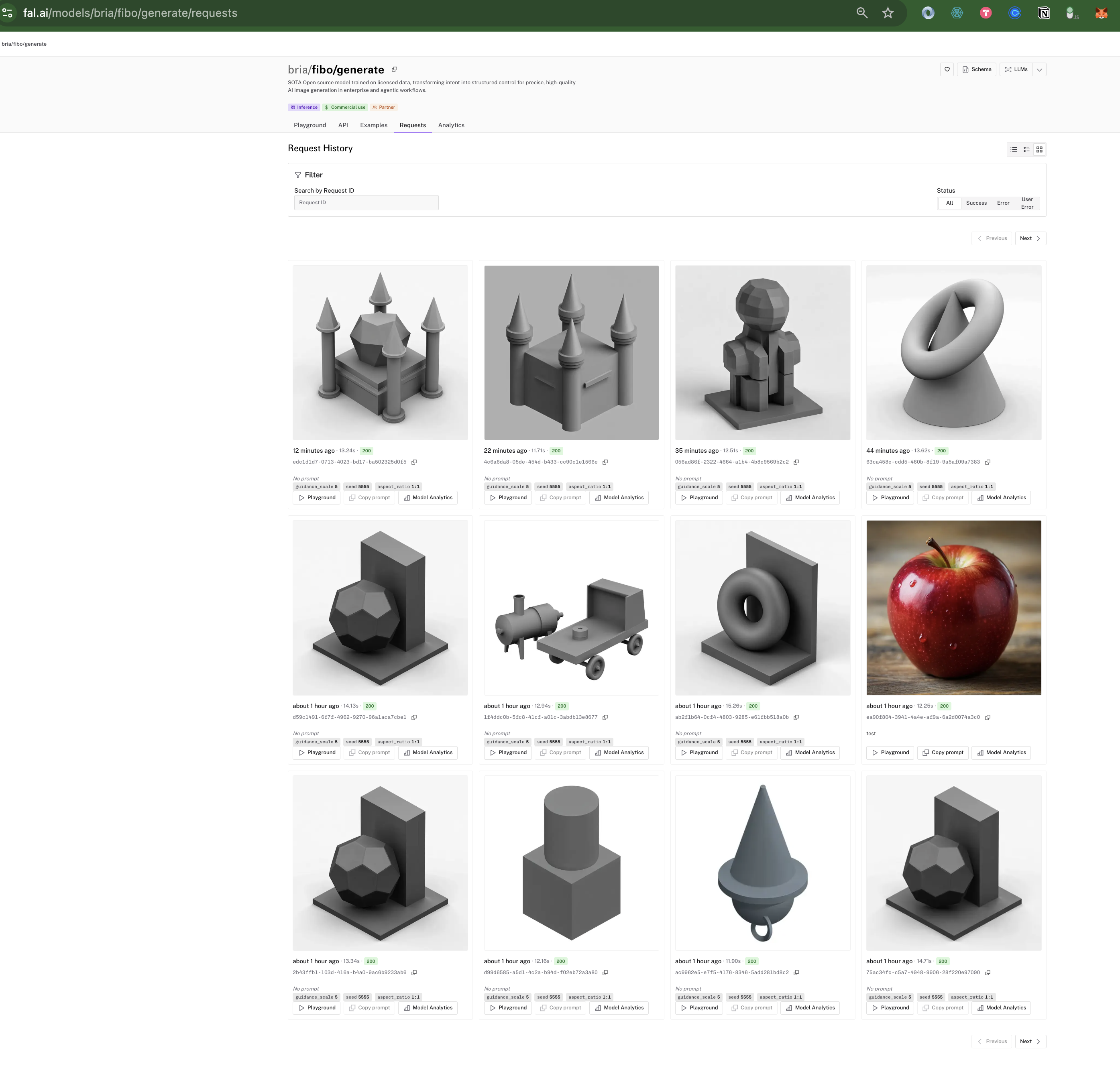
- HDR lighting is consistent and reproducible
We also had to balance precision vs usability—keeping JSON expressive without making it intimidating for creators.
Accomplishments that we're proud of
- Achieved repeatable, spec-driven HDR image generation using FIBO
- Built a pipeline agnostic to downstream image-to-3D models
- Demonstrated that JSON can act as a creative interface, not just configuration
- Created a fast path from primitive sketch → studio preview → printable 3D
What we learned
Controllability isn’t the opposite of creativity—it unlocks it.
By making visual decisions explicit and inspectable, creators gain confidence that their intent will survive downstream AI pipelines. JSON becomes a shared language between humans, AI, and manufacturing.
What's next for AI3D Printable Primitives
Next, we plan to:
- Expand the JSON schema into reusable material and camera presets
- Add versioning, diffing, and forking of scene specifications
- Deepen integration with multiple image-to-3D backends
- Explore monetization via paid printable exports and material-accurate previews
Our long-term goal is a deterministic, composable 3D creation layer that sits between human intent and AI-driven fabrication.
Built With
- bria
- fal
- fibo
- javascript
- npm
- three
- webgl


Log in or sign up for Devpost to join the conversation.