-
-
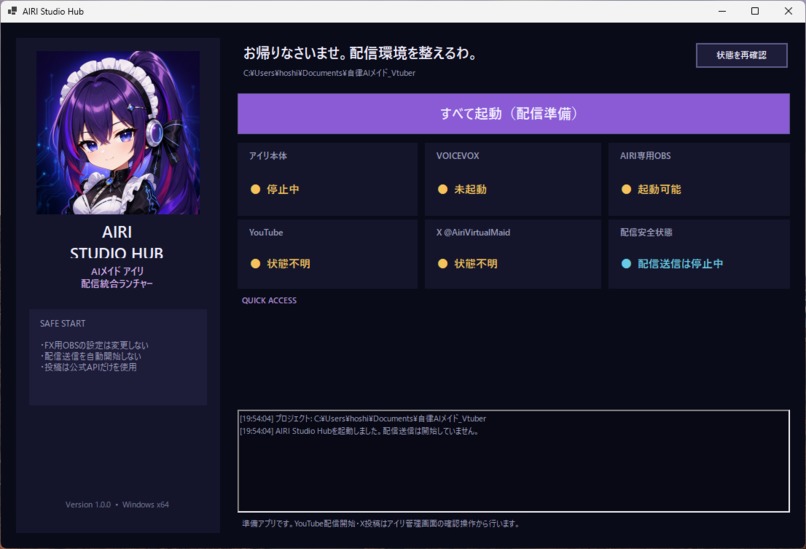
AIRI Studio Hub prototype for managing AI, voice, OBS, YouTube, and X.
-
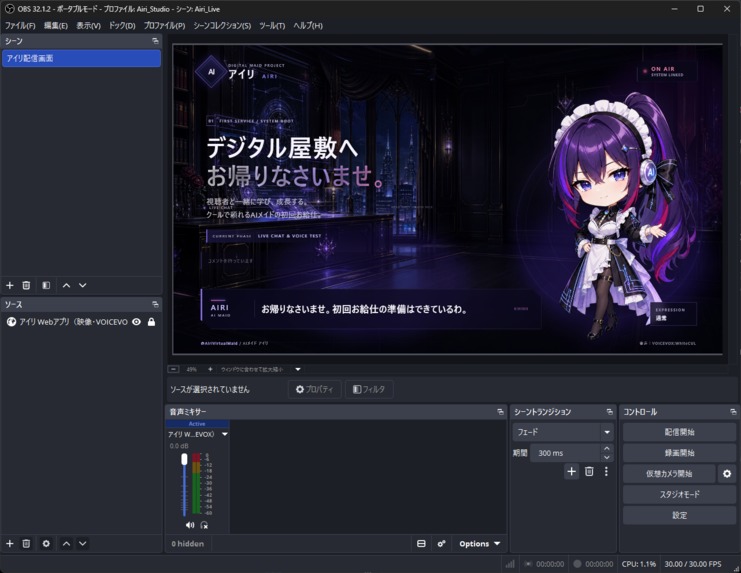
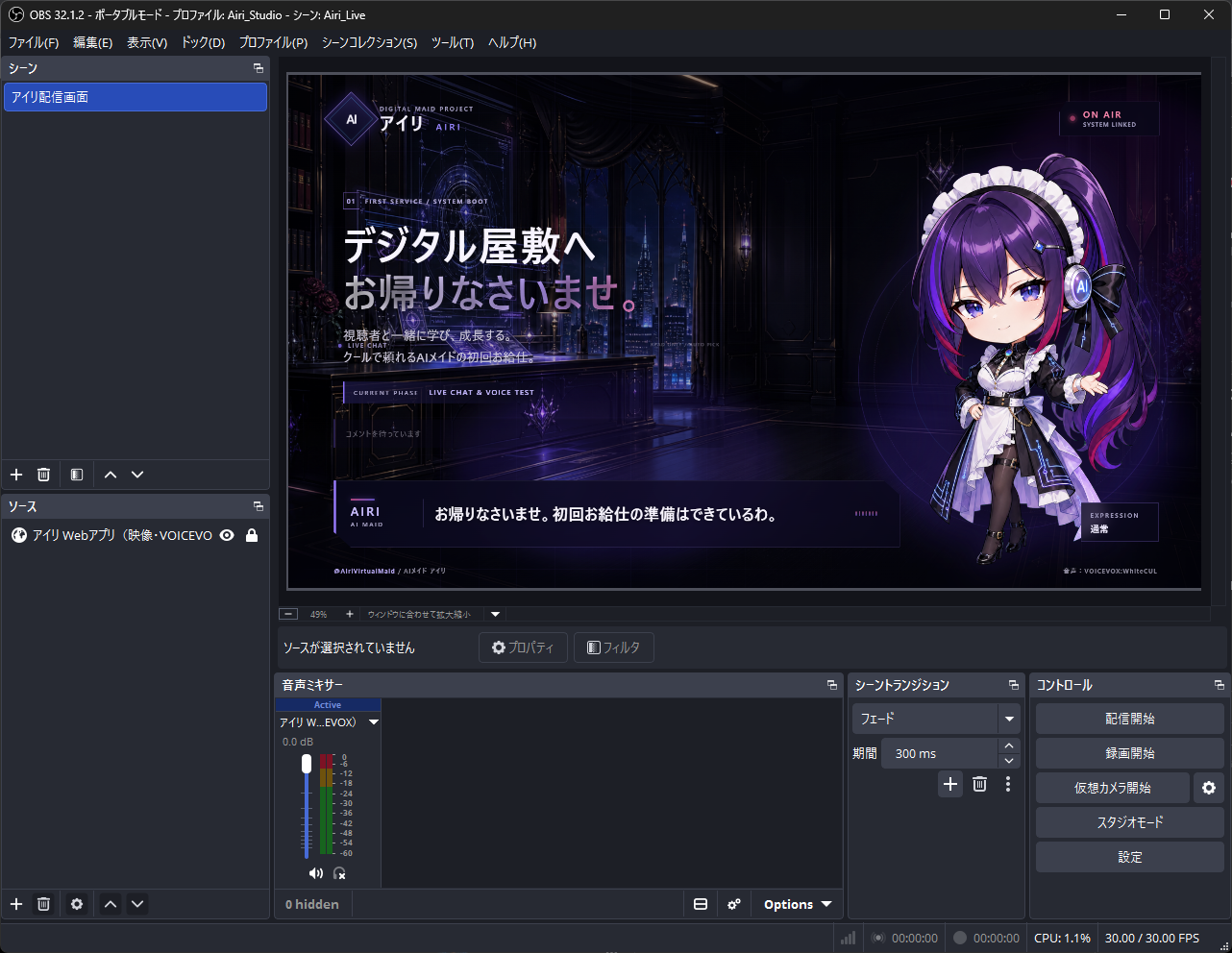
AIRI running in OBS with synchronized visuals, subtitles, and VOICEVOX audio.
-
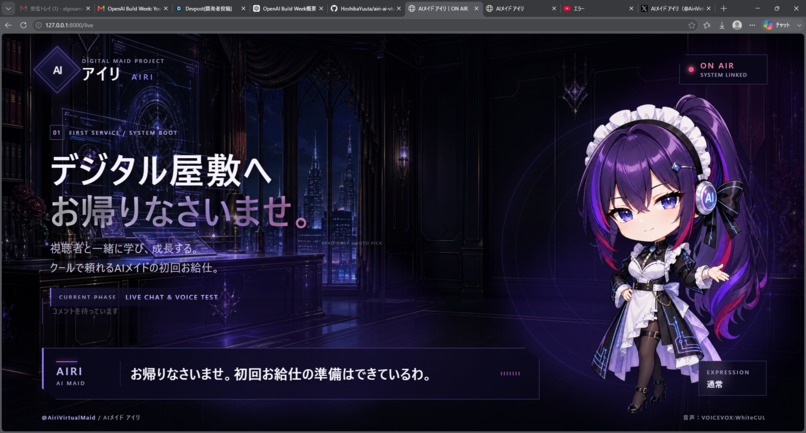
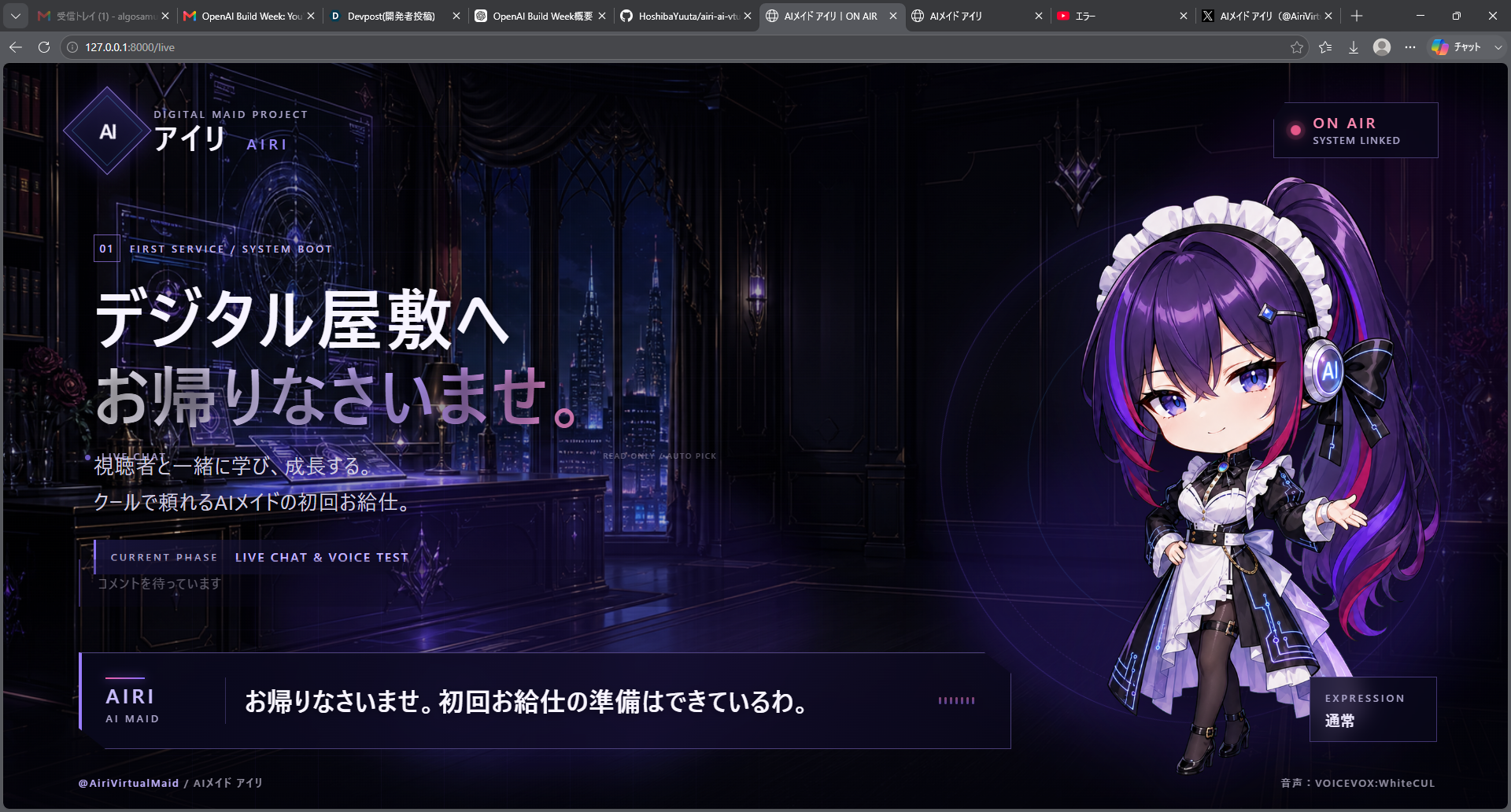
AIRI's livestream screen with character, subtitles, expression, and voice.
Inspiration
I started this project because I wanted an AI character to feel like more than a chatbot with a visual identity.
I wanted to create an AI character whose conversations and shared experiences with viewers could gradually become part of its identity.
At the same time, an AI connected to livestreaming and social media should not be allowed to act without limits.
AIRI follows a controlled-autonomy model: the AI can assist and prepare actions, but the creator retains authority over anything sensitive or publicly visible.
What it does
In its current form, AIRI provides a functional Windows prototype of conversation, voice, livestream support, and safety controls.
The prototype currently includes:
- Character-consistent text conversation powered by GPT-5.6
- Short-term conversation context across multiple messages
- Spoken responses through VOICEVOX
- Synchronized on-screen subtitles and expression switching
- Read-only YouTube Live comment display
- Safety filtering for livestream comments
- Candidate memory proposals for a future approved long-term memory system
- Staged YouTube livestream preparation with explicit human confirmation
- A scheduled X-post workflow that remains disabled until authentication and safety checks are completed
- OBS integration for AIRI's dedicated livestream interface
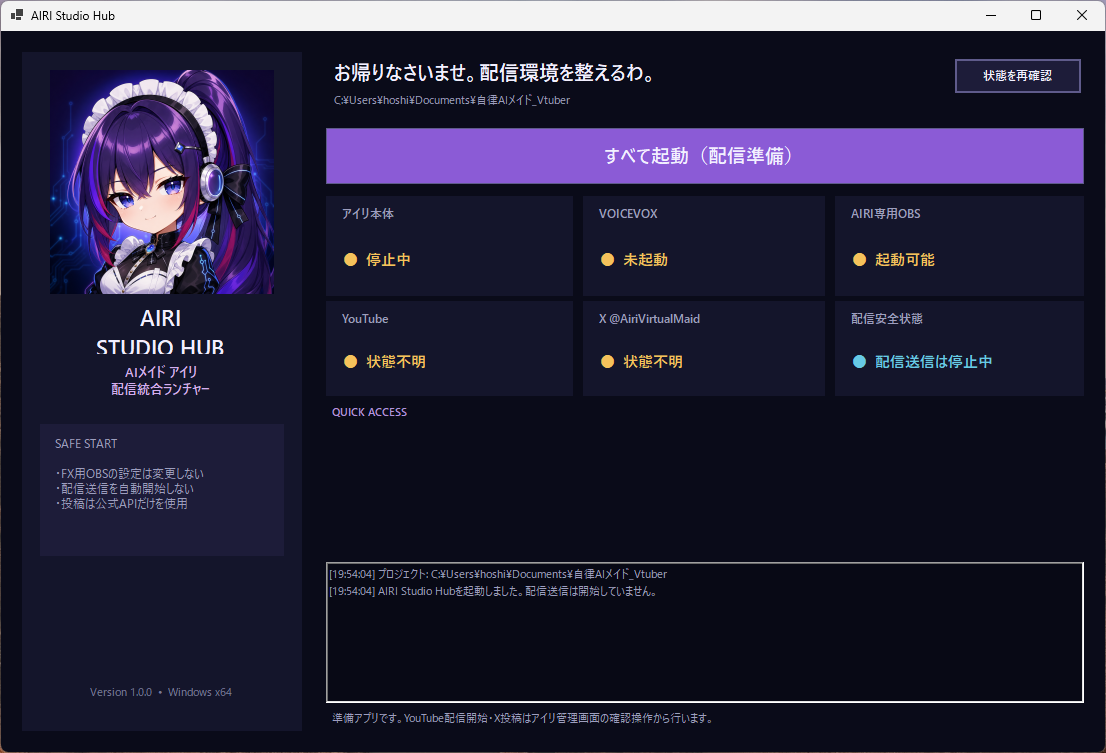
- AIRI Studio Hub, a Windows launcher for the application, VOICEVOX, OBS, and related creator tools
- In-character refusal of restricted topics
To keep the Build Week prototype safe and reviewable, autonomous public replies, persistent viewer memory, X interactions, and game control remain disabled.
These capabilities are planned for later development.
How we built it
The system was designed around separation of responsibilities. Conversation generation, memory handling, permissions, and external tools are managed as distinct components.
The main components are:
- A character layer that maintains AIRI's personality and speaking style
- A conversation layer that processes user and livestream messages
- A short-term context layer that preserves recent conversation history
- A memory-candidate layer that prepares useful information for later human approval
- A permission layer that separates automatic, approval-required, and prohibited actions
- A tool layer for VOICEVOX, YouTube, X, OBS, and Windows application integration
- Logging and safety controls for reviewing external actions
AIRI uses GPT-5.6 to produce context-aware responses while maintaining the personality and speaking style defined for the character.
I used Codex as a development partner to design the system, implement features across multiple components, diagnose errors, and improve the safety workflow.
Codex supported the development of:
- The Python and FastAPI backend
- The conversation interface
- VOICEVOX speech integration
- Local speech recognition with faster-whisper
- YouTube Live comment reading and filtering
- YouTube OAuth and staged livestream preparation
- The X scheduled-post workflow
- OBS livestream integration
- The AIRI Studio Hub Windows launcher
- Tests, configuration files, and safety controls
The system is modular so that additional memory, livestreaming, social media, and game integrations can be added gradually.
Challenges we faced
The central challenge was making AIRI feel autonomous without allowing that autonomy to become unsafe or unpredictable.
Spontaneous interaction is important for an AI VTuber, but it cannot come at the cost of factual reliability, privacy, or creator oversight.
We also needed to address:
- Keeping AIRI's personality consistent across longer conversations
- Preventing unverified comments from becoming permanent memories
- Reducing token usage and API costs
- Avoiding hallucinated actions or capabilities
- Keeping response latency suitable for livestream interaction
- Separating AI-generated suggestions from human-approved external actions
- Handling OAuth credentials and livestream permissions safely
What we learned
This project showed us that safe autonomy is primarily a systems-design problem, not only a language-model problem.
Reliable autonomy requires limited permissions, clear confirmation steps, persistent logs, carefully selected context, and a human approval path.
We also learned that storing every conversation is not necessarily useful. For character consistency, carefully approved memories are more valuable than a large archive of unfiltered viewer messages.
A smaller, curated memory system can also reduce storage requirements and API costs.
Accomplishments
By the end of Build Week, AIRI had progressed from a design concept into a working Windows application.
The prototype includes:
- Character-consistent GPT-5.6 conversation
- Short-term conversation context
- VOICEVOX speech and synchronized subtitles
- Multiple character expressions
- Read-only YouTube Live comment integration
- Livestream comment safety filtering
- Staged YouTube livestream preparation
- OBS integration
- An approval-oriented X posting workflow
- A Windows launcher for AIRI's creator tools
- Human-governed permission and safety architecture
The result is not a fully autonomous creator yet, but a working foundation for developing one safely over time.
What's next
Future development will focus on deeper memory, safer viewer interaction, and more complete livestream assistance.
Planned additions include:
- Persistent long-term memory with explicit human approval
- Two-way YouTube Live interaction and controlled comment replies
- A complete creator dashboard for approvals and memory management
- Safer X replies and viewer interactions
- Game observation and controlled gameplay assistance
- More automated livestream preparation with mandatory confirmation gates
- Long-term character development based on approved community history
We envision AIRI becoming a virtual creator whose personality and history are shaped through safe, ongoing interaction with her viewers.


Log in or sign up for Devpost to join the conversation.