-
-
preview3
-
preview1
-
preview2
Inspiration
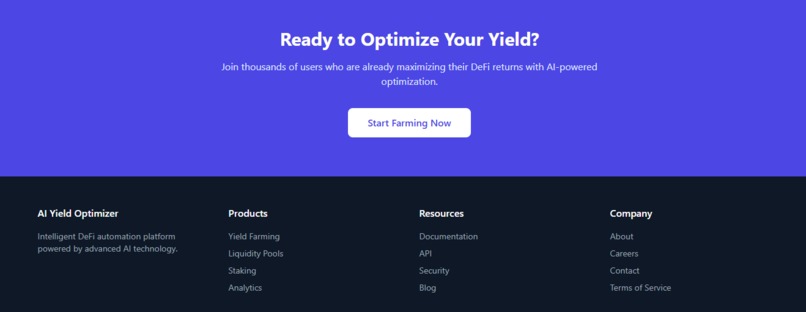
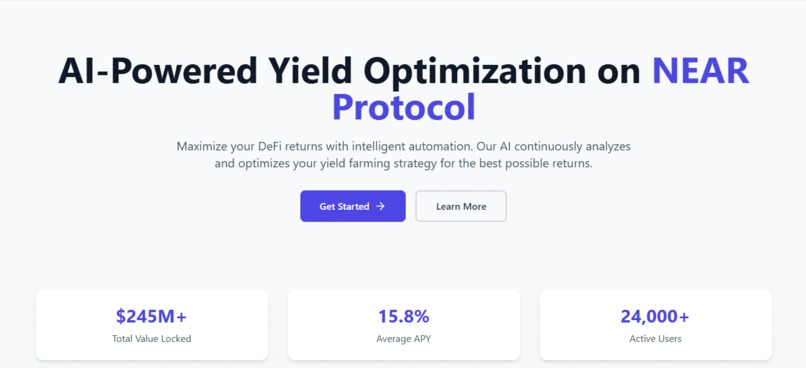
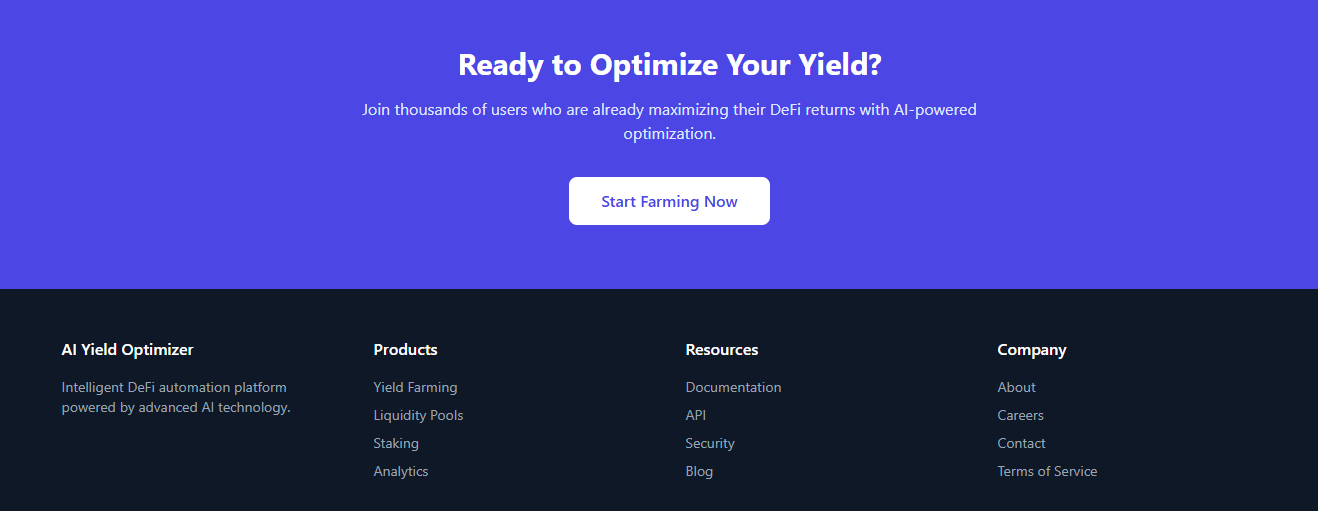
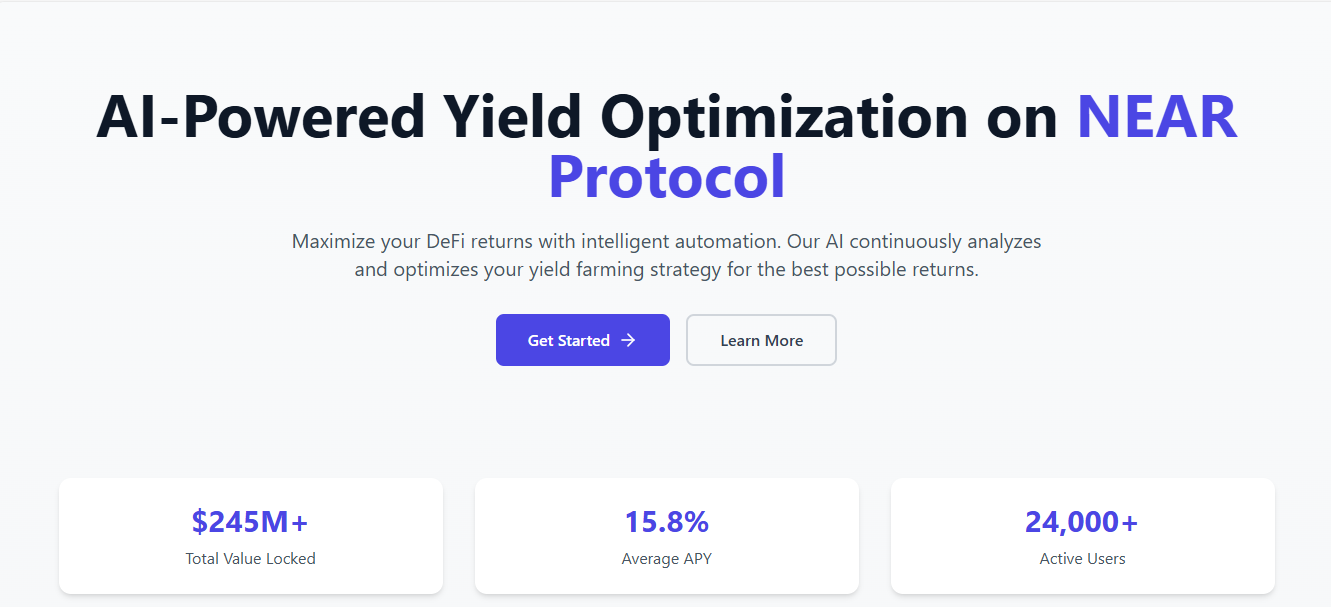
AI Yield Optimizer is an intelligent DeFi agent designed to automate and maximize yield farming strategies on the NEAR Protocol. Powered by AI-driven analytics, the platform continuously scans DeFi opportunities, predicts the best staking/lending options, and autonomously reallocates funds to ensure maximum returns with minimal risk.
What it does
🛠 How It Works
1️⃣ Connect Wallet – Users connect their NEAR wallet to access the platform.
2️⃣ AI Analysis – The agent scans various DeFi protocols, liquidity pools, and staking opportunities.
3️⃣ Yield Optimization – It suggests the best yield strategies based on risk tolerance and market trends.
4️⃣ Automated Rebalancing – The agent reallocates funds automatically to optimize earnings.
5️⃣ Performance Dashboard – Users track their earnings, strategy history, and portfolio performance.
How we built it
🌟 Features
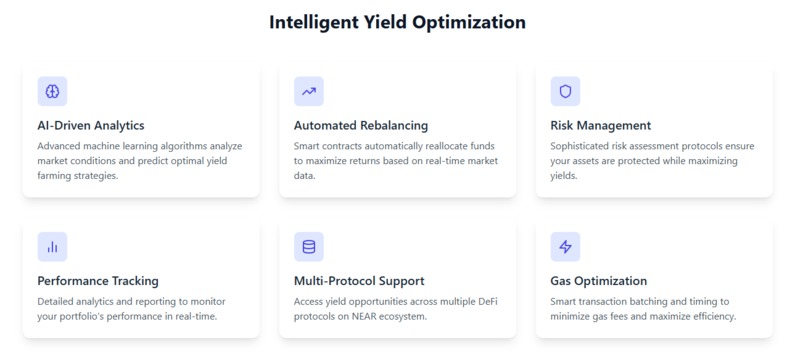
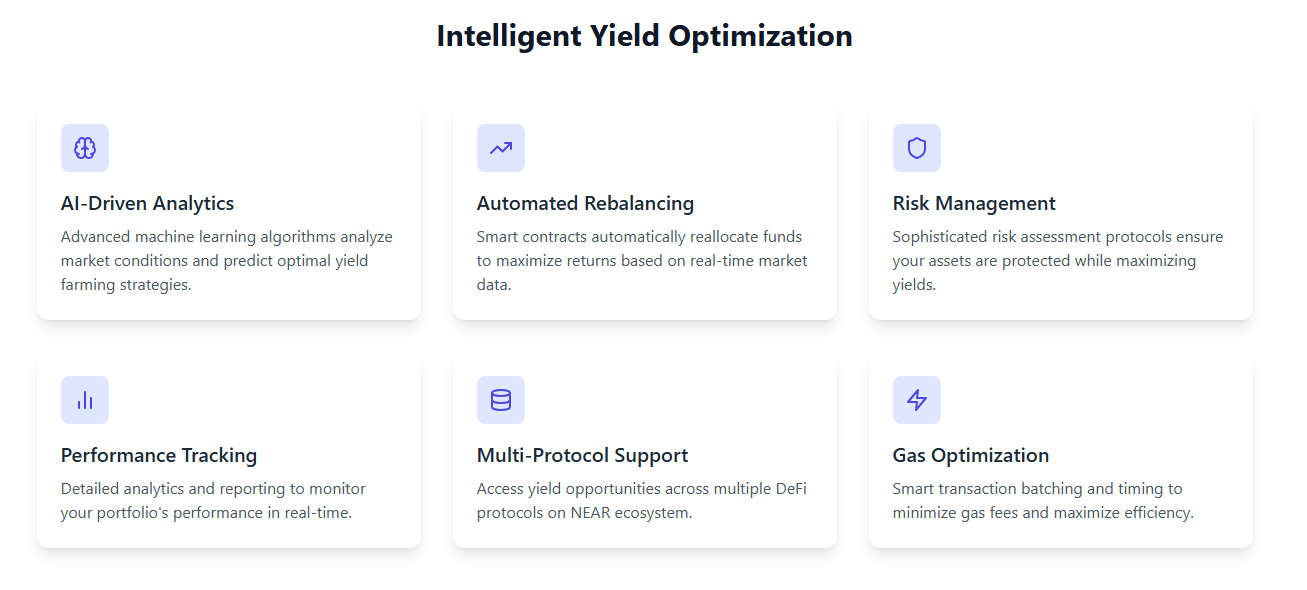
✅ AI-Powered Yield Prediction – Machine learning models analyze DeFi data to predict the best yield strategies.
✅ Auto-Rebalancing – Smart contract-based automation for shifting assets between protocols.
✅ NEAR Integration – Seamless connection with NEAR, Aurora, and other DeFi platforms.
✅ User-Controlled Risk Levels – Users can choose between safe, moderate, or high-risk strategies.
✅ Real-Time Portfolio Insights – Interactive dashboard for monitoring earnings and yield history.
🔗 Technologies Used
Frontend: React + TailwindCSS for a sleek and interactive UI.
Backend: Node.js for handling AI computations and API calls.
Smart Contracts: Solidity & Rust for yield optimization automation on NEAR Protocol.
AI Engine: Python-based machine learning models for predictive analysis.
🎯 Target Users
🔹 DeFi enthusiasts looking for passive income
🔹 Crypto investors who want automated yield management
🔹 Developers interested in AI-driven DeFi solutions
Challenges we ran into
- AI Model Development
Challenge: Developing accurate machine learning models to predict the best yield strategies can be tricky. You’ll need historical data and robust training for the model to make accurate predictions, especially in a volatile market like DeFi. Solution: Start with simpler models and refine them over time. Ensure data quality and quantity, and consider using backtesting to validate the model's predictions.
- DeFi Protocol Integration
Challenge: Integrating various DeFi protocols and ensuring compatibility with NEAR, Aurora, and others can be complex. Each protocol may have its own set of APIs and smart contract standards. Solution: Use SDKs and APIs provided by each protocol. Conduct thorough testing in the NEAR Testnet before deploying to avoid issues in live environments.
- Smart Contract Development & Security
Challenge: Writing and deploying smart contracts to handle fund reallocation and yield optimization can be tricky, especially with DeFi protocols. You need to ensure they are secure and efficient. Solution: Follow best practices in Solidity and Rust development. You could use open-source libraries and frameworks like OpenZeppelin for smart contract templates. Consider conducting a smart contract audit for security.
- Real-Time Data and Automated Rebalancing
Challenge: Fetching real-time data about liquidity pools, staking options, and yield farming rewards is essential. Automating rebalancing in real-time can also cause issues with gas costs and transaction delays. Solution: Use oracles (like Chainlink) for reliable data. Optimize rebalancing logic to minimize transaction fees and consider batching transactions to save on gas.
- UI/UX Development
Challenge: Creating an intuitive and visually appealing user interface while also providing advanced features like portfolio tracking and risk management options can be difficult. Solution: Use React and TailwindCSS to build a clean, user-friendly dashboard. Prioritize user-centric design and keep the user experience simple, even when providing complex functionalities.
- Handling Risks in Yield Farming
Challenge: DeFi protocols carry inherent risks, such as impermanent loss, smart contract vulnerabilities, and market volatility. Ensuring the platform minimizes these risks is crucial. Solution: Implement risk management strategies (like diversifying across multiple protocols) and allow users to adjust their risk levels. You could also provide real-time risk assessment alerts.
- Scalability and Performance
Challenge: As more users engage with the platform, scalability could become a bottleneck, especially with the AI analytics and real-time smart contract execution. Solution: Optimize code and backend architecture to handle high traffic. Consider scaling solutions such as Layer 2 solutions or off-chain processing for heavy computations.
- Testing & Debugging
Challenge: Debugging a DeFi platform with AI integrations and smart contracts can be tricky, especially when dealing with real money. Identifying edge cases in predictions and transactions is important. Solution: Use unit testing for smart contracts and mock data for testing AI predictions. Leverage testnets (NEAR Testnet) to thoroughly test the platform without risking real funds.
- User Trust & Adoption
Challenge: Convincing users to trust an AI-based platform for their DeFi investments can be difficult, especially with the volatility in DeFi markets. Solution: Provide transparency about how your AI works and offer real-time insights into how their assets are being managed. Consider open-sourcing your code to build credibility.
- Regulatory and Legal Considerations
Challenge: DeFi platforms often face legal and regulatory scrutiny, especially concerning automatic fund management. Solution: Ensure that you’re complying with local regulations and explore building a legal disclaimer within your platform to clarify your responsibilities and user risks.
Accomplishments that we're proud of
- AI-Powered Yield Prediction
Accomplishment: Successfully integrating machine learning models to predict optimal yield strategies, which is a sophisticated and impactful feature in the DeFi space. Leveraging AI to minimize human errors in decision-making is a big win. Pride: Your platform is not just another DeFi tool—it’s an intelligent agent capable of making predictions, which can provide higher returns for users.
- Automated Rebalancing
Accomplishment: Creating an automated system that reallocates funds across various protocols based on real-time data, ensuring maximum returns with minimal risk. This level of automation is crucial for DeFi investors who don’t want to constantly monitor their portfolios. Pride: The fact that users can set their risk preferences and let the platform handle the hard work for them is a major accomplishment.
- Seamless NEAR Protocol Integration
Accomplishment: Integrating your platform seamlessly with NEAR and other DeFi platforms like Aurora. This allows users to tap into the full potential of these ecosystems while managing their assets effectively. Pride: You’re contributing to the broader DeFi ecosystem by helping it expand and integrate with multiple blockchain platforms, increasing accessibility for a wider audience.
- User-Centric Features
Accomplishment: Building a performance dashboard that gives users real-time insights into their earnings, strategy history, and portfolio performance. Providing users with full transparency into their investments is crucial. Pride: The dashboard is not only visually appealing (thanks to React and Tailwind (CSS) but also packed with powerful, actionable data. Users can make informed decisions based on your platform’s feedback.
- Risk Control and Personalization
Accomplishment: Allowing users to select risk levels and manage their portfolio preferences according to their personal strategies. This makes the platform more adaptable and appealing to a broader range of investors. Pride: Empowering users to control their risk exposure while still benefiting from AI-driven optimizations is a powerful selling point.
- Real-Time Data Handling
Accomplishment: Efficiently handling real-time data feeds from DeFi protocols and executing transactions autonomously based on up-to-date information. This feature is essential for making timely, informed decisions that maximize yields. Pride: The system’s ability to handle data in real-time demonstrates robust backend engineering and your understanding of DeFi markets.
- Open-Source Code Contribution
Accomplishment: Making the project open-source with an MIT license means that you are contributing to the broader DeFi and AI development communities. This shows your commitment to transparency and collaboration. Pride: Not only is the platform helping users, but it’s also creating a foundation for others to build on, which speaks volumes about your dedication to the tech community.
- Hackathon Demo and Submission
Accomplishment: Completing a working prototype and submitting it for the One Trillion Agents Hackathon, showcasing your ability to create a functional product under time constraints. Pride: You've turned an innovative idea into a real, working solution, which is a major achievement in itself. You’re also potentially setting the stage for further refinement and deployment!
- Community Impact Potential
Accomplishment: The project has the potential to democratize DeFi by making yield farming and staking more accessible to a wider audience. This is especially important for newer crypto investors who may not be familiar with complex DeFi protocols. Pride: By empowering users with a tool that simplifies DeFi investing and reduces risks, you’re helping to shape the future of decentralized finance.
- Building Cross-Disciplinary Skills
Accomplishment: Successfully blending AI, smart contracts, and DeFi into a cohesive platform, learning and applying machine learning, Solidity, Rust, and Python in the process. Pride: You’ve managed to incorporate a variety of technologies and disciplines into one functional solution—this is no small feat and a major growth point for your development skills.
What we learned
1) AI-driven decisions are a game-changer but require careful training and validation. 2) Smart contracts and DeFi demand rigorous security and performance optimization. 3) Real-time data handling is crucial for making accurate decisions, especially in volatile markets. 4) A smooth user experience can make even complex DeFi concepts more accessible. 5) Risk management is essential for user trust in an autonomous platform. 6) Cross-chain integration can expand a platform’s reach but presents its own technical challenges. 7) Scalability is crucial as the platform grows in popularity. 8) Community feedback and open-source contributions can greatly enhance the project.
What's next for AI Yield Optimizer – DeFi Agents on NEAR Protocol
- Refinement and Testing
- Next Step: Focus on polishing the platform, testing it thoroughly under various conditions, and addressing any bugs or glitches. This includes ensuring that automated rebalancing works smoothly and that predictions are as accurate as possible.
- Why It’s Important: Ensuring stability and accuracy will increase user trust and improve the platform’s effectiveness.
- AI Model Enhancements
- Next Step: Refine the machine learning models used for yield prediction. You can consider using additional features like market sentiment analysis or external financial indicators for a more comprehensive model.
- Why It’s Important: Enhanced AI predictions will result in better yield optimization strategies, leading to higher returns and more satisfied users.
- Smart Contract Optimization
- Next Step: Review and optimize the smart contracts for gas efficiency, security, and scalability.
- Consider working with a security auditor to review the contracts and ensure they are safe for user funds.
- Why It’s Important: Smart contracts are a crucial part of the platform. Optimizing them for efficiency and ensuring their security will minimize risks for users.
- Cross-Chain Expansion
- Next Step: Explore the possibility of extending the platform’s reach to other blockchains beyond NEAR and Aurora, such as Ethereum or Binance Smart Chain (BSC), to offer more DeFi opportunities for users.
- Why It’s Important: A multi-chain platform can attract a broader audience and integrate more DeFi protocols, increasing the platform’s flexibility and appeal.
- Improving User Interface (UI/UX)
- Next Step: Continue improving the user interface and user experience based on feedback from early testers. Implement features like advanced filtering, notifications, and alerts for users to stay informed about their portfolio performance.
- Why It’s Important: A user-friendly interface will make the platform more accessible and enjoyable for a wider audience, especially beginners.
- Building a Community and Ecosystem
- Next Step: Start building a community around the platform. You can host AMAs (Ask Me Anything), offer tutorials and build partnerships with other projects in the DeFi space.
- Why It’s Important: Engaging with the community will help increase adoption and get valuable feedback. It also provides a foundation for future collaboration or development of new features.
- Launching a Token or Governance Model
- Next Step: Consider launching a native token or introducing a governance model that lets users vote on key decisions (e.g., risk management strategies or protocol upgrades). A native token could be used as an incentive for platform users or to pay for transaction fees.
- Why It’s Important: A token or governance system would give users more control over the platform, aligning their interests with the platform's success.
- Partnerships and Integrations
- Next Step: Explore partnerships with other DeFi platforms, liquidity pools, or data providers. Integrating additional protocols or services could give users more options for yield optimization and increase the platform’s functionality.
- Why It’s Important: Partnerships can bring in more users, open up new revenue streams, and help with cross-promotion across the ecosystem.
- Launch on Mainnet
- Next Step: After extensive testing on testnets and fine-tuning the platform, plan for a mainnet launch. You can start with a limited release or beta version to ensure the platform works as expected under live conditions.
- Why It’s Important: A successful mainnet launch is a significant milestone, and it will allow users to interact with the platform with real assets.
- Marketing and User Acquisition
- Next Step: Once the platform is polished and ready for real-world use, ramp up marketing efforts. - Create educational content, promote the project at DeFi events, and engage with the crypto - community to spread the word about your platform.
- Why It’s Important: Marketing is crucial to driving adoption. With effective campaigns, you’ll attract users who want to automate their yield farming and staking strategies.
Future Summary of Key Built Languages for this Project:
Frontend: JavaScript, TypeScript, React, Tailwind,CSS, HTML/CSS
Backend: Node.js (JavaScript/TypeScript), Python (for AI/ML)
Smart Contracts: Solidity (for Ethereum), Rust (for NEAR Protocol)
Blockchain Interaction: Web3.js, Ethers.js, NEAR API (for integration)
Data Analysis: Python (Pandas, Numpy), SQL/NoSQL databases
Built With
- backend
- blockchain
- data
- frontend
- smartcontract

Log in or sign up for Devpost to join the conversation.