-
-
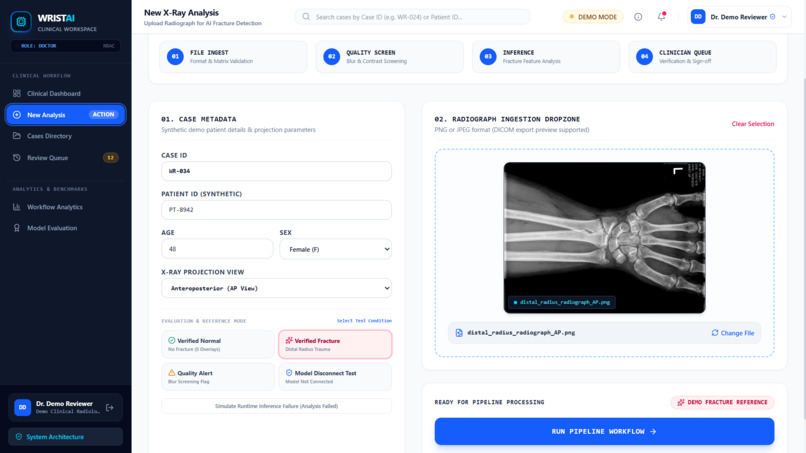
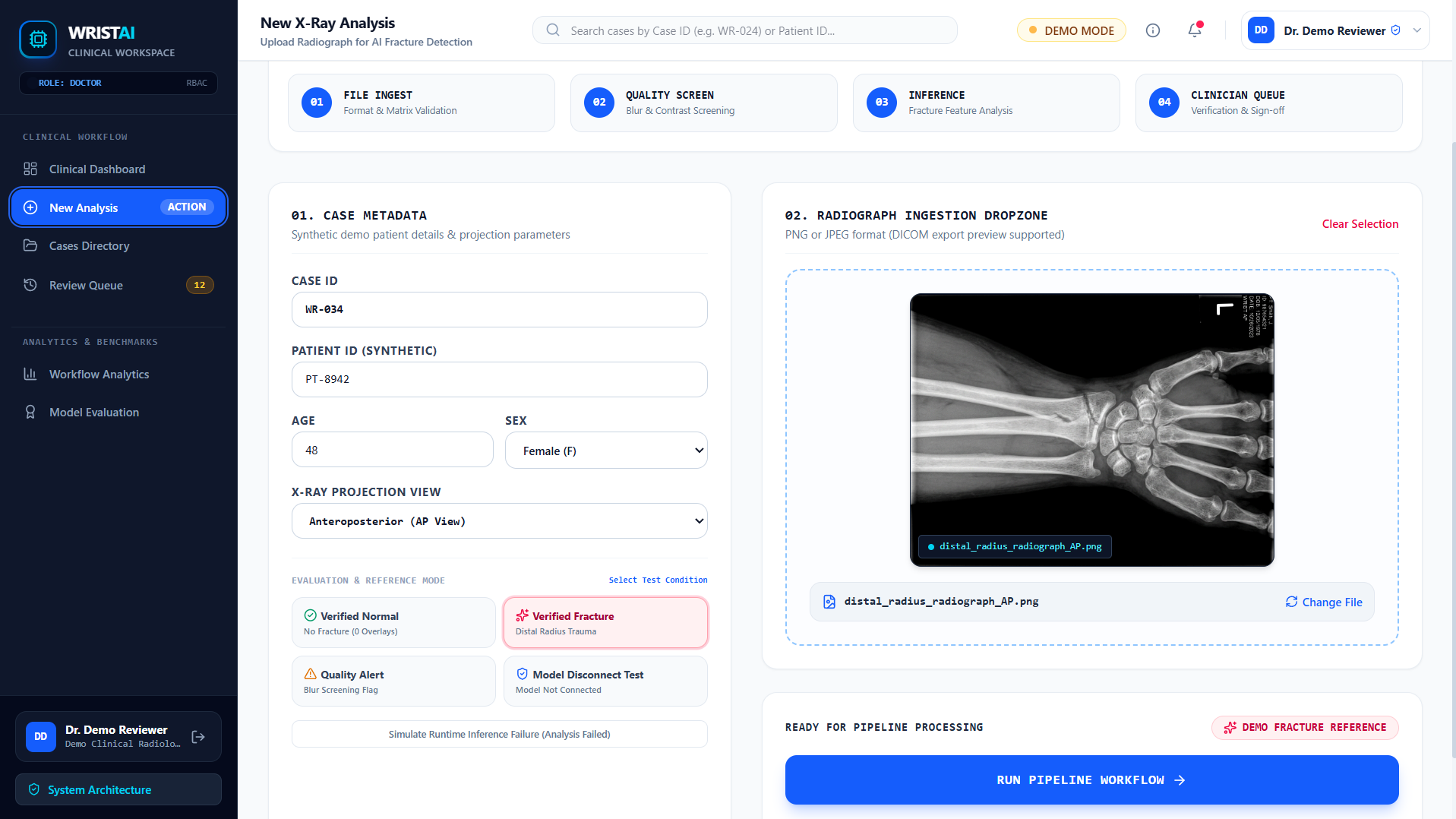
FractureLens AI: Wrist X-ray review interface concept for examining images and suspected fracture regions.
-
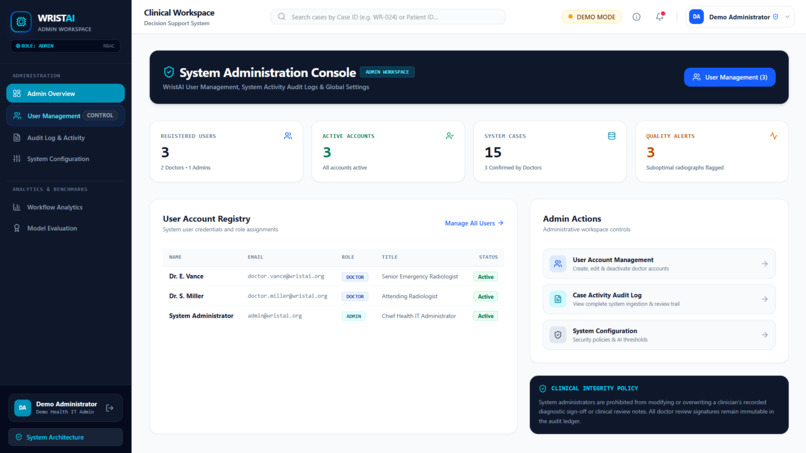
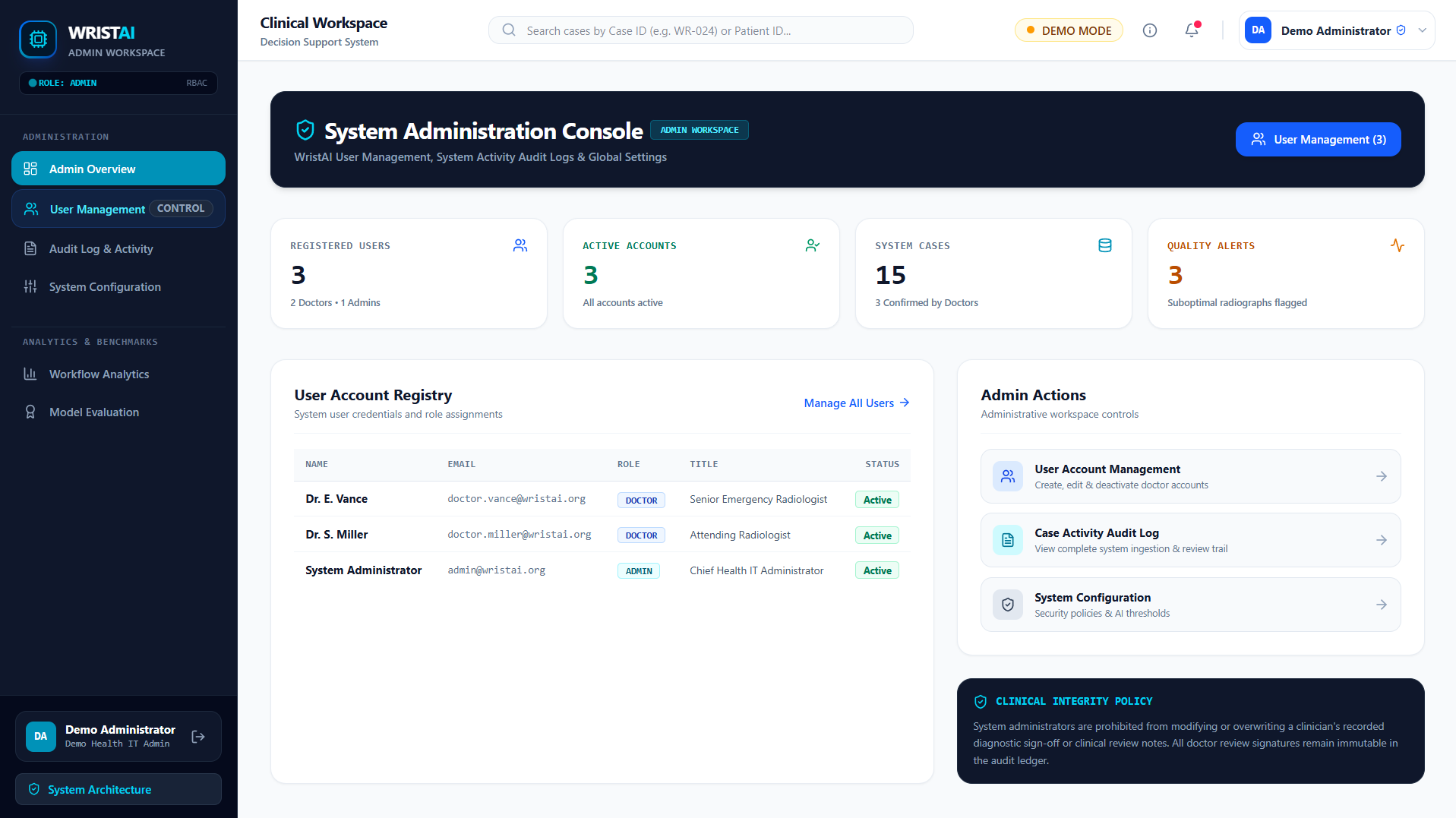
FractureLens AI: Dashboard concept for organizing cases and presenting AI-assisted wrist X-ray review information.
-
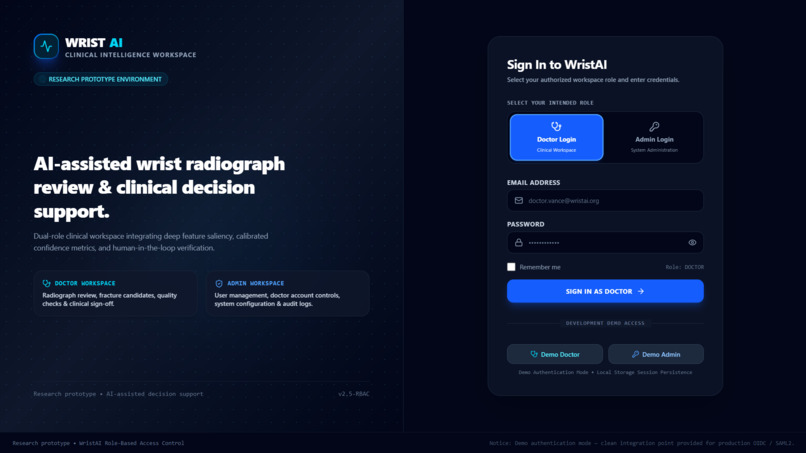
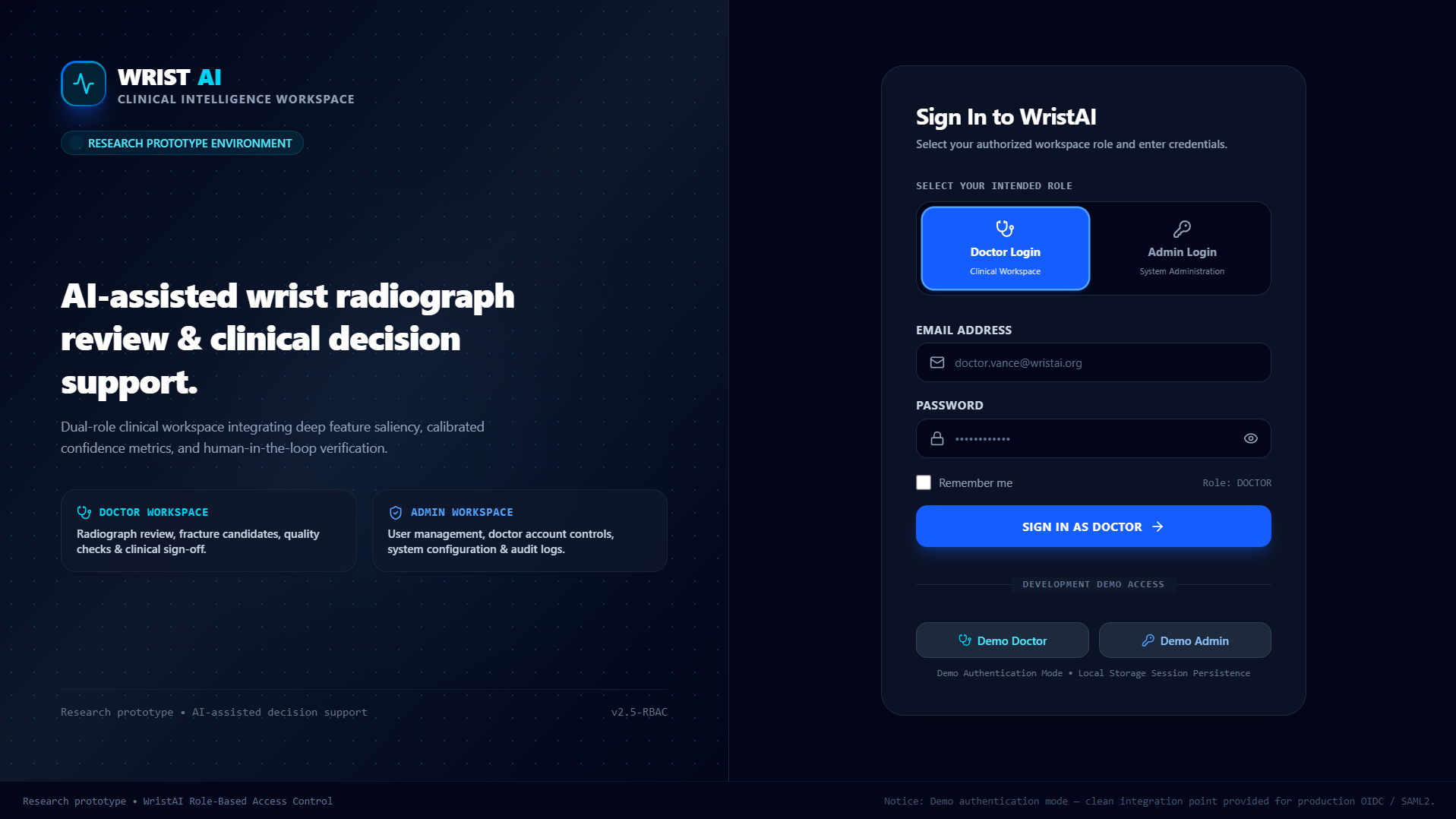
FractureLens AI — Secure Role-Based Login Interface featuring dedicated Doctor and Admin workspaces
Inspiration
Wrist fractures can sometimes be difficult to identify from X-ray images, especially when findings are subtle or image quality is poor. We wanted to explore how Artificial Intelligence could make wrist X-ray review more transparent and help clinicians inspect potentially important findings.
What It Does
FractureLens AI is an AI-assisted wrist X-ray review prototype designed to check basic image-quality indicators and visualize suspected fracture locations when a compatible trained AI model is configured. It also aims to flag uncertain cases for clinician review instead of presenting every prediction as a definitive diagnosis.
How We Built It
The prototype uses Python and Streamlit for the user interface, OpenCV for basic image-quality checks, and Pillow and NumPy for image processing. An optional Ultralytics YOLO-based detection component can analyze X-ray images when compatible pretrained model weights are available.
The workflow is designed around image upload, technical quality checks, visual detection results, and a downloadable summary.
Challenges We Faced
One of the main challenges is integrating a compatible pretrained model and ensuring that its predictions are presented responsibly. A missing detection must not be interpreted as proof that a fracture is absent. Image quality, model compatibility, and uncertainty also need to be considered.
What We Learned
This project helped us explore computer vision, image processing, AI-assisted medical workflows, and the importance of communicating model limitations. We also learned that healthcare AI requires careful evaluation, appropriate datasets, and human oversight.
Real-World Impact
FractureLens AI aims to provide a foundation for research into explainable wrist X-ray review. With further testing and clinical evaluation, this type of tool could be investigated as a way to support image review and identify cases that may need additional attention.
Current Status and Future Work
The project is a research prototype, not a clinically validated diagnostic system. The next steps are to verify model inference, evaluate performance on appropriate independent datasets, improve uncertainty handling, and obtain expert feedback before considering any clinical application.

