Inspiration
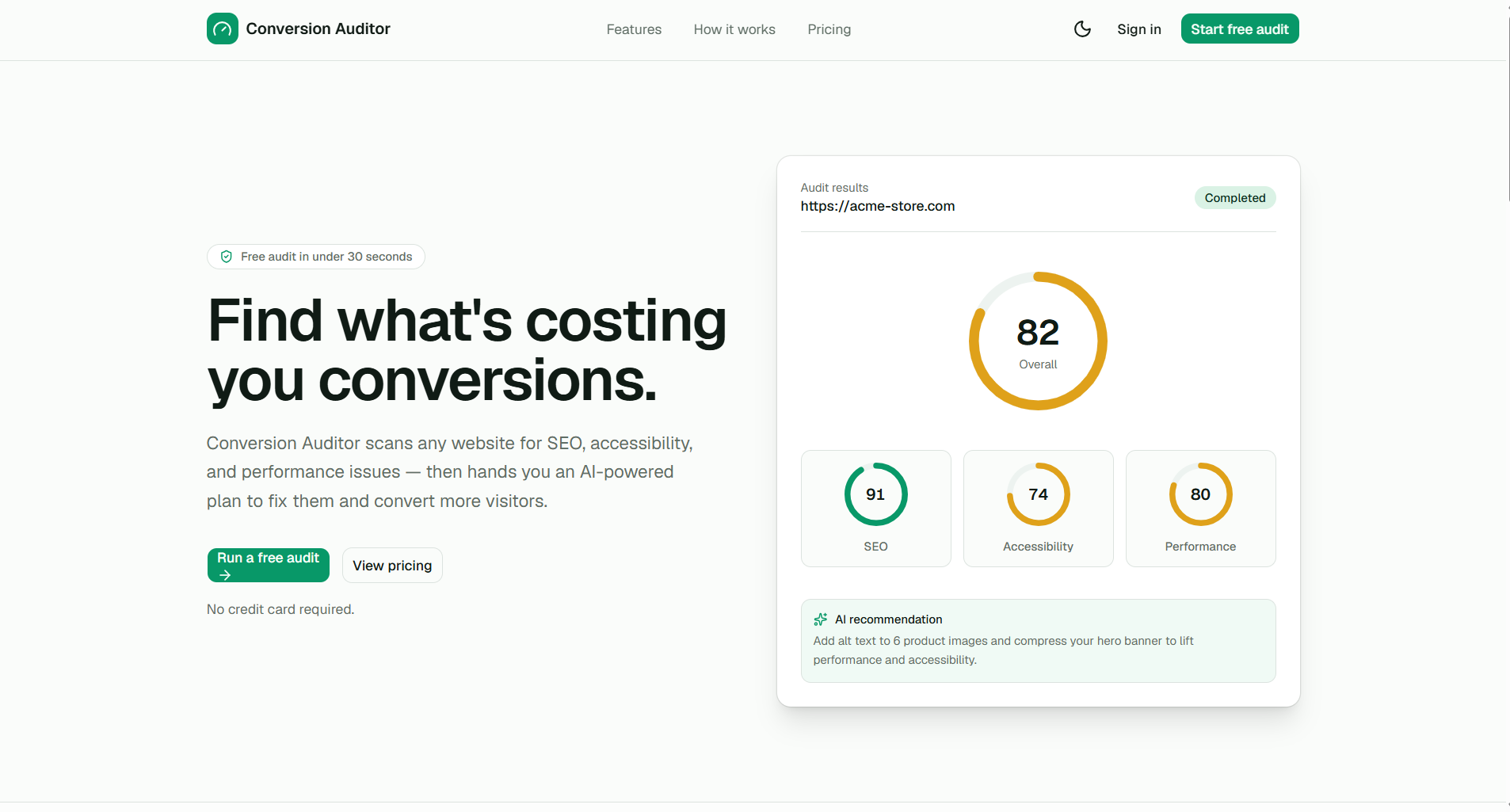
I noticed that many small business owners struggle with low conversion rates but lack the technical expertise to diagnose why their websites are underperforming. I wanted to build a bridge between complex technical analytics and actionable business insights. My goal was to create a tool that democratizes website optimization, making professional-grade audits accessible to everyone.
What it does
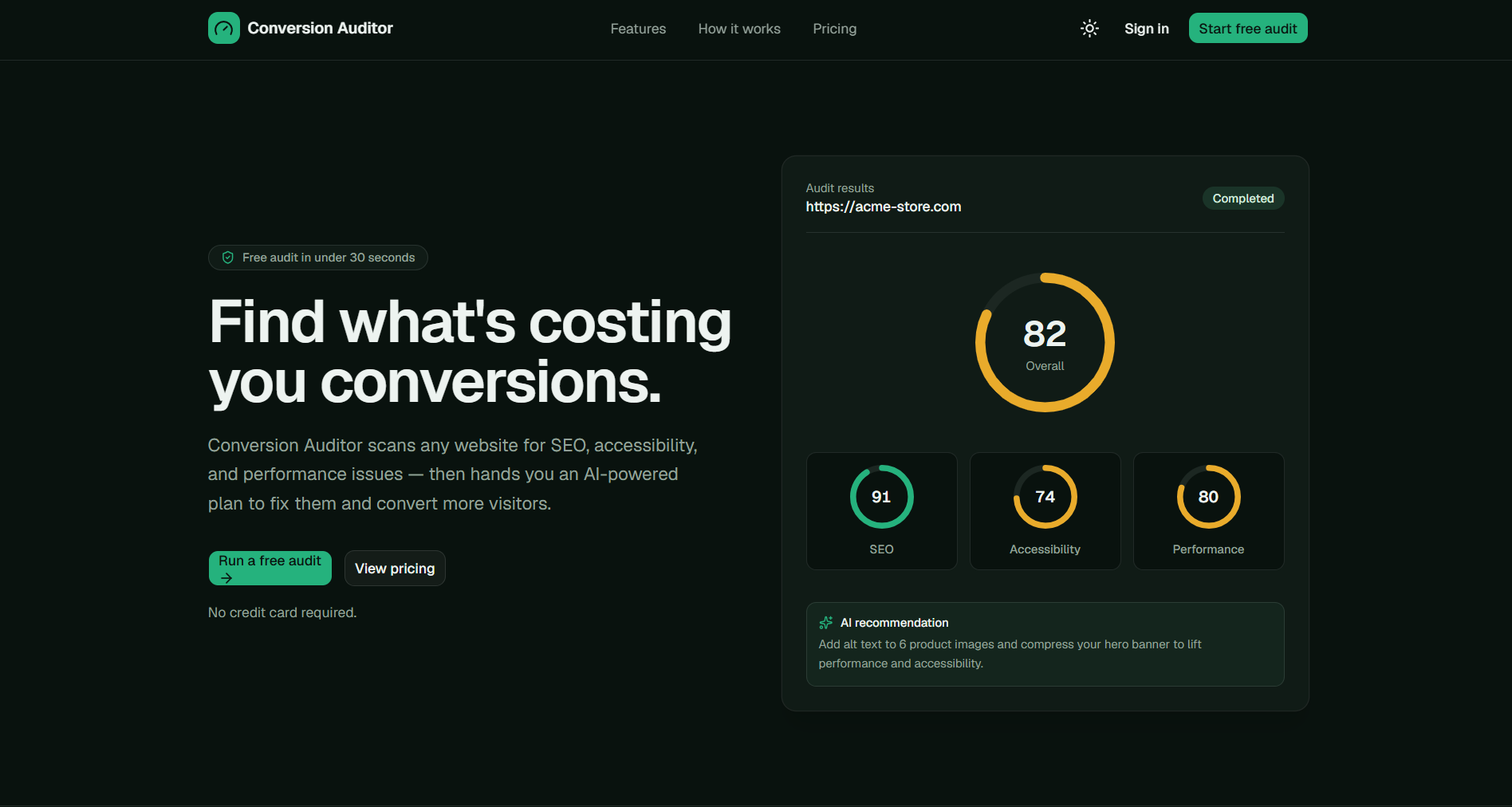
The AI Website Conversion Auditor is a comprehensive tool that scans any URL to instantly identify SEO, accessibility, and performance bottlenecks. Instead of just giving a technical report, it provides an actionable, AI-powered roadmap to fix these issues, helping businesses turn more visitors into customers.
How we built it
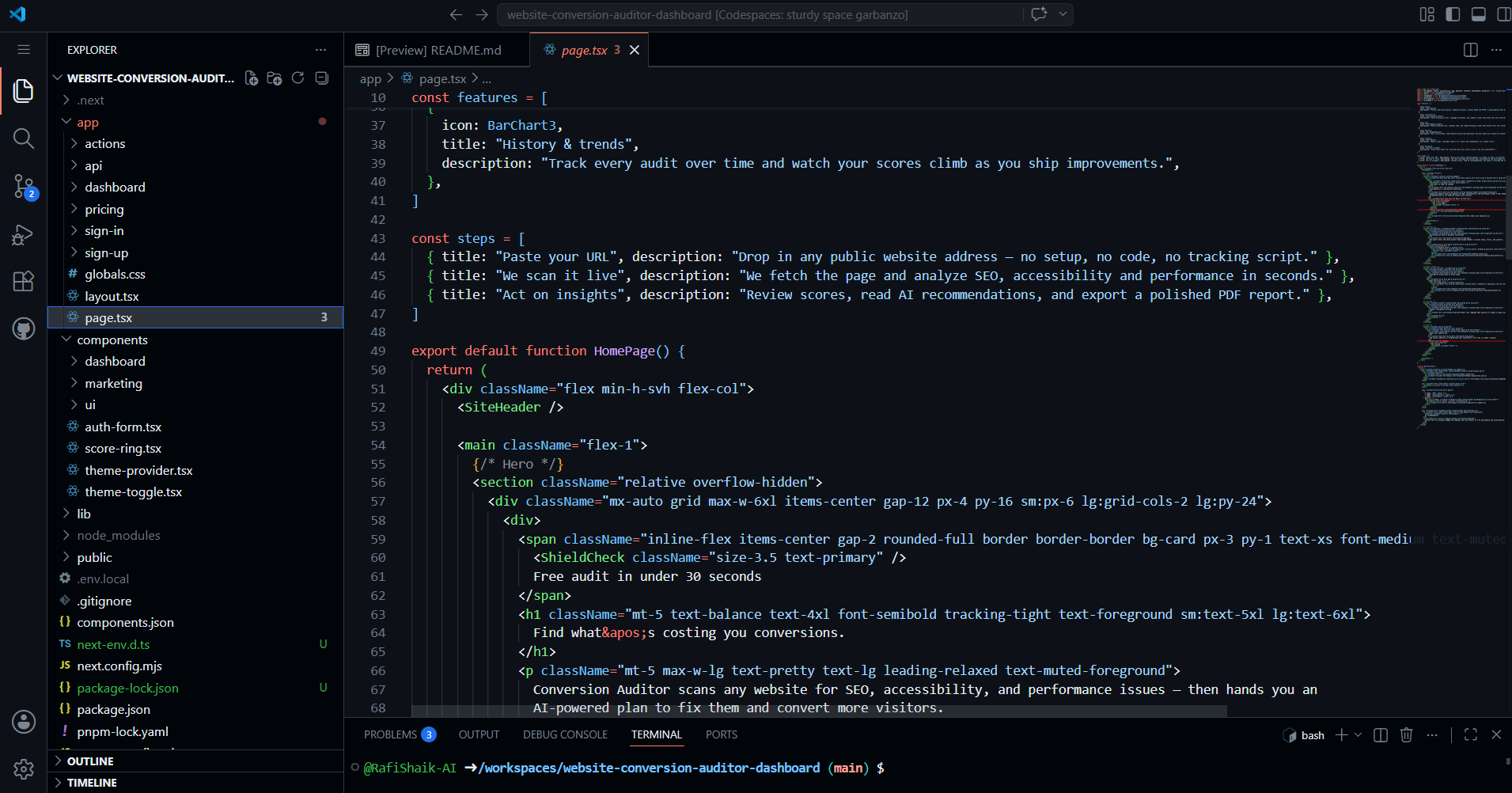
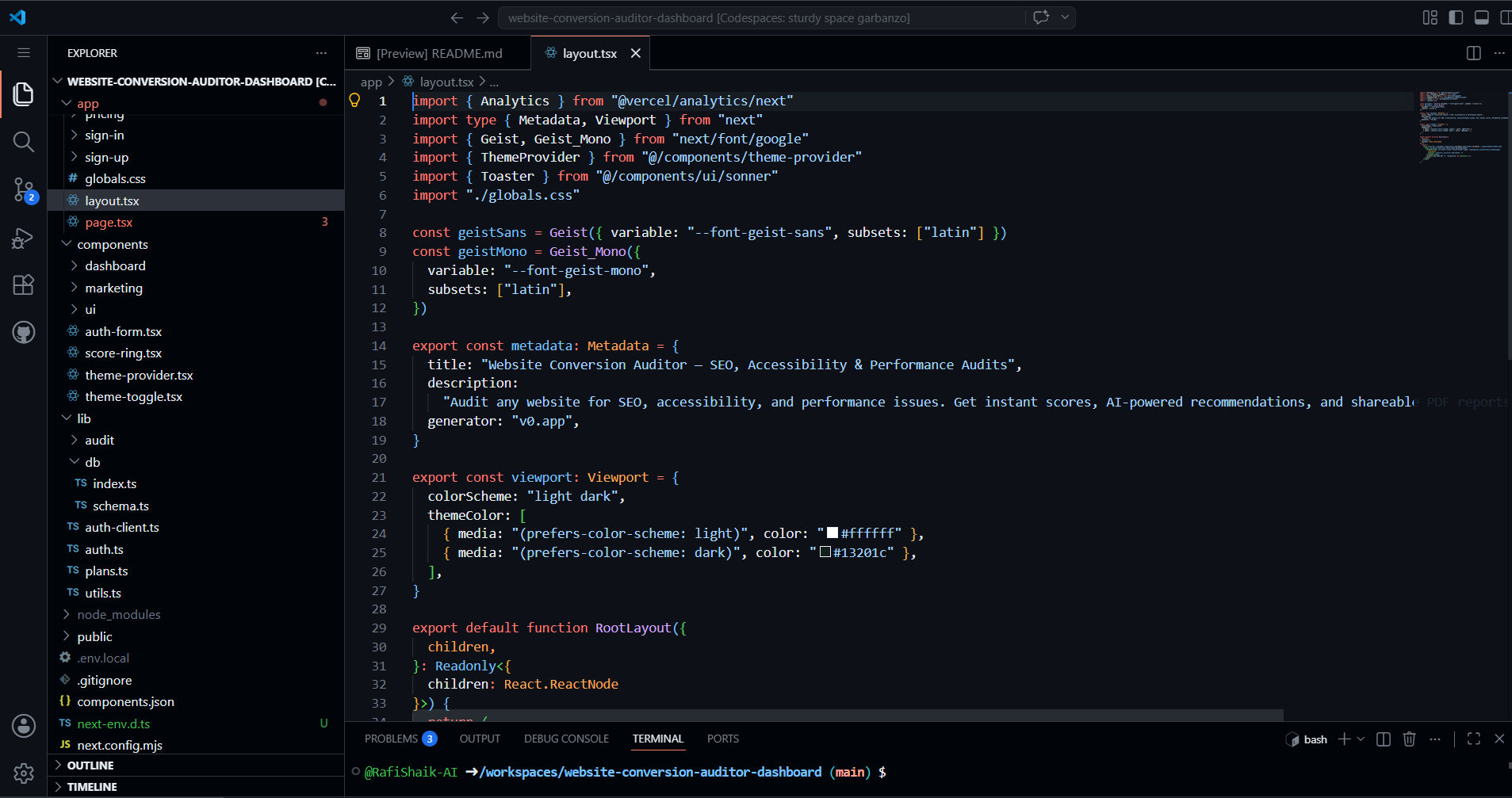
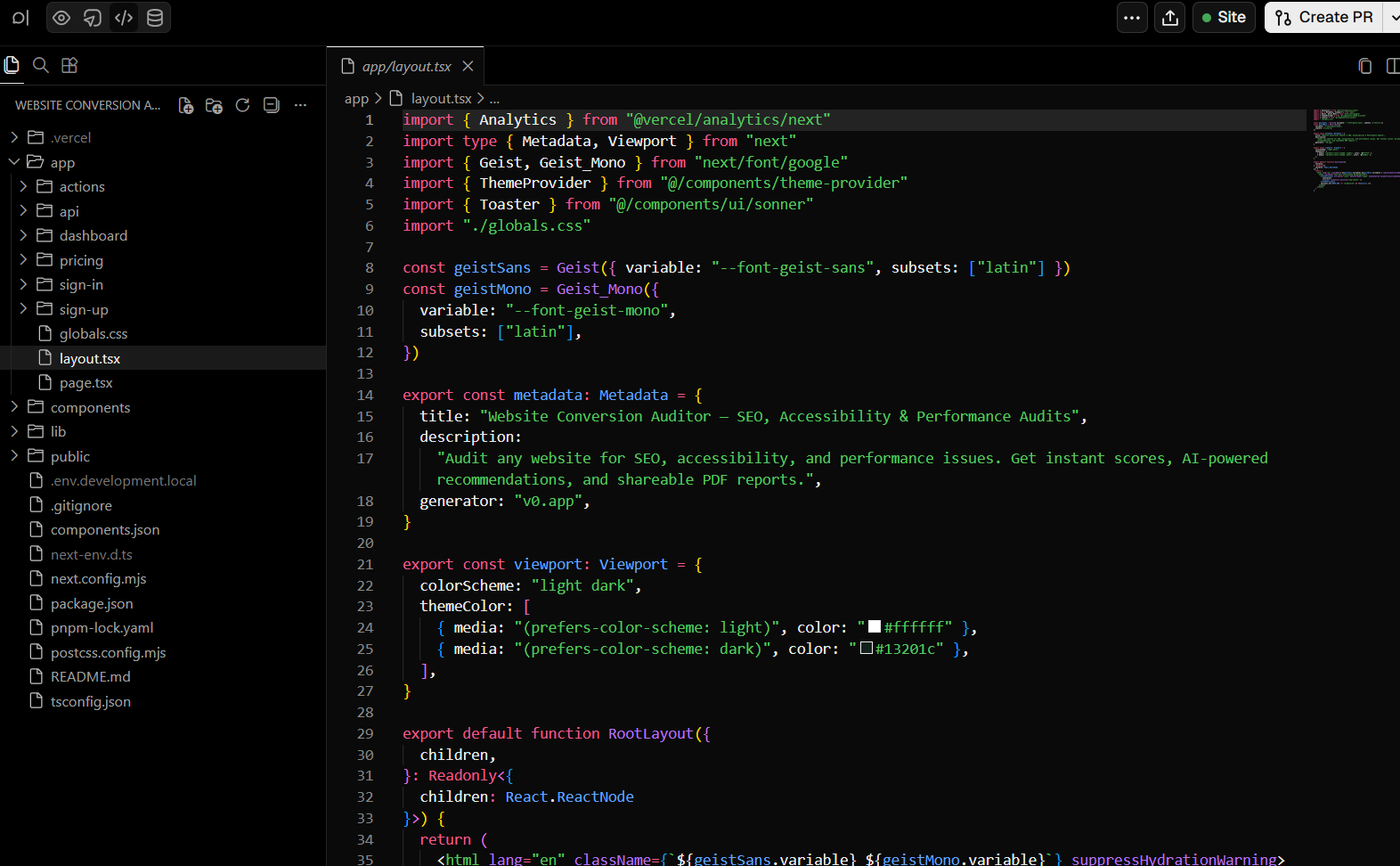
The project was built using a modern Next.js framework, ensuring a fast, responsive, and SEO-friendly user interface.
Frontend: Built with React and styled using Tailwind CSS and components from v0 to ensure a professional look.
Backend: Leveraged API integrations to fetch real-time performance metrics (via Google PageSpeed Insights) and AI-driven analysis (via OpenAI).
Database: Used an AWS-based database (Neon/Aurora PostgreSQL) to securely store audit history and user data.
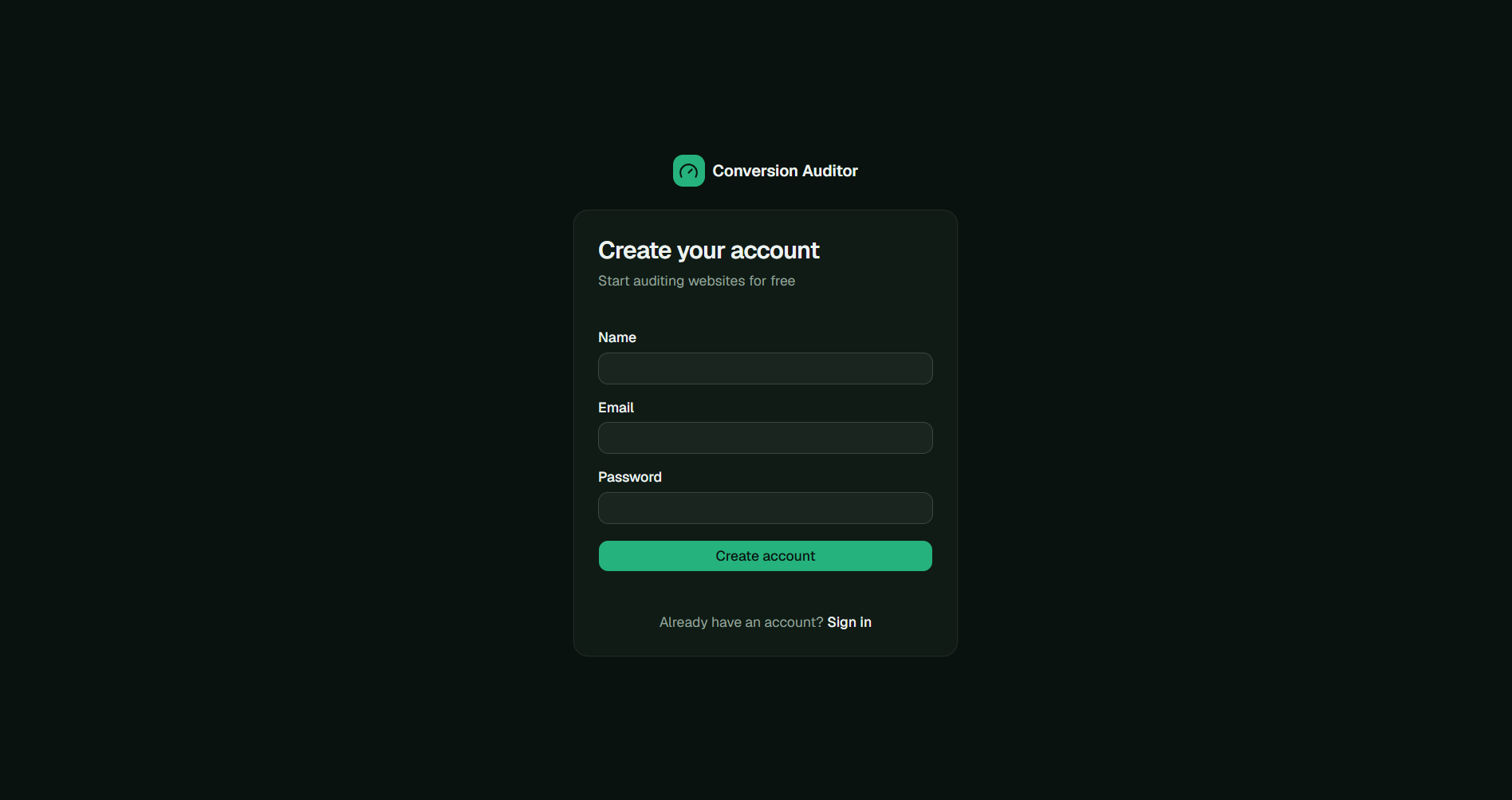
Authentication: Implemented Better Auth to manage user sessions and secure personalized audit reports.
Challenges we ran into
The biggest challenge was integrating multiple asynchronous APIs while maintaining a seamless user experience. Managing the data flow—where the app fetches technical metrics and feeds them into an LLM to generate a human-readable roadmap—required careful state management. Additionally, ensuring the security of API keys and database credentials was a priority, handled via secure server-side configuration.
Accomplishments that we're proud of
I am particularly proud of creating a tool that translates complex technical data into plain-English advice. By modeling the conversion impact of site speed, where the conversion rate $C$ is represented by C(t) = C_0 .e^{-kt}, the tool provides mathematically-grounded insights that help users understand the direct cost of their site's latency.
What we learned
This project deepened my understanding of the "Zero Stack" architecture—combining modern frontend frameworks with serverless databases and AI providers. I learned how to architect a full-stack application that handles sensitive API communications securely and optimizes database queries to ensure the auditor delivers results in seconds.
What's next for AI Website Conversion Auditor
Moving forward, I plan to add:
Automated Implementation: A feature to automatically generate and apply code fixes for identified accessibility and SEO issues.
Competitor Benchmarking: Allowing users to compare their audit results directly against top competitors in their industry.
Ongoing Monitoring: A subscription feature that alerts users when their site's conversion health drops below a certain threshold.
Built With
- betterauth
- githubcodespaces
- googlepagespeedinsightsapi
- neon
- next.js
- openapi
- talivindcss
- vercel
- vo


Log in or sign up for Devpost to join the conversation.