-
-
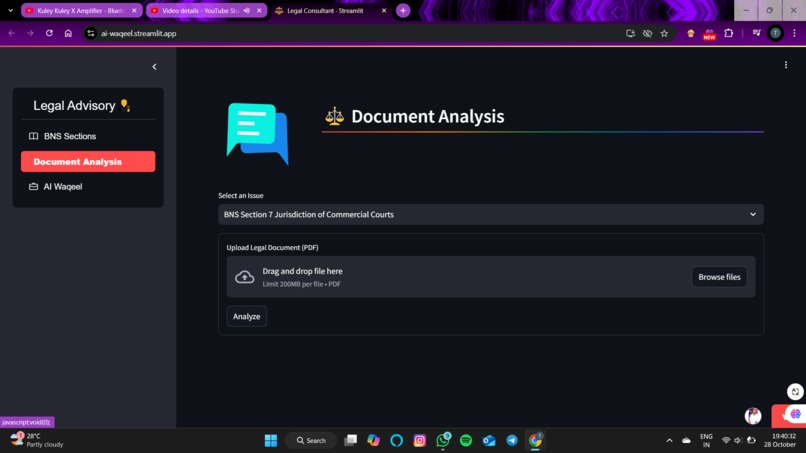
Backend
-
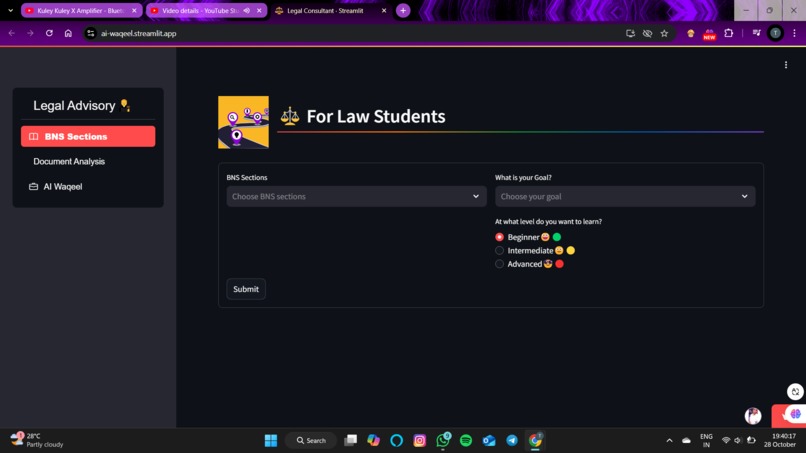
Backend
-
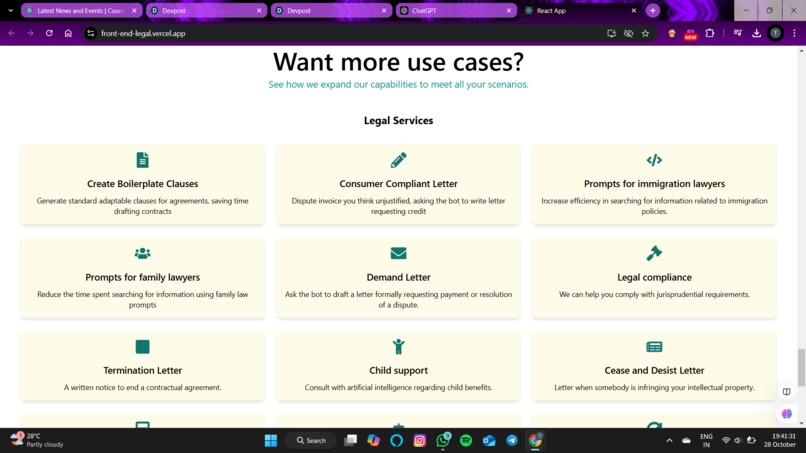
Frontend
-
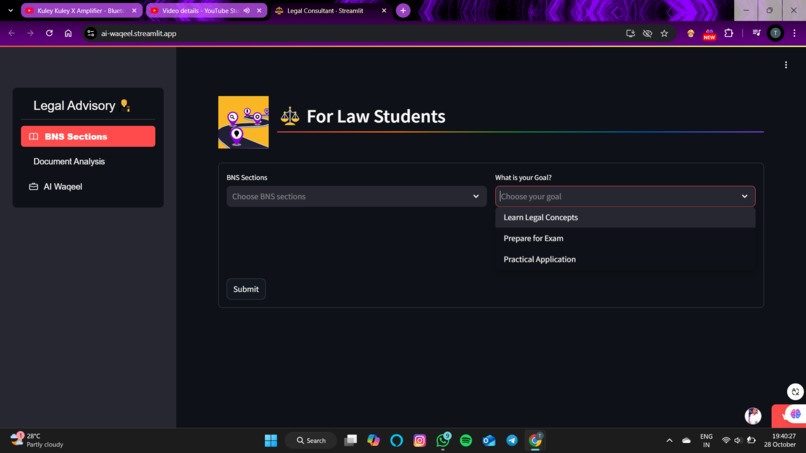
Backend
-
Backend
-
Backend
-
Frontend
-
Frontend
-
Frontend
-
Frontend
-
Frontend
-

Frontend
Inspiration
Here’s some inspiration for building this system using the MERN stack, advanced AI models like LLaMA or Gemini, and multi-language capabilities:
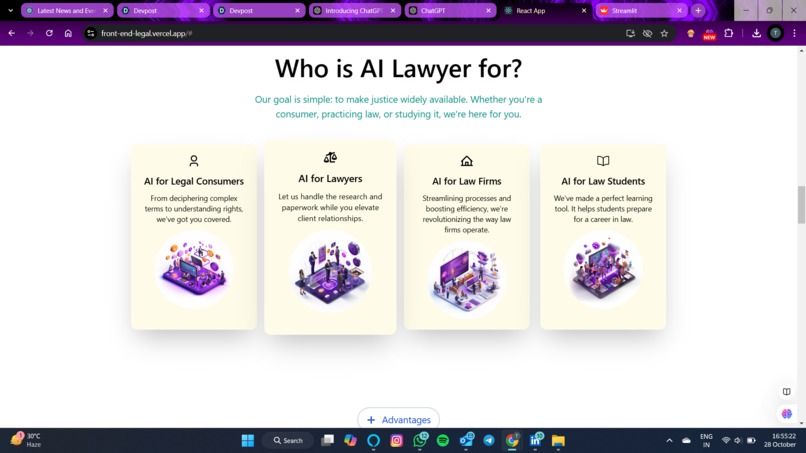
Increasing Access to Justice Commercial courts handle complex cases that often demand specialized legal knowledge. With an AI chatbot that communicates in multiple languages, AI Waqeel can make legal advice accessible to a broader audience, from small business owners to larger enterprises, streamlining their access to legal support.
Bridging the Knowledge Gap By leveraging powerful AI models like LLaMA and Gemini, the chatbot can interpret and generate sophisticated legal advice in real-time. This advanced NLP capability supports users in drafting documents, understanding court procedures, or even simulating legal scenarios—bridging the knowledge gap between laypersons and legal professionals.
Efficiency in Legal Proceedings Imagine reducing case backlogs by empowering users to self-serve on preliminary matters. With AI Waqeel, commercial court users can handle routine legal queries without waiting for human intervention, improving case management and reducing delays.
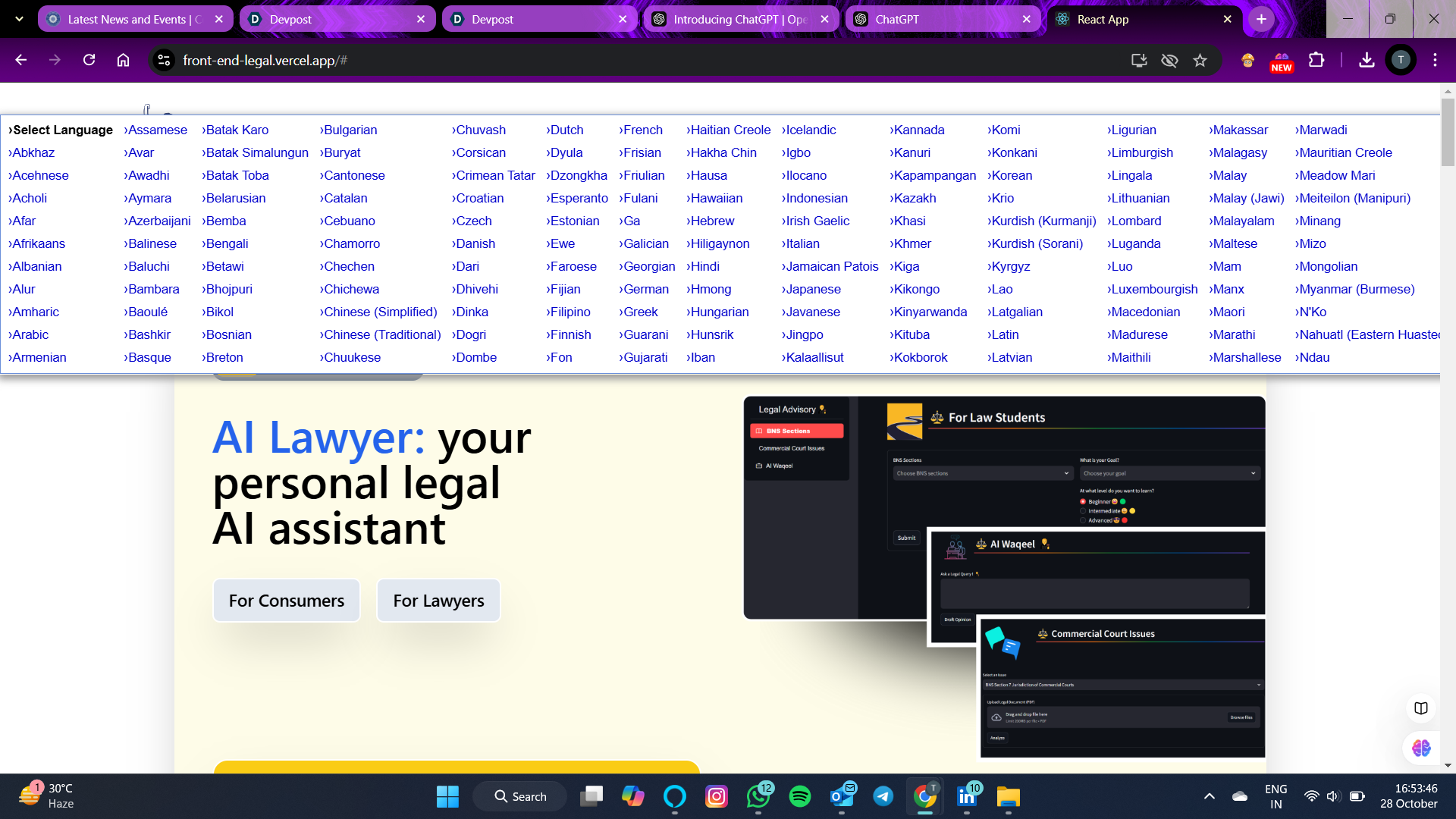
Global Accessibility with API 47 Language Using API 47 language ensures the platform can seamlessly operate across different languages, catering to diverse users worldwide. This inclusivity is crucial in a globalized economy, where cross-border business transactions frequently lead to legal challenges.
State-of-the-Art Tech Stack A MERN stack is robust, flexible, and perfect for scalable applications like AI Waqeel. It allows you to build a platform that is both responsive and high-performing, with MongoDB ensuring secure data handling for sensitive legal information, Express and Node.js providing the backend support, and React delivering an intuitive front-end experience.
Contributing to Legal Innovation You're not just building a tool but pioneering in legal tech innovation. Platforms like AI Waqeel could set the foundation for AI-assisted justice systems globally, bringing transparency, efficiency, and fairness to commercial law.
Every line of code on this project is a step towards making legal resources more equitable and the justice system more efficient, accessible, and user-friendly for everyone involved.
What it does
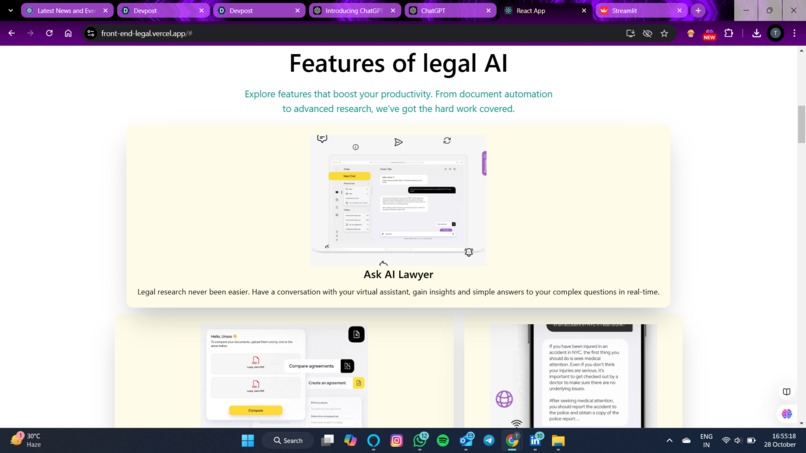
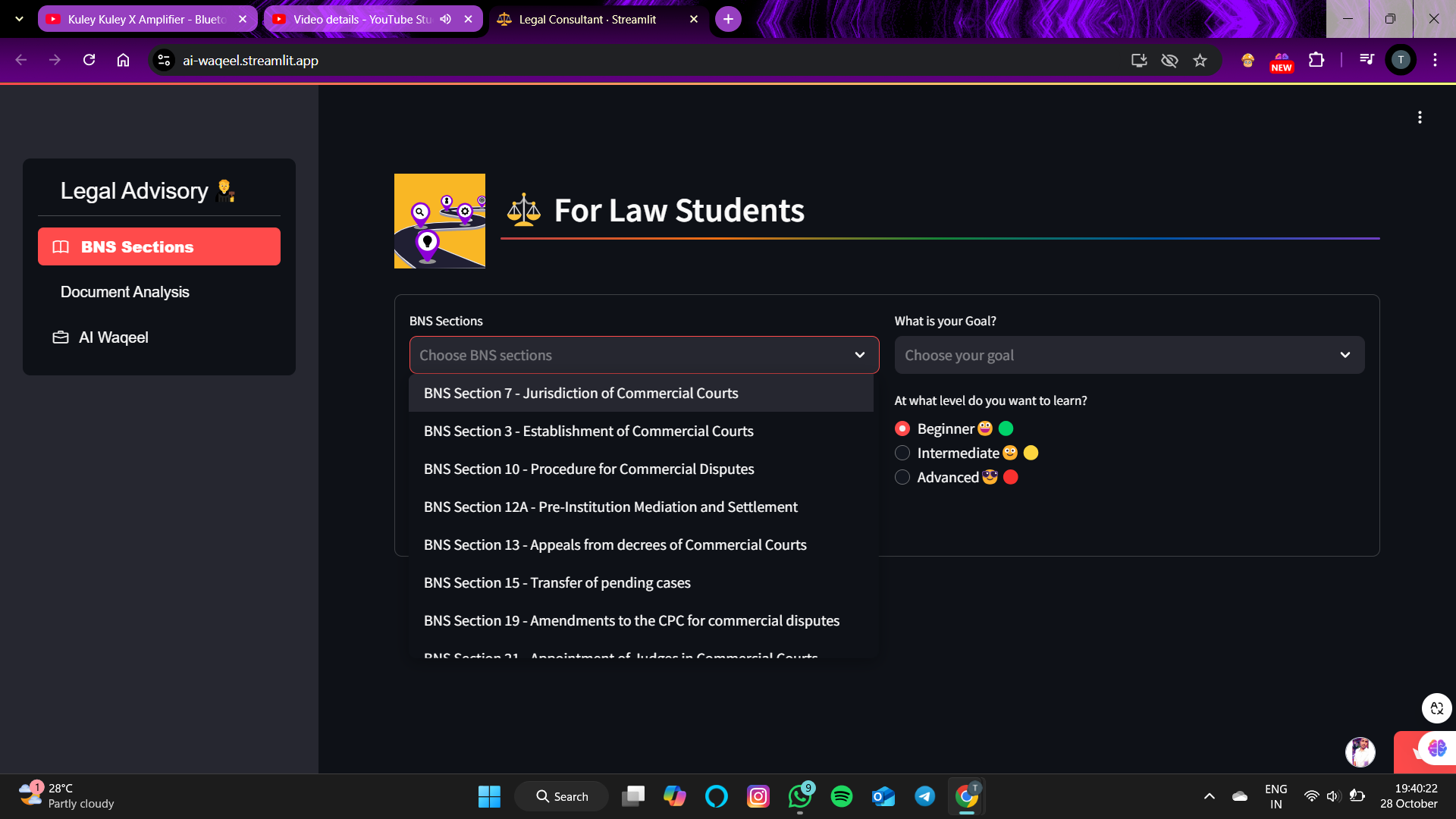
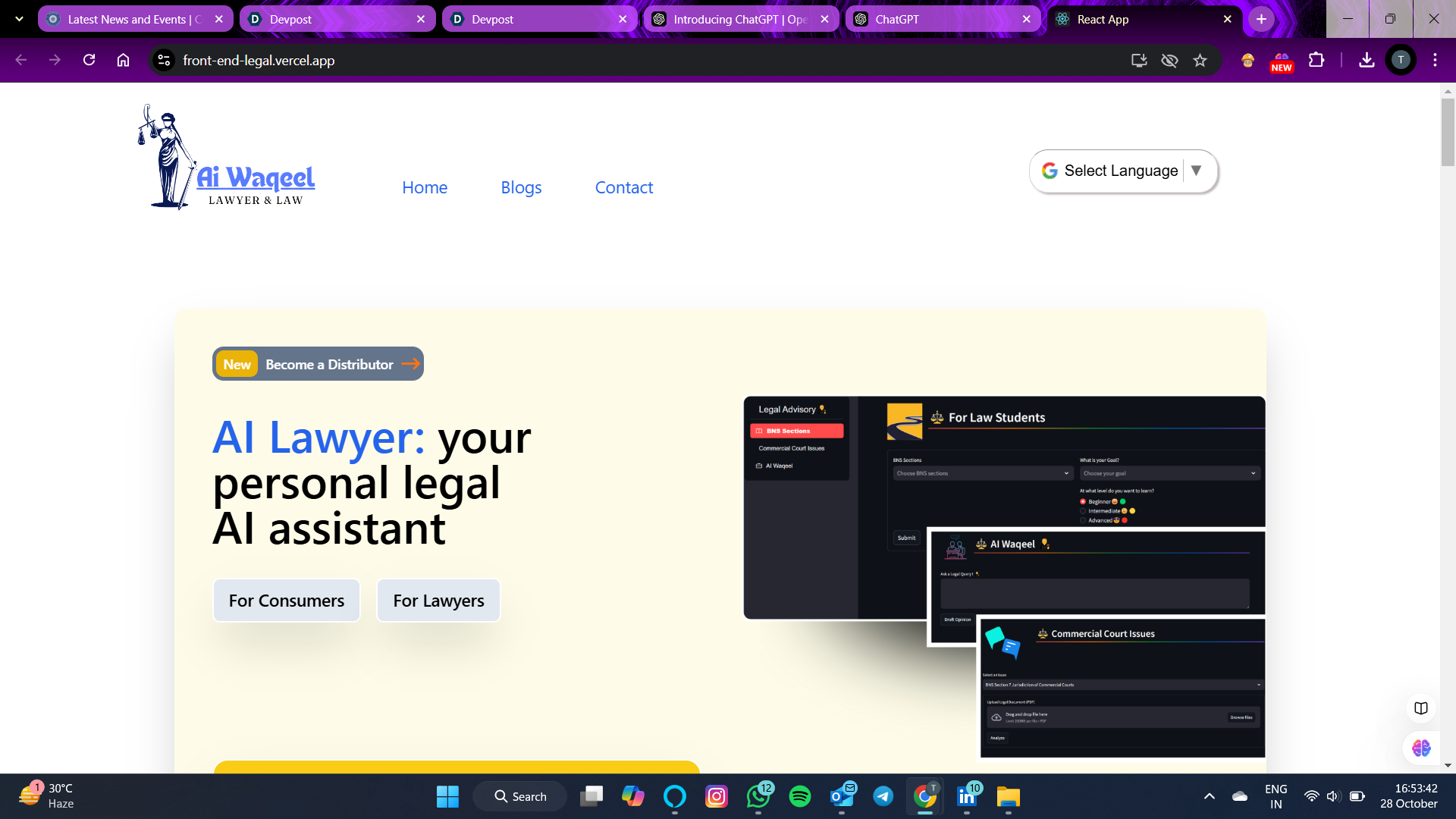
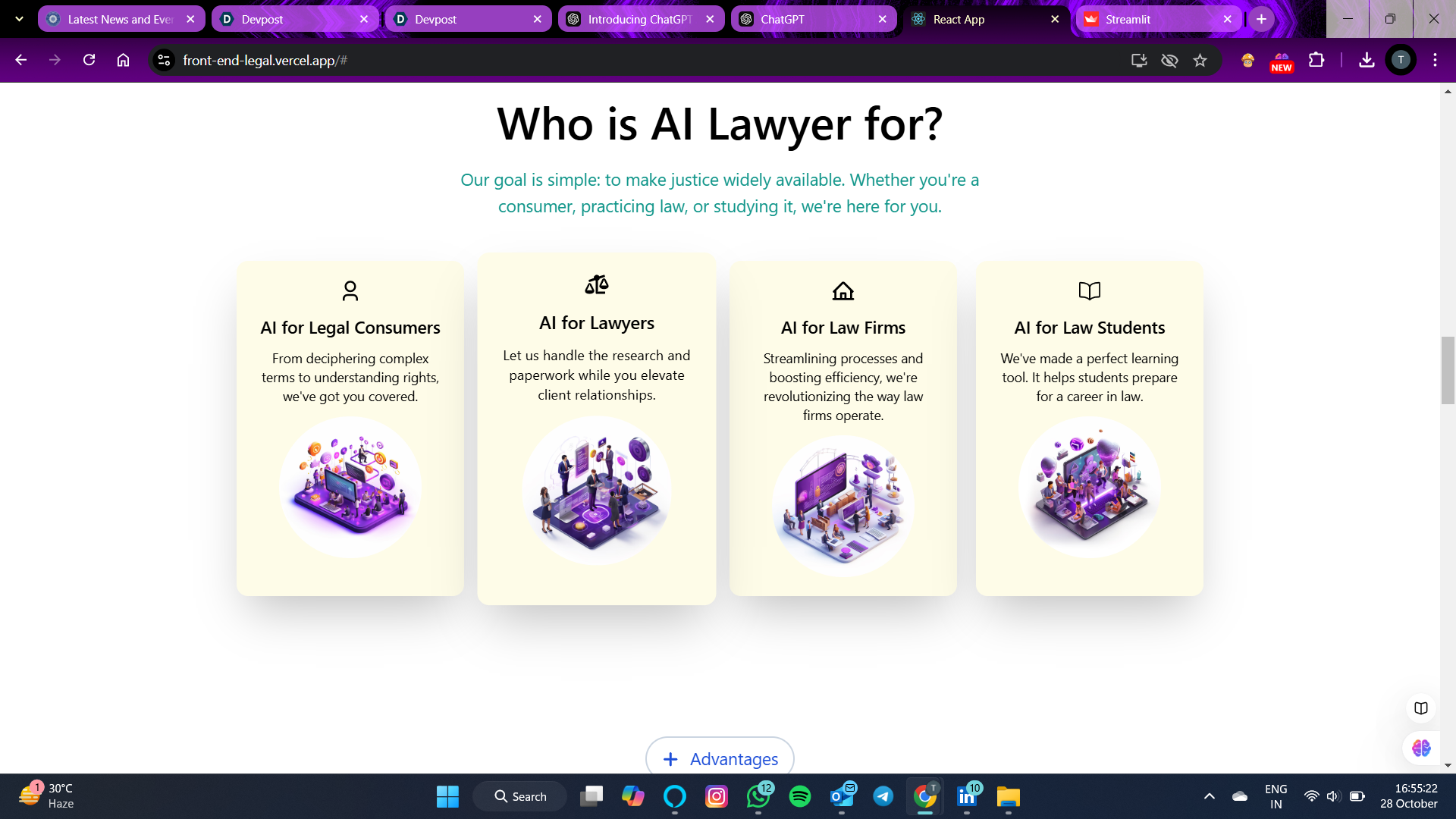
AI Waqeel is designed as a comprehensive legal platform specifically tailored for commercial courts. Here’s a breakdown of its core functionalities:
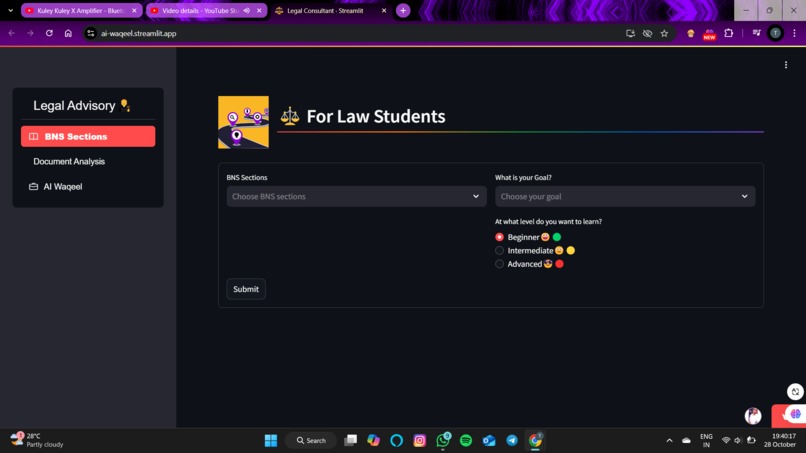
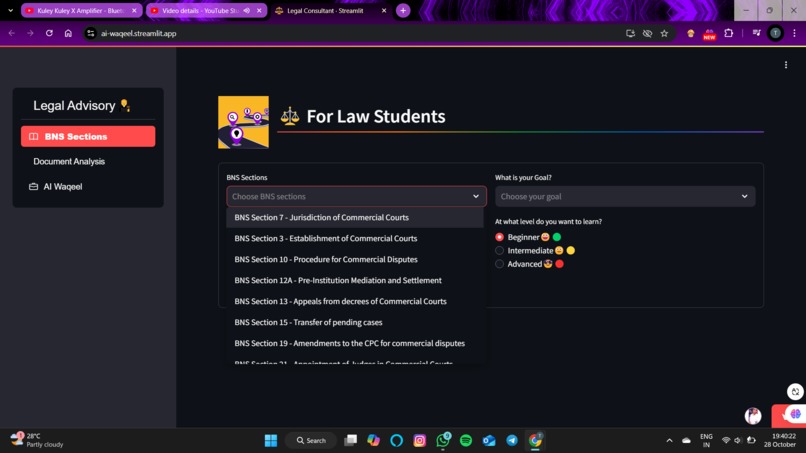
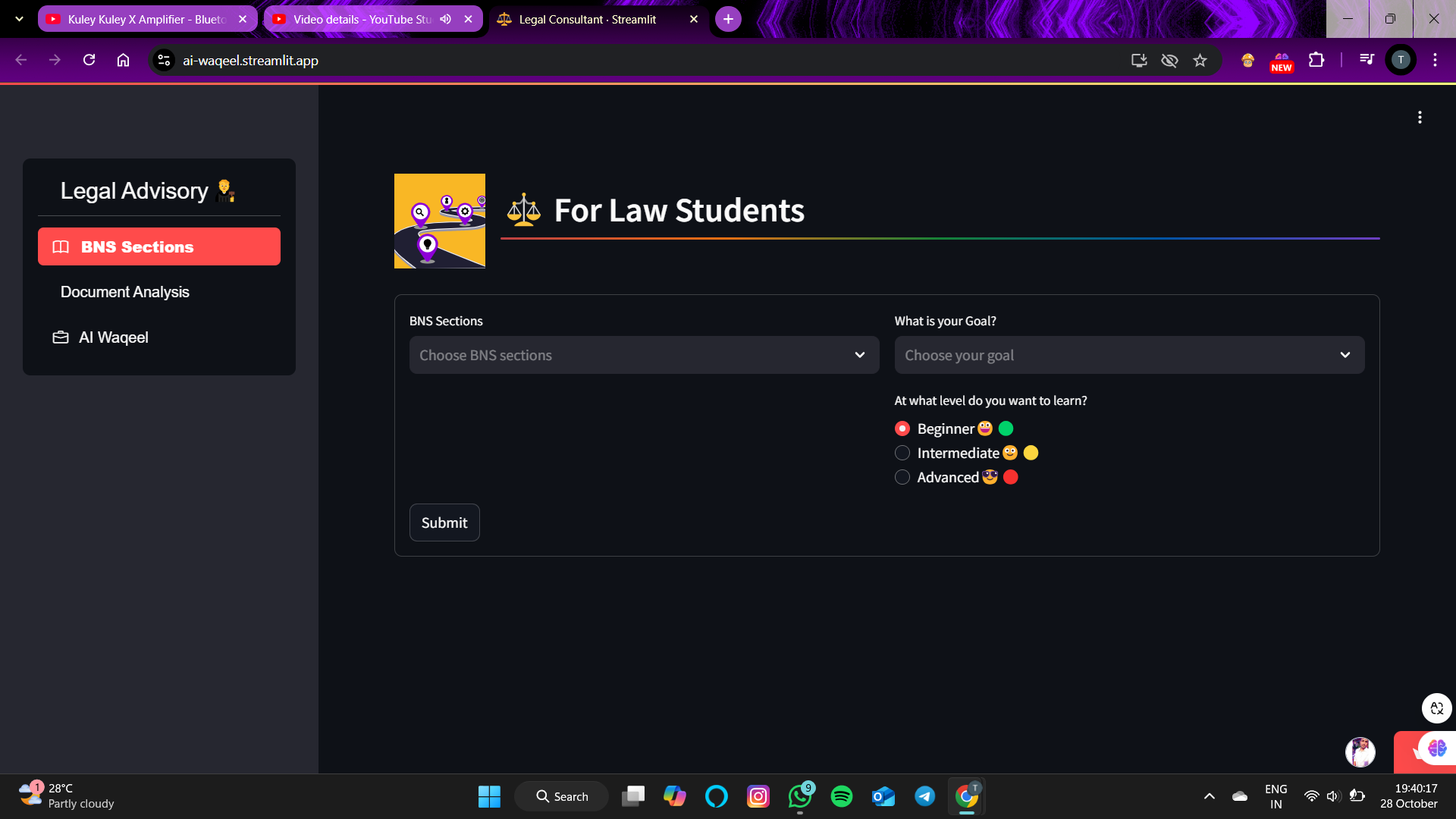
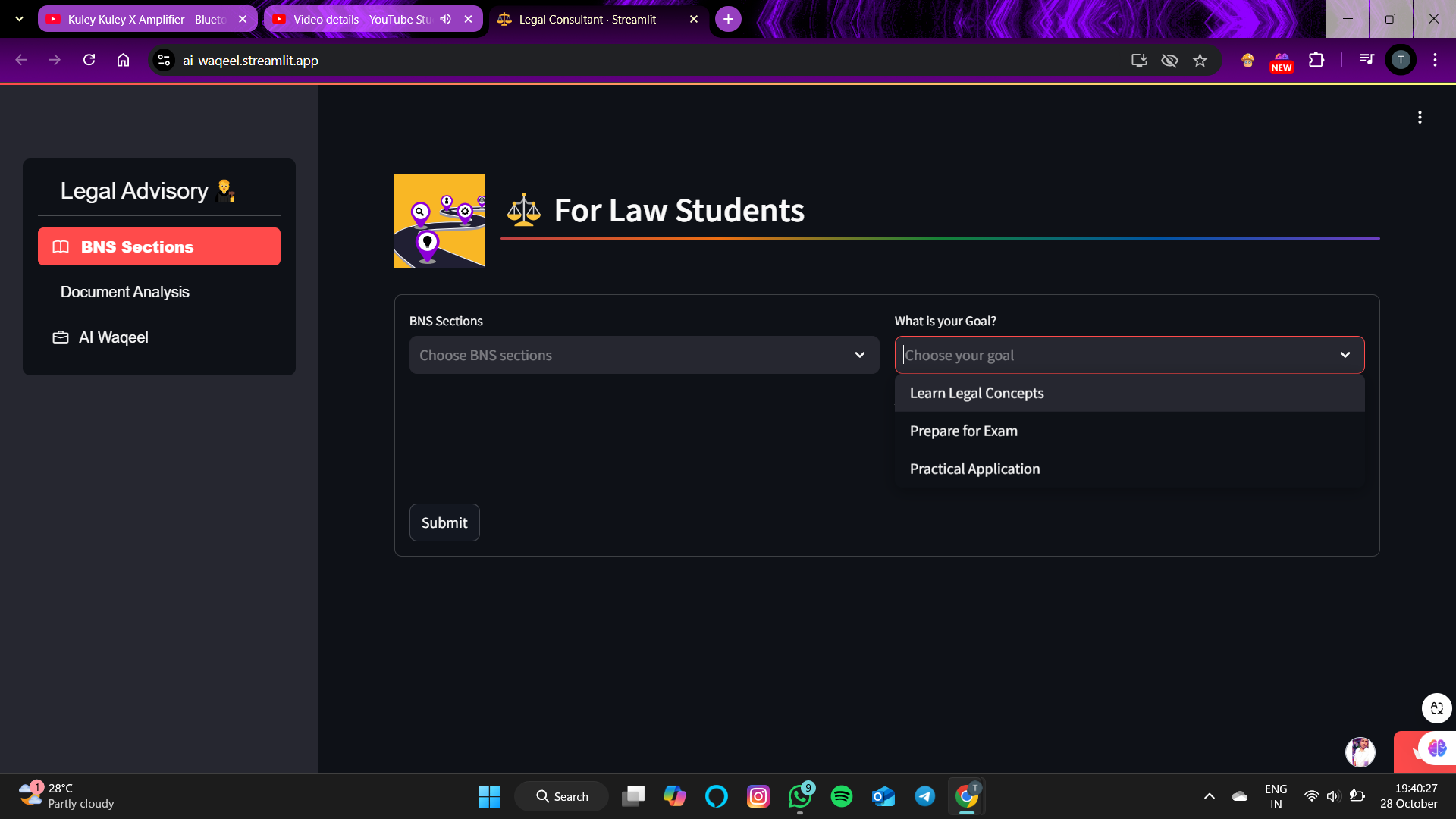
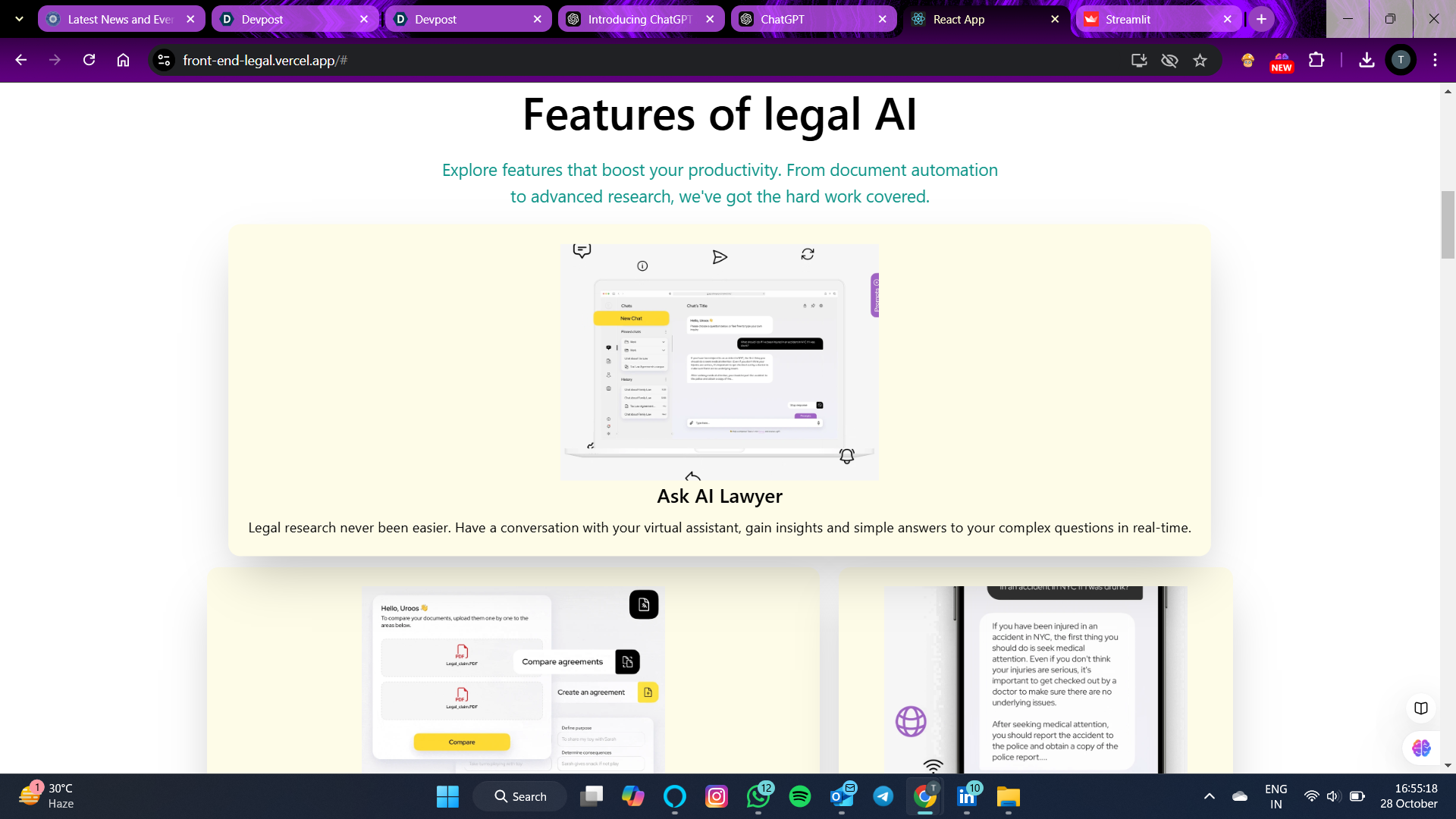
Legal Query Assistance Users can interact with an AI-driven chatbot to seek guidance on a range of legal questions related to commercial law. This includes interpreting complex legal documents, understanding case precedents, or getting advice on legal procedures and terminologies.
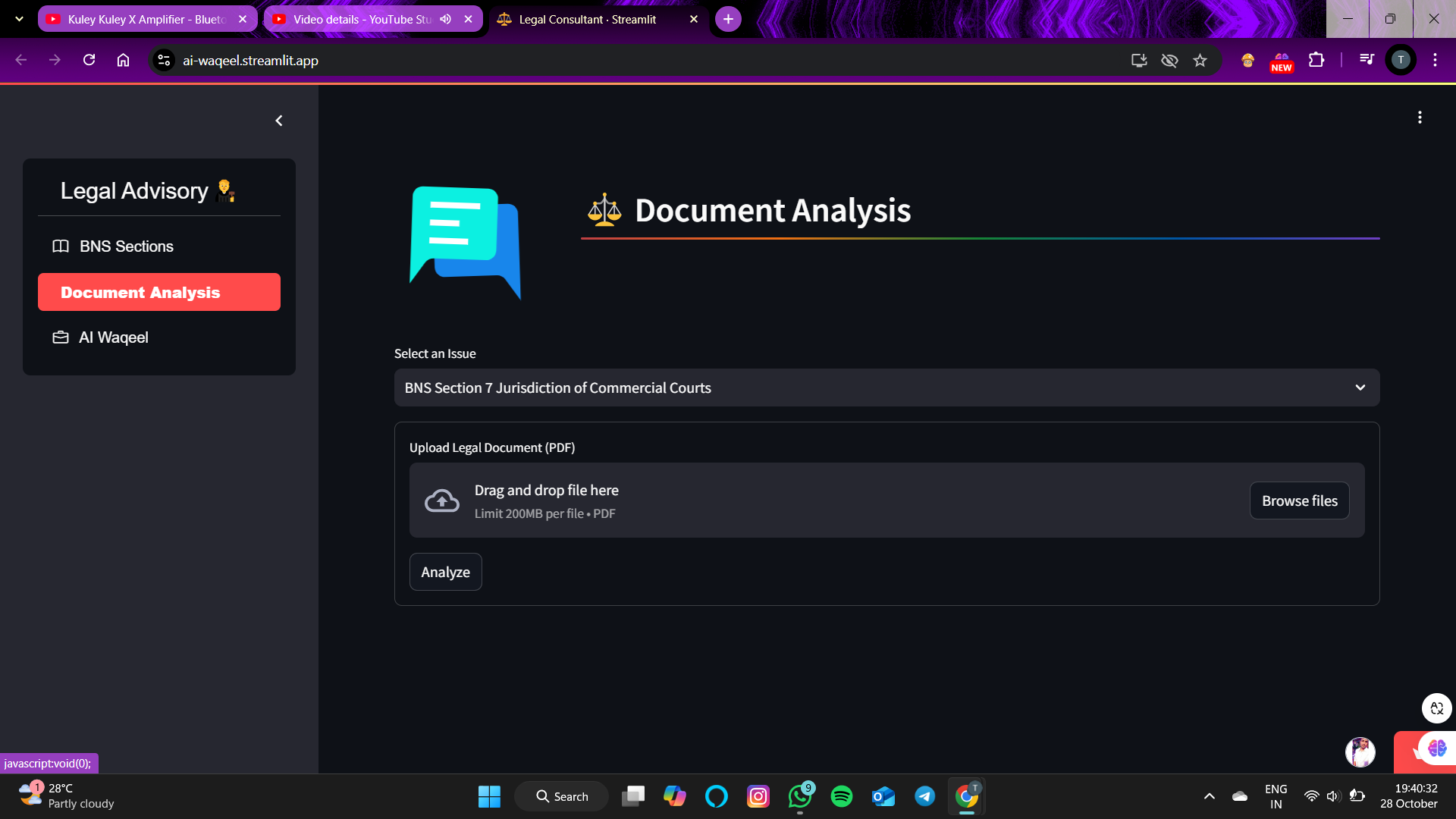
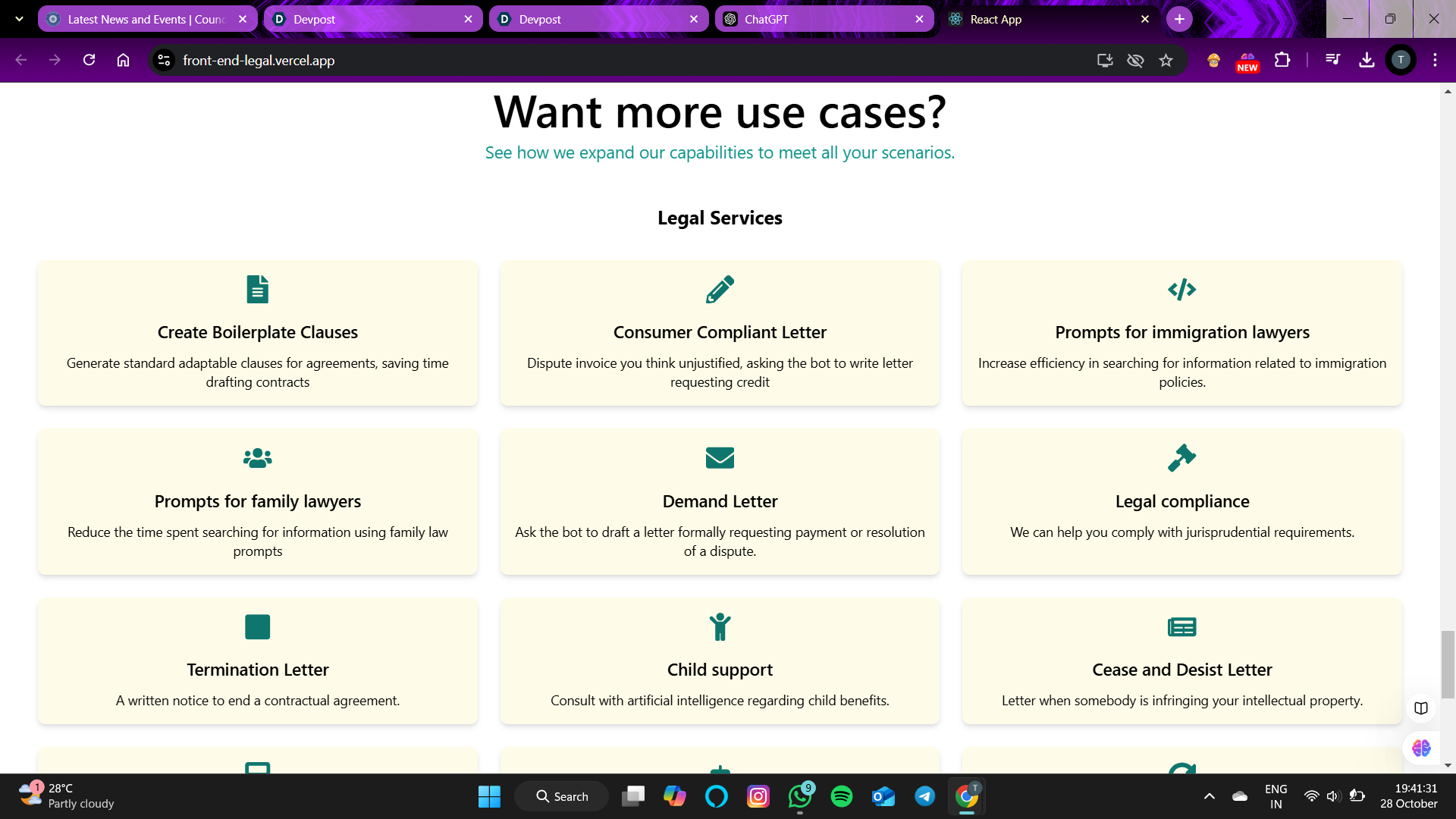
Document Drafting and Review The platform can help draft, review, and refine legal documents, such as contracts, petitions, and affidavits. This feature assists users in preparing documents according to legal standards, making it easier for commercial cases to proceed smoothly in court.
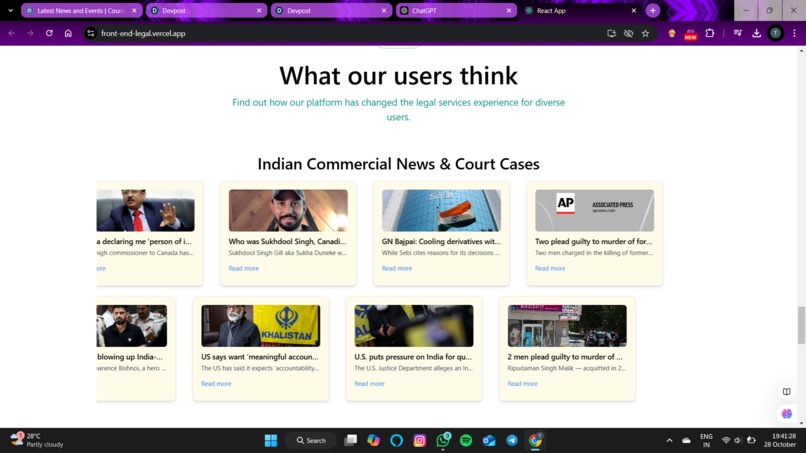
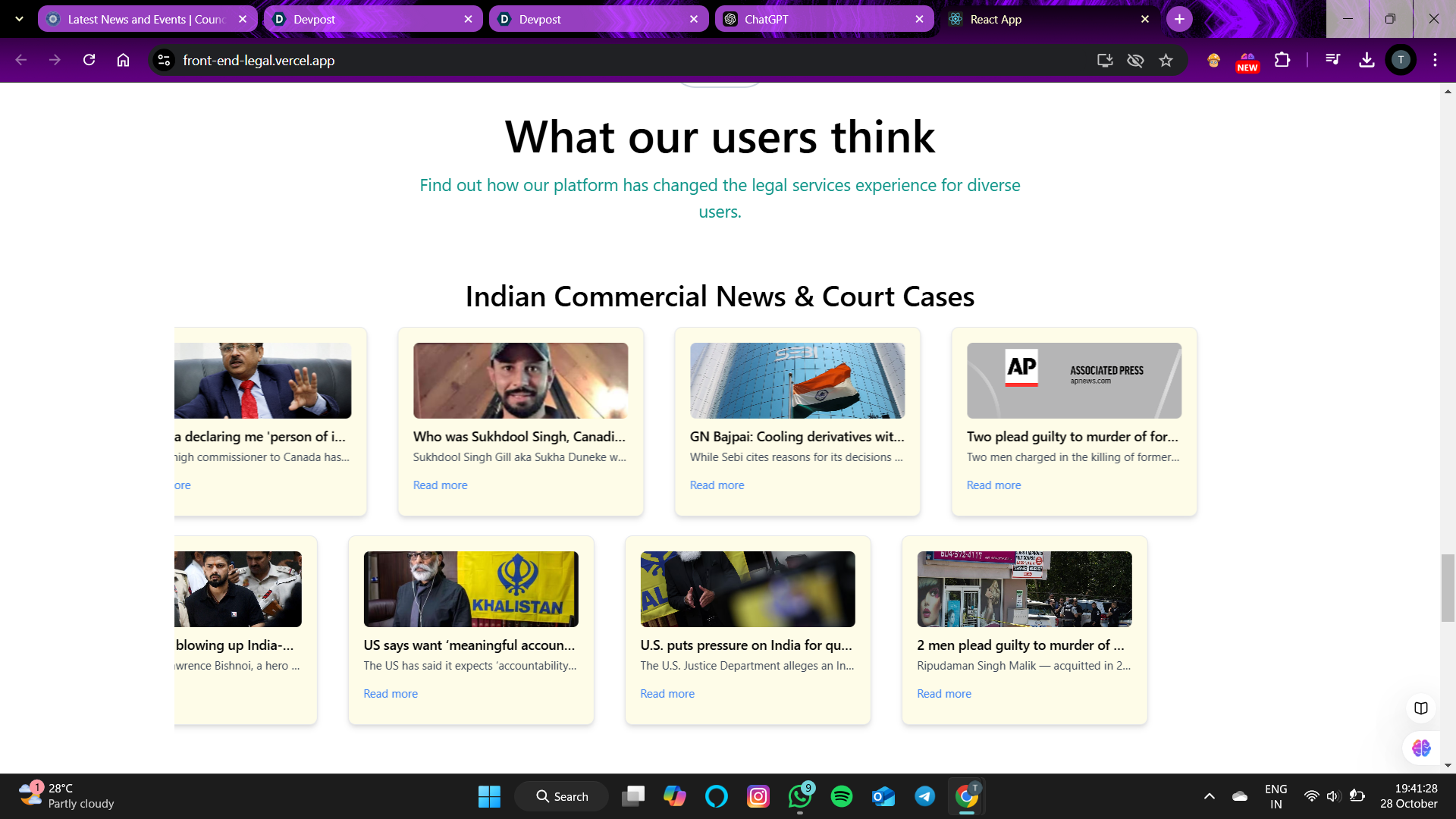
Case Research and Precedent Search AI Waqeel includes a research engine to search through legal databases for relevant case precedents, laws, or statutes. It quickly surfaces relevant legal information, helping users build stronger cases or make informed decisions based on historical rulings.
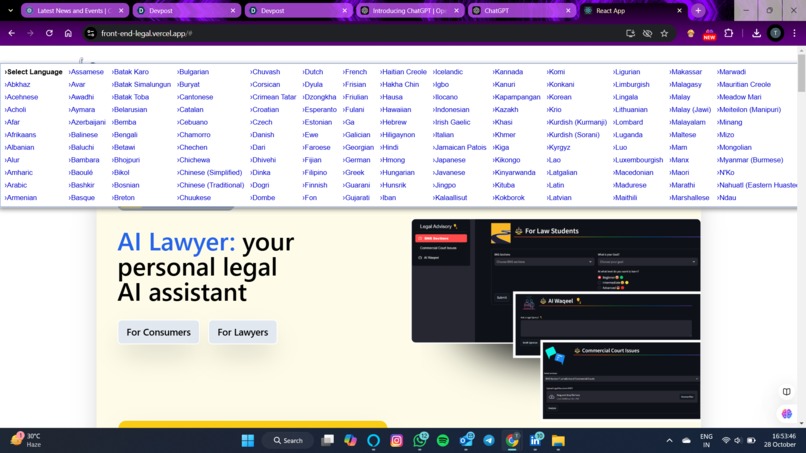
Multilingual Support Using API 47 language support, AI Waqeel caters to users in multiple languages. This is especially valuable in international commercial law, where parties may speak different languages or come from diverse legal backgrounds. It allows businesses from various regions to access legal support without language barriers.
Court Procedure Guidance Users can receive step-by-step guidance on court procedures. For example, if a business is filing a lawsuit or needs to respond to one, the chatbot can guide them through the necessary steps, filing requirements, and deadlines.
Simulated Legal Scenarios For businesses wanting to explore possible outcomes, the AI-driven chatbot can simulate legal scenarios based on existing case data. This feature can help users understand potential legal risks or outcomes in hypothetical situations.
Secure Storage of Legal Documents AI Waqeel offers a secure repository where users can store and manage their legal documents. This feature ensures that users have all necessary paperwork organized and easily accessible for future reference or court proceedings.
Resource Recommendations Based on user inquiries, AI Waqeel can suggest relevant resources, like legal articles, FAQs, or case summaries, to help users deepen their understanding of particular legal issues or concepts.
With these features, AI Waqeel aims to demystify the legal process for businesses, streamline interactions with commercial courts, and ultimately make legal support more accessible, especially for SMEs and international companies navigating complex legal landscapes.
How we built it
Building AI Waqeel involved a mix of cutting-edge technology, strategic architecture, and AI integration to create a robust and user-friendly platform for commercial courts. Here’s an overview of the key steps and technologies used:
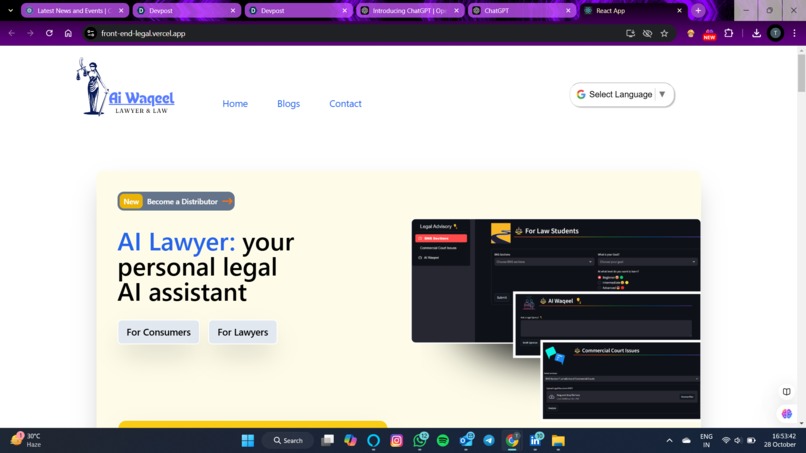
Front-End Development (React)
Framework: We used React to develop a responsive, interactive, and dynamic user interface. React’s component-based structure allows easy customization and scalability, which is ideal for a multi-functional platform like AI Waqeel. UI/UX: Our goal was a streamlined, intuitive UI that users from various legal backgrounds could navigate easily. We focused on accessible design principles and ensured a minimal, clean interface for seamless interactions. Back-End Development (Node.js and Express)
Framework: The backend is powered by Node.js and Express, providing an efficient and scalable foundation to handle multiple requests and manage user sessions. API Integration: We used Express to create APIs that handle user interactions with the chatbot, document processing, and database operations, making the system highly modular and scalable. Database Management (MongoDB)
Database: MongoDB was chosen for its flexibility in handling unstructured data and document-oriented storage, which suits legal document storage and retrieval. Data Security: We implemented encryption and user authentication to ensure the secure storage of sensitive legal information, addressing the privacy requirements of legal professionals and businesses. AI-Driven Chatbot Integration (LLaMA/Gemini Models)
LLM Selection: We integrated LLaMA and Gemini API as foundational language models. These models provide powerful natural language processing (NLP) capabilities, enabling the chatbot to understand complex legal language and respond accurately. Fine-Tuning: We fine-tuned these models on datasets specific to commercial law, legal documentation, and court processes, enhancing the chatbot’s accuracy and relevance in handling legal inquiries. Language Support: Using API 47's multi-language capabilities, we trained the chatbot to handle inquiries in various languages, making the platform accessible to diverse user groups. Document Processing and Management
Document Automation: We used Natural Language Processing (NLP) techniques to develop features like document drafting, review, and legal clause extraction. Secure Document Storage: MongoDB’s grid file system allows us to securely store and index documents, making retrieval efficient and enabling users to manage their files effectively. Legal Research Engine
Case Law and Precedent Retrieval: We designed a research engine using MongoDB’s powerful querying capabilities and AI models to help users search for relevant legal precedents and case summaries. AI Summarization: NLP summarization techniques assist in providing quick summaries and key points from extensive legal texts, which helps users understand complex case law more efficiently. Testing and Validation
User Testing: We conducted several rounds of testing with legal professionals to validate the chatbot’s responses, document processing, and research accuracy. Feedback was crucial in refining features and user experience. Iterative Development: The platform followed an agile development approach, enabling continuous improvements based on real-time feedback and test results. Deployment and Hosting
Deployment: We deployed the platform on Vercel for front-end hosting, ensuring fast and reliable access. The backend is hosted on a scalable cloud service, optimized to handle high loads securely and reliably. Continuous Integration and Deployment (CI/CD): We set up CI/CD pipelines to streamline updates, improve collaboration, and ensure a stable environment for the platform’s various modules. Through this combination of advanced tech, legal expertise, and user-centered design, AI Waqeel provides a modern solution for commercial courts, aiding businesses and legal practitioners in navigating complex legal landscapes efficiently.
Challenges we ran into
Building AI Waqeel came with a range of challenges, particularly because it involves applying advanced AI and managing sensitive legal information. Here are some of the main obstacles we faced and how we addressed them:
Legal Data Collection and Privacy
Challenge: Compiling a comprehensive legal dataset for training AI models was challenging due to privacy laws and the sensitive nature of legal documents. Solution: We used publicly available legal data, case summaries, and anonymized legal texts to train the AI while strictly adhering to data protection laws. This ensured that the platform could deliver accurate responses without compromising user privacy. Fine-Tuning Language Models for Legal Accuracy
Challenge: Pre-trained models like LLaMA and Gemini are not inherently specialized for legal language, so they needed substantial fine-tuning to handle complex legal terminology and nuances. Solution: We fine-tuned these models on legal-specific datasets, emphasizing commercial law and common court procedures. Additionally, we tested the model extensively with legal professionals to identify any gaps in comprehension or accuracy.
Accomplishments that we're proud of
we won the aicte ide bootcamp held at integral university and are elligible for an investment of 20 lakhs. maybe our problem will get shortlisted for sih24 as its results are pending.
What we learned
Working on AI Waqeel provided us with key insights into AI development, legal tech, and user experience design. Here’s what we learned throughout the journey:
Domain-Specific AI Training is Crucial
We learned that generic AI models, while powerful, require extensive fine-tuning for specialized fields like law. Training LLaMA and Gemini on legal data taught us the importance of domain-specific data for achieving accurate, contextually relevant responses, particularly with complex, nuanced language like legal terminology. Balancing Accuracy with Usability
Striking the right balance between a highly technical platform and one that’s easy to use was essential. Legal users, especially those without a tech background, needed an intuitive, streamlined experience. This reinforced our understanding of user-centered design—listening to user feedback is essential for making complex technology accessible. The Importance of Ethical AI and Data Privacy
Working with sensitive legal data underscored the importance of ethical data practices and robust privacy protections. We learned how crucial it is to prioritize data security and follow data privacy regulations, as users must trust the platform to handle their information safely. It also reinforced the need for disclaimers to guide users on the limits of AI-based legal advice. Challenges in Multi-Language AI Implementation
Implementing multi-language support is more complex than simply translating responses. Each language has its own legal jargon and nuances. This project taught us the intricacies of localization and the need for culturally and contextually accurate translations, especially in a domain as sensitive as law. Iterative Development and Testing Make a Difference
The project underscored the power of an iterative, agile development approach. By continuously refining features based on real-world feedback from legal professionals and beta testers, we improved both functionality and user satisfaction. Regular testing cycles helped catch issues early and gave us a clearer picture of what users truly valued. Adaptability is Key in Legal Tech
Given that laws evolve, maintaining an up-to-date system requires adaptability in both tech and process. This experience taught us the value of building scalable and flexible infrastructure to allow for seamless updates, both in terms of legal content and technical capabilities. AI is an Enhancement, Not a Replacement
One of the biggest takeaways was understanding AI’s role in enhancing human work rather than replacing it. The legal guidance offered by AI Waqeel serves as a helpful resource, but it cannot replace the nuanced expertise of a lawyer. This insight shaped how we framed AI Waqeel as a support tool rather than a replacement for legal professionals. Legal Tech is a Growing, High-Impact Field
Finally, working on AI Waqeel highlighted the transformative potential of legal tech to improve access to justice and streamline court processes. We saw firsthand how AI and tech can bridge knowledge gaps and support businesses and individuals in navigating complex legal systems. These lessons not only enriched our project but also equipped us with invaluable skills and insights that we’ll carry into future projects. Building AI Waqeel was an intensive but rewarding experience that underscored the value of blending AI, user-centered design, and ethical practices to create impactful technology.
What's next for AI Waqeel
With AI Waqeel successfully addressing core needs in commercial courts, there are exciting future directions we can pursue to enhance its functionality, accessibility, and impact. Here are some potential next steps for the platform:
Expanding Legal Domain Coverage
Beyond Commercial Law: Adding support for additional legal domains—like intellectual property, contract law, or employment law—would make AI Waqeel useful to a wider audience. Expanding domain-specific training data and fine-tuning the AI models for these areas could help broaden the platform’s impact. Enhanced Multi-Language Capabilities
Dialect and Jurisdiction-Specific Localization: Going beyond language, we could localize AI Waqeel for specific dialects or regional legal practices within each language. This enhancement would improve its utility for users from different jurisdictions by accommodating regional legal terminology, practices, and regulations. Integrating Real-Time Legal Updates
Automated Legal Data Feeds: By incorporating automated data feeds for new rulings, legal updates, and regulatory changes, AI Waqeel could remain current in real-time. This feature would ensure that users receive the latest information and guidance based on recent legal developments, keeping the platform aligned with changing legal landscapes. Advanced Legal Research Tools
Case Similarity and Prediction Analysis: Using machine learning to find similar cases or predict potential outcomes based on precedent could give users valuable insights into their case’s likely trajectory. Developing such advanced research tools could enhance AI Waqeel’s role as a legal strategy assistant. Detailed Citation System: Enabling users to view and access case citations, statutes, and references within the chatbot’s responses would allow them to explore the legal foundation behind AI-provided advice. Integrating with Court Systems and Legal Databases
Court Data and Filing Integration: Partnering with court systems to integrate filing capabilities or sync with official court calendars could allow AI Waqeel to guide users in real-time case management and help with deadlines or document submissions. Partnerships with Legal Databases: Collaborating with established legal databases like LexisNexis or Westlaw would enable broader access to legal documents, statutes, and case law for in-depth research and analysis.

Log in or sign up for Devpost to join the conversation.