Inspiration
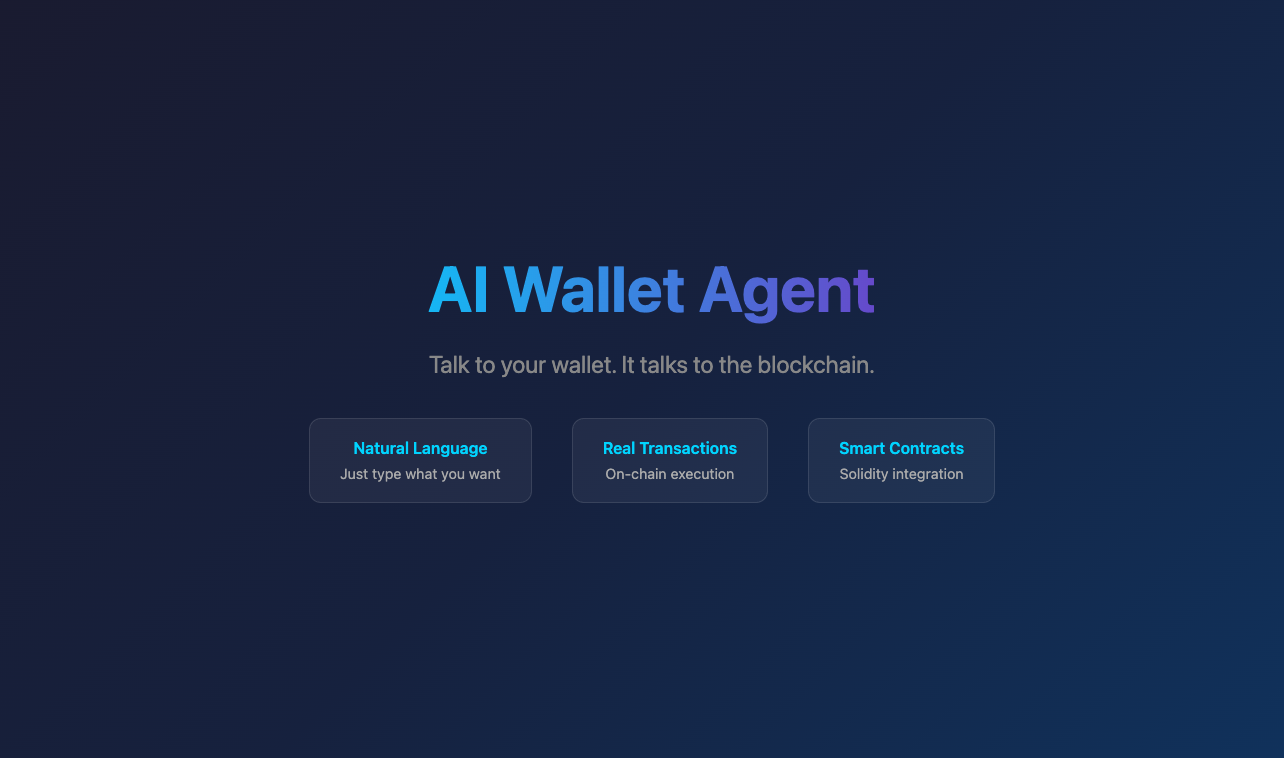
Crypto wallets are intimidating. Most people don't want to learn about gas fees, transaction hashes, or smart contract ABIs - they just want to send money or interact with apps. We thought: what if you could just tell your wallet what to do in plain English and it would figure out the rest? That's how AI Wallet Agent was born.
What it does
AI Wallet Agent is a crypto wallet you can talk to. Type "send 0.01 ETH to this address" or "tip the smart contract" and the AI understands your intent, selects the right blockchain function, and executes a real transaction on Base Sepolia. It can check balances, send ETH, read from smart contracts, and write to them - all through natural conversation.
How we built it
We used Llama 3.3 70B (via Groq's free API) as the AI brain with tool-calling capabilities. The backend is Node.js with Express, using ethers.js to interact with the Base Sepolia blockchain. We wrote a TipJar smart contract in Solidity and deployed it to testnet. The frontend is a simple chat interface built with HTML, CSS, and JavaScript.
Challenges we ran into
Getting the Coinbase CDP SDK to work, initially, the API kept rejecting our credentials. We pivoted to using ethers.js directly which gave us more control. Formatting the AI's tool responses to be user-friendly while still being accurate. Making sure the AI wouldn't hallucinate transaction details.
Accomplishments that we're proud of
The AI successfully executes real blockchain transactions from natural language. We deployed a working Solidity smart contract that the AI can interact with autonomously. The whole system works end-to-end: you type a message, the AI thinks, and a real transaction appears on the blockchain.
What we learned
We learned how AI tool-calling works and how to give an LLM the ability to take real-world actions. We got hands-on experience with Solidity, smart contract deployment, and blockchain transactions.
What's next for AI Wallet Agent
We want to add user authentication and multi-user support. We also want to look into how to properly secure the application if it were to go live.
Built With
- base-sepolia-rpc-tools:-npm
- css-frameworks/libraries:-node.js
- ethers.js-v6
- express.js
- groq-sdk-ai/ml:-llama-3.3-70b-(via-groq-api)-blockchain:-base-sepolia-(ethereum-l2)
- html
- languages:-javascript
- node.js
- solc-compiler-apis:-groq-api
- solidity
- solidity-0.8.19

Log in or sign up for Devpost to join the conversation.