-
-
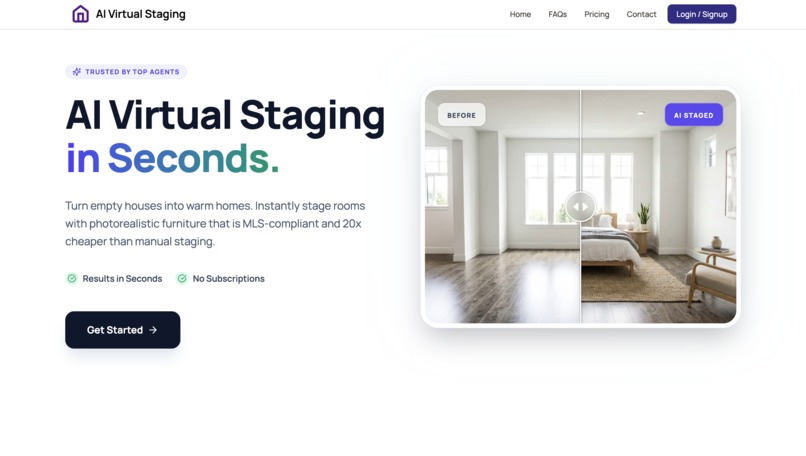
Home page
-
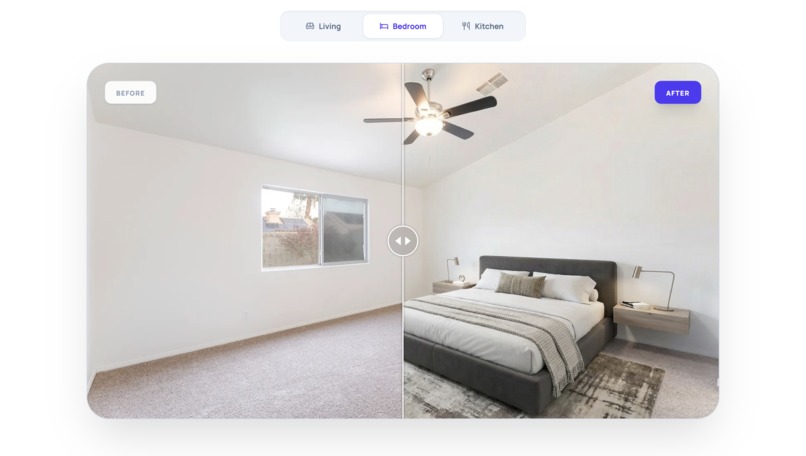
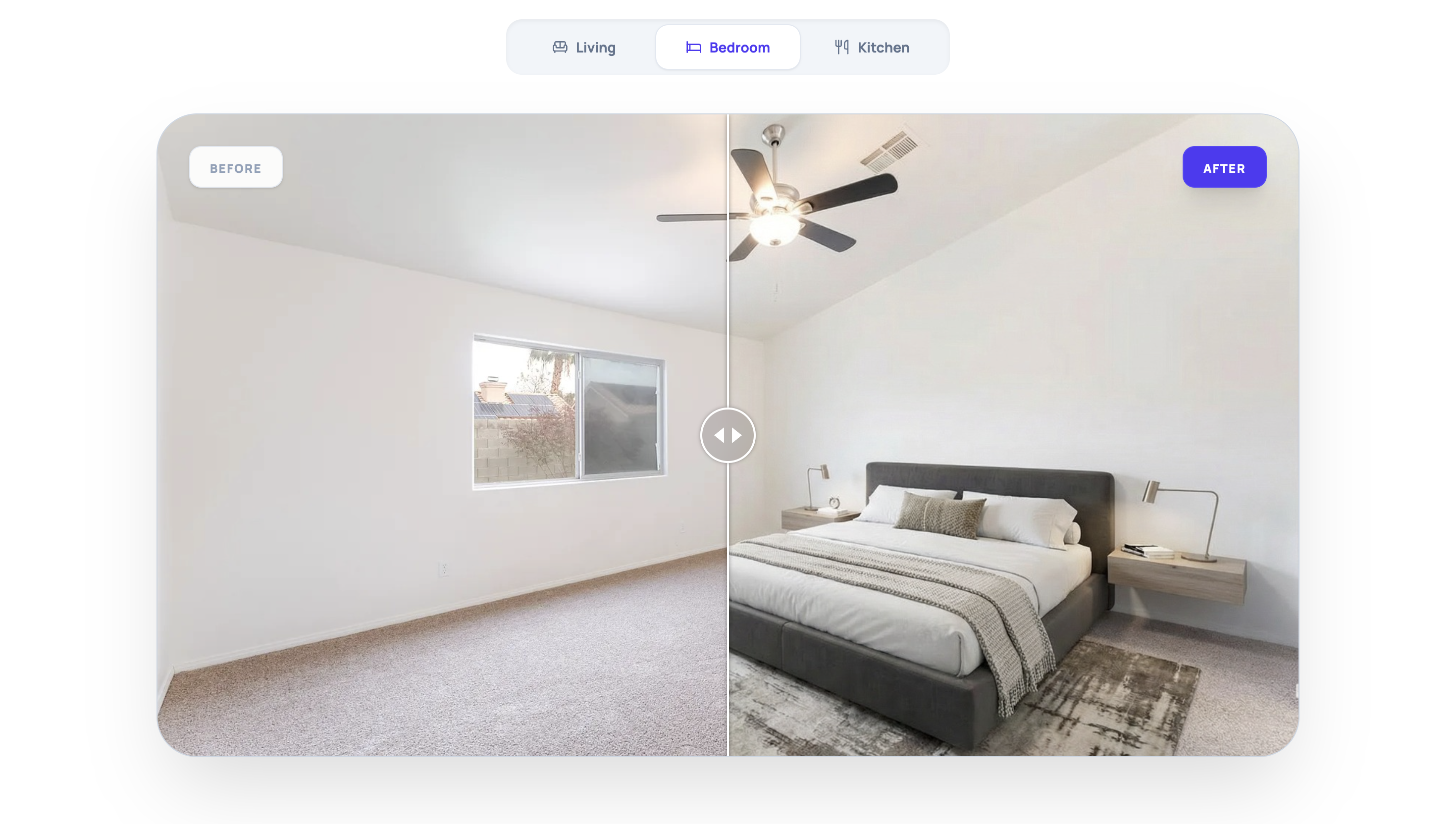
example of ai virtual staging
-
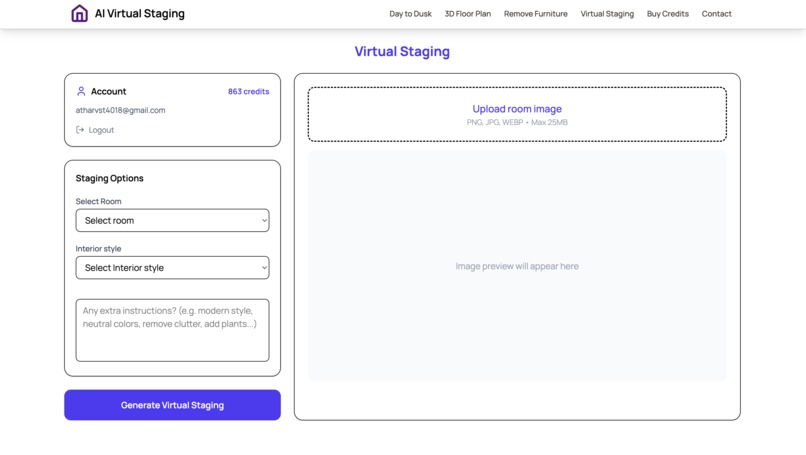
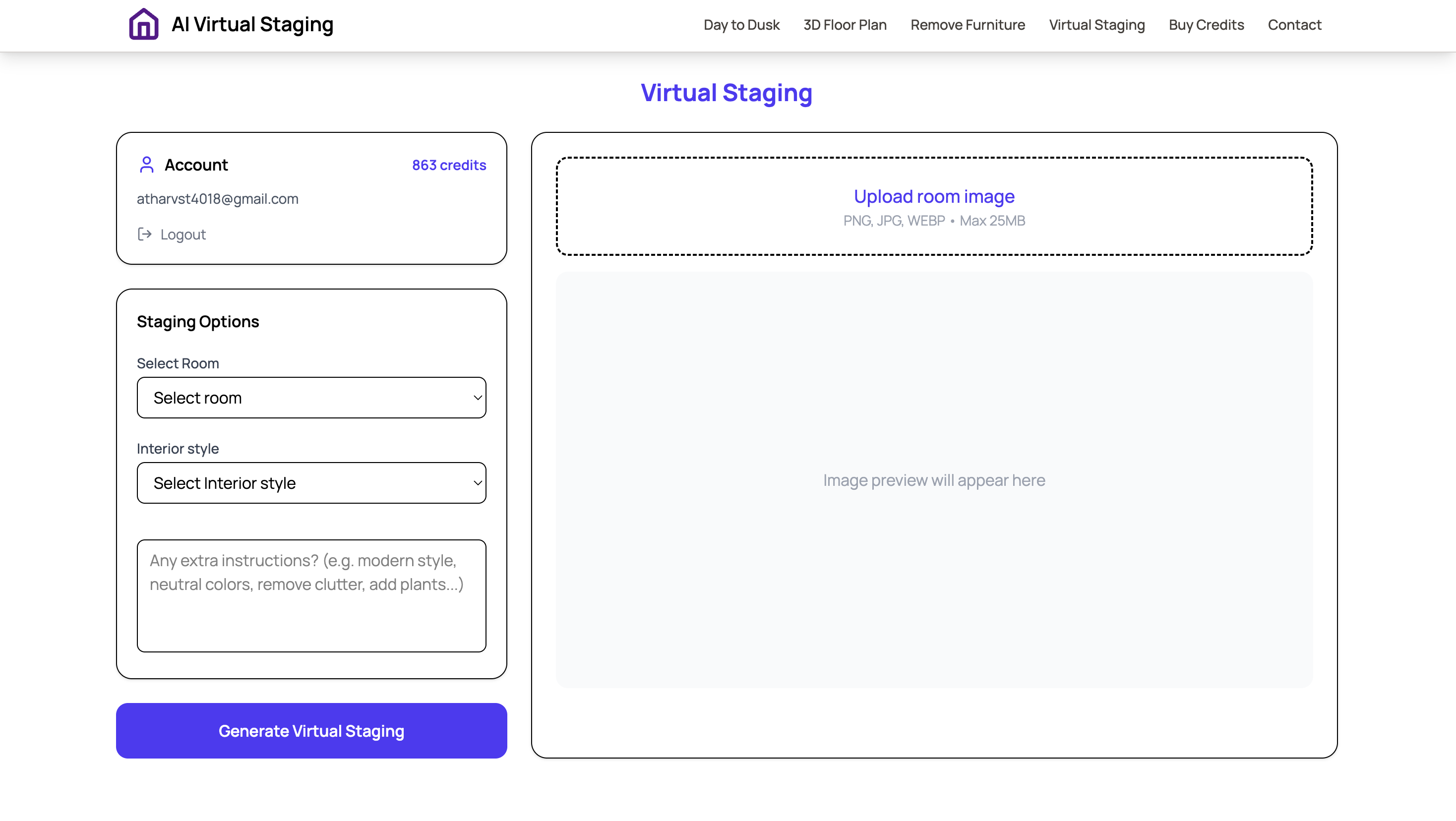
dashboard
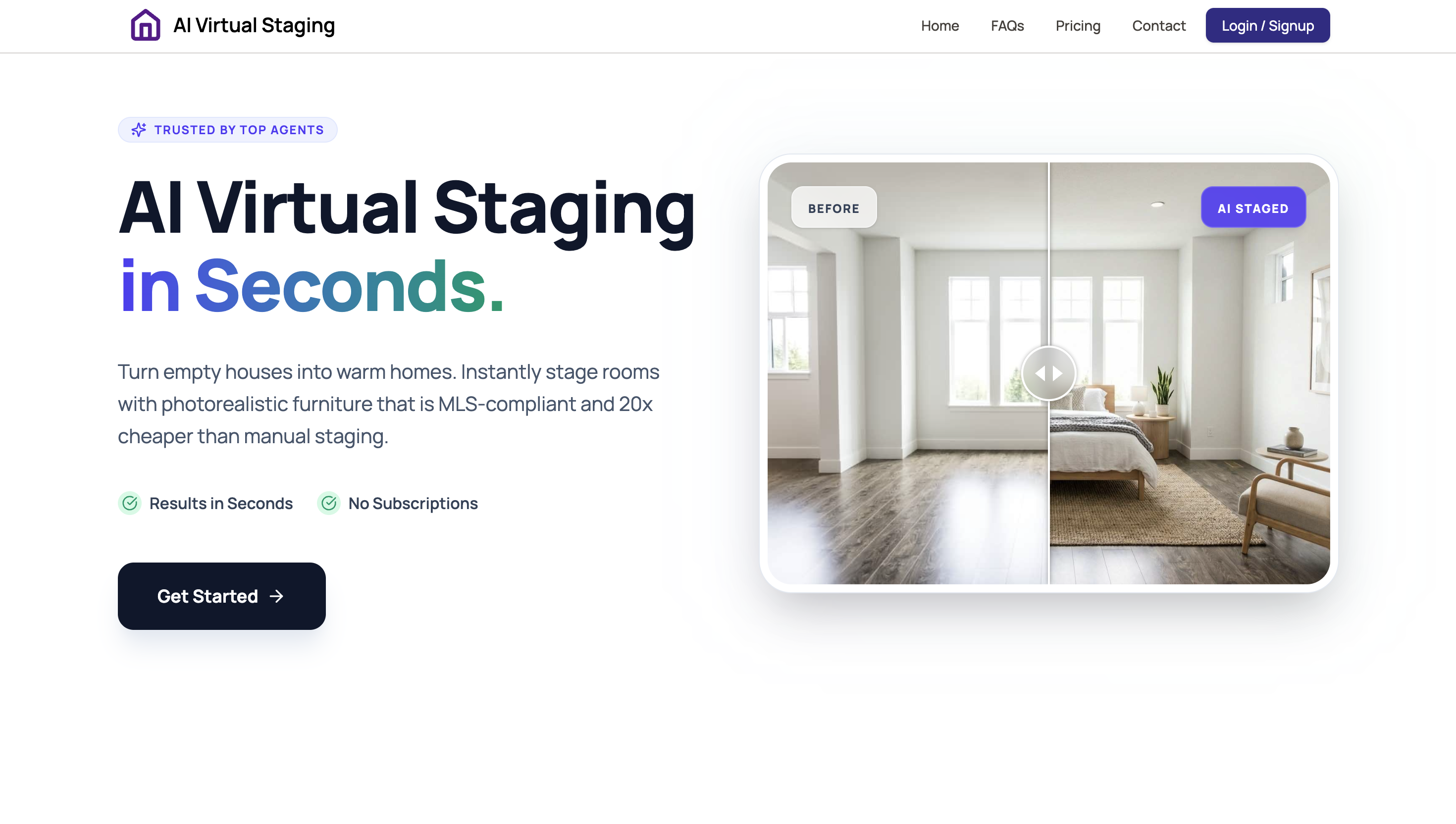
Inspiration
The idea for AI Virtual Staging came from a simple problem in real estate marketing: empty homes often struggle to attract buyers online.
Traditional staging is expensive, slow, and requires coordination with designers or physical furniture teams. For many agents, brokers, and home sellers, this adds unnecessary cost and delays.
I wanted to build a tool that makes professional-quality staging accessible in seconds, allowing anyone to upload an empty room photo and instantly transform it into a warm, buyer ready space using AI. The goal was to make listings look more appealing while keeping the room’s original layout realistic and MLS-compliant.
What it does
AI Virtual Staging helps real estate professionals instantly stage empty or partially furnished rooms using AI.
Users simply:
- upload a room photo
- choose an interior style
- generate a photorealistic staged image in seconds
The platform keeps the room dimensions, perspective, and lighting intact so that the output remains realistic and compliant for real estate listings.
It is designed for:
- real estate agents
- brokers & agencies
- home sellers
- builders & developers
- investors & flippers
How I built it
I built the platform as a full-stack SaaS product with a strong focus on speed and usability
The stack includes:
Next.js for the frontend and landing pages Node.js / Express API for backend processing AI image generation workflows for room staging and furniture insertion image optimization pipeline for fast delivery
A big focus was building a smooth user flow: upload → select style → generate → download
so users can get results in under 30 seconds.
Challenges I ran into
One of the biggest challenges was making the AI generated results feel realistic enough for real estate use.
The outputs needed to:
preserve room geometry keep shadows and lighting believable avoid changing walls, windows, or floor layouts remain MLS-compliant
Another major challenge was balancing image quality with generation speed.
For real estate agents, waiting several minutes creates friction, so performance optimization was extremely important.
Accomplishments that I'm proud of
I’m especially proud of building a tool that solves a clear business problem with immediate visual value.
The before-and-after transformation makes the value proposition instantly understandable.
Some things I’m proud of:
- fast AI staging generation
- realistic furniture placement
- building for a high-intent niche market
- creating a SaaS with clear monetization potential
I’m also proud that the product is built specifically for real estate professionals instead of being a generic AI image tool.
What I learned
This project taught me a lot about building AI products for niche industries.
Some key learnings:
users pay for speed and convenience vertical SaaS products convert better than general tools visual products need instant trust and realism first impressions matter a lot in real estate
What's next for AI Virtual Staging
I am planning to add video generation from images to create marketing video for real estate

Log in or sign up for Devpost to join the conversation.