-
-
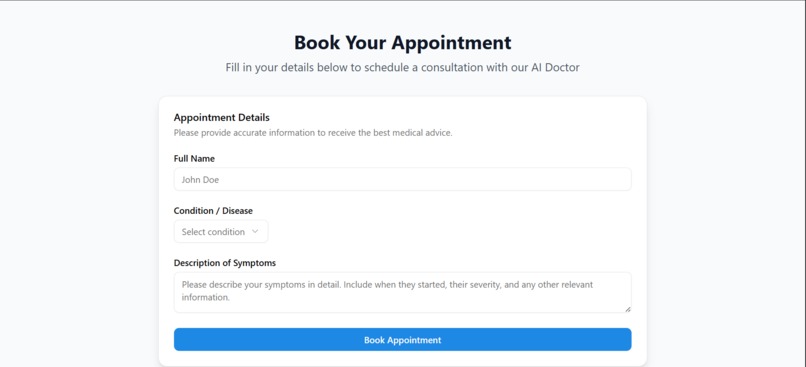
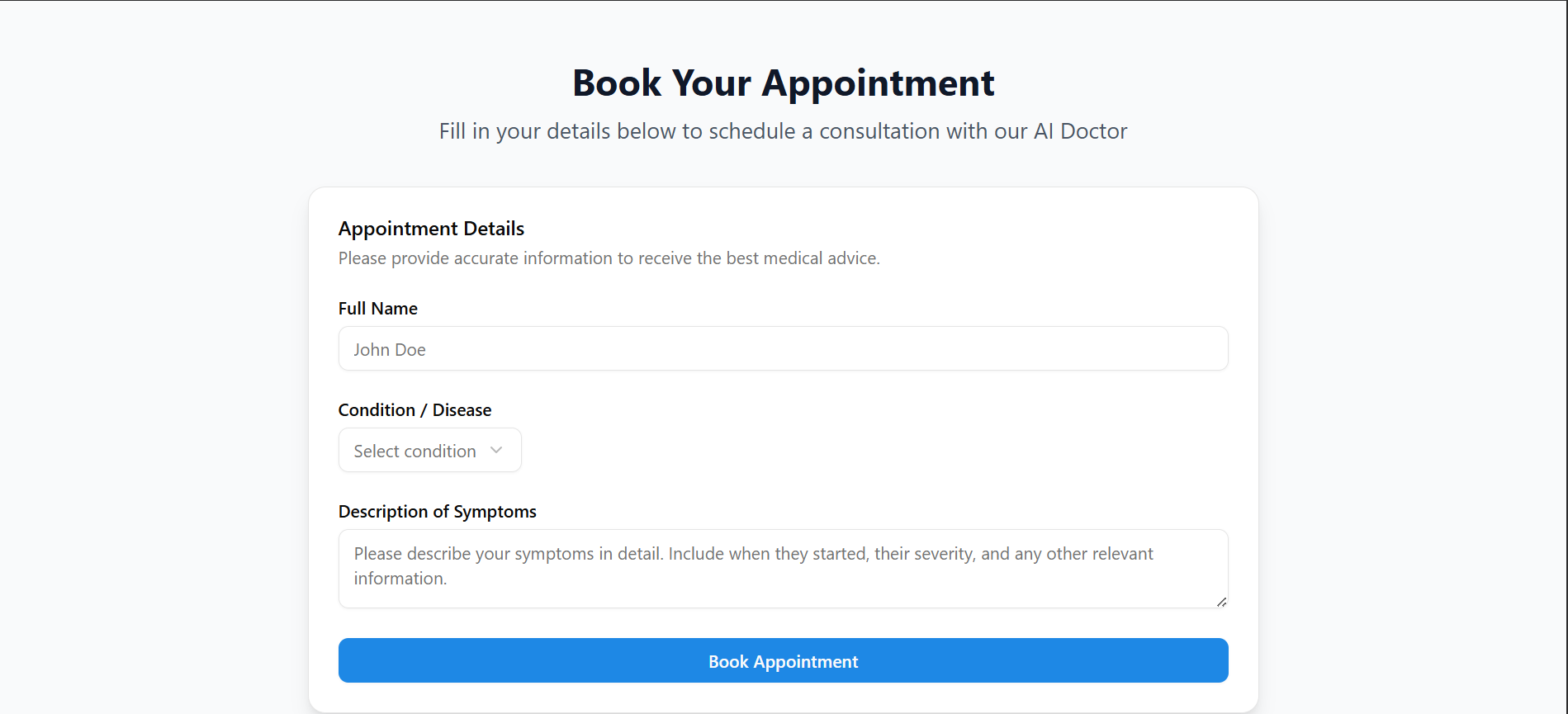
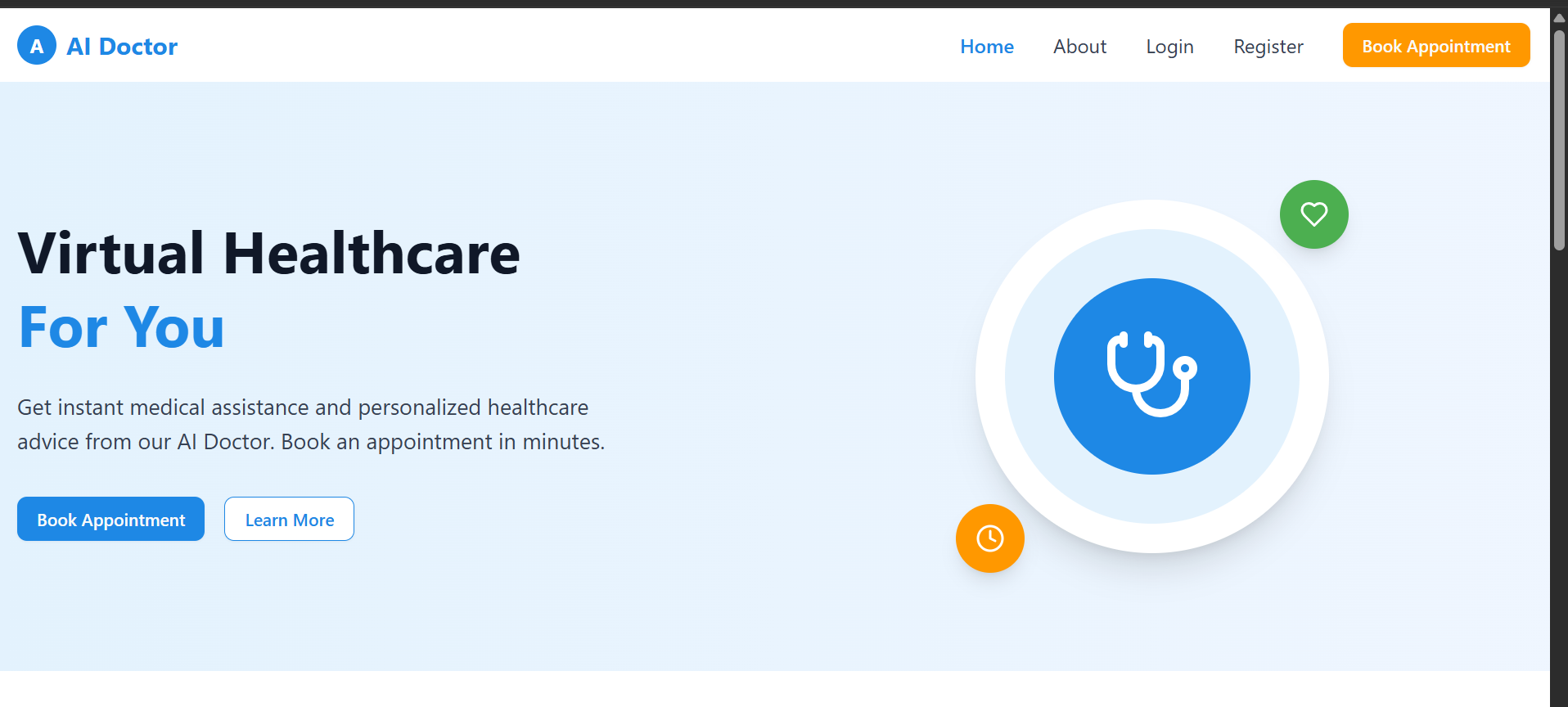
book appointment
-
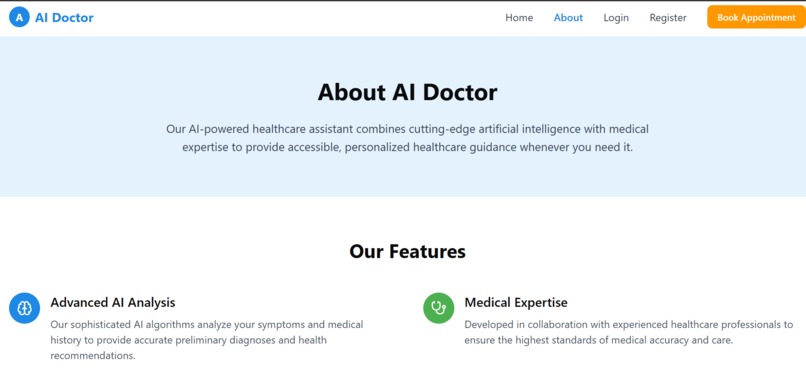
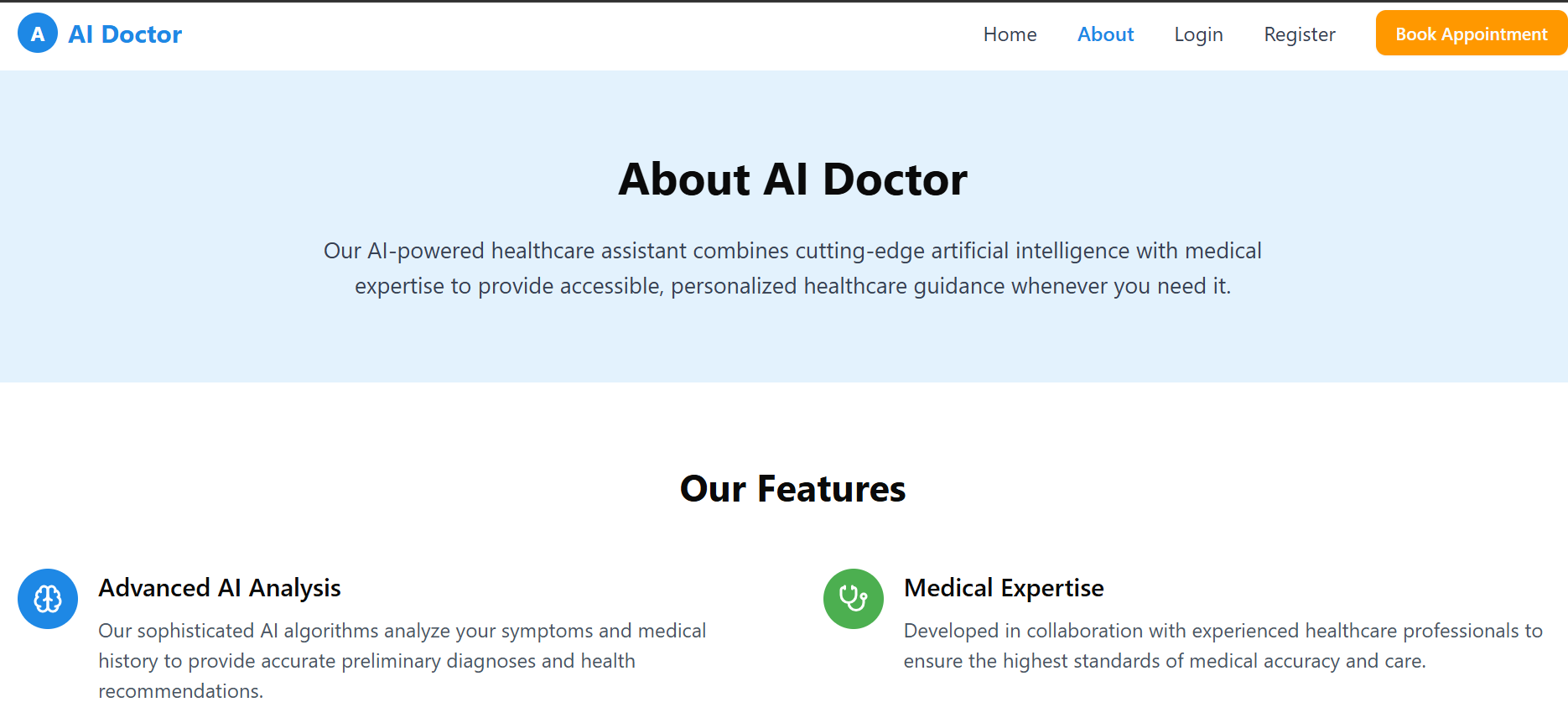
home
-
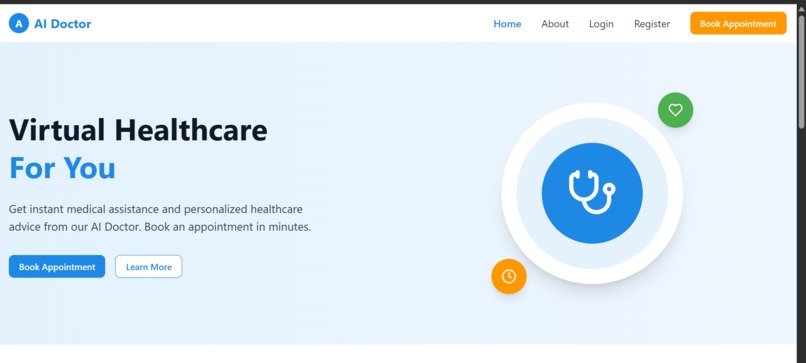
home
-
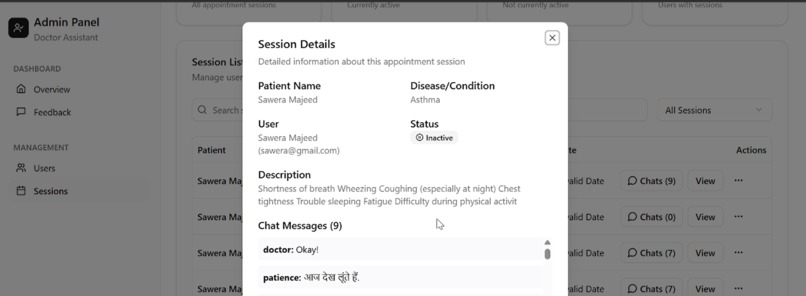
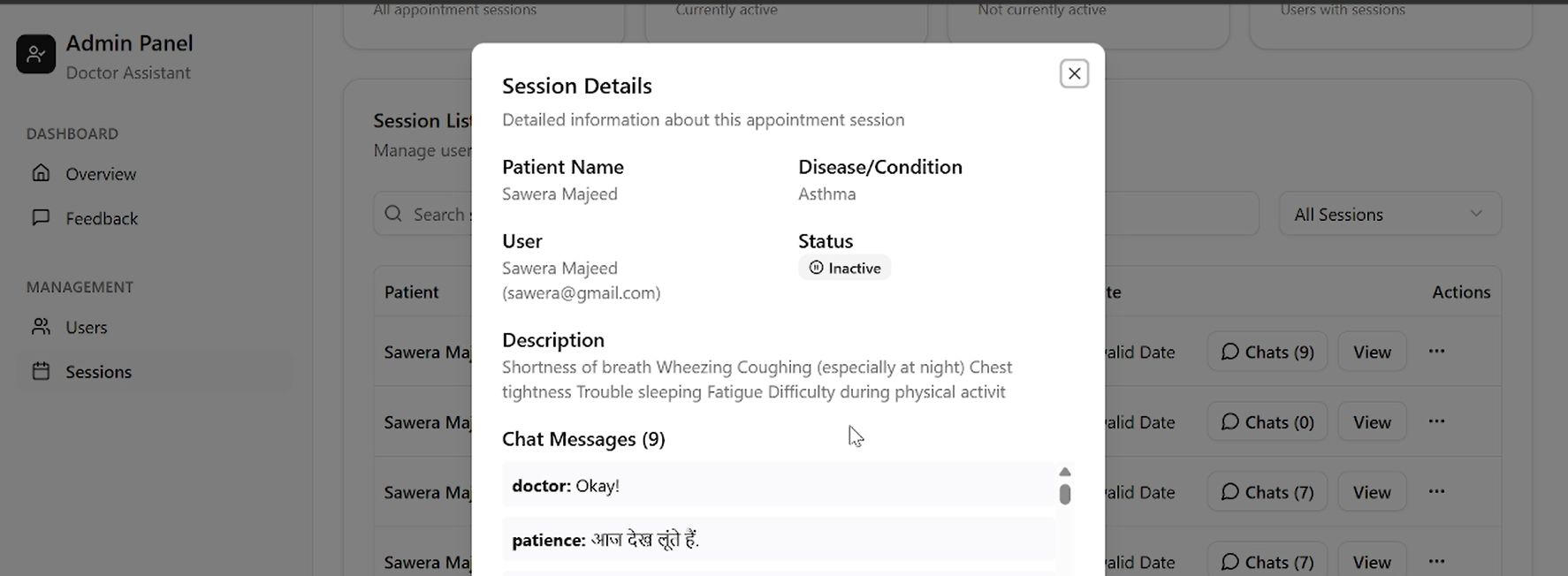
admin panel
-
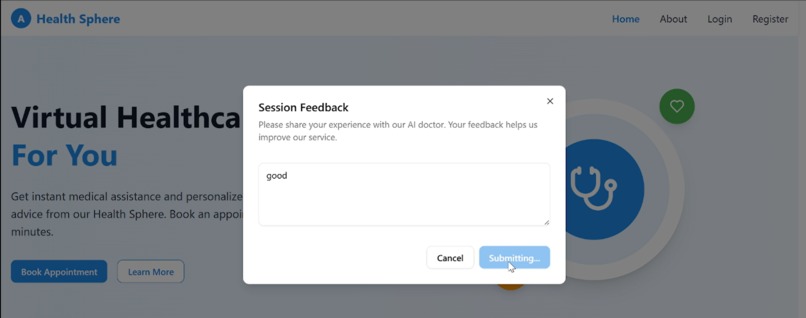
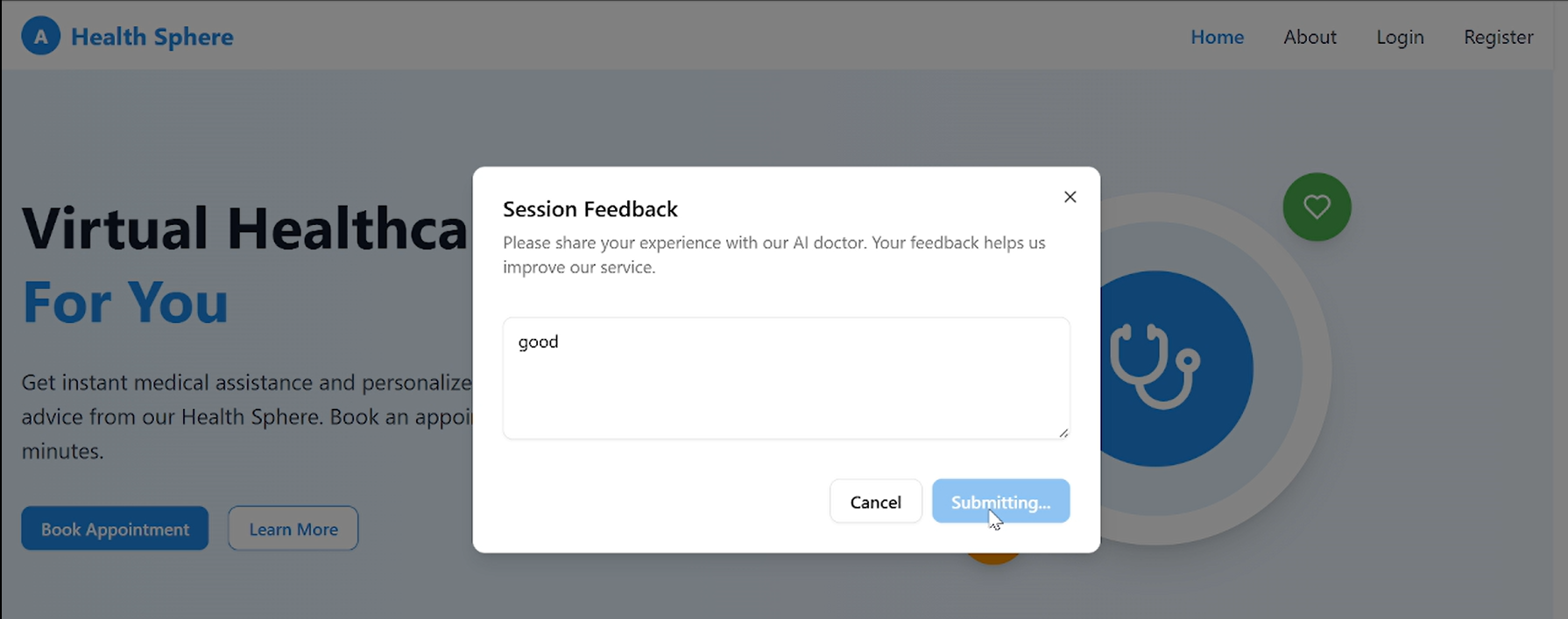
session end and feedback
-
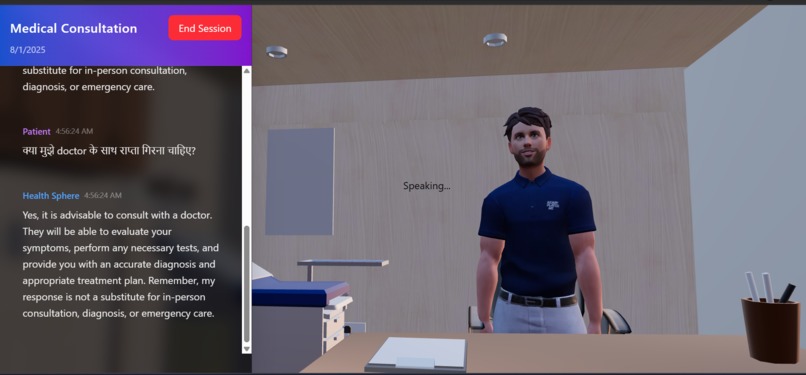
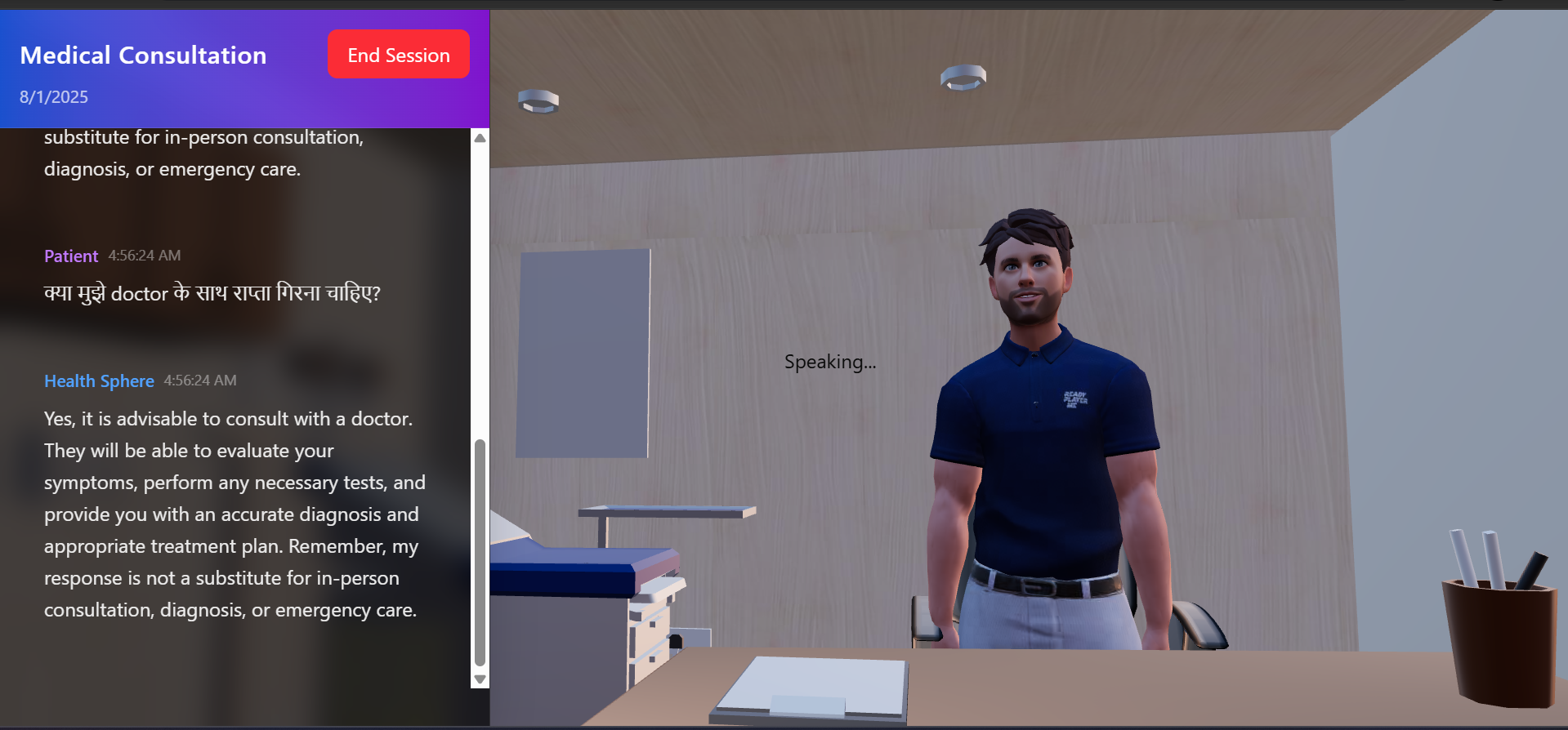
main page (virtual doctor)
Inspiration
In South Asia, millions face delays in accessing qualified medical advice due to overcrowded hospitals, limited doctor availability, and lack of local-language support. Our team wanted to create a solution that bridges the gap between technology and healthcare, offering fast, reliable, and culturally aware medical guidance in an immersive way.
What it does
The AI Virtual Med-Assistant is a 3D interactive virtual doctor that: Speaks and understands local South Asian languages. Uses speech-to-text and text-to-speech for natural conversations. Offers real-time medical Q&A for common diseases like diabetes, hypertension, asthma, and more. Provides an immersive 3D consultation room experience built with Three.js. Includes an intelligent appointment system, analytics dashboard, and HIPAA-inspired privacy practices.
How we built it
Frontend: React + Three.js + React Three Fiber for 3D environments. Backend: Node.js & Express with MongoDB for data storage and authentication. AI Model: Fine-tuned Meta-LLaMA-3.1-8B-Instruct-bnb-4bit using LoRA on South Asian medical datasets via Unsloth. Speech Processing: WebSocket-based pipeline integrating speech-to-text and text-to-speech with lip-sync animation. Security: JWT authentication, bcrypt password hashing, and secure APIs.
Challenges we ran into
Model Optimization: Running a large AI model in a resource-efficient way without losing accuracy. Language Handling: Training the AI to understand regional languages and medical terminology. Real-time Sync: Ensuring lip-sync animations matched speech output without lag. Dataset Curation: Cleaning and formatting medical datasets to fit the fine-tuning requirements.
Accomplishments that we're proud of
Built a fully functional AI medical assistant that works in a 3D virtual space. Achieved 99.3% test pass rate during quality assurance. Fine-tuned an advanced AI model on region-specific medical data. Integrated real-time audio and visual interactivity successfully. Created a system that could improve accessibility to healthcare in underserved areas.
What we learned
How to fine-tune large language models using LoRA efficiently. The importance of cultural and language adaptation in AI healthcare tools. Techniques for building low-latency WebSocket-based communication. Strategies for merging AI models with 3D front-end environments.
What's next for AI Virtual Med-Assistant for SouthAsian Healthcare Challenge
Expand disease coverage beyond the initial 10+ diseases Add multi-language voice output for broader regional use. Deploy as a mobile application for rural and low-bandwidth areas. Integrate symptom image recognition for visual diagnostics. Partner with local healthcare NGOs for pilot programs.
Built With
- express.js
- mango
- node.js
- three.js
- unsolthai


Log in or sign up for Devpost to join the conversation.