-
-
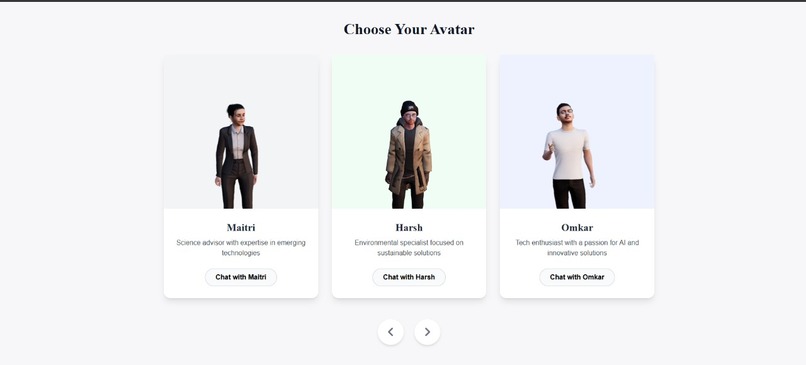
Home page
-
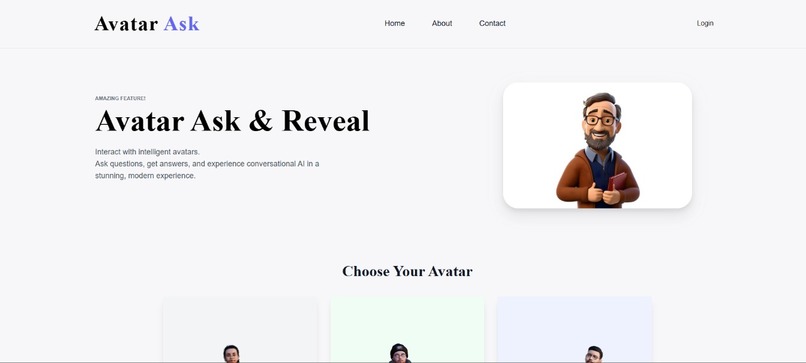
Home page
-
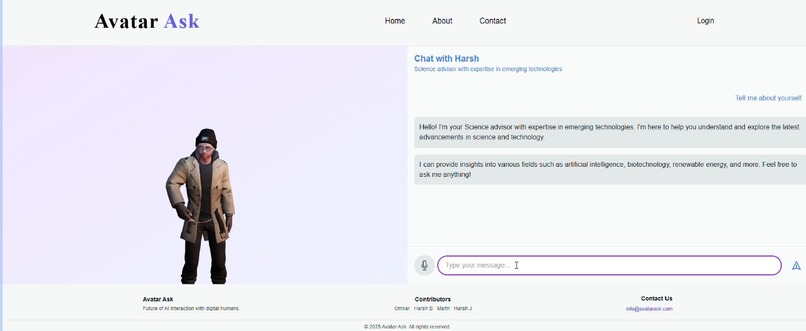
Chat Response
-
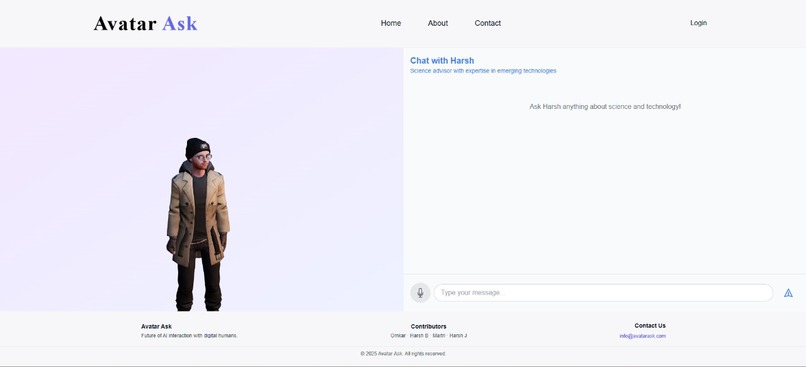
Chat
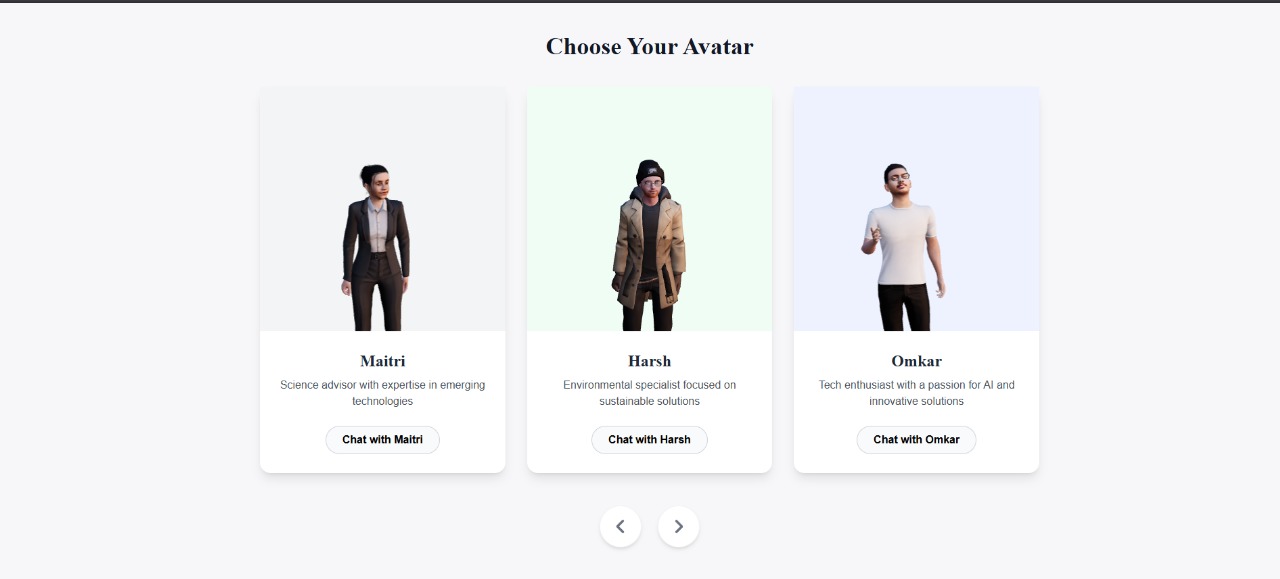
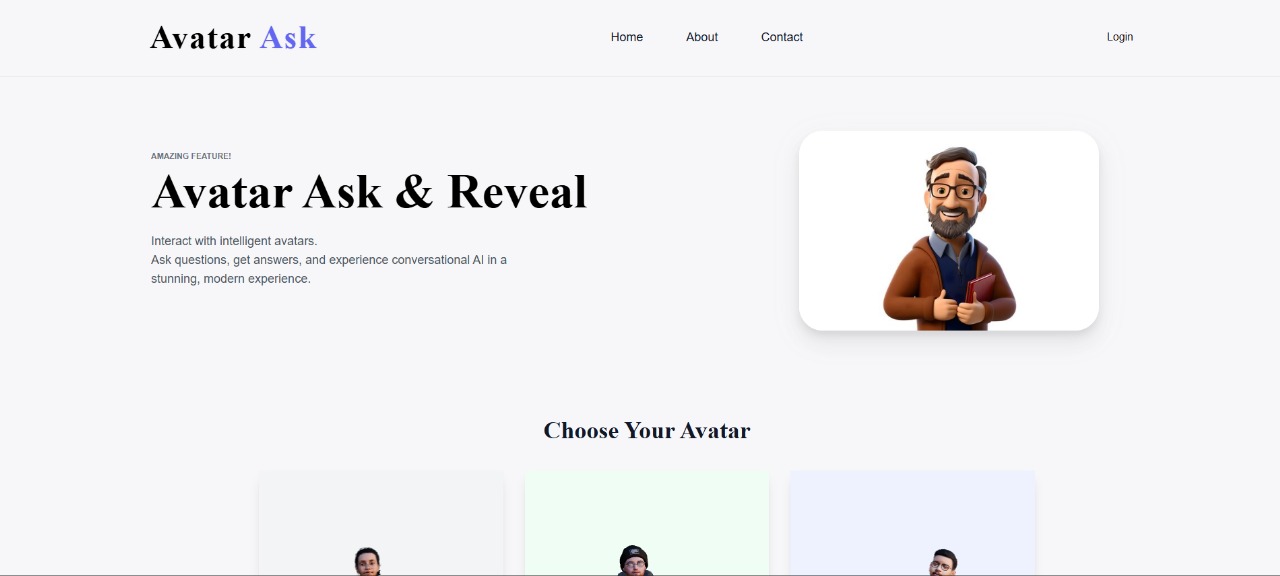
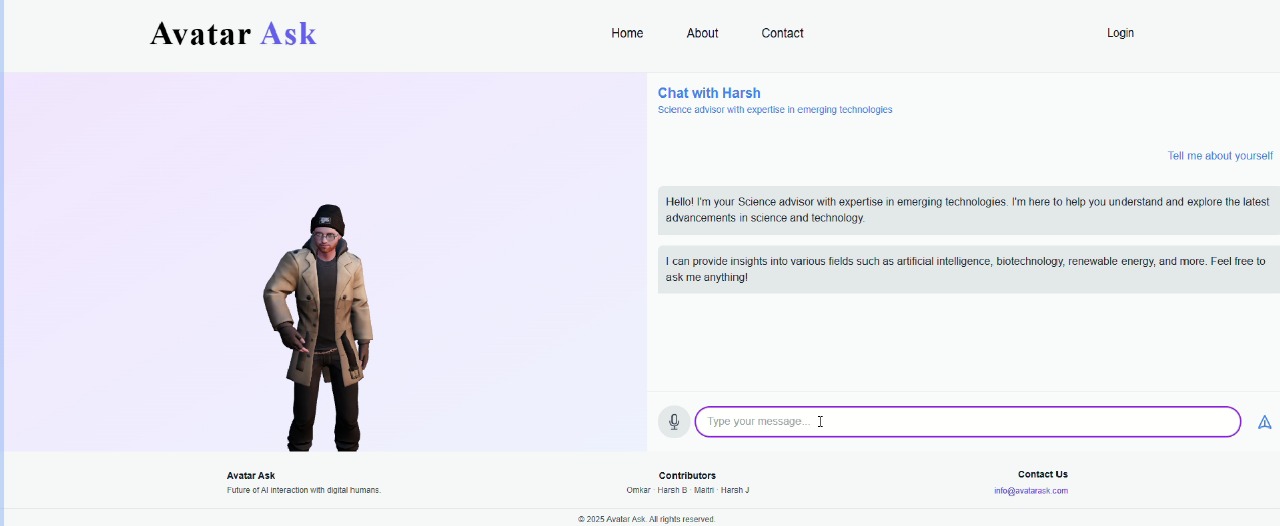
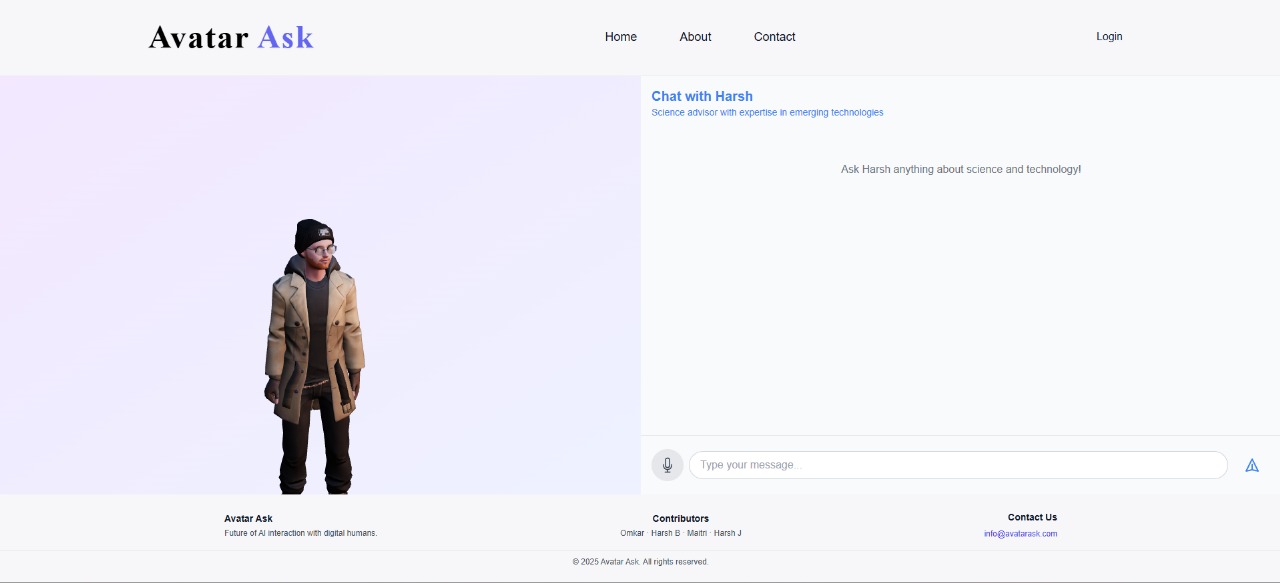
Inspiration
We were inspired by the growing need for more human-like digital interactions in fields like education, customer support, mental health, and virtual collaboration. While voice assistants exist, they often lack visual presence and emotion. We wanted to bridge that gap by building a virtual avatar that not only speaks but also expresses — combining AI intelligence with personality and presence.
What it does
AI Virtual Avatar is an interactive, animated digital assistant that:
Responds to user queries using natural language processing (powered by ChatGPT).
Speaks responses with realistic voice output.
Displays a virtual 3D avatar that lip-syncs and shows expressions while speaking.
Optionally tracks hand gestures or facial cues for more dynamic interaction.
It acts as a friendly AI face for any platform—whether in a customer service kiosk, online classroom, or healthcare portal.
How we built it
Frontend: Built using React.js and Three.js to render the 3D avatar and handle animations.
AI Backend: Integrated with ChatGPT API for understanding and generating responses.
Voice: Used Text-to-Speech (TTS) services like Google TTS / ElevenLabs for realistic voice output.
Avatar Animation: Used BlendShapes and animation libraries for lip-sync and expressions.
Optional Input: Integrated MediaPipe for hand and face tracking to allow gesture-based input or reactions.
Deployment: Hosted the application on Vercel for easy web access and sharing.
Challenges we ran into
Real-time lip-sync accuracy was difficult to implement smoothly across all browsers.
Latency issues with response generation and voice output needed optimization.
Balancing realism and performance for the avatar, especially on lower-end devices.
Gesture tracking integration had some bugs and required additional processing.
Time constraints—fitting everything into a tight hackathon timeline while maintaining quality.
Accomplishments that we're proud of
Built a fully functional AI avatar that speaks and interacts within the hackathon period.
Achieved smooth integration between text generation, voice, and animation.
Created a versatile system that can be adapted for multiple real-world use cases.
Successfully deployed a live demo that’s accessible via browser.
What we learned
Gained hands-on experience in real-time avatar animation and speech integration.
Learned how to optimize AI responses and improve user engagement through personality-driven design.
Understood the importance of performance optimization for web-based 3D applications.
Improved teamwork and adaptability under pressure.
What's next for AI Virtual Avatar
Add emotion detection using facial expression recognition for more personalized responses.
Implement multilingual support to reach a broader user base.
Improve gesture and voice input recognition for more natural interactions.
Build use-case-specific versions for education, telemedicine, and customer service.
Package the solution as a plug-and-play widget for websites and apps.

Log in or sign up for Devpost to join the conversation.