Problem Statement 7:
As AI technologies rapidly integrate into our daily lives, concerns about privacy and security have become more urgent than ever. With the rise of powerful generative AI models, large-scale data collection, and cloud-based deployment, users face increasing risks: sensitive data leakage, identity theft, etc. This hackathon invites participants to explore solutions in the following areas:
- Enhancing the privacy of AI systems themselves (Privacy of AI); and/or
- Using AI to defend user privacy and security (AI for Privacy).
Inspiration:
In this day and age, AI content on social media has evolved to seamlessly replicate authentic video footages. Yet nowadays, AI detection sites only deal with deepfakes. But what about non-deepfake videos that look real. There are groups of users, particularly the elderly, who are not able to discern AI videos from real ones given how hyper-realistic some videos can be. We need to protect these groups of users so as to curb the spread of misinformation and inform them on true reality.
What it does:
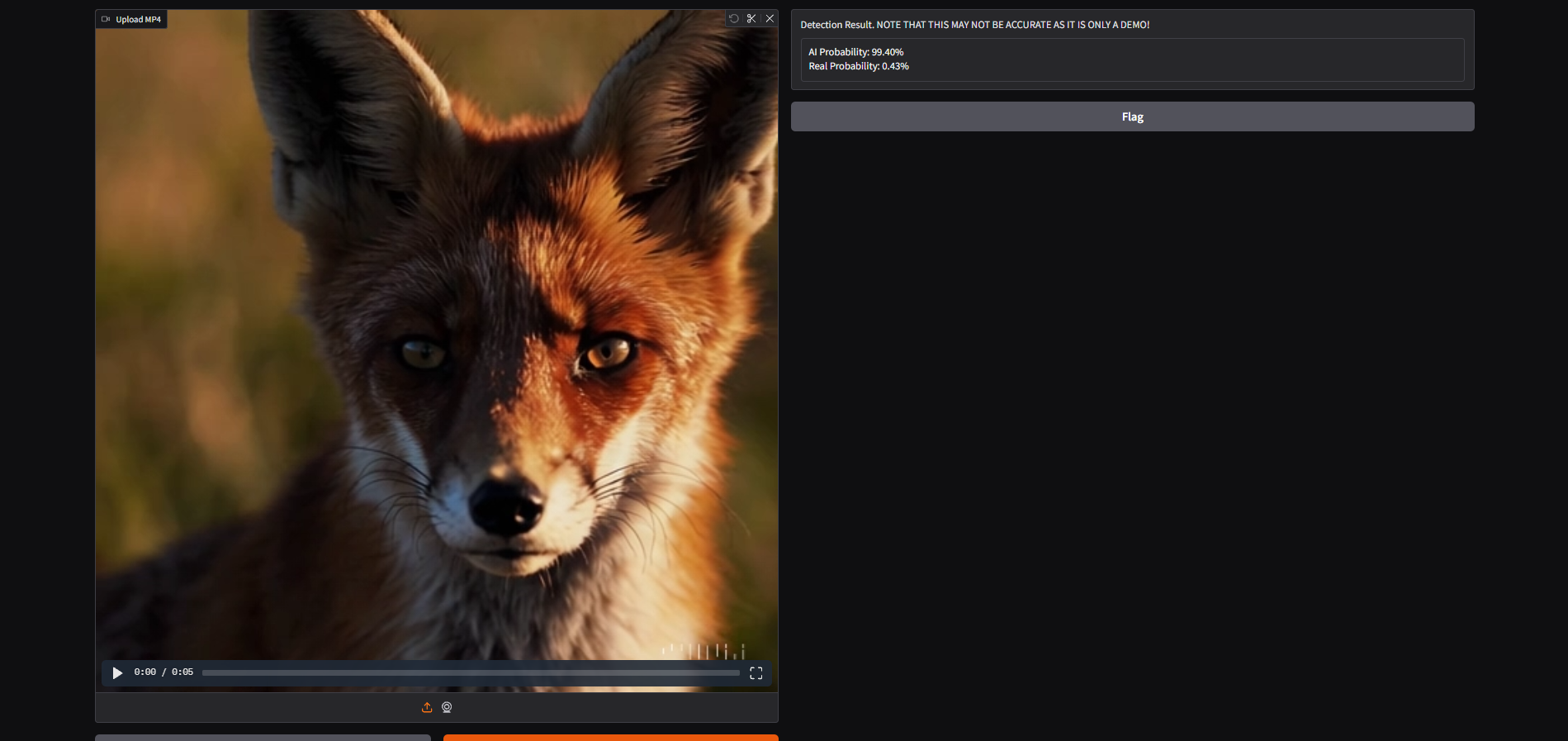
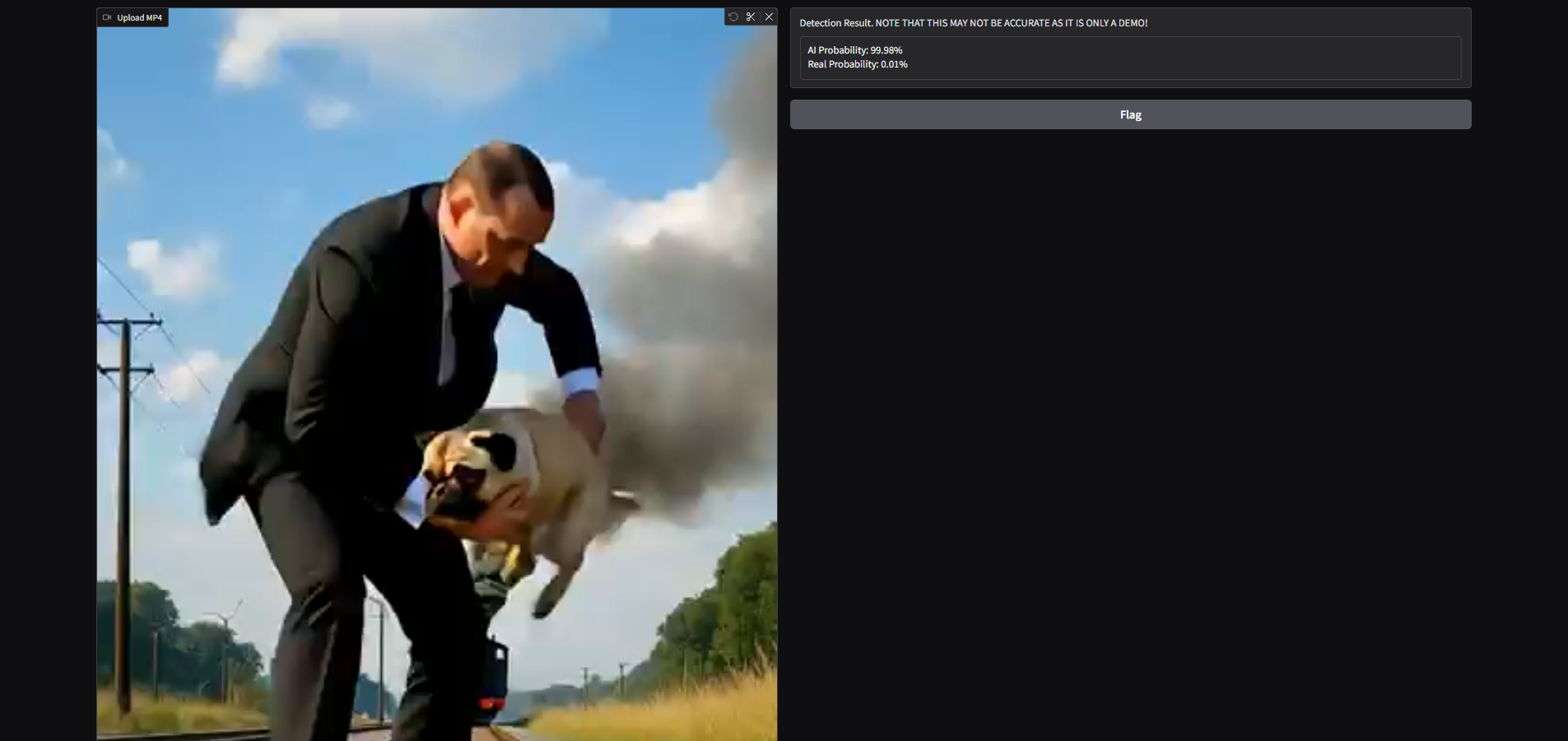
This project is a machine learning-based system designed to detect whether an input video has been AI-generated or is real. By analysing sampled frames from videos, the model classifies each video with probability scores indicating the likelihood of it being AI-generated or authentic.
How we built it:
- Extracts a fixed number of representative frames from any input video.
- Utilizes a pretrained video transformer model fine-tuned specifically for distinguishing AI-generated videos.
- Supports batch training and inference on local video datasets.
- Automatically handles corrupted or missing videos during data processing.
- Outputs interpretable probabilities for real vs. AI-generated content.
- Saves trained model checkpoints for reuse or further fine-tuning.
Challenges we ran into:
- Due to time constraints and limited hardware, we were only able to test about 1000 videos.
- It was also difficult to find good video datasets as our solution is very broad and it aims to tackle AI videos in general. ## Accomplishments that we're proud of:
- Given these constraints, our model managed to fine-tune to a level that is sufficient for a demo version
What we learned:
We learn what goes on in the process of training a model, including data pre-processing, which is probably the most important aspect of machine learning. We also get a glimpse of how fine-tuning the model works and we definitely gain insights on how we can improve for future AI hackathons
What's next for AI Video Detection WebApp:
We will definitely need to fine-tune our model to different video categories instead of only generalising them as AI vs Real.
Additional References:
Model and Sample Videos for Testing: link


Log in or sign up for Devpost to join the conversation.