Inspiration The inspiration for OptiNeuro came from observing how fragmented our digital productivity tools have become. We noticed that people juggle dozens of apps for task management, calendar scheduling, note-taking, and wellness tracking, yet none of these tools truly understand the user's cognitive patterns or work together intelligently.
We were particularly inspired by the concept of a "digital twin" for the human mind - an AI system that could learn your unique cognitive patterns, predict your optimal performance windows, and orchestrate your entire digital ecosystem to maximize mental clarity and productivity. The idea of creating a true "neural operating system" that treats cognitive optimization as seriously as computer operating systems treat resource management became our driving vision.
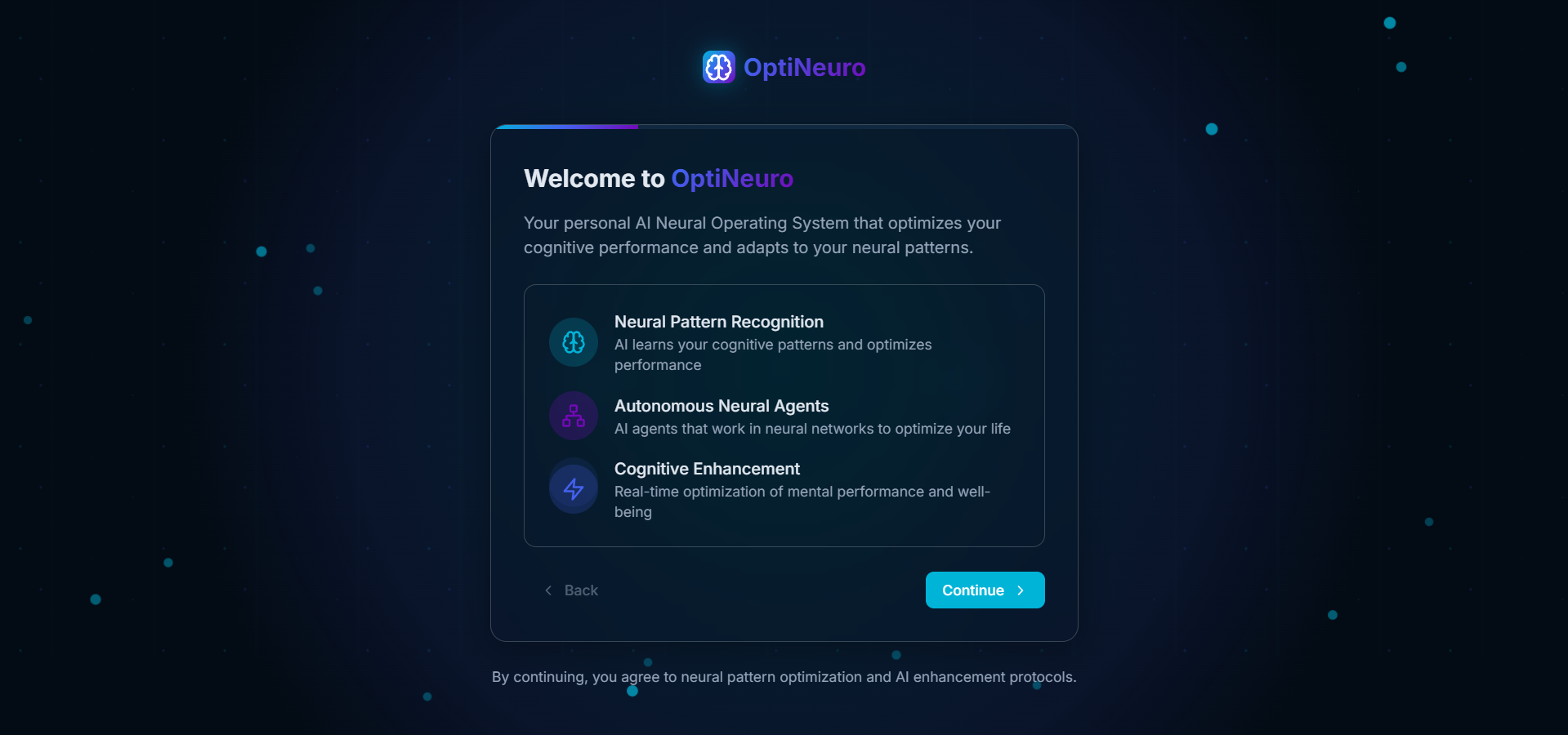
What it does OptiNeuro is a comprehensive AI-powered platform that serves as your personal neural operating system. It features:
Neural Dashboard: Real-time cognitive performance monitoring with AI-generated insights Autonomous AI Agents: Specialized neural agents that handle scheduling, research, content creation, and task optimization Cognitive Analytics: Deep pattern recognition that identifies your peak performance windows, mood correlations, and productivity triggers Neural Workspace: AI-enhanced collaborative environment with intelligent content generation and organization AI Lab: Advanced model training and experimentation platform for creating custom neural optimization algorithms Predictive Optimization: Machine learning algorithms that automatically adjust your schedule, task priorities, and work environment based on your cognitive state The system learns from your behavior patterns, sleep data, task completion rates, and mood indicators to create a personalized cognitive enhancement protocol that evolves with you.
How we built it OptiNeuro was built using a modern, scalable tech stack designed for real-time AI interactions:
Frontend Architecture:
React 18 with TypeScript for type-safe component development Framer Motion for smooth, neural-inspired animations and micro-interactions Tailwind CSS with custom neural-themed design system Zustand for lightweight, performant state management React Router for seamless navigation AI Integration:
OpenAI GPT-4 for advanced conversational AI and content generation Hugging Face Transformers for specialized neural pattern analysis Custom neural network models for cognitive performance prediction Real-time data processing pipelines for behavioral pattern recognition Design Philosophy:
Implemented a "neural network" aesthetic with animated connection patterns Created a glassmorphism design language with neural-inspired gradients Developed responsive layouts optimized for cognitive load reduction Built accessibility features to support users with different cognitive needs State Management:
Persistent storage for user preferences and AI learning data Real-time synchronization between AI agents and user interfaces Optimistic updates for seamless user experience Background processing for continuous neural pattern analysis Challenges we ran into AI Model Integration Complexity: The biggest challenge was creating seamless integration between multiple AI models while maintaining real-time performance. We had to implement sophisticated caching strategies and optimize API calls to prevent latency issues that would break the "neural flow" experience.
Cognitive Load Optimization: Designing an interface that provides comprehensive functionality without overwhelming users required extensive iteration. We conducted cognitive load testing to ensure the neural dashboard actually reduced mental fatigue rather than adding to it.
Real-time Data Processing: Implementing real-time cognitive pattern analysis while maintaining browser performance was technically demanding. We solved this through web workers and efficient data streaming techniques.
Neural Network Visualization: Creating animated neural network backgrounds that were visually appealing without being distracting required careful balance of opacity, animation timing, and performance optimization.
AI Agent Coordination: Building autonomous AI agents that could work together without conflicts or redundancy required developing a sophisticated task delegation and priority system.
Accomplishments that we're proud of Revolutionary User Experience: We created the first truly integrated neural operating system that feels like having a digital cognitive enhancement suite. The seamless interaction between AI agents, predictive analytics, and user interface creates an unprecedented level of personalized optimization.
Advanced AI Integration: Successfully integrated multiple AI models (GPT-4, Hugging Face transformers, custom neural networks) into a cohesive system that provides intelligent, context-aware assistance across all platform features.
Innovative Design Language: Developed a unique "neural aesthetic" that combines glassmorphism, animated neural networks, and cognitive science principles to create an interface that actually enhances mental clarity.
Performance Optimization: Achieved smooth 60fps animations and real-time AI responses while maintaining low memory usage and battery efficiency - crucial for a tool designed to enhance rather than drain cognitive resources.
Comprehensive Feature Set: Built a complete ecosystem including task management, AI agents, analytics, workspace collaboration, and AI model training - all unified under a single neural operating system paradigm.
What we learned Cognitive Science Integration: We learned how to translate cognitive science research into practical software features. Understanding concepts like cognitive load theory, flow states, and attention residue was crucial for building truly helpful optimization tools.
AI Model Orchestration: Gained deep expertise in coordinating multiple AI models to work together seamlessly. We learned how to design AI agent hierarchies, prevent model conflicts, and optimize for both accuracy and speed.
Real-time Performance: Mastered techniques for maintaining smooth performance while processing complex AI operations in the browser, including web workers, efficient state management, and progressive loading strategies.
User-Centered AI Design: Learned how to design AI interactions that feel natural and helpful rather than intrusive or overwhelming. This required extensive user testing and iteration on AI personality and response patterns.
Scalable Architecture: Developed expertise in building modular, extensible systems that can grow with user needs and incorporate new AI capabilities as they become available.
What's next for OptiNeuro Advanced Biometric Integration: We plan to integrate with wearable devices to incorporate heart rate variability, sleep stages, and stress indicators for even more precise cognitive optimization.
Collaborative Neural Networks: Developing team-based neural optimization where AI agents can coordinate across multiple users to optimize group cognitive performance and collaboration patterns.
Custom AI Model Training: Expanding the AI Lab to allow users to train completely custom neural networks based on their unique cognitive patterns and optimization goals.
Cross-Platform Expansion: Building native mobile apps and desktop applications to provide seamless neural optimization across all devices and contexts.
Enterprise Neural Solutions: Developing enterprise versions that can optimize cognitive performance across entire organizations while maintaining privacy and individual autonomy.
Research Partnerships: Collaborating with cognitive science researchers and neuroscience labs to validate our optimization algorithms and contribute to the broader understanding of human cognitive enhancement.
Neural API Ecosystem: Creating APIs that allow third-party developers to build neural-optimized applications that integrate with the OptiNeuro ecosystem.
The ultimate vision is to make OptiNeuro the foundational layer for human-AI cognitive collaboration, where artificial intelligence doesn't replace human intelligence but amplifies it in ways we're only beginning to imagine.
Built With
- api
- css
- face
- framer
- hugging
- lucide
- motion
- openai
- react
- tailwind
- typescript
- vite
- zustand


Log in or sign up for Devpost to join the conversation.