-
-
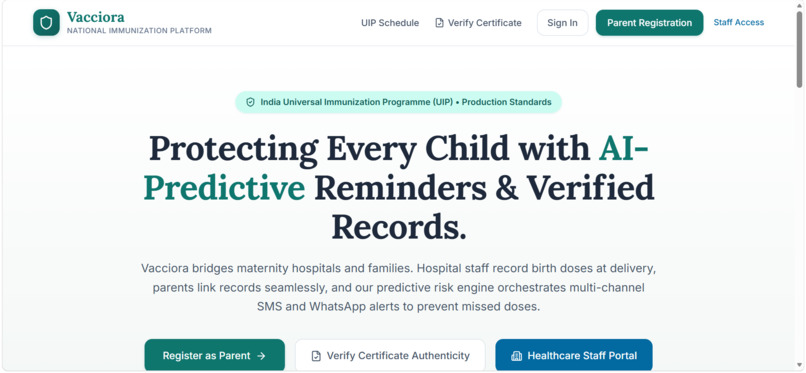
Landing page
-
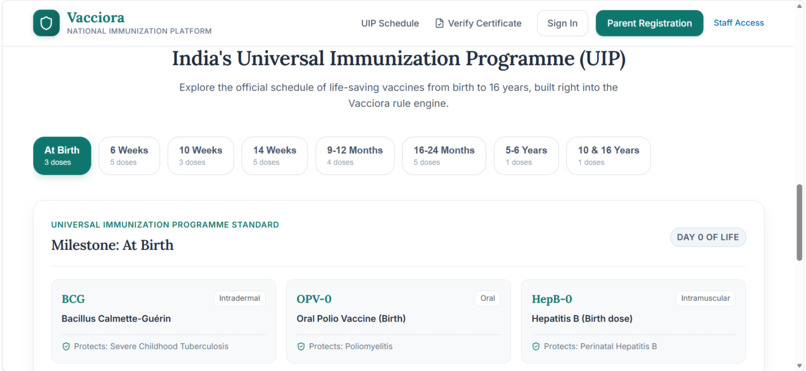
Landing page
-
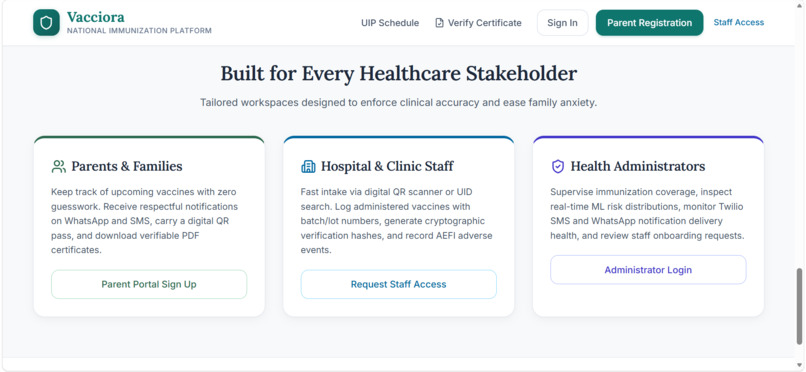
Landing page
-
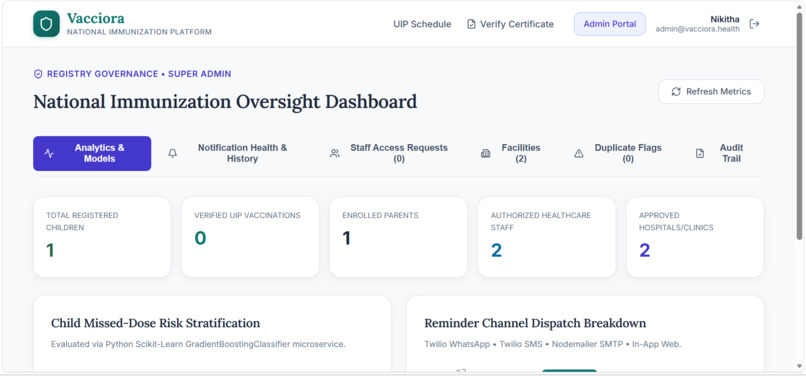
Admin dashboard
-
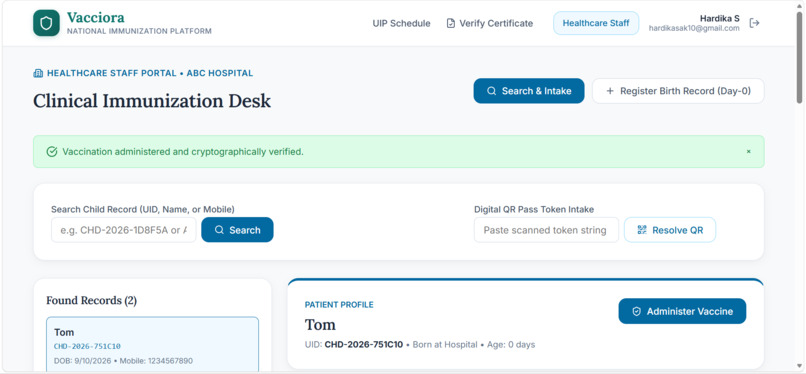
Staff dashboard
-
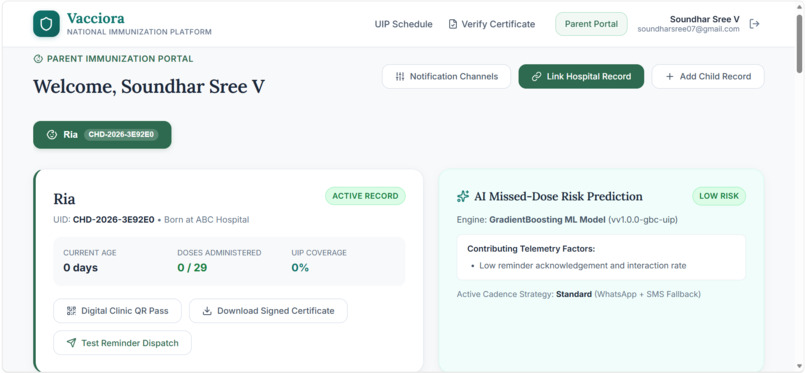
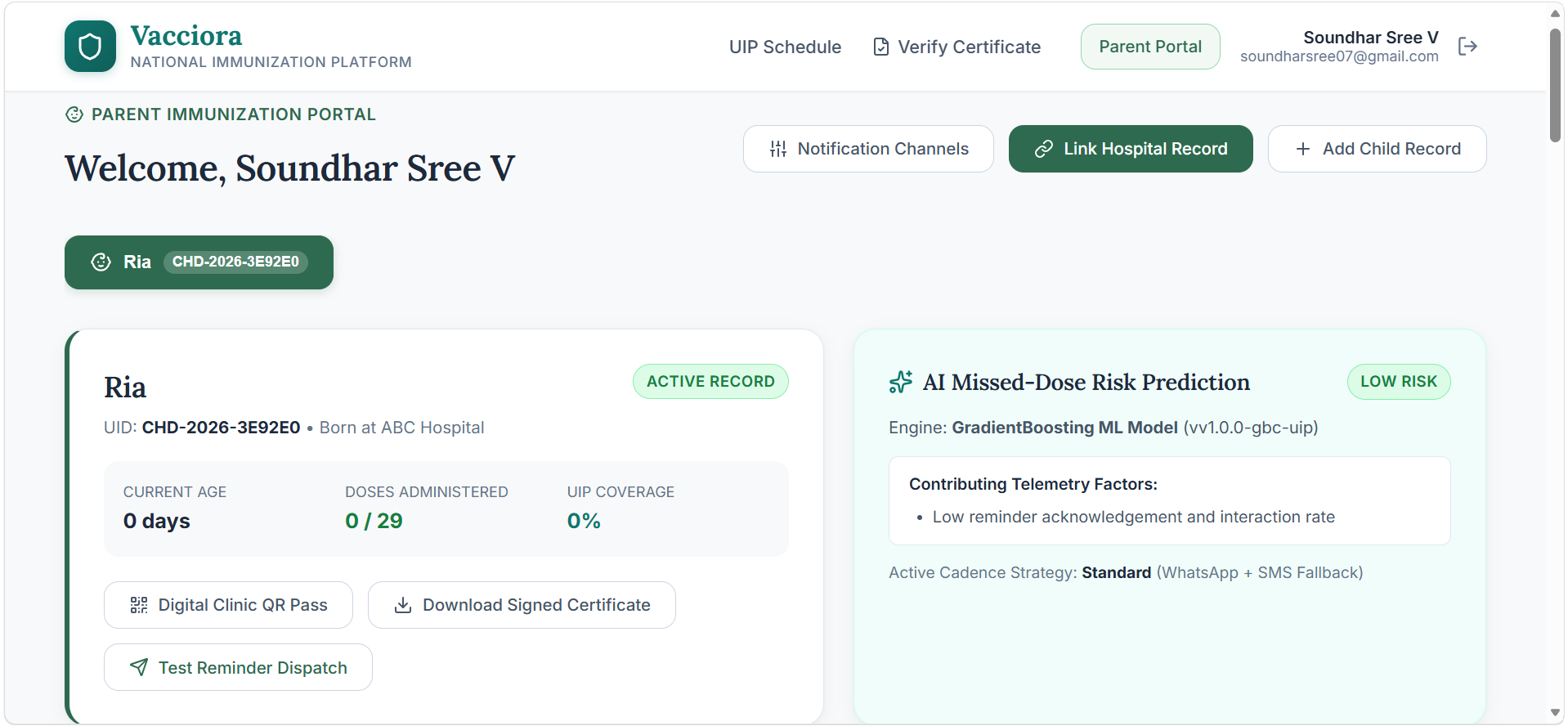
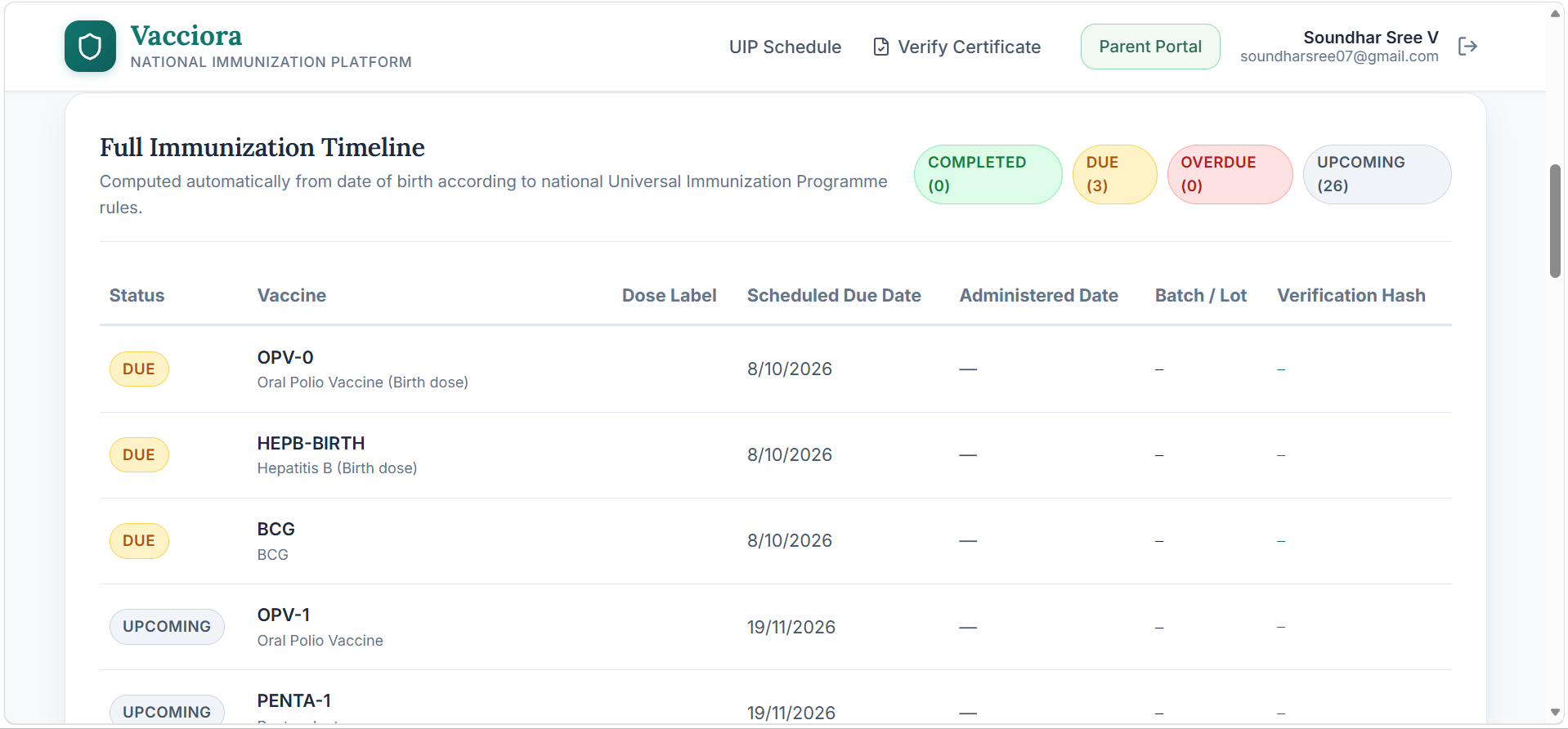
Parent dashboard
-
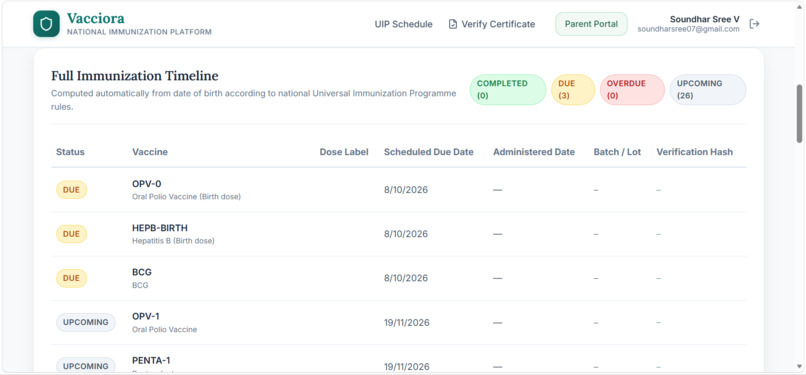
Parent dashboard
Inspiration
Childhood immunization is essential for protecting children from vaccine-preventable diseases. However, parents may forget vaccination dates, struggle to track multiple doses, or face difficulties accessing timely information. Healthcare workers may also find it challenging to maintain accurate records and follow up with children who miss scheduled vaccinations.
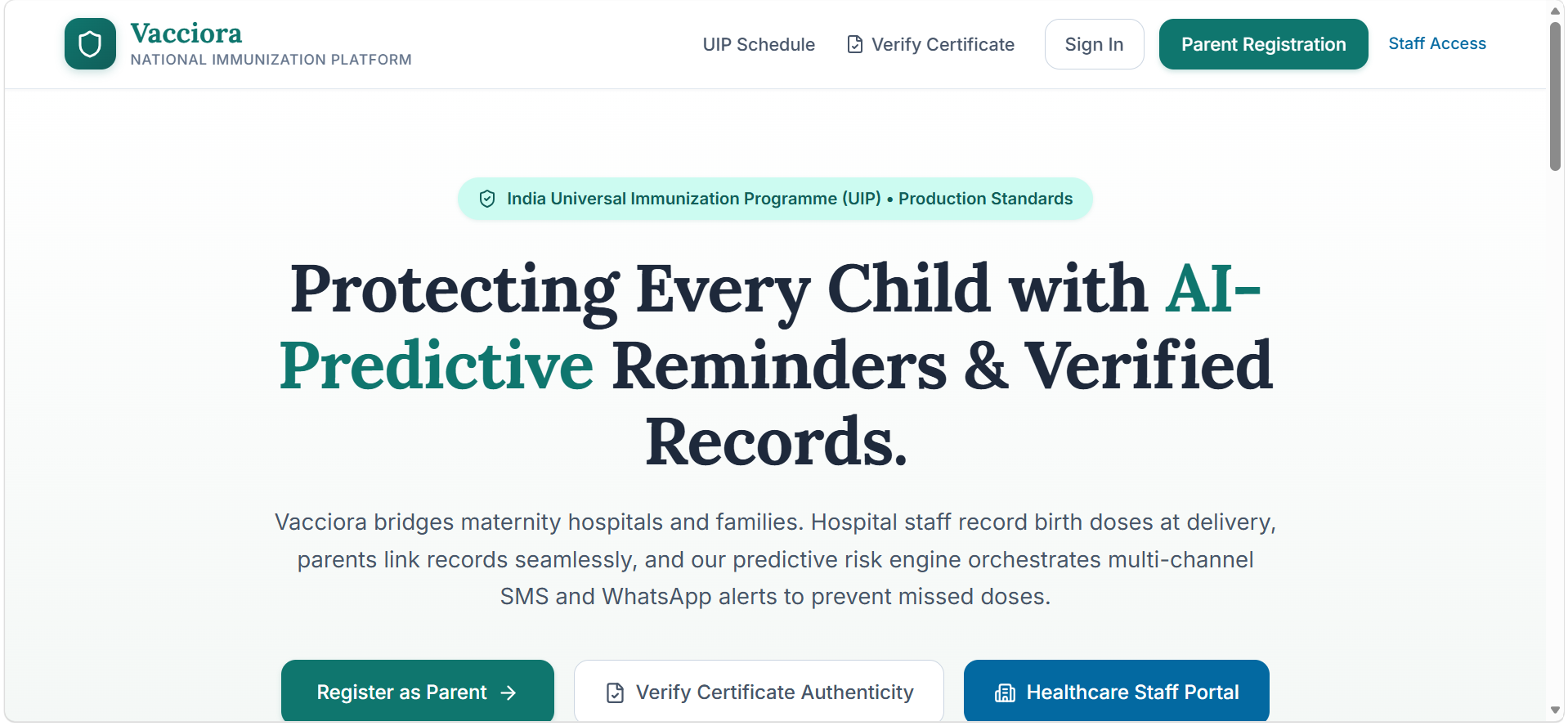
These challenges inspired us to build AI Vaccination Reminder System, a smart solution that combines digital vaccination management, AI-based risk prediction, and personalized reminders to help reduce missed and delayed vaccinations.
What it does
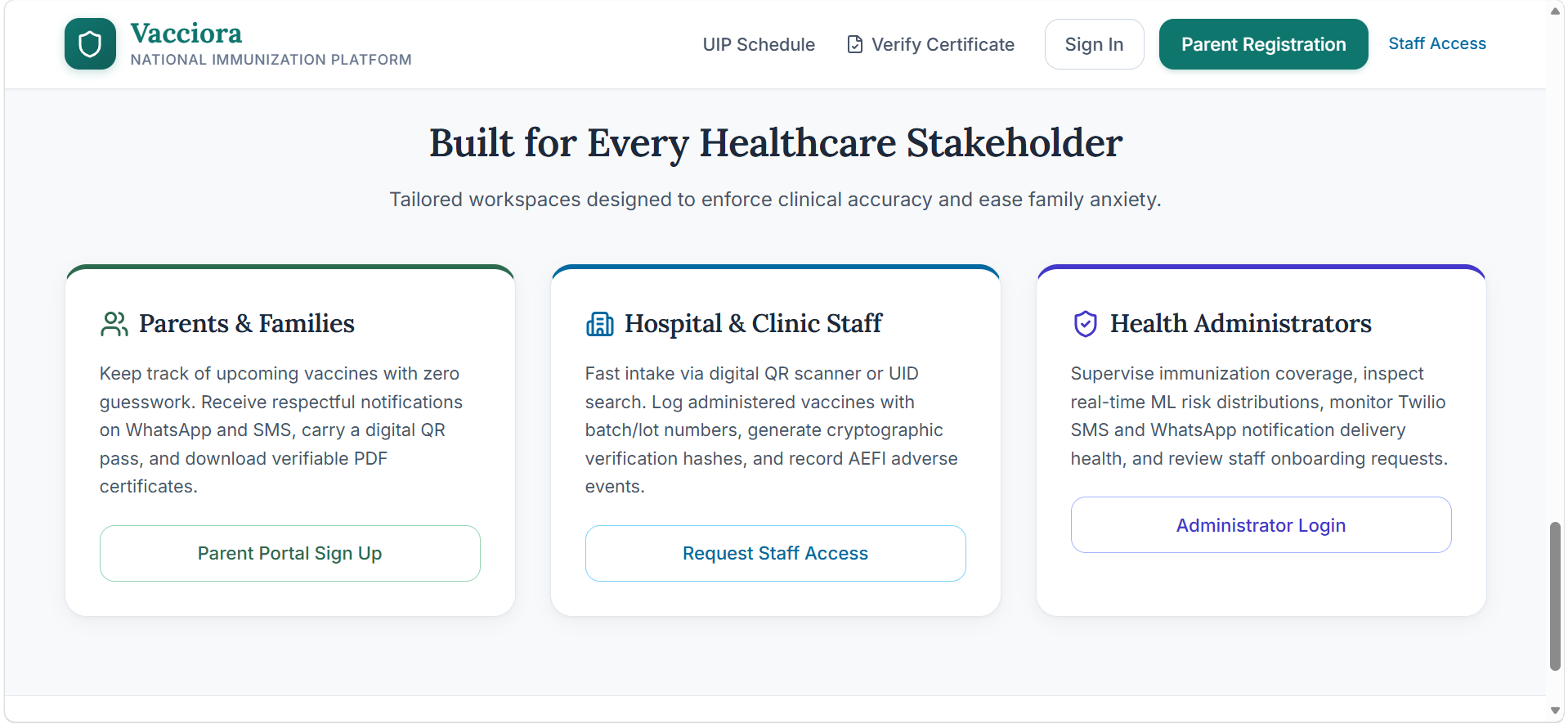
Our system helps parents and healthcare workers manage childhood immunization more effectively.
Child Profile Management: Maintains children's profiles and vaccination histories.
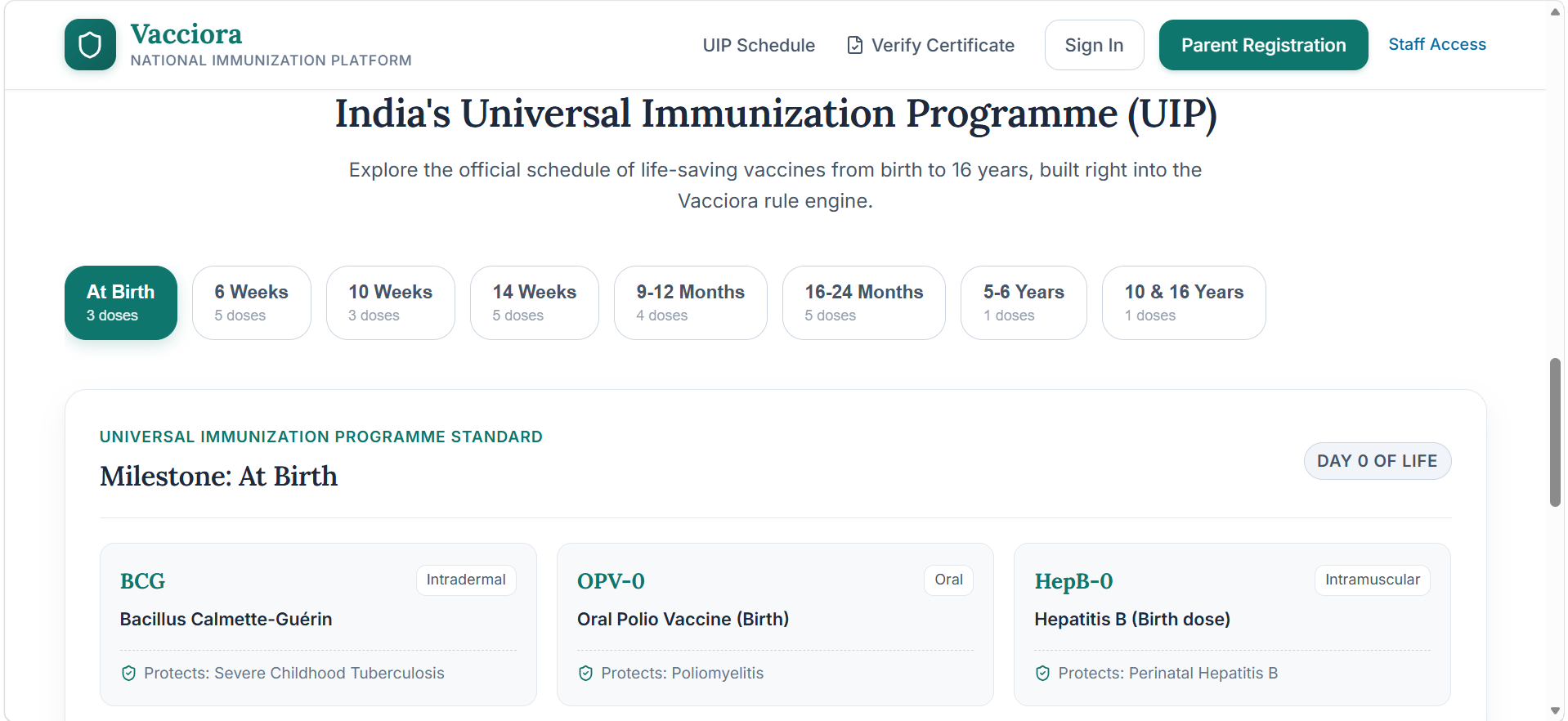
Automated Vaccination Scheduling: Identifies upcoming, due, delayed, and missed vaccinations based on the child's date of birth and configured vaccination schedule.
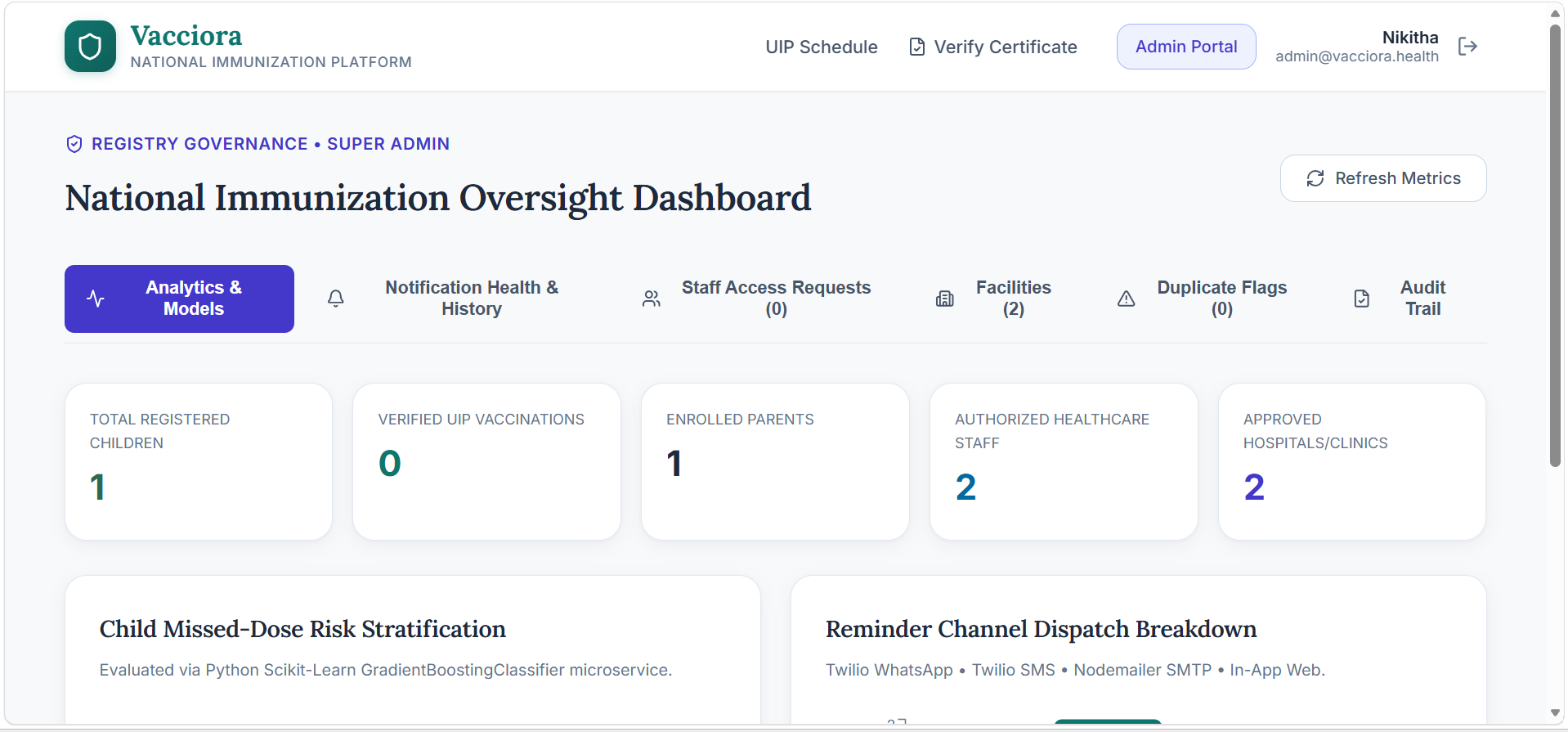
AI-Based Risk Prediction: Estimates the risk of a child missing or delaying an upcoming vaccination using relevant historical information.
Smart Reminders: Supports vaccination reminders through SMS and WhatsApp, with voice-call escalation planned for cases requiring additional follow-up.
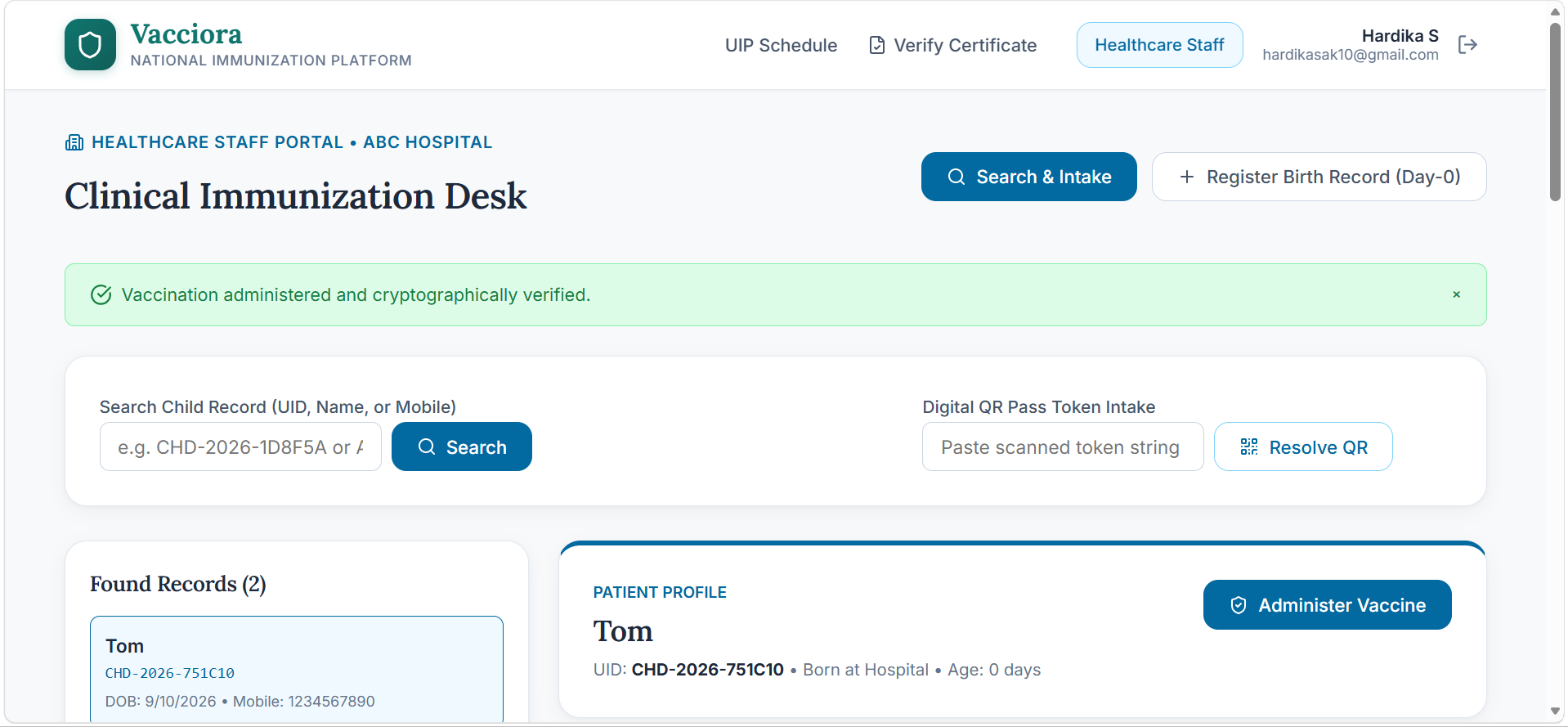
Healthcare Worker Support: Enables authorized healthcare workers to record vaccinations after administration and assist parents who have difficulty entering information.
Reminder Tracking: Records notification delivery, parental responses, and vaccination outcomes to support evaluation and future risk assessment.
How we built it
We designed the project as a full-stack web application integrated with a machine learning service.
Frontend: React.js and Tailwind CSS for an interactive user interface.
Backend: Node.js and Express.js for application logic and REST APIs.
Database: MongoDB for storing user profiles, child records, vaccination schedules, and reminder history.
Machine Learning: Python and scikit-learn for developing a model to predict the risk of missed or delayed vaccinations.
Notifications: Twilio for SMS and WhatsApp integration.
Development and Testing: VS Code, Postman, and Git for coding, API testing, and version control.
Challenges we ran into
One important challenge was ensuring accurate information when parents have difficulty filling out forms or accidentally enter incorrect details. To address this, we designed a workflow in which authorized healthcare workers can record vaccinations and help maintain accurate records.
Another challenge was finding suitable data for machine learning. Public vaccination datasets can provide information about vaccination history, but they generally do not contain individual SMS, WhatsApp, or voice-call response histories. We therefore need to distinguish publicly available vaccination data from interaction data collected through our application.
Integrating the frontend, backend, database, machine learning service, and external messaging APIs also requires careful testing, secure configuration, and reliable error handling.
Accomplishments that we're proud of
We are proud to develop a project that addresses a meaningful healthcare problem using AI and full-stack technologies. Our key design accomplishments include:
Combining vaccination schedule management with predictive risk assessment.
Designing an adaptive reminder workflow rather than relying only on fixed reminders.
Considering healthcare workers as an alternative way to enter and verify vaccination records.
Planning a feedback mechanism that connects reminder history and vaccination outcomes with future risk assessment.
Building a solution with potential to support parents and healthcare workers in improving vaccination follow-up.
What we learned
We learned how AI and web technologies can be combined to address real-world healthcare challenges. The project helped us explore full-stack application development, REST API integration, database design, machine learning workflows, and third-party messaging services.
We also learned that successful healthcare technology depends on more than model accuracy. Data quality, privacy, accessibility, reliable notifications, and human oversight are essential to making a system useful and trustworthy.
What's next for AI Vaccination Reminder System
Our next steps are to strengthen the system and move towards a more reliable, deployable solution.
Complete and test the integration between the frontend, backend, MongoDB, and machine learning service.
Train and evaluate the risk-prediction model using suitable vaccination data.
Complete SMS and WhatsApp reminder testing and explore voice-call integration.
Implement role-based access for parents, healthcare workers, and administrators.
Improve data validation and provide workflows for correcting inaccurate records.
Evaluate model performance using precision, recall, F1-score, and other relevant metrics.
Measure reminder delivery, parental response, and vaccination adherence during testing.
Deploy the application and explore collaboration with healthcare centres for real-world evaluation.
Our long-term goal is to develop a proactive, accessible, and data-driven childhood immunization platform that helps reduce missed vaccinations and supports timely healthcare follow-up.
Built With
- artificial-intelligence
- express.js
- machine-learning
- mongodb
- node.js
- python
- react
- scikit-learn
- twilio

Log in or sign up for Devpost to join the conversation.