Inspiration
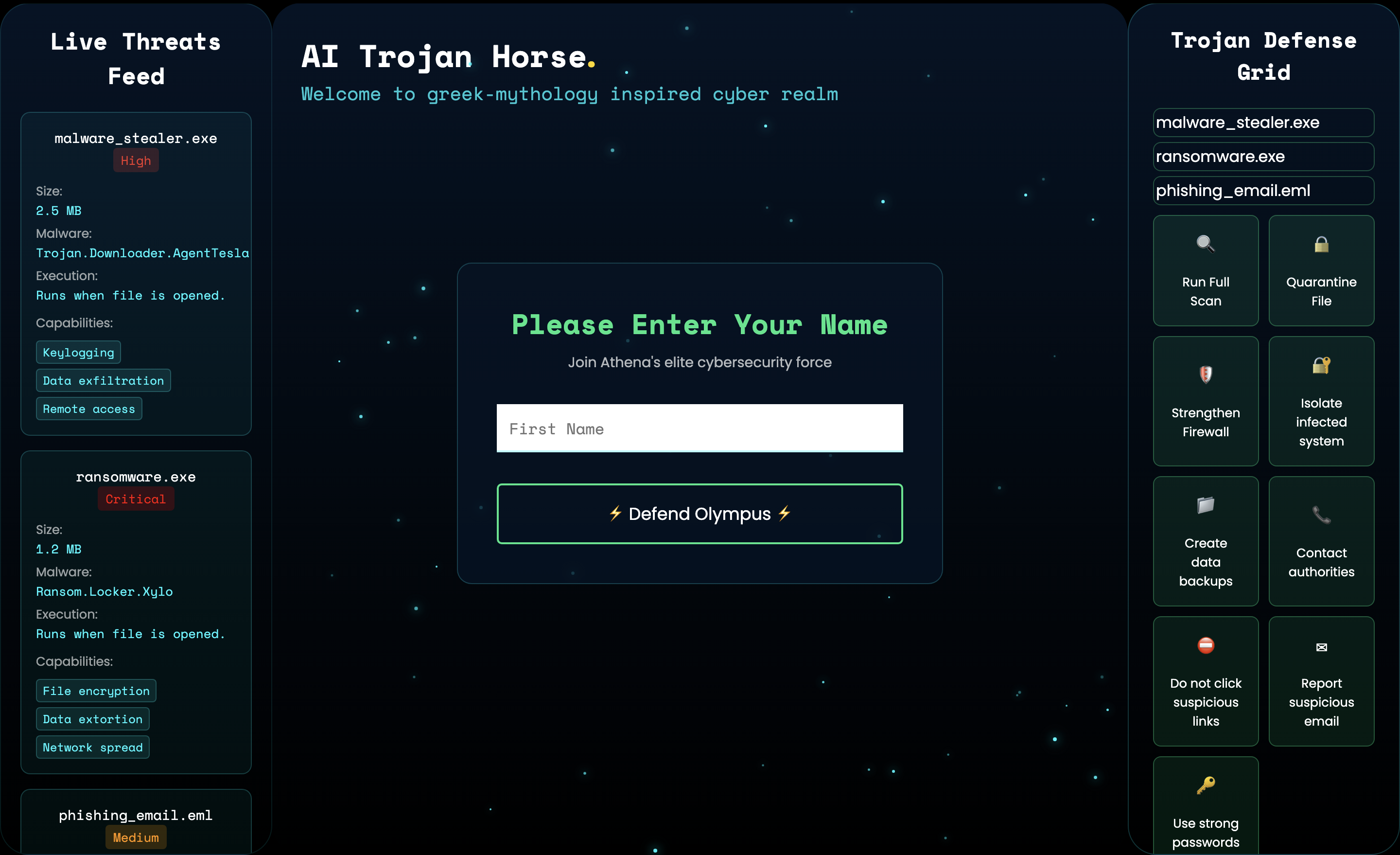
Since we are attending AthenaHacks, we wanted to work on a project that closely relates to Greek mythology while integrating it with the field of computer science. We decided to create an educational cybersecurity game focused on defense strategies for beginners, drawing inspiration from the legendary Trojan Horse.
What it does
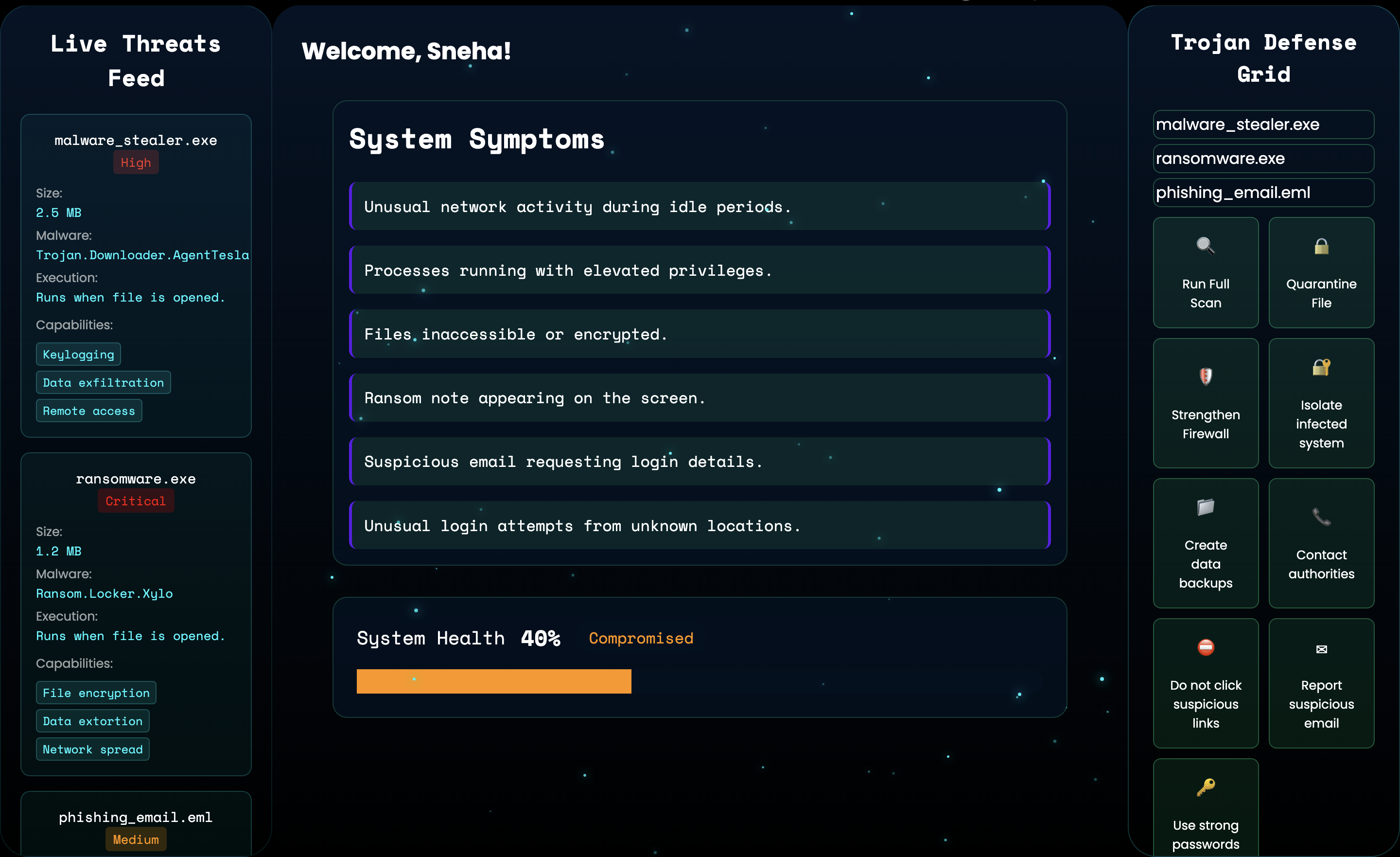
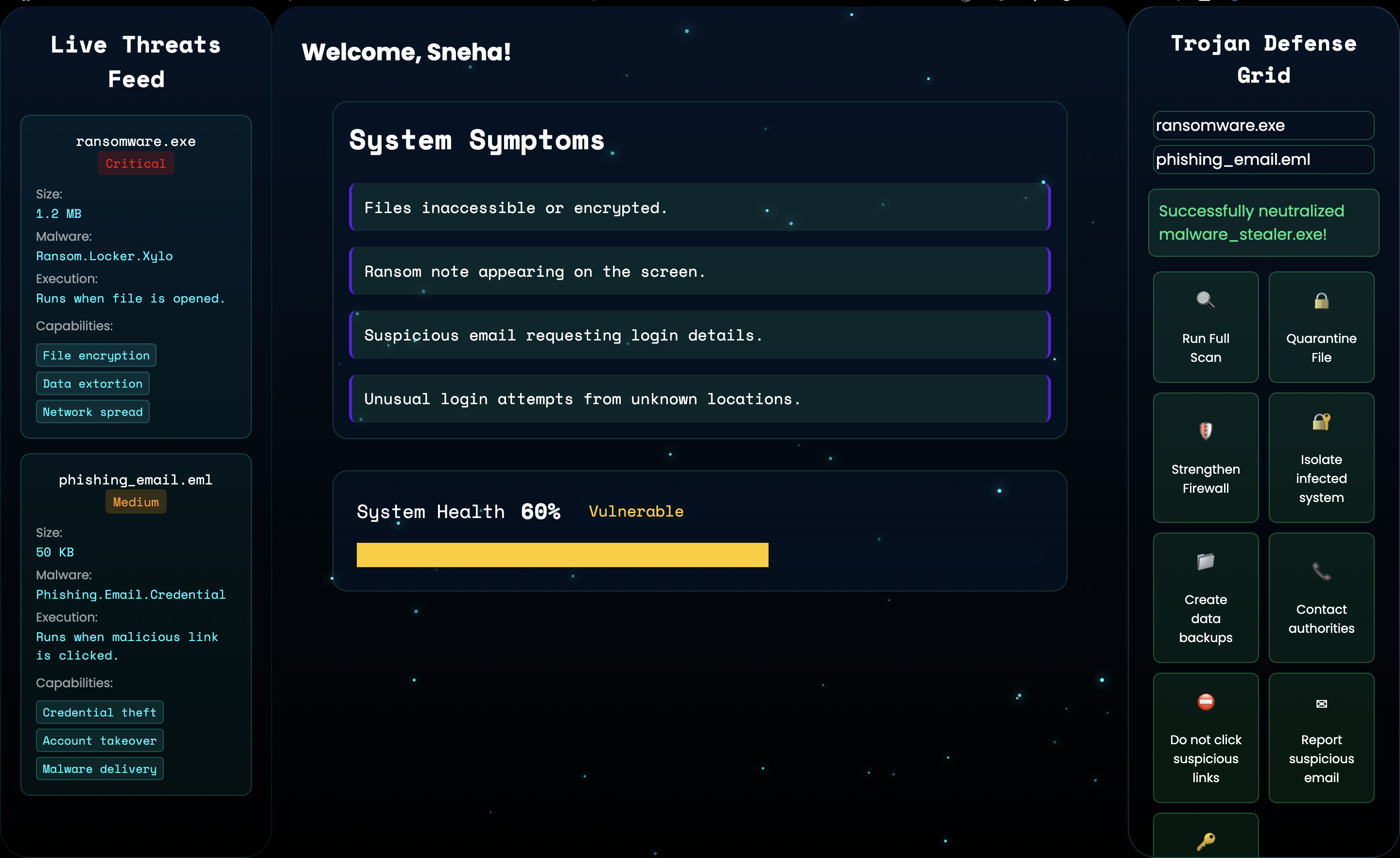
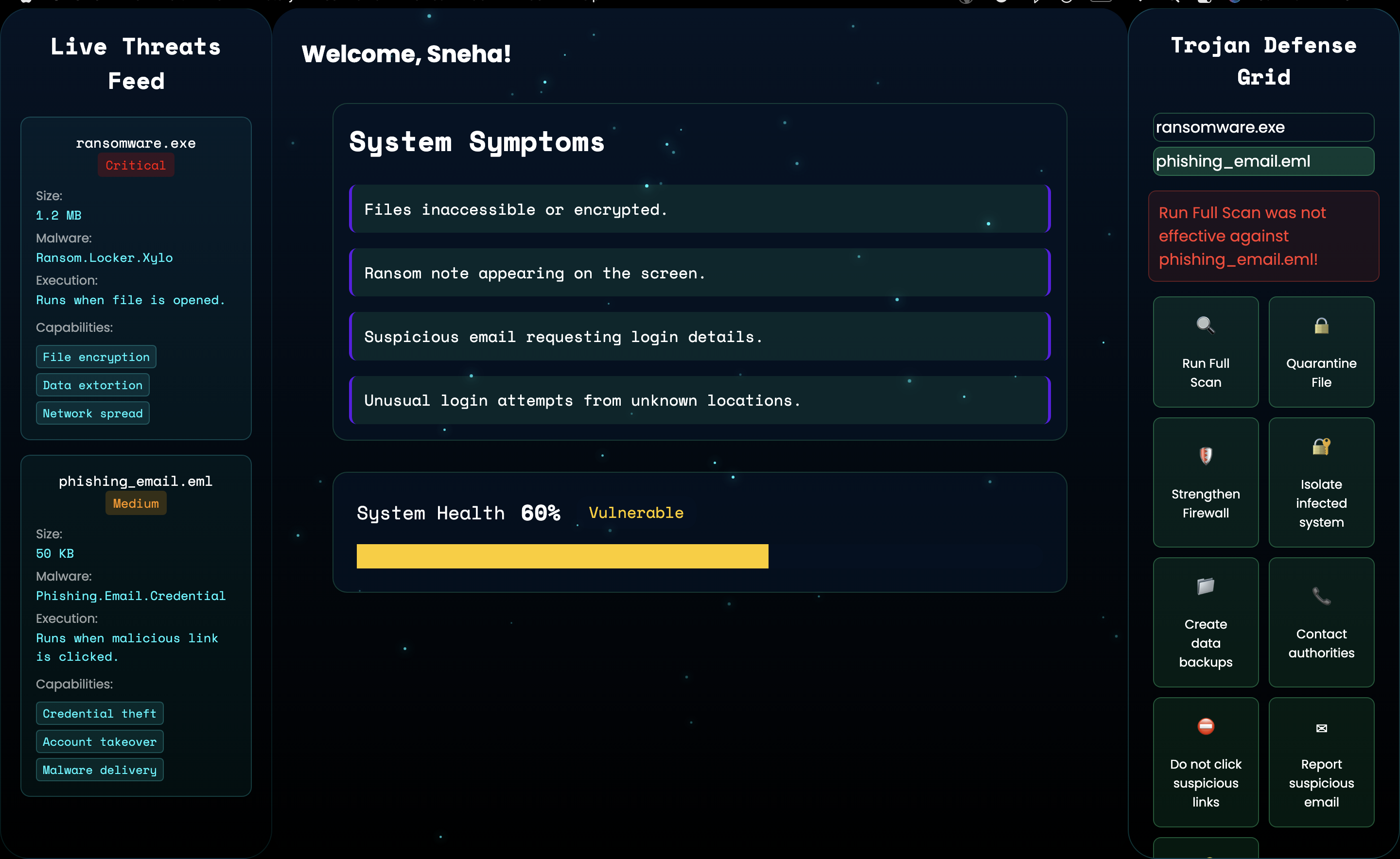
AI Trojan Horse is an interactive cybersecurity simulation game that educates users on threat detection, malware defense, and ethical hacking techniques. Players take on the role of a cybersecurity defender, protecting their system from AI-generated Trojan Horse cyberattacks. They must analyze live threat feeds, quarantine malware, strengthen firewalls, and counteract evolving digital threats in a strategic, mythologically inspired cyber battlefield.
How we built it
We developed AI Trojan Horse using a combination of modern web technologies, AI models, and cybersecurity principles. The project consists of:
- Frontend (React): The user interface was built using React for a dynamic and interactive experience.
- Backend (Flask & MongoDB): The backend was powered by Flask, handling real-time game state management and API requests. MongoDB was used to store player progress.
- Google Gemini API: We leveraged Google's Gemini AI to generate realistic, evolving cybersecurity threats. The AI provides dynamic threat descriptions, system symptoms, and interactive challenges.
- Real-Time Threat Detection: We implemented an AI-driven system that dynamically generates live cyber threats, mimicking real-world hacking techniques and malware behavior.
Challenges we ran into
Getting the Trojan Defense Grid to work with the threats in the Live Threats Feed. We have the answers, sequences of buttons to be clicked, to remove the threats, but we struggled to do that. Incorporating mutations within the malware, also proved to be an additional challenge as the logic of our game had to change in order to be able to support a mutation system. We would also say implementing the functionality of the buttons was a challenge, as we made the mistake of making the endpoint reliant on the name of the file. However, we managed to change the game enough so that it would work with the logic we had. I feel like working with Gemini AI was also definitely another challenge, as we weren't aware of the rate limits, and as a result went past the allotted limit. Furthermore, tailoring the requests made to Gemini AI was definitely a challenge, because we had to be very precise with our language.
Accomplishments that we're proud of
Coming up with an idea that blended both cybersecurity and education. Improvement of our UI/UX compared to our prior projects.
What we learned
Learned to create stars using a randomization algorithm. Learned how to parse responses, as well as write and save them to files. Learned about different types of malware and how they mutate.
What's next for Ai Trojan Horse
We plan to expand AI Trojan Horse by allowing players to choose between being a hacker or a defender. While the current version focuses on defenders protecting their systems, we want to introduce an alternative mode where players take on the role of hackers who craft deceptive cyberattacks and attempt to infiltrate a secure system. Additionally, we aim to introduce Athena, an AI mentor, who will provide cryptic wisdom and hints to players about threat detection, and hacking strategies.


Log in or sign up for Devpost to join the conversation.