-
-
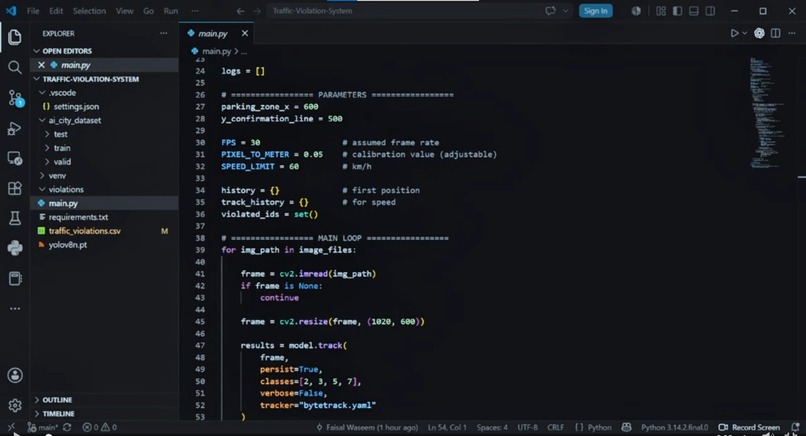
File Architecture
-
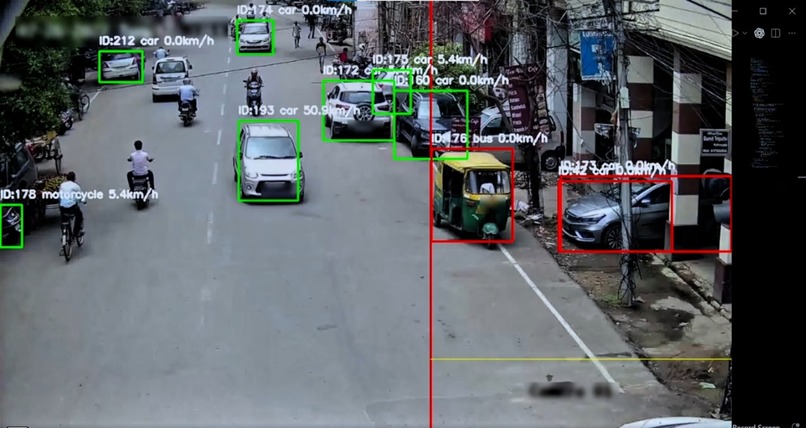
1
-
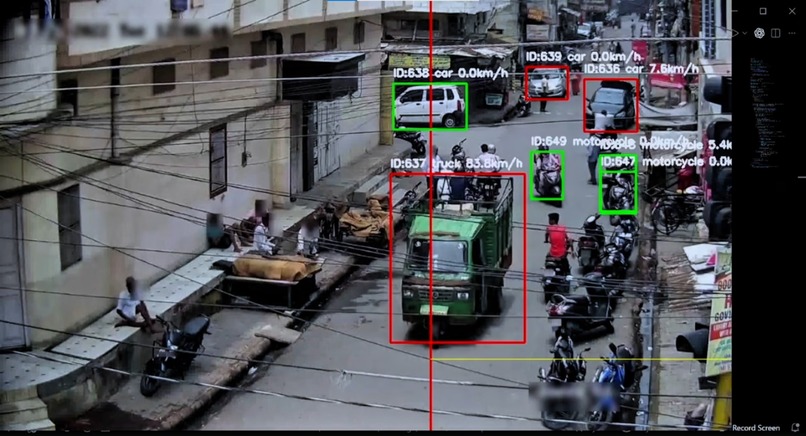
2
-
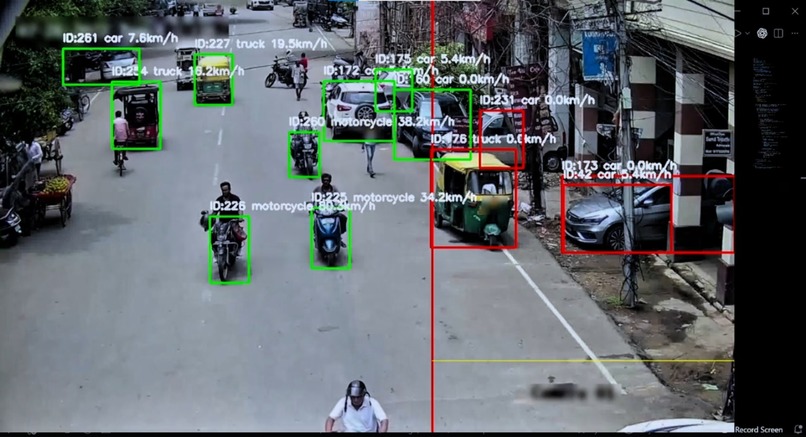
3
-
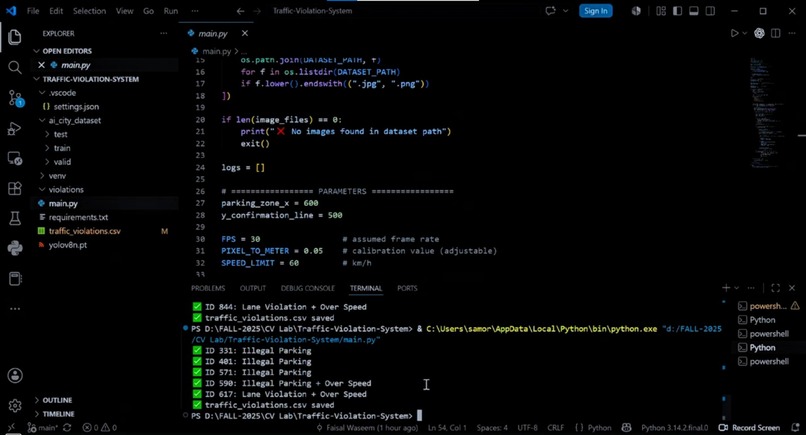
CSV
AI Traffic Violation Detection System
Inspiration
Traffic violations are a major challenge in urban transportation systems. Traditional traffic monitoring often requires significant manual effort, making it difficult to monitor busy roads continuously.
I wanted to explore how artificial intelligence and computer vision could help automate traffic monitoring by detecting vehicles, tracking their movements, and identifying potentially unsafe driving behavior.
This project was developed as part of my software engineering internship experience.
What it does
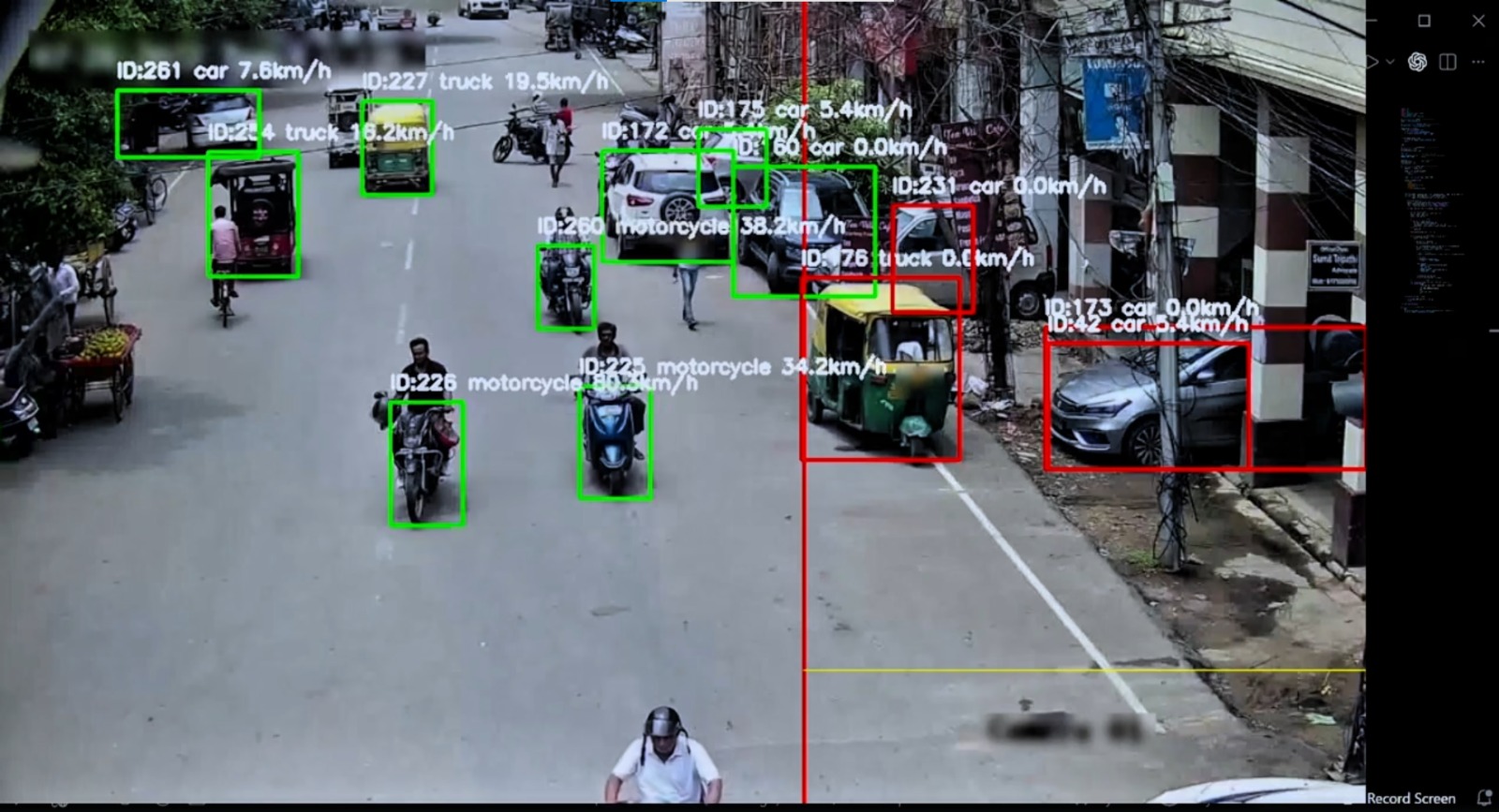
AI Traffic Violation Detection is a computer vision-based application designed to analyze traffic footage and automatically detect potential traffic violations.
The system includes:
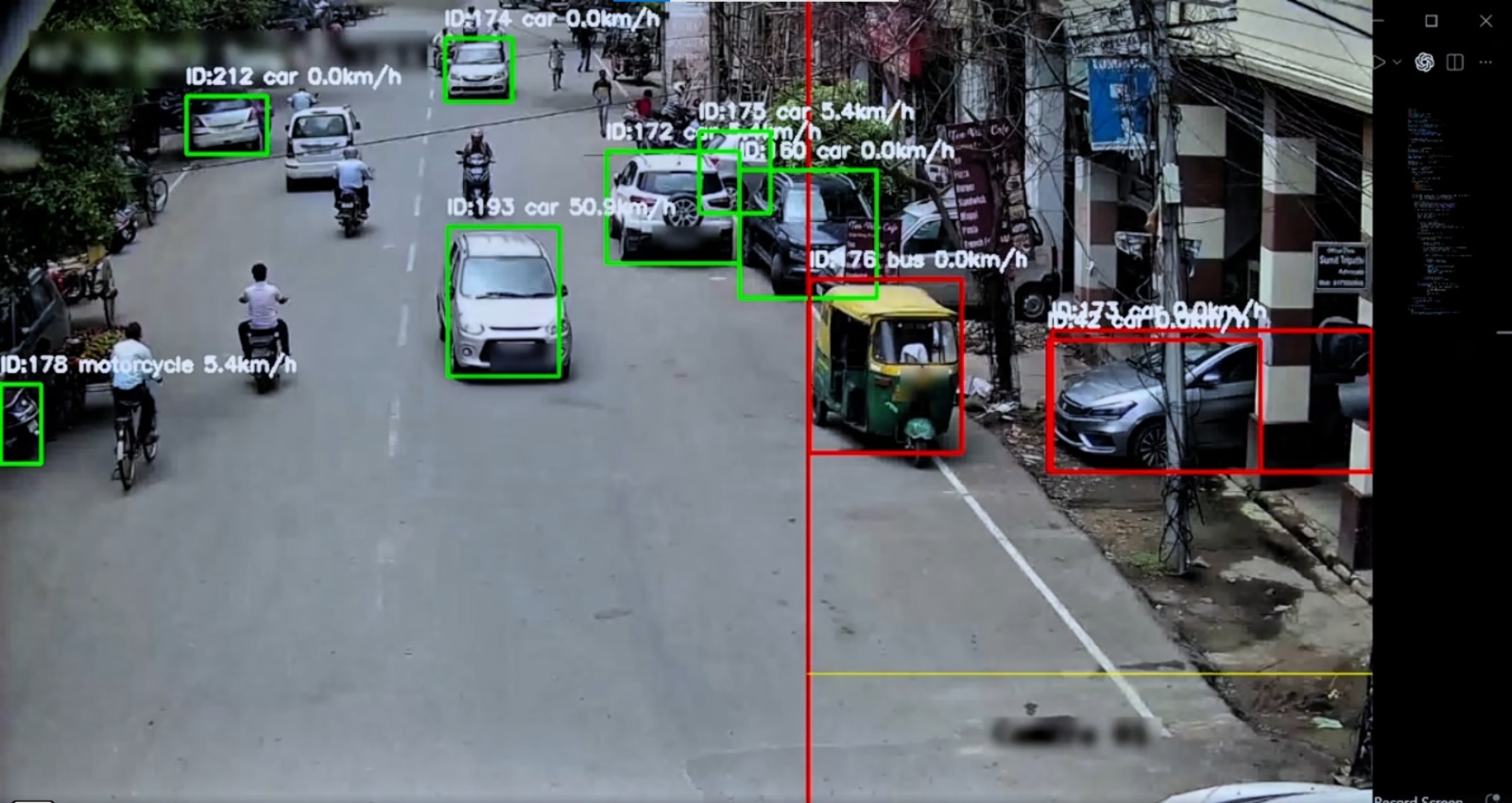
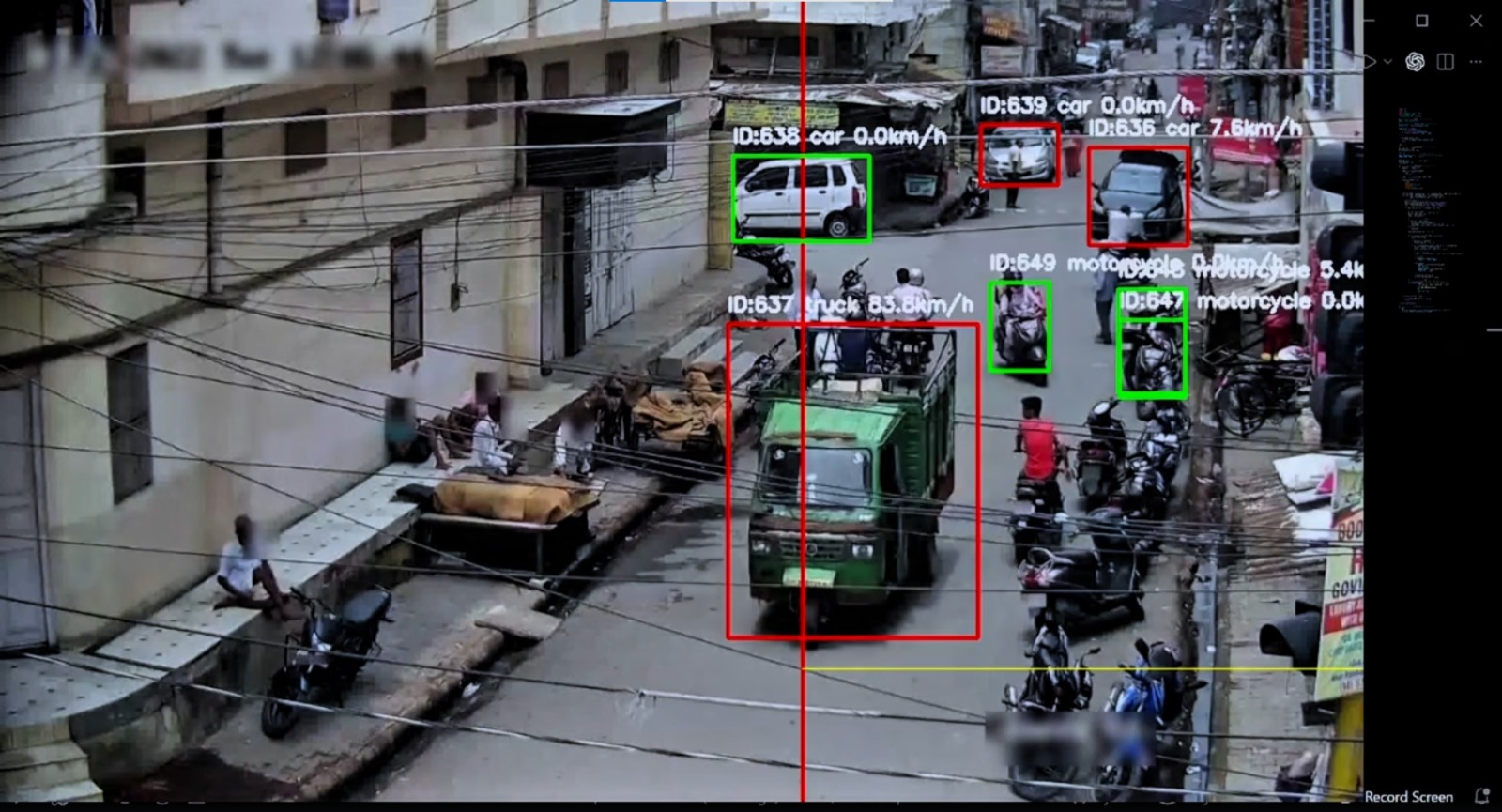
- Vehicle Detection: Identifies vehicles in traffic footage using YOLOv8.
- Vehicle Tracking: Uses ByteTrack to associate vehicle detections across consecutive frames.
- Speed Estimation: Estimates vehicle movement speed using frame-based position changes.
- Red-Light Violation Detection: Monitors vehicle movement across a defined stop line.
- Illegal Parking Detection: Identifies vehicles that remain within specified parking-restricted areas beyond a defined threshold.
- Traffic Monitoring: Visualizes detected vehicles and tracks their movements.
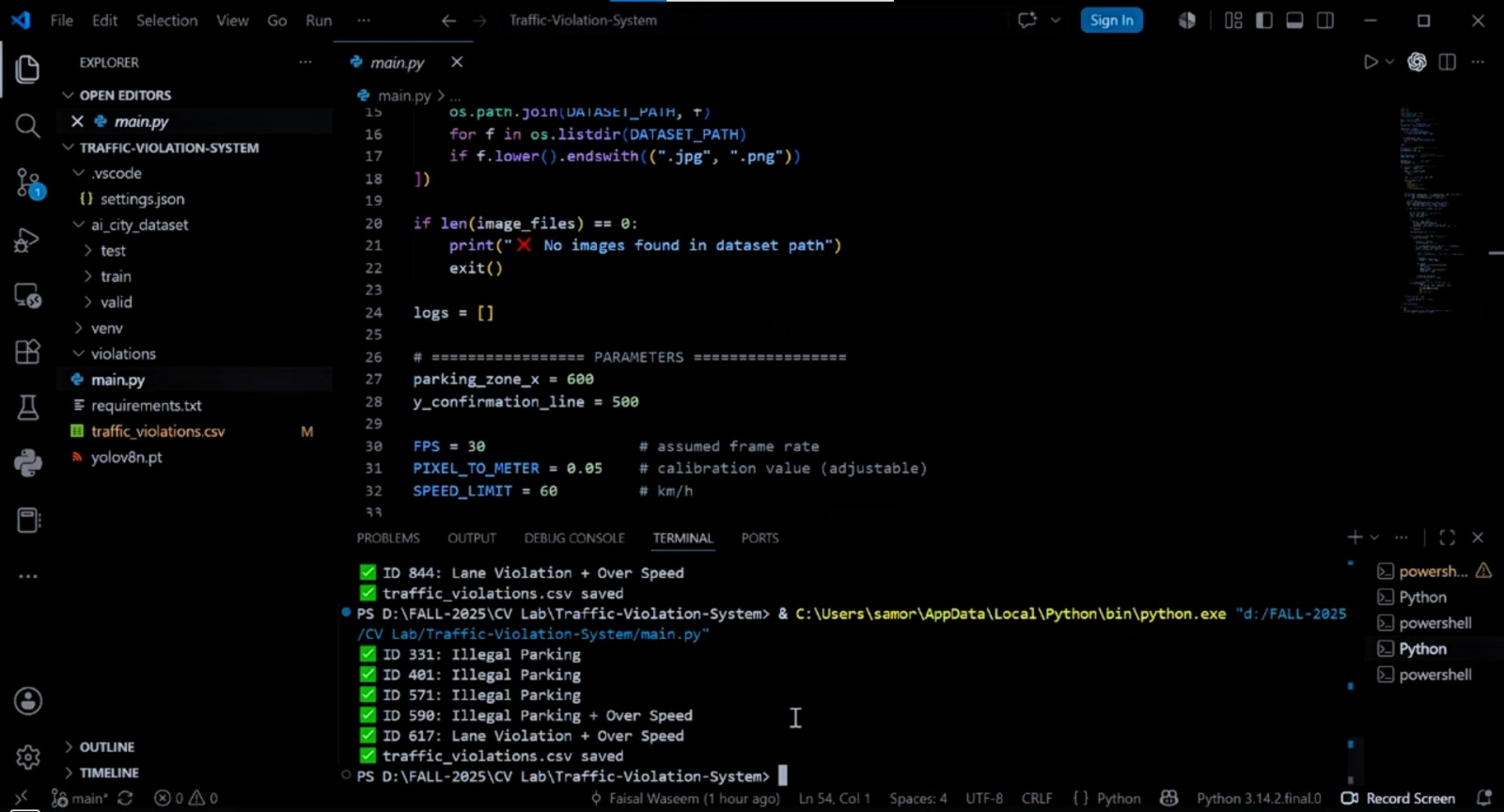
- Violation Logging: Records detected violations for further analysis.
How I built it
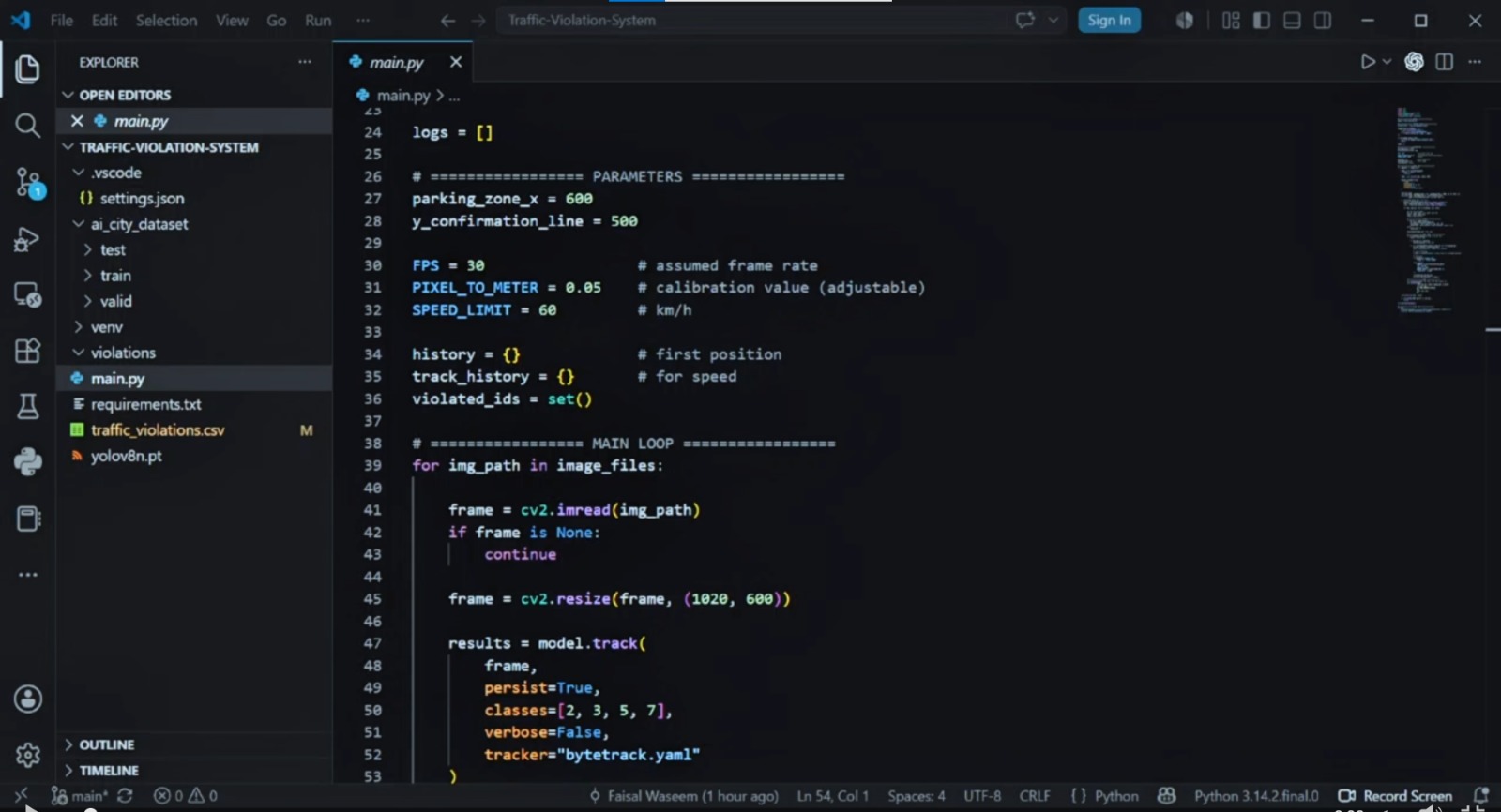
I developed the system using Python, OpenCV, Ultralytics YOLOv8, and ByteTrack.
1. Data preparation
I worked with traffic image sequences from the AI City dataset to test the system's detection and tracking capabilities.
2. Vehicle detection
YOLOv8 was used to identify vehicles and generate bounding boxes around detected objects.
3. Object tracking
ByteTrack was incorporated to associate detected vehicles between frames, allowing the system to analyze their movement over time.
4. Traffic violation rules
I implemented rule-based detection logic using virtual road boundaries, parking zones, and movement thresholds.
5. Speed estimation
The application estimates vehicle speed from displacement across video frames. This represents a frame-based estimate rather than a calibrated real-world speed measurement.
6. Results and visualization
OpenCV was used to display vehicle detections, tracking information, and violation indicators. Violation records could also be exported for analysis.
Challenges I faced
One of the main challenges was maintaining reliable vehicle tracking across consecutive traffic frames.
Another challenge involved defining appropriate road boundaries and monitoring zones because different traffic scenes require different configurations.
I also worked on improving the connection between object detection, tracking, speed estimation, and violation identification.
Accomplishments
- Developed a Python-based traffic monitoring pipeline.
- Integrated YOLOv8 for automated vehicle detection.
- Incorporated ByteTrack for multi-object tracking.
- Implemented rule-based traffic violation monitoring.
- Built speed estimation logic using frame displacement.
- Added visual traffic monitoring and violation records.
What I learned
This project strengthened my understanding of computer vision, object detection, multi-object tracking, image processing, and Python-based AI development.
I also gained experience debugging machine learning applications and combining AI models with application-level decision-making.
What's next
Future improvements could include:
- Training and fine-tuning detection models on more diverse traffic datasets.
- Improving tracking performance in crowded road conditions.
- Implementing camera calibration for real-world vehicle speed estimation.
- Developing a web dashboard for monitoring traffic violations.
- Integrating real-time alerts and structured reporting.
Tech Stack
Programming: Python
AI and Computer Vision: YOLOv8, Ultralytics, OpenCV, ByteTrack
Data Processing: NumPy
Dataset: AI City traffic dataset
