-
-
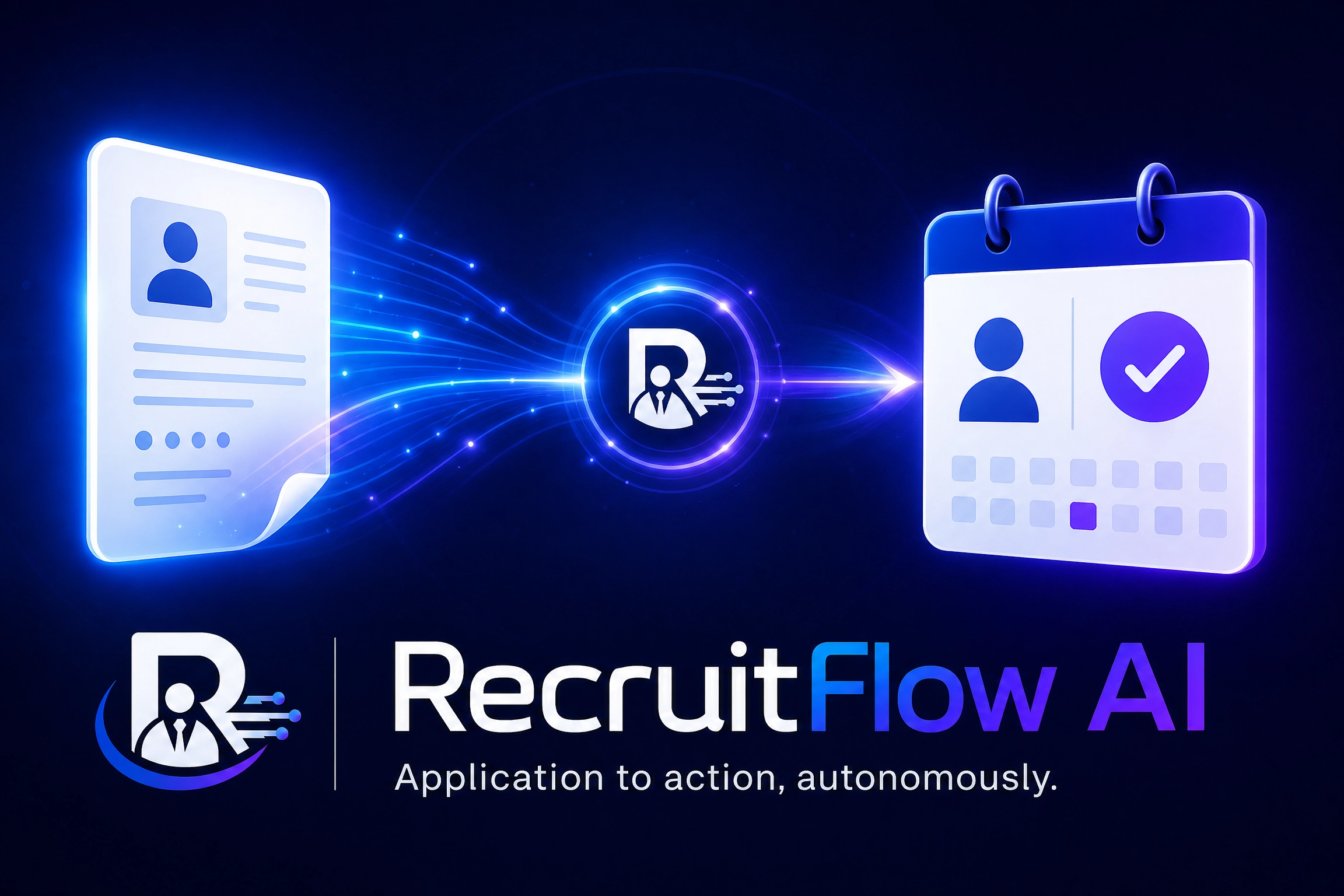
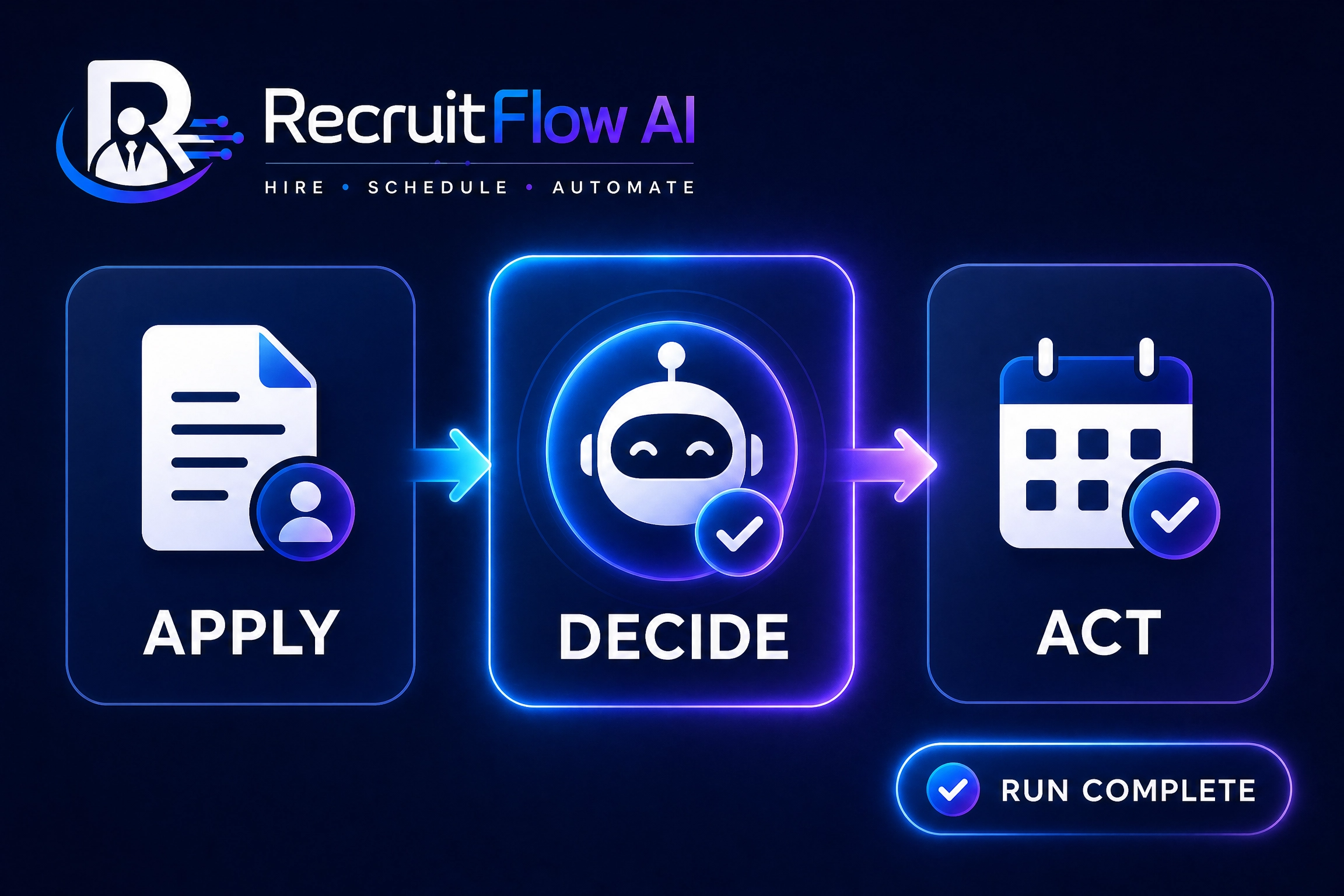
CV transformed into a scheduled interview through the RecruitFlow agent.
-
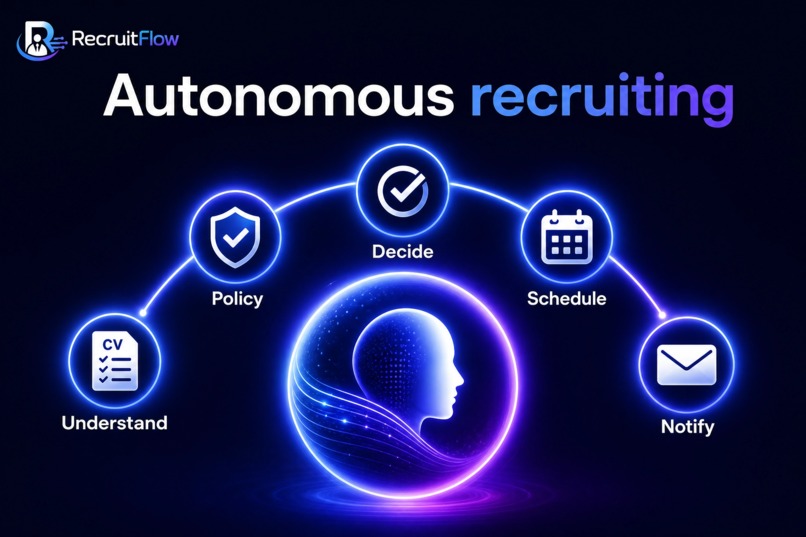
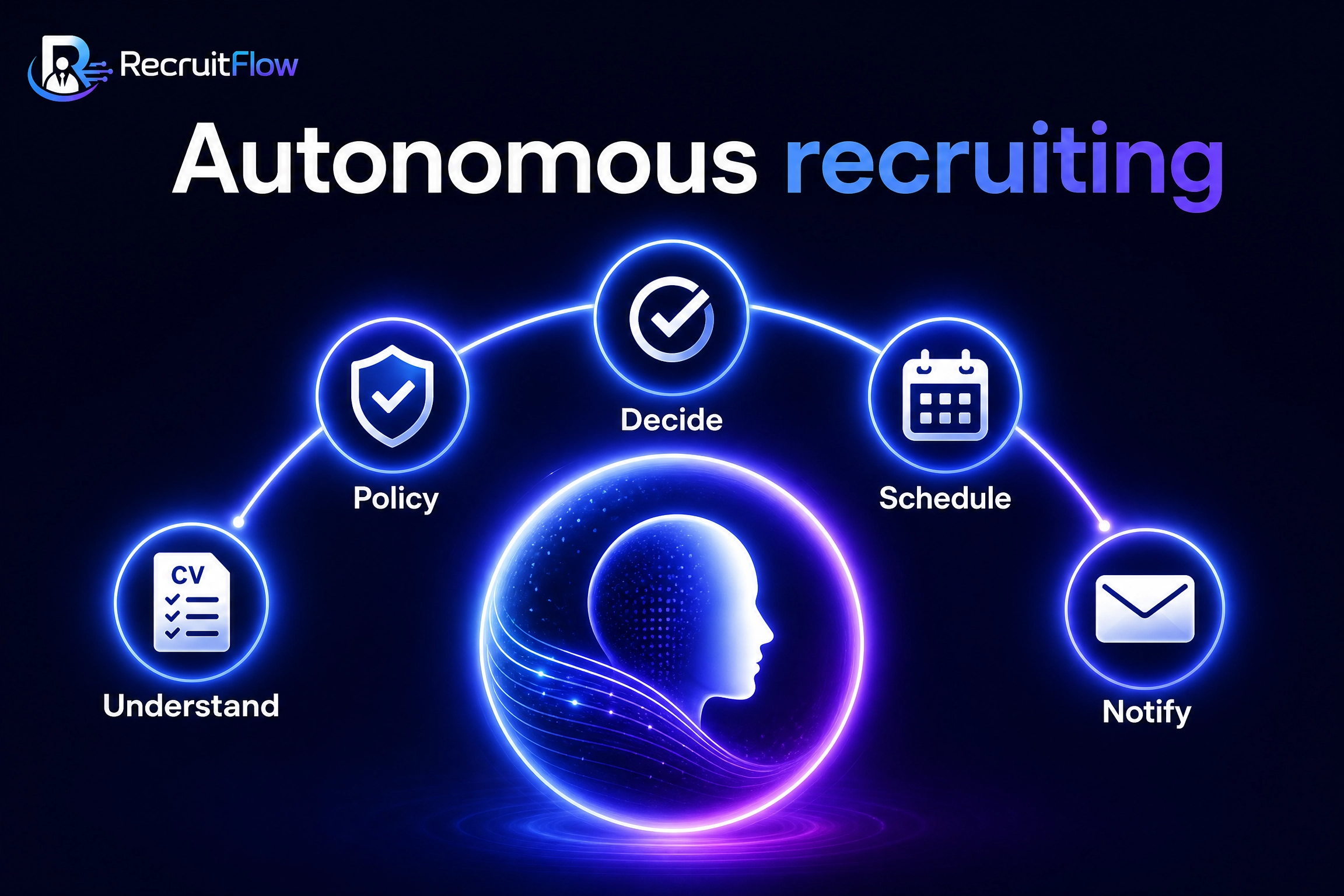
The agent understands applications, applies policy, decides, schedules, and notifies.
-
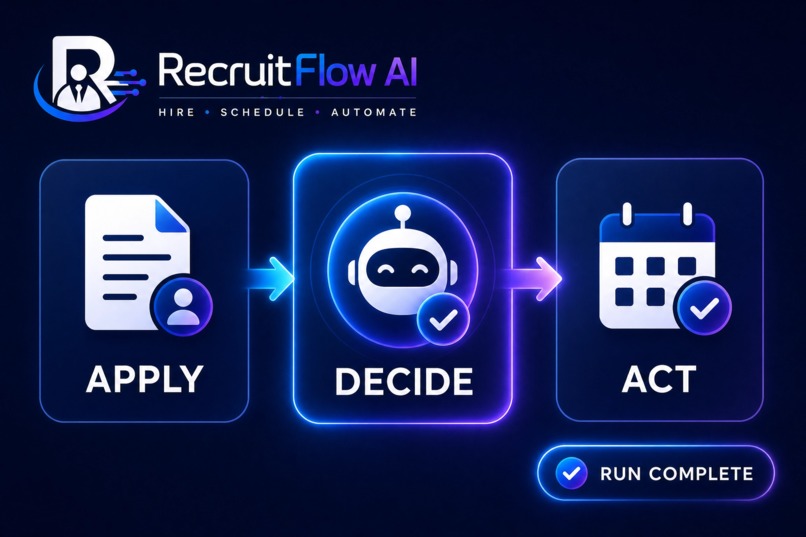
A simple visual summary of RecruitFlow’s end-to-end automation loop.
-
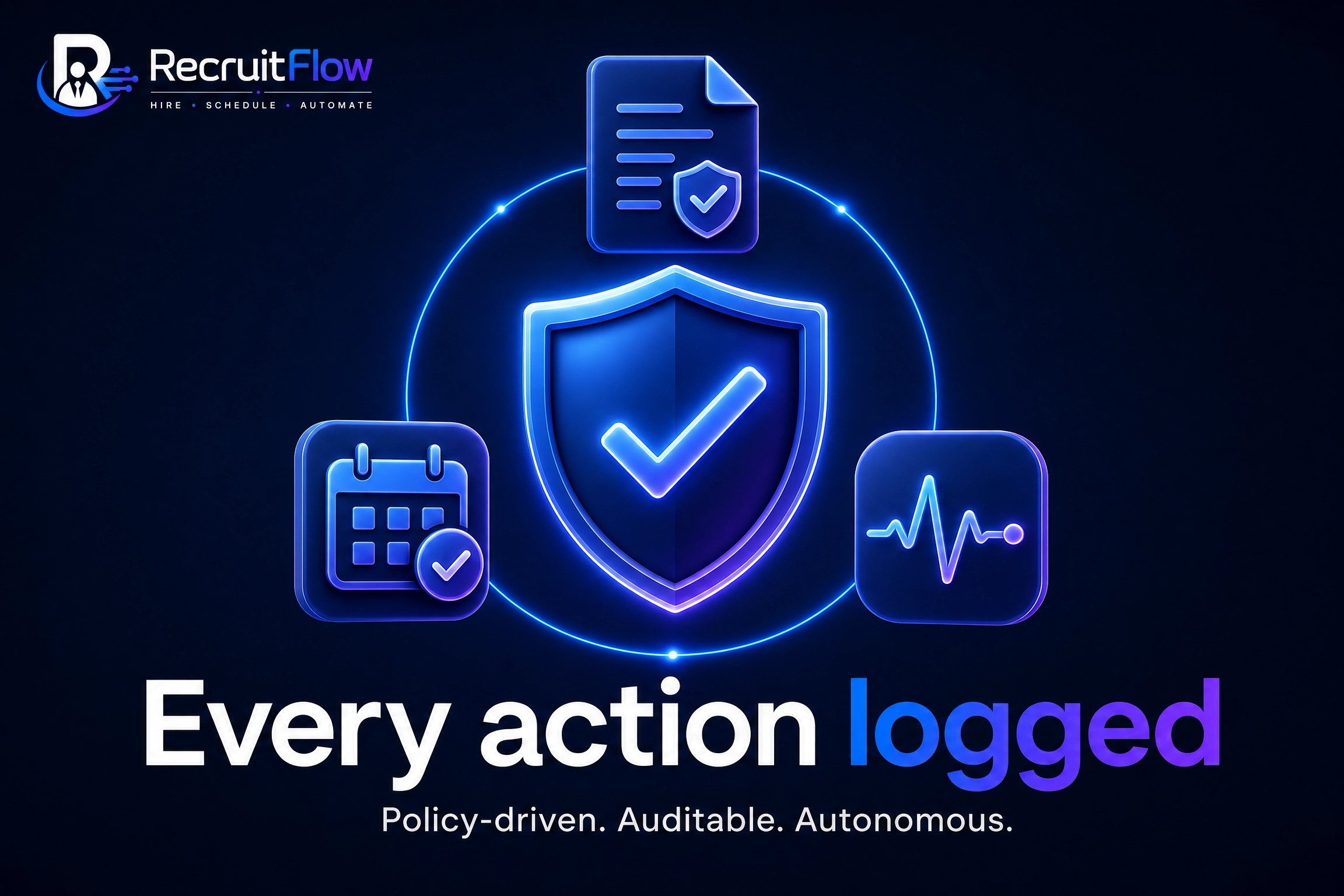
Policy-driven, auditable recruiting with scheduling and activity tracking.
-
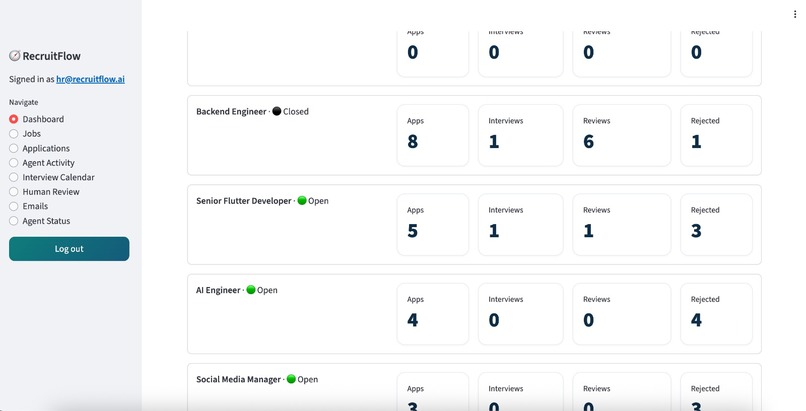
Autonomous recruiting from application to action.
-
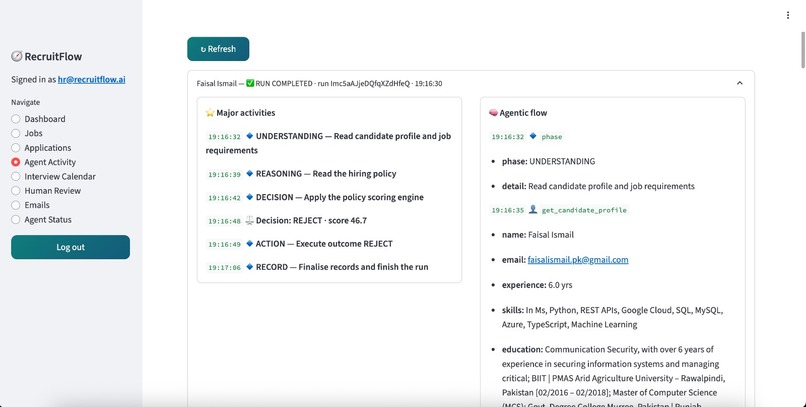
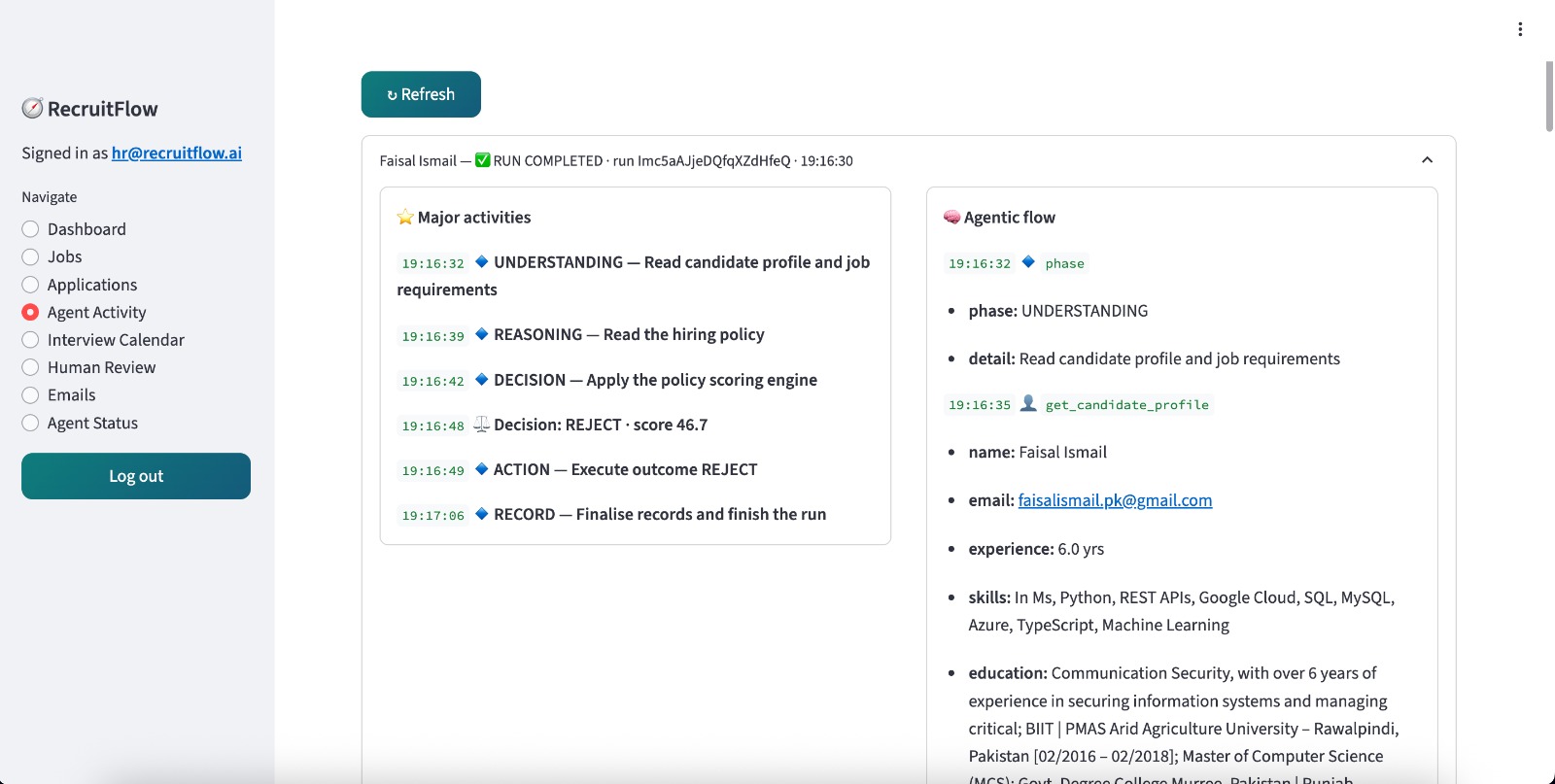
Agent Activity in action.
-
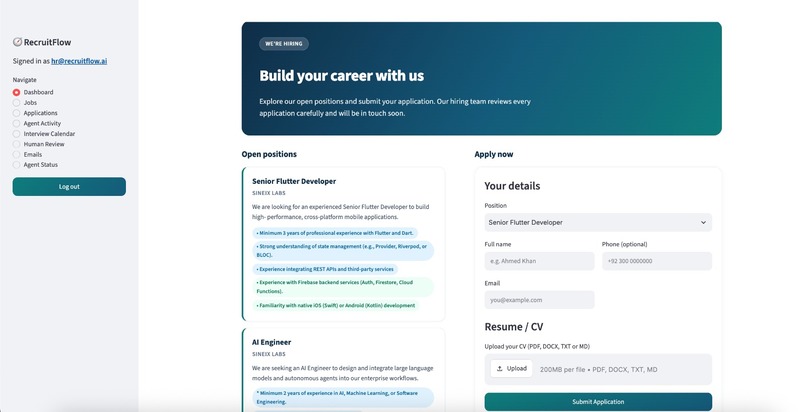
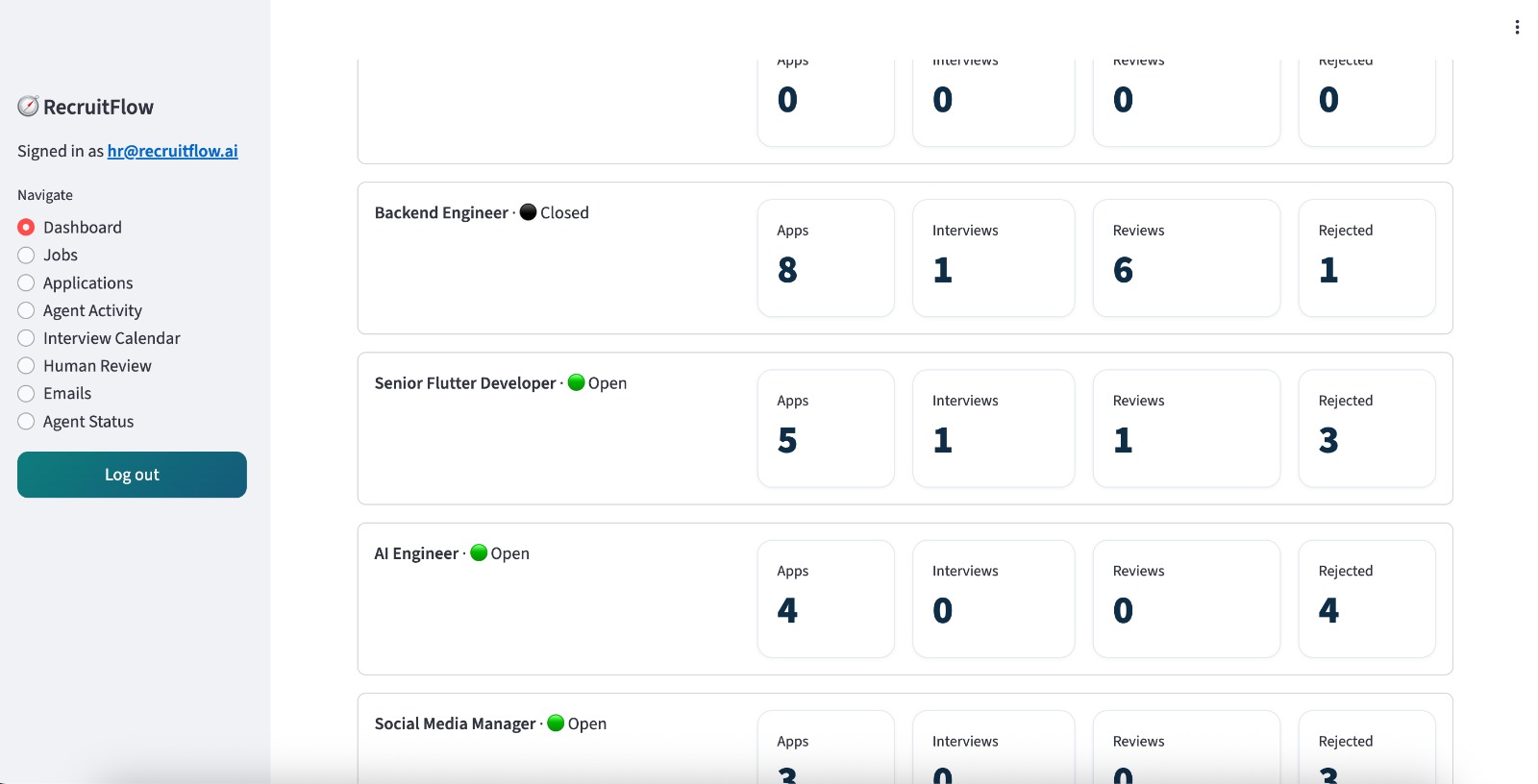
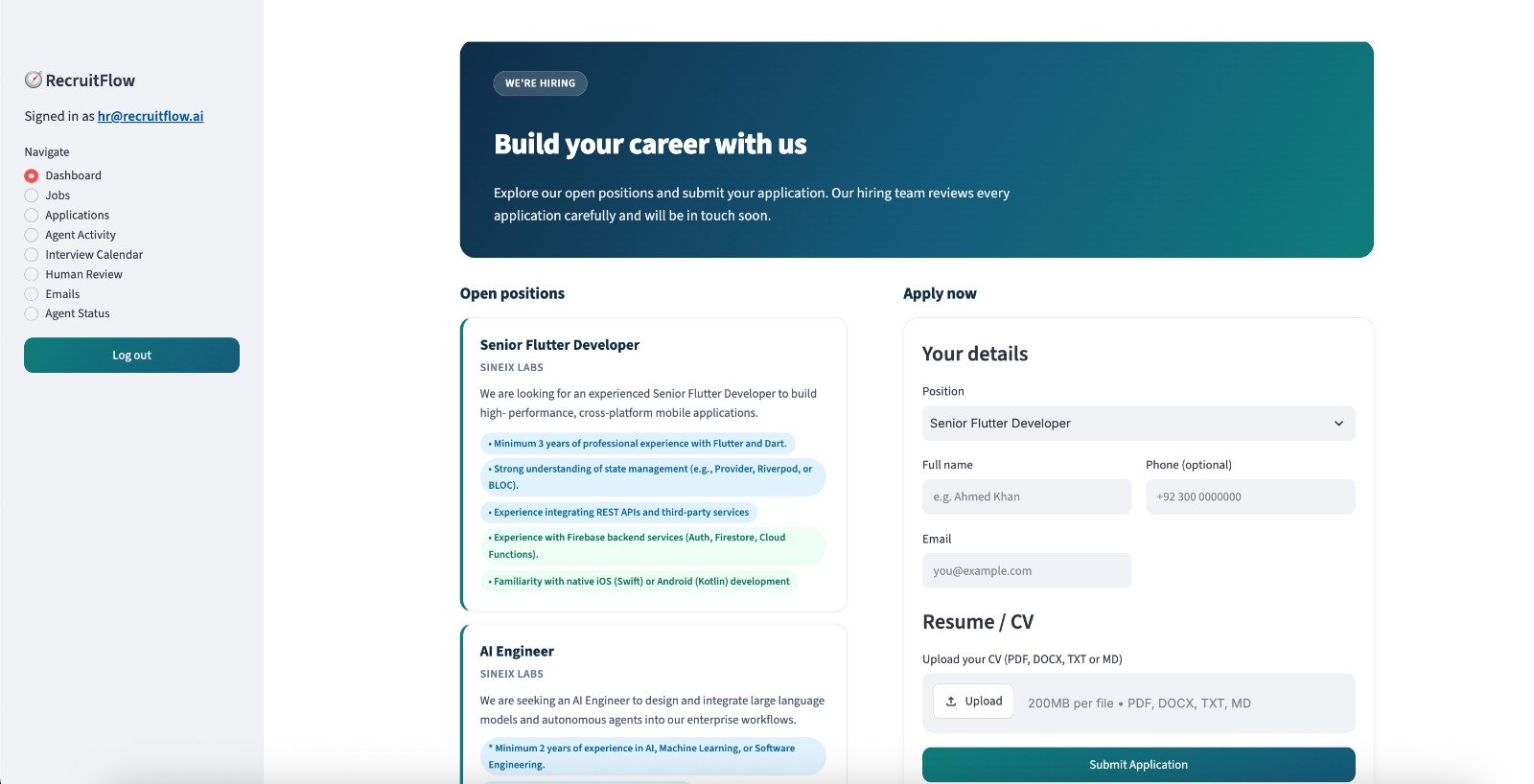
Building seamless recruitment workflows with a clean, intuitive hiring portal for job seekers and HR teams.
-
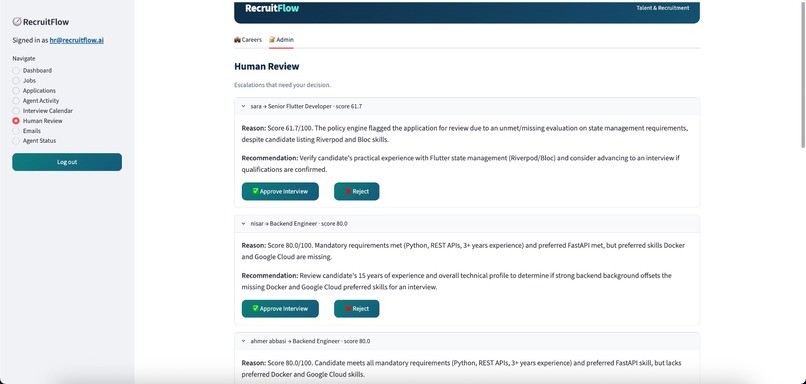
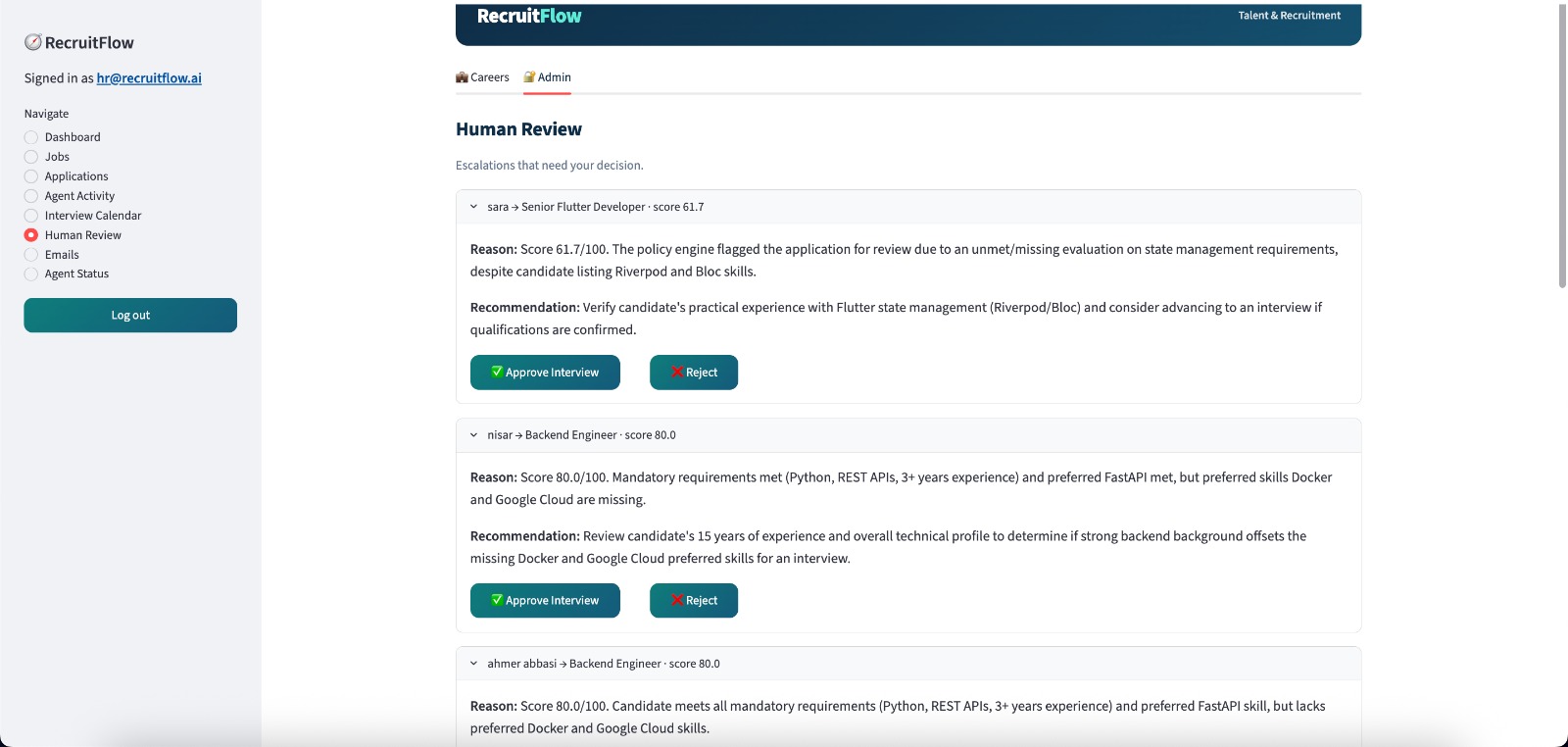
Keeping humans in the loop: intelligent automated candidate evaluation with clear decision flags and actionable recommendations.
-
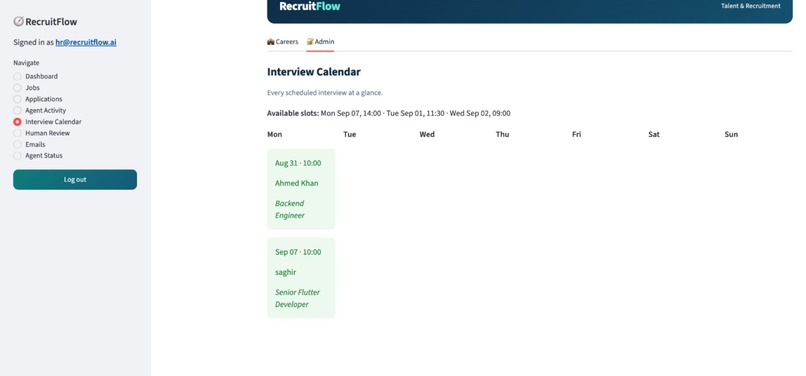
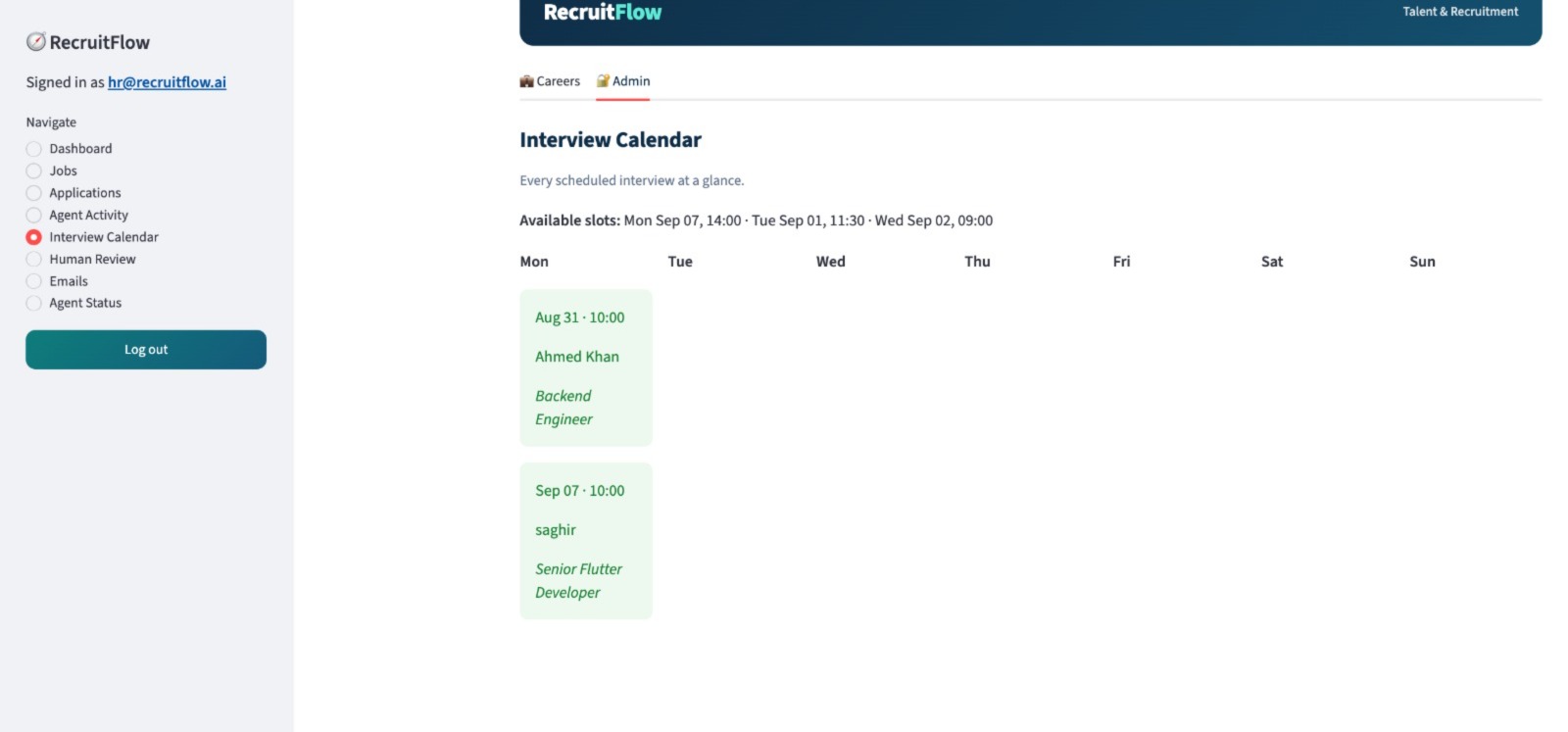
Streamlining interview scheduling with a centralized calendar to track upcoming candidate sessions at a glance.
-
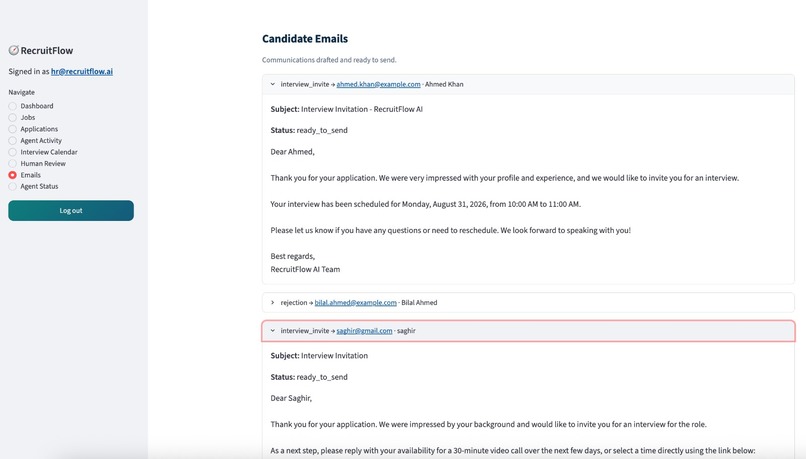
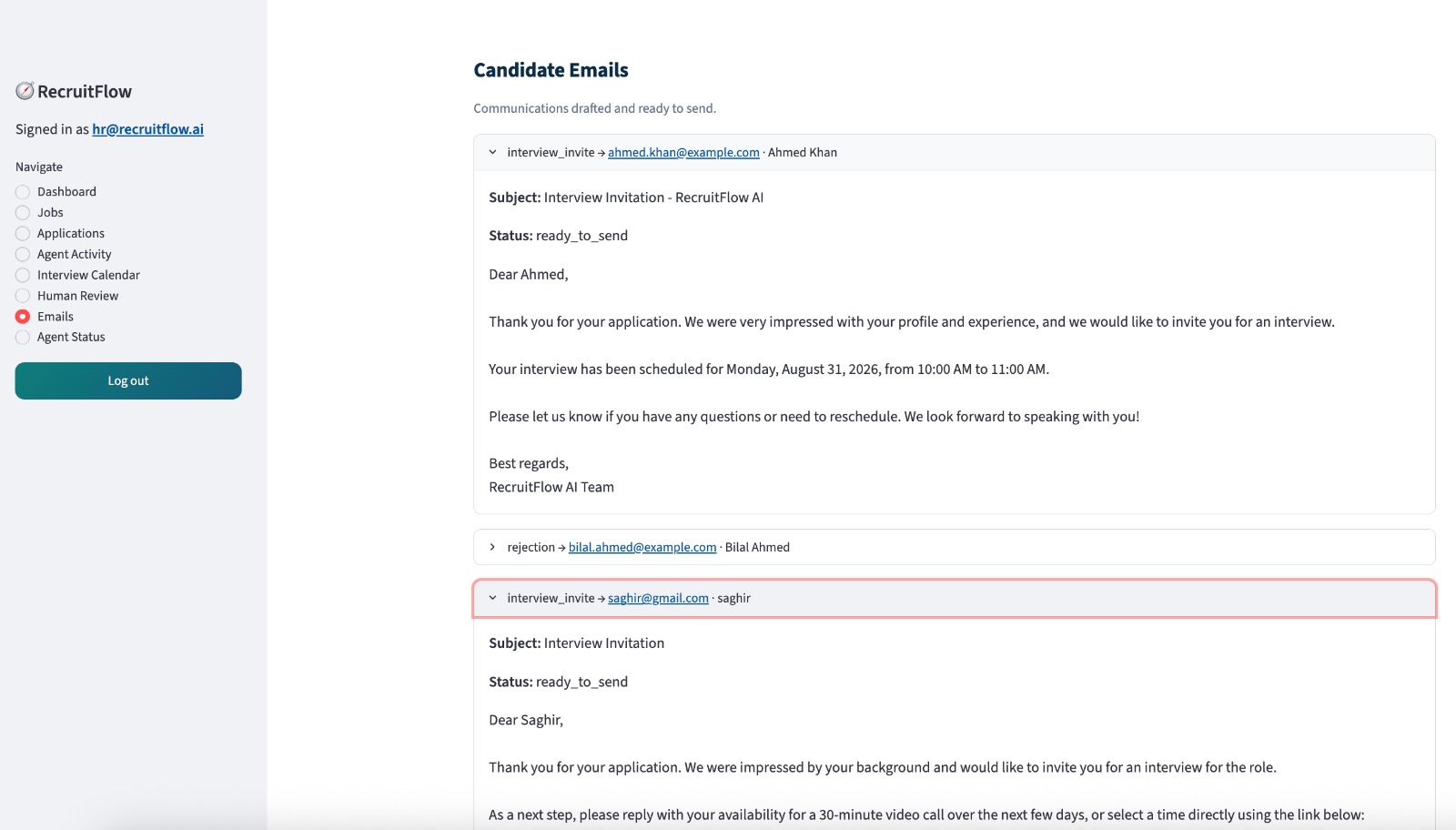
Automating outreach with AI-drafted candidate communications ready for instant review and dispatch.
Inspiration
Recruitment is full of repetitive steps. A candidate applies, someone reads the CV, checks the requirements, decides what should happen next, searches for an interview slot, sends an email, and updates the records.
We kept asking ourselves: what if an AI agent didn't just recommend the next step, but actually took it?
That became the idea behind RecruitFlow AI. Instead of building another CV-matching chatbot that gives a percentage score and stops there, we wanted to build an autonomous recruitment workflow: from application received to recruitment action taken.
Our goal was to explore what happens when an agent is given real tools, real constraints, and real responsibility for completing a workflow.
What it does
RecruitFlow AI is an autonomous recruitment agent built for the Taskmaster track of the All Things Agentic Hackathon.
When a new application arrives, the system:
- Understands the candidate and job requirements.
- Checks mandatory and preferred qualifications.
- Applies a human-defined hiring policy.
- Determines the appropriate outcome.
- Takes the next action autonomously.
- Records every step for auditability.
Depending on the outcome, the agent can schedule an interview, create a human-review escalation, or draft a rejection email.
For an interview recommendation, it can also check available slots, select a conflict-free time, create the interview, add it to the recruiter calendar, and prepare the candidate communication.
The interesting part is that Gemini isn't simply generating a recommendation. Through Google ADK, it decides which tools to use and how to move the workflow forward.
At the same time, we deliberately kept the actual eligibility scoring and hiring outcome inside a deterministic policy engine. This means the AI can orchestrate the workflow, while company policy remains consistent, explainable, and auditable.
How we built it
We built RecruitFlow AI as a lightweight, event-driven system around a single Google ADK RecruitmentCoordinatorAgent.
The frontend is built with Streamlit, with separate Candidate and Admin experiences. FastAPI handles applications, jobs, pipeline queries, activity logs, interviews, reviews, and authentication.
The agent is powered by Gemini 3.7 Flash and has seven tools covering the complete workflow:
- Candidate profile retrieval
- Job requirement retrieval
- Hiring policy retrieval
- Interview availability checking
- Interview scheduling
- Human-review creation
- Candidate email drafting
We use Firestore for persistent application state, decisions, interviews, emails, reviews, and activity logs. The application runs on Google Cloud Run, giving us a stateless, scalable runtime.
Most importantly, we treated the hiring policy as a first-class, human-editable artifact rather than hiding it inside a prompt. A policy such as:
$$ 85\text{–}100 \rightarrow \text{Interview}, \quad 60\text{–}84 \rightarrow \text{Human Review}, \quad <60 \rightarrow \text{Reject} $$
can be changed without rewriting the application logic.
Challenges we ran into
One of our biggest challenges was finding the right balance between autonomy and control.
It would have been easy to let an LLM make the entire hiring decision, but that would make the system difficult to audit and potentially inconsistent. We instead separated responsibilities: Gemini handles agentic orchestration and tool selection, while deterministic code applies the actual hiring policy.
Another challenge was making autonomous actions safe.
Scheduling an interview isn't just a text-generation task. The system needs to check availability, avoid conflicts, persist the interview, and make sure a retry doesn't accidentally create a second booking. We therefore made action tools idempotent using the application ID and ensured each action records its own status and activity-log step.
We also had to think about failure cases that are easy to overlook in a happy-path demo: unparseable CVs, missing mandatory information, unavailable interview slots, failed tool calls, and even a missing policy file. Instead of allowing the agent to improvise, these cases are routed toward human review.
Accomplishments that we're proud of
We're proud that RecruitFlow AI goes beyond “AI evaluated this candidate.”
It demonstrates a complete autonomous workflow:
Application → Understanding → Policy Evaluation → Decision → Action → Record
We built a system where the agent can actually do something in the real world: select an available interview slot, create the interview, update the application, prepare candidate communication, or escalate a case.
We're also particularly proud of the auditability. Every important action leaves a trace, while our activity logs avoid storing sensitive CV content or unnecessary PII.
Another accomplishment was making the project both demo-friendly and deployment-ready. The same workflow can run completely offline for a reliable hackathon demonstration or use Gemini, Firestore, and Cloud Run in full mode.
What we learned
The biggest lesson was that being agentic isn't about giving an LLM more freedom. It's about giving it meaningful responsibility within well-defined boundaries.
We learned that a strong agentic system needs more than a powerful model. It needs tools, state, policies, failure handling, idempotency, and observability.
We also learned that deterministic components and AI agents don't have to compete with each other. In our case, they complement each other:
AI decides how to navigate the workflow. Code guarantees what the policy means.
That separation made the system much more trustworthy while still allowing Gemini to act autonomously.
What's next for RecruitFlow AI
RecruitFlow AI is currently focused on the application-to-interview workflow, but the architecture can grow into a broader autonomous recruitment platform.
Next, we'd like to add richer candidate communication, interview feedback processing, multi-stage hiring pipelines, recruiter analytics, and stronger policy/version tracking.
We also want to explore how far autonomous recruitment workflows can go while maintaining human oversight where it matters, transparent decisions, and strong privacy protections.
Ultimately, our vision is simple:
Recruiters shouldn't have to manually move every application from one step to the next. They should be able to define the rules, and let trustworthy agents handle the work.


Log in or sign up for Devpost to join the conversation.