-
-
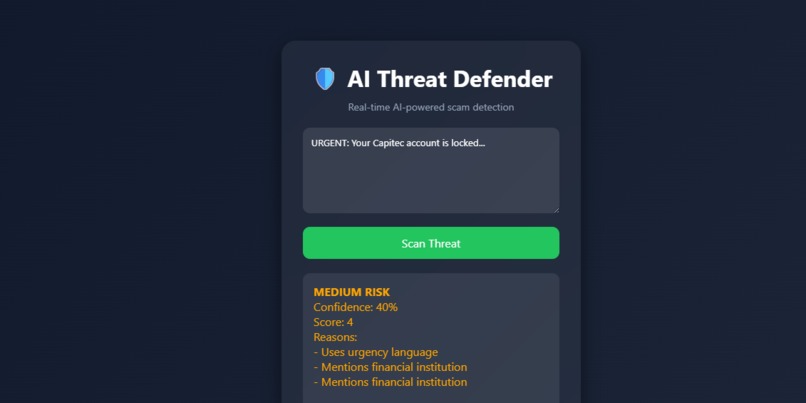
User-friendly interface for scanning suspicious messages in real time
-
Inspiration
AI Threat Defender was inspired by the increasing number of phishing and scam messages targeting everyday users, especially through emails, SMS, and online platforms. Many of these attacks use urgency, fake rewards, or impersonation of trusted institutions to trick users into revealing sensitive information. The goal of this project was to build a simple and accessible tool that can analyze suspicious messages in real time and help users identify potential threats before they fall victim.
What it does
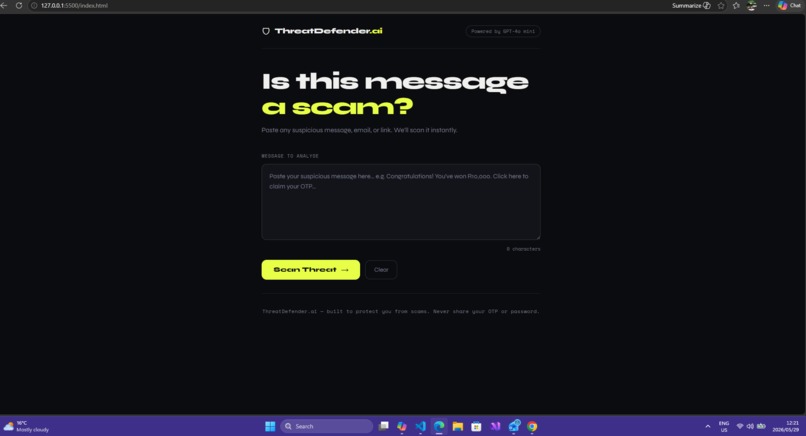
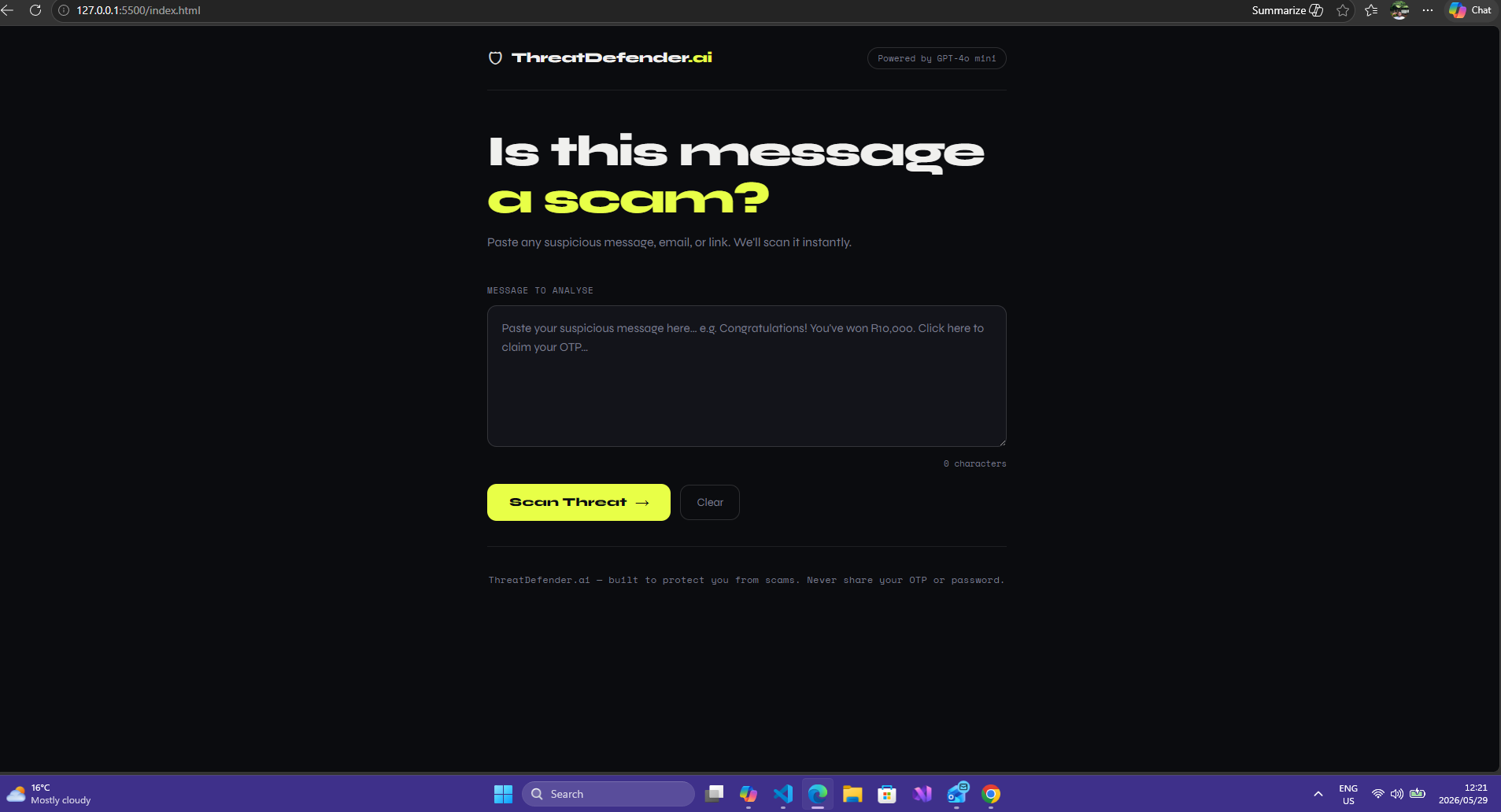
AI Threat Defender allows users to paste or type any message, link, or text and instantly analyzes it for potential threats.
The system scans for common phishing indicators such as:
Suspicious links
Urgency or pressure tactics
Request for sensitive information
Financial or institutional keywords
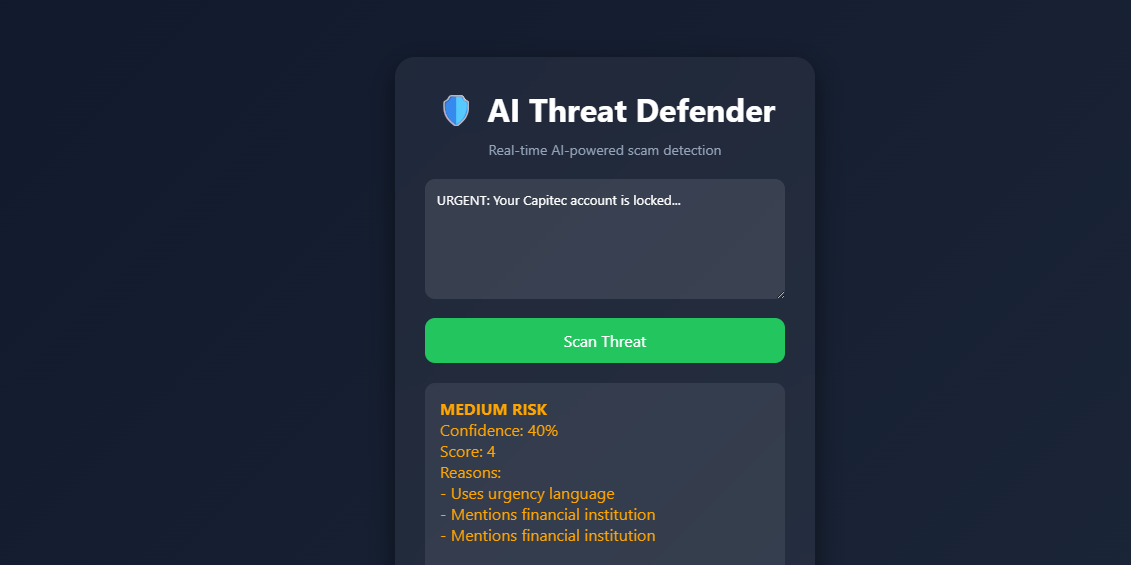
It then assigns a risk level (Low, Medium, or High), provides a score, and explains the reasons behind the decision. The tool also includes AI-style analysis to help users better understand the threat.
This enables users to quickly identify scams and make safer decisions online.
How we built it
The system is a full-stack web application: Frontend: A clean and user-friendly web interface where users can paste or type any suspicious message. Backend: A Python Flask server that processes the input and performs threat analysis. Detection System: A scoring-based engine that checks for: Suspicious links Urgency language (e.g., “urgent”, “act now”) Requests for sensitive information (e.g., PIN, OTP, password) Financial or institutional keywords The backend then returns a risk level (Low, Medium, High) along with reasons for the decision
Challenges we ran into
Fixing deployment issues such as missing dependencies and file paths Connecting the frontend to a live backend URL Debugging API errors and environment variable setup Designing a scoring system that balances simplicity and effectiveness
Accomplishments that we're proud of
Successfully built and deployed a full-stack web application from scratch
Implemented a real-time threat detection system with scoring and explanations
Connected frontend and backend seamlessly using API communication
Deployed the backend to the cloud (Render) and made it publicly accessible
Designed a clean and user-friendly interface for easy interaction
Overcame deployment and debugging challenges during development
What we learned
During this project, I learned: How to build and connect a frontend and backend system How to deploy a Python Flask application to the cloud How to handle API communication using JavaScript How to manage environment variables securely How cybersecurity systems detect phishing patterns
What's next for AI Threat Defender
Integrating a real machine learning model for advanced detection Supporting file and email scanning Adding a history/dashboard for scanned messages Improving accuracy with larger datasets
Built With
- css
- flask
- flask-cors
- html
- javascript
- netlify
- python
- render
- rest
