-
-
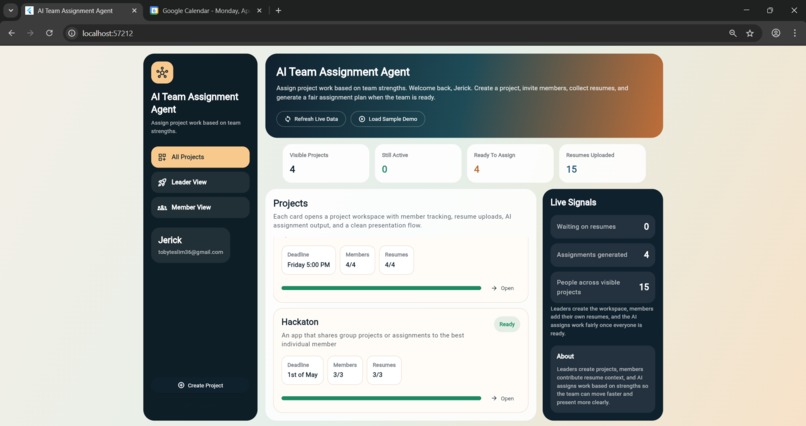
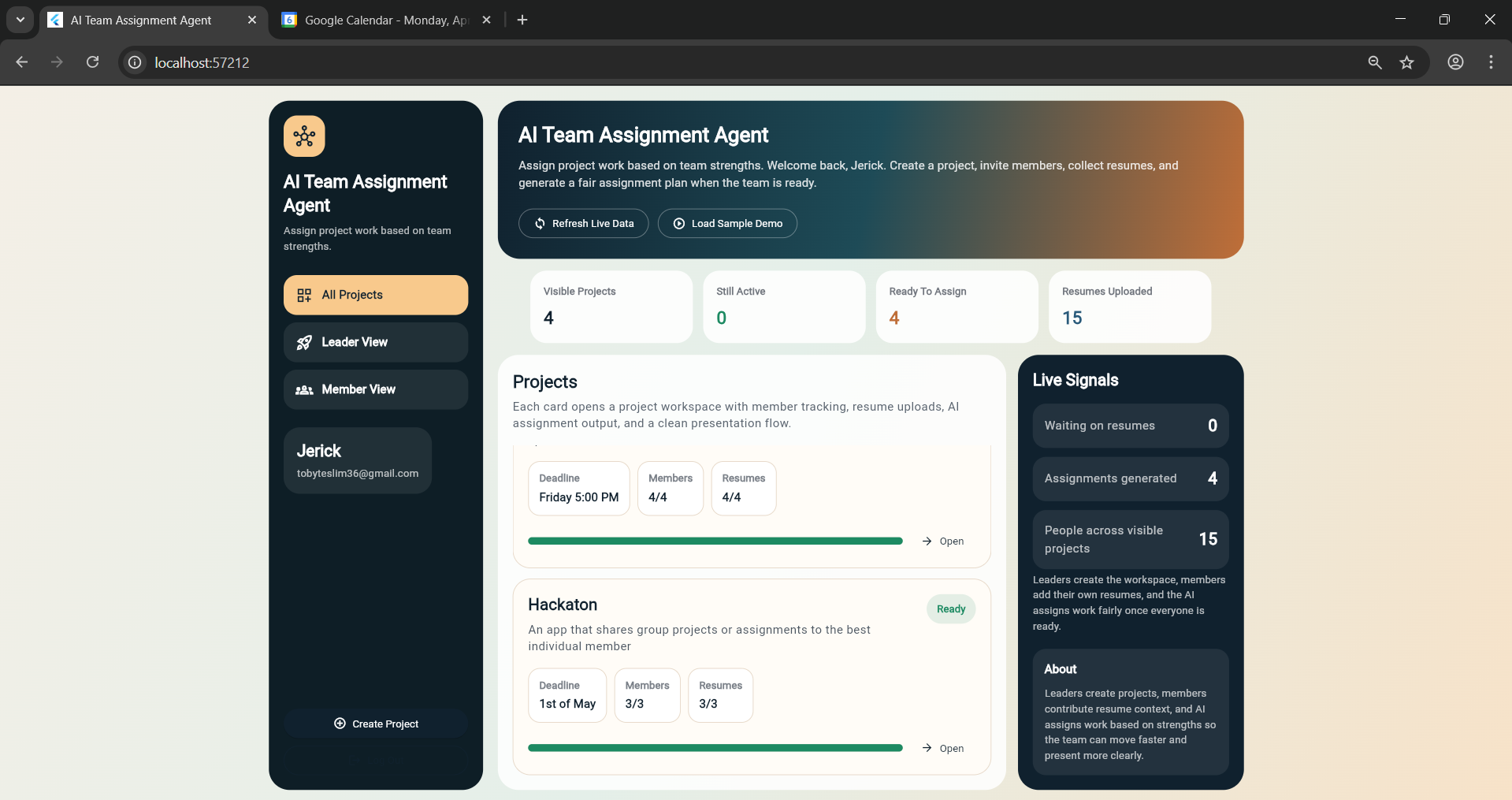
Dashboard view of AI Team Assignment Agent with live project status, assignment readiness, and team activity signals
-
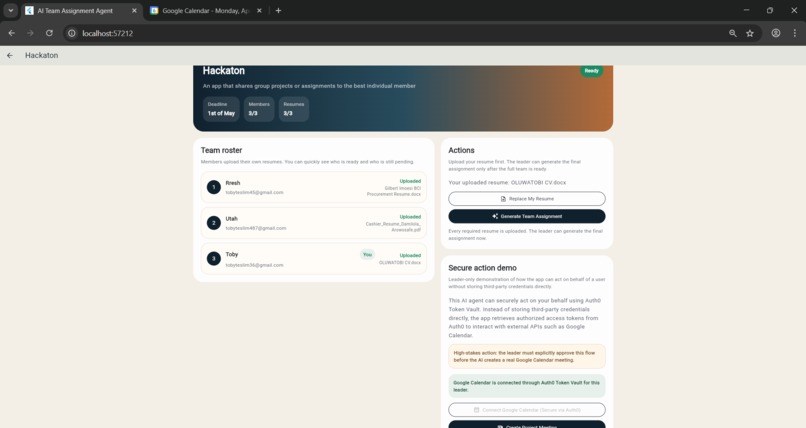
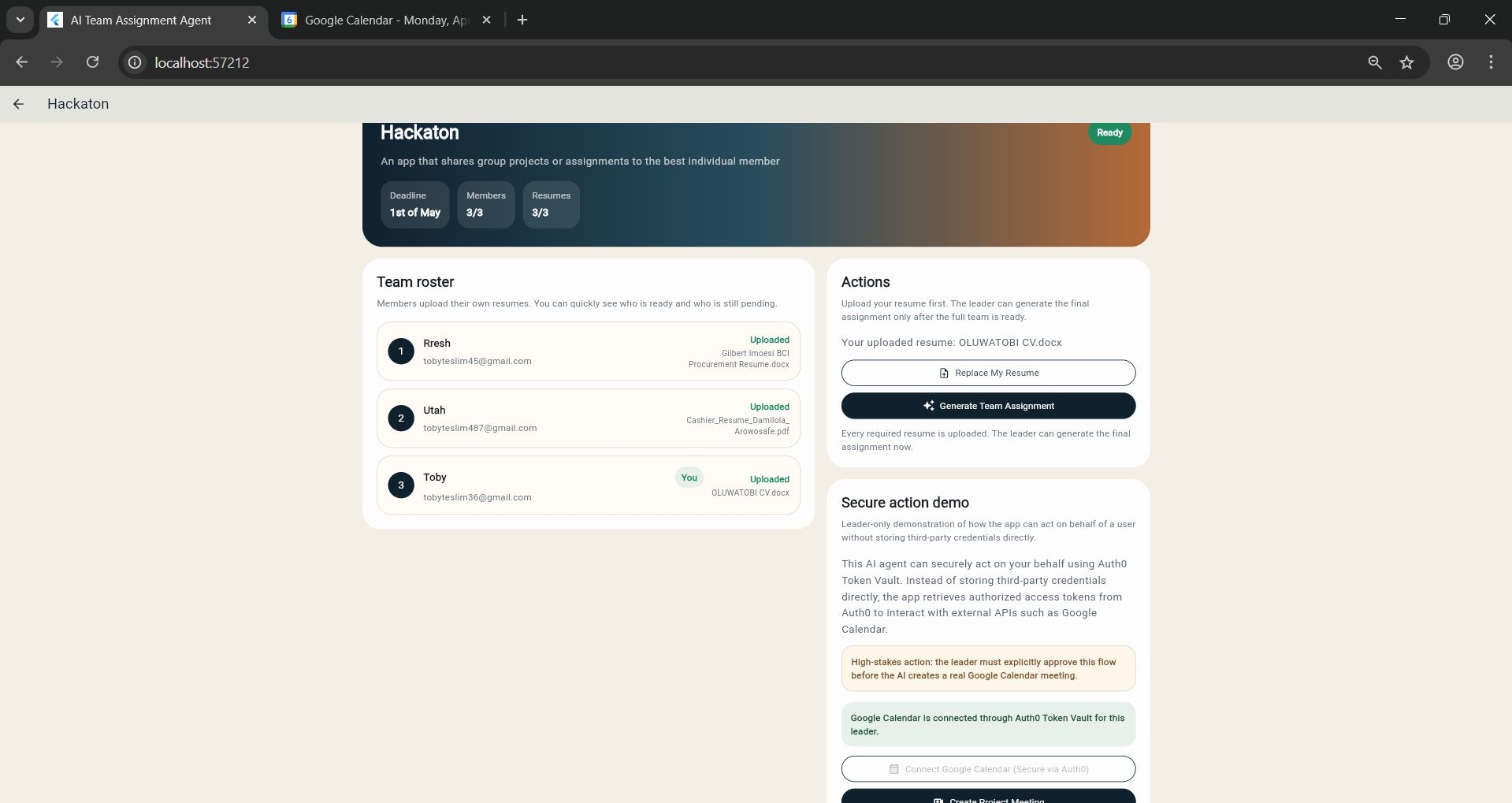
Project workspace showing invited teammates and resume upload readiness before the leader generates assignments.
-
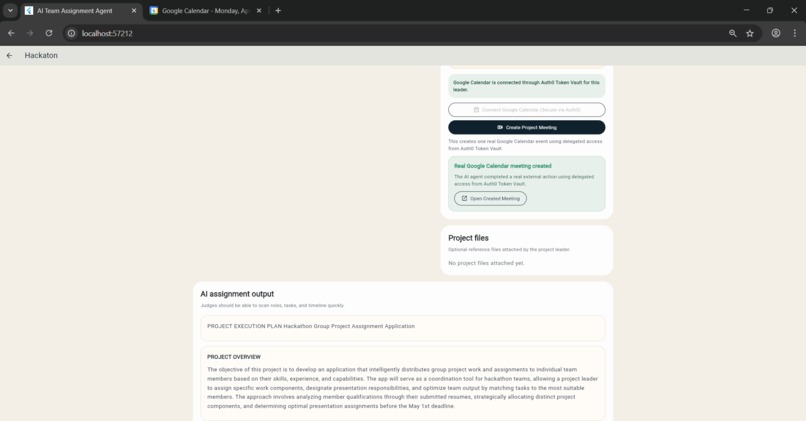
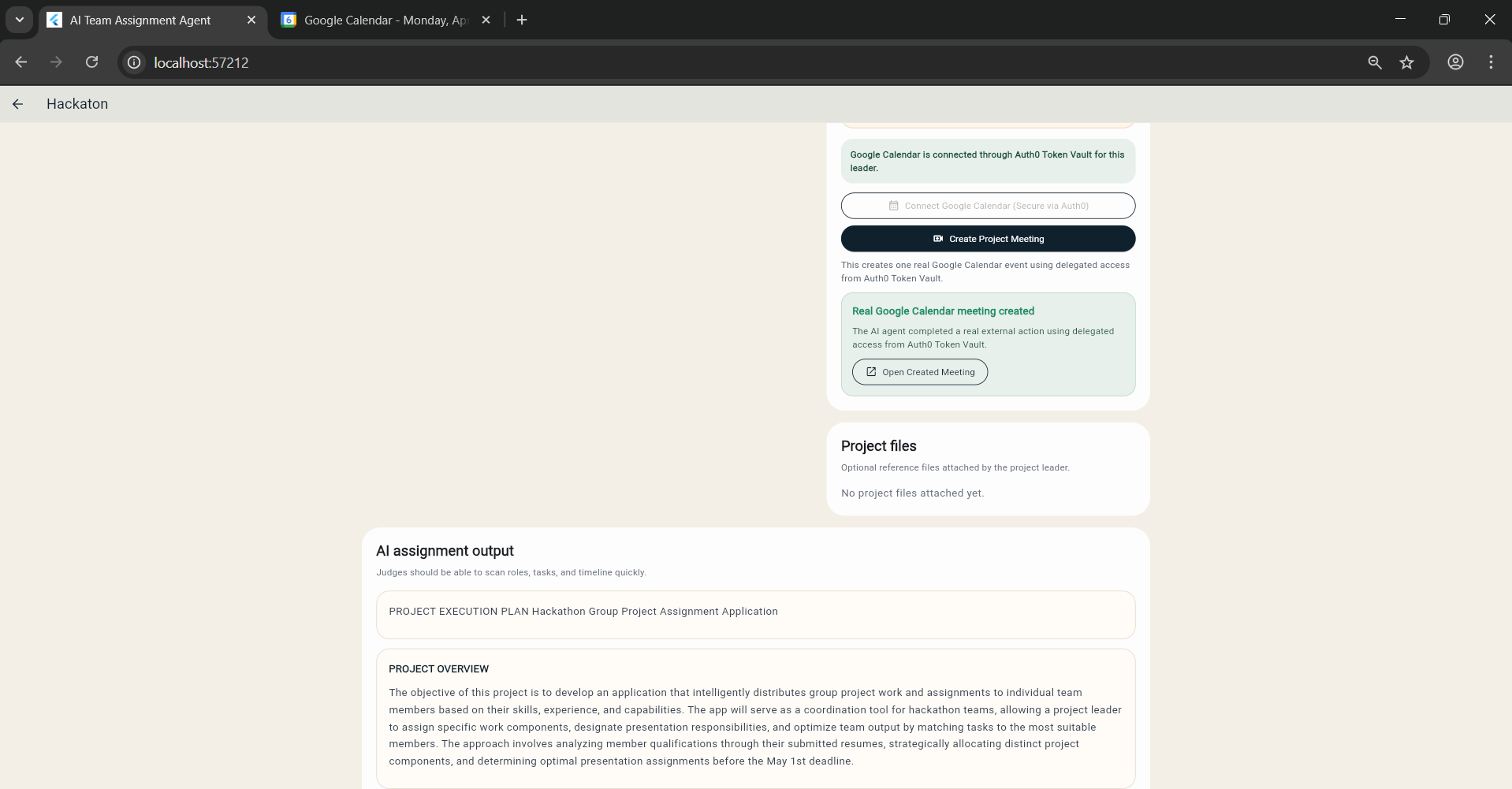
Structured AI assignment output that shows project overview so teams can execute clearly.
-
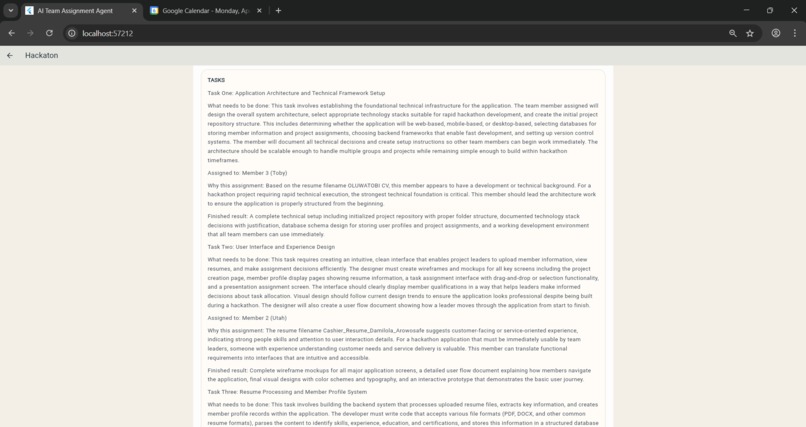
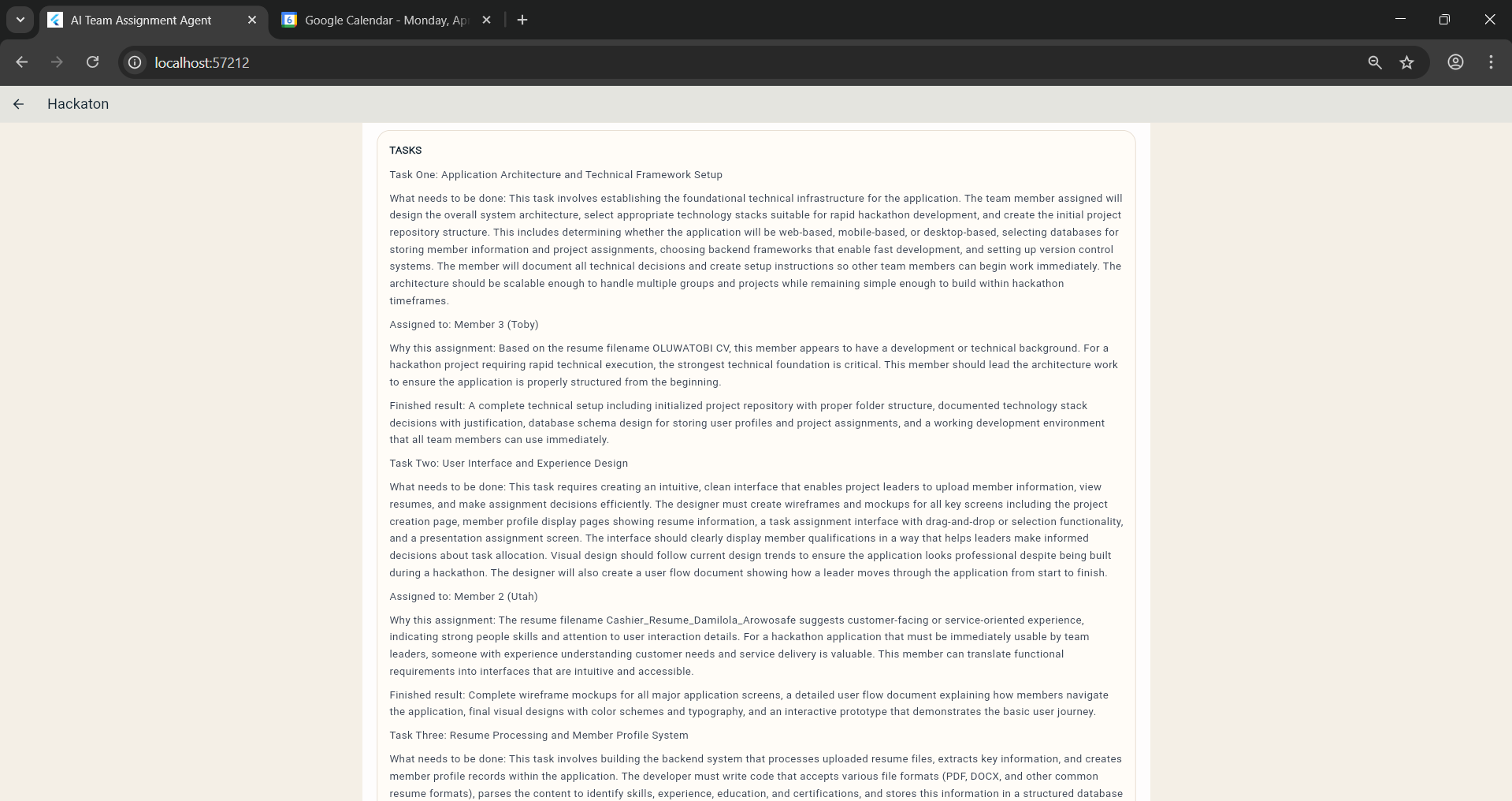
Structured AI assignment output that shows tasks so teams can execute clearly.
-
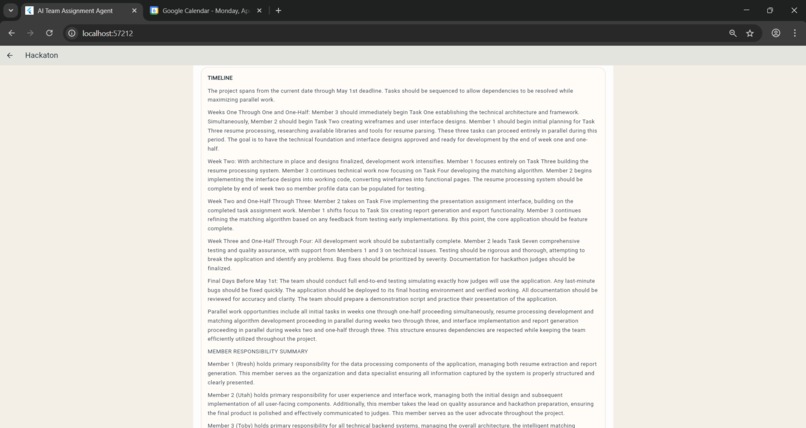
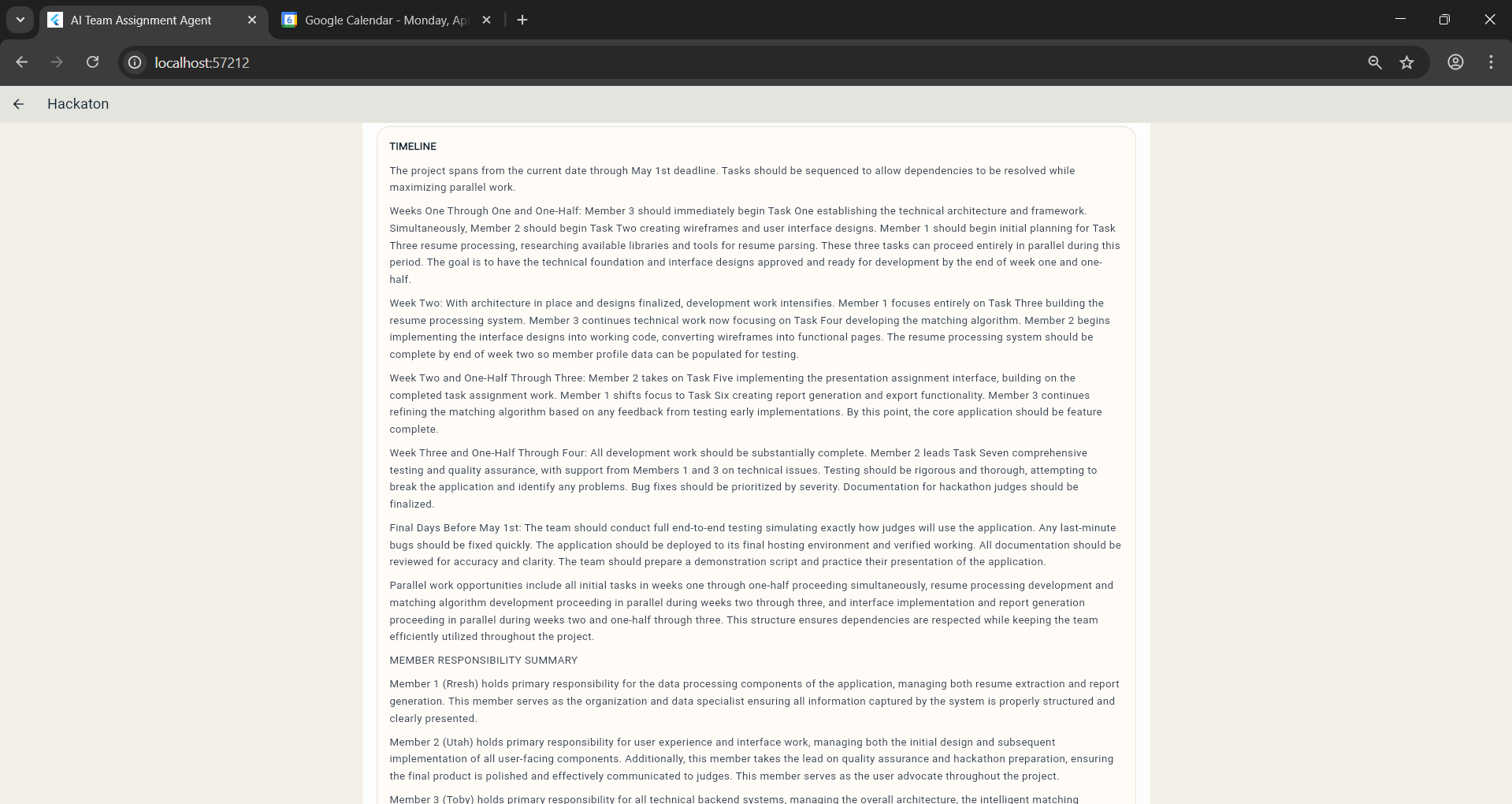
Structured AI assignment output that shows timeline so teams can execute clearly.
Inspiration
Team projects often fail for a simple reason: work is assigned based on guesswork instead of evidence. In hackathons, classrooms, and collaborative builds, leaders usually know the deadline and the goal, but they do not have a reliable way to match tasks to the people best suited to do them.
I built the AI Team Assignment Agent to solve that. The app helps a leader create a project, invite teammates, collect individual resumes, and generate a structured assignment plan based on each member’s strengths. I then extended that workflow with a secure real-world action: after the leader explicitly approves it, the app can create a real Google Calendar meeting on the leader’s behalf using Auth0 for AI Agents Token Vault.
What it does
AI Team Assignment Agent is a Flutter application for team coordination and secure agentic action.
The workflow is simple:
- A leader signs in and creates a project.
- The leader invites teammates by email or username.
- Each member uploads their own resume.
- The leader generates an AI assignment plan once the team is ready.
- The app presents a structured output with role assignments, task breakdown, and timeline.
- The leader can then approve one secure delegated action: creating a real Google Calendar meeting through Auth0 Token Vault.
This keeps the AI useful, but still inside explicit permission boundaries.
How we built it
The frontend is built in Flutter and is designed around a leader/member workflow. I use Firebase for the app data layer, including authentication scaffolding, project persistence, and file upload support for resumes and project files.
For the secure delegated action, we added a lightweight Node.js backend. That backend integrates with Auth0 for AI Agents and Auth0 Token Vault to complete the Google authorization flow, retrieve delegated access securely, and create a real Google Calendar event.
The key design decision was to separate project coordination from privileged action execution:
- Flutter handles the product experience
- Firebase stores project and team workflow data
- Auth0 handles OAuth, consent, and connected accounts
- Token Vault enables secure delegated access
- The backend performs the final Google Calendar API call
Challenges we ran into
The hardest part was not building a basic UI. The hardest part was making the secure action real.
I had to work through:
- Auth0 callback configuration
- My Account API access
- Google redirect URI setup
- Google test-user configuration
- connected account completion
- Token Vault grant configuration
- Google Calendar delegated event creation
That work was important because we wanted to avoid a fake or simulated security demo. I pushed until the app created a real calendar event through the Token Vault flow.
Accomplishments that we're proud of
I am most proud of two things:
- the product flow is understandable and grounded in a real collaboration problem
- the secure delegated action is real, not just mocked
The final result is an app where:
- a leader creates a project
- teammates contribute their own resume context
- AI produces a structured project assignment
- the leader explicitly approves a real calendar action
- Auth0 Token Vault enables that action without direct third-party token storage
What we learned
This project taught me that secure agentic AI is not just a prompt or workflow problem. The hardest part is building the trust layer correctly.
I learned how delegated access changes the design of an AI product. Instead of storing third-party credentials directly, I used Auth0 for AI Agents and Token Vault to let the app perform a real Google Calendar action only after explicit user approval. That forced me to think carefully about permission boundaries, high-stakes actions, and how to keep users in control.
I also learned how much product quality depends on the workflow around the AI, not just the model output itself. The project became much stronger once the leader/member flow, resume collection, assignment readiness, and secure follow-up action all worked together as one system.
What's next for AI Team Assignment Agent
Next, I would extend the secure action model beyond a single calendar event.
Future directions include:
- secure task creation in project tools
- role-based approval flows for multiple high-stakes actions
- richer AI planning across deadlines and dependencies
- more delegated integrations where agents can act on behalf of users without unsafe token storage
My goal is to make AI coordination tools not just smart, but trustworthy.
Bonus Blog Post
Building AI Team Assignment Agent taught me that the biggest challenge in agentic AI is not just generating a useful response. The real challenge is letting an AI system take action without breaking trust.
My original goal was simple: help a project leader assign work more fairly by using teammate resumes and project context instead of guesswork. That part was already useful. A leader could create a project, invite members, wait for each person to upload their own resume, and generate a structured assignment plan with clear roles, tasks, and a timeline. But for this hackathon, I wanted to go further and prove that the app could perform a real action securely.
The hardest technical work was around Auth0 for AI Agents Token Vault. I had to work through callback URL mismatches, My Account API access, Google redirect configuration, connected account setup, and Token Vault grant issues before I finally got the secure flow working end to end. That process forced me to think much more seriously about permission boundaries and high-stakes actions.
What I found most valuable is that Token Vault changes how you design an AI product. Instead of storing third-party credentials directly in the app or backend database, the app can request delegated access only when the user explicitly approves a real action. In my case, that action was creating a real Google Calendar meeting for the project leader.
That lesson will stay with me: agentic AI becomes much more credible when usefulness and security are designed together.
Built With
- auth0
- auth0-for-ai-agents
- auth0-token-vault
- claude
- cloud-firestore
- dart
- express.js
- firebase
- firebase-auth
- firebase-storage
- flutter
- google-calendar-api
- node.js


Log in or sign up for Devpost to join the conversation.