-
-
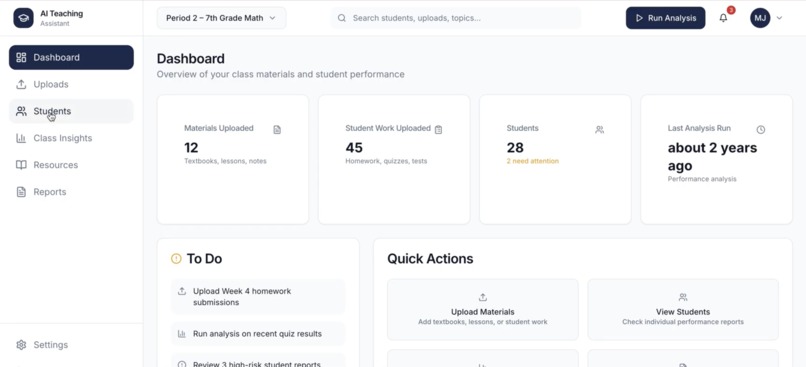
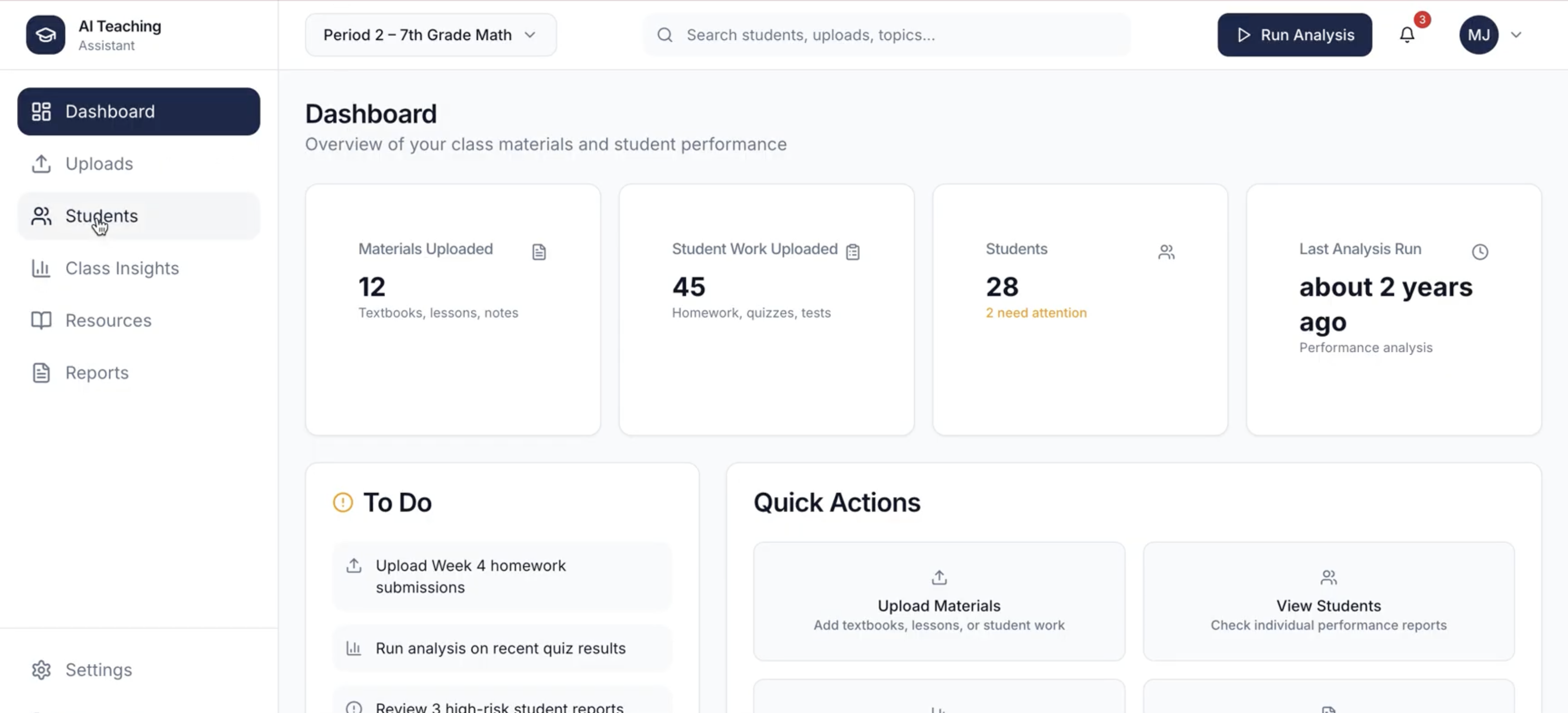
Dashboard
-
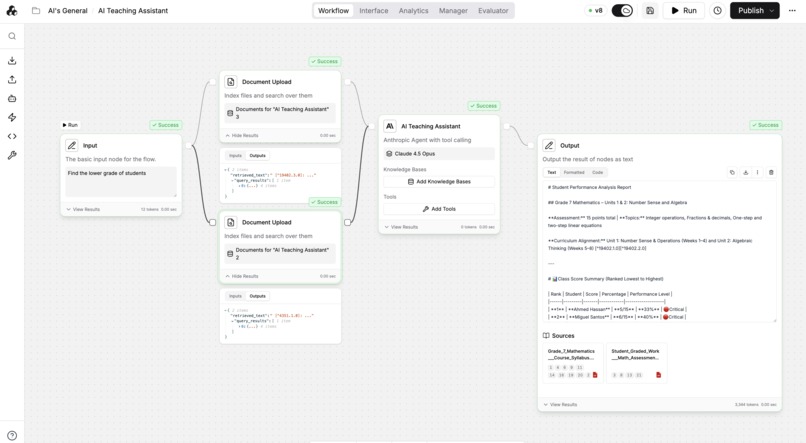
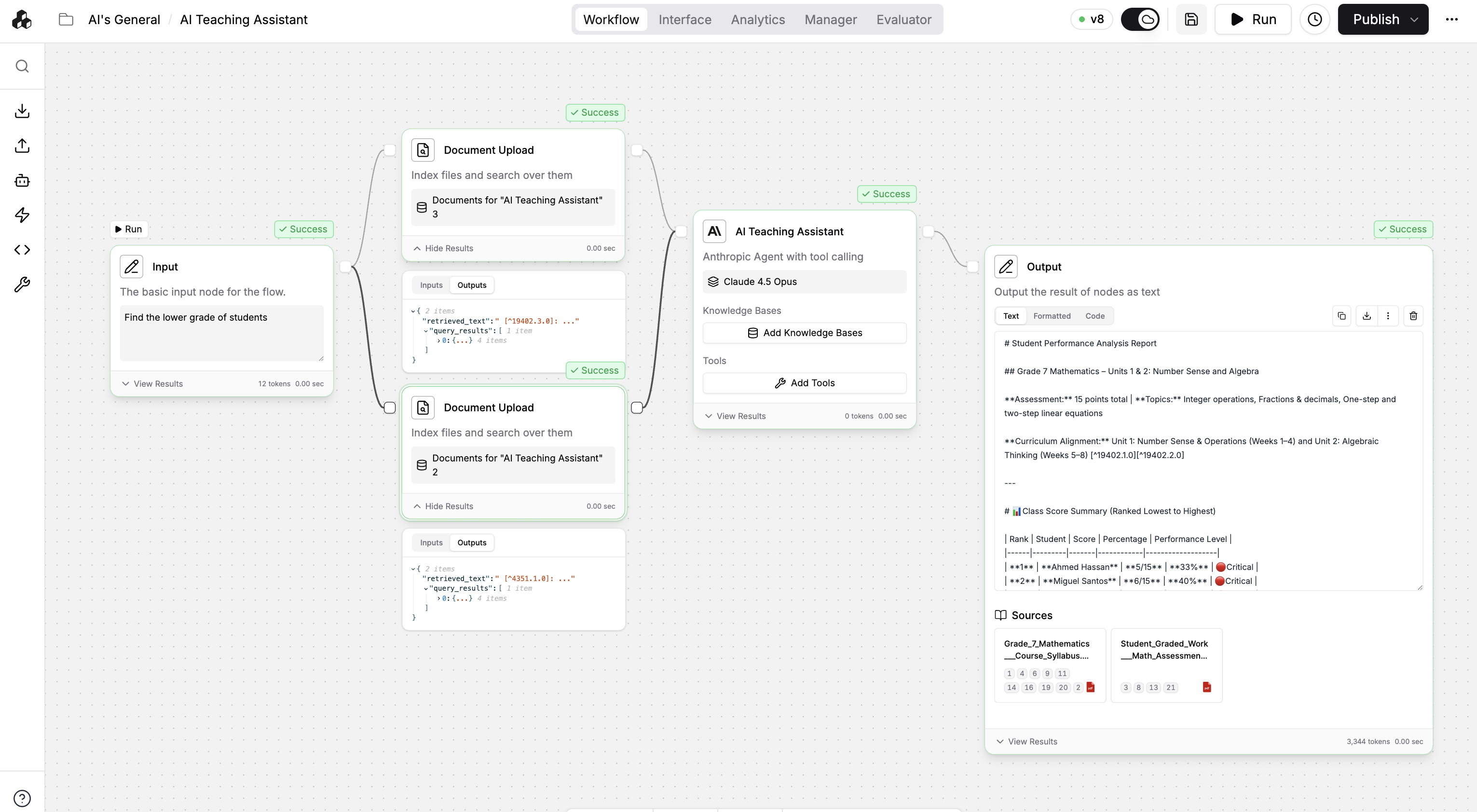
AI Agent using StackAI
-
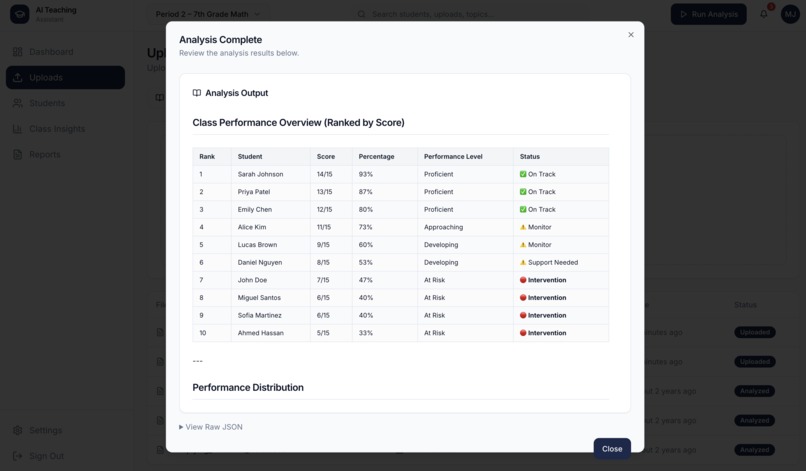
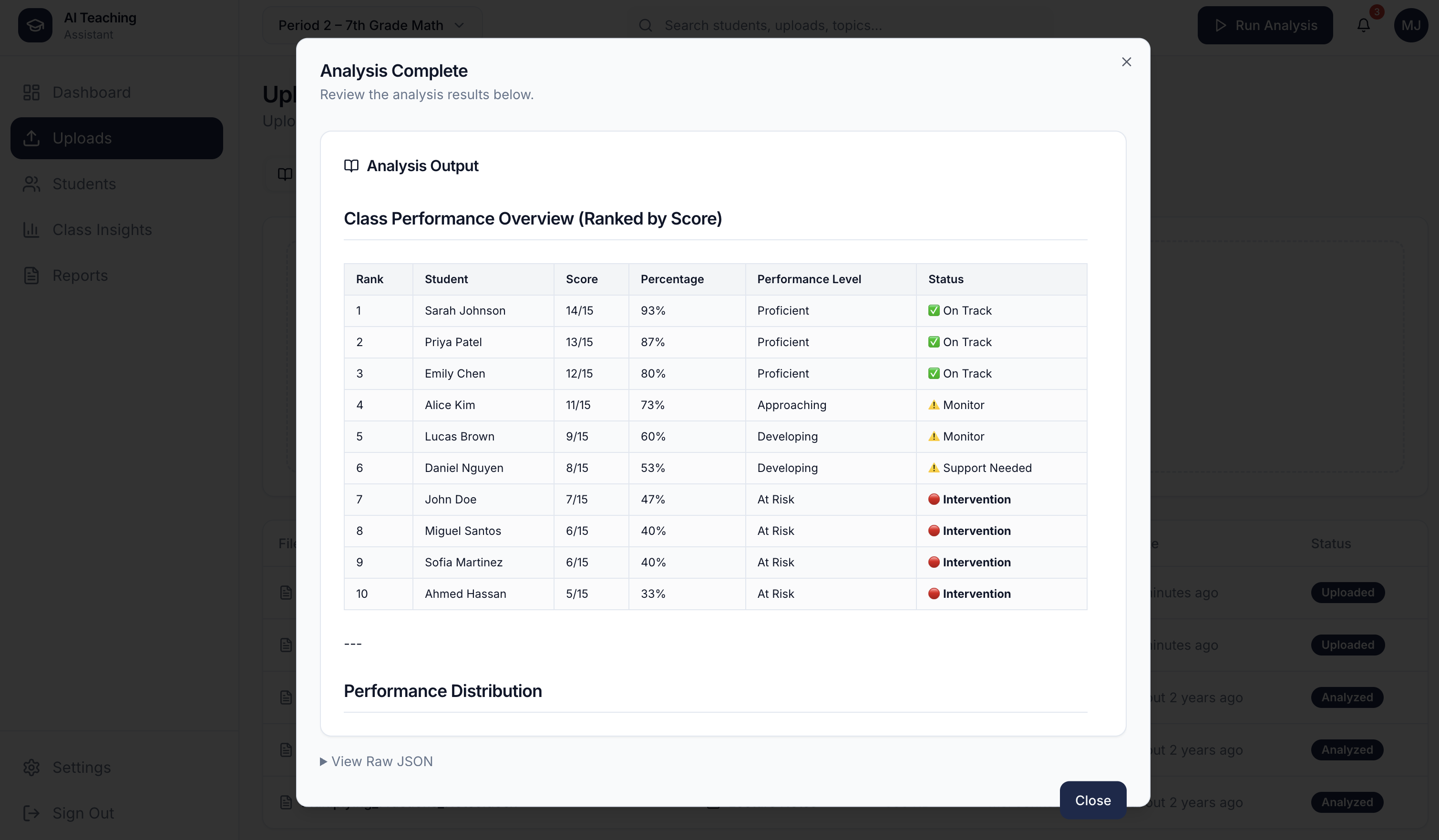
Analysis Results
-
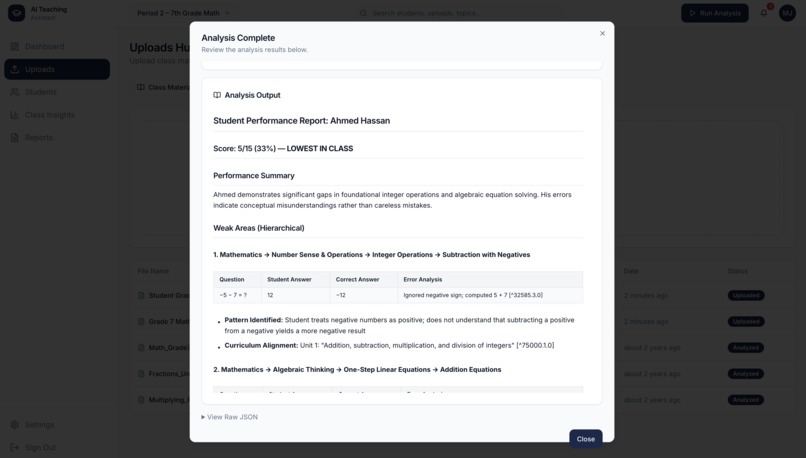
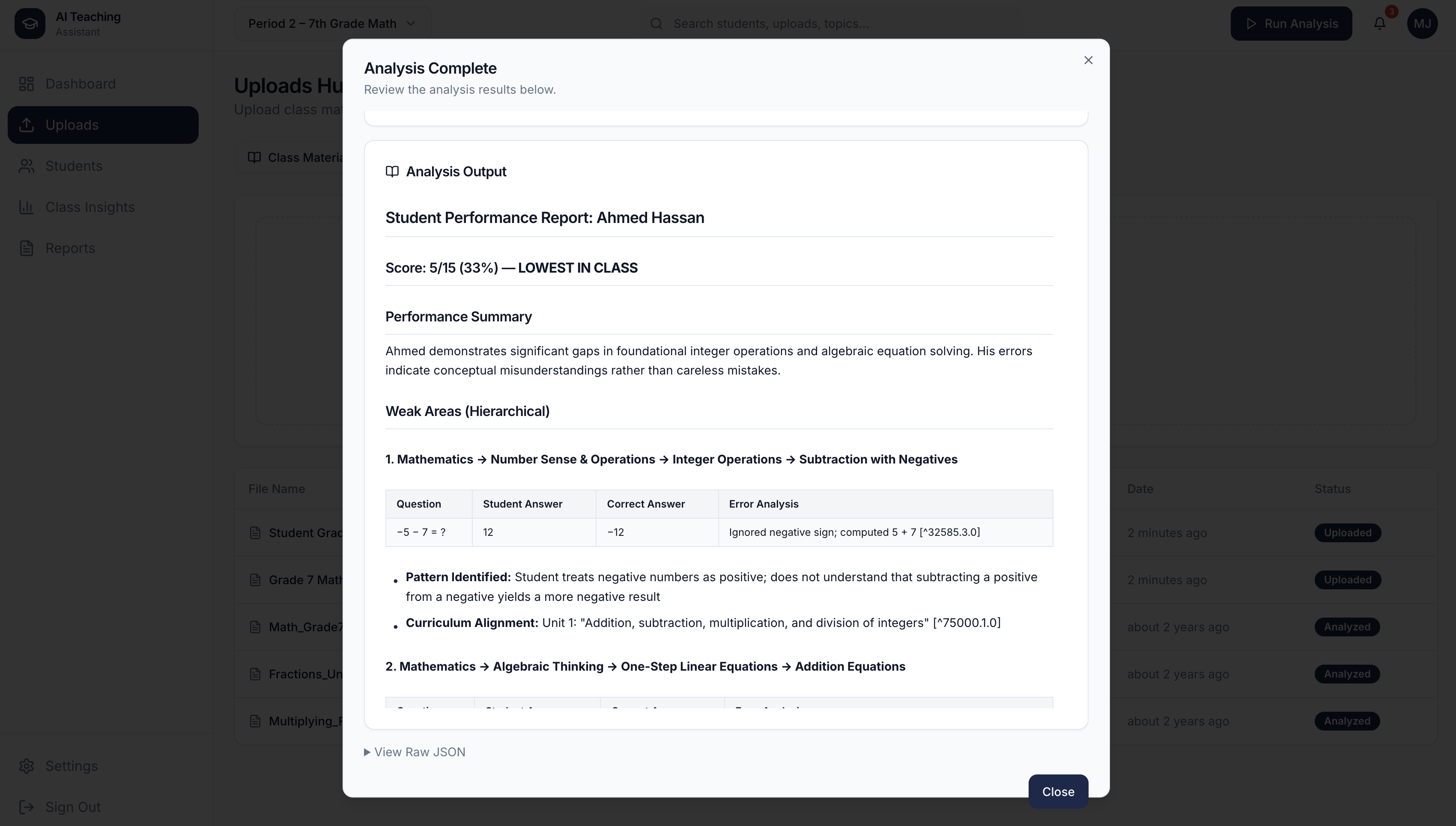
Student Performance Report Ahmed Hassan
-
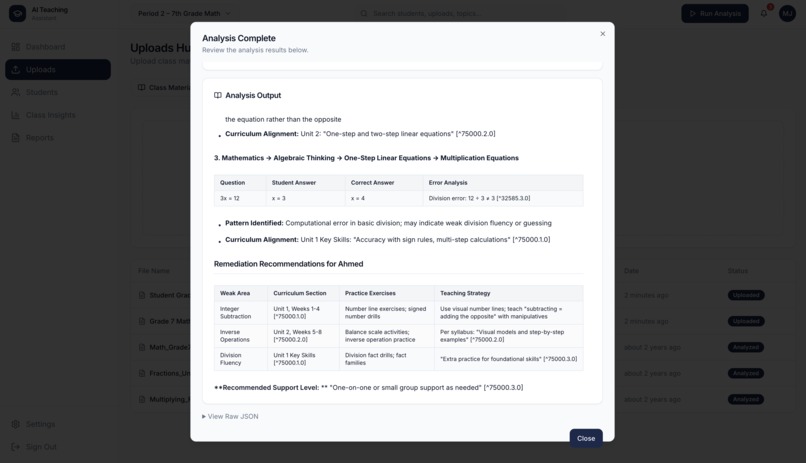
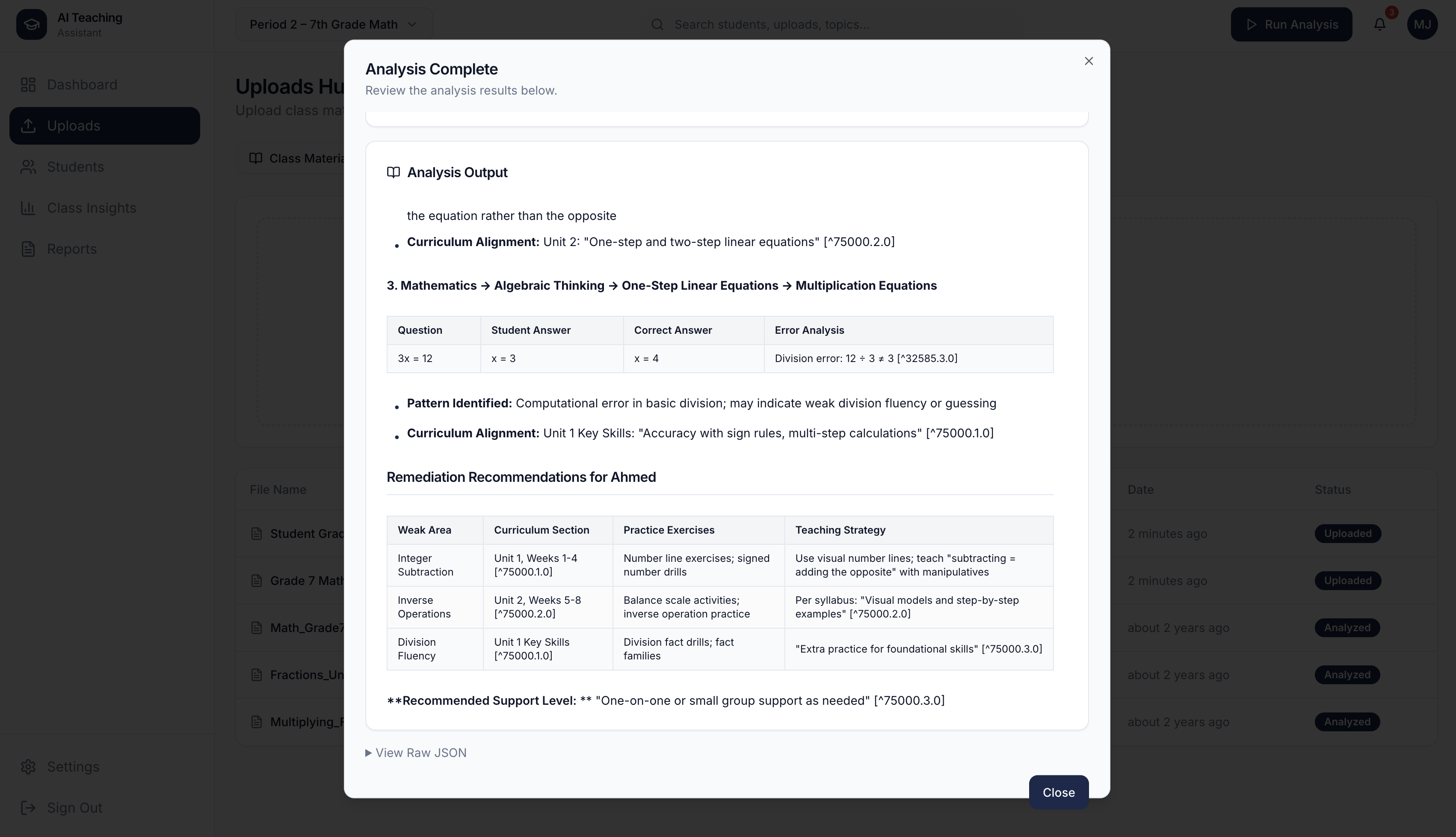
Remediation Recommendations for Ahmed
-
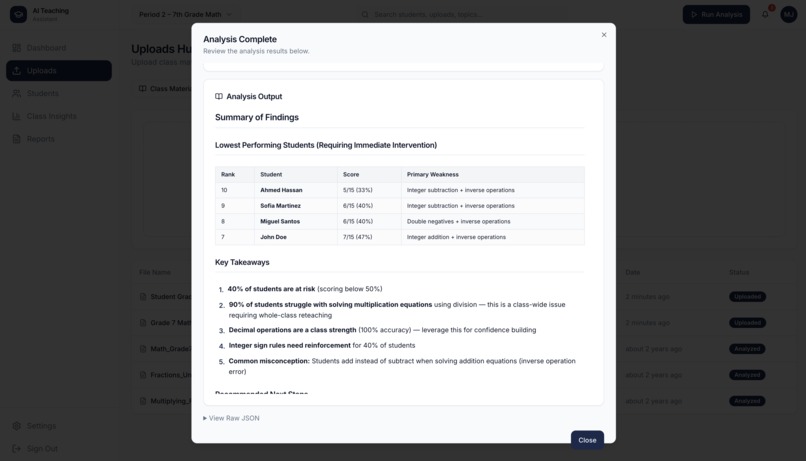
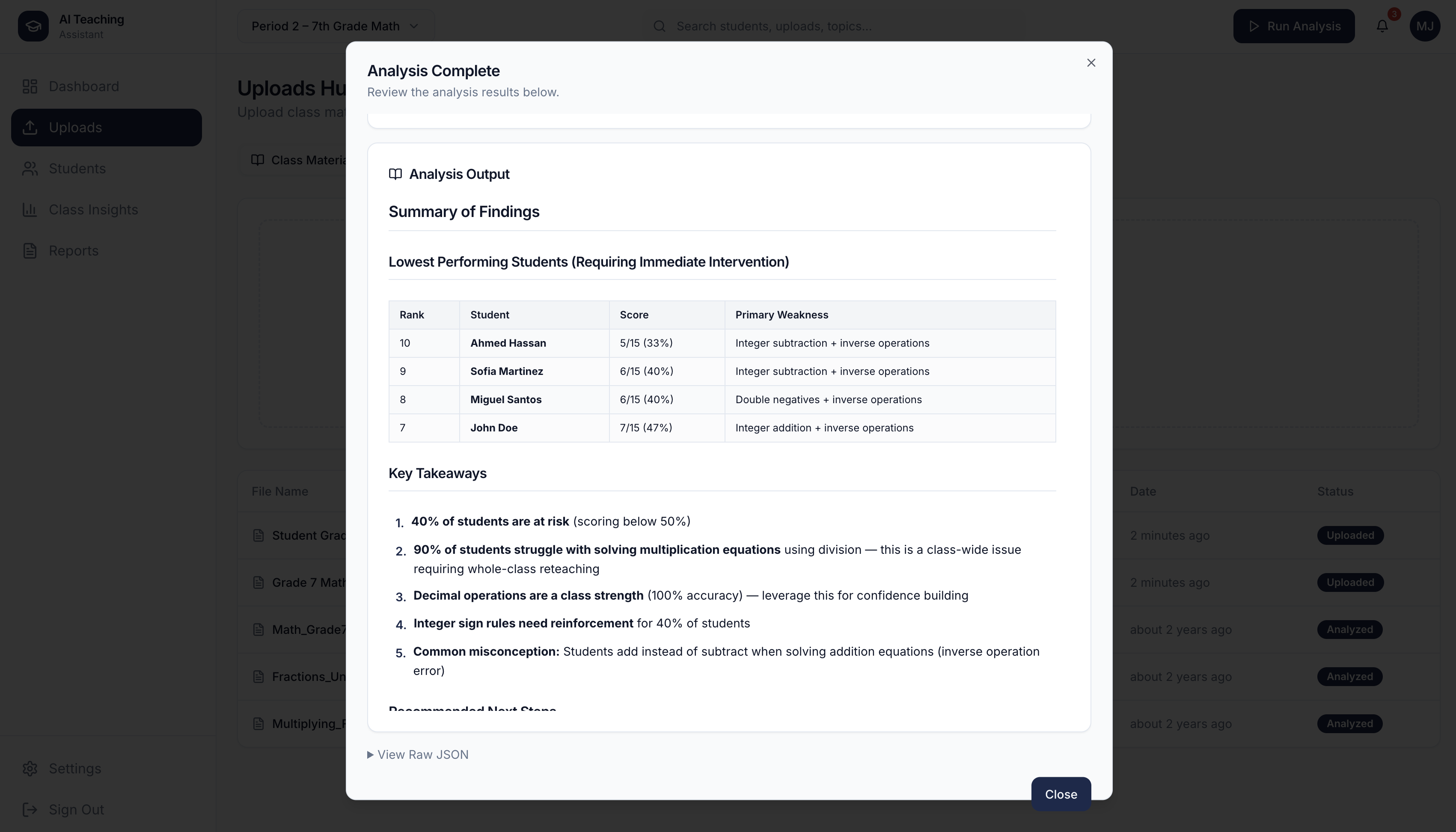
Lowest Performing Students
Inspiration
Many students fall behind not because they lack ability, but because gaps in understanding go unnoticed until grades drop or confidence is already shaken. Teachers are overloaded with grading and lesson planning, and often don’t have time to deeply analyze patterns across dozens of students and assignments.
We were inspired to build AI Teaching Assistant to surface those hidden gaps early — giving teachers clarity and giving students personalized support before small misunderstandings become major barriers.
What it does
AI Teaching Assistant helps teachers and students identify exactly where learning is breaking down.
Teachers can upload:
- textbooks, lesson plans, and lecture slides
- graded homework, quizzes, and tests The system analyzes student performance against the curriculum and generates:
- per-student reports highlighting weak subjects and topic
- evidence tied to specific assignments and questions
Students get:
- a personalized dashboard of topics they’re struggling with
- an interactive AI tutor that explains concepts in their preferred language
- voice or text chat for step-by-step help
- automatically generated study plans to catch up efficiently
How we built it
We built the frontend using Lovable to rapidly prototype clean teacher and student dashboards.
On the backend, we used Stack AI to create specialized agents:
- a curriculum-mapping agent
- a student work analyzer
- a gap detection agent
- a multilingual tutoring agent
- a study-plan generator
These agents are orchestrated through secure API routes in a Next.js backend that proxies requests, manages authentication, and stores results in a database for reuse across teacher and student views.
Challenges we ran into
- Designing agents that reliably map messy real-world school documents to structured topic hierarchies.
- Keeping tutoring responses age-appropriate, supportive, and multilingual.
- Protecting API keys while integrating external AI services into a web product.
- Handling long-running analyses while keeping the UI responsive.
- Confirming that explanations helped students learn rather than just giving answers.
Accomplishments that we're proud of
- Built end-to-end teacher and student experiences in a short time.
- Created agents that surface topic-level learning gaps with evidence.
- Implemented a conversational AI tutor that adapts to language preferences.
- Generated dynamic study plans tailored to real weaknesses.
- Designed dashboards that feel intuitive and teacher-friendly.
What we learned
- AI is most powerful when broken into specialized agents instead of one giant prompt.
- Structured outputs are critical for reliable UX.
- Teachers value clarity and evidence more than flashy predictions.
- Students respond better to supportive, interactive tutoring than static explanations.
- Multilingual support isn’t a “nice to have” — it’s essential for equity.
What's next for AI Teaching Assistant
- analyze grade-level and school-wide performance trends
- identify curriculum units that consistently cause trouble
- surface inequities in access or outcomes
- recommend curriculum adjustments
- integrate with LMS platforms like Google Classroom and Canvas
- track improvement over time after interventions
Built With
- apify
- lovable
- react
- render
- stackai
- typescript


Log in or sign up for Devpost to join the conversation.