-
-
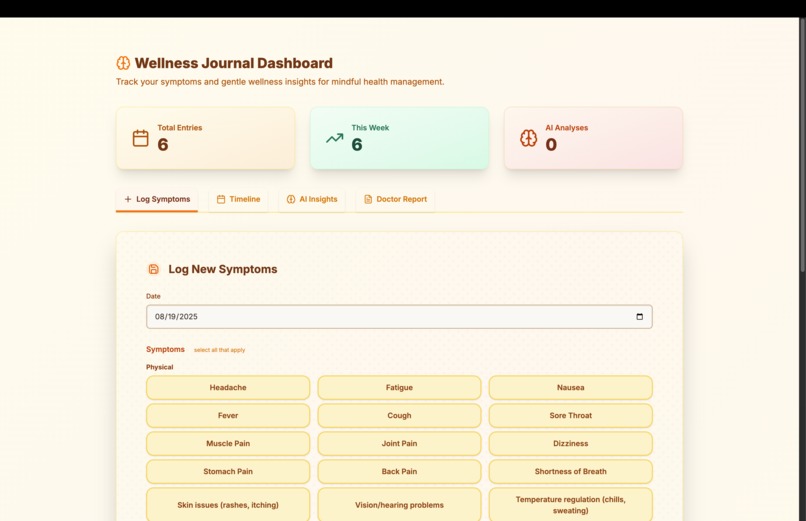
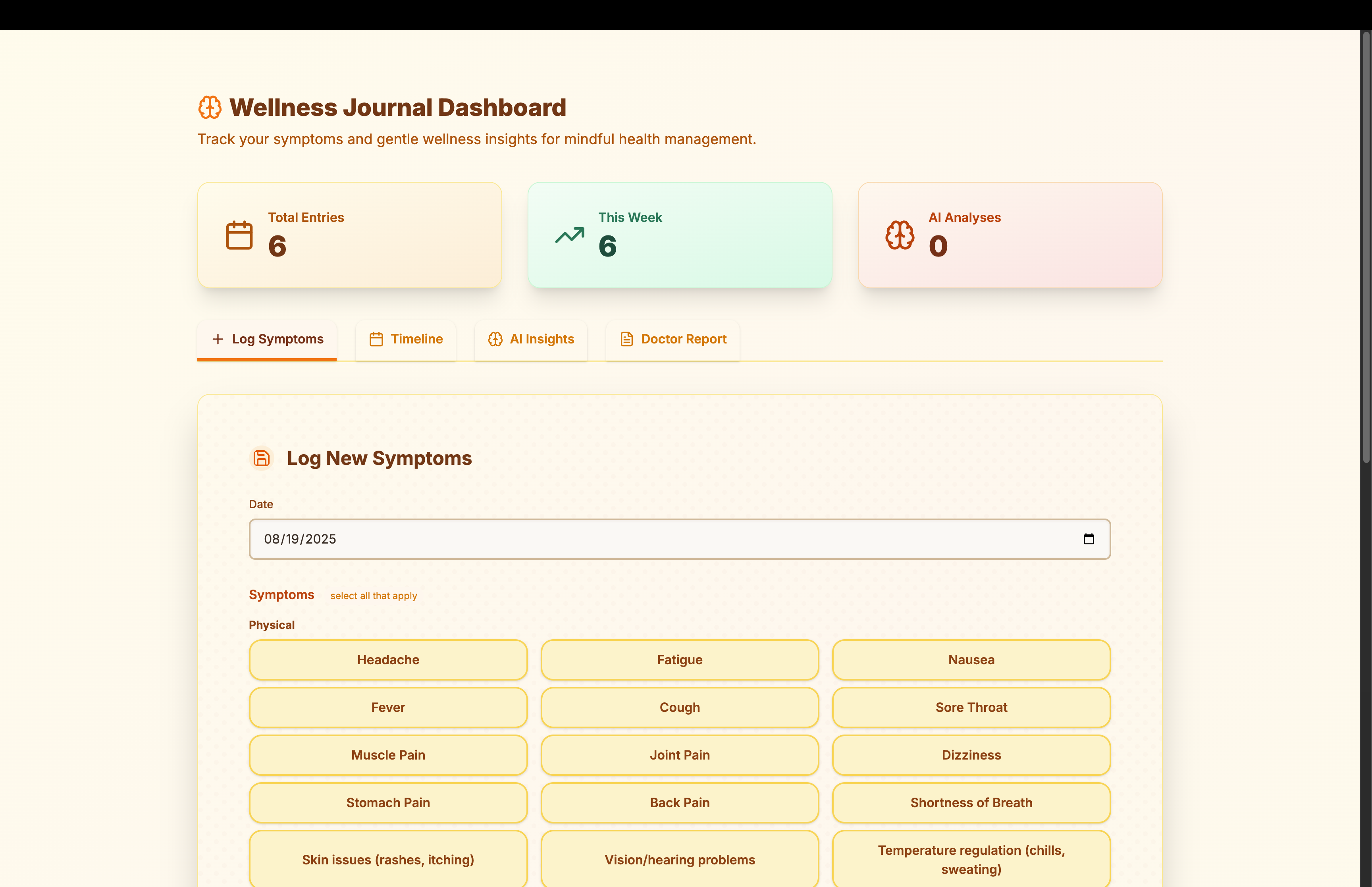
Log Symptoms View
-
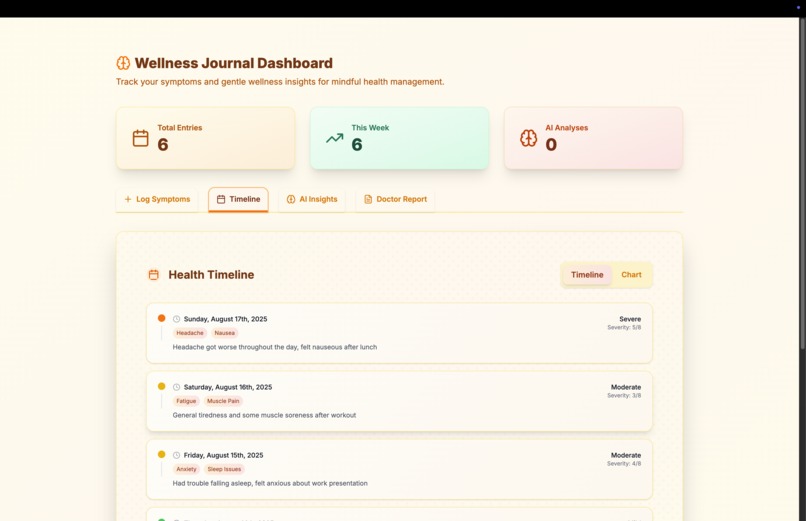
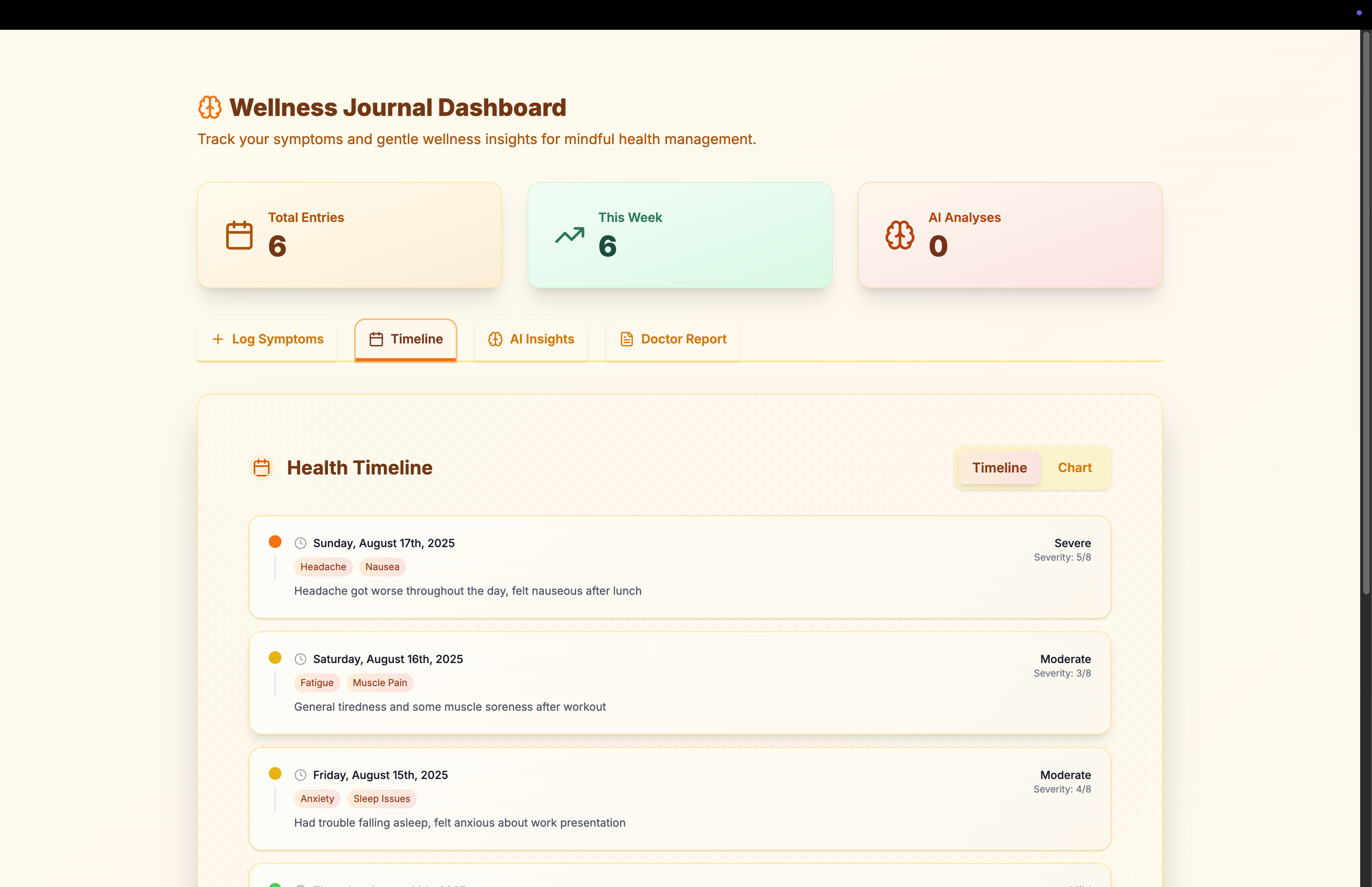
Health Timeline View
-
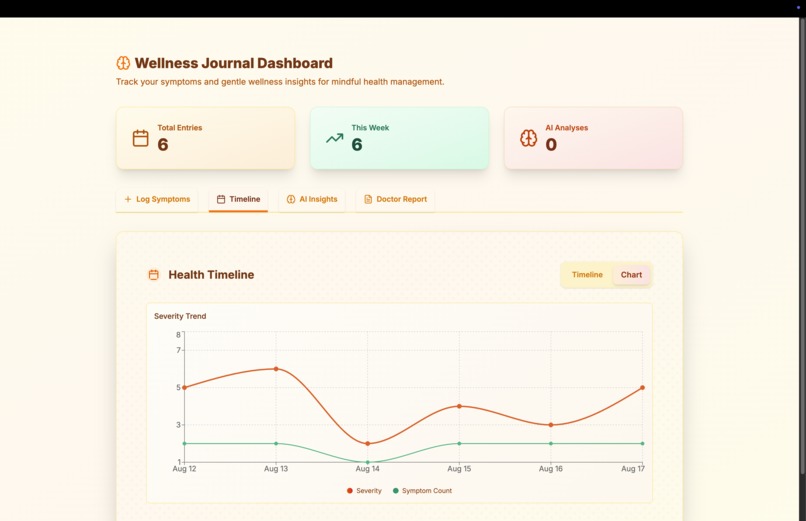
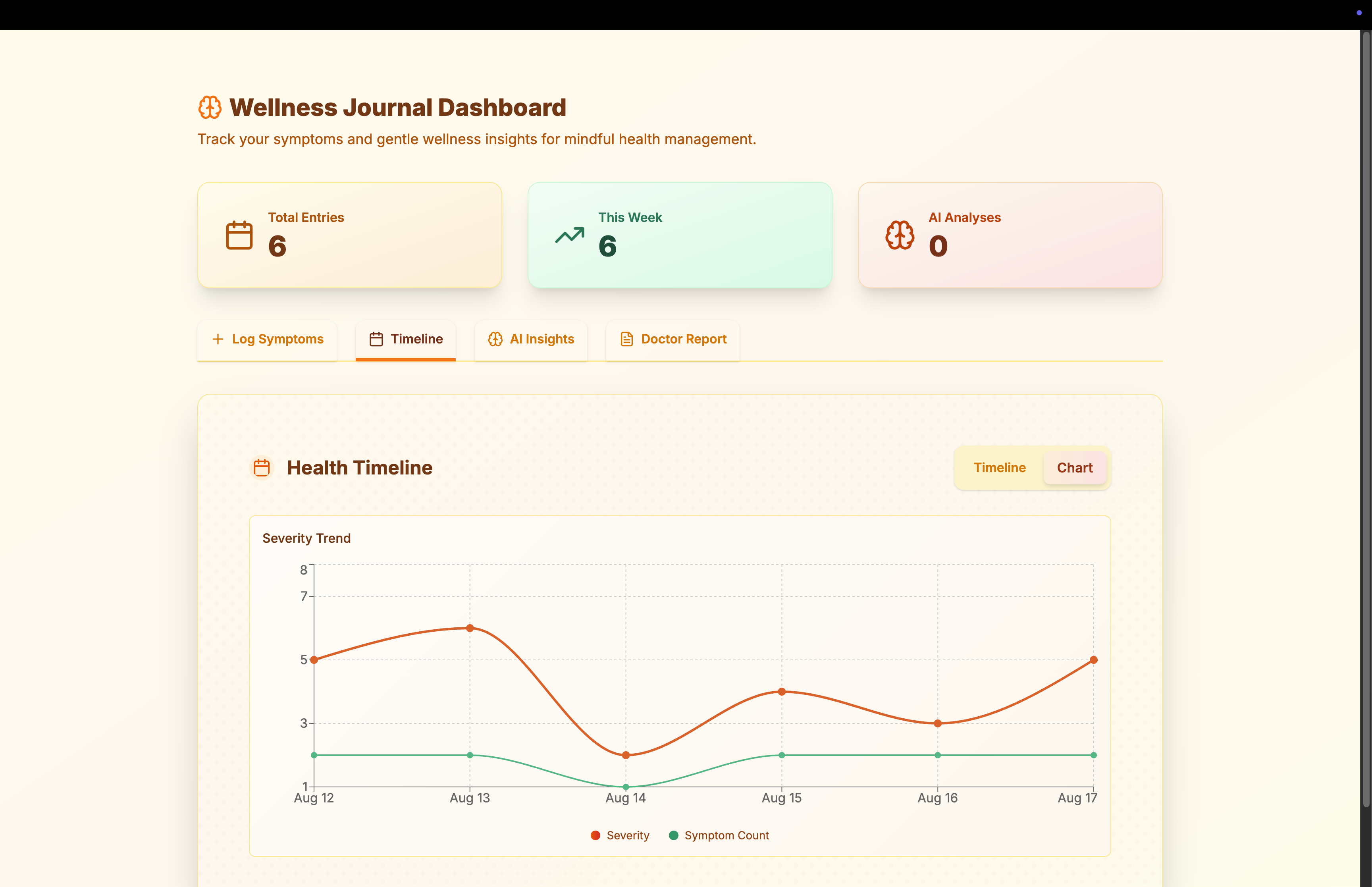
Health Timeline Chart
-
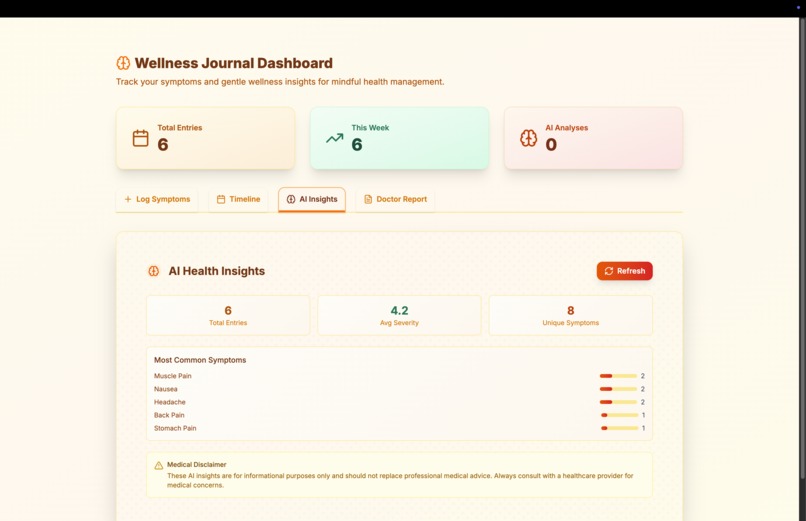
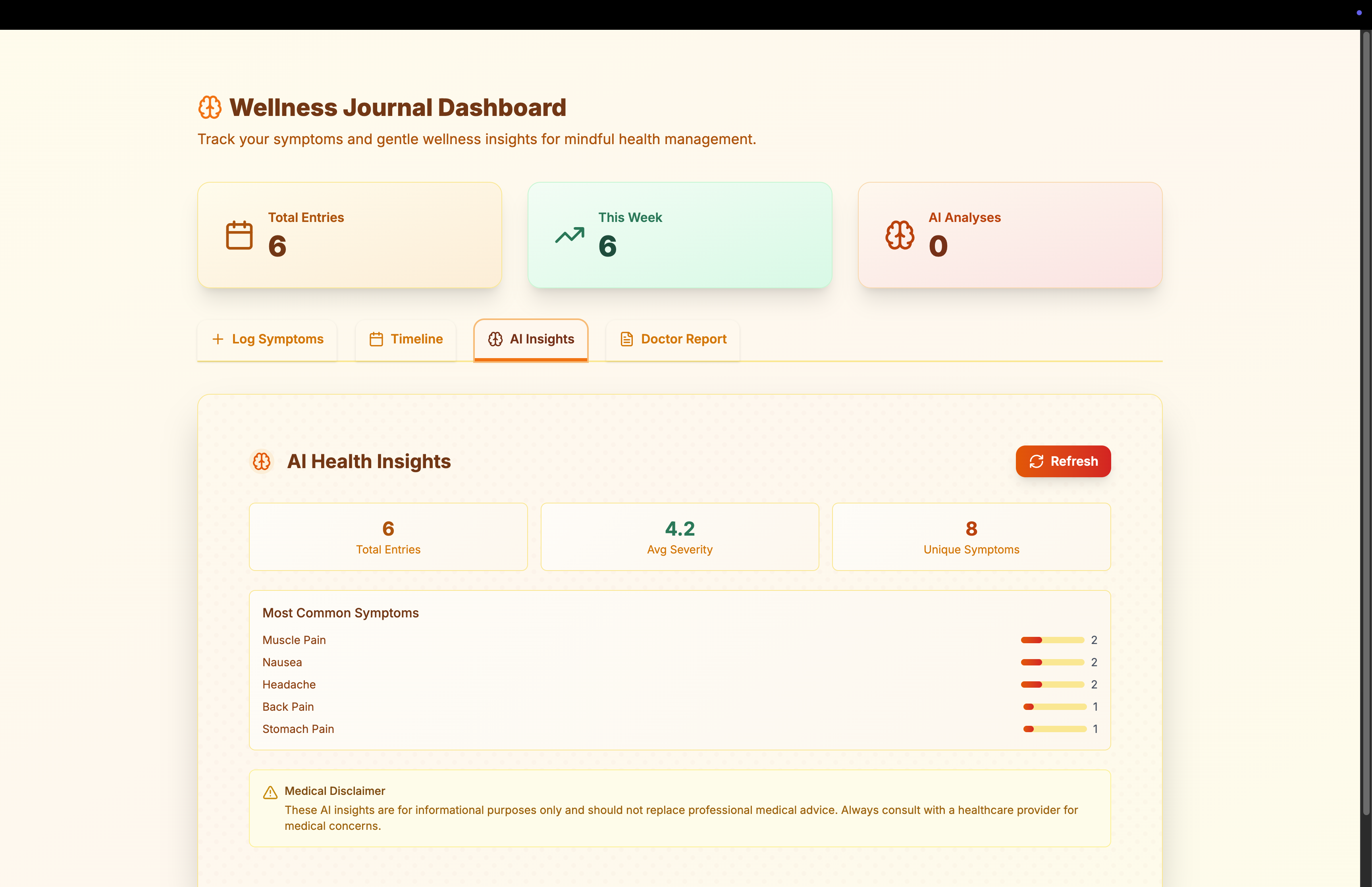
AI Insights View
-
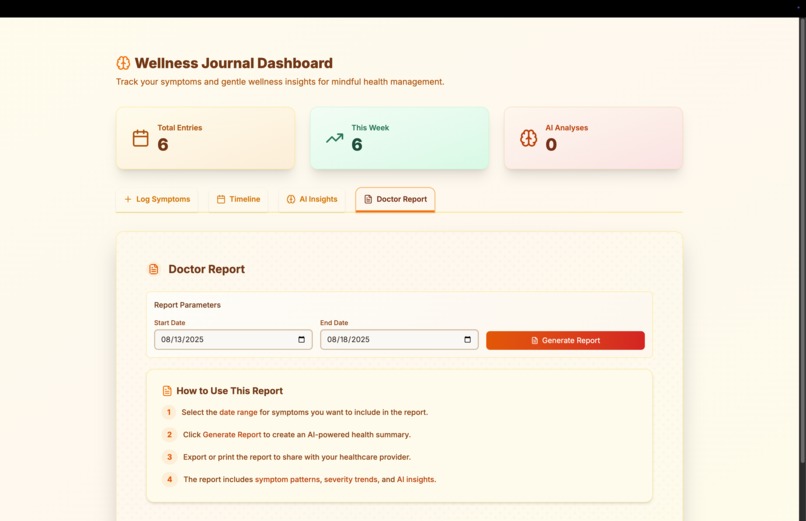
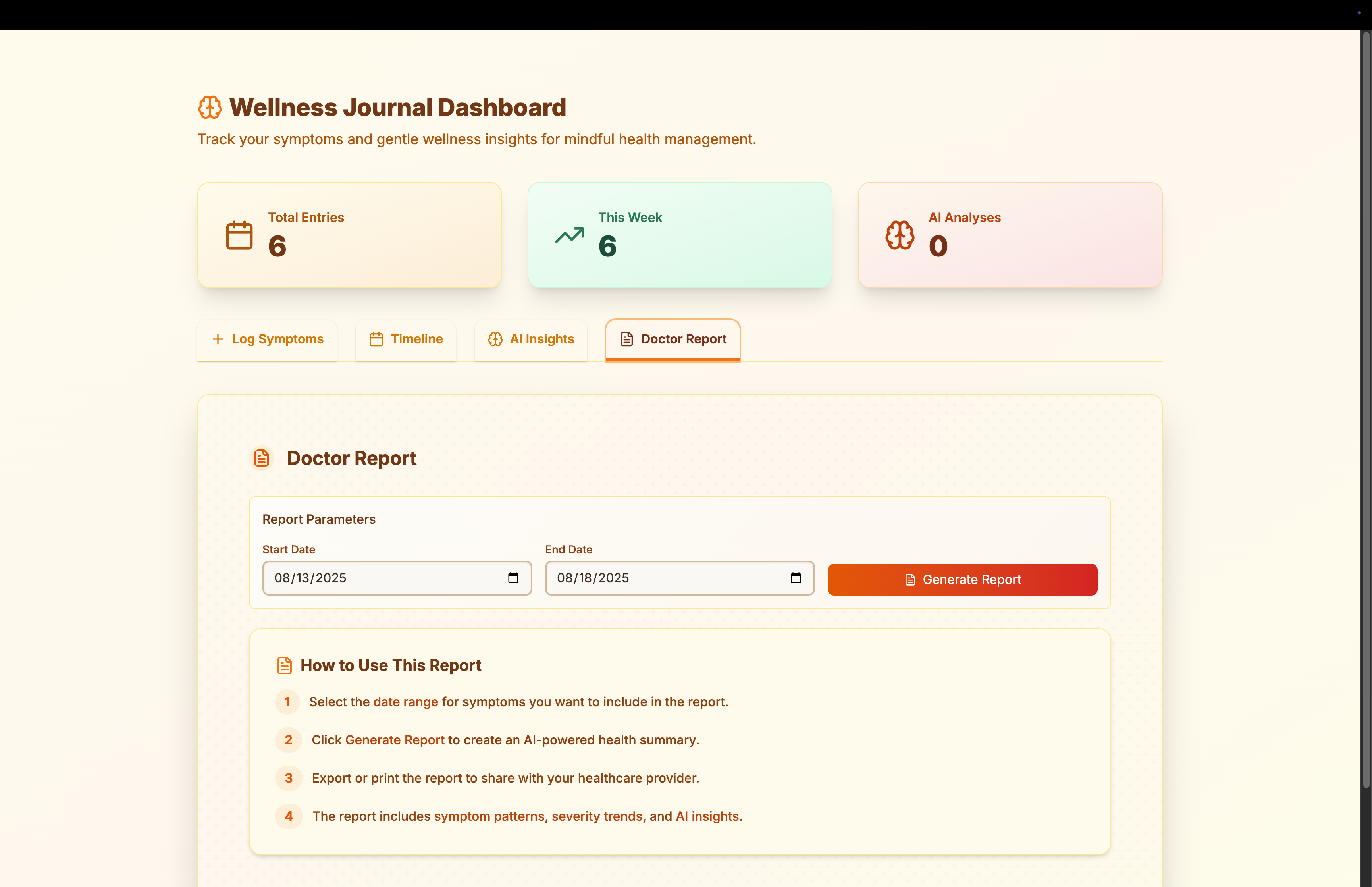
Doctor Report View
Inspiration
The healthcare system often struggles with fragmented patient data and reactive care. We were inspired by the idea that preventive healthcare could be revolutionized through intelligent symptom tracking. Many people experience recurring health issues but lack an easy way to identify patterns or communicate effectively with their doctors. We wanted to bridge this gap using AI to transform scattered health observations into actionable insights.
What it does
AI Wellness Journal is a comprehensive health tracking platform that empowers users to:
- Log daily symptoms with an intuitive interface featuring severity scales and detailed notes
- Discover patterns through AI-powered analysis that identifies correlations and trends
- Generate professional reports for healthcare providers with AI-synthesized insights
- Visualize health data through interactive timelines and charts
- Receive intelligent recommendations for when to seek medical care
The app focuses on preventive care by encouraging consistent health monitoring and providing users with the tools to have more informed conversations with their healthcare providers.
How we built it
Frontend: Next.js 14 with TypeScript and Tailwind CSS for a modern, responsive interface
Database: Supabase (PostgreSQL) for robust data storage with real-time capabilities
AI Integration: Google Gemini Pro API for sophisticated symptom analysis and pattern recognition
Visualization: Recharts for interactive health timeline charts
Architecture: Modern React patterns with custom hooks and component composition
Key technical decisions:
- Server-side rendering with Next.js for optimal performance
- Type-safe development with TypeScript for reduced bugs
- Real-time database with Supabase for instant data synchronization
- Modular AI prompts for accurate health insights without medical advice
Challenges we ran into
AI Prompt Engineering: Crafting prompts that provide helpful health insights while maintaining appropriate medical disclaimers required extensive iteration and testing.
Data Privacy Concerns: Implementing secure handling of sensitive health data while maintaining usability for a hackathon timeline.
Medical Accuracy Balance: Ensuring AI insights are helpful without overstepping into medical diagnosis territory - required careful prompt design and clear disclaimers.
Real-time Performance: Optimizing database queries and AI API calls to provide responsive user experience even with complex pattern analysis.
UI/UX for Health Data: Designing an interface that makes complex health tracking feel simple and non-intimidating for everyday users.
Accomplishments that we're proud of
- ✨ Sophisticated AI Analysis: Successfully implemented pattern recognition that identifies symptom correlations, timing patterns, and severity trends
- 🏥 Professional Doctor Reports: Created export functionality that generates comprehensive, medical-grade summaries suitable for healthcare providers
- 📊 Interactive Data Visualization: Built engaging charts and timelines that make health data accessible and actionable
- 🚀 Production-Ready Architecture: Developed a scalable, type-safe application with proper error handling and user experience considerations
- 💡 Healthcare Impact Focus: Designed every feature with real preventive care benefits in mind, not just technical novelty
What we learned
AI Integration Complexity: Working with large language models for healthcare applications requires careful prompt engineering and extensive testing to ensure appropriate, helpful responses.
Healthcare UX Design: Medical applications need to balance comprehensive functionality with simplicity - users should feel empowered, not overwhelmed.
Data Modeling for Health: Designing flexible database schemas that can accommodate diverse symptom patterns while maintaining query performance.
Privacy-First Development: Building with healthcare data requires considering privacy and security from the ground up, not as an afterthought.
The Power of Preventive Care: Researching this space reinforced how much impact better health tracking could have on patient outcomes and healthcare costs.
What's next for AI Wellness Journal
Enhanced AI Capabilities:
- Implement predictive modeling to forecast potential health issues
- Add support for analyzing uploaded medical documents and lab results
- Integrate with wearable devices for automatic symptom correlation
Advanced Features:
- Voice note transcription and analysis for hands-free logging
- Photo analysis for visible symptoms (rashes, swelling, etc.)
- Medication tracking with interaction warnings
- Integration with calendar apps for appointment scheduling
Healthcare Ecosystem Integration:
- Direct integration with Electronic Health Records (EHR) systems
- Healthcare provider dashboard for monitoring multiple patients
- API for integration with telemedicine platforms
- HIPAA compliance for enterprise healthcare deployment
User Experience Enhancements:
- Mobile app development for iOS and Android
- Offline-first architecture for reliable access
- Personalized health education based on symptom patterns
- Community features for users with similar conditions (privacy-focused)
Built With
- date-fns
- google-gemini-pro-api
- lucide-react
- next.js-14
- react
- recharts
- supabase-(postgresql)
- tailwind-css
- typescript
- vercel

Log in or sign up for Devpost to join the conversation.