-
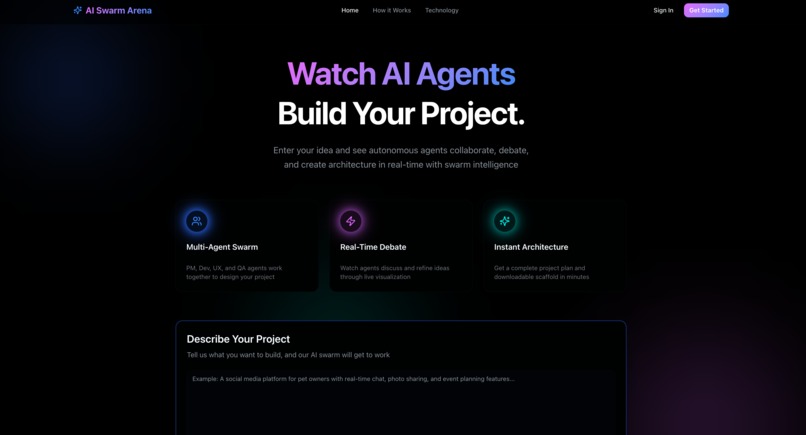
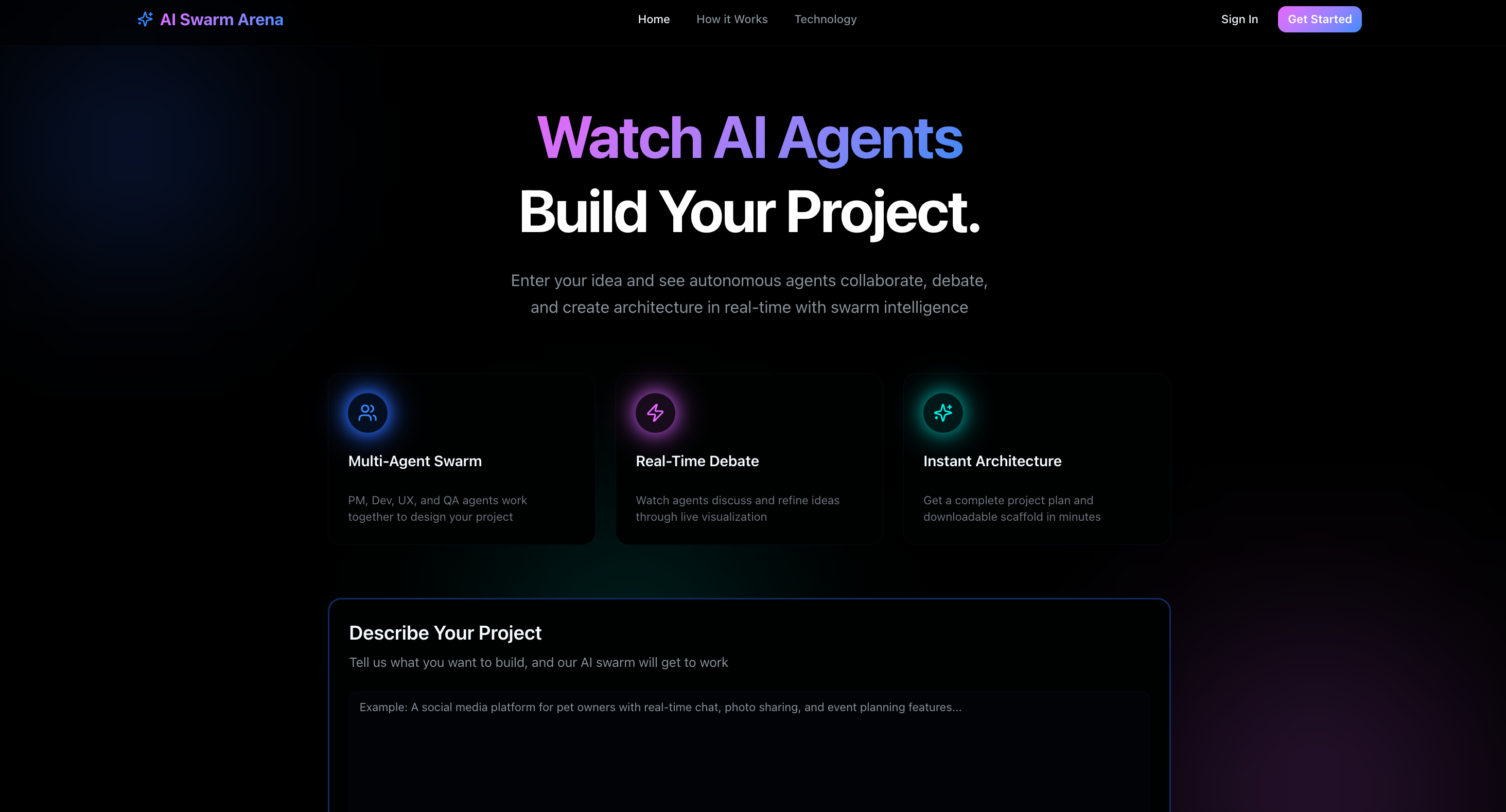
Intro page
-
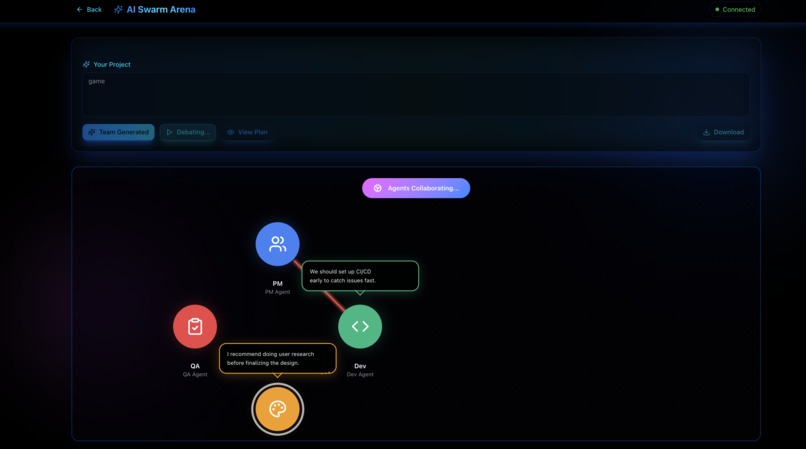
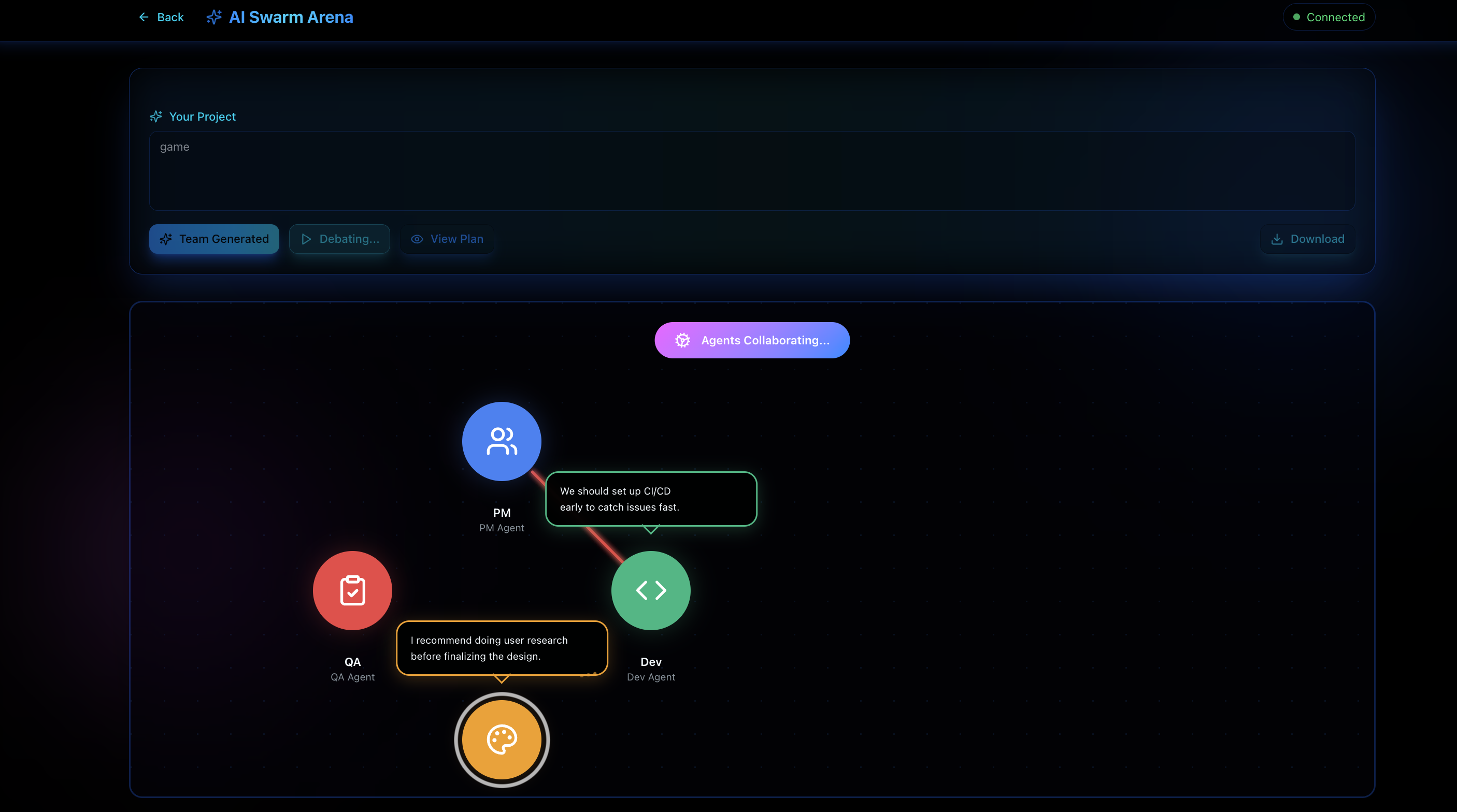
Agentic collaboration page
-
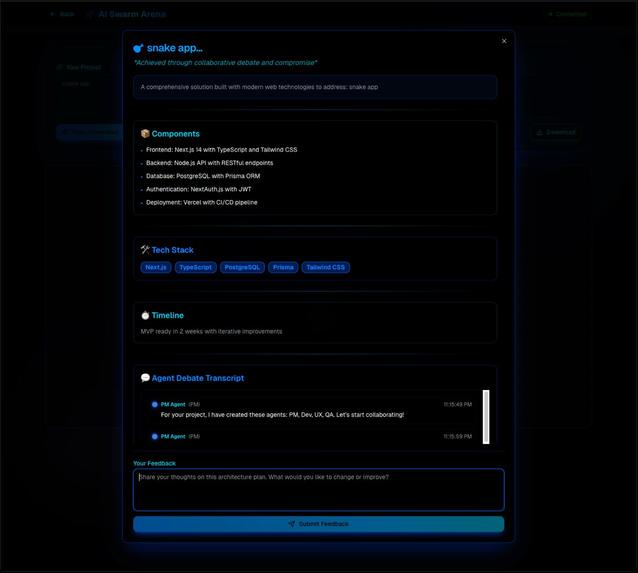
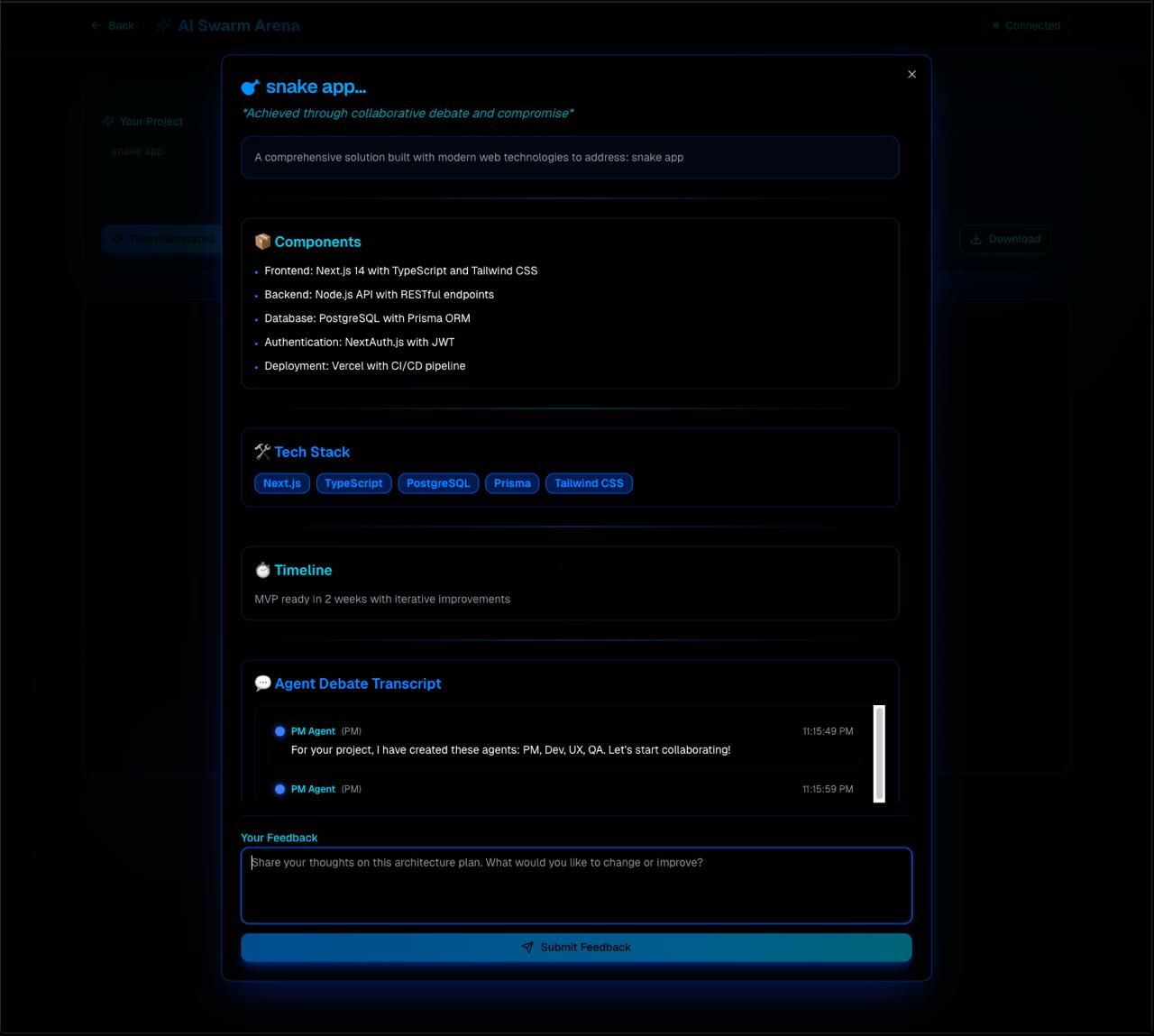
Plan outcome
🌟 Inspiration
We were inspired by a simple but frustrating question we hear all the time:
“I have a great idea... but I don’t know how to start building it.”
As developers, we know how hard it is to turn a vague concept into a production-ready MVP — and it’s even harder for non-technical founders. We asked:
What if an AI could simulate a startup team — PMs, devs, designers — who brainstorm, debate, and ship like real collaborators?
That idea became AI Swarm Arena: a system that dynamically spawns an intelligent swarm of specialized AI agents (e.g. Product Manager, Frontend Dev, Backend Architect) to plan and scaffold software projects — all from a single prompt.
🛠 What it does
AI Swarm Arena helps users go from idea to architecture by simulating a digital workforce of AI agents. Given a user's plain-English brief, it:
- Understands the intent.
- Dynamically assembles a team of AI agents with specialized roles.
- Lets those agents debate, collaborate, and agree on an architecture.
- Generates a fullstack scaffold (Next.js, FastAPI, Supabase).
- Outputs a downloadable repo and visual replay of the decision-making process.
The magic lies in watching AI agents act like a real startup team — negotiating, planning, and producing code together.
💠 How we built it
Our system has three core phases:
1. Intent → Team Formation
- Users submit a prompt (e.g., “Build a job board for freelancers”).
- A planner agent parses it into a
ProjectBrief, then builds aTeamPlanwith AI roles. - Each role is routed to an optimal model (Claude, GPT-4o, Gemini, etc).
2. Swarm Collaboration
- We dynamically construct a LangGraph from the team.
- Agents reason in parallel, debate ideas, challenge each other, and align on the architecture.
- A real-time D3.js graph shows this collaboration live.
3. Output Generation
- An Aggregator produces an
ArchitecturePlan. - A Builder agent generates code: DB schema, APIs, frontend UI, and README.
- Output is packaged as a .zip repo for download.
🚤 Challenges we ran into
- Multi-agent orchestration with LangGraph and socket.io required careful async design.
- Balancing emergence vs determinism — we wanted agents to be creative but converge.
- Prompting agents to disagree productively without derailing the plan.
- Keeping WebSocket-connected visualizations in sync with real-time agent decisions.
🏅 Accomplishments that we're proud of
- Fully functional swarm engine with live agent debate and planning.
- Dynamic team generation from voice or text input.
- Real-time collaboration graph built with D3.js.
- Generated scaffold (Next.js + FastAPI + Supabase) end-to-end from a user idea.
- Built a system that shows how AI agents can think together.
📖 What we learned
- LangGraph enables powerful, dynamic multi-agent flows — and requires thoughtful graph design.
- Prompt engineering for team dynamics is completely different than solo LLM prompting.
- Some models are better at different roles: Claude (planning), DeepSeek (math), GPT-4o (code), Gemini (vision).
- Real-time feedback loops make AI teams feel alive and teachable.
🌟 What's next for AI Swarm Arena
- Train a vector memory to let the swarm learn from past user feedback.
- Add agent "culture presets" (e.g., aggressive, consensus-seeking).
- Build a marketplace of swarm templates for common product types.
- Let agents run + test code, not just write it.
- Launch a beta for accelerators to use in MVP planning.
AI Swarm Arena is just the beginning of multi-agent orchestration. We're excited to evolve it into a full AI-native workforce platform.
Built With
- d3.js
- elevenlabs
- fastapi
- gemini-1.5
- godaddy
- gpt-4o-mini
- javascript
- jinja
- langgraph
- next.js
- openrouteservice
- python
- python-socketio
- railway
- socket.io
- sql
- supabase
- tailwind
- typescript
- vercel


Log in or sign up for Devpost to join the conversation.