-
-
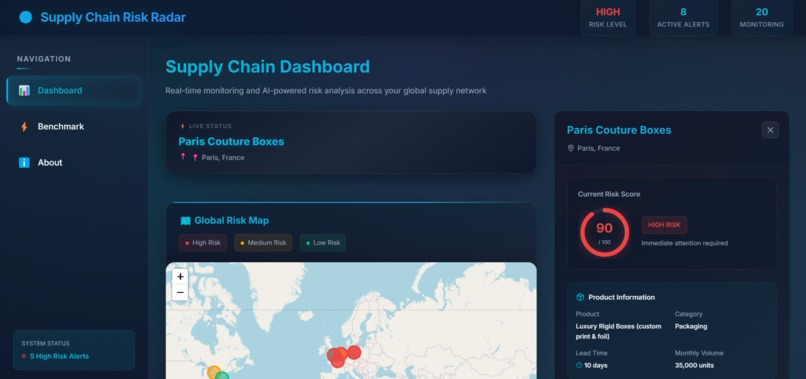
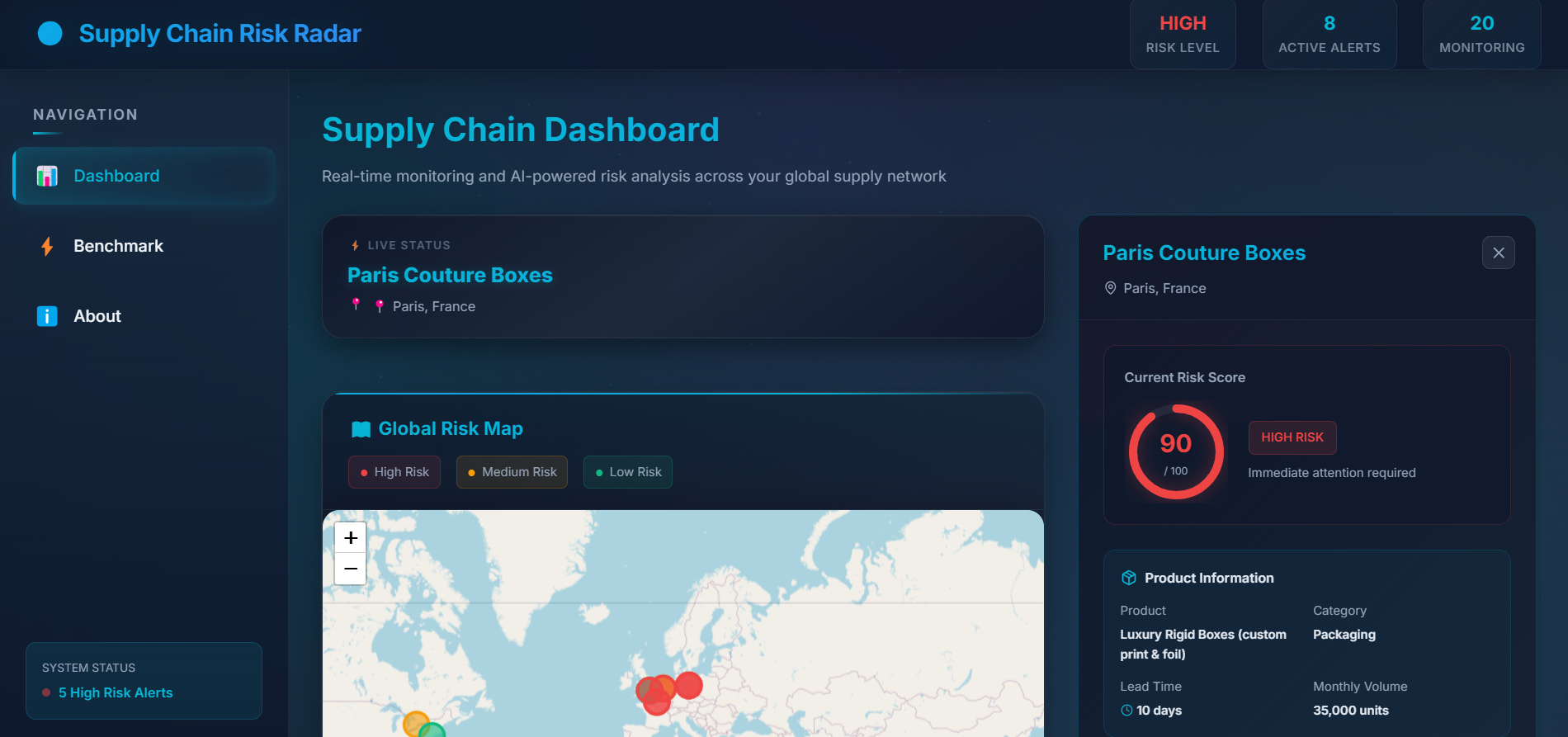
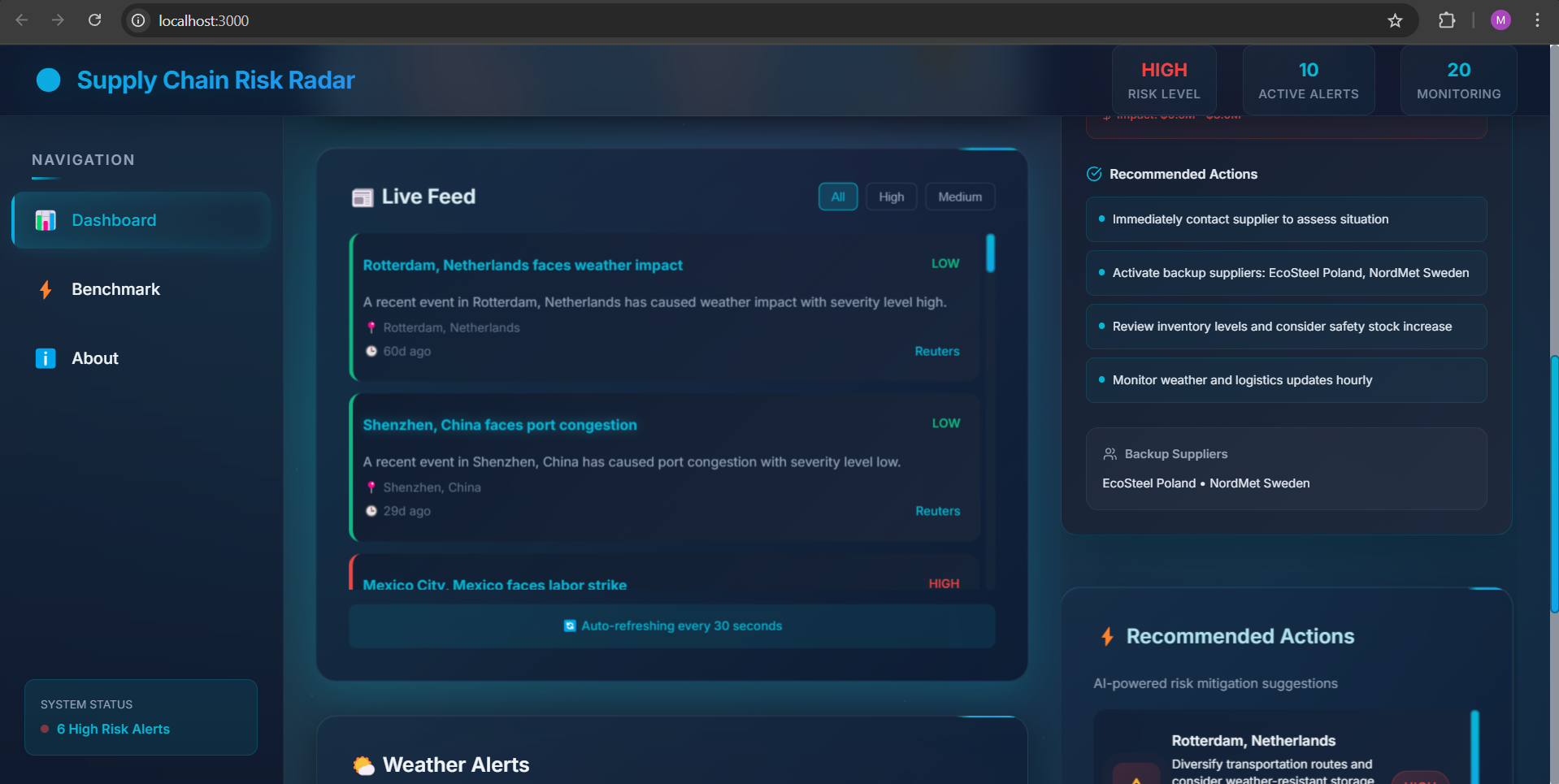
Dashboard with risk analysis
-
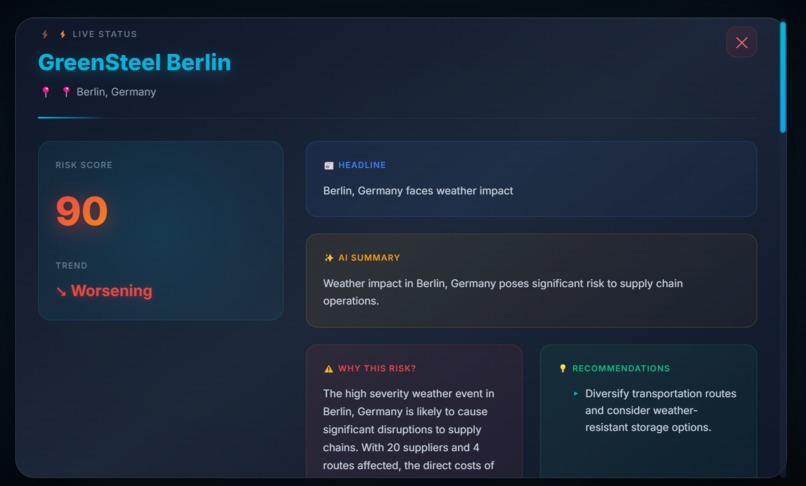
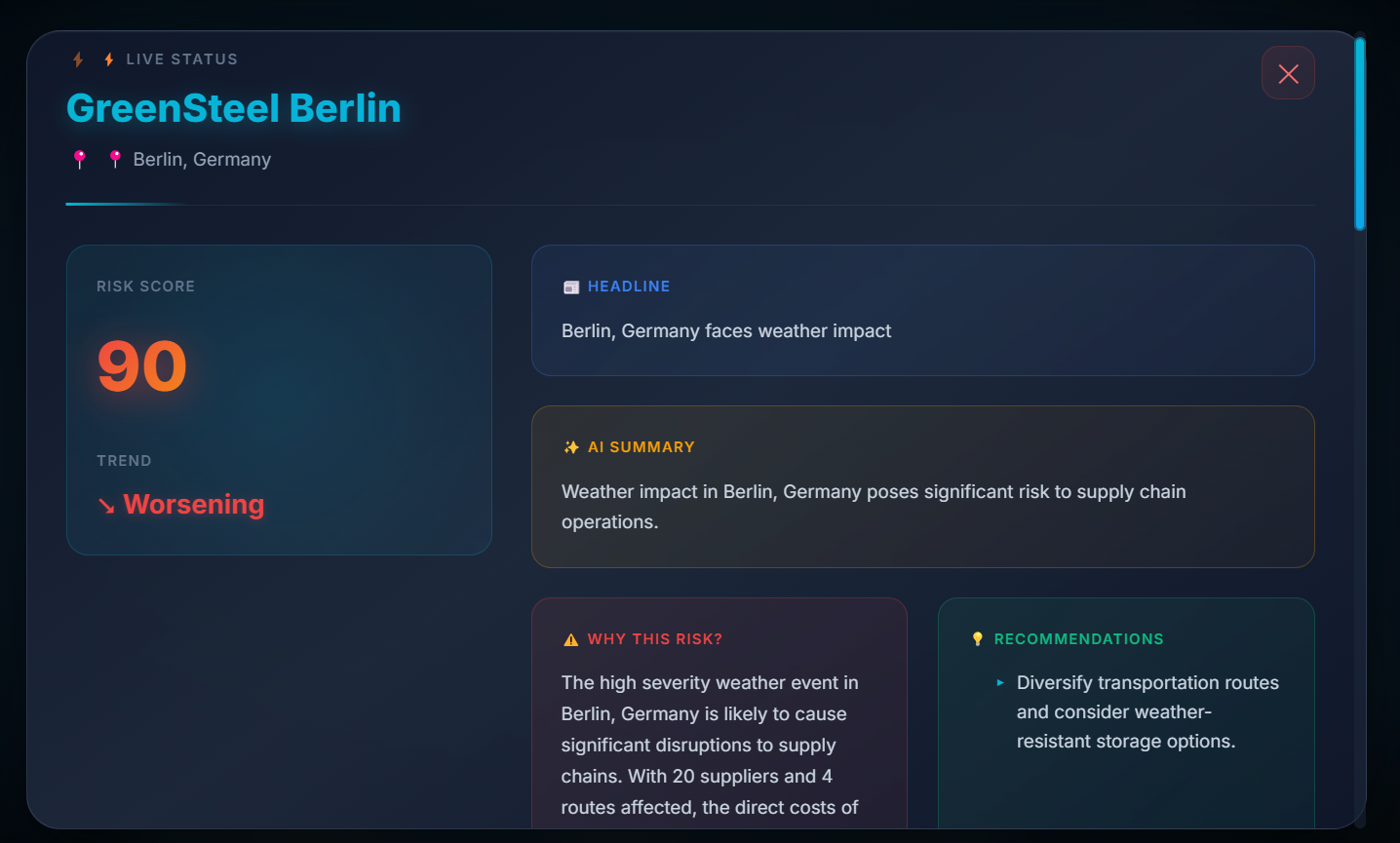
Risk details
-
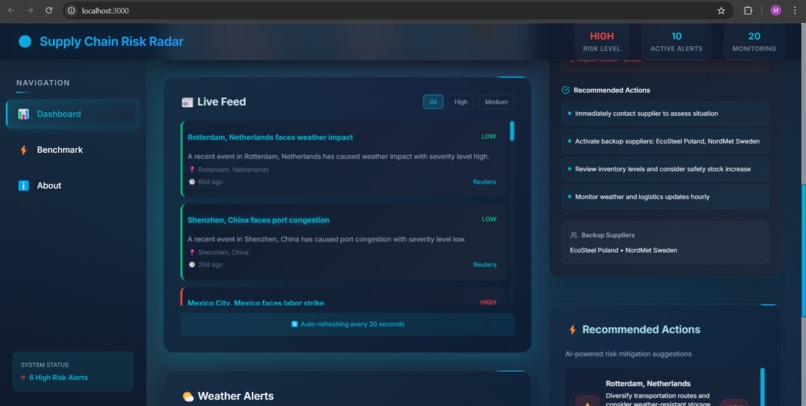
supplier data
-
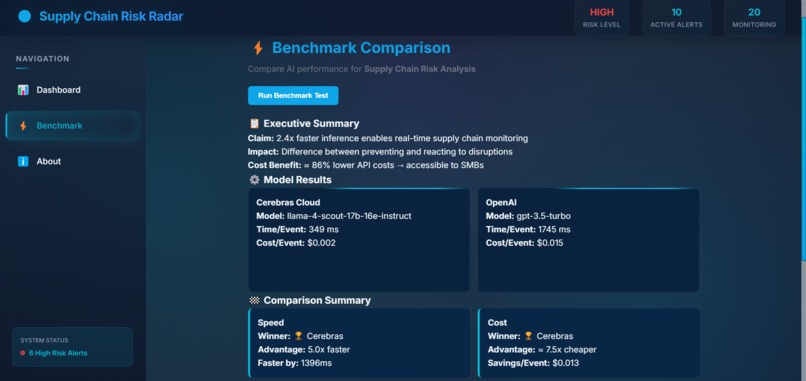
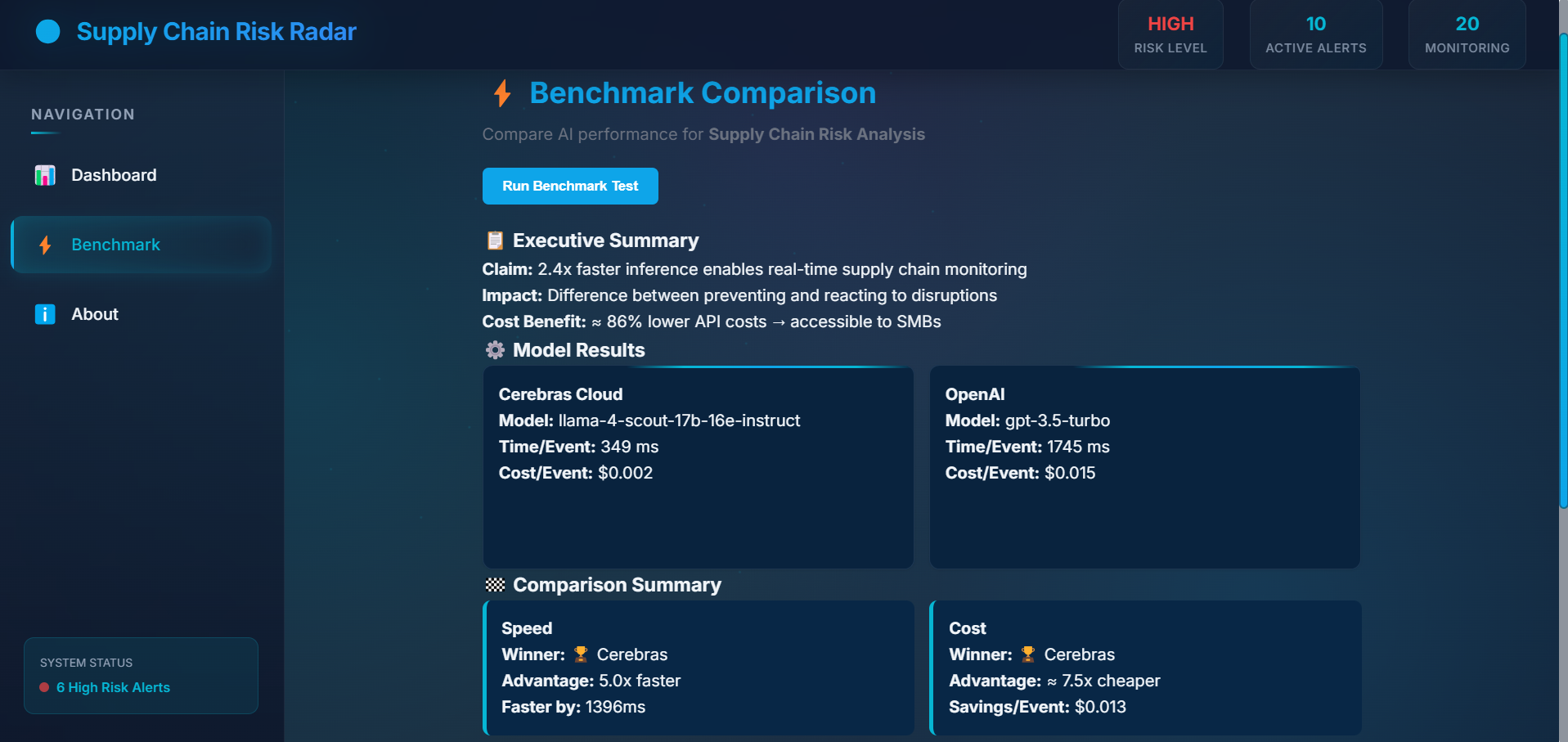
Benchmark comparison with standard AI model
🚩 The Spark
It started with a simple question “Why do companies only learn about disruptions after it’s too late?” We realized that despite billions spent on logistics software, most systems are reactive, not predictive. During the hackathon, we wanted to flip that — to build an AI platform that could see problems before they happen, saving millions in losses and countless supply chain jobs.
🧠 The Idea
Supply chains generate massive global data from weather, ports, finance, and local news. Our idea was to create an AI command center that could: Detect risks in fast seconds, Predict financial impact, and Recommend alternative suppliers and routes automatically.
We called it AI Supply Chain Risk Radar a real-time risk detection and decision support system powered by Cerebras and Docker microservices.
⚙️ The Build
We divided our sprint into four key parts:
Backend – Built in Node.js, connected multiple services (news, weather, supplier, and risk engines). AI Engine – Integrated Cerebras LLaMA inference API for multilingual summarization, risk classification, and financial impact prediction.
Frontend – Designed a React.js dashboard showing a live risk map, supplier insights, and news feeds.
Infrastructure – Containerized everything using Docker & MCP Gateway for one-command deploment and scalability.
The biggest challenge was optimizing latency and that’s where Cerebras changed the game. Our benchmark showed faster inference and faster risk scoring, bringing full-stack analysis down to under 3 seconds.
🌍 The Impact
Detect global disruptions 36–48 hours earlier than traditional tools, Analyze 150 data sources in real time, Predict $1.2M–$7.2M financial impact per event, and Recommend backup suppliers and routes instantly.
For small manufacturers, that’s not just analytics it’s survival intelligence.
💡 What We Learned
We learned how to scale AI from idea to deployment using real infrastructure: How Cerebras can deliver inference at millisecond speed without GPU overhead. How Docker MCP can simplify complex multi-service orchestration. And how designing for explainability builds trust in AI-driven decisions.
🚀 What’s Next
We’re taking it beyond the hackathon : adding multi-language NLP, historical ML prediction, and blockchain-backed supplier traceability.
The goal: turn this prototype into an open-source early-warning system for global supply chains — accessible to everyone, from small factories to Fortune 500s.
Built With
- cerebras
- docker
- geoservice
- kaggle
- llama
- newsapi
- node.js
- react
- regressionmodel
- weatherapi

Log in or sign up for Devpost to join the conversation.