Inspiration
Personally, visualizing my brainstorming ideas in a creative writing class was especially a liability. Recognizing the challenge of bringing imaginative concepts to life, this tool aims to facilitate the creative process, making storytelling more tangible and inspiring.
What it does
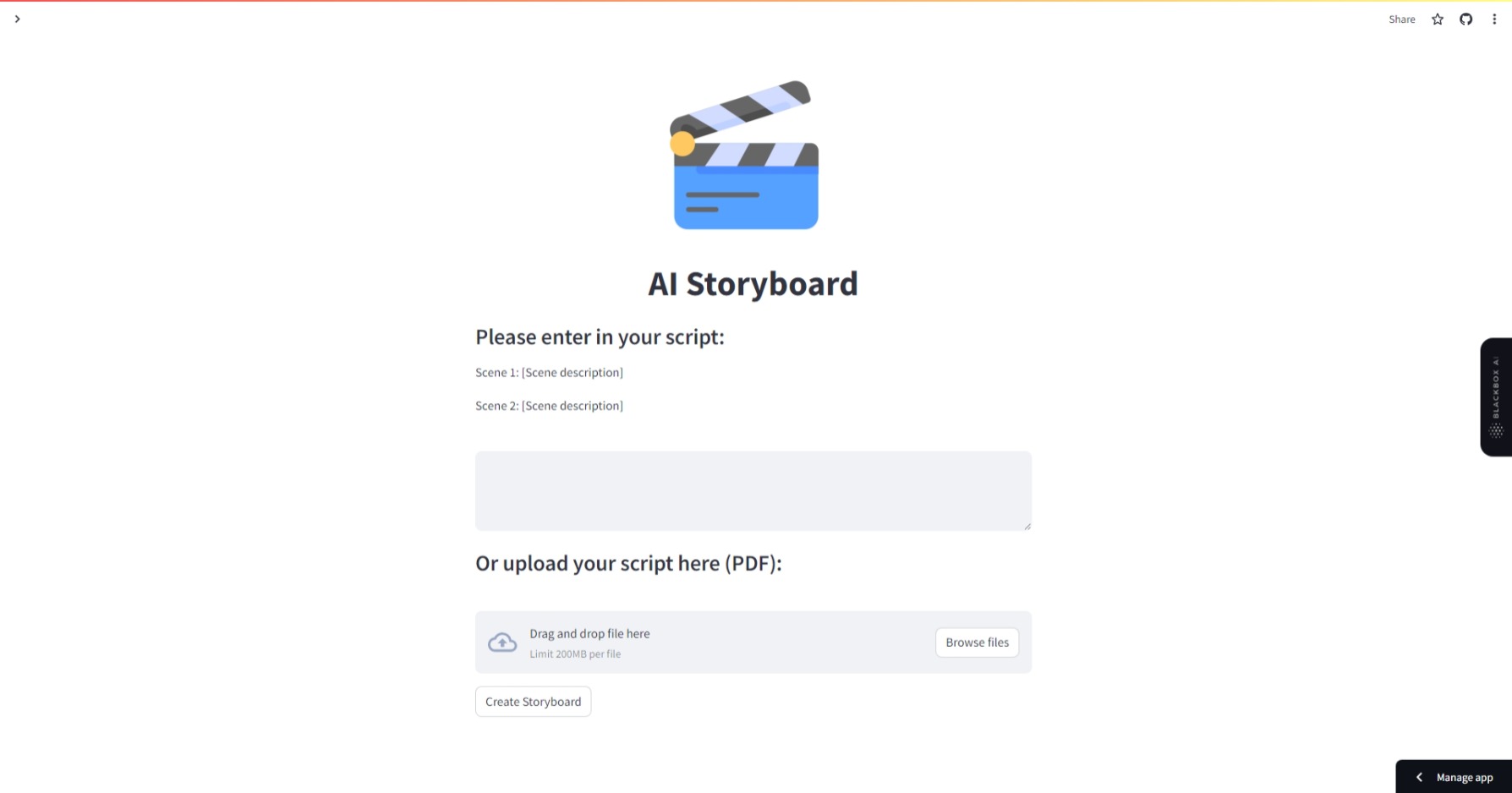
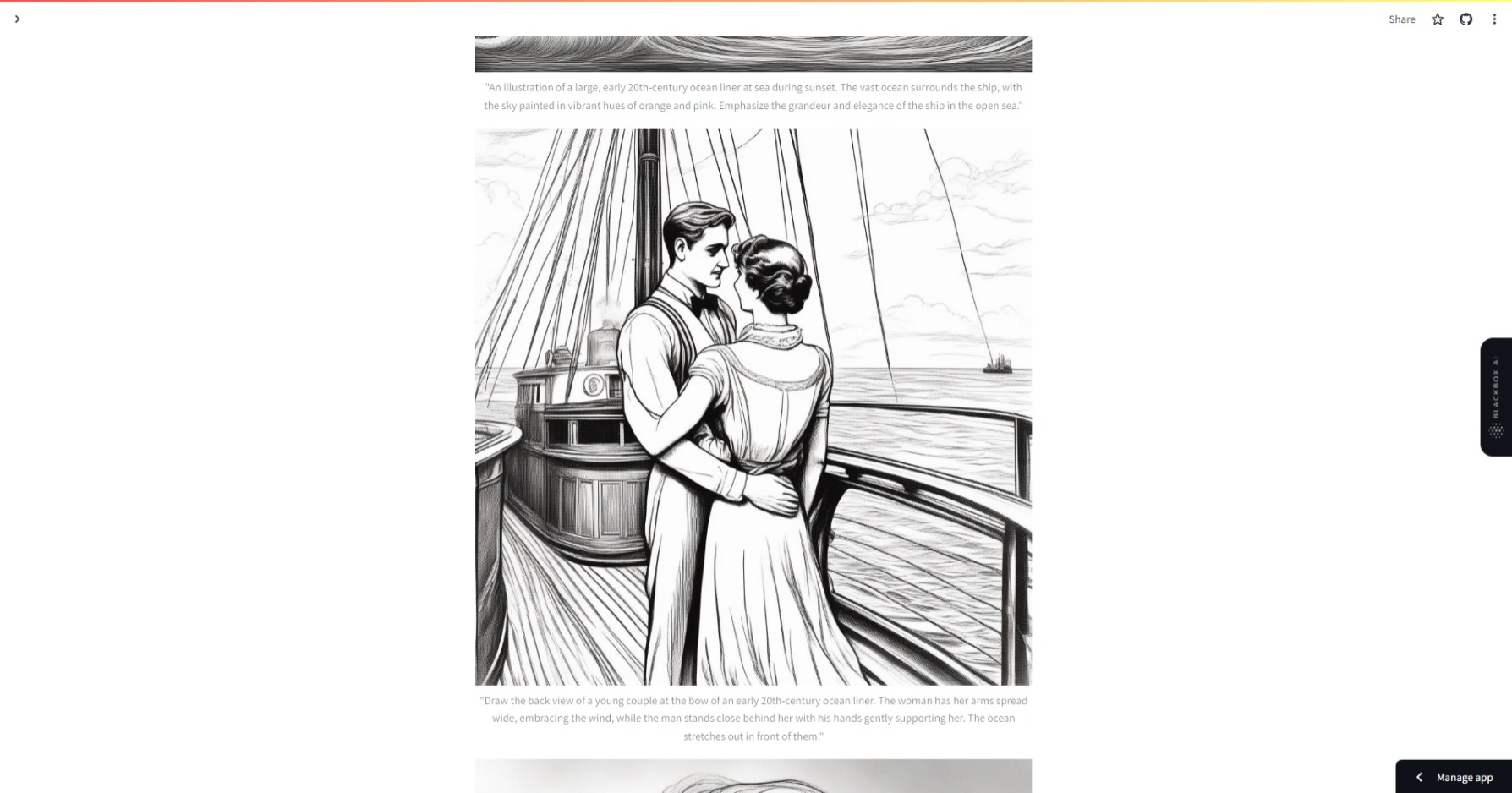
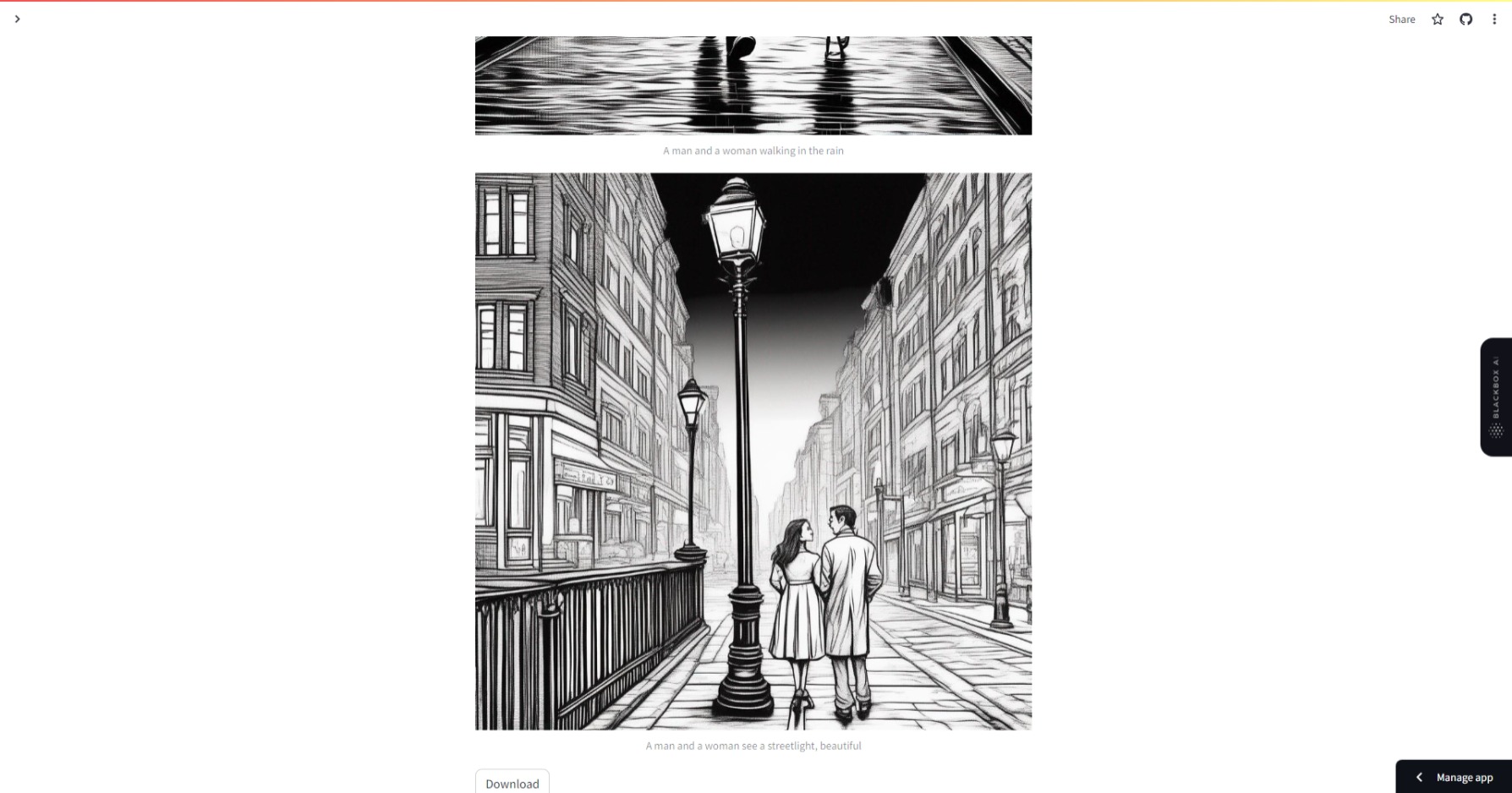
This tool transforms textual descriptions into visual storyboards, aiding in visualizing scenes and characters. It uses a fine-tuned version of Stable Diffusion to apply sketch art style in each storyboard's panels.
How we built it
The app's backend uses an API call to HuggingFace to return an image based on our parsed input, while the user interface is built with Streamlit, a lightweight Python framework.
Challenges we ran into
At first, I was trying to run the Stable Diffusion model of text-to-image locally, and the runtime was prolonged, and the style of each panel was inconsistent.
Accomplishments that we're proud of
We're proud that the App could be deployed, and anyone could try visualizing their ideas from plain texts to sketches.
What we learned
This project taught me more about deploying a website framework and working with dependencies while deploying an app. In addition, I also learned more about the filmmaking process and how a storyboard holds a crucial value in a successful movie.
What's next for AI Storyboard Visualization
In the future, I plan to implement more art styles in the app, such as abstract or realistic, and also integrate an LLM chatbot to aid the user in developing their idea and suitable prompt for the text-to-image model.
Built With
- huggingfaceapi
- lora
- python
- stablediffusion
- streamlit

Log in or sign up for Devpost to join the conversation.