-
-
Thumbnail
-
Home
-
Demo
-
Example
Inspiration
I wanted a simple way to turn one creative idea into something that feels like a film—structured scenes, dialogue, and visual direction—not just a paragraph-style short story. The inspiration was the gap between “writing a story” and “creating a short-film draft” that a filmmaker or content creator can actually use.
What it does
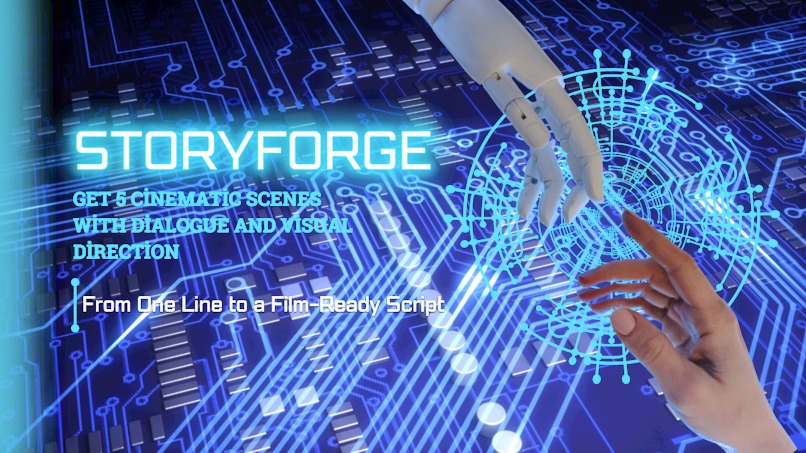
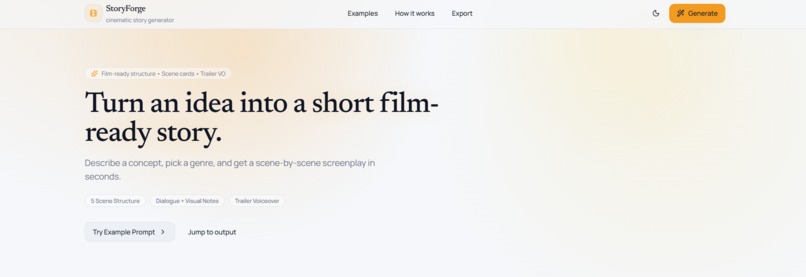
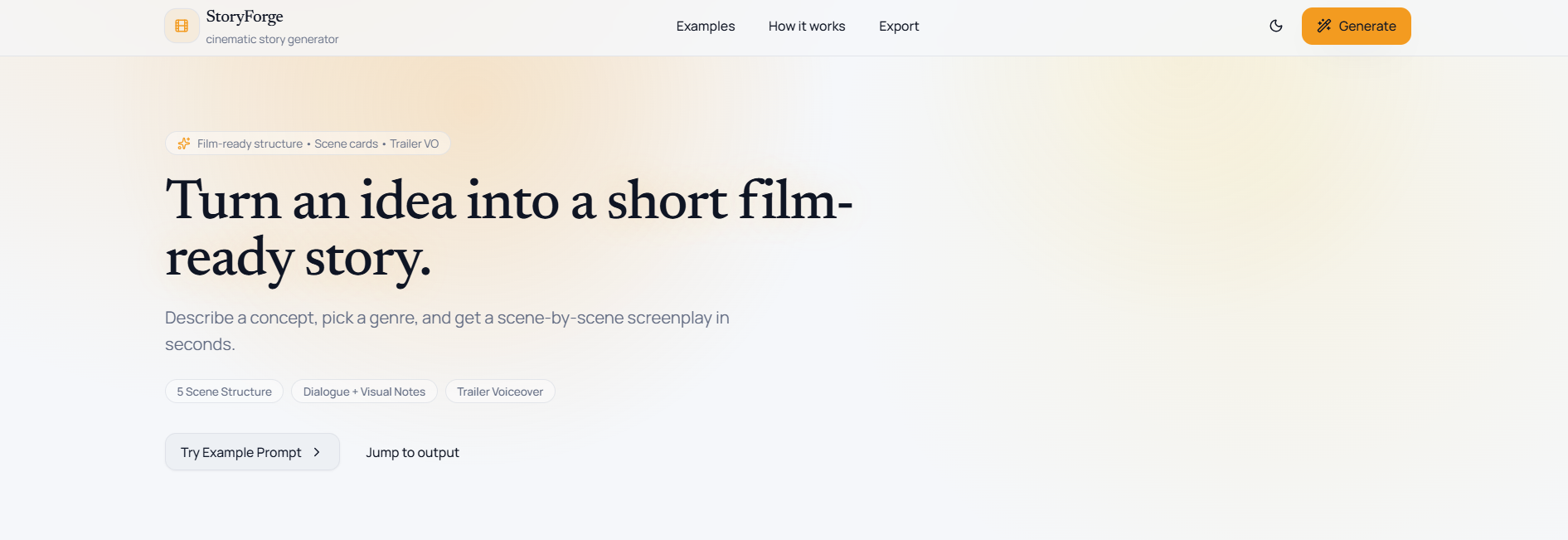
StoryForge – AI Short Film Script Studio turns a user prompt into a film-ready 5-scene screenplay.
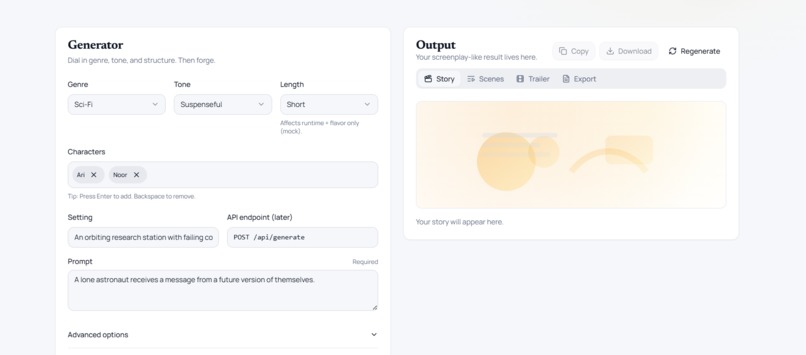
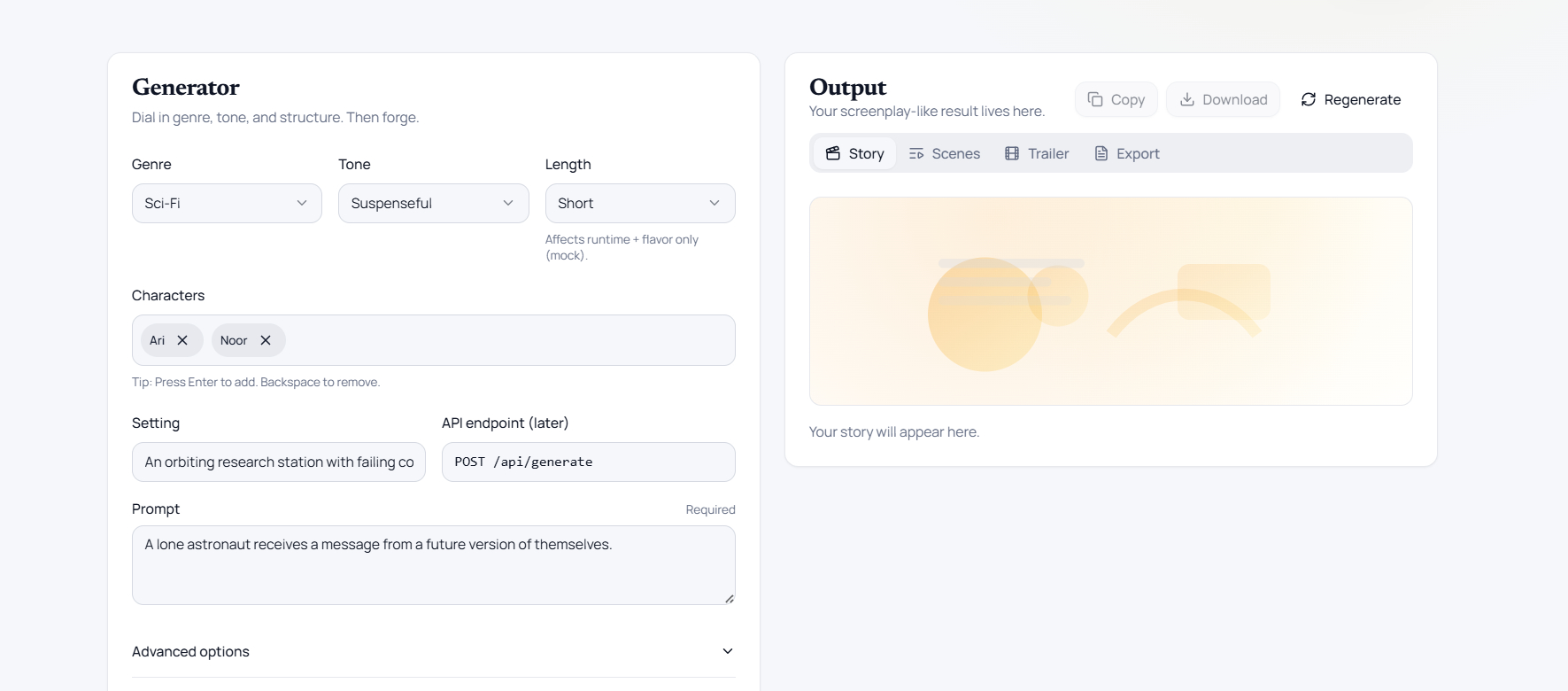
Users provide:
- Prompt (core idea)
- Genre (Sci-Fi, Horror, Romance, Thriller, etc.)
- Tone (Dark, Funny, Suspenseful, Epic, etc.)
- Characters (tag input)
- Setting
- Optional controls (POV, time period, twist, etc.)
It generates:
- Title + logline
- Estimated runtime
- 5 structured scenes (setting, visual notes, action, dialogue)
- Trailer pack (voiceover lines + quick cuts)
- Export options (Markdown / JSON / TXT)
How we built it
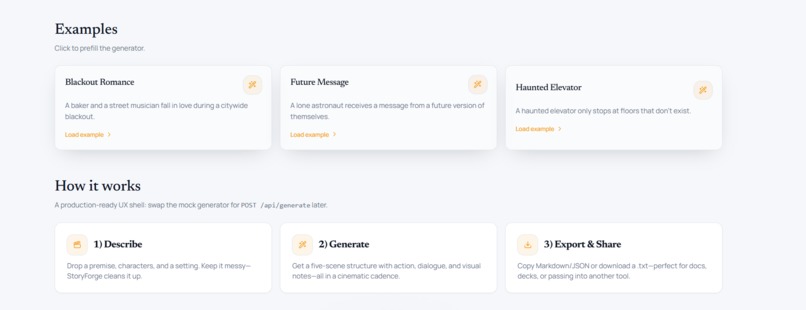
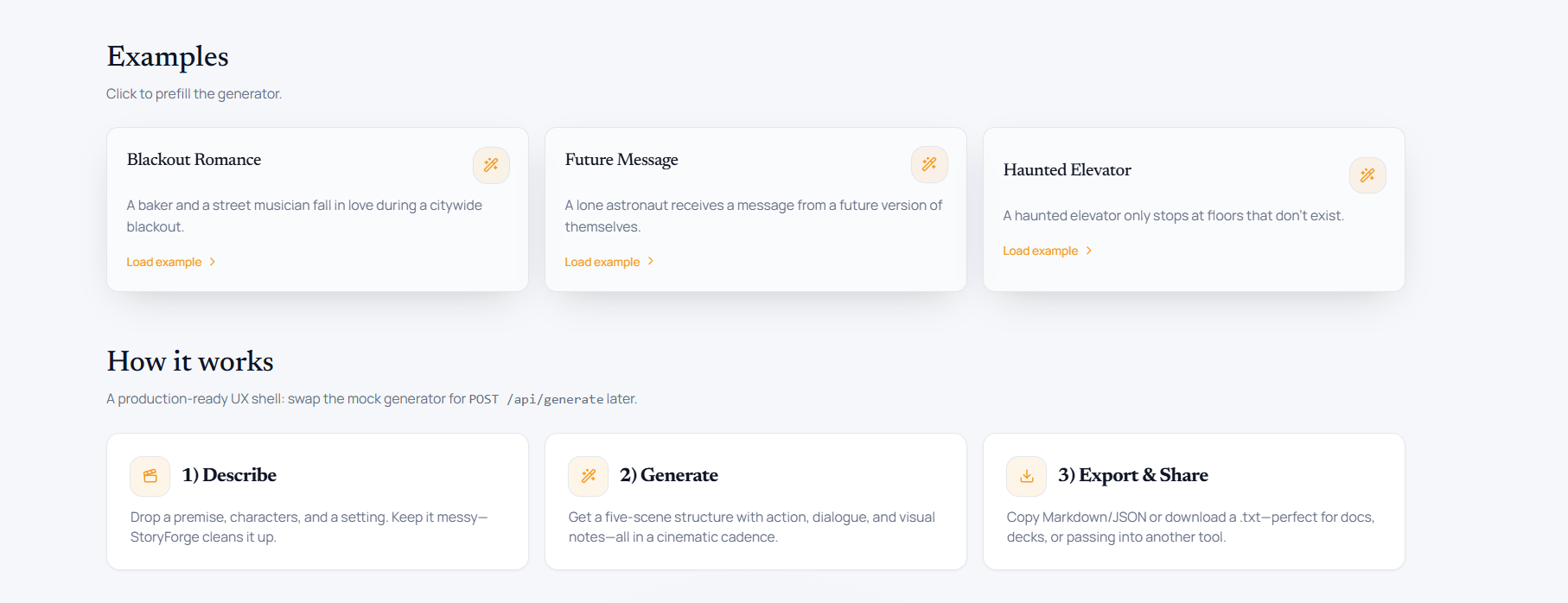
- Frontend: A cinematic UI with a two-panel generator layout, scene cards, tabs (Story/Scenes/Trailer/Export), loading states, and export tools.
- Backend: A single API endpoint
POST /api/generatethat sends a structured prompt to Gemini and requests strict JSON output. - Prototype scope: No database or authentication—kept intentionally minimal so the core experience works end-to-end.
Challenges we ran into
- Framework mismatch: Some generated UI components used SPA routing patterns (e.g.,
react-router-dom), which conflict with Next.js. We replaced those with Next.js routing (next/link) to fix build errors. - Output reliability: AI responses can vary, so we enforced a strict JSON schema and structured prompting to keep rendering predictable.
Accomplishments that we're proud of
- A working end-to-end prototype that produces cinematic, structured screenplay outputs (not just text blobs).
- Clean UI/UX with tabs, export tools, and strong presentation that feels like a real pre-production tool.
- A backend flow that returns consistent JSON ready for future upgrades.
What we learned
- How to design an AI app around a stable output schema so UI stays reliable.
- How to prompt for structured results (scenes, dialogue, visual notes) with consistent formatting.
- How to debug and adapt generated code to match the framework (Next.js) and deploy cleanly.
What's next for StoryForge – AI Short Film Script Studio
Potential upgrades (after the prototype):
- Storyboard images per scene (cinematic frames)
- A “Story Bible” for stronger character + tone consistency
- Optional short video clips per scene (advanced)
- Saving projects (database) + sharing links
For now, the focus is shipping a solid, shareable prototype that consistently generates film-ready scene drafts.
Built With
- api
- app
- css
- gemini
- generation)
- next.js
- react
- router)
- tailwind
- text
- typescript
- vercel

Log in or sign up for Devpost to join the conversation.