-
-
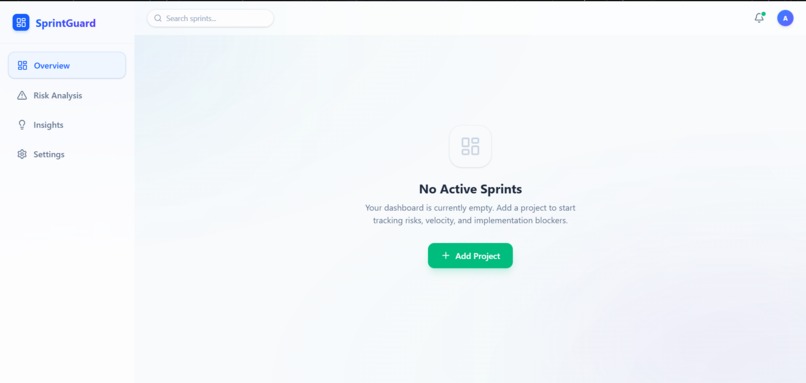
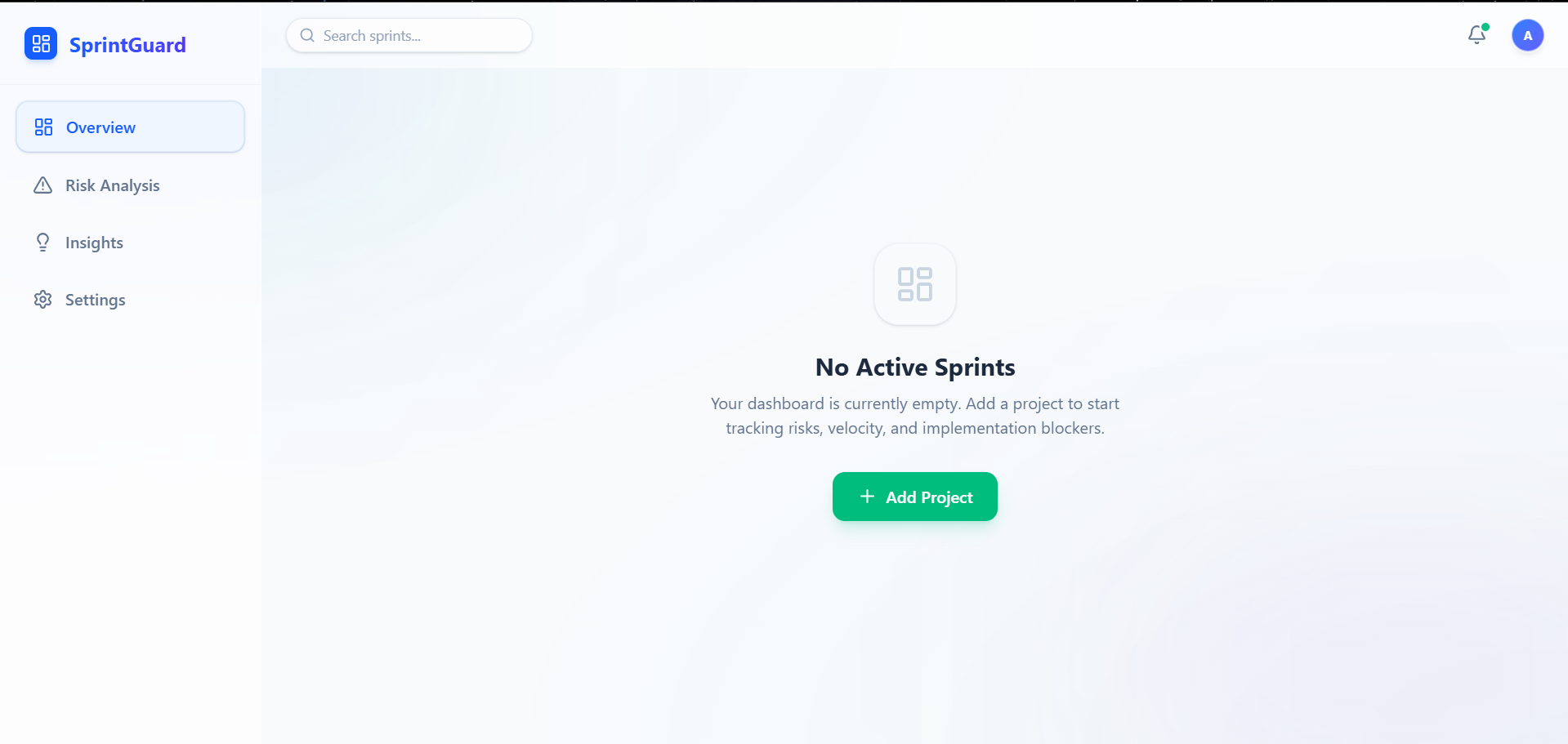
Overview and project adder .
-
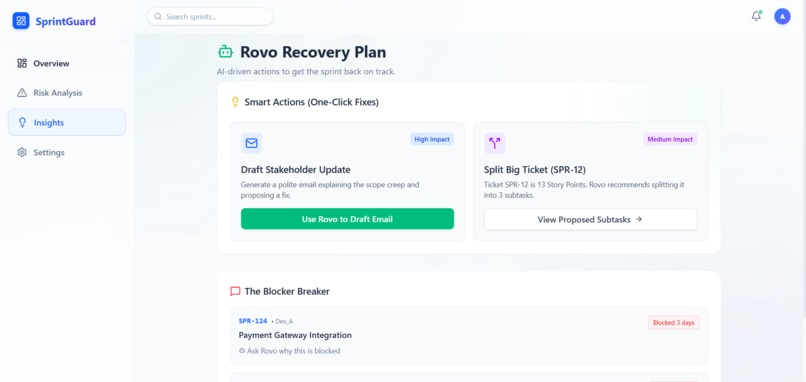
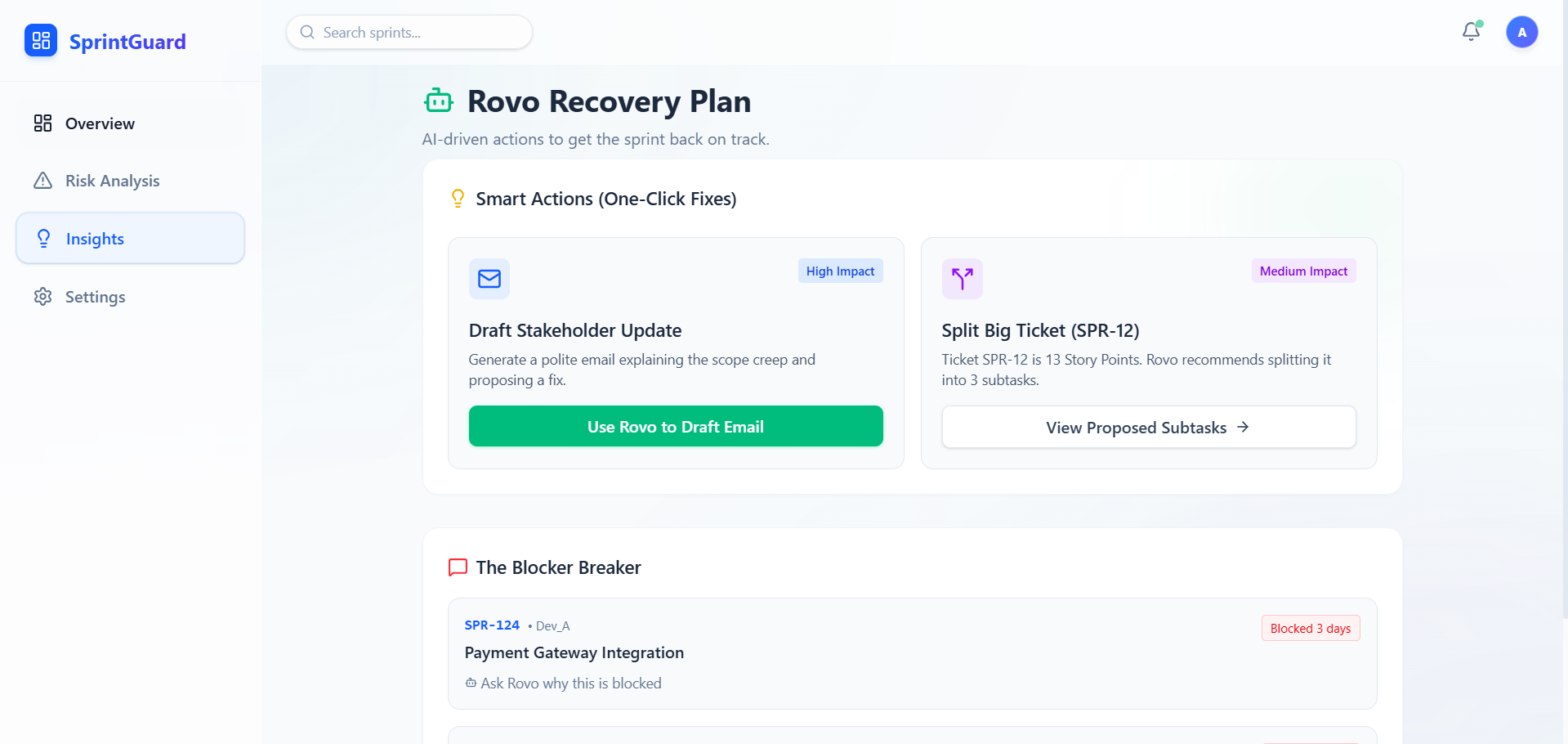
Insights of the project.
-
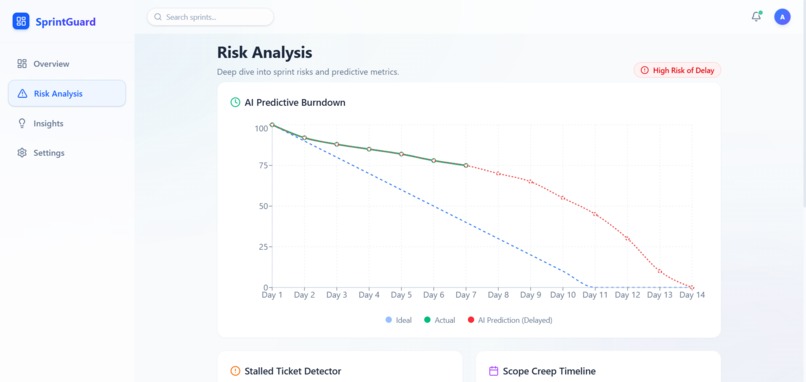
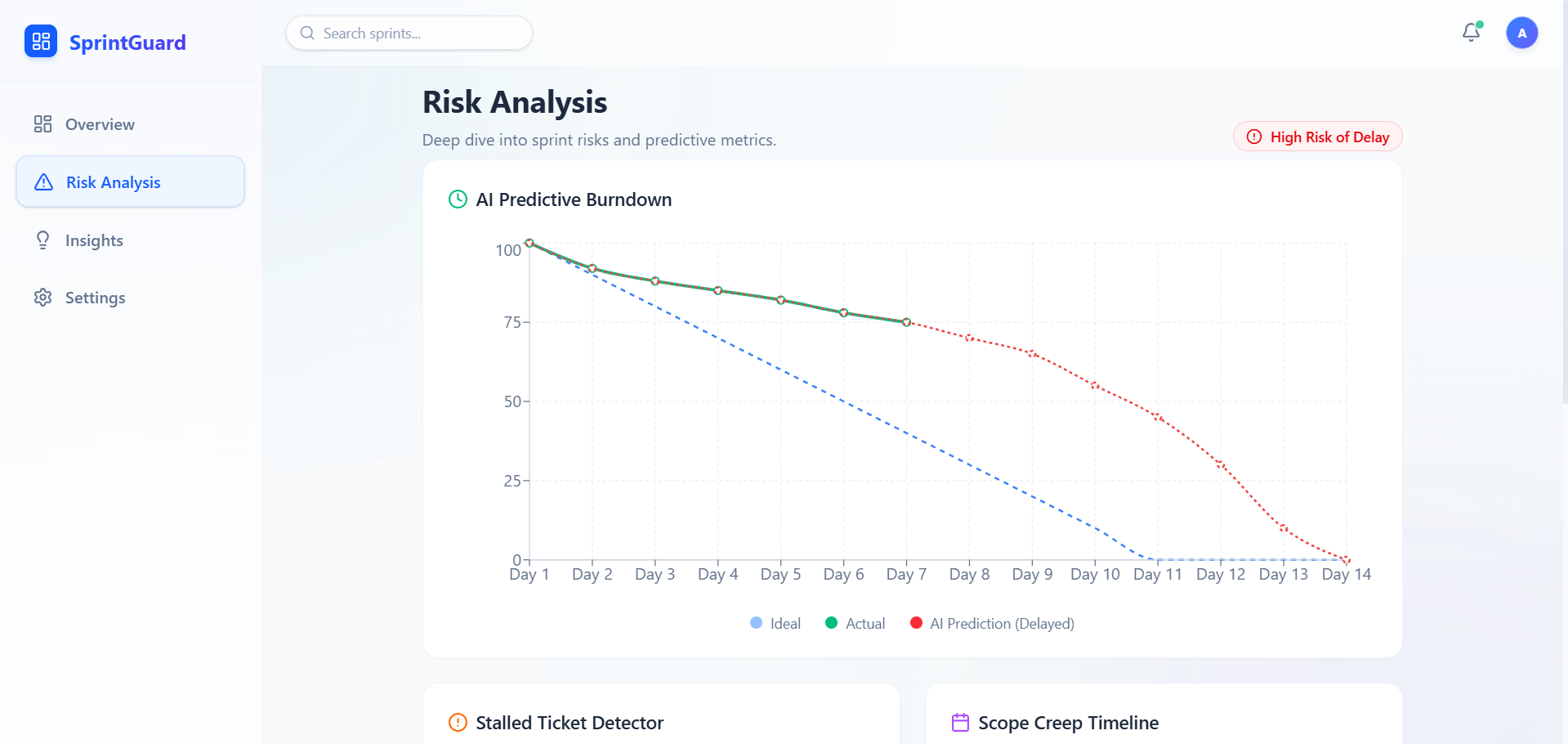
Risk Analysis of the project .
-
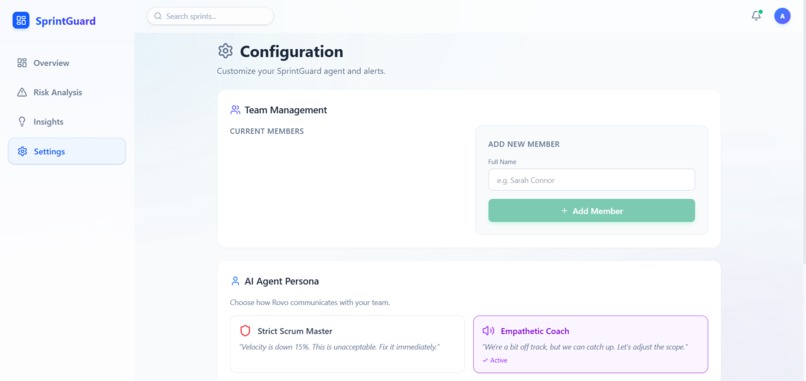
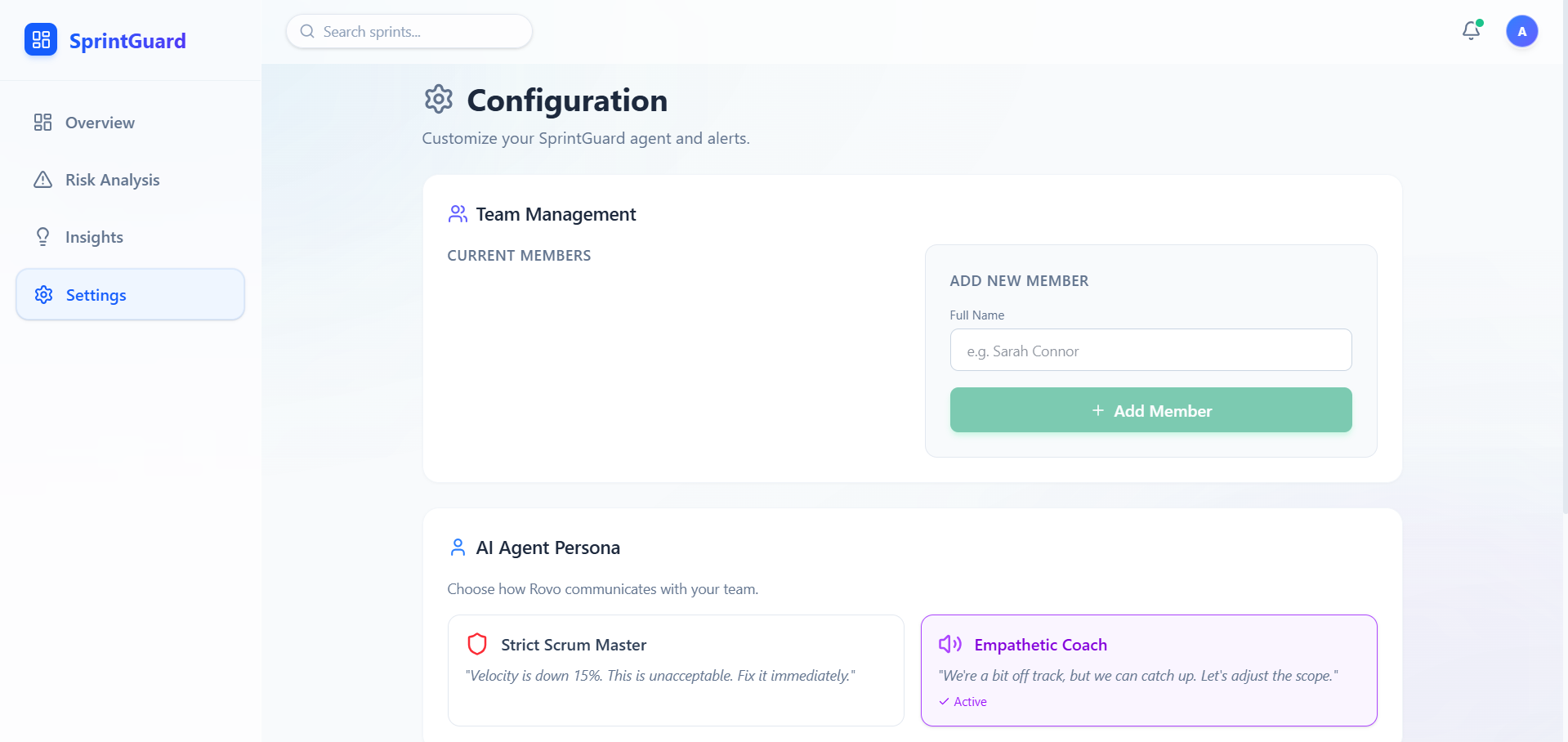
Settings & Configuration.
Here is the clean text of your report. I have removed all markdown formatting (bolding, headers, and bullet symbols) so you can copy and paste it directly into any document without extra symbols appearing.
SprintGuard: Project Report By: Team SprintGuard
Inspiration We've all been there: It’s Friday afternoon, the sprint board looks fine, but deep down, we know we aren't going to make the deadline.
In software development, "Sprint Failure" often happens silently. A few extra tickets are added (scope creep), a pull request gets stuck for 3 days (bottleneck), or a critical bug distracts the lead developer. Traditional tools track what work is being done, but they don't warn you when things are going off the rails until it's too late.
We built SprintGuard to be the "Smoke Detector" for Agile Teams. We wanted to move beyond passive tracking to active risk prevention, using the power of Atlassian Rovo to not just identify problems, but help teams fix them before the sprint ends.
What it does SprintGuard is an intelligent layer that sits on top of Jira Software to predict sprint risks in real-time.
Real-Time Risk Scoring: It calculates a live "Sprint Risk Score" (0-100) by analyzing ticket stagnation, scope changes, and velocity drops. Automated Scope Creep Detection: The system instantly flags when new work is injected mid-sprint, visualizing the impact on the deadline. Rovo "Recovery" Agent: This is our game-changer. Instead of just showing a chart, our integrated Rovo Agent analyzes blocked tickets and generates an actionable "Recovery Plan" (e.g., suggesting which low-priority tickets to cut or drafting updates to stakeholders). The "Bus Factor" Alert: Identifies if a single developer is overloaded with critical path items, preventing burnout and bottlenecks.
How we built it We built SprintGuard as a Forge Custom UI app to ensure it feels native to the Atlassian ecosystem.
Platform: Atlassian Forge (Serverless Function-as-a-Service). Frontend: React.js with Atlaskit components for that seamless Jira look and feel. We used Recharts for the predictive burndown visualizations. Backend and Logic: The backend runs on the Forge Runtime (Node.js). It fetches data via the Jira REST API and processes it through our custom risk algorithm (weighted analysis of time elapsed vs. story points completed). AI Integration: We leveraged Rovo Agents to ingest the sprint context and generate natural-language recommendations for the "Insights" module.
Challenges we ran into Data Noise: Jira data can be messy. Differentiating between a "legitimate scope change" (approved by PM) and "accidental scope creep" was difficult. We had to build a heuristic to flag tickets created after the sprint start date. The "Empty State" Problem: Making the dashboard look good for a new user with zero data was tough. We implemented "skeleton loaders" and a robust onboarding state to guide users to their first sync. Rovo Prompt Engineering: Getting the AI to be "helpful" rather than "bossy" took several iterations. We tuned the system prompts to ensure the Agent sounds like an empathetic Agile Coach.
Accomplishments that we're proud of The Risk Algorithm: We successfully turned complex, scattered Jira data into a single, understandable number (The Risk Score). Native Feel: The app doesn't look like a plugin; it looks like a core part of Jira. The UI transition from "Overview" to "Deep Analysis" is smooth and intuitive. Actionability: We didn't just build a dashboard; we built a tool that helps you fix the sprint.
What we learned The Power of Forge: We were surprised by how quickly we could spin up a secure, serverless backend without managing infrastructure. AI as a Teammate: We learned that the best AI features aren't the ones that "do everything," but the ones that nudge humans to make better decisions (like our "Bottleneck Breaker" suggestions).
What's next for SprintGuard One-Click Actions: We plan to let the Rovo Agent perform write-actions, like automatically moving a stuck ticket to the "Blocked" column or assigning a reviewer. Slack/Teams Integration: Pushing the "Risk Alert" directly to the team's chat channel if the score drops below 50. Historical Trends: Using machine learning to predict velocity based on the team's performance over the last 6 months, not just the current sprint.

Log in or sign up for Devpost to join the conversation.