-
-
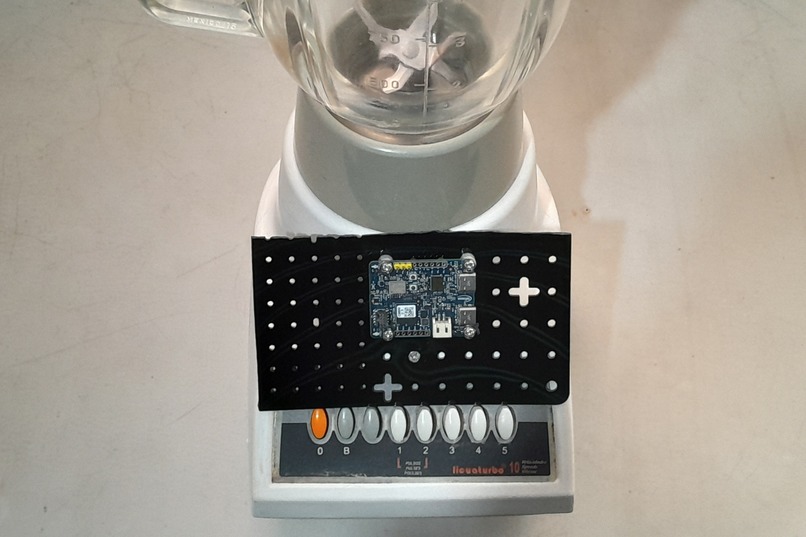
Cover
-
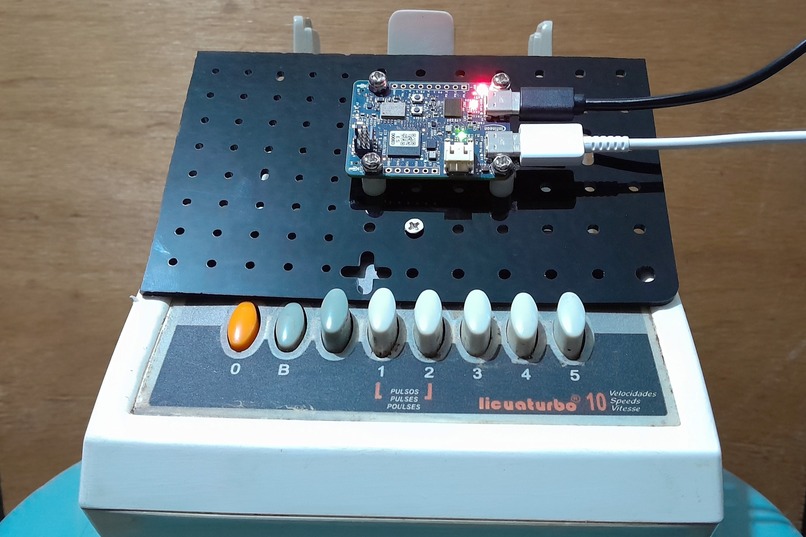
Training the Model
-
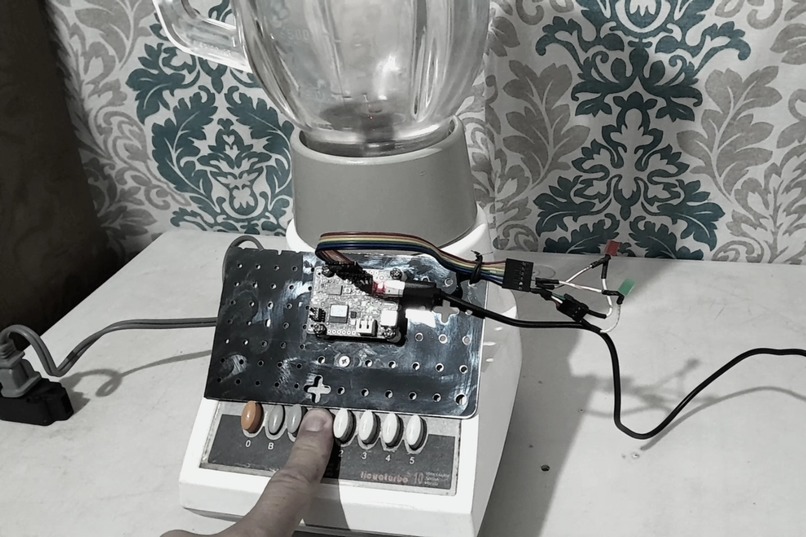
Test Using LEDs
-
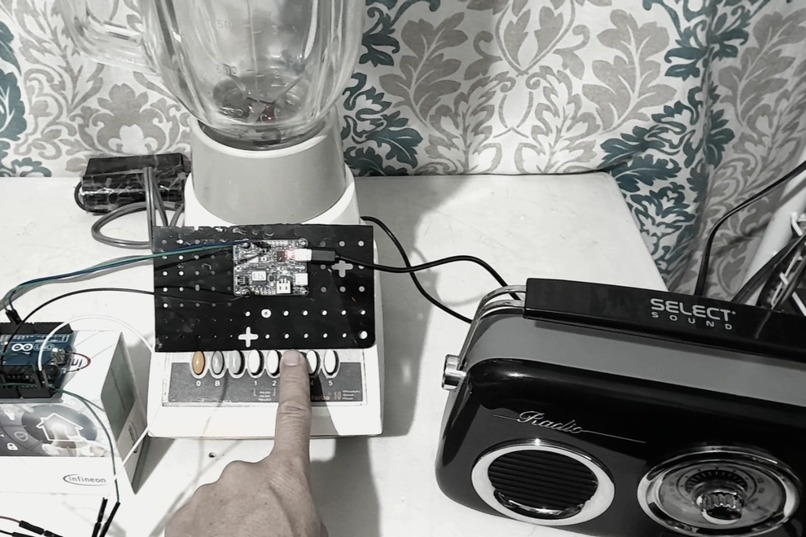
Test Using Voice Module
-
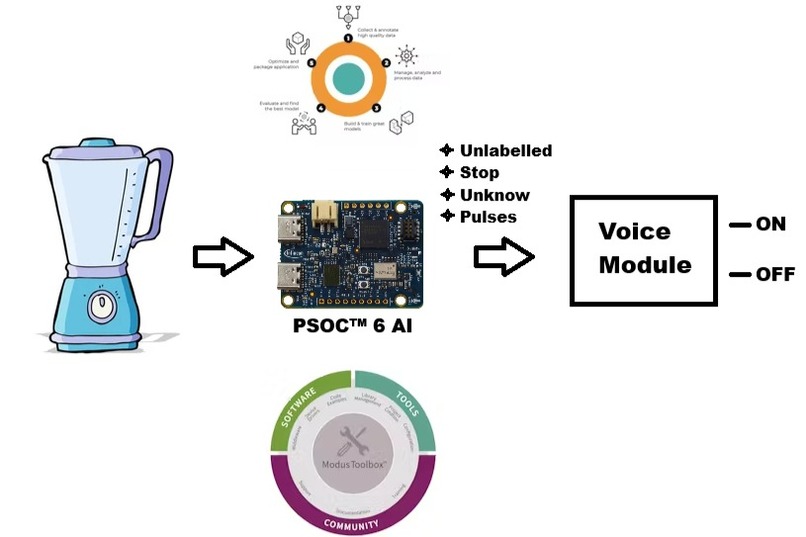
Block Diagram
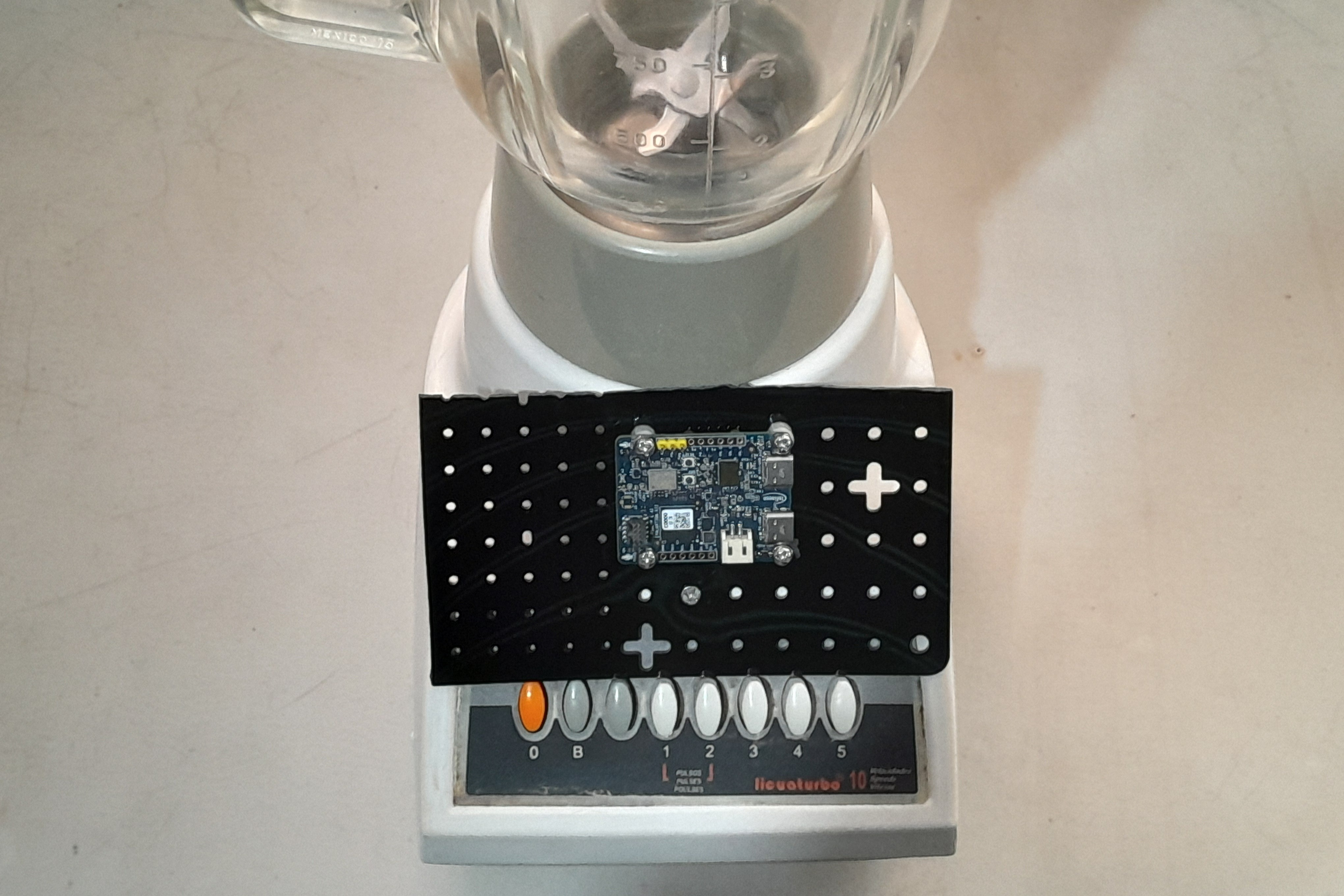
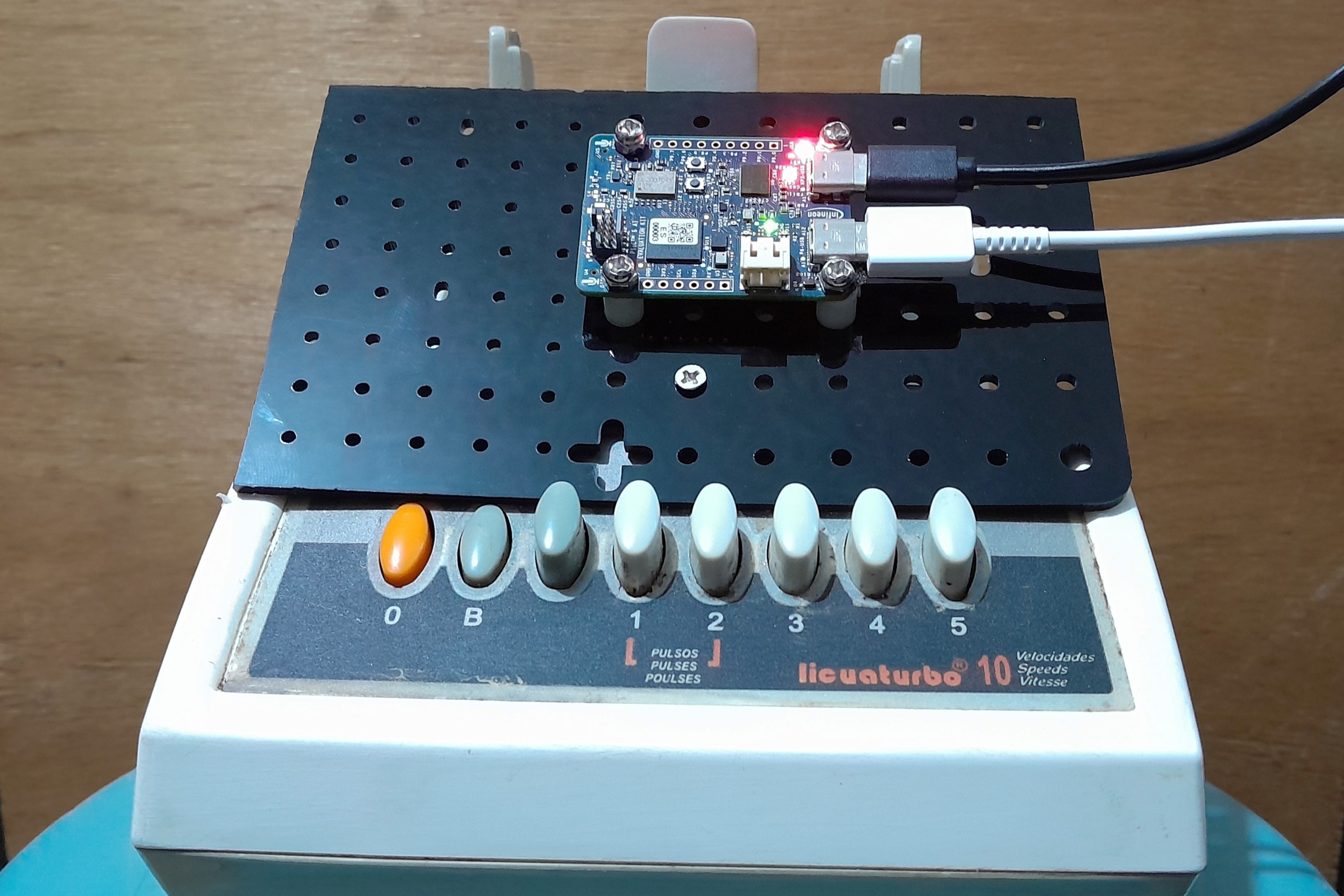
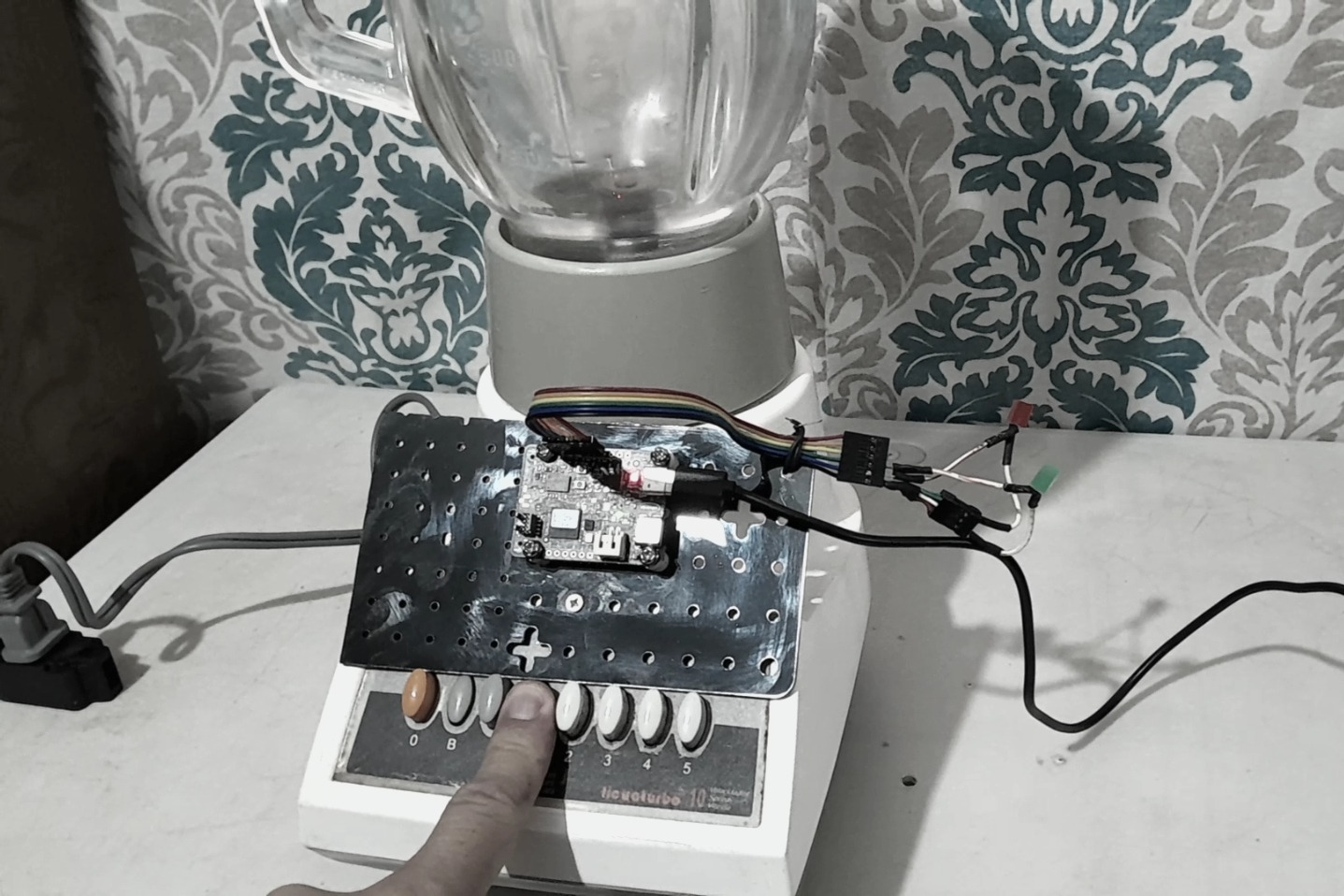
Inspiration
- Modern smart homes focus heavily on energy efficiency, automated safety, and predictive maintenance. Kitchen appliances like blenders are inherently loud, consume varying levels of power depending on their speed, and can easily overheat or experience mechanical failure if left running at high speeds unchecked. The inspiration came from wanting to bring non-invasive, edge-based artificial intelligence into the kitchen. By analyzing the vibrational frequencies of a blender, we can intelligently detect its operational speed state entirely at the edge, without requiring expensive smart-appliance upgrades or risking data privacy.
What it does
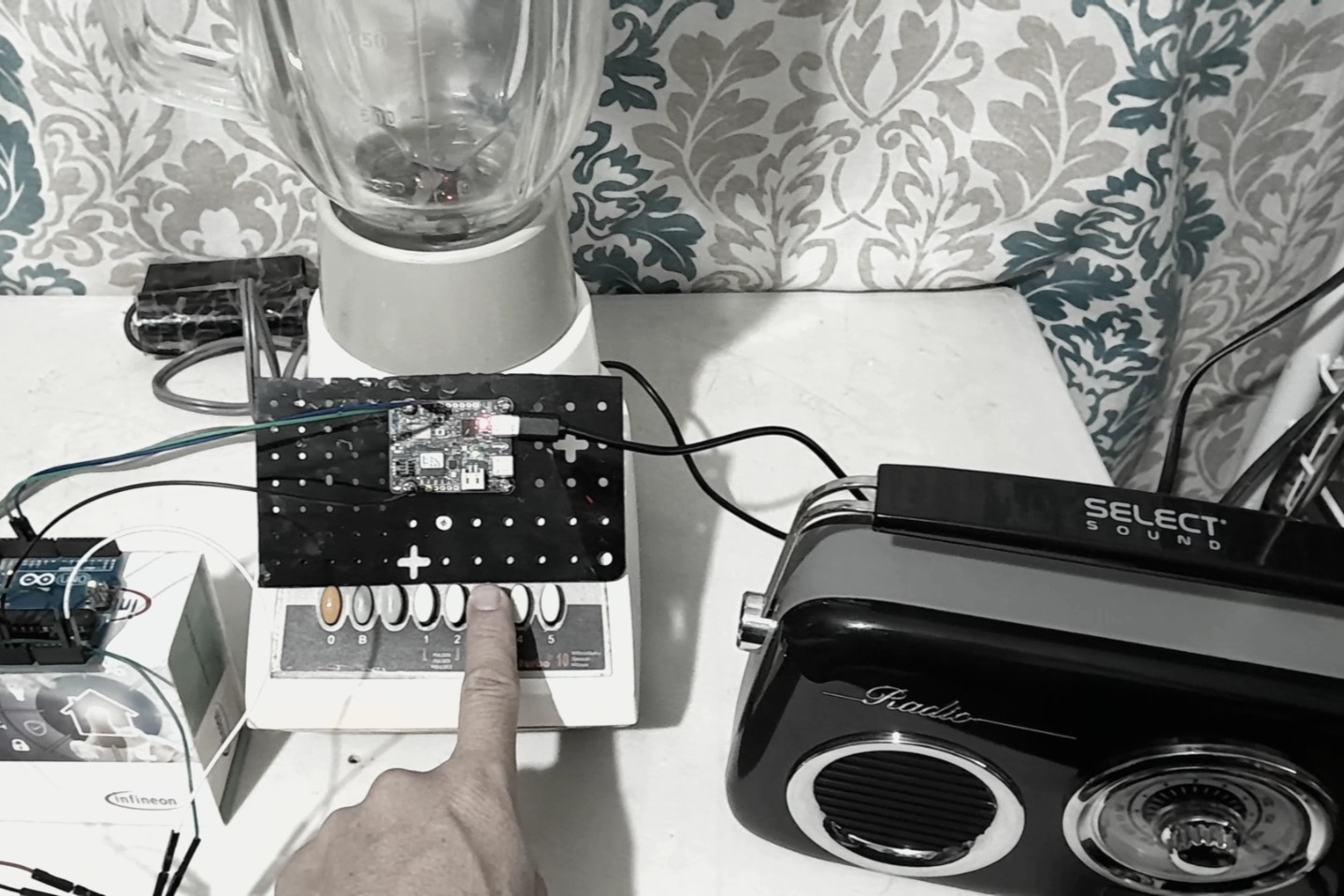
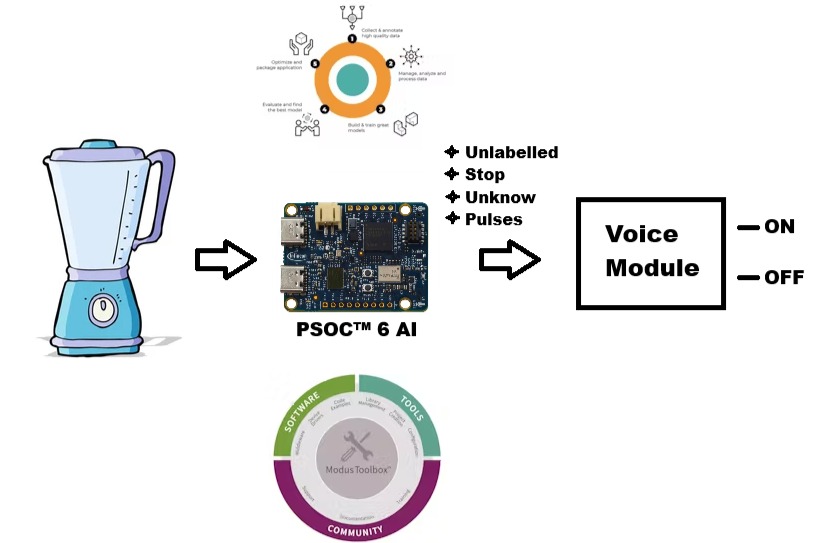
- The AI Speed Blender Detector is an intelligent Edge AI monitoring system that listens to or feels the operation of a standard blender. Using a trained machine learning model running locally on a microcontroller, it classifies the blender’s current state in real-time (e.g., Off, Low Speed, Medium Speed, High Speed, or Anomalous Overloading). It processes this data completely locally, providing immediate visual feedback via onboard LEDs or Voice Module.
How we built it
- The Hardware: Built using an embedded edge development board equipped with an onboard sensor (3-axis accelerometer) capable of handling TinyML inferencing.
- Data Collection: We collected vibration samples of the blender operating at different gear settings, capturing the distinct frequency signatures of each speed.
- Model Training: The dataset was preprocessed using a frequency-domain feature extractor like Mel-Frequency Cepstral Coefficients (MFCC) for Spectral Analysis for vibration. A lightweight neural network was trained to accurately classify these frequency bands.
- Deployment: The model was optimized and compressed into a TensorFlow Lite Micro format and flashed onto the microcontroller, enabling real-time, low-power inference.
Challenges we ran into
- The biggest hurdle was vibrational noise isolation. Kitchens are noisy environments with ambient background chatter, running water, or other appliances operating simultaneously. Initially, the model would misclassify ambient room noise as a "low speed" blender setting. Overcoming this required expanding the dataset with a robust "Background/Noise" class and optimizing the feature extraction parameters to focus strictly on the specific resonance frequencies produced by the blender's motor.
Accomplishments that we're proud of
- We successfully achieved high classification accuracy (greater than 90%) running entirely on a highly constrained, low-power microcontroller. The system operates with minimal latency, detecting speed transitions almost instantly. We are incredibly proud of creating a fully operational, privacy-first smart home feature that requires absolutely no internet connection to perform its core AI task.
What we learned
- We gained a much deeper understanding of data preprocessing for time-series and vibration signals at the edge. We learned how critical high-quality, varied datasets are for model robustness—saving time during deployment by spending more time refining data collection up front. We also solidified our skills in deploying micro-optimized models onto specialized hardware where every kilobyte of RAM matters.
What's next for AI Speed Blender Detector
- Predictive Maintenance: Expanding the ML model's classes to identify anomalies, such as blade blockages, loose bearings, or motor overheating before mechanical failure occurs.
- Industrial Scaling: Adapting the toolkit to work as an automated Quality Assurance (QA) tool on assembly lines, allowing factory testers to verify appliance speed calibrations purely by sound or vibration.
- Enclosure Design: Designing and 3D-printing a rugged, compact case to protect the electronics from a fast-paced kitchen or workshop environment.

Log in or sign up for Devpost to join the conversation.