Inspiration
I don't drink wine but I've always been fascinated by the world of serious collectors. People who spend years curating bottles, tracking vintages, and building cellars worth thousands of dollars... still managing everything in a spreadsheet. That gap felt like a real problem worth solving. When the Build with MeDo Hackathon launched, I saw an opportunity to push the boundaries of what MeDo could generate: not just a simple tool, but a complete, premium digital experience for wine enthusiasts. The tagline came to me immediately: one photo. Your entire cellar. I'm a builder from Strand, Cape Town, South Africa. My background spans cybersecurity, AI, and full-stack development. Most of what I build is for African communities youth mentorship platforms, tools for informal traders, wildlife conservation AI. This project was different. It was a creative challenge: could I use MeDo to build something polished enough that a serious wine collector would actually pay for it? The answer is yes.
What it does
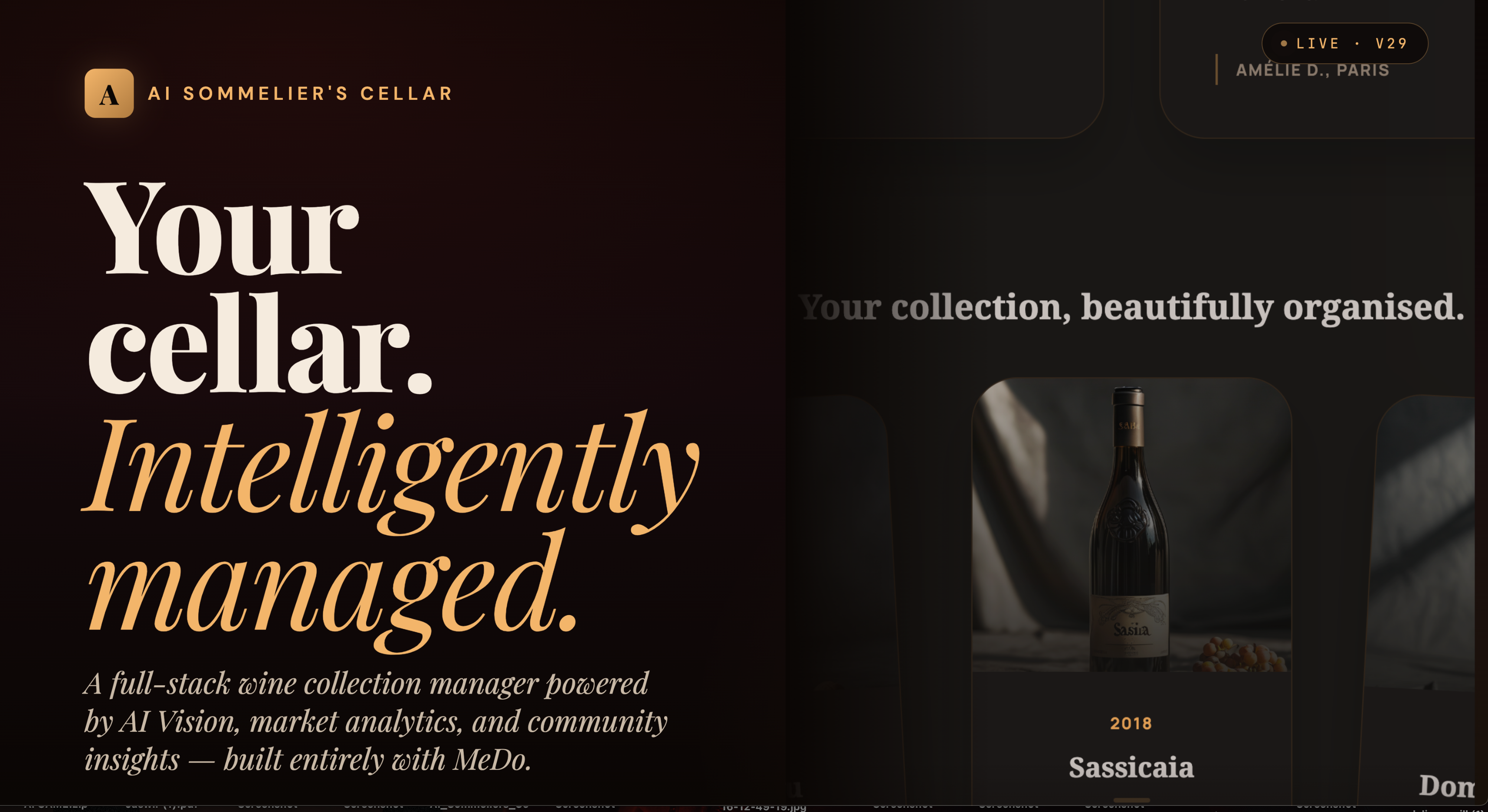
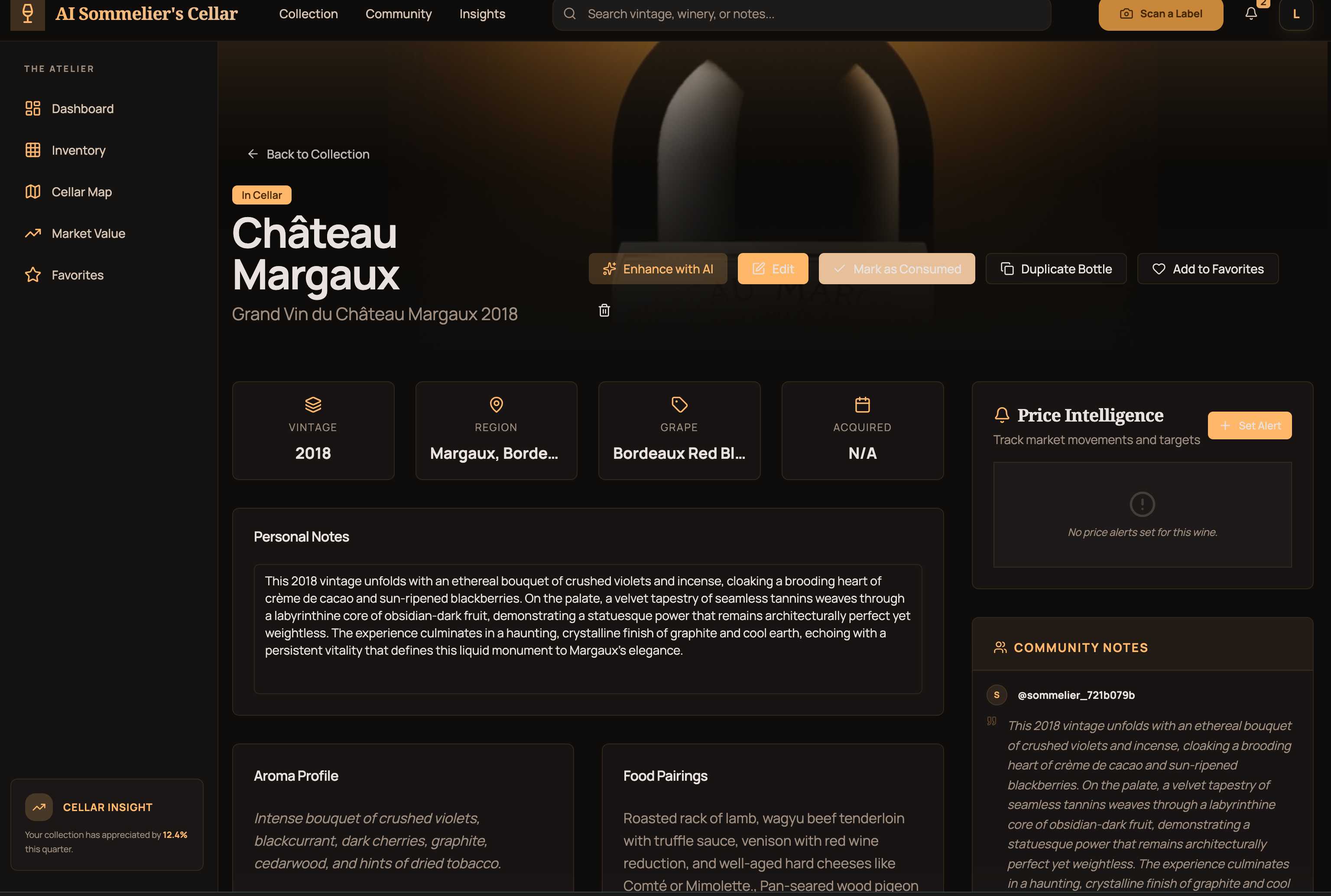
AI Sommelier's Cellar is a full-stack wine collection manager that turns a single photo into a complete cellar record. Here is what the app delivers:
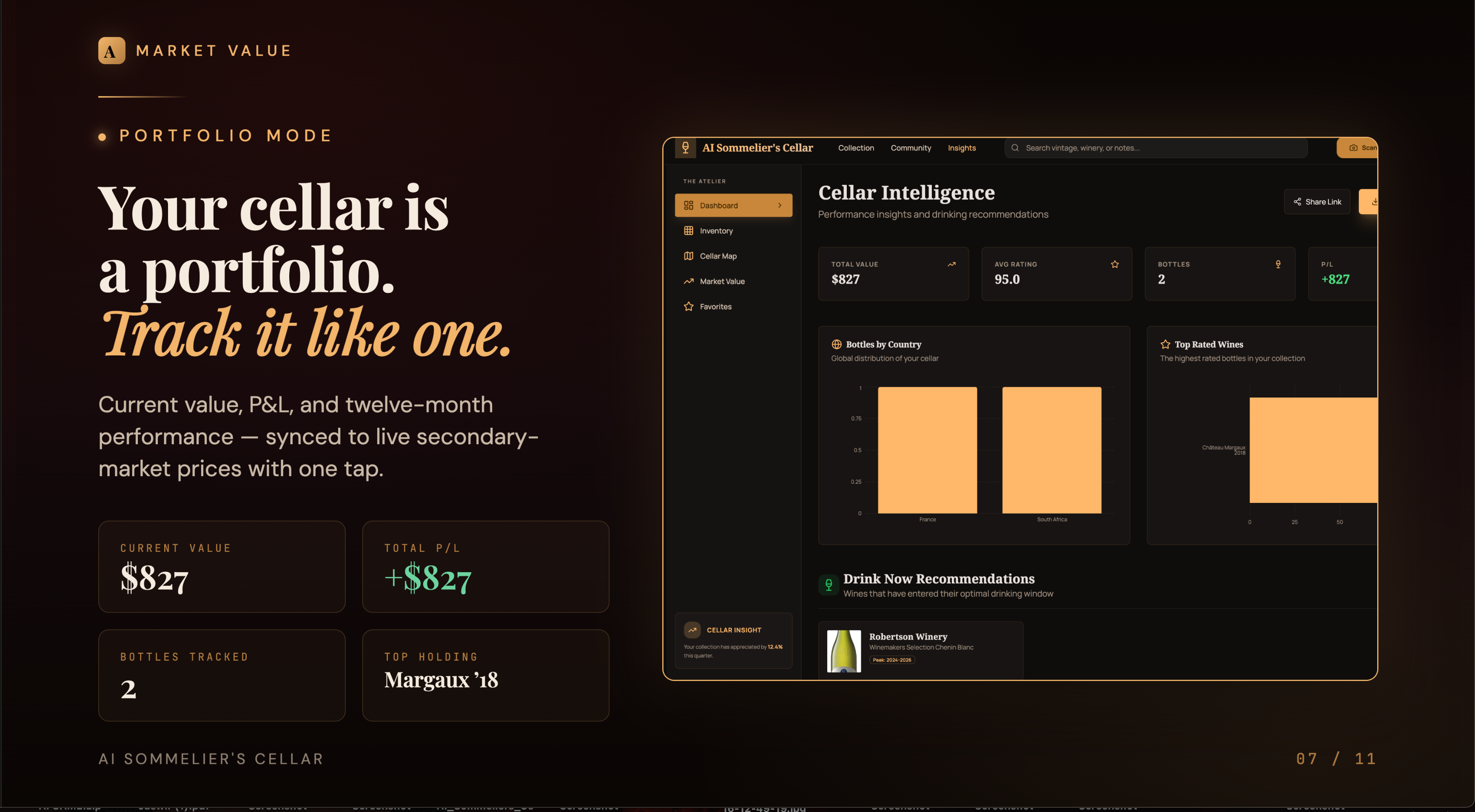
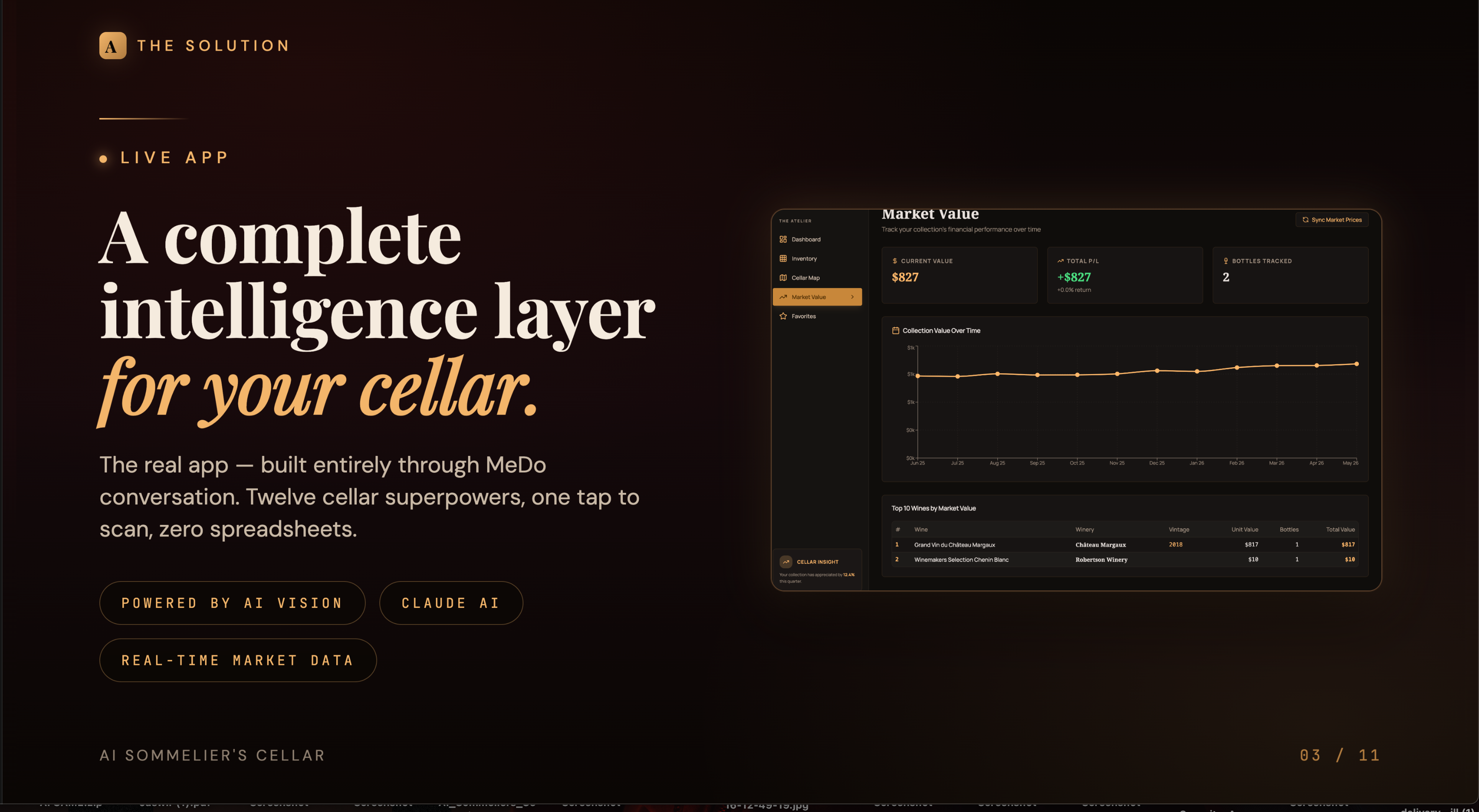
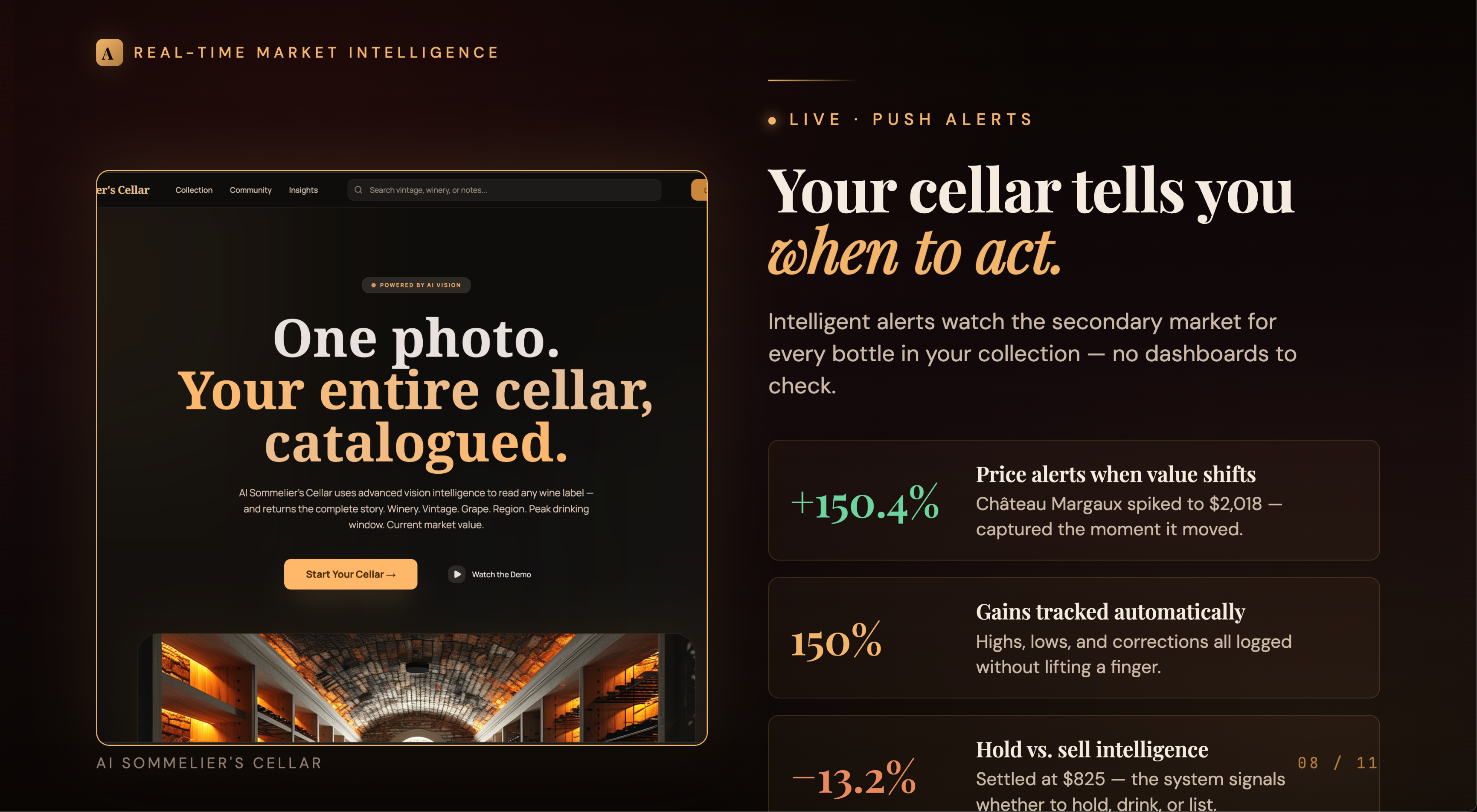
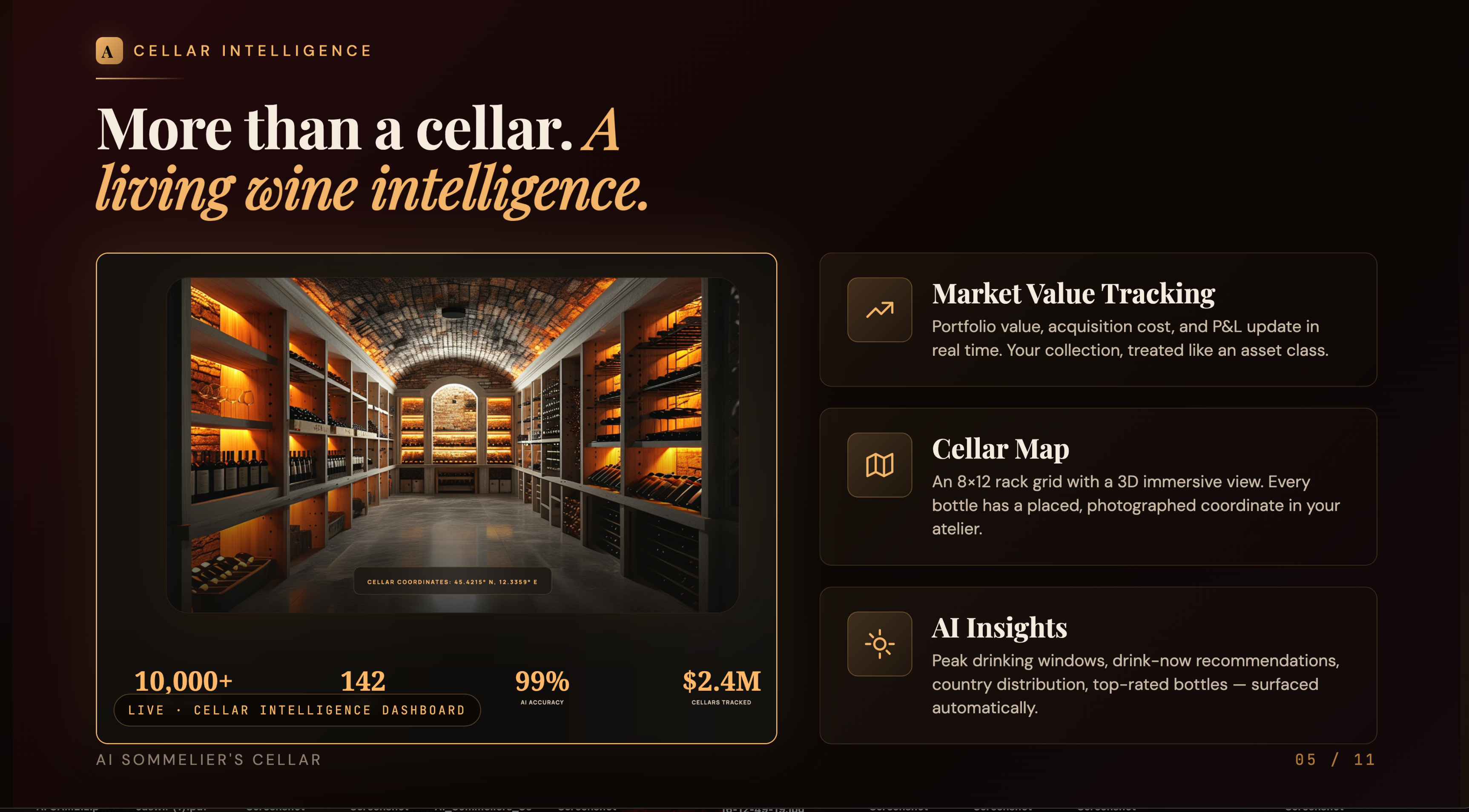
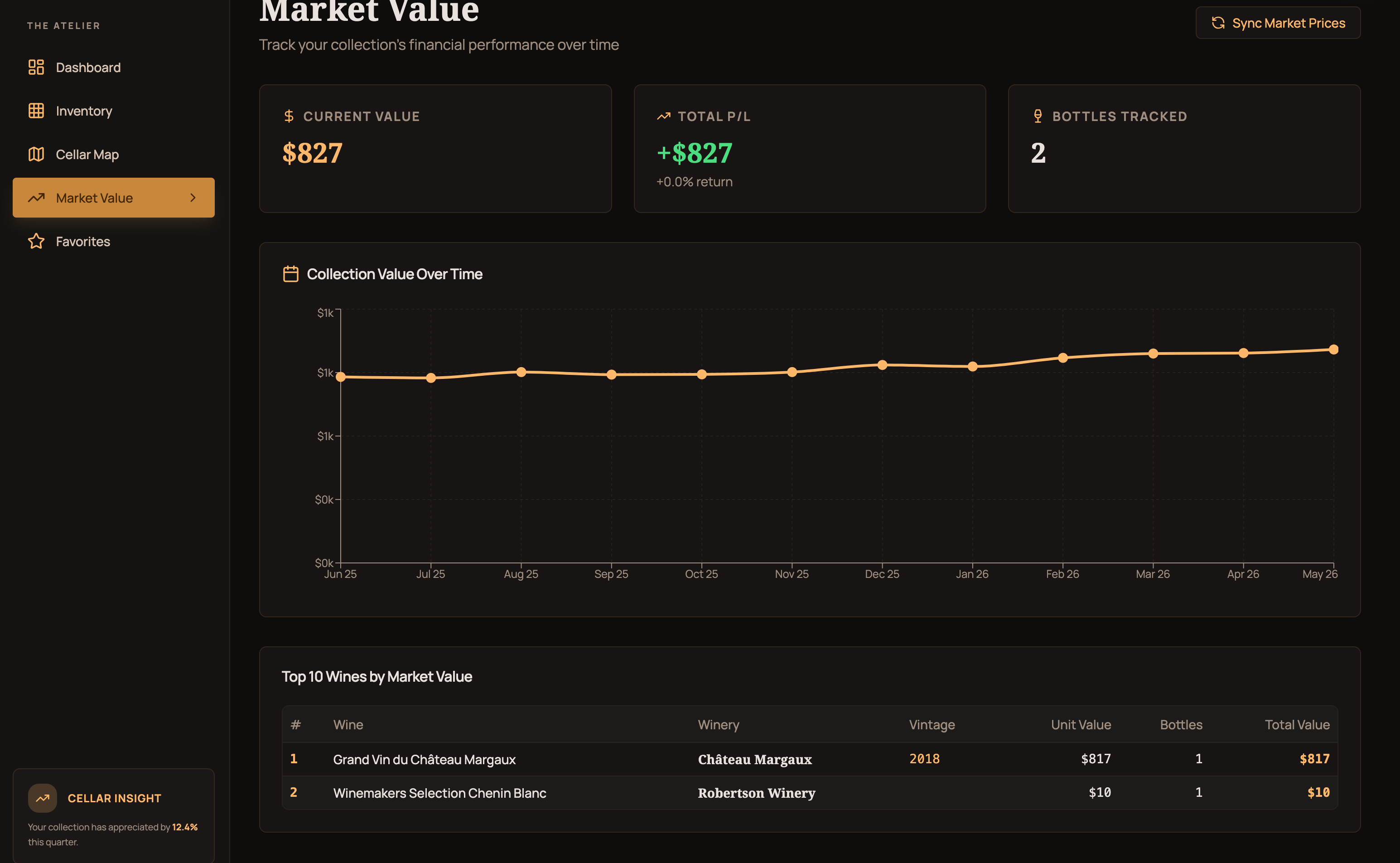
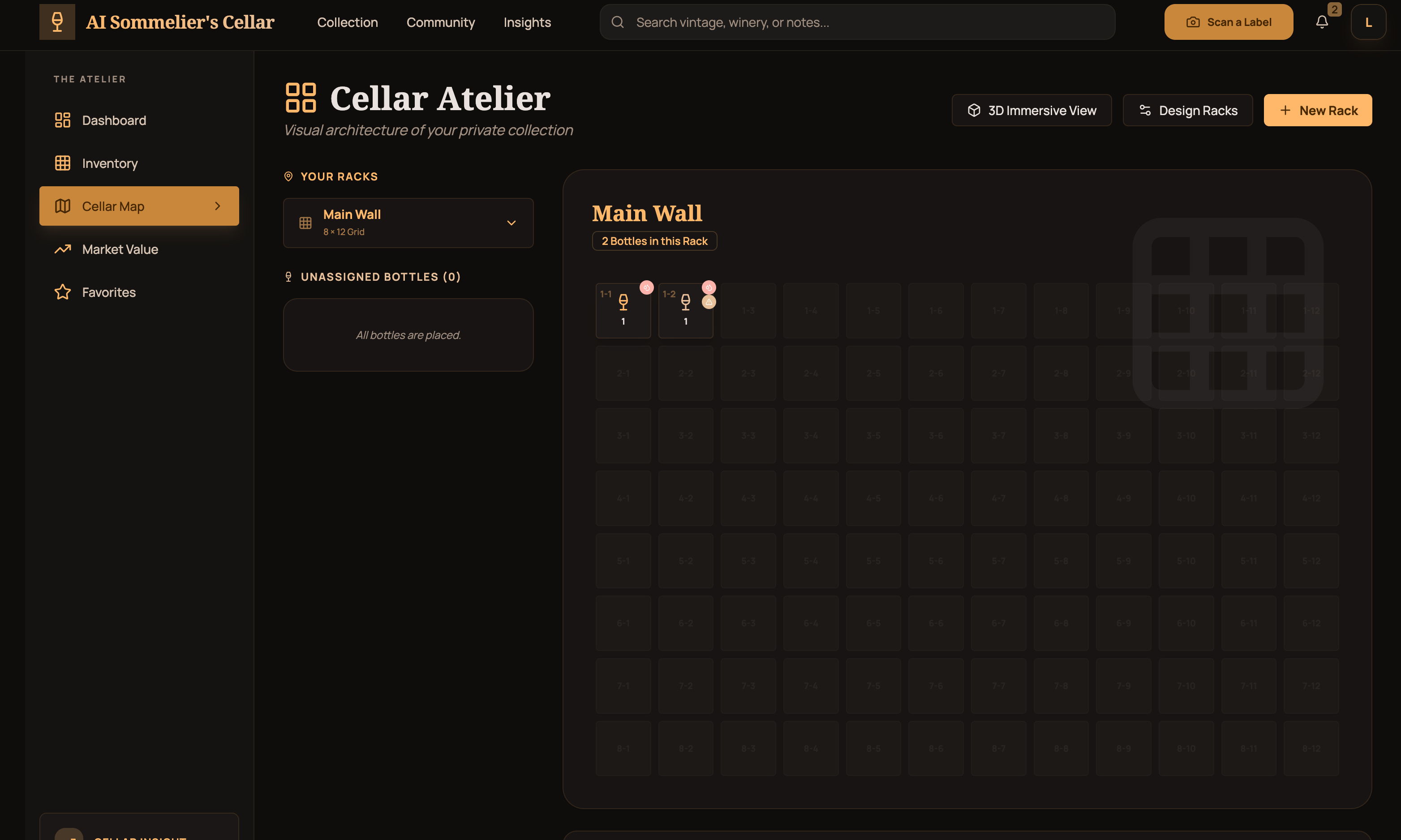
AI Label Scan - Point your camera at any wine bottle. The AI Vision model reads the label and automatically populates the winery, vintage, region, grape blend, and a professional tasting profile. No manual input required. Dashboard - A live overview of your collection: total value, average rating, bottles in cellar, and P&L (profit and loss) tracking. Inventory - Full collection management with labels, tasting notes, provenance, and status tracking (in cellar, consumed, sold). Cellar Map - A visual rack-by-rack layout showing exactly where each bottle lives. Market Value Tracking - Real-time valuation of your entire collection, updated as market prices shift. Community - Share tasting notes, discover hidden gems, and connect with fellow collectors. AI Insights - Smart recommendations on which bottles to drink now versus hold for appreciation.
The live app is deployed at app-awki5pdkn7y9.appmedo.com.
How we built it
Everything was built using MeDo through natural language conversation, multi-turn iteration, and MeDo's visual editor. The process looked like this:
- Architecture First I described the full concept to MeDo in a single opening prompt: a wine cellar manager with AI label scanning, market value tracking, community features, and a premium dark UI. MeDo scaffolded the entire full-stack architecture database schema, authentication, API layer, and the core UI structure.
- AI Vision Integration The label scanning feature required the most iteration. Using multi-turn chat, I refined the AI Vision integration step by step prompting MeDo to handle edge cases, improve accuracy, and structure the returned data cleanly into the collection schema.
- Dashboard and Analytics I described each metric card in plain language (Total Value, Avg Rating, P&L, Bottles) and MeDo generated a live, data-bound dashboard that updates in real time as bottles are added or removed.
- Cellar Map and Inventory These modules were built through a combination of conversational prompting and the visual editor adjusting layouts, filters, and sorting logic through natural language rather than code.
- UI Polish The dark cellar aesthetic, gold accents, and card-based bottle display were all refined through MeDo's visual editor. By version 29, the app looked and felt like a product worth building seriously.
The most impressive thing MeDo generated: the AI label scan feature. Describing it in natural language and watching it become a working, integrated feature inside a full-stack app that was the moment I knew this tool was something different.
Challenges we ran into
Label scan accuracy on complex labels Wine labels vary enormously in typography, language, and layout. Some iterations of the AI Vision feature returned incomplete data for labels with decorative or non-standard fonts. Iterating through MeDo's multi-turn chat to improve prompt engineering around the vision model took several rounds. Designing for emotional connection A wine cellar manager has to feel premium. Generic UI would kill the product. Getting MeDo to maintain a consistent dark, warm, gold-accented aesthetic across every screen while adding new features required deliberate visual editor work alongside conversational prompting. Real-time valuation logic Connecting market value updates to individual bottle records and surfacing P&L at the dashboard level required careful data modeling. Describing the logic clearly to MeDo was the key to getting it right.
Accomplishments that we're proud of
Built a production-quality, multi-feature app entirely through MeDo with no external coding environment The AI label scan works - point, shoot, and your bottle is logged with full metadata Reached version 29 through iterative **MeDo conversations, each improving the product meaningfully The UI is premium enough that multiple people who saw screenshots asked if it was a real commercial product Built and submitted within the hackathon window, solo, while managing multiple other active projects
What we learned
MeDo rewards clear thinking, not just good prompting. The builders who get the most out of MeDo are the ones who think clearly about architecture before they start typing. The more precisely I described what I wanted the data model, the user flow, the visual style the better MeDo performed. Multi-turn chat is a superpower. Single prompts get you scaffolding. Multi-turn iteration gets you a product. The label scan feature went from broken to impressive across five focused iterations in the chat interface. No-code does not mean low-ambition. AI Sommelier's Cellar has a real database, real auth, real-time valuation, AI Vision, community features, and a Cellar Map. None of that required touching a code editor. The constraint was creative thinking, not technical skill.
What's next for AI Sommelier's Cellar
Expanded AI Vision support multi-label batch scanning for collectors with large cellars Barcode and QR fallback for bottles where labels are damaged or unreadable Drink window recommendations AI-generated optimal drinking windows per bottle based on vintage data Export and insurance reports one-click PDF reports for insurance valuation or cellar sales Mobile-first redesign optimizing the scan flow for one-handed mobile use in a physical cellar Integration with wine marketplaces direct sell and price-compare from within the app
The foundation is solid. The vision is a tool that serious collectors reach for every time they add a bottle to their cellar or decide to finally open one.
Built With
- ai
- api
- artificial
- cloud
- computer
- database
- deployment
- design
- intelligence
- javascript
- language
- medo
- multi-turn
- natural
- no-code
- node.js
- processing
- react
- real-time
- recognition)
- responsive
- rest
- vision
- web


Log in or sign up for Devpost to join the conversation.