-
-
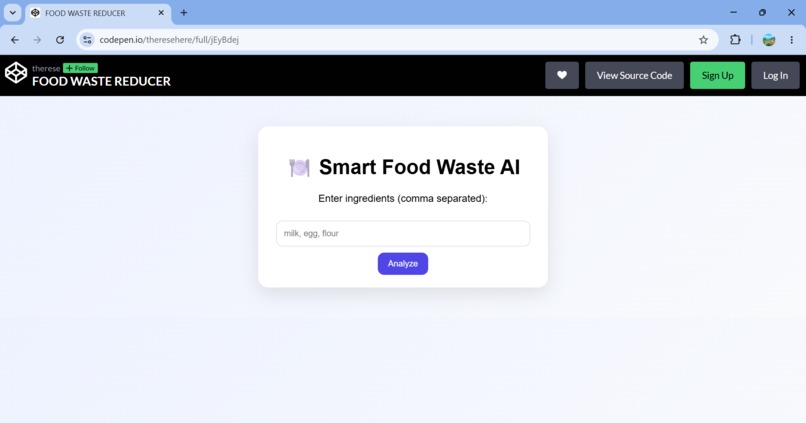
Home UI
-
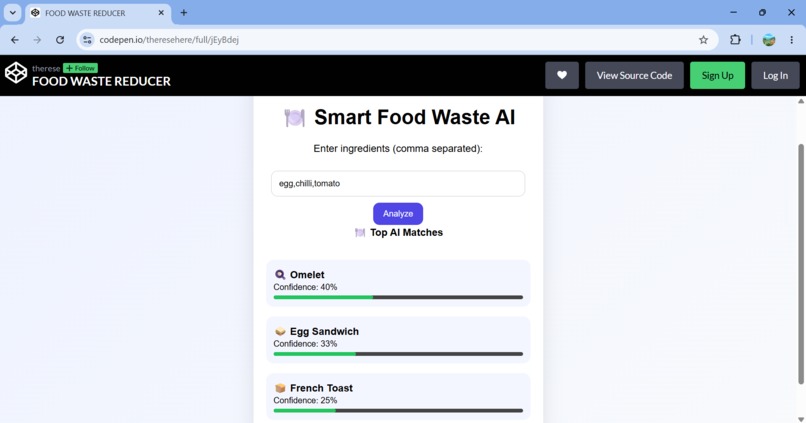
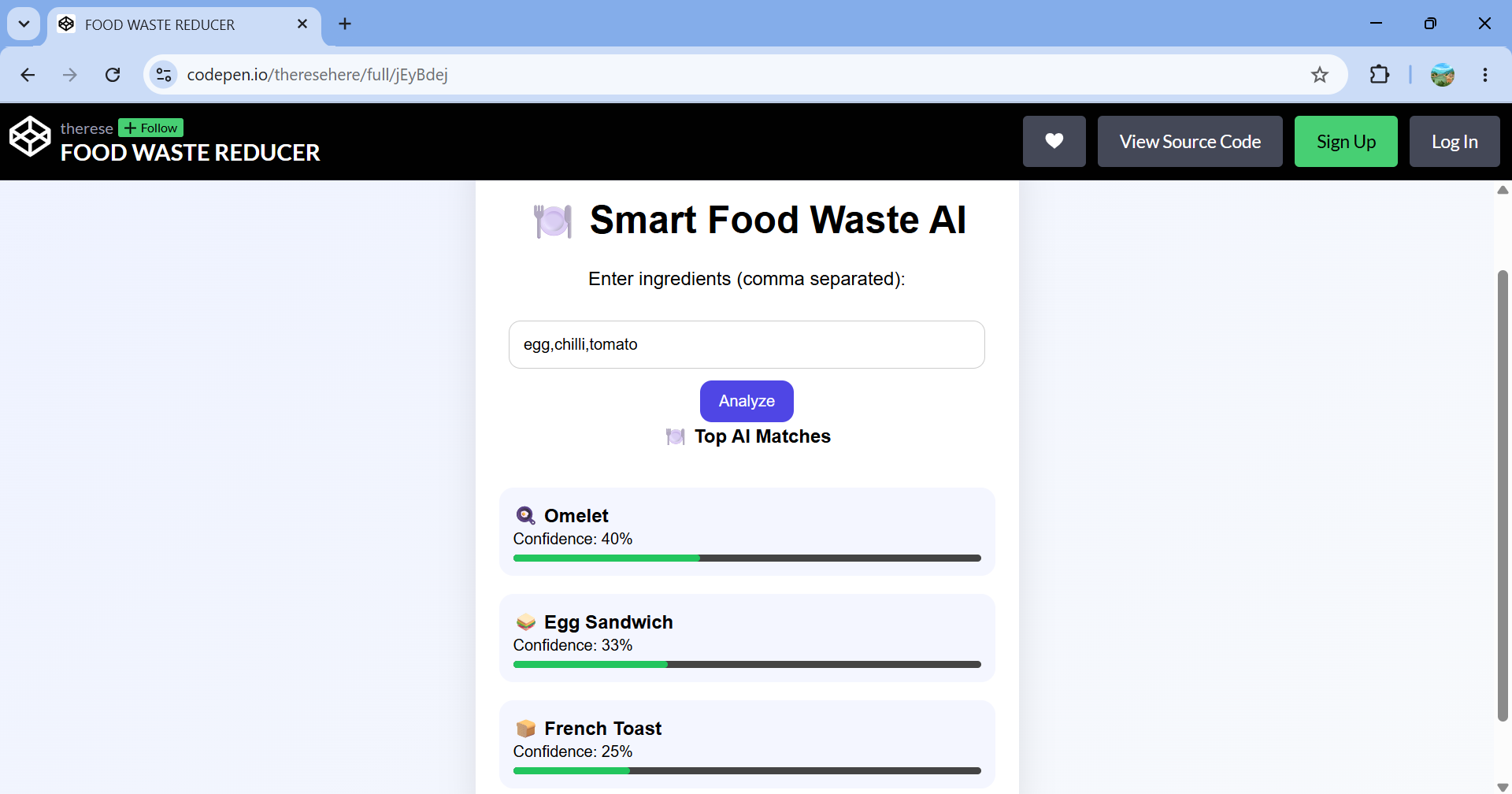
Typing ingredients,Results shown
-
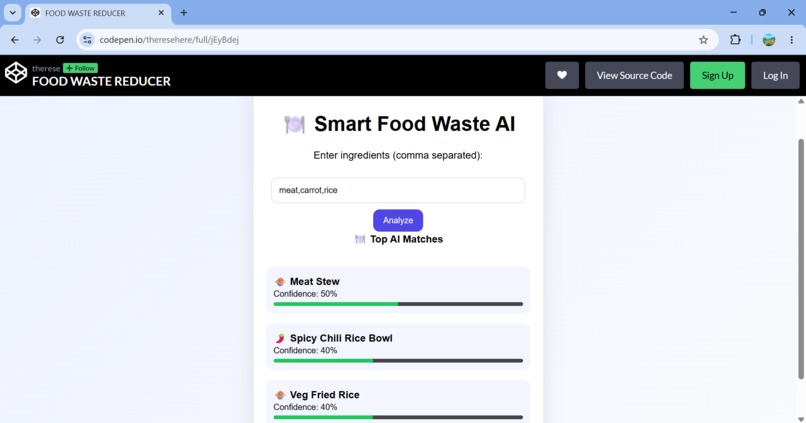
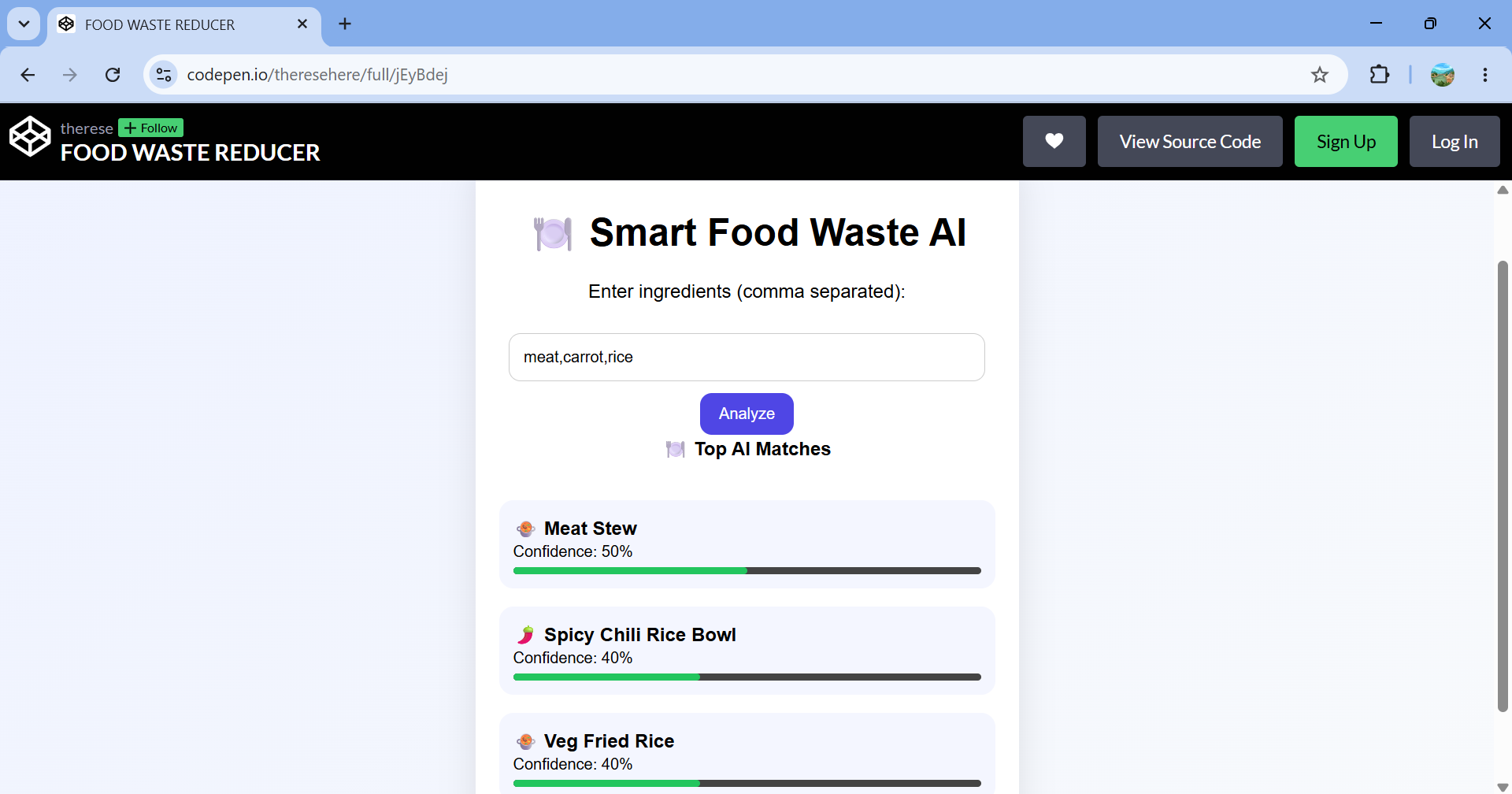
different input
Inspiration
What it does
How we built it
Challenges we ran into
Accomplishments that we're proud of
What we learned
What's next for AI Smart Food Waste Reducer
Inspiration We were inspired by a very common everyday problem people often have random ingredients in their fridge but don’t know what to cook. This leads to unnecessary food waste, especially in households and student environments. We wanted to create a simple solution that acts like a “smart kitchen assistant” and helps users turn available ingredients into real meals instantly.
What it does AI Smart Food Waste Reducer takes user-input ingredients (like rice, egg, tomato, chili, etc.) and suggests possible recipes. It ranks meals based on ingredient matches and gives a confidence score for each suggestion. The goal is to help users quickly decide what to cook using what they already have, reducing food waste and saving time.
How we built it We built the project using HTML, CSS, and JavaScript in CodePen. The core system is a rule-based AI recommendation engine: We created a dataset of ingredients and recipes We match user input with recipe ingredients We calculate confidence using: Confidence=(Matched Ingredients/Total ingredients)×100 The UI is designed like a chat-style AI assistant to make the experience feel interactive and intelligent.
Challenges we ran into Handling messy user inputs (different formats and combinations of ingredients) Preventing irrelevant or low-quality recipe suggestions Making a simple rule-based system feel like real AI Designing a clean UI that is both functional and engaging We solved these by improving our scoring system and expanding our recipe database significantly.
Accomplishments that we're proud of Built a working AI-style recommendation system without using external APIs Created a smooth and interactive user interface Designed a system that mimics real AI behavior using logic and scoring Successfully mapped real-world cooking scenarios into code-based rules
What we learned We learned how recommendation systems work at a basic level and how AI-like behavior can be simulated using simple logic. We also improved our understanding of:
JavaScript functions and global scope UI/UX design for interactive applications Problem-solving using structured scoring systems
What's next for AI Smart Food Waste Reducer
In the future, we plan to upgrade the project into a full AI-powered application by:
Integrating real machine learning models for smarter predictions Adding voice input for hands-free cooking Including nutrition tracking for each recipe Supporting multilingual ingredient recognition Adding a fridge scanning feature using images Created a smooth and interactive user interface Designed a system that mimics real AI behavior using logic and scoring Successfully mapped real-world cooking scenarios into code-based rules
Built With
- codepen
- css3
- html5
- javascript

Log in or sign up for Devpost to join the conversation.