-
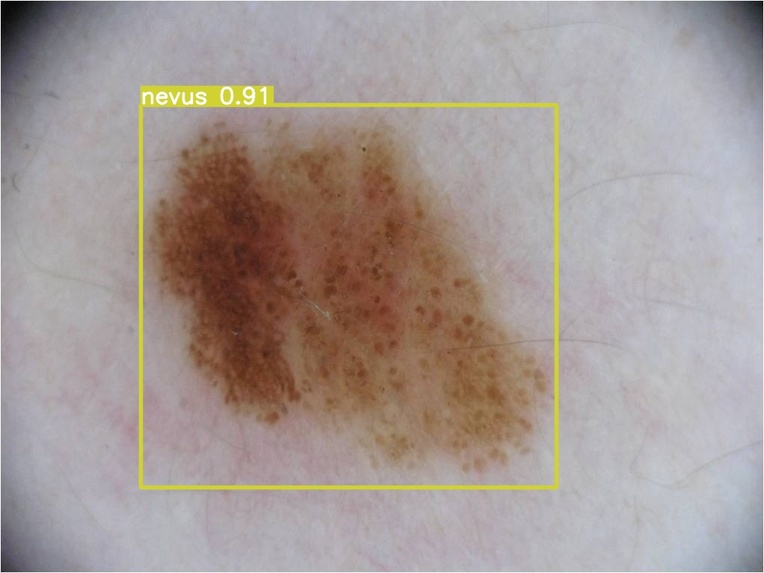
nevus skin cancer prediction accuracy 91%
-
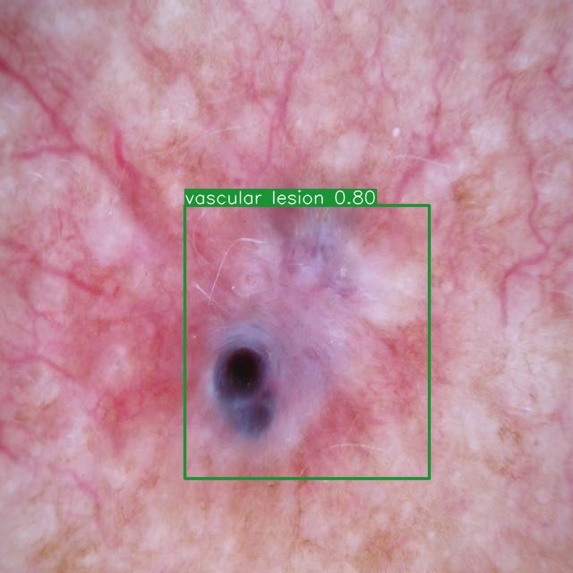
vascular lession skin cancer prediction accuracy 80%
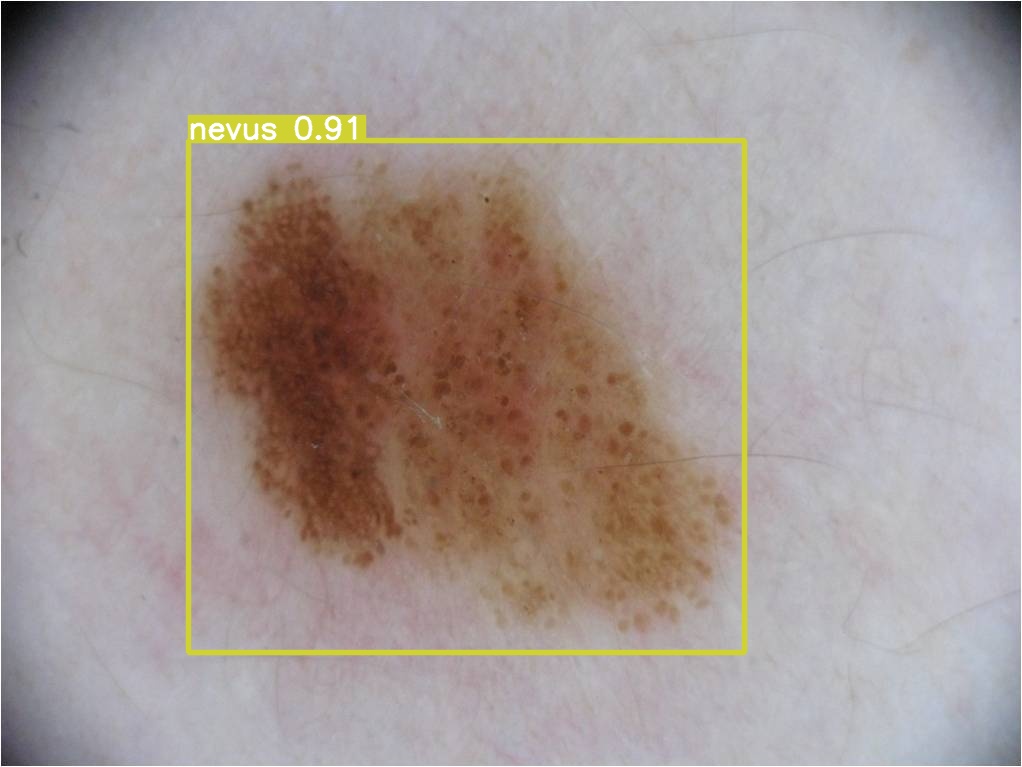
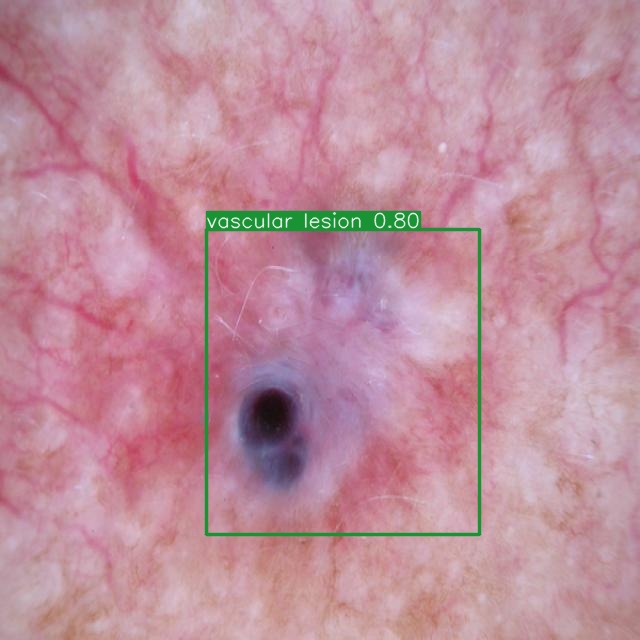
Skin cancer is a common and sometimes fatal disease that affects people all over the world. The prognosis and effectiveness of therapy depend heavily on early detection. Deep learning methods have demonstrated encouraging results recently in automating the identification of skin lesions, facilitating early management and bettering patient outcomes. This research provides an innovative method for the automatic diagnosis of skin cancer lesions in dermoscopic pictures using YOLOv8, a cutting-edge object detection algorithm. The suggested method combines a library of annotated dermoscopic photos with YOLOv8, a deep convolutional neural network architecture renowned for its precision and effectiveness in item detection applications. The model gains the ability to precisely locate and categorize disturbing lesions suggestive of several kinds of skin cancer, such as melanoma, basal cell carcinoma, and squamous cell carcinoma. The system's efficacy in correctly identifying malignant lesions while reducing false positives is demonstrated by evaluation. Superior performance is demonstrated by comparison with current approaches, both in terms of computational efficiency and detection accuracy. Moreover, the system's resilience and generalizability are shown by its capacity to identify lesions in a variety of skin types and circumstances. With the use of the suggested skin cancer detection system, early intervention tactics could be greatly improved, allowing for prompt diagnosis and treatment initiation. It may help medical staff prioritize high-risk cases, triage patients, and make prompt referrals to dermatologists for additional assessment and treatment by automating the detection process. In the end, YOLOv8- based detection technologies integrated into clinical processes could transform skin cancer screening procedures, resulting in better patient outcomes and lower mortality rates.


Log in or sign up for Devpost to join the conversation.