-
-
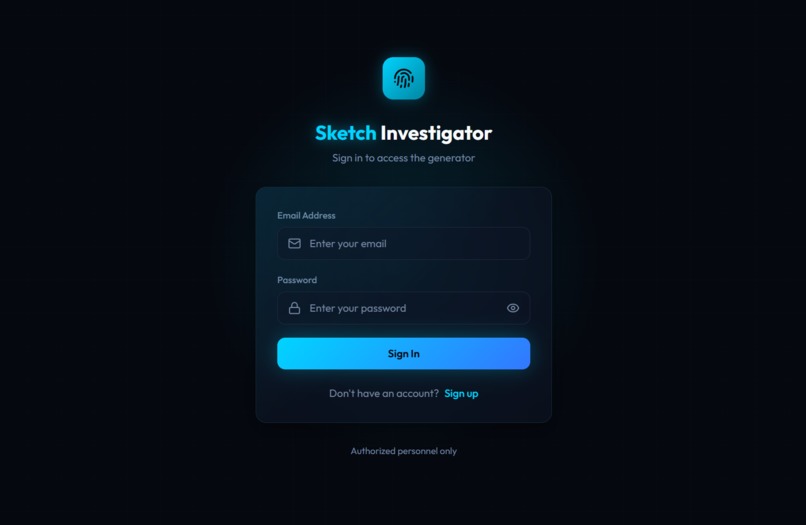
Signup/Login page
-
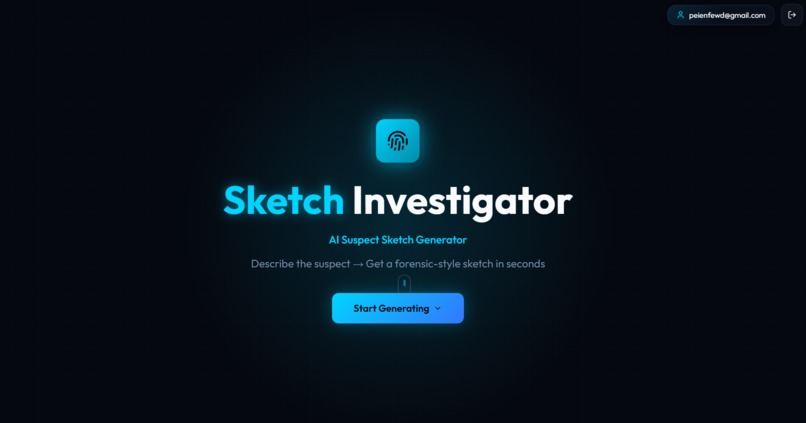
Home page
-
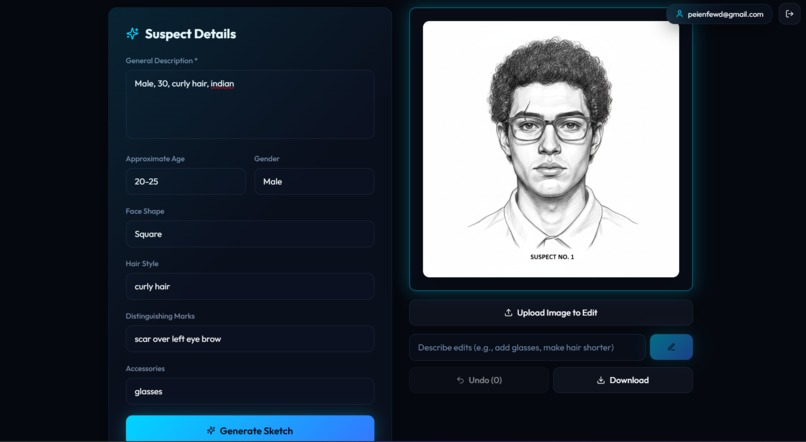
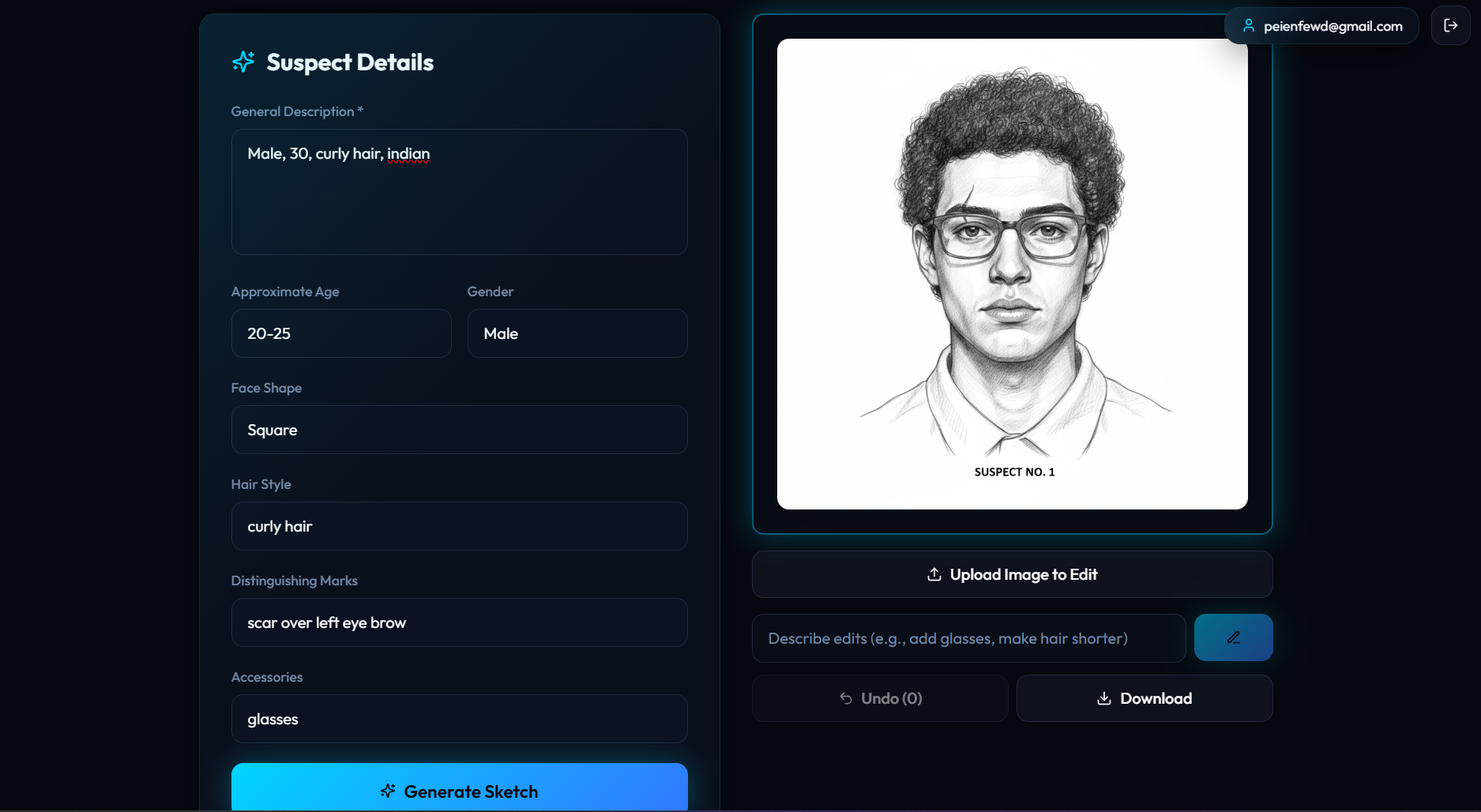
Main page

Sketch Investigator When time matters and memory fades — generate sketches instantly
Sketch Investigator was inspired by real-world challenges faced during police investigations, where witness memory fades quickly and traditional sketch artists take time. In many cases, the first few hours are critical — details are sharp, emotions are high, and memory is fresh. This project aims to convert those early recollections into visual sketches instantly using AI, speeding up the identification process while reducing human dependency.
The idea originated from a hackathon challenge focused on innovation and problem-solving. The goal was to build something meaningful — a tool that could, even conceptually, support law enforcement, victims, and witnesses with technology rather than paperwork and delays. The motivation behind the project is simple: time is critical in crime investigation, and memory fades fast. If AI can visualize suspects from descriptions, investigation can start sooner.
How I built it:
• Designed a modern user interface using React, Vite, Tailwind, and shadcn • Integrated a Supabase Edge Function to communicate with the AI model • Built input fields for witness-based attributes such as age, gender, face shape, hairstyle, and identifiable marks • Generated sketches using a text-to-image model • Implemented a preview system with an option to download the generated image • Focused on a minimal and forensic-style dark theme for professional aesthetics
What I learned:
• Prompt engineering for forensic sketch generation • How cloud functions operate securely as backends • Using Supabase as a serverless backend for AI-based applications • Structuring UI and workflows for investigation-related tools • Handling asynchronous API responses, failures, and delays • Understanding how prompt clarity impacts generation accuracy
Challenges faced:
• Achieving consistent human facial outputs with limited descriptions • Handling inference time and failures when backend credits expired • Integrating an AI model without local GPU dependency • Translating witness memory into visual representation accurately • Balancing realistic features with forensic sketch styling
Key takeaway: AI output quality improves significantly with well-structured prompt inputs and model tuning aligned toward forensic sketch style.
Vision ahead:
Sketch Investigator is an early concept with potential room for growth. With refinement and development, it can include: • LoRA models trained specifically for forensic-style faces • Multiple sketch variations and refinement controls • A case management system to store suspects and versions • Faster real-time generation for on-spot investigation support
This project demonstrates how AI can reduce friction in the initial investigation phase, acting as a fast sketch assistant rather than replacing human expertise. It is a step toward technology-driven justice support where speed matters and memory fades.
Built With
- ai
- edge-functions
- github
- javascript
- markdown
- node.js
- npm
- react
- supabase
- tailwindcss
- typescript
- vite

Log in or sign up for Devpost to join the conversation.