Inspiration## Inspiration
Most student-safety tools assume the student can ask for help by pressing an SOS button, unlocking a phone, or making a call. In a serious accident, a fall, or a sudden medical issue, that is exactly what a student may be unable to do. GPS trackers only show where a student is, not what happened, and constant surveillance is intrusive and treats everyone as a suspect. We wanted to close this response gap with a system that recognises an emergency on its own, finds the student, and alerts help without being asked.
What it does
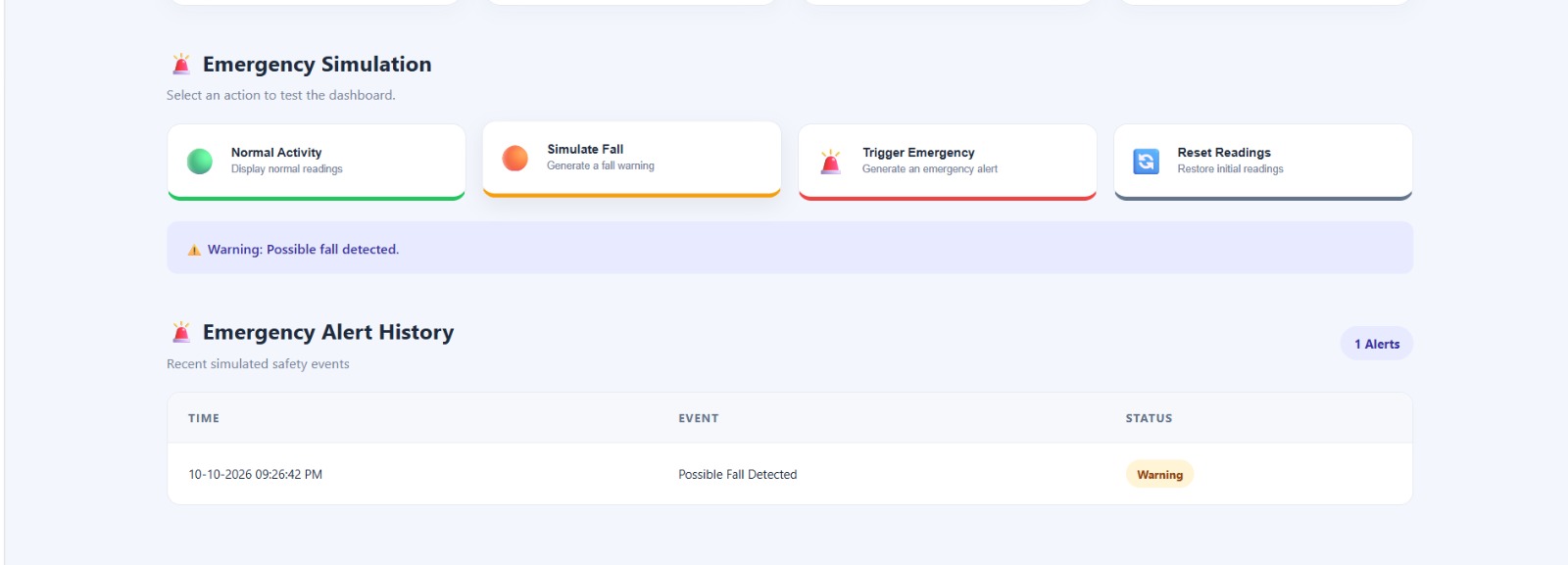
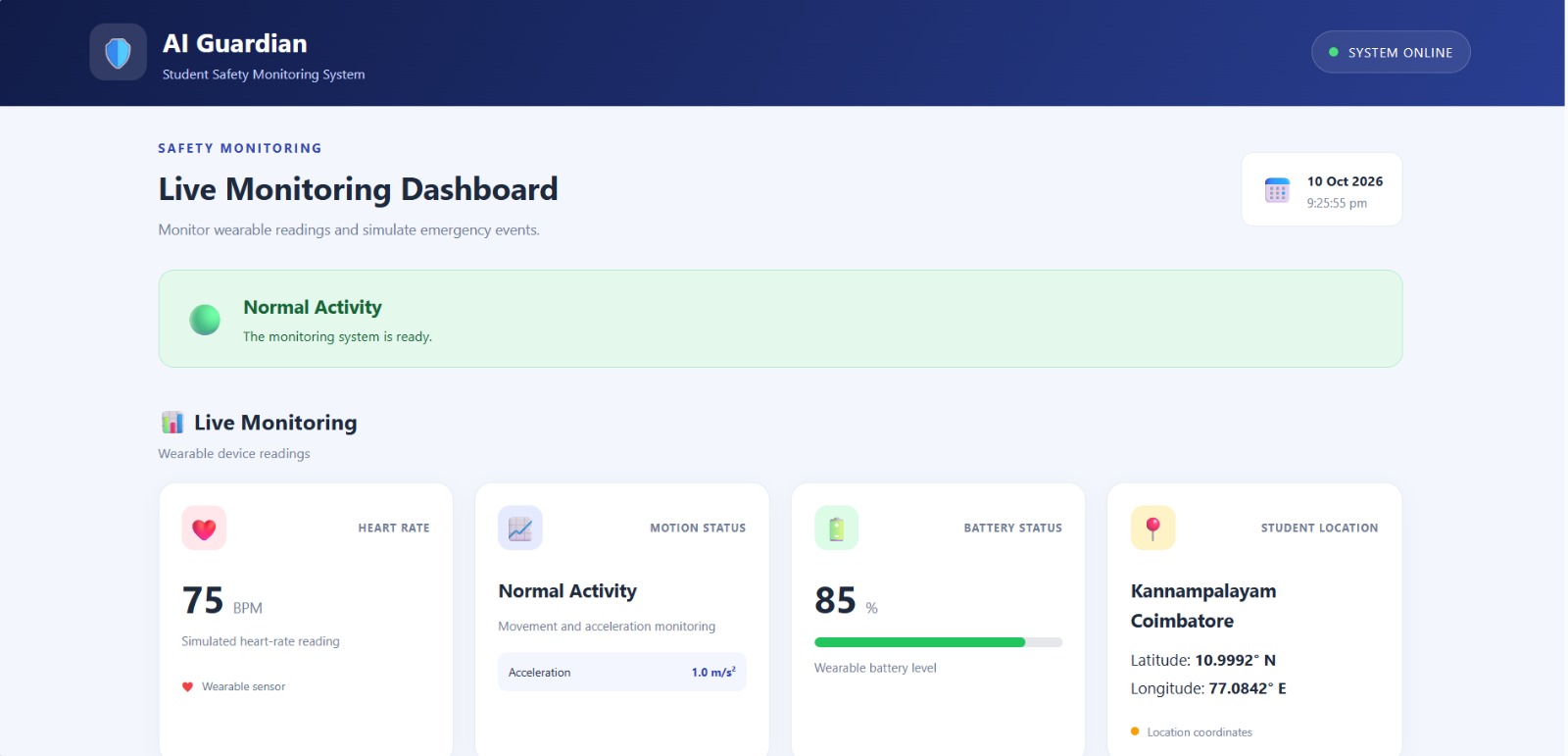
AI Silent Guardian is a low-cost, AI-powered wearable for student safety and emergency response. It detects unusual situations from motion and heart-rate patterns, checks them against predefined triggers, and grades the risk before raising an alert. When an emergency is confirmed, it shares the student's live location and instantly notifies authorized personnel such as teachers, hostel wardens, and administration. It works even when the student cannot press a button, use a phone, or speak, and it keeps track of six signals: acceleration, orientation, heart rate, GPS position, inactivity time, and battery level.
How we built it
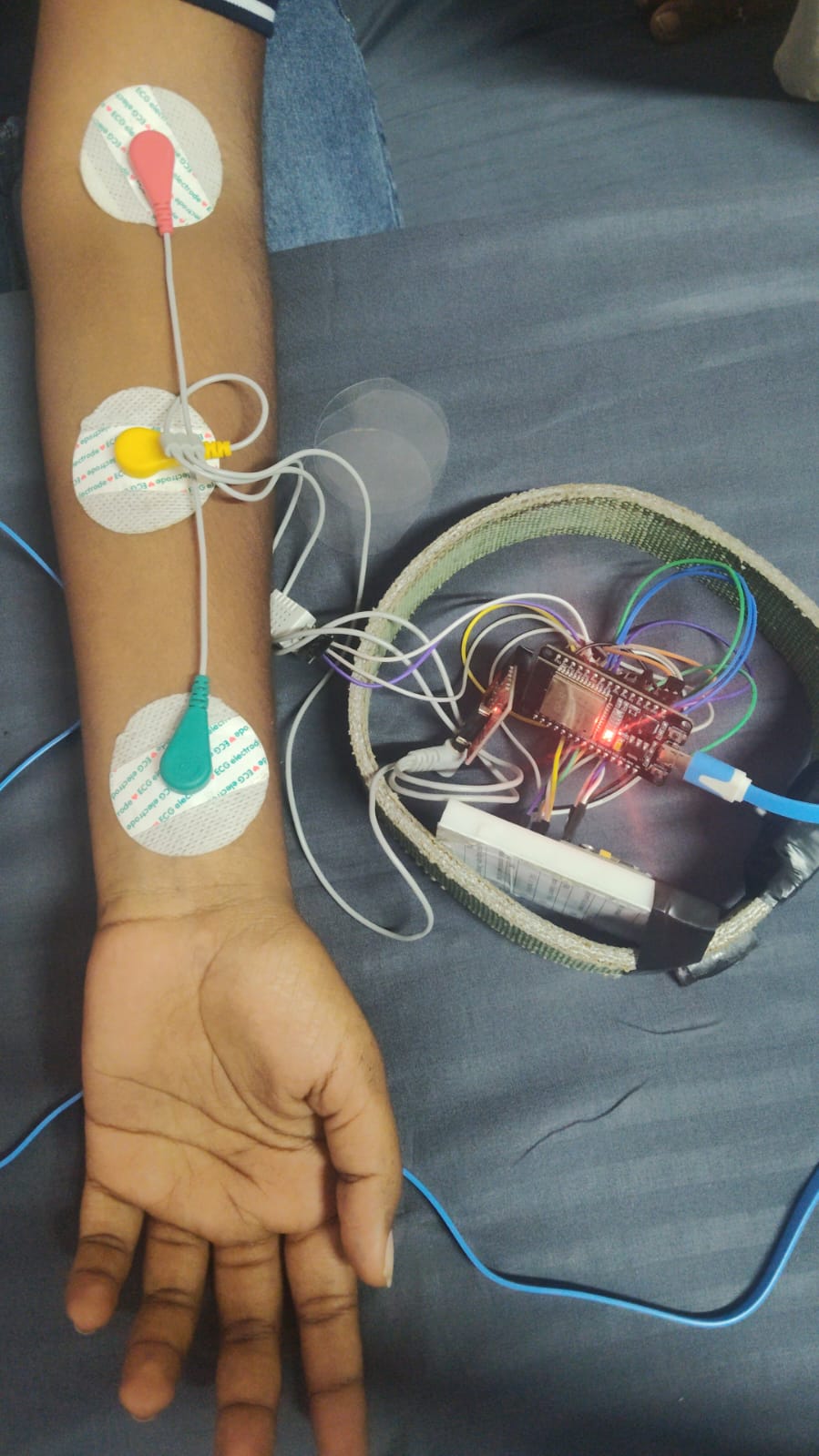
We built a working prototype during the ideathon using affordable, off-the-shelf parts. An ESP32 microcontroller collects and time-syncs data from an MPU6050 accelerometer and gyroscope, a MAX30102 pulse sensor, and a NEO-6M GPS module. A rechargeable Li-ion battery with a charging module keeps the device running during an emergency. The system follows a five-stage pipeline of sensors, data collection, AI analysis, location, and alert. The ESP32 gathers the readings, the detection logic flags unusual activity and grades the risk, and the alert goes out with the student's real-time position over Wi-Fi or a phone hotspot. The whole prototype cost about ₹2,570.
Challenges we ran into
The hardest problem was balancing false alarms against missed emergencies. Everyday movements like running or sitting down hard can look like a fall, so setting detection thresholds took careful tuning. Signals from a wearable are also noisy, which is why we combine motion, heart rate, and inactivity instead of trusting any single reading. We also had to design for power from the start, since a safety device that runs out of battery is useless, and our prototype's reliance on Wi-Fi or a phone hotspot limits where alerts can be sent. Finally, we wanted protection without surveillance, so the device only raises an alert when its predefined triggers fire.
Accomplishments that we're proud of
We are proud of building a working end-to-end prototype that goes from sensing to detection to an alert with live location, all for under ₹3,000 with easily available components. Our design is automatic and far less intrusive than continuous monitoring, and it can scale from a single student to an entire institution.
What we learned
We learned that hardware, sensing, and AI have to be designed together, because a good model cannot fix poor sensor data. In a safety system, the false-alarm rate matters as much as detection accuracy, since too many false alerts make people ignore the real ones. We also learned that thresholds only become trustworthy when they are tuned on real sensor data, and that a solution is only useful if it is affordable and practical for the schools and colleges that would deploy it.
What's next for AI Silent Guardian
Over the next three months, we plan to build a compact wearable with integrated power backup and log real sensor data in the first month. In the second, we will tune the detection thresholds and measure the false-alarm rate and alert delay. In the third, we will add an alert dashboard and pilot the device with one institution. In the long run, we aim to bring it to schools, colleges, and hostels across India, supporting SDG 3, 4, and 11 and a safer, healthier young population on the road to Viksit Bharat @2047.

Log in or sign up for Devpost to join the conversation.