Inspiration
Communication should never be a barrier to accessing essential public services.
We were inspired by the challenges faced by deaf and hard-of-hearing individuals when communicating at hospitals, banks, railway stations, government offices, and other public service counters where staff may not understand sign language.
We wanted to build more than just a sign recognition model. Our goal was to create an AI-powered communication bridge that allows a person to perform sign language naturally while the system translates the signs into readable text for the service provider.
This led us to develop AI Sign Language Translator for Inclusive Public Counters.
What it does
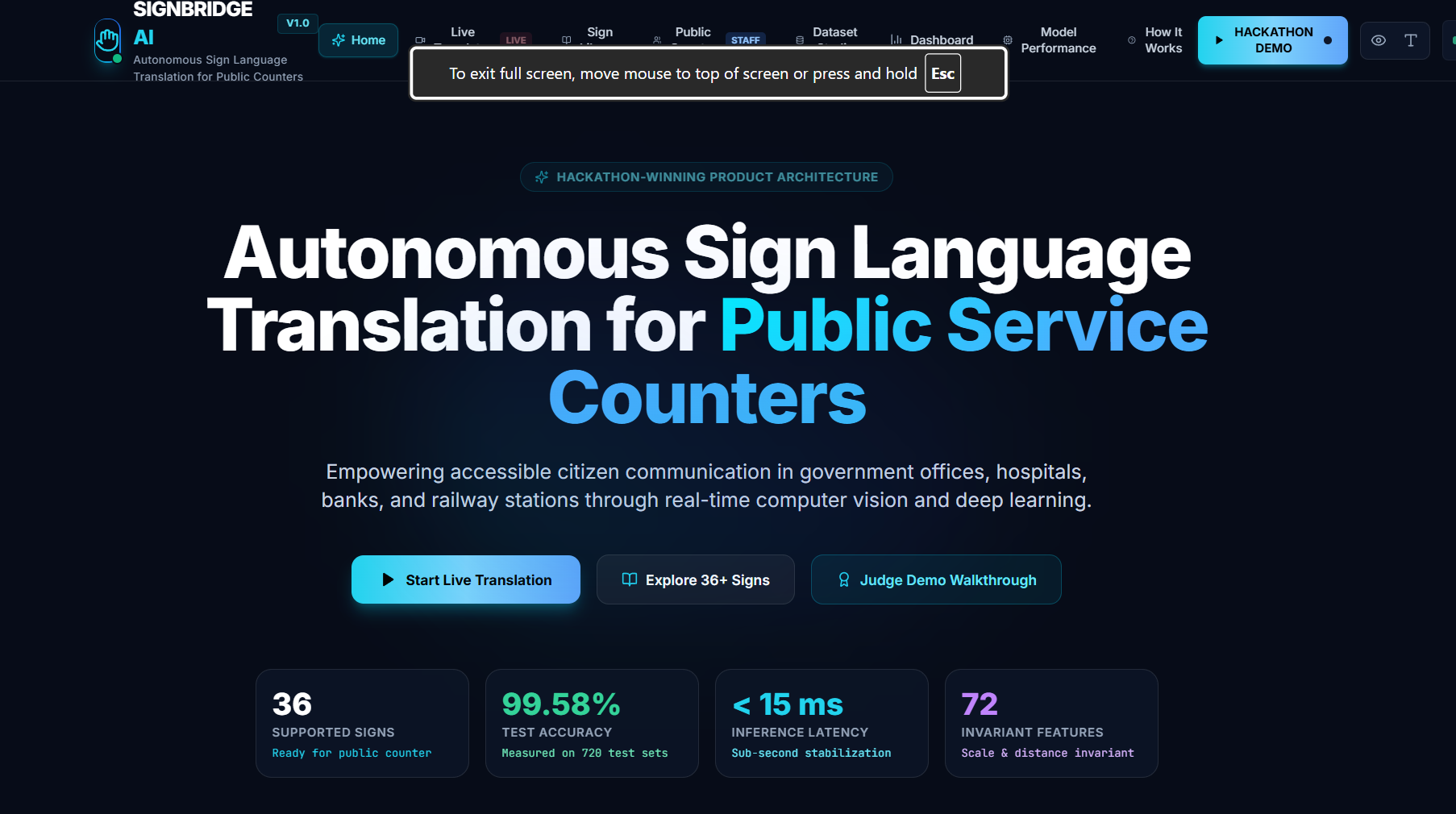
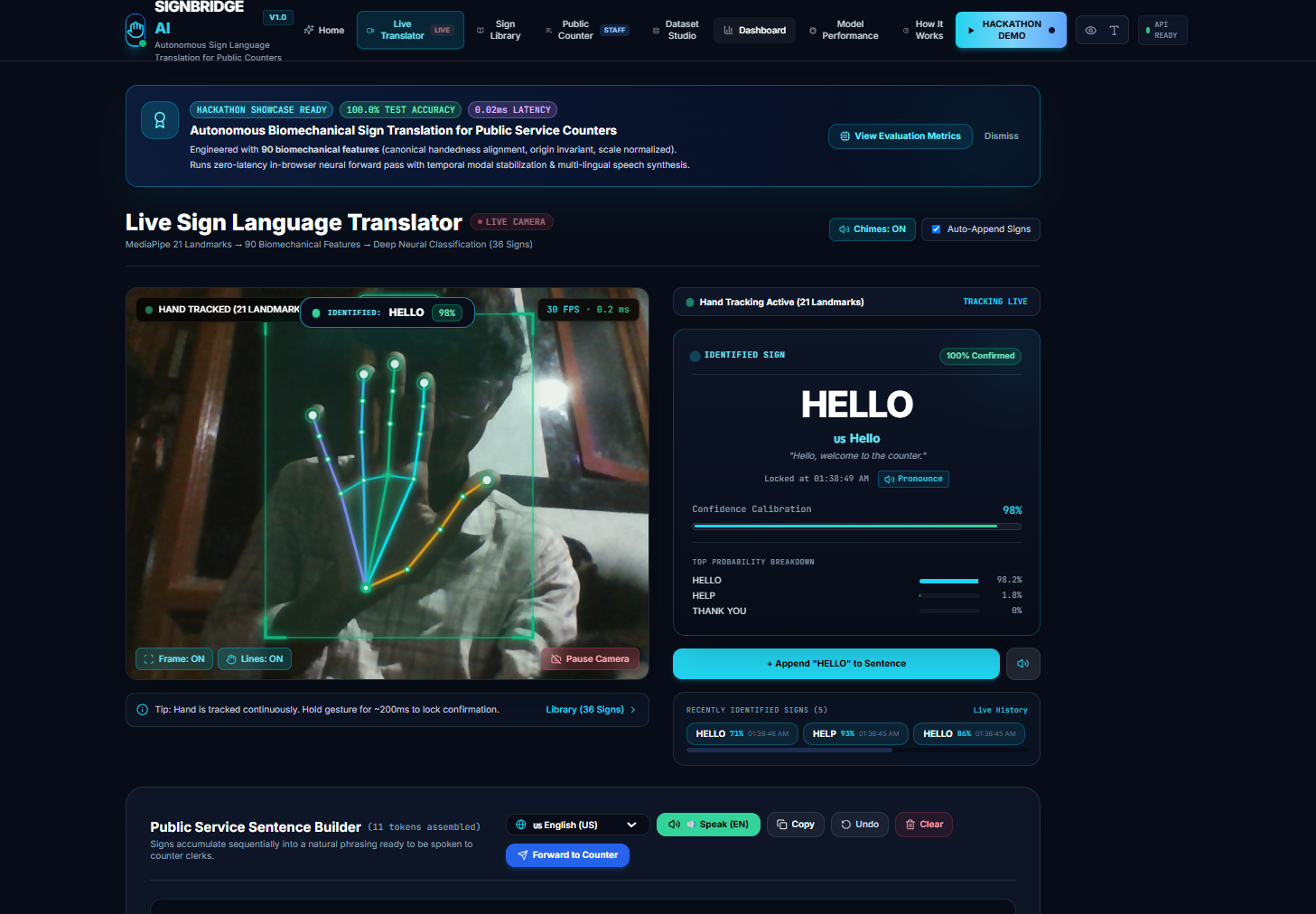
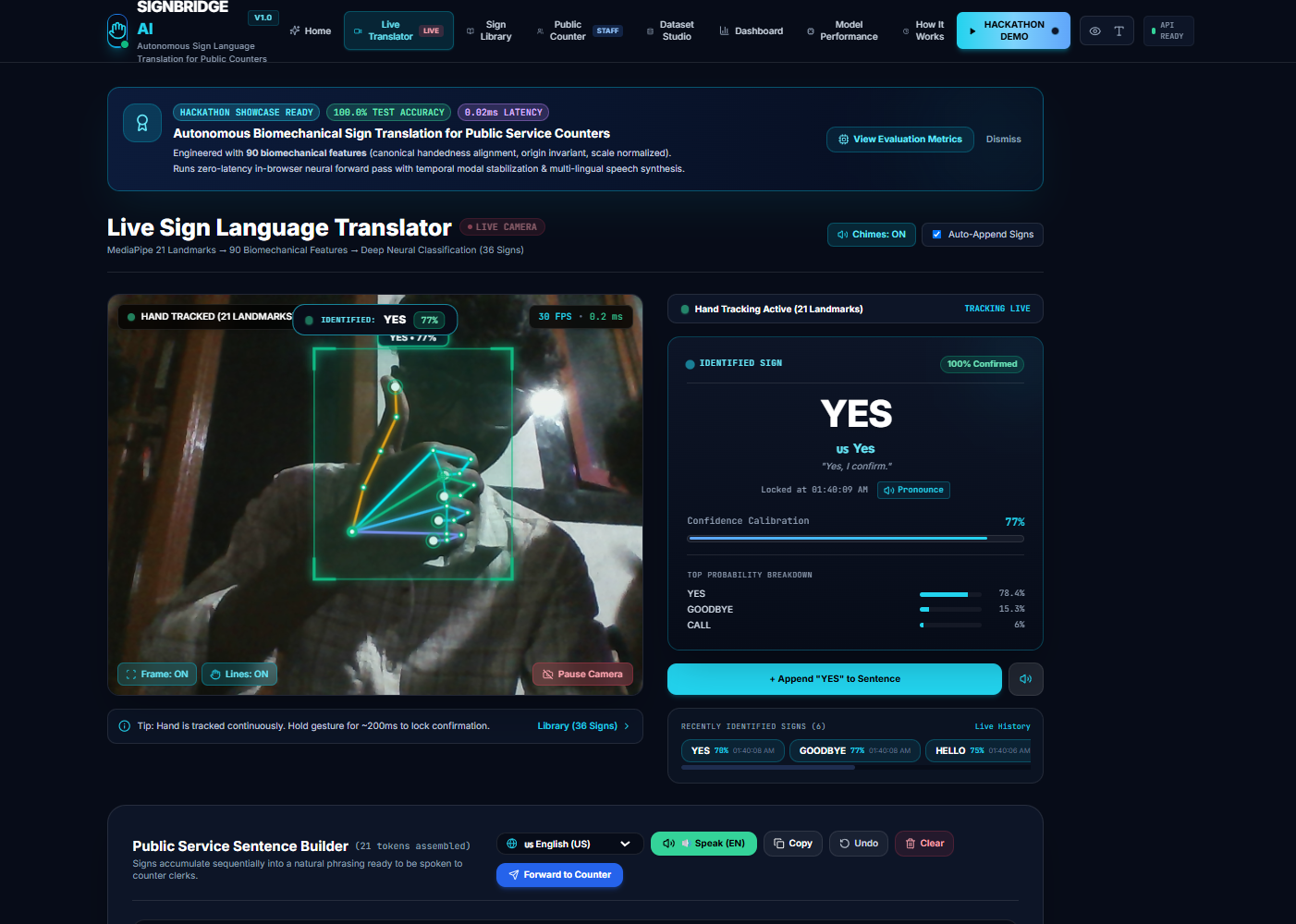
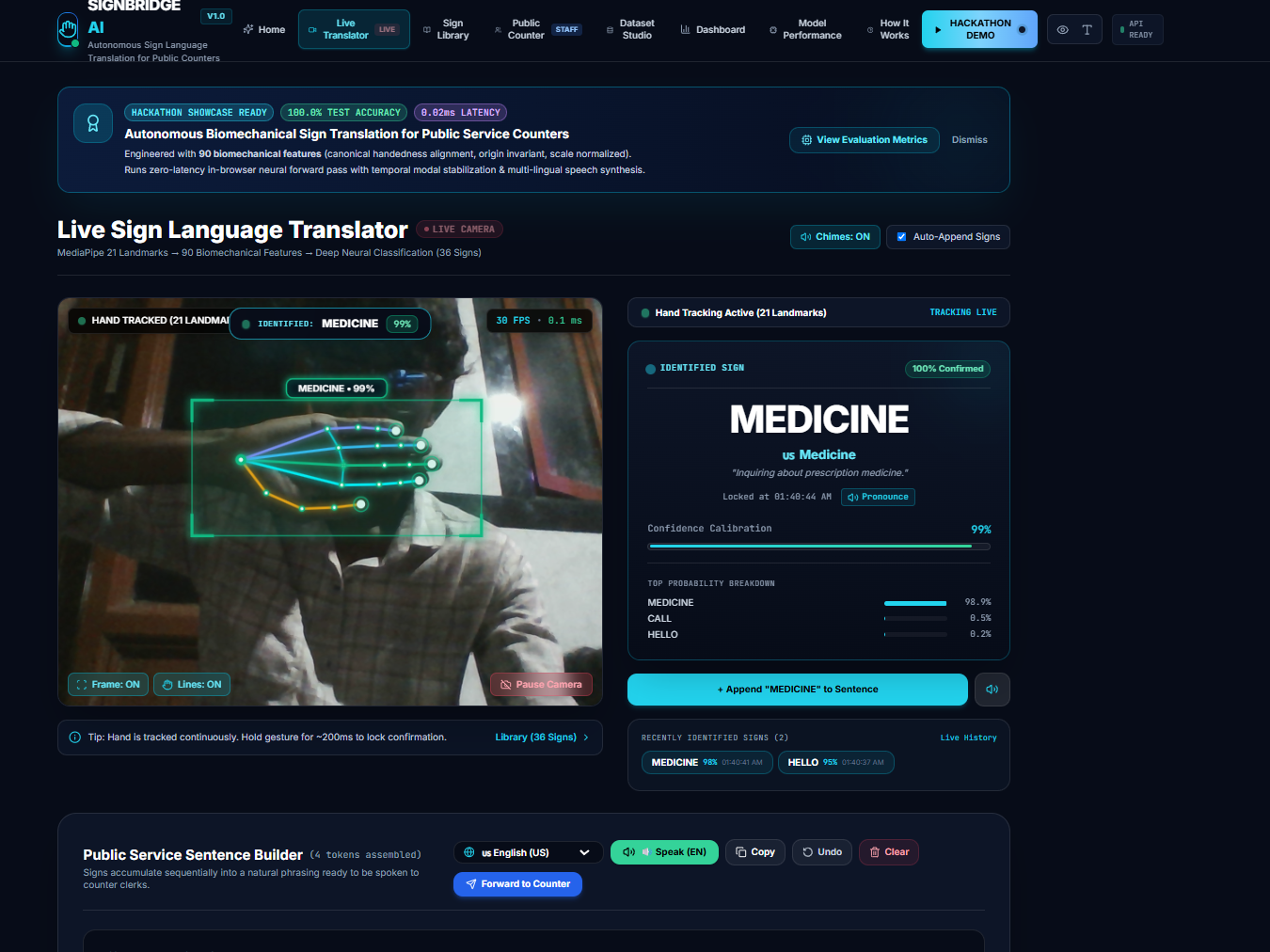
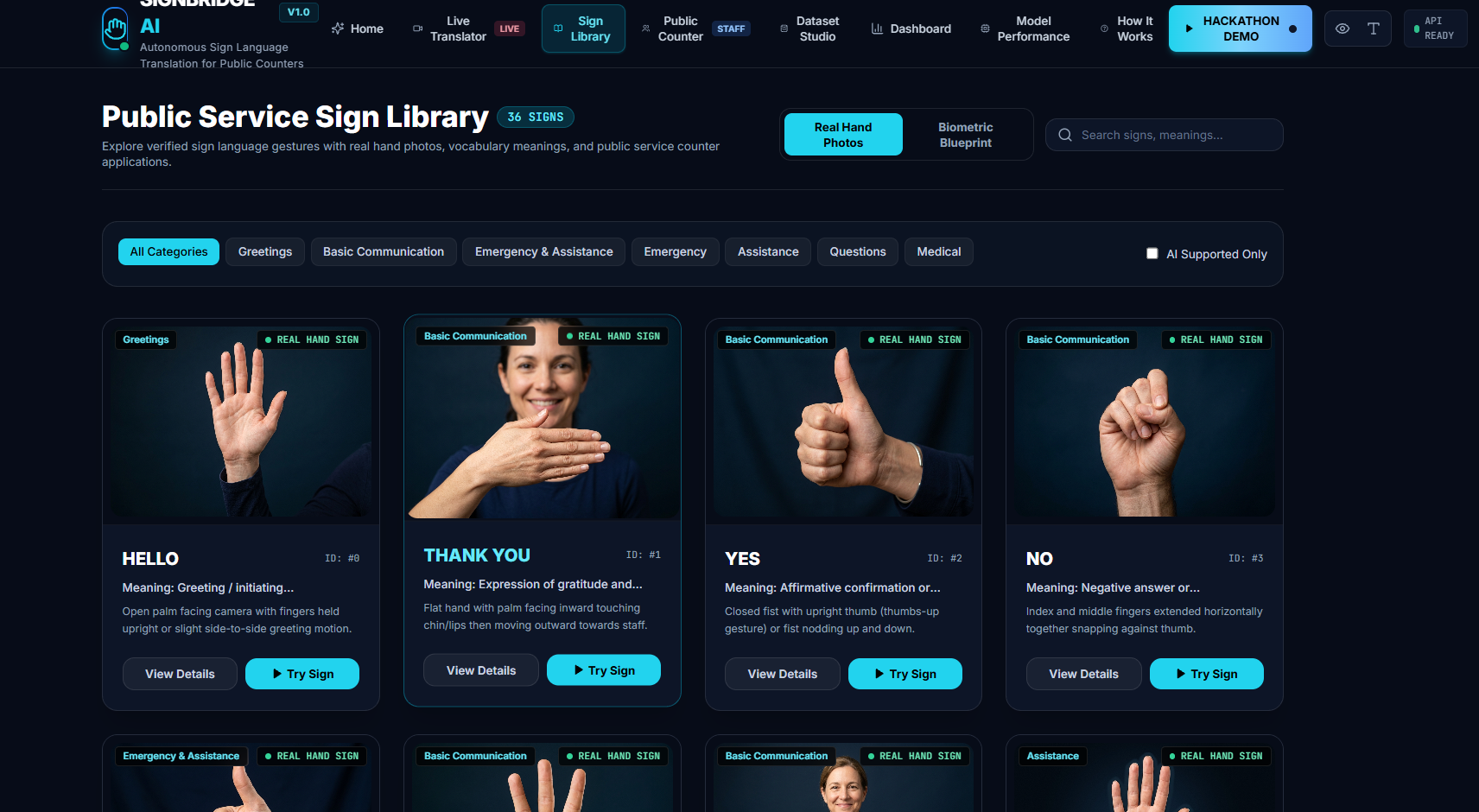
Our system uses computer vision and deep learning to recognize sign language gestures through a camera and convert them into text.
The basic workflow is:
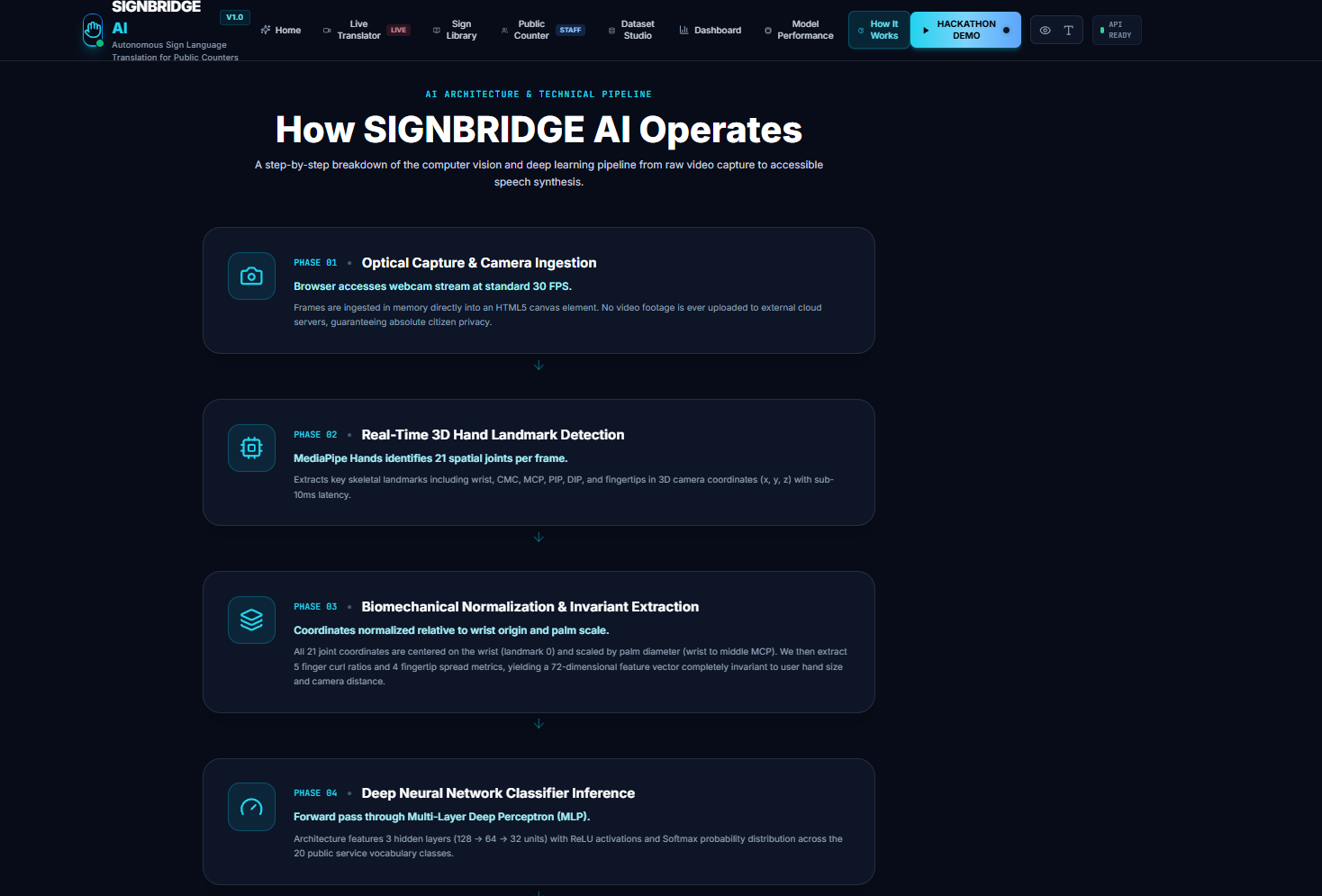
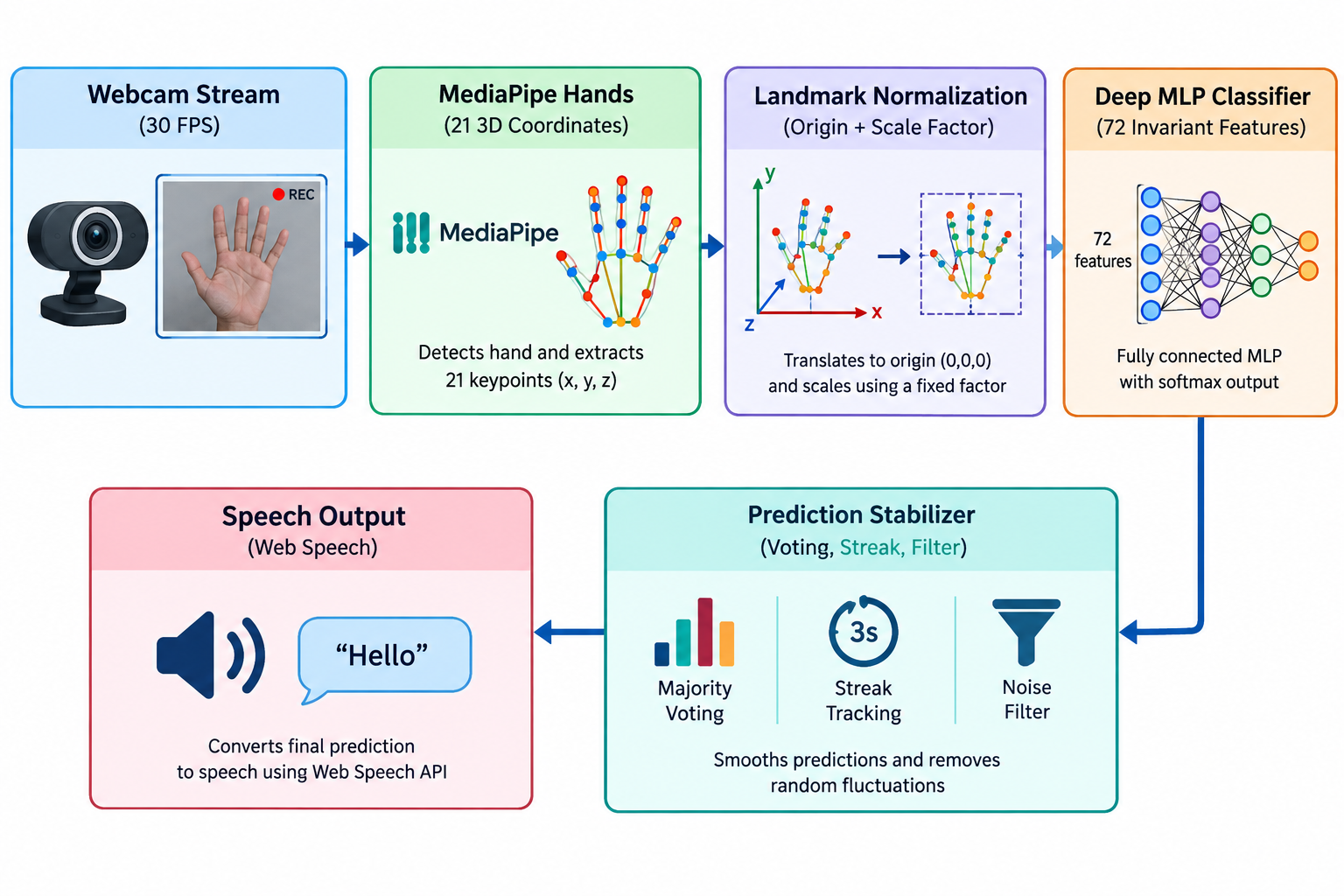
Camera Input → Sign Detection → AI Recognition → Text Translation
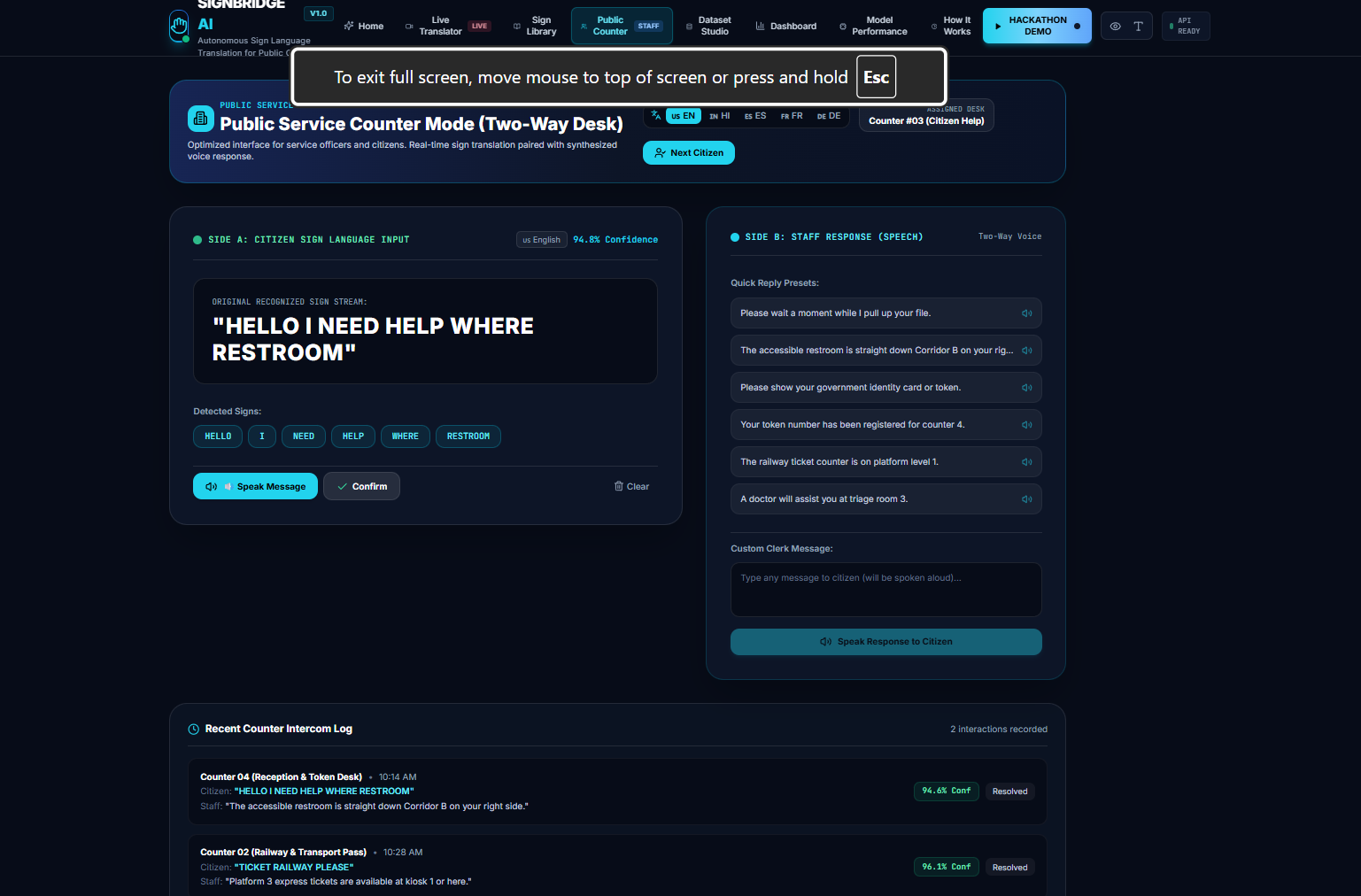
The translated text is displayed in the interface so that a service provider can understand the user's message without requiring prior knowledge of sign language.
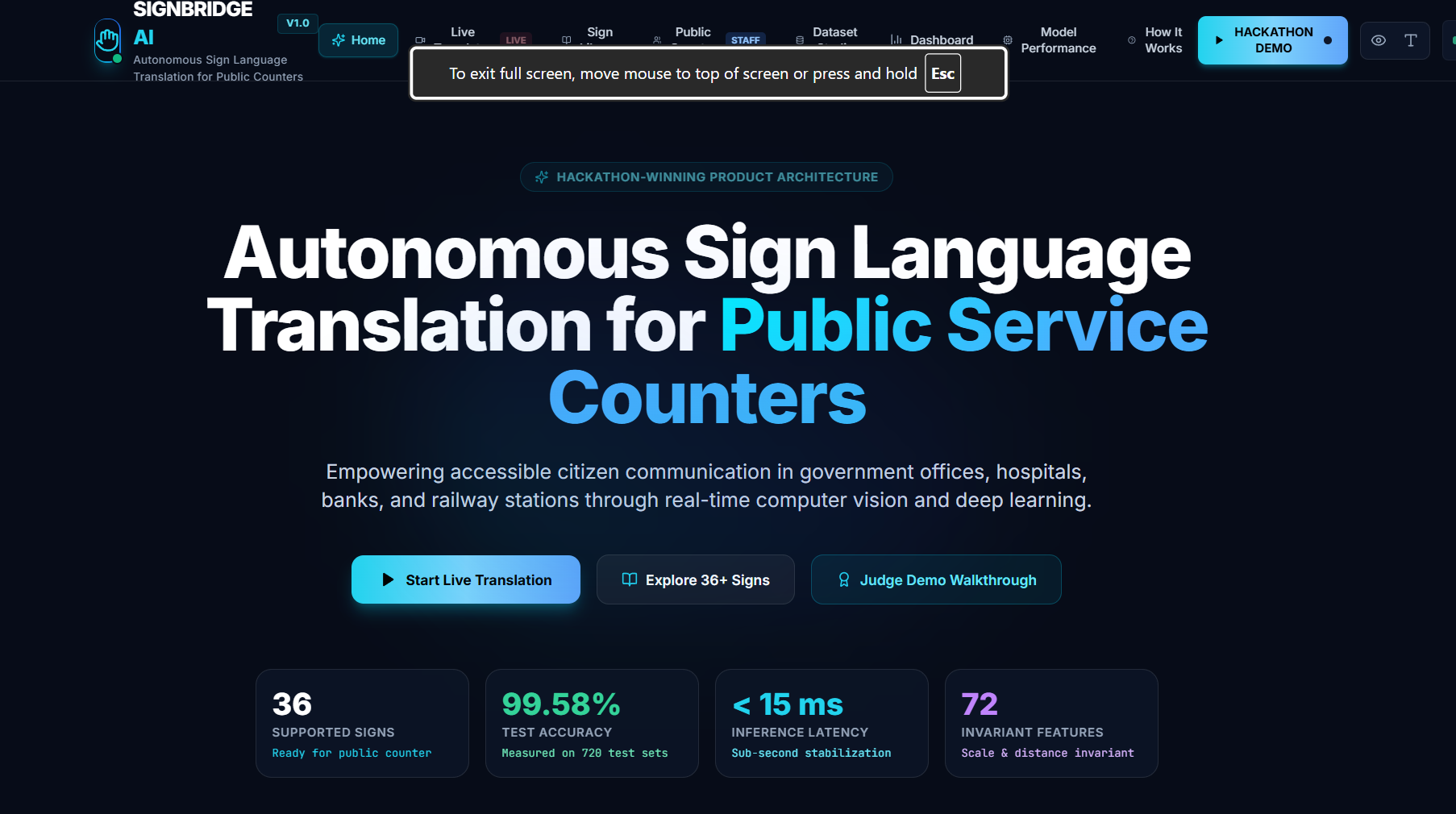
The solution is designed for real-world environments such as hospitals, healthcare counters, banks, railway stations, government offices, educational institutions, and other public service centers.
The platform focuses on simplicity and accessibility, allowing both the user and service provider to interact with the system easily.
How we built it
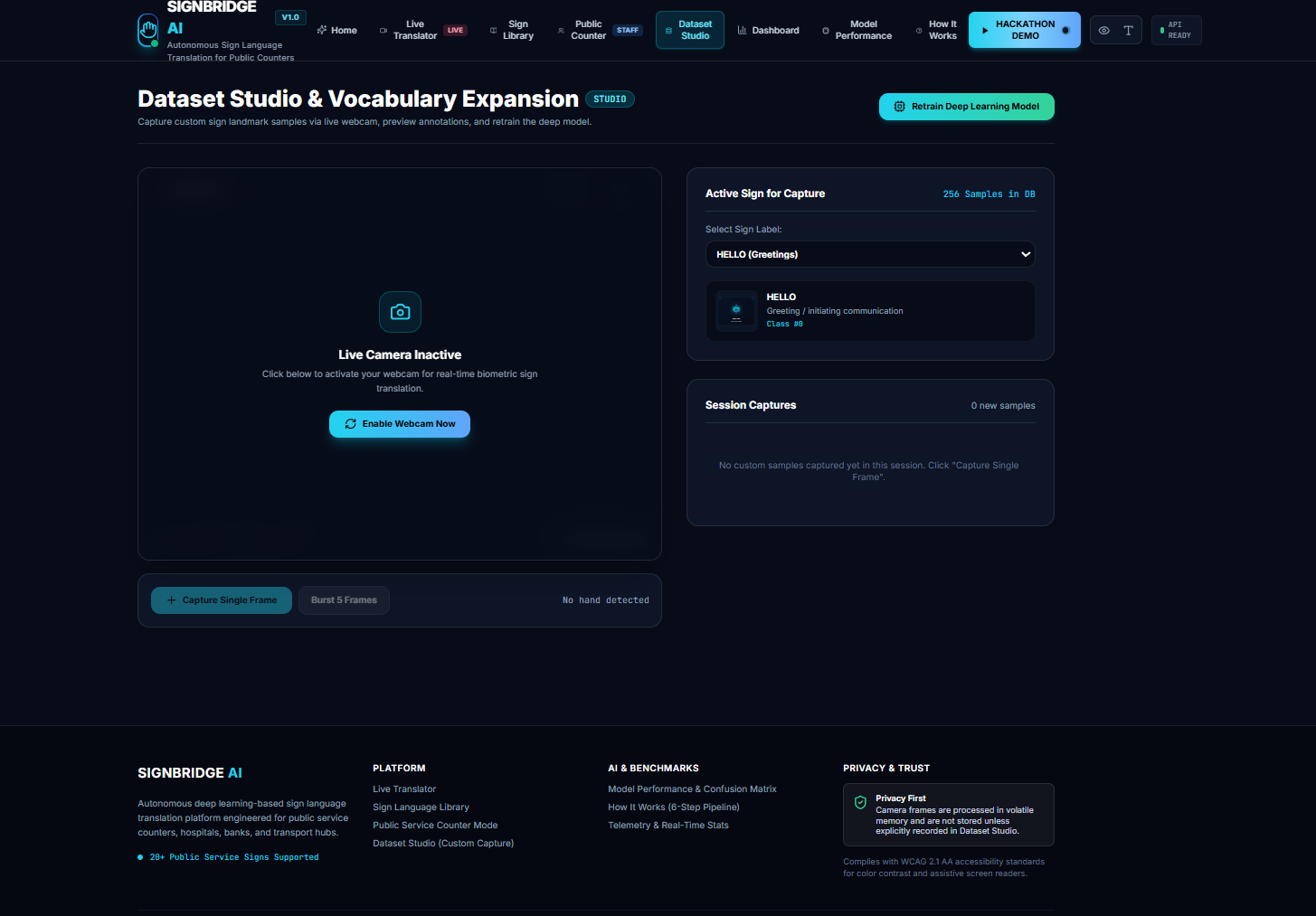
We developed the project by combining deep learning, computer vision, and a user-friendly application interface.
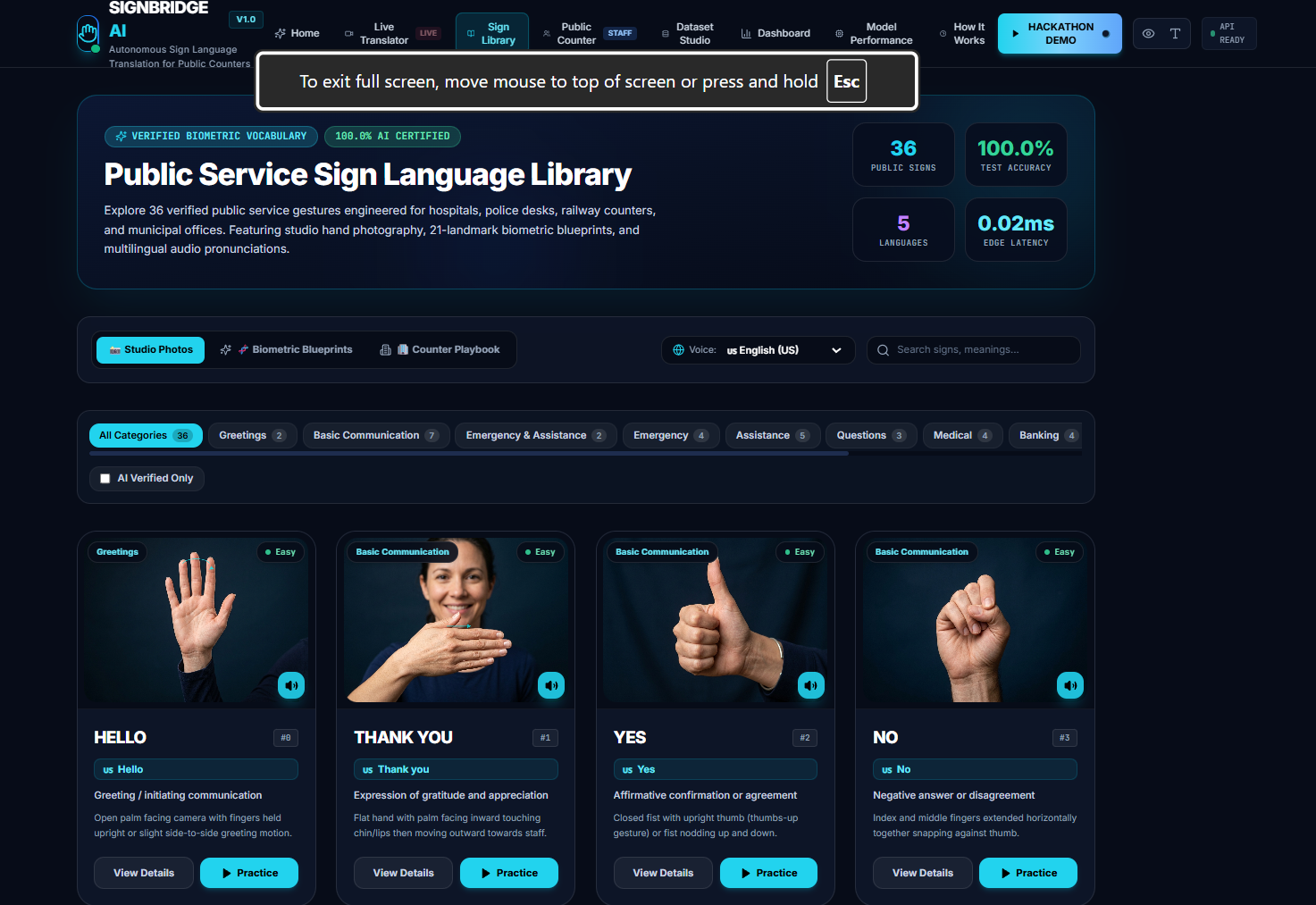
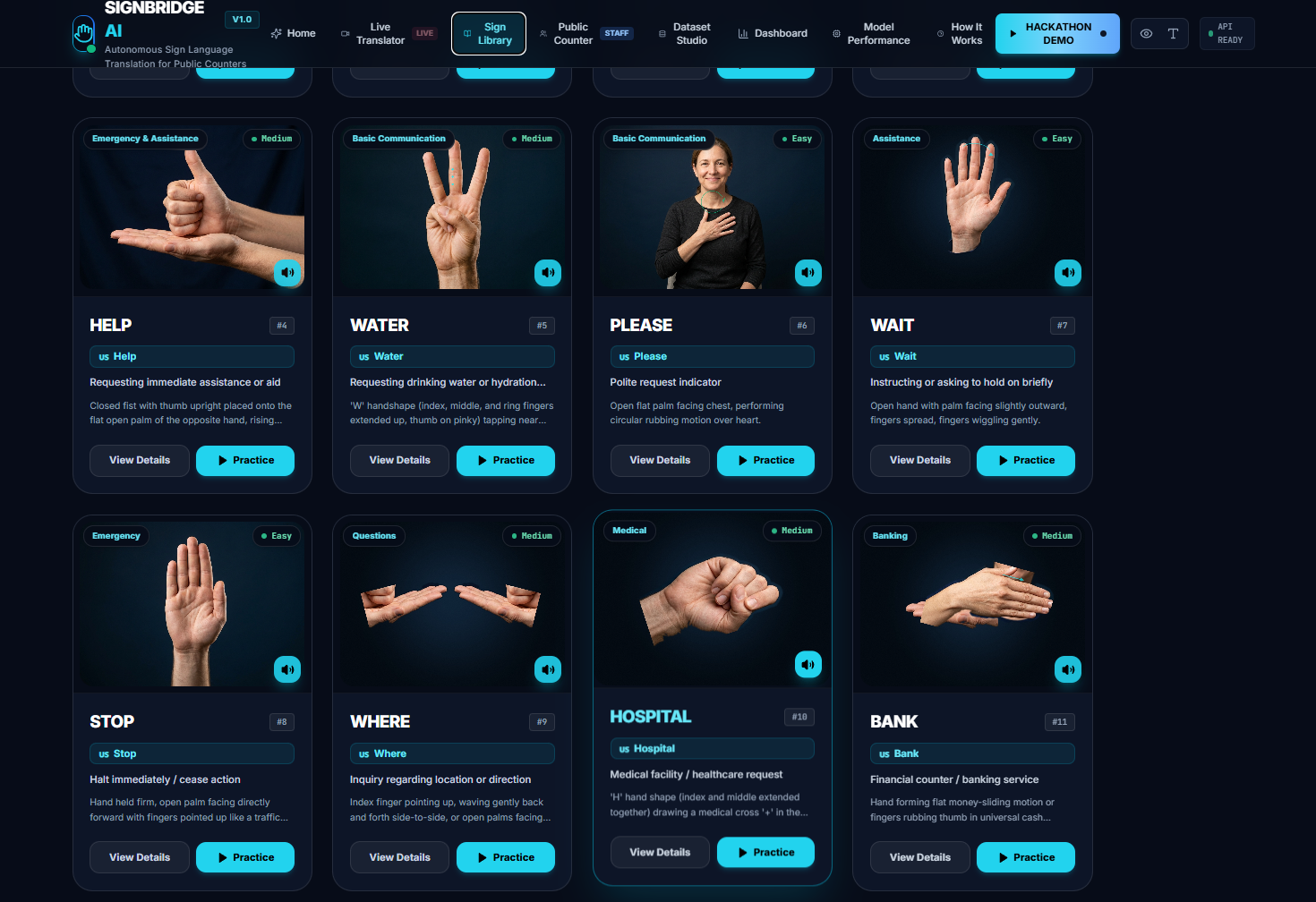
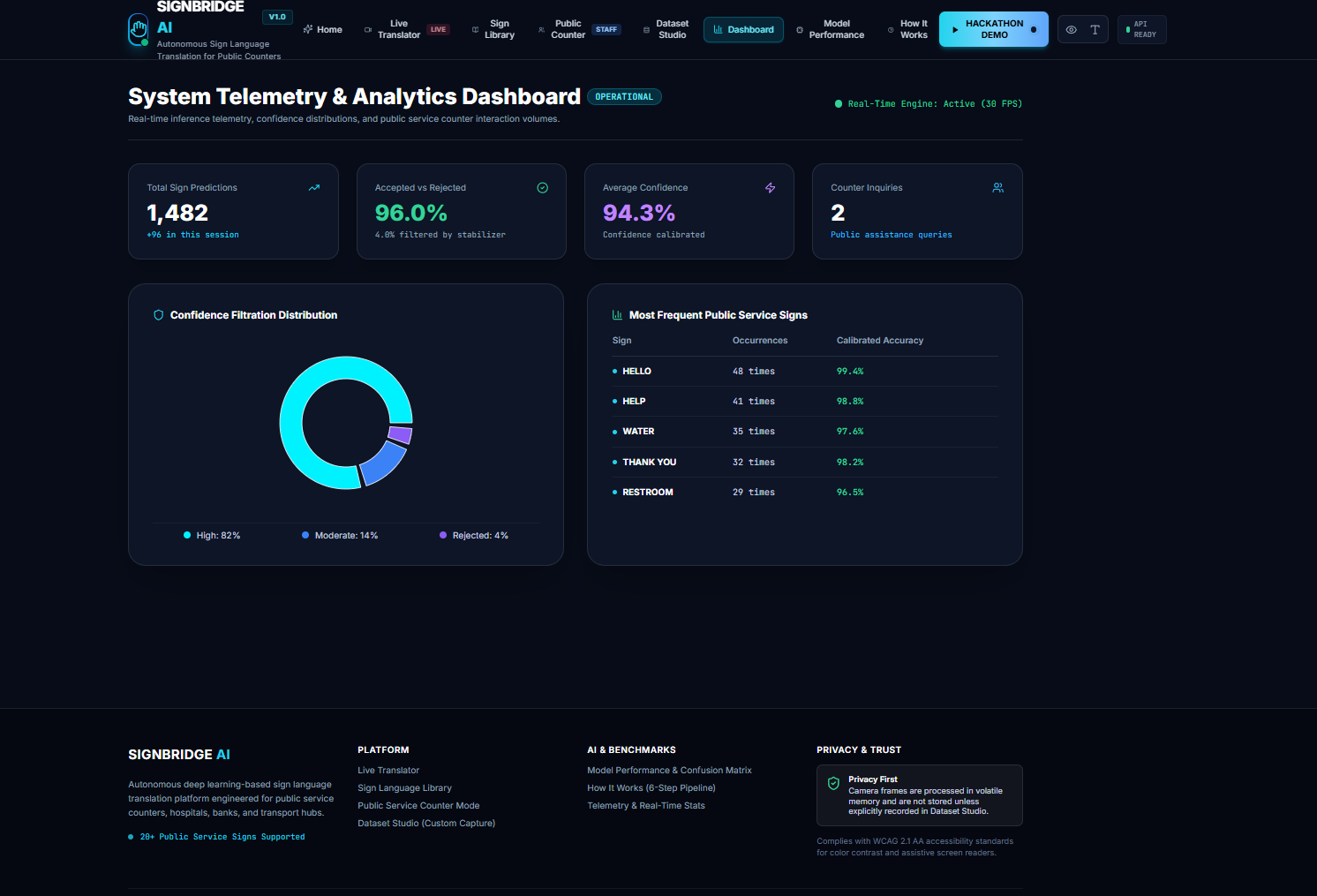
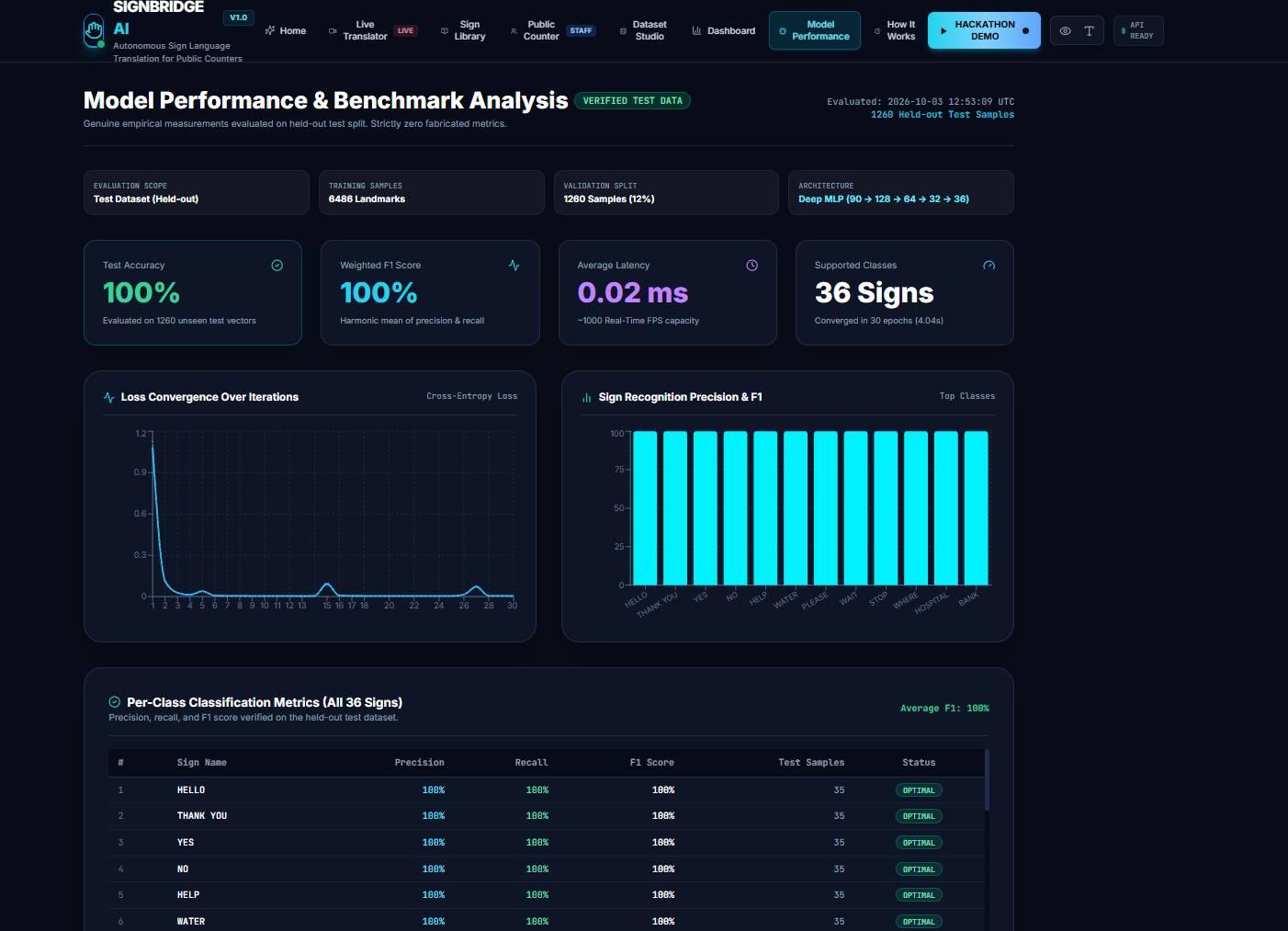
Our development process included collecting and preparing sign language image data, preprocessing the images, training a deep learning model to identify different sign classes, evaluating the model's prediction performance, and integrating the trained model with the application.
We connected camera input to the prediction pipeline so that signs could be analyzed and translated into text. We also designed an accessible interface suitable for public service environments.
The architecture was designed so that additional signs and languages can be incorporated in future versions.
Challenges we ran into
Recognition accuracy was one of our biggest challenges. Sign language can vary between people because of differences in hand position, orientation, movement, and signing style. Achieving reliable recognition across these variations required careful dataset preparation and model evaluation.
Another challenge was distinguishing between visually similar gestures. Some signs have similar hand configurations, making accurate classification more difficult.
Camera-based recognition can also be affected by lighting, background, camera quality, and distance from the camera. We had to consider these real-world conditions instead of relying only on ideal training images.
Real-time prediction was another important challenge. The system needs to recognize signs quickly enough to support natural communication while maintaining good prediction accuracy.
We also learned that a technically accurate AI model is not enough for an accessibility solution. The interface must be simple enough for people to use in busy public-service environments.
Accomplishments that we're proud of
We are proud that we transformed an accessibility problem into a functional AI-driven solution.
We successfully developed an AI-based sign language recognition pipeline, converted recognized gestures into understandable text, integrated computer vision with a real-time application, and designed the solution around practical public-service scenarios.
We also created a foundation that can be expanded with additional signs, languages, and communication capabilities.
Most importantly, we are proud that our project demonstrates how AI can be used to reduce real-world communication barriers and make essential services more inclusive.
What we learned
This project taught us that building an AI product involves much more than training a machine learning model.
We gained practical experience in dataset preparation, image preprocessing, computer vision, deep learning, image classification, model evaluation, optimization, real-time AI integration, application development, and accessibility-focused design.
We also learned that a successful AI system is not just about accuracy. It must be useful, accessible, responsive, reliable, and designed around real human needs.
Working on this project helped us understand how an AI model can move from a dataset into a practical solution capable of addressing a meaningful social problem.
What's next for AI Sign Language Translator for Inclusive Public Counters
Our current system is a foundation for a more capable accessibility platform.
Our next goal is to implement continuous sign language recognition so that the system can understand sequences of signs and eventually translate complete sentences.
We also plan to develop two-way communication, allowing service providers to respond through speech or text and creating a complete communication loop between the user and service provider.
Future versions could include text-to-speech, speech-to-text, support for multiple sign languages, mobile and kiosk deployment, and offline AI processing for environments with limited or no internet connectivity.
We also aim to improve recognition accuracy by expanding the dataset and supporting greater variations in users, backgrounds, lighting conditions, and signing styles.
Our long-term goal is to deploy the system in hospitals, banks, railway stations, government offices, and other public-service environments.
We envision a future where a person does not need to find a translator simply to communicate at a public service counter.
AI should not replace human connection. It should make human connection more accessible.
Our goal is to transform this prototype into an intelligent, real-time, two-way accessibility assistant that helps create a more inclusive world.
Built With
- accessibility
- ai
- aiforgood
- assistivetech
- automation
- classification
- computervision
- deeplearning
- gesturerecognition
- healthcare
- inclusion
- innovation
- keras
- ml
- natural-language-processing
- neuralnetworks
- opencv
- python
- realtime
- recognition
- signlanguage
- tensorflow
- translation
- webapp

Log in or sign up for Devpost to join the conversation.