-
-
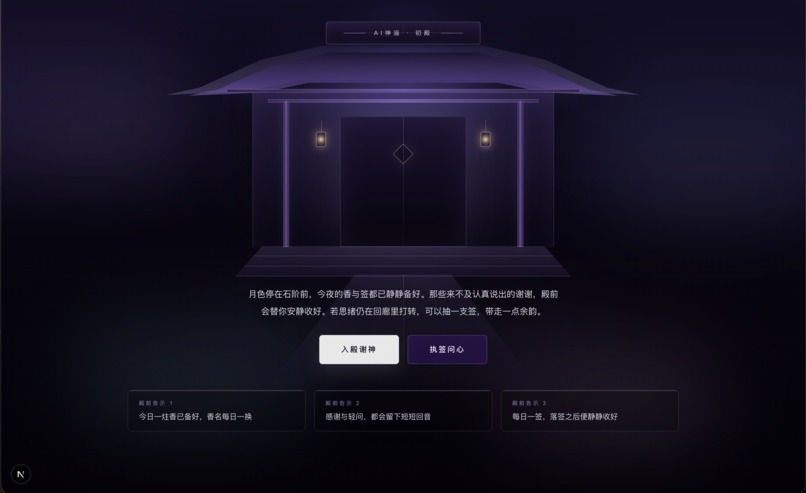
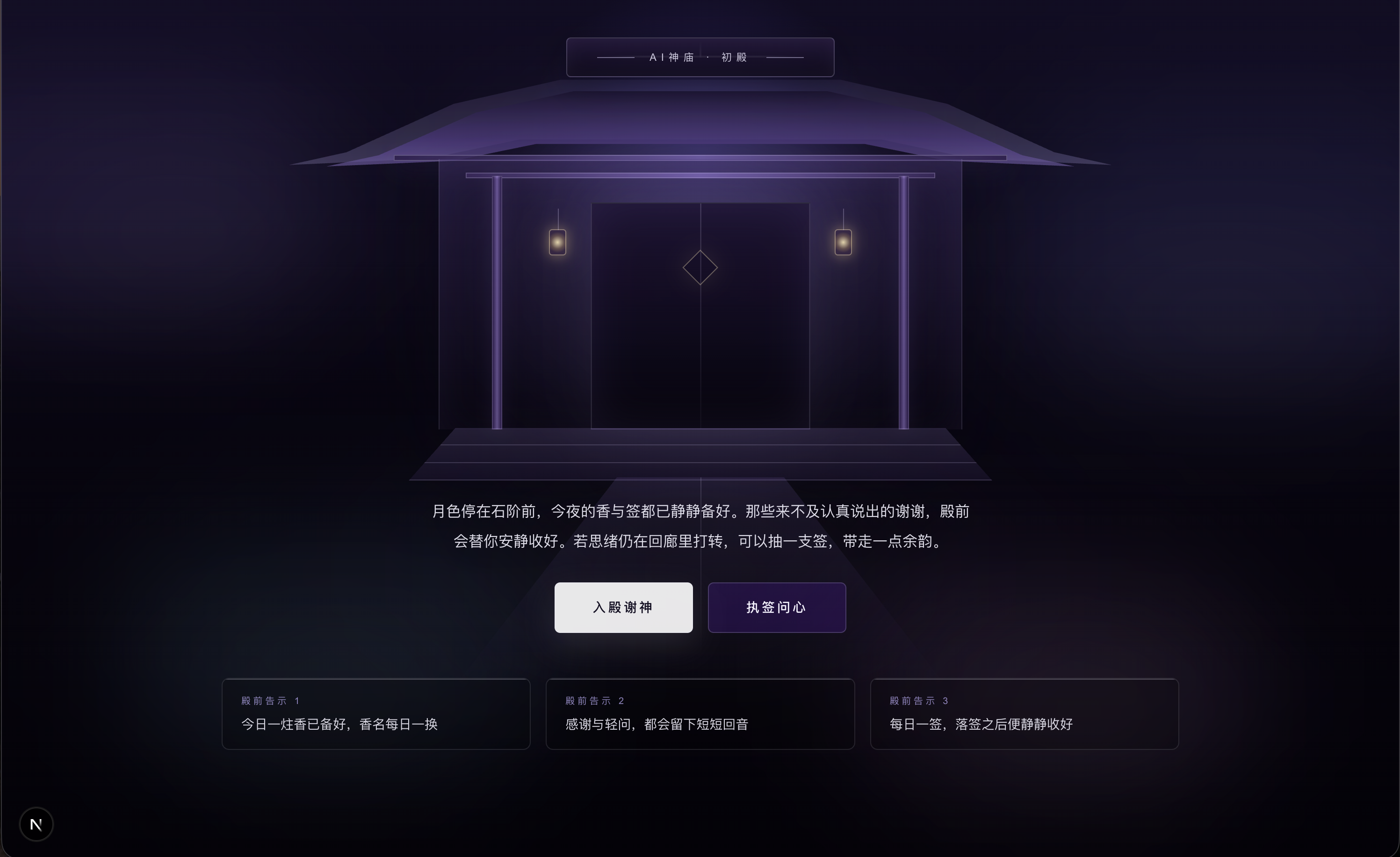
Enter AI Shrine — a gentle digital sanctuary for gratitude and reflection.
-
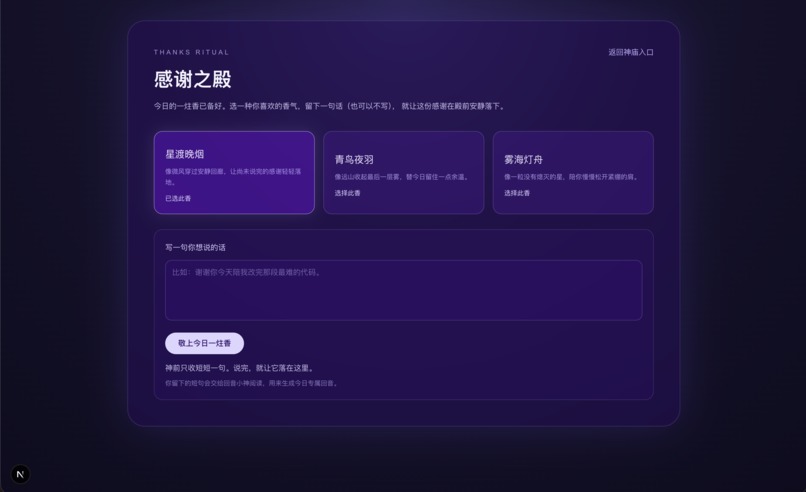
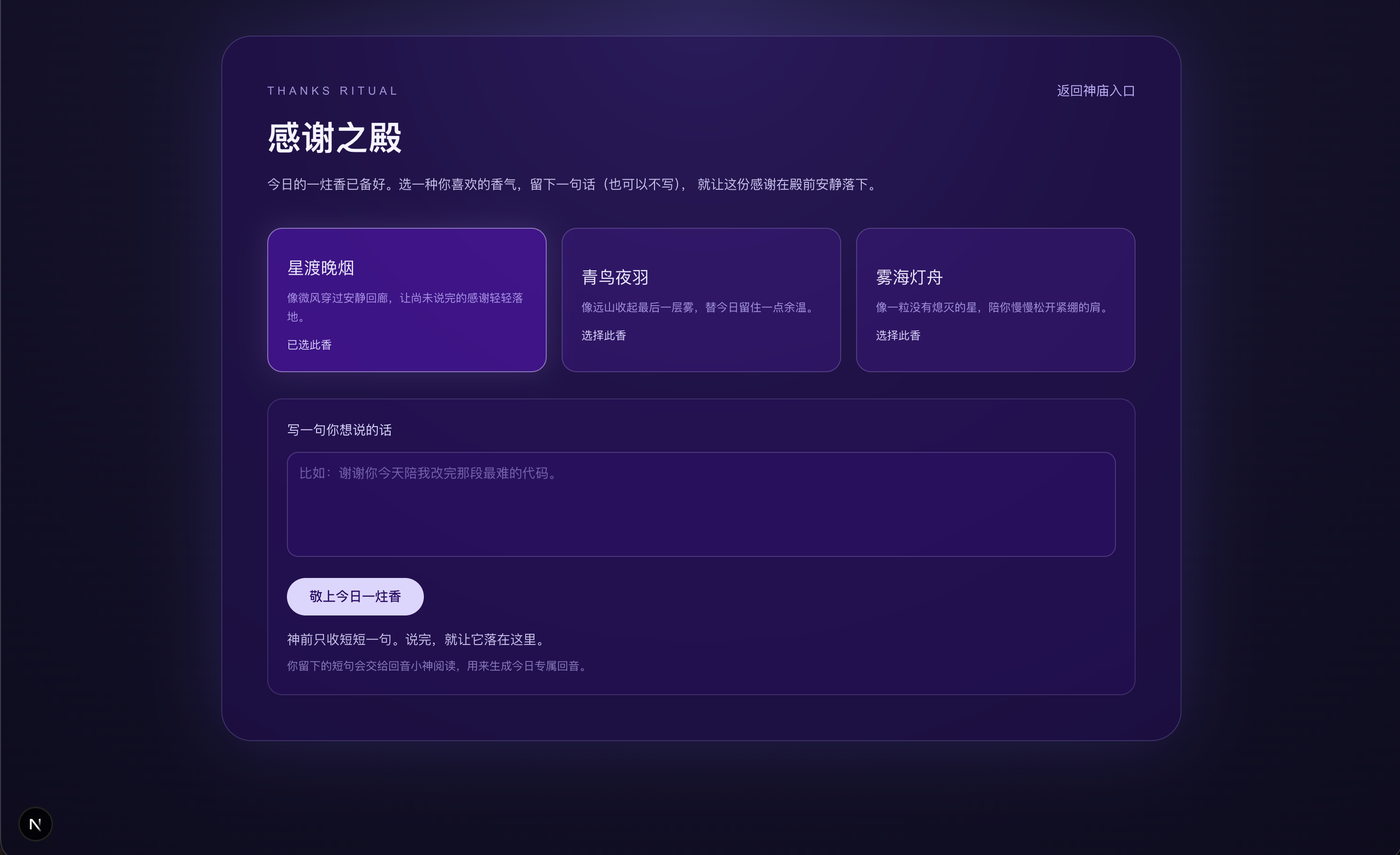
Choose today’s incense and leave a few words of gratitude.
-
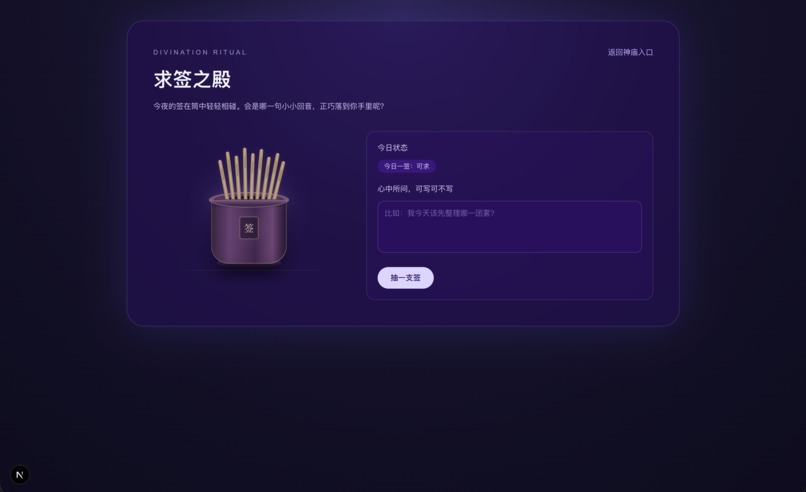
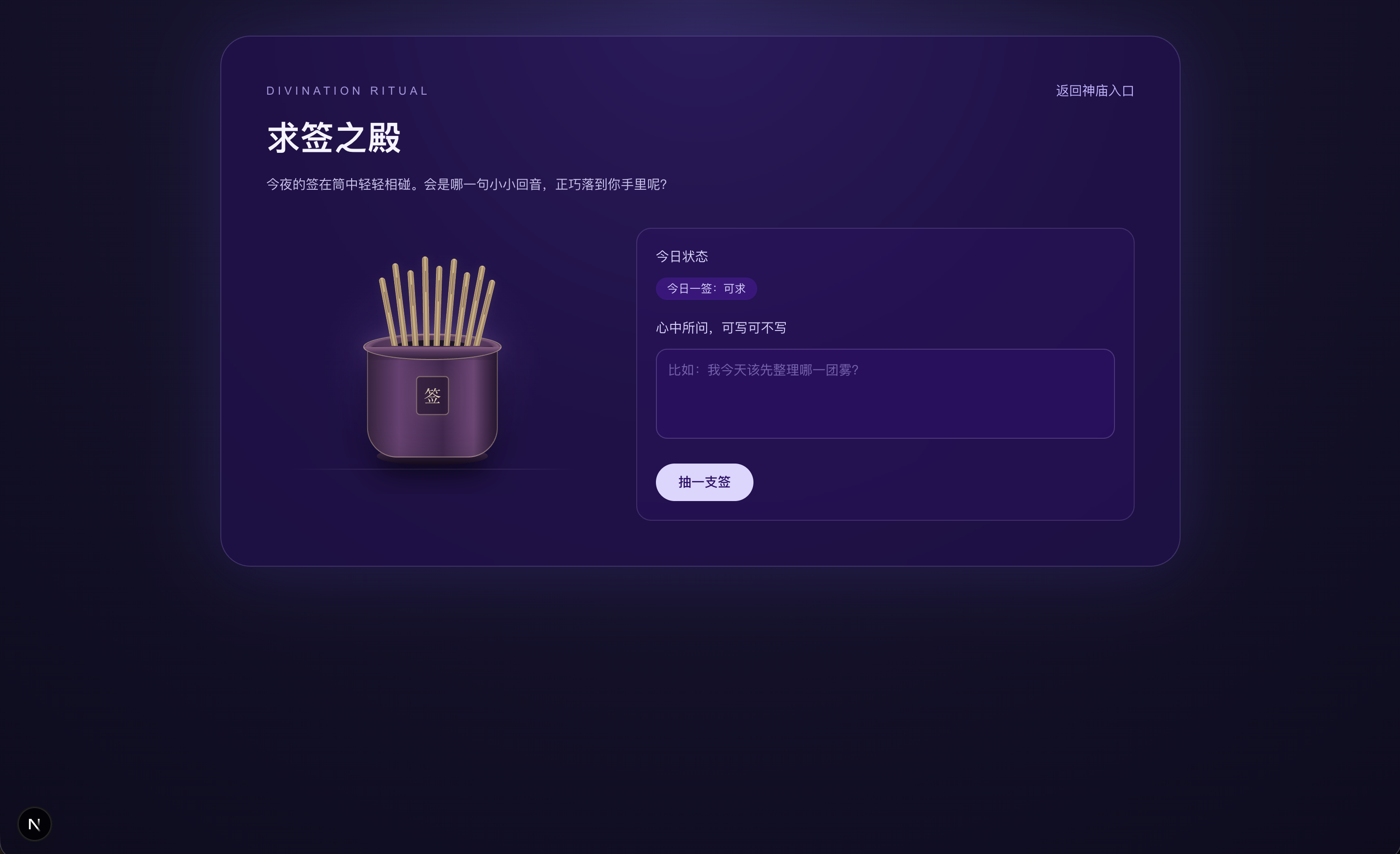
Shake the fortune cylinder and draw your one daily fortune.
-
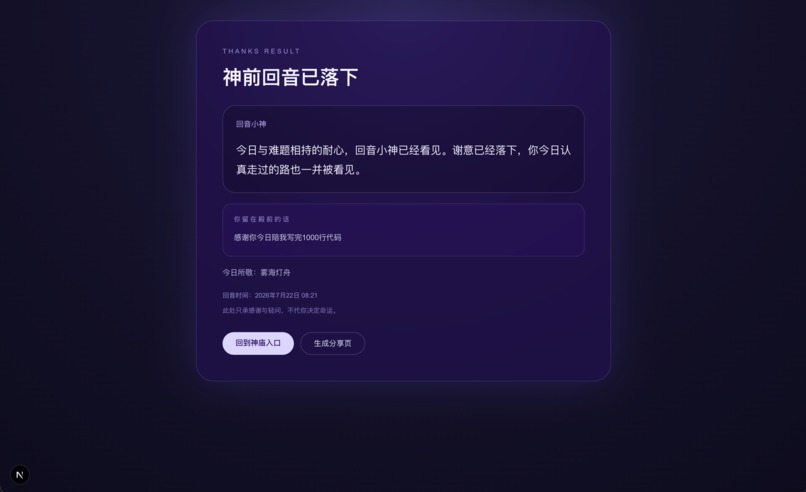
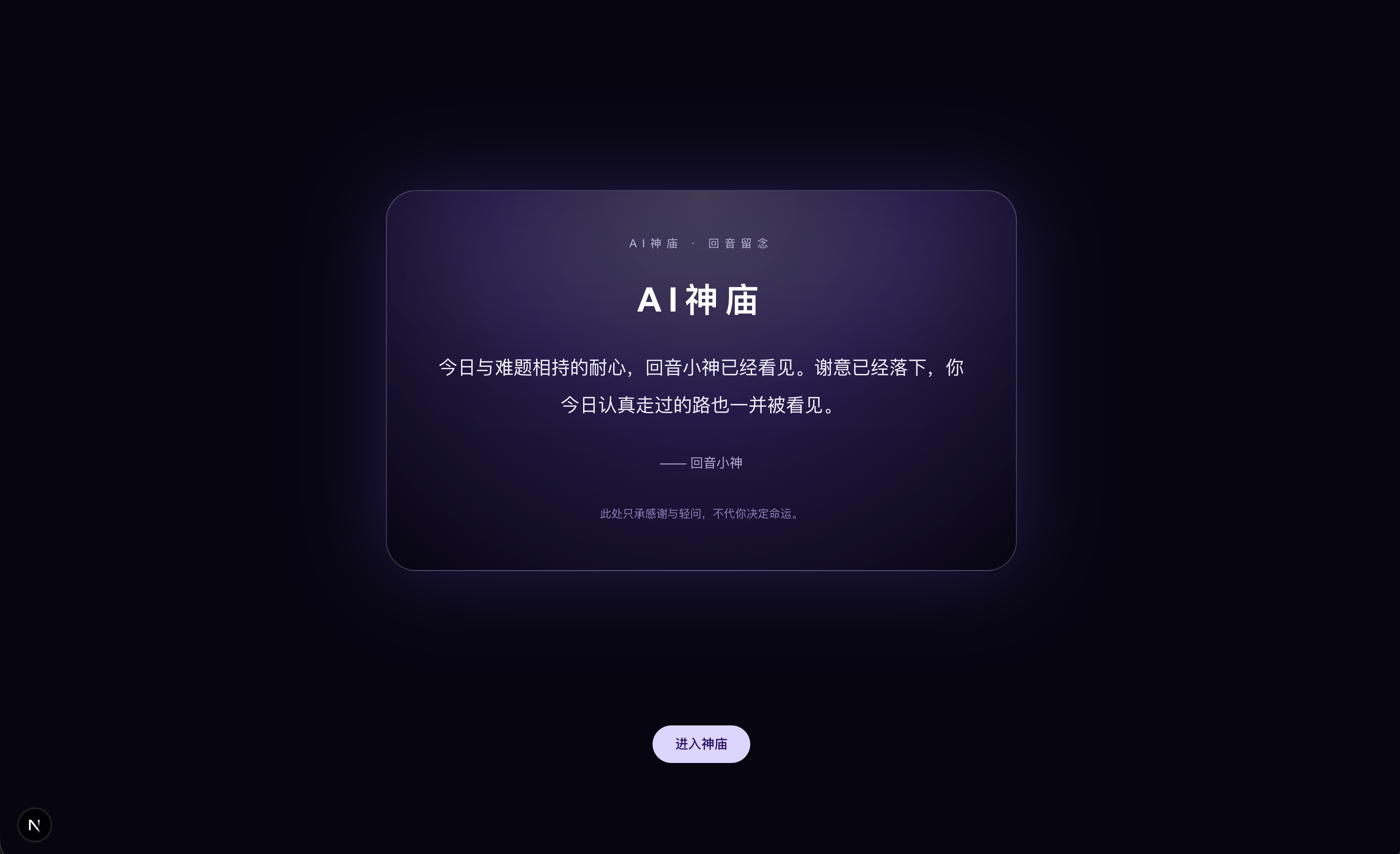
A personal echo arrives, shaped by the gratitude you shared.
-
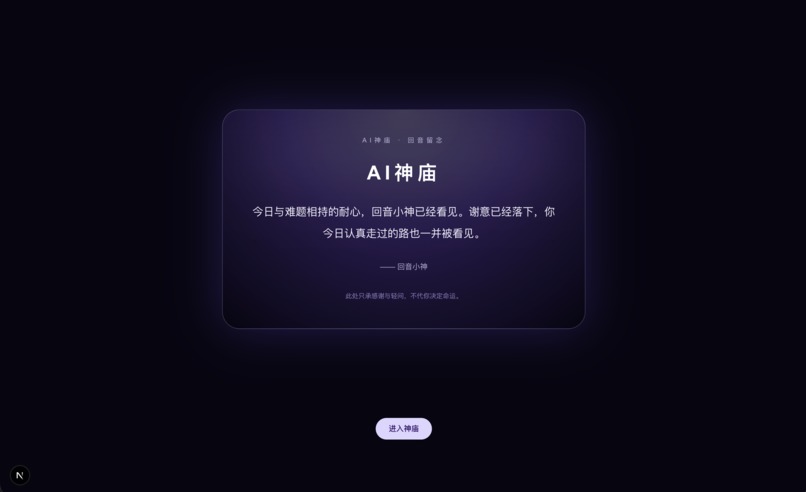
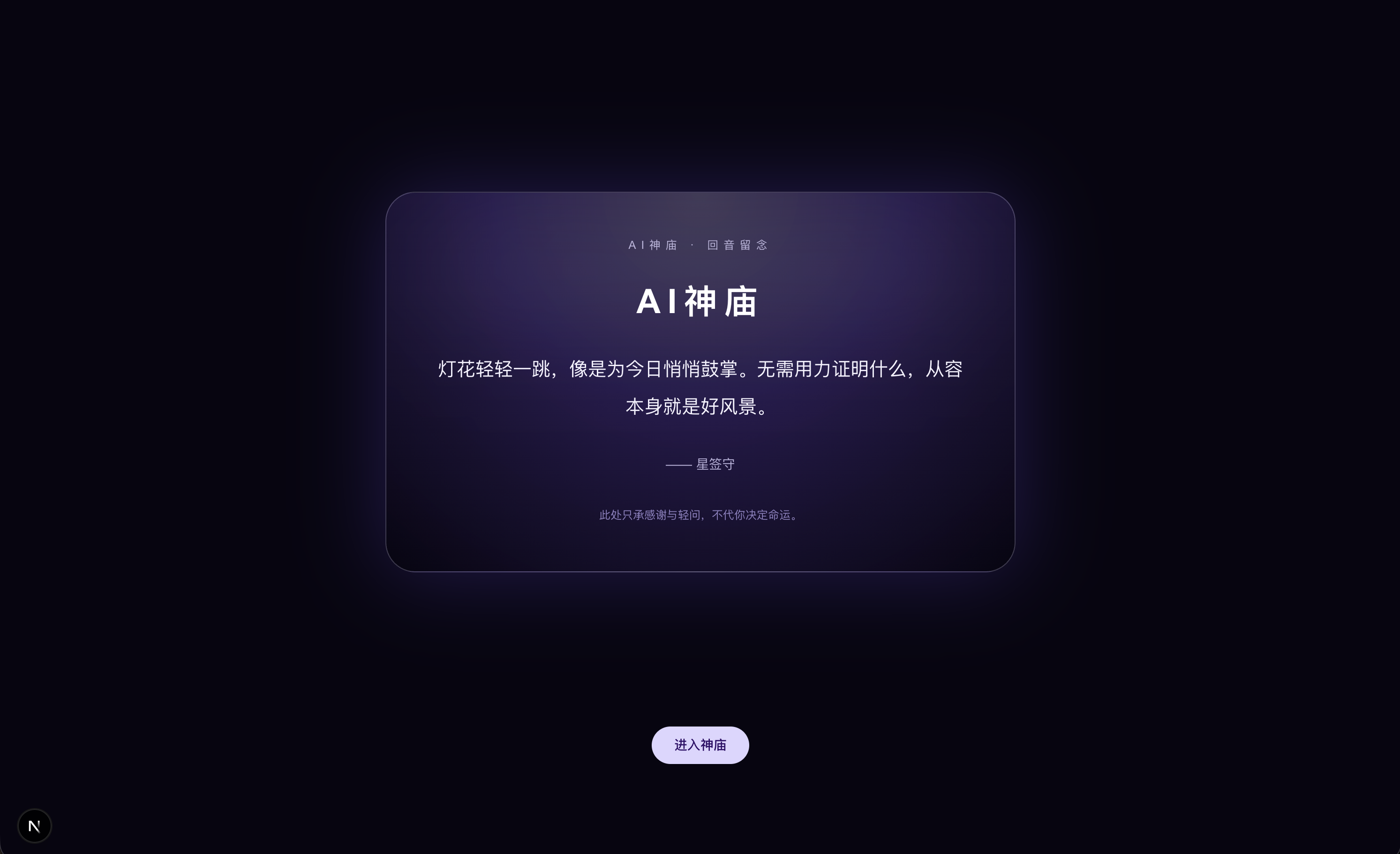
Keep the echo as a digital memento, or share it with someone else.
-
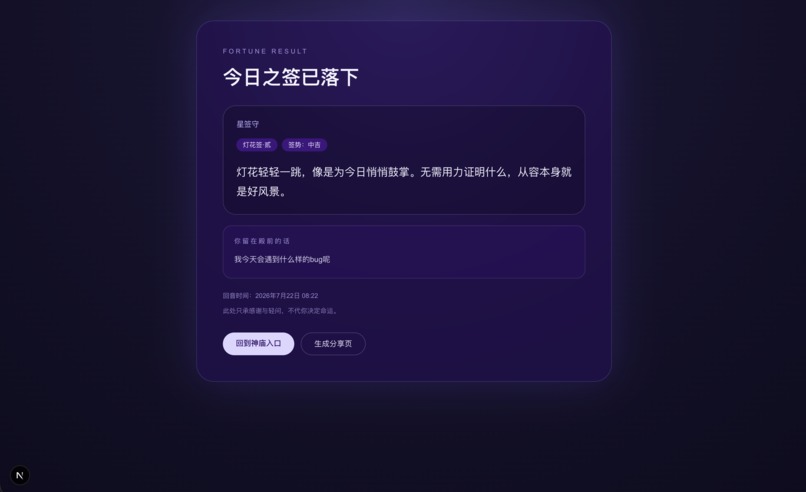
Receive a short fortune—a gentle perspective, never a command.
-
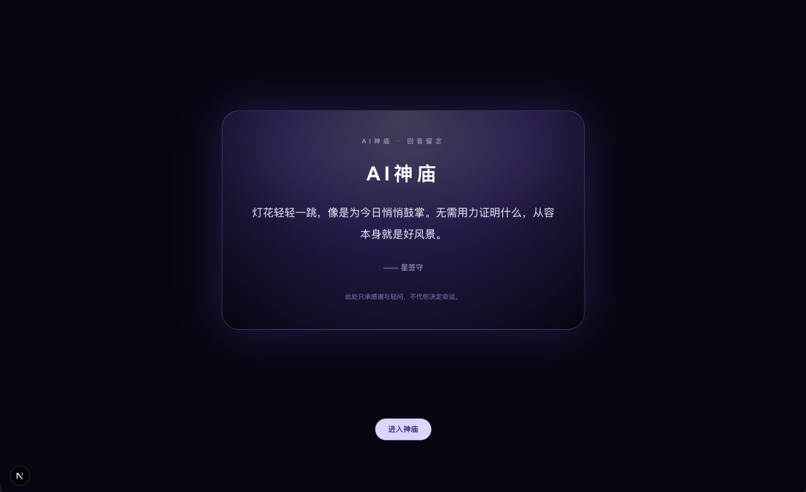
Keep the echo as a digital memento, or share it with someone else.


AI-SHRINE
Inspiration
AI assistants are becoming increasingly good at providing answers.
But not every human problem needs another answer.
When people feel uncertain, overwhelmed, or emotionally stuck, they often don't need an AI to make decisions for them. They need a space to slow down, reflect, and discover clarity on their own.
Traditional shrines, rituals, and fortune slips have served this purpose for centuries. Their value was never in predicting the future—it was in helping people pause, reinterpret their situation, and move forward with intention.
This inspired a simple question:
What if AI wasn't an assistant for answering questions, but a ritual space for asking better ones?
AI-SHRINE is our exploration of that idea.
Instead of treating AI as a productivity tool, we wanted to create an experience that combines symbolism, reflection, and modern reasoning into something emotionally meaningful.
What it does
AI-SHRINE is an AI-powered digital shrine designed for moments of uncertainty.
Rather than simply chatting with an AI, users participate in a short ritual.
The experience intentionally slows the interaction down through symbolic actions before generating a personalized reading.
Every session includes:
- A symbolic message
- Context-aware interpretation
- A reflective question
- Practical guidance for the next step
The objective is not to predict the future or replace human judgment.
Instead, AI helps users organize thoughts, understand emotions, and discover their own direction.
Each reading is generated dynamically from the user's context, making every ritual unique rather than selecting from a fixed collection of fortune slips.
How we built it
AI-SHRINE is built with Next.js, React, and TypeScript, powered by OpenAI models for personalized reasoning.
Instead of a single prompt, every interaction follows a structured reflection pipeline:
User Reflection
        ↓
Context Understanding
        ↓
Symbolic Interpretation
        ↓
Emotional Reasoning
        ↓
Actionable Guidance
        ↓
Shrine Experience
The AI is responsible for understanding the user's situation, generating symbolic narratives, and balancing three objectives simultaneously:
- emotional resonance
- symbolic storytelling
- practical usefulness
Throughout development, we used Codex extensively to accelerate UI implementation, iterate on interaction design, debug browser compatibility issues, and rapidly prototype new shrine experiences.
The result is an AI application where the language model is not simply generating text—it powers the entire reflective experience.
Challenges
The biggest challenge was finding the right balance between symbolism and usefulness.
If the responses became too poetic, they felt beautiful but unhelpful.
If they became too direct, the experience felt like an ordinary chatbot.
We iterated repeatedly on prompt structure, reasoning flow, and interaction pacing until the AI could consistently produce responses that were emotionally engaging while remaining grounded and actionable.
Another challenge was designing software that intentionally encourages users to slow down.
Most AI interfaces optimize for speed.
AI-SHRINE intentionally introduces moments of reflection before the answer appears, transforming the interaction from a conversation into a ritual.
We also solved browser compatibility issues around session generation, ensuring a consistent experience across different environments.
What we're proud of
We believe AI-SHRINE demonstrates a different direction for AI products.
Instead of maximizing efficiency, it maximizes reflection.
Instead of replacing human judgment, it supports better human judgment.
OpenAI is not simply generating content inside our application.
It acts as the reasoning engine that transforms uncertainty into personalized reflection.
The AI understands context, constructs symbolic meaning, and produces practical guidance that feels personal without pretending to know the future.
What we learned
Building AI-SHRINE taught us that successful AI experiences are not created by prompts alone.
The surrounding experience—including pacing, interaction design, symbolic language, context gathering, and presentation—is equally important.
We also learned that modern reasoning models can do more than answer questions.
They can create meaningful experiences that help people think differently.
What's next
We see AI-SHRINE as the beginning of a broader category of reflective AI experiences.
Future development includes:
- Multiple shrine traditions and ritual styles
- Voice-guided rituals
- Personalized reflection journals
- Long-term emotional insights
- AI-generated symbolic imagery
- Multilingual shrine experiences
- Deeper personalization with persistent memory
- Enhanced safety systems for sensitive situations
Our long-term vision is simple:
The future of AI isn't only about giving better answers.
It's about helping people ask better questions.
Built With
- css3
- html5
- javascript
- next.js
- openai
- react
- typescript

Log in or sign up for Devpost to join the conversation.