-
-
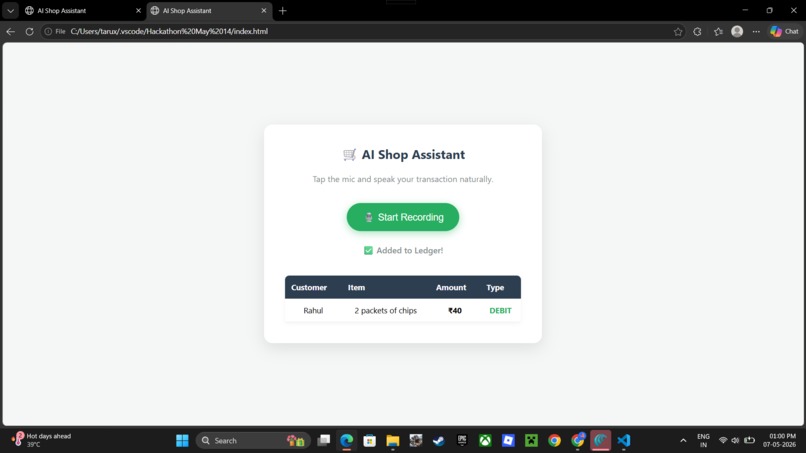
AI Shop Assistant - Clean Desktop UI
-
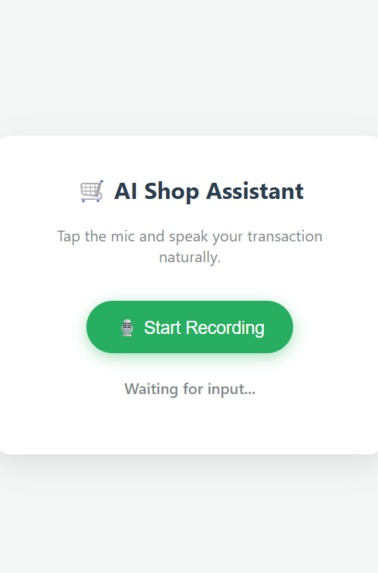
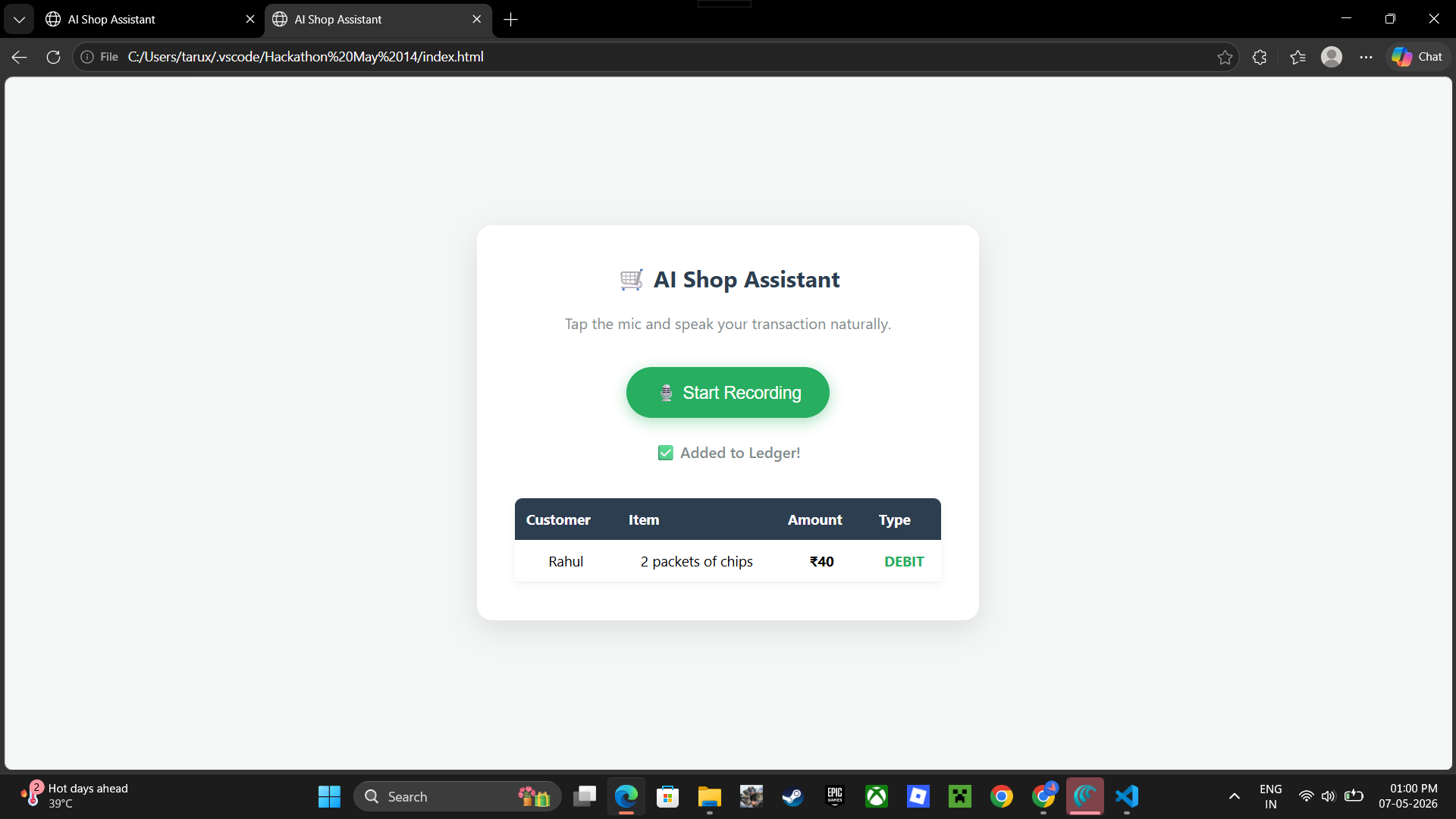
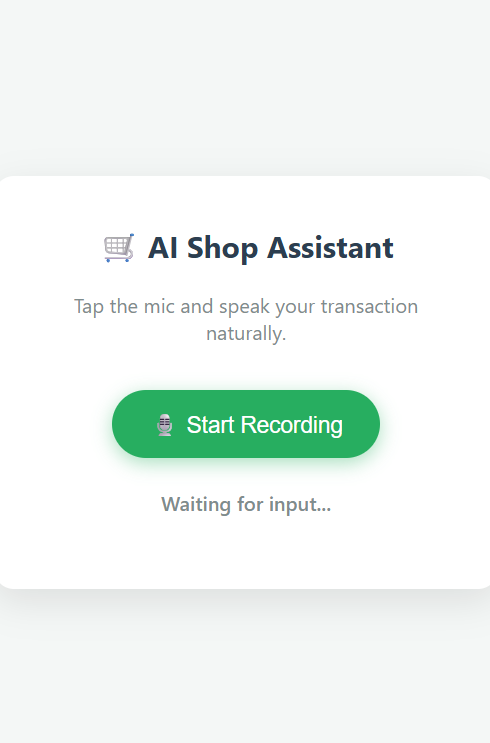
Fully Mobile Responsive Design
💡 Inspiration
Navigating the busy local markets here in Bhopal, I noticed a recurring problem: shopkeepers and vendors spend an immense amount of time manually writing down sales, daily expenses, and customer tabs in physical notebooks. During peak hours, this manual ledger system becomes a massive bottleneck. I wanted to build something that required zero technical skills to operate—a tool where the merchant's voice does all the heavy lifting.
💻 What it does
AI Shop Assistant is a productivity-focused web dashboard designed for local vendors. Instead of navigating complex accounting menus, the user simply taps a microphone and speaks naturally (e.g., "Add 500 rupees to Rahul's account for groceries"). The system processes this voice input, extracts the relevant entities (Name, Amount, Item, Transaction Type), and automatically updates a digital ledger in real-time.
⚙️ How we built it
To align with the low-code and web focus of the hackathon, the architecture is designed for rapid deployment and ease of use:
- Frontend: Built using a low-code web framework to create a clean, accessible, and mobile-friendly interface that anyone can use.
- Backend & AI: Powered by a lightweight Python backend. We integrated the Gemini API to process unstructured speech-to-text transcripts and convert them into structured JSON data.
- Database: Connected to a seamless cloud database to ensure local shops always have their data backed up and synced.
🚧 Challenges we ran into
The biggest challenge was handling the natural, unstructured way people speak—especially mixing languages or using informal accounting terms. Designing the right prompt architecture for the AI to consistently return highly accurate, perfectly formatted data for the ledger required rigorous testing and debugging.
🏆 Accomplishments that we're proud of
Successfully bridging the gap between advanced AI capabilities and a simple, low-code interface. Watching the system flawlessly update a database column based purely on a casual voice command feels incredibly rewarding and proves that advanced tech can be accessible to grassroots businesses.
📚 What we learned
This project deepened our understanding of rapid API integration and how to leverage LLMs for precise data structuring, rather than just text generation. It also highlighted the true power of low-code platforms when paired with custom AI backends.
🚀 What's next for AI Shop Assistant
In the future, the goal is to integrate WhatsApp automation so shopkeepers can receive daily ledger summaries directly on their phones, alongside predictive inventory alerts based on their voice-logged sales data.

Log in or sign up for Devpost to join the conversation.