-
-
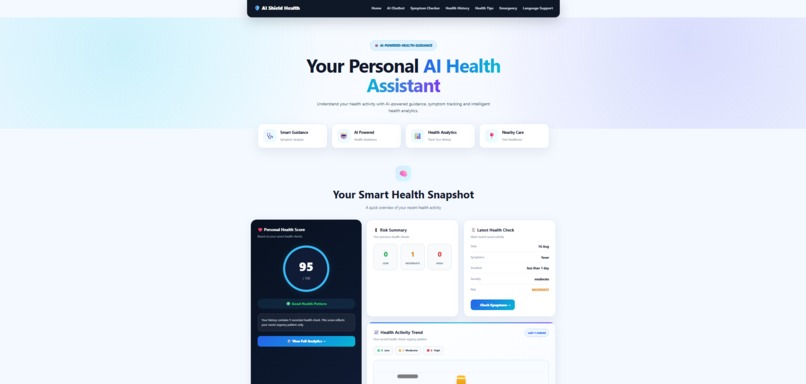
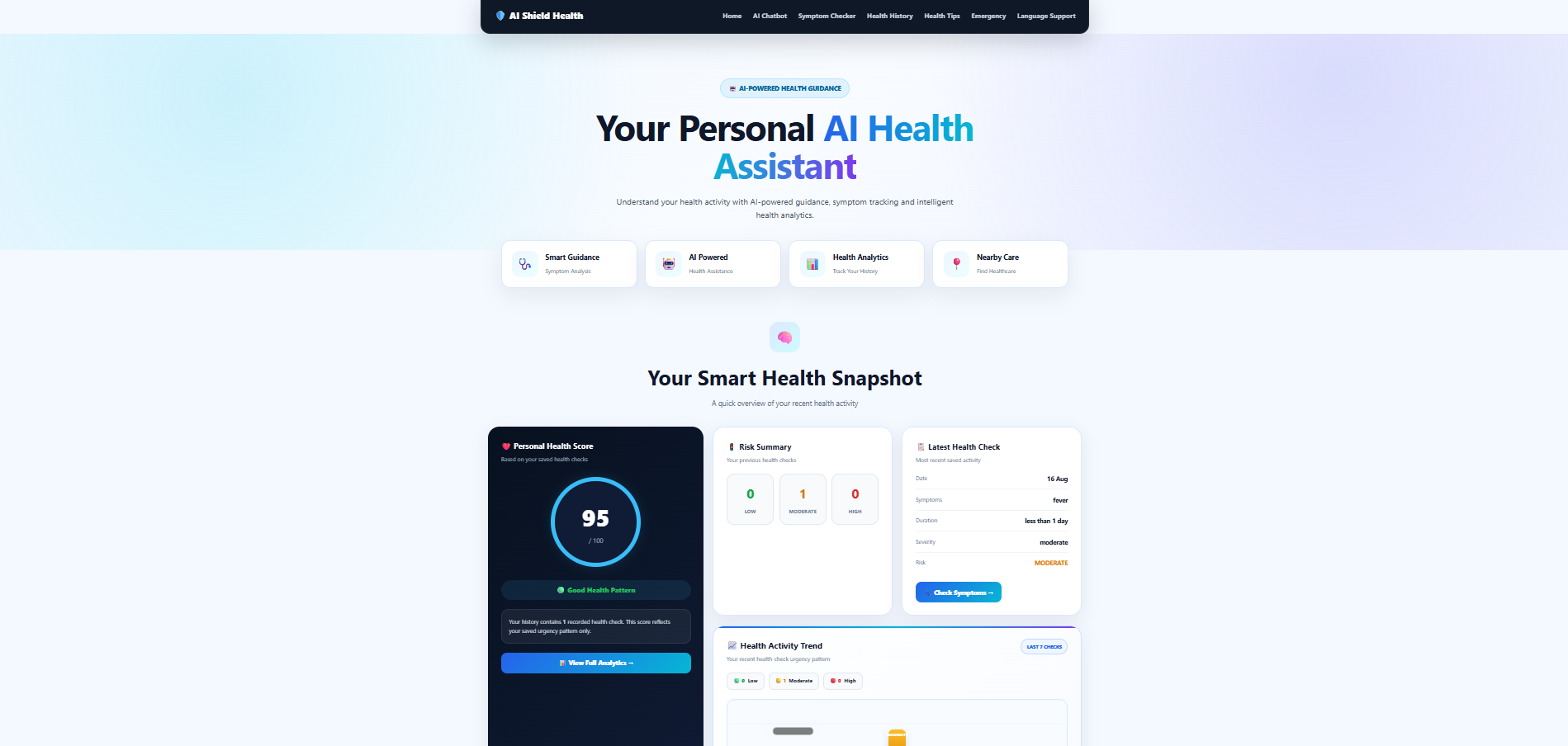
Personal AI Health Assistant dashboard providing access to key healthcare features.
-
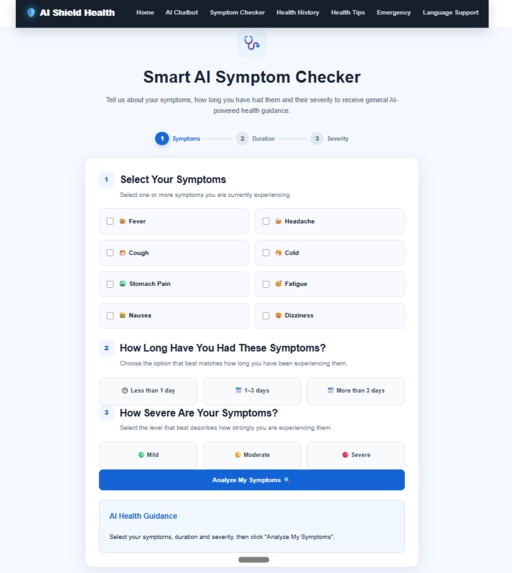
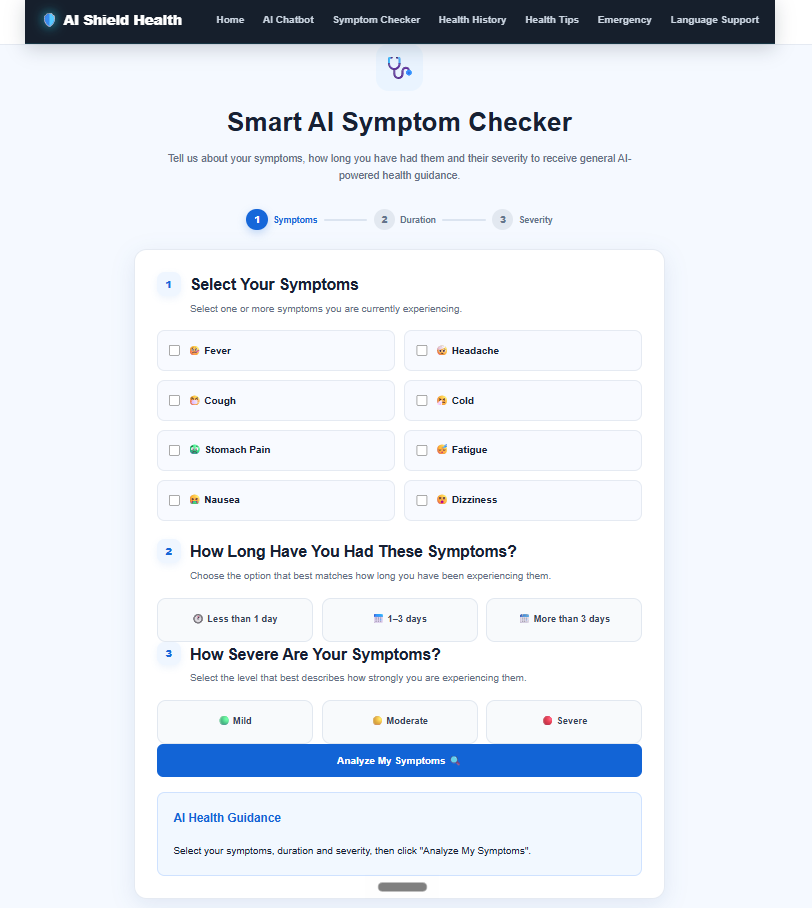
AI-powered symptom assessment interface for analyzing user health concerns.
-
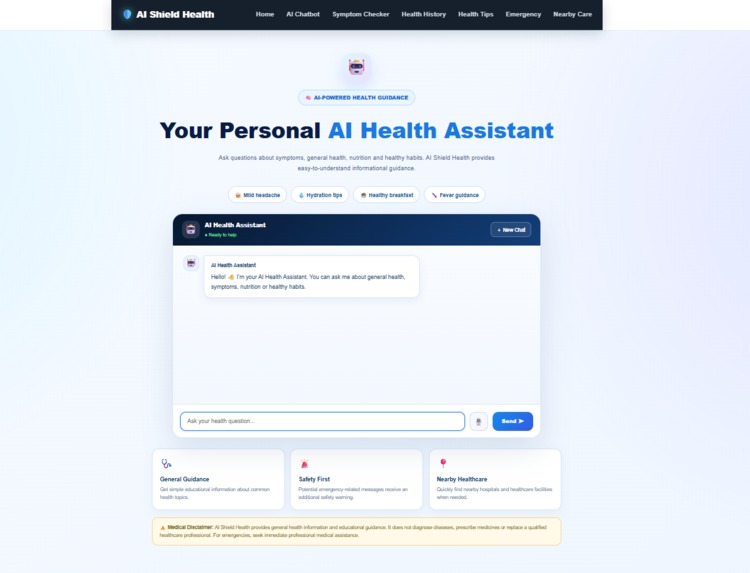
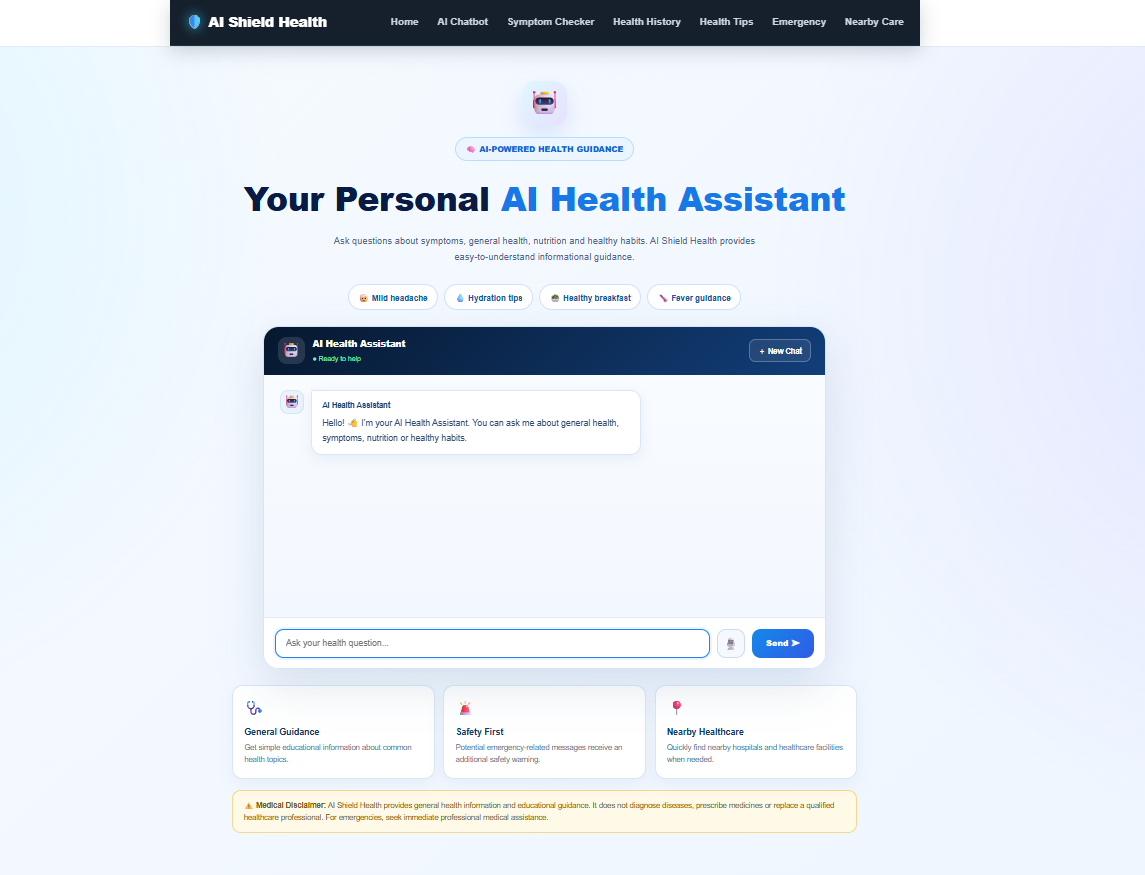
AI Health Assistant providing personalized health guidance through conversational interaction.
-
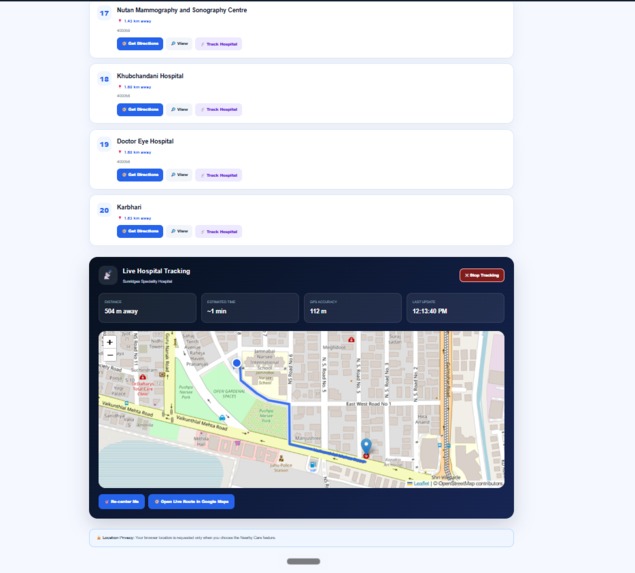
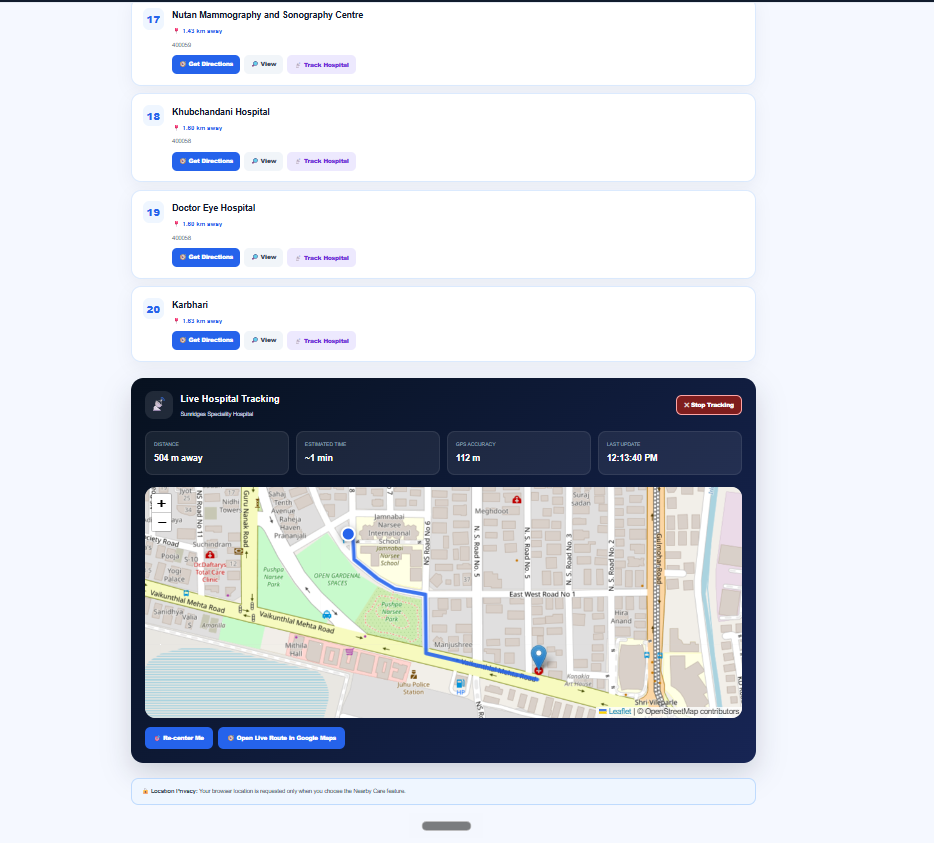
Location-based hospital discovery helping users find nearby healthcare facilities.
-
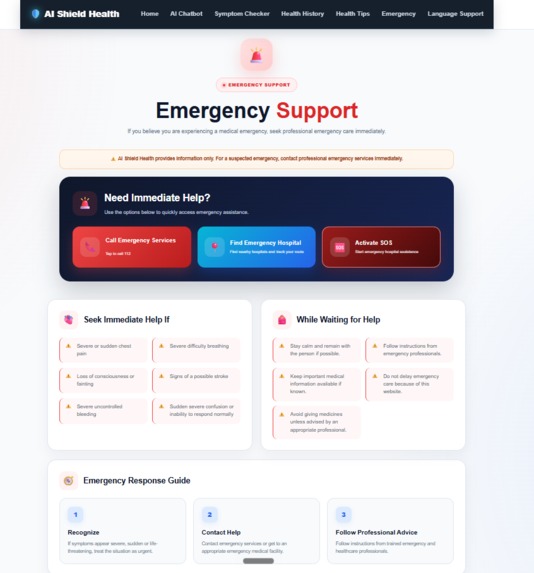
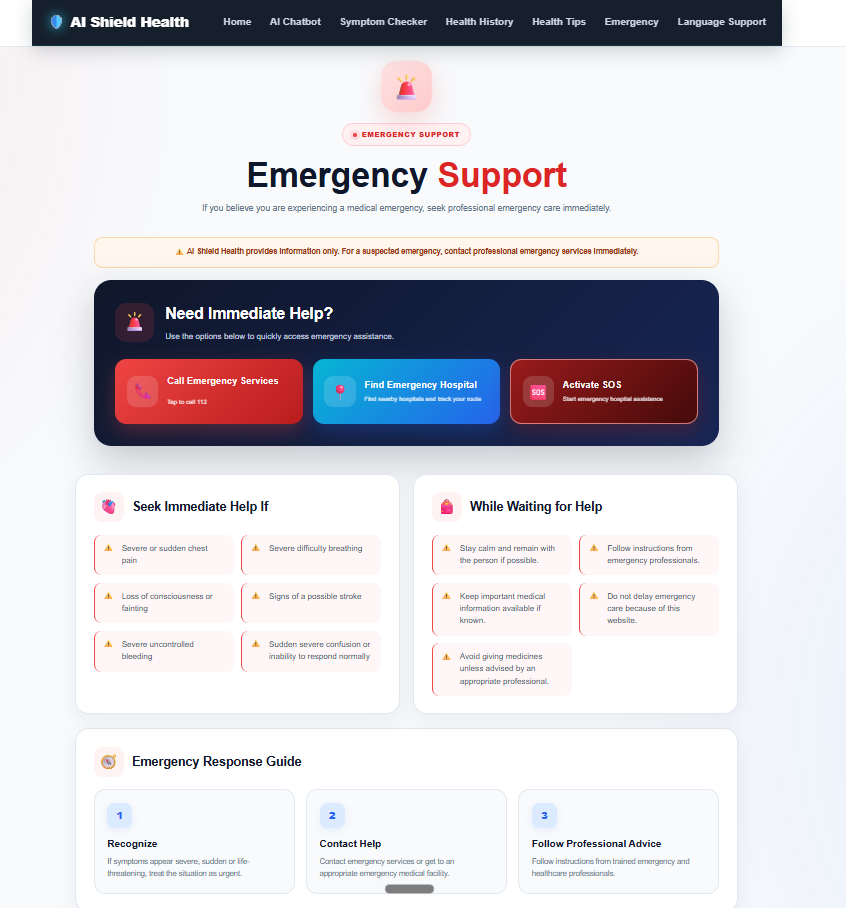
Emergency support dashboard providing quick access to critical health resources.
-
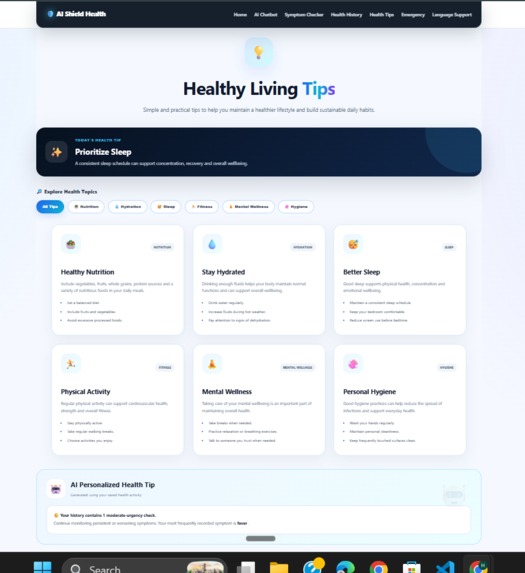
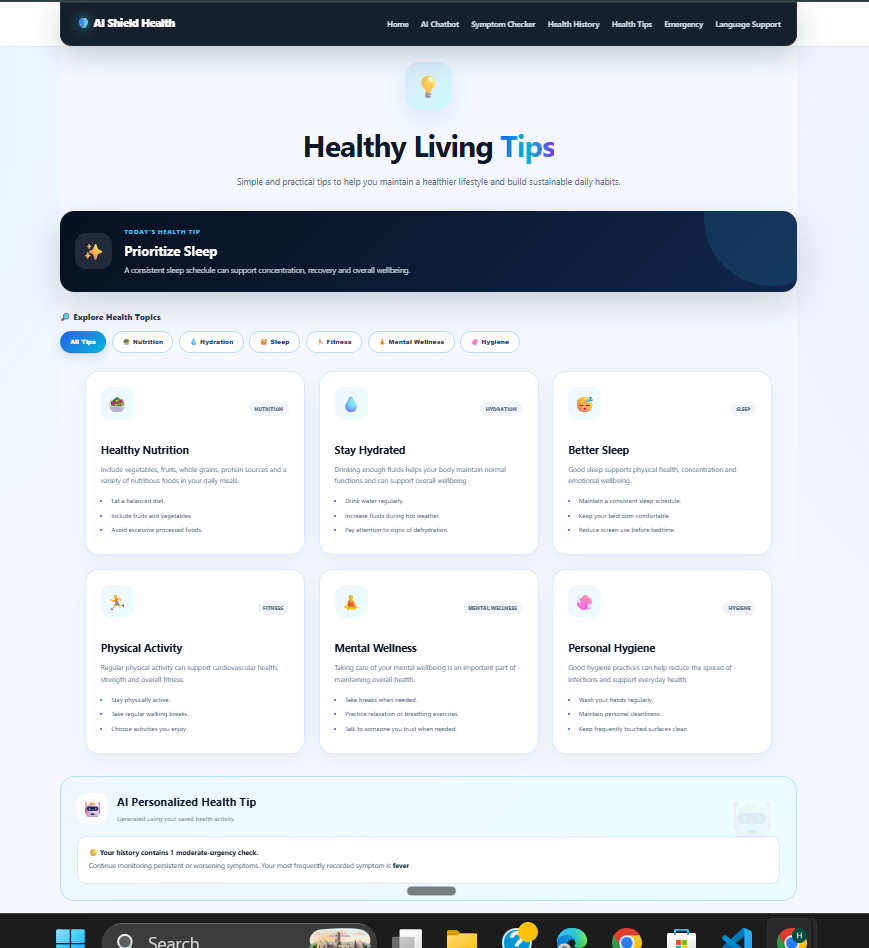
Personalized health tips providing practical guidance for maintaining a healthier lifestyle.
-
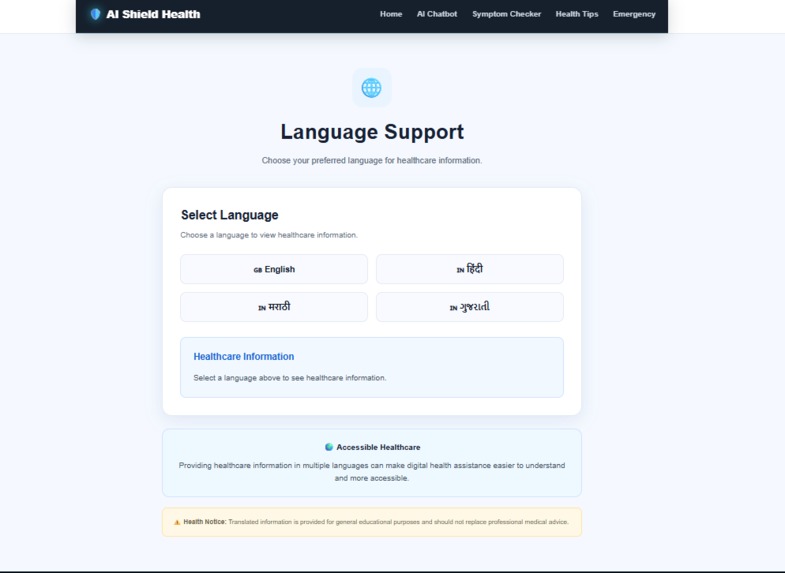
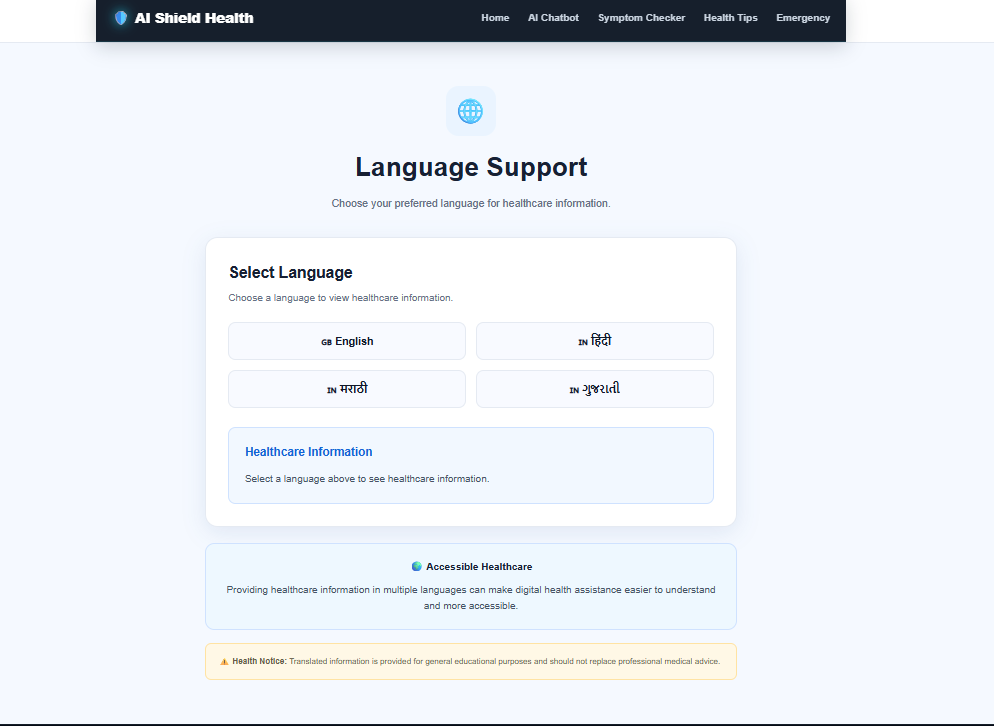
Multilingual support making the AI health assistant accessible to diverse users.
Inspiration
Healthcare information is often difficult to understand, especially when a person is unsure whether their symptoms require immediate attention or basic self-care. We wanted to build a simple and accessible platform that could provide initial health guidance without making healthcare information feel complicated.
The idea behind AI Shield Health was to combine AI, symptom analysis, emergency support, multilingual assistance, and health education into one user-friendly platform. We were especially inspired by the need for quick guidance during situations where people may not immediately know what to do next.
What it does
AI Shield Health is an AI-powered health assistance platform that helps users understand their symptoms and access relevant health guidance.
The platform includes:
- AI Health Chatbot for health-related questions.
- AI Symptom Checker that analyzes user-provided symptoms and provides non-diagnostic guidance.
- Urgency guidance to help users understand whether a situation may require routine care, medical attention, or emergency support.
- Emergency Support for situations that may require immediate action.
- Health Tips for general health awareness and preventive care.
- Multilingual Support in English, Hindi, Marathi, and Gujarati.
- A responsive interface designed to work across desktop and mobile devices.
- Medical disclaimers to clearly communicate that the platform is an assistance tool and not a replacement for professional medical diagnosis.
How we built it
We built the project using a modern web-based architecture.
The frontend was developed with HTML, CSS, and JavaScript, with a focus on responsive design and a simple user experience.
For the backend, we used Node.js and Express.js to handle application logic and API communication. An external AI API was integrated to provide intelligent responses and symptom-related guidance.
We also implemented environment-based API key configuration using .env to avoid exposing sensitive credentials directly in the source code.
The application was structured around separate health-assistance features such as the chatbot, symptom checker, health tips, emergency support, and language support. We focused on connecting these features into one continuous healthcare-assistance experience rather than creating unrelated features.
Challenges we ran into
One of our biggest challenges was making the AI responses useful while ensuring that the system did not present itself as a medical professional or provide definitive diagnoses.
We also faced challenges while integrating the frontend with the backend and external AI API, handling API configuration securely, and making different features work reliably together.
Another challenge was designing the interface so that important information such as emergency guidance and symptom-related warnings remained clear without overwhelming the user.
Testing responsiveness, user interactions, and different possible inputs also required multiple iterations and debugging.
Accomplishments that we're proud of
We are proud of turning a basic healthcare idea into a functional AI-powered platform with multiple connected features.
Our biggest accomplishment is that AI Shield Health does more than simply provide an AI chatbot. It combines AI assistance, symptom checking, urgency guidance, emergency support, health education, and multilingual accessibility in one platform.
We are also proud of implementing the project with a proper backend architecture and secure environment-variable configuration for API credentials.
The project helped us move beyond simply building a UI and understand how frontend, backend, APIs, AI services, user experience, and responsible AI considerations can work together in a real-world application.
What we learned
Through this project, we learned how to integrate an external AI API into a web application and connect it with a Node.js and Express.js backend.
We also learned the importance of handling API keys securely, designing responsive interfaces, debugging frontend-backend communication, and structuring a project around actual user problems.
Most importantly, we learned that building an AI healthcare application requires more than making AI generate answers. Safety, clarity, responsible communication, accessibility, and appropriate medical disclaimers are equally important.
What's next for AI Shield Health
Our next goal is to make AI Shield Health more intelligent, useful, and personalized while keeping safety at the center.
We plan to improve the symptom-checking workflow by considering factors such as symptom duration and severity, provide clearer urgency levels and warning signs, and improve emergency escalation.
We also want to introduce a user health dashboard with symptom history and visual insights such as activity trends, symptom frequency, and urgency distribution.
Further improvements will focus on better mobile experience, stronger testing, improved accessibility, and making the overall platform more reliable and practical for real-world users.
Our long-term vision is to make AI Shield Health a responsible first-step health assistance platform that helps people understand their health concerns and know when professional medical care may be needed.
Built With
- ai
- api
- css
- express.js
- html
- javascript
- node.js
- responsive
- rest
- web


Log in or sign up for Devpost to join the conversation.