-
-
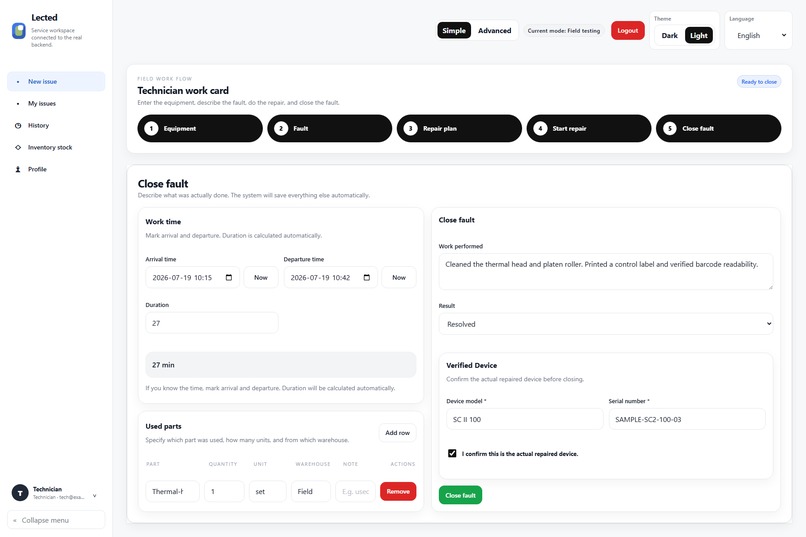
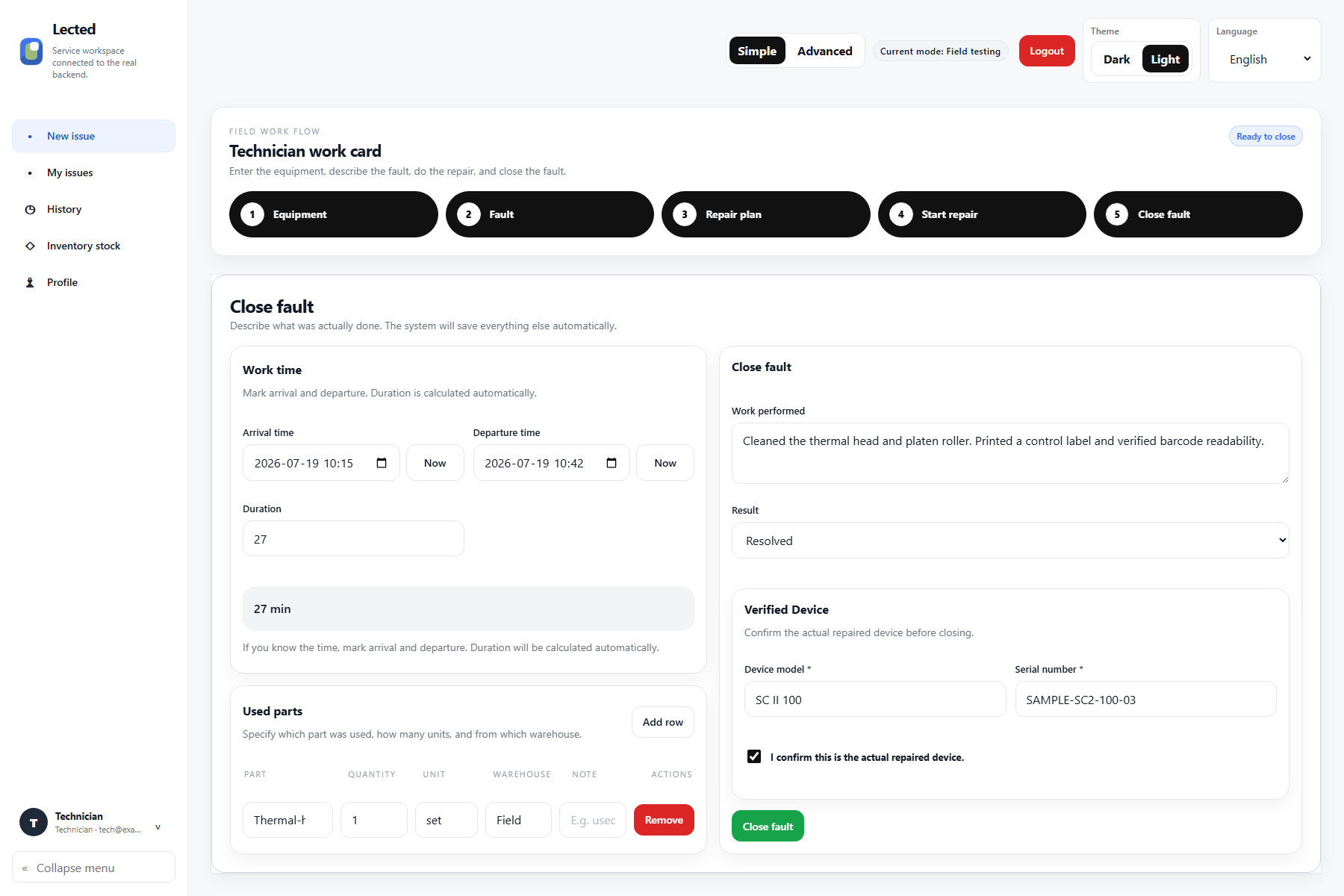
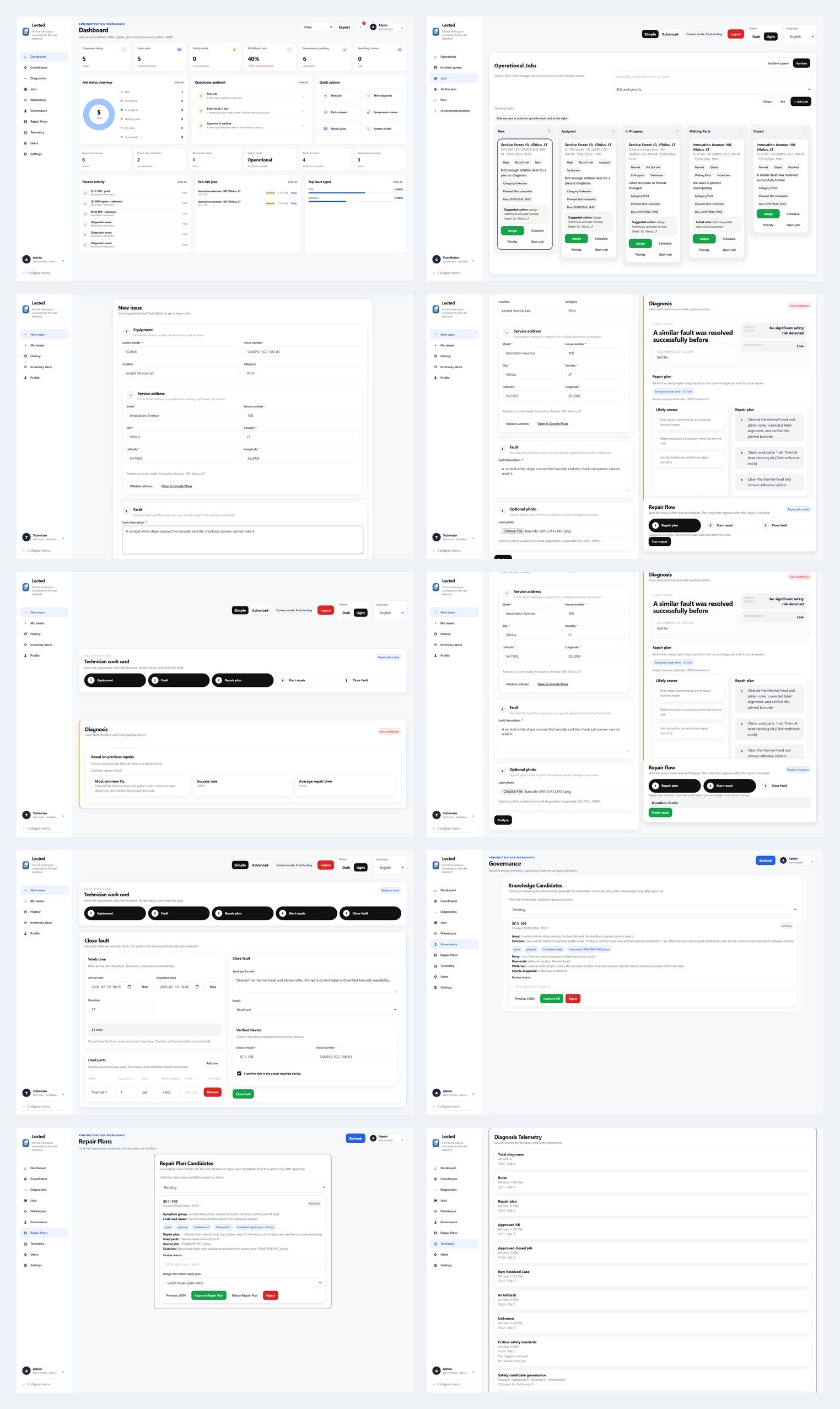
Completed repairs are documented with work time, used parts, verified equipment and structured service evidence.
-
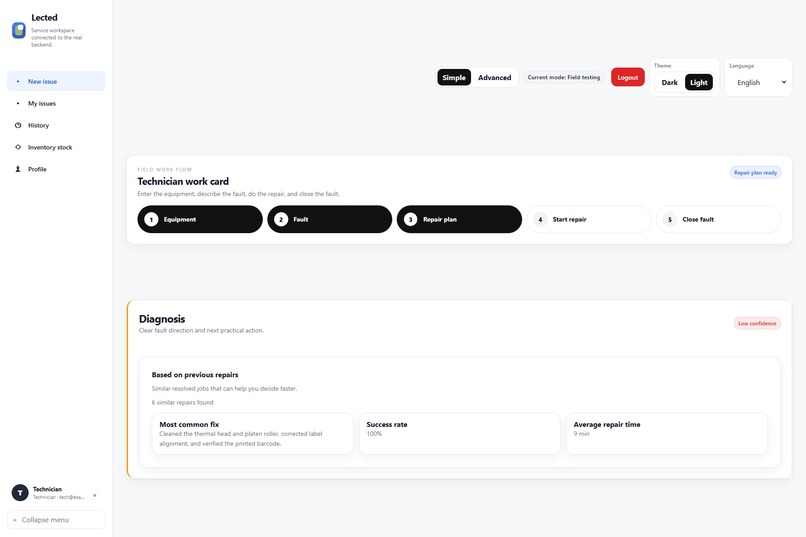
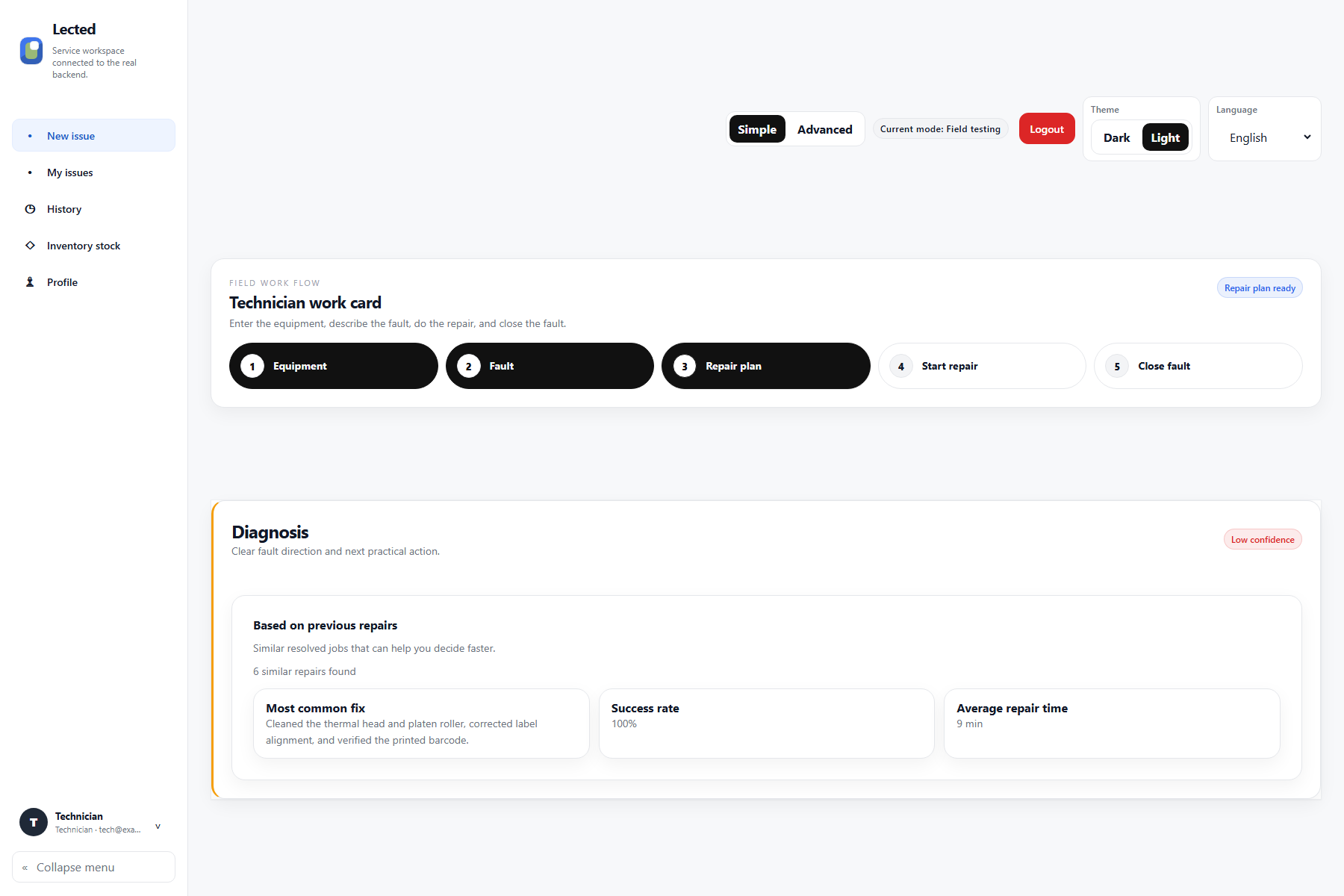
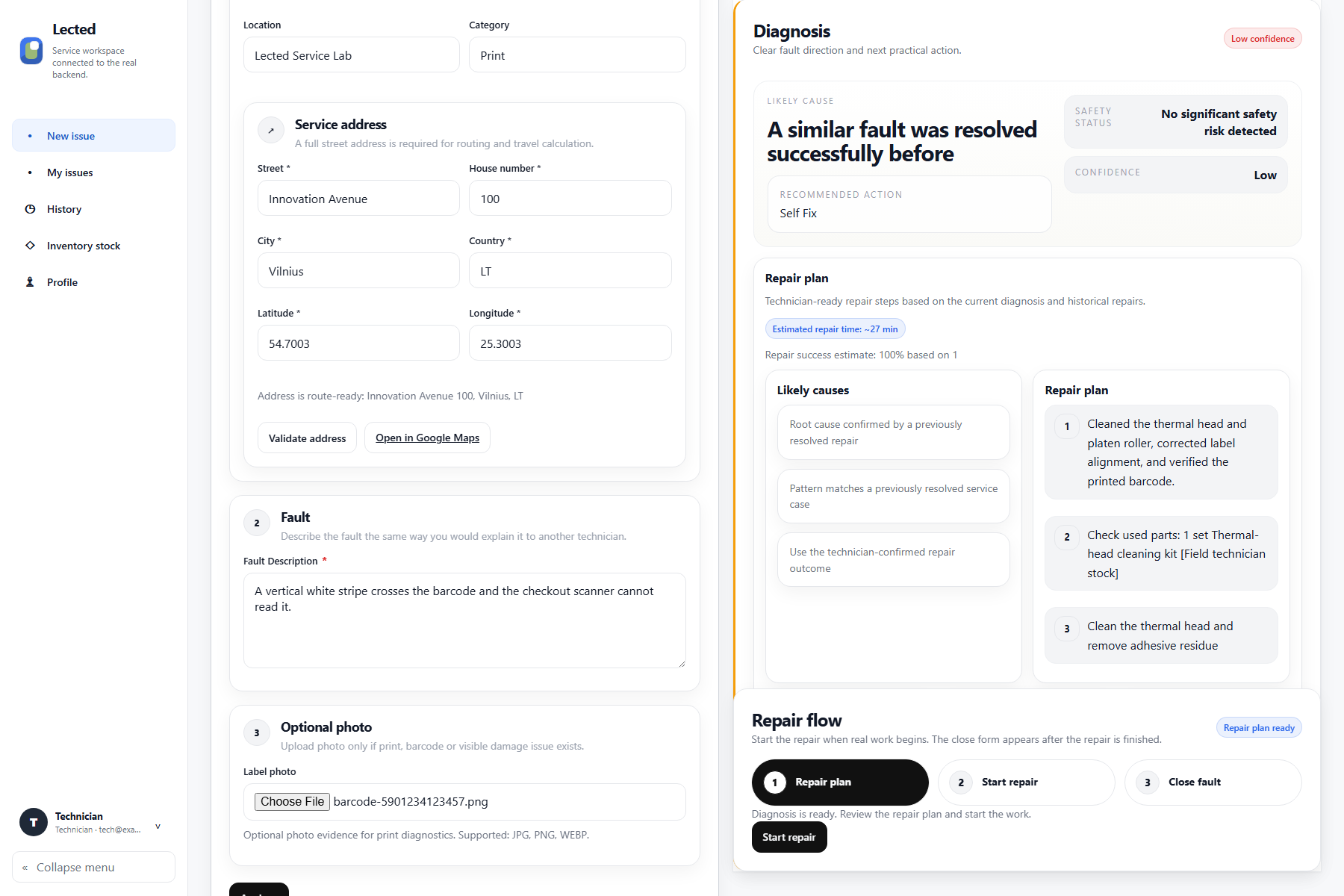
The assistant combines deterministic rules, repair history and safety checks to generate an explainable diagnosis and repair plan.
-
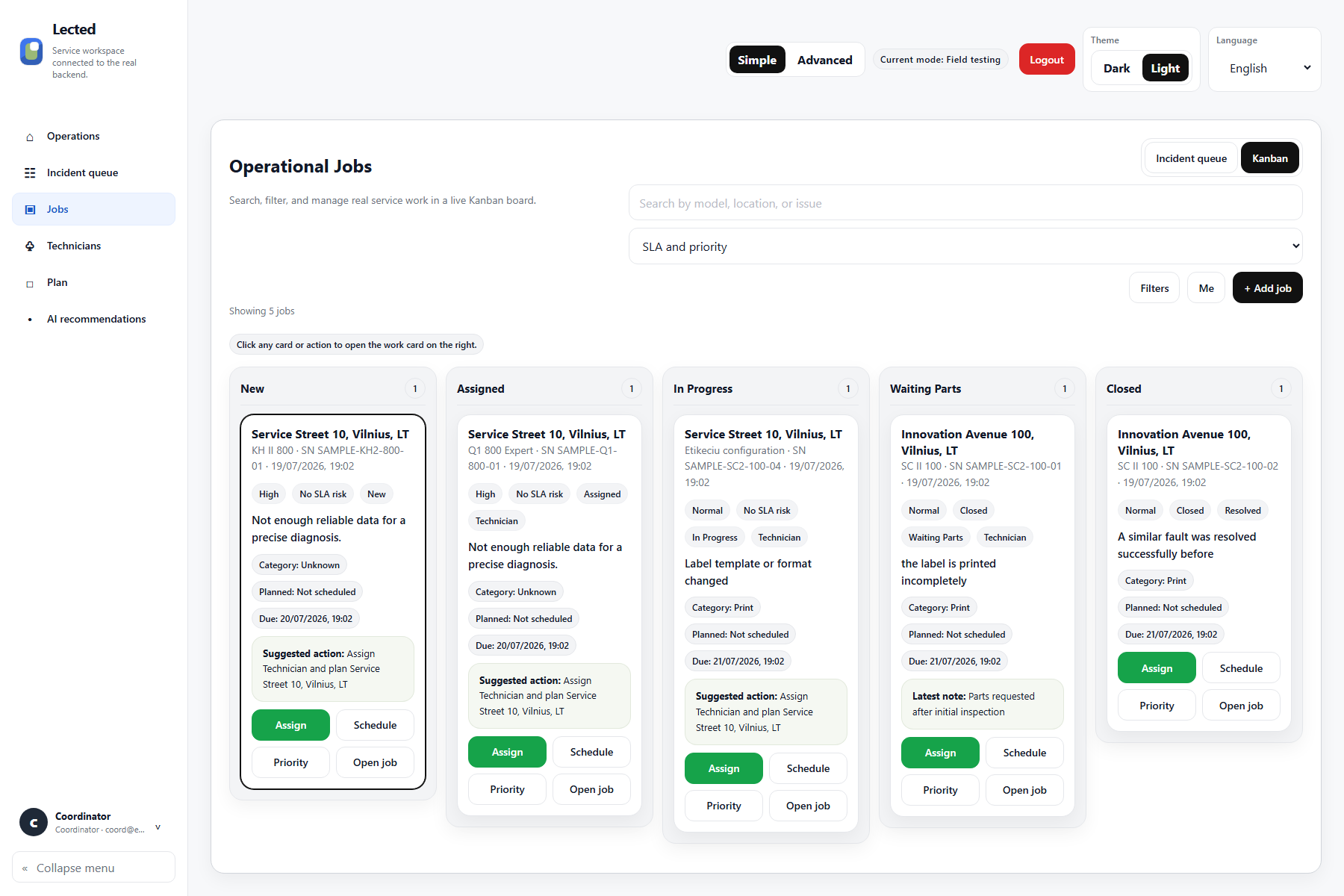
Kanban-based job planning with technician assignment, SLA tracking, routing and AI recommendations.
-
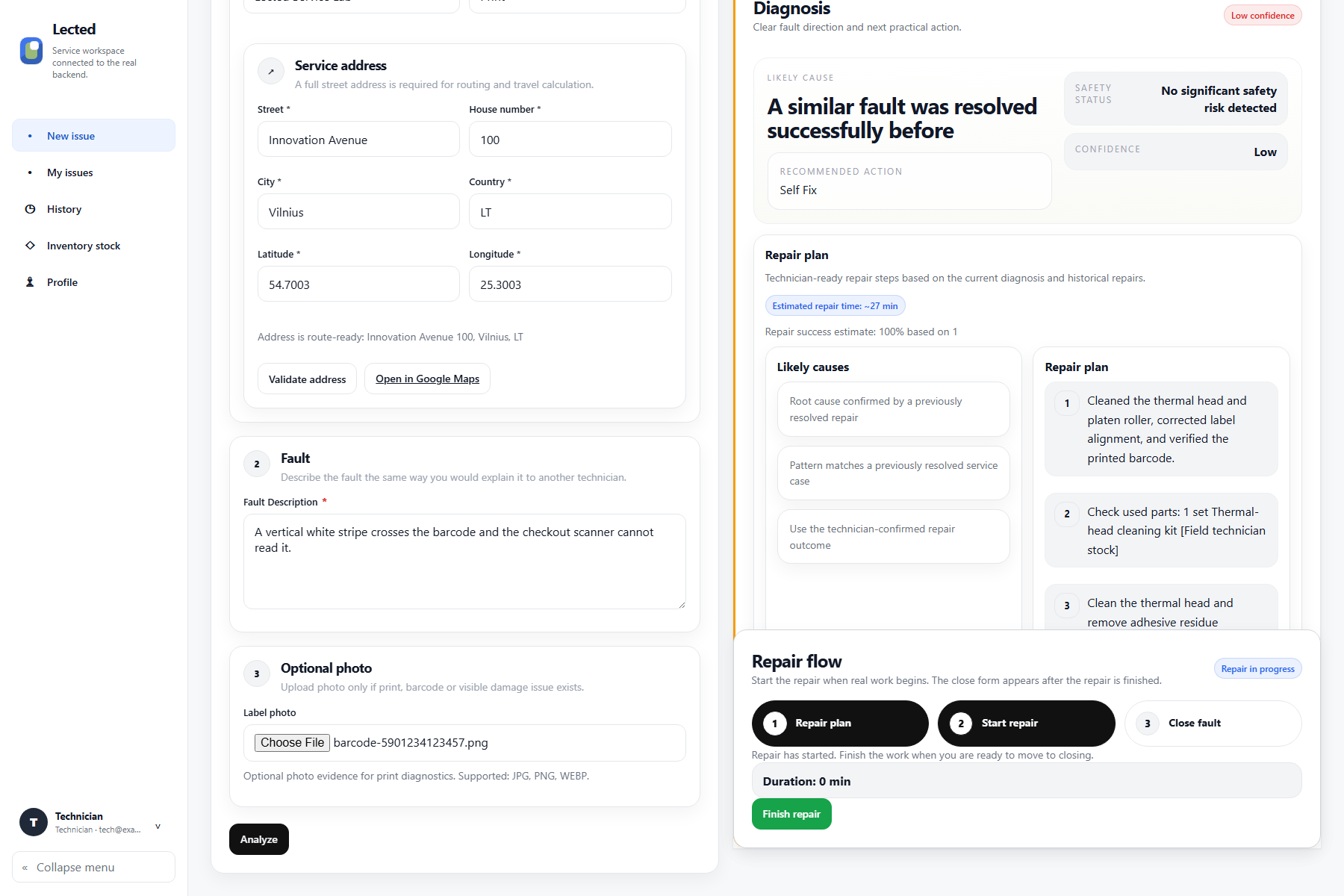
Step-by-step repair workflow guides the technician from diagnosis to repair execution using structured processes.
-
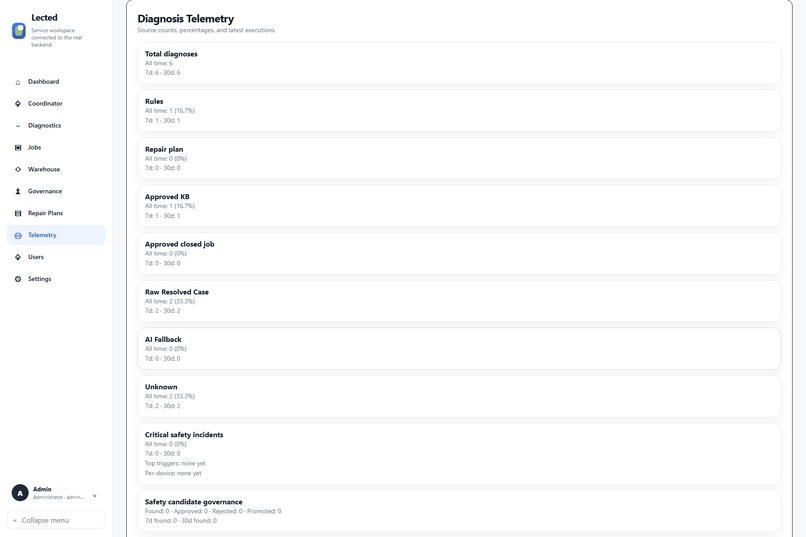
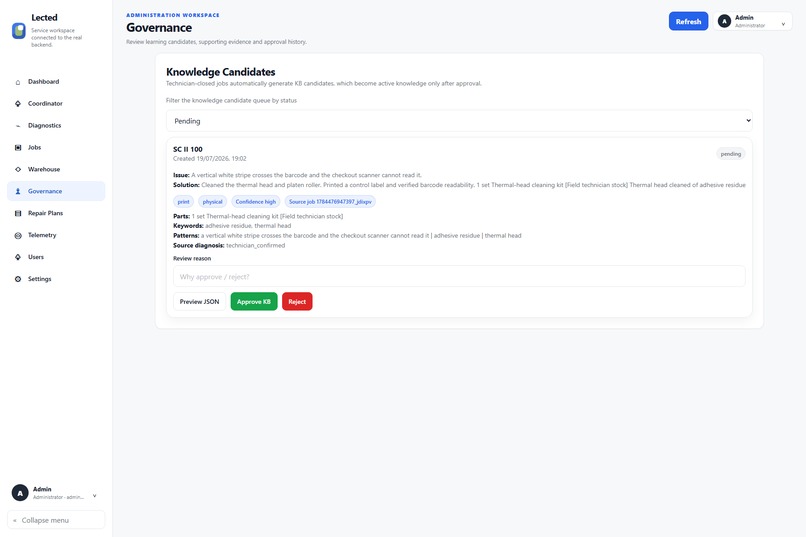
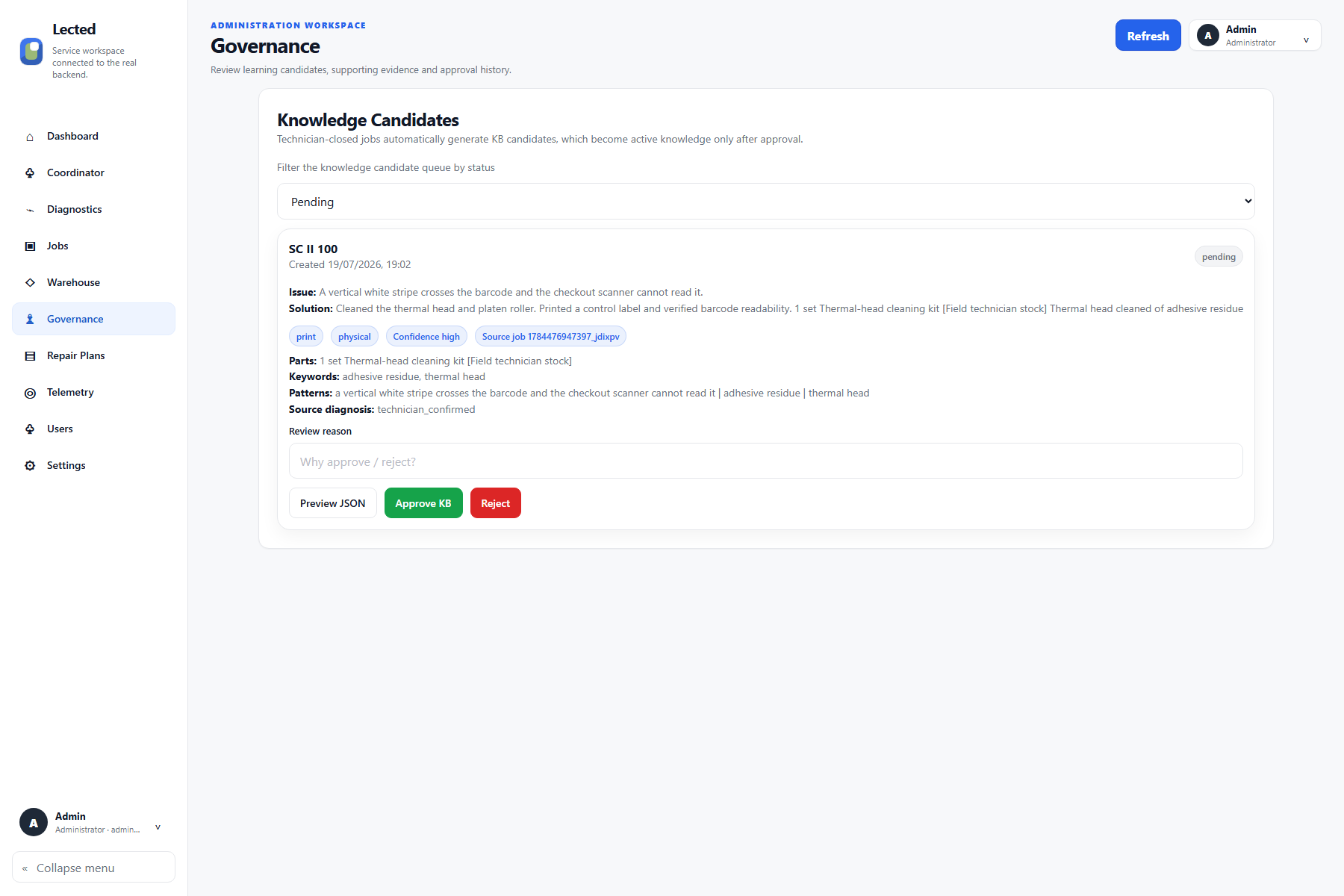
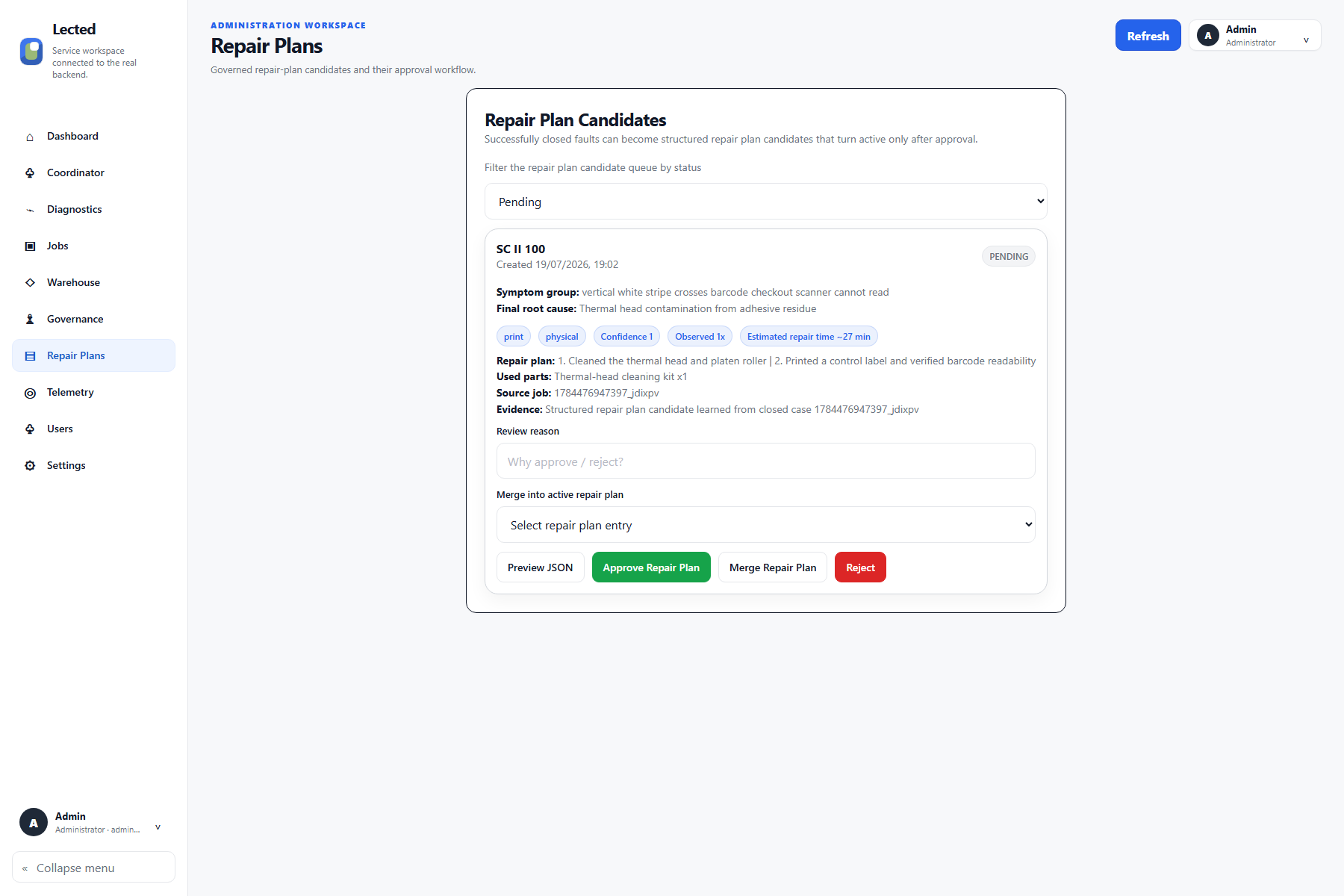
Successful repairs become repair-plan candidates that require human approval before becoming reusable procedures.
-
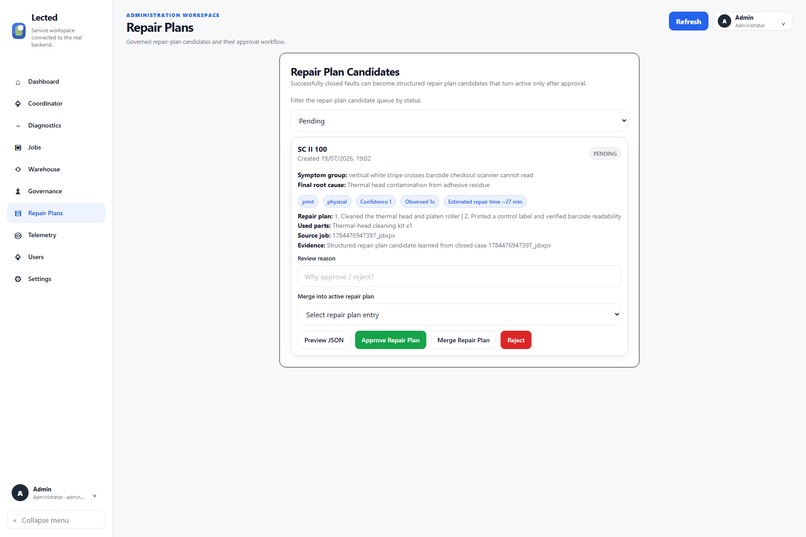
Administrators review technician-confirmed knowledge before promoting it into the trusted knowledge base.
-
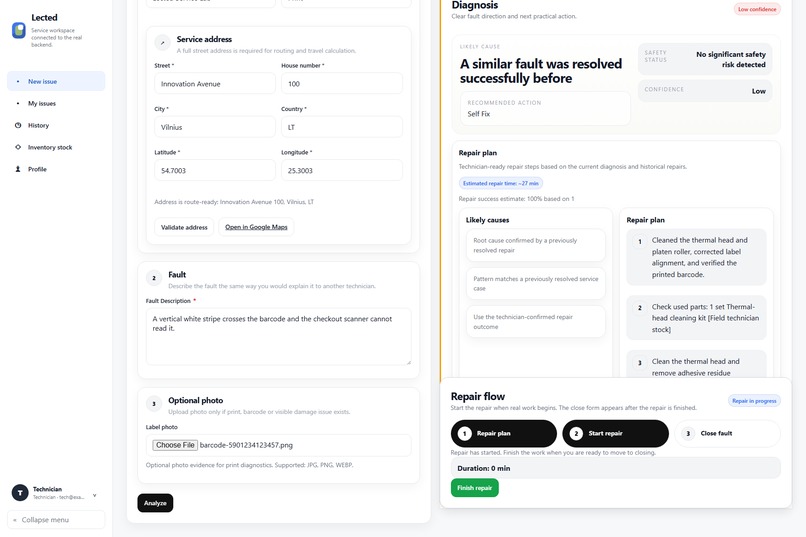
Historical repair intelligence surfaces similar resolved cases, success rates and recommended technician actions.
-
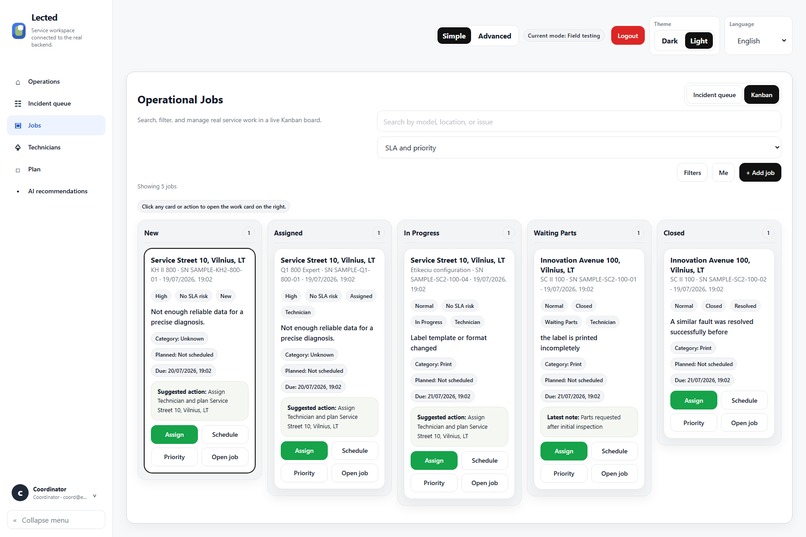
Real-time operations dashboard showing diagnostics, safety alerts, governance queue, telemetry and AI-assisted service metrics.
-
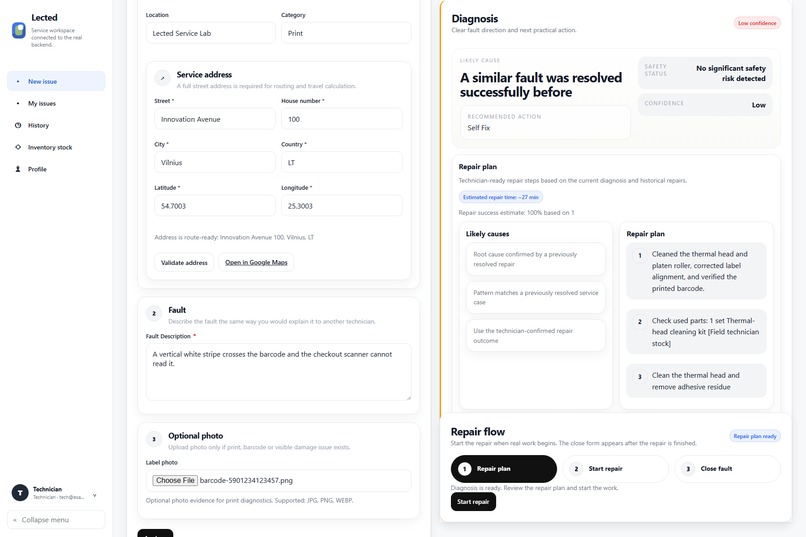
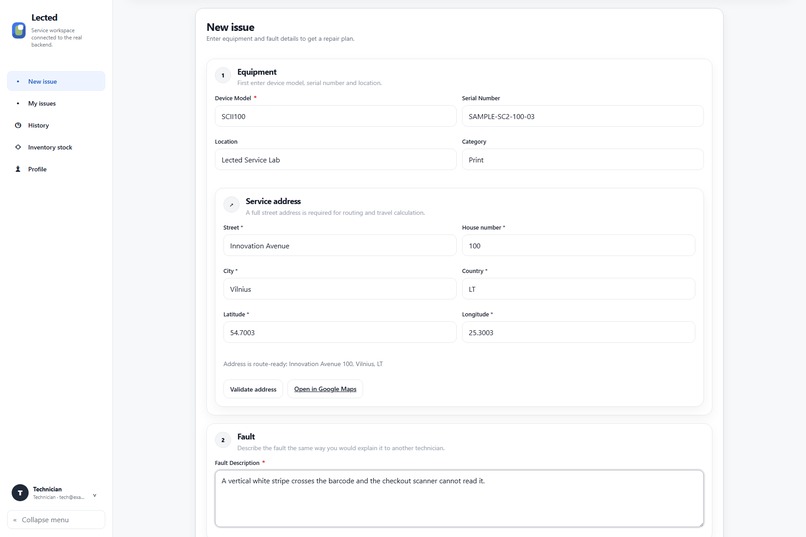
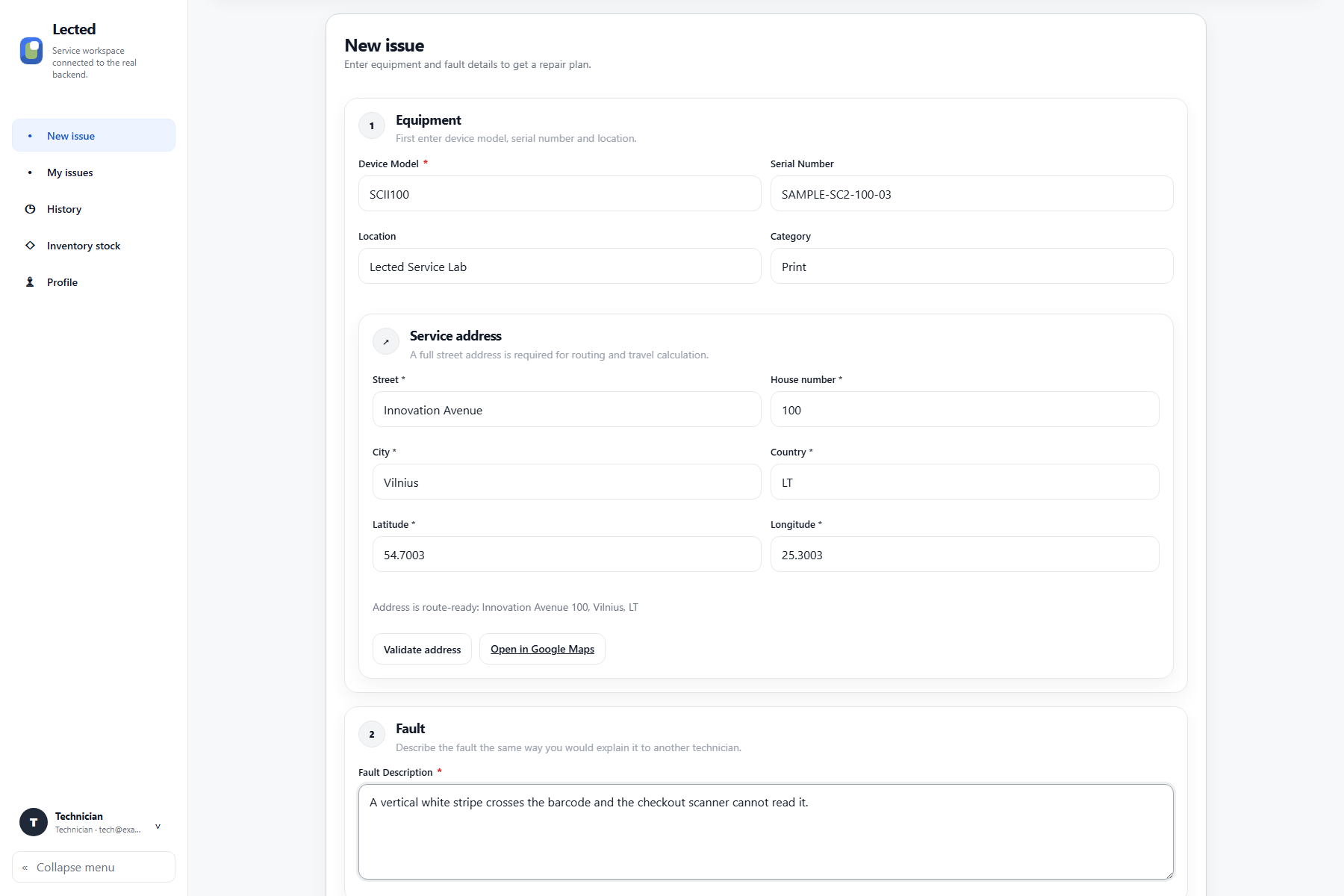
Technician registers a new service case with verified equipment details and a complete service address for routing.
-
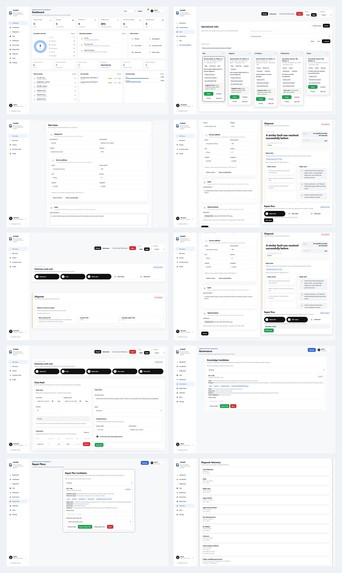
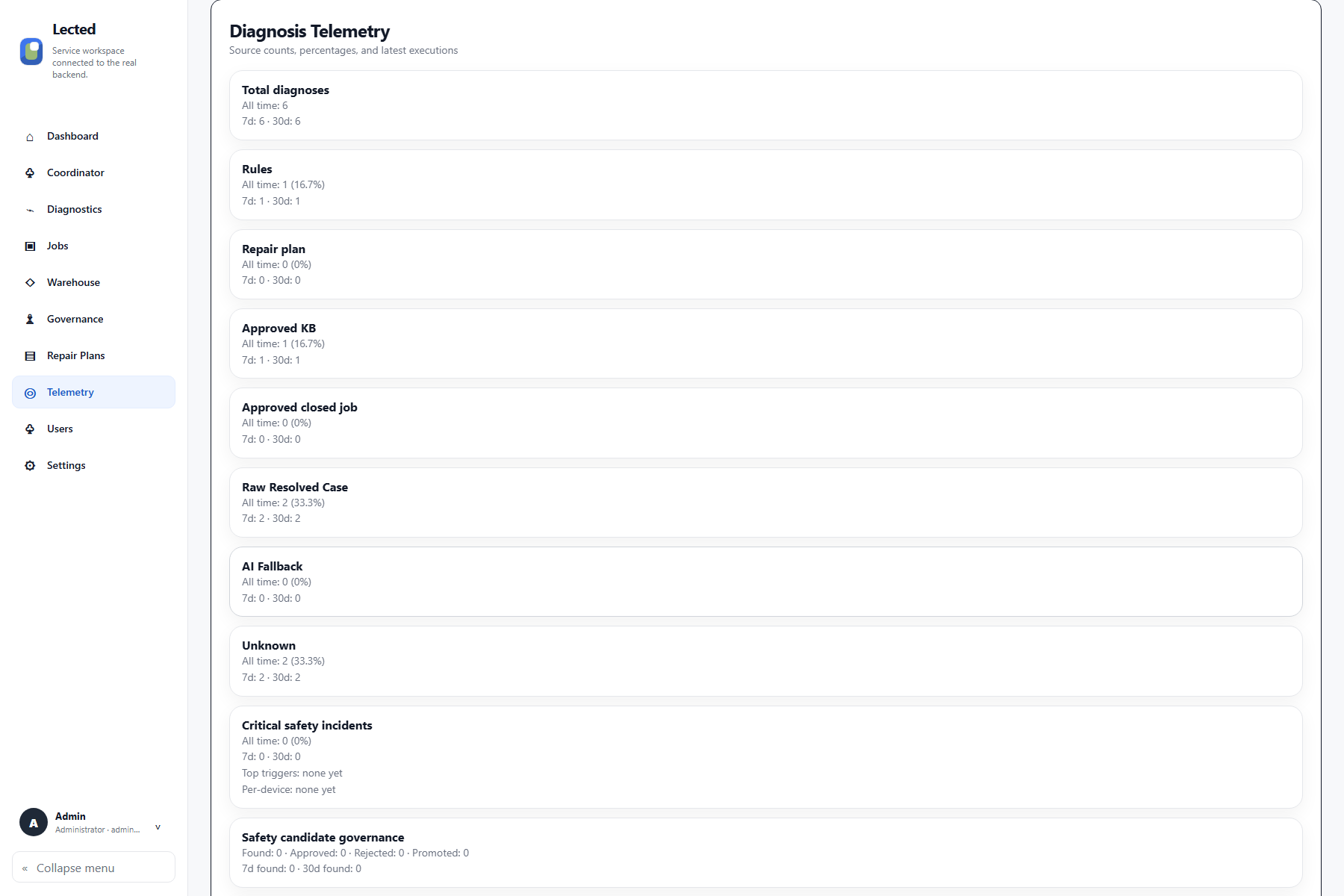
Operational telemetry measures diagnostic quality, AI usage, repair outcomes and continuous learning performance.
Inspiration
Industrial service technicians often diagnose equipment failures under time pressure. The information they need is scattered across manuals, previous repair records, photographs, emails, and individual technician experience.
I built AI Service Assistant to turn that fragmented knowledge into a practical diagnostic workflow. The goal is not to replace technicians, but to help them reach safer and more consistent decisions faster.
What it does
AI Service Assistant helps service teams manage and diagnose industrial equipment incidents from initial registration to final resolution.
A technician or coordinator can:
- register an incident with the full customer address and equipment details;
- add symptoms, notes, images, and device information;
- receive likely causes and a structured repair plan;
- search similar successfully resolved incidents;
- view safety-focused diagnostic recommendations;
- assign work to technicians and manage service status;
- close an incident with the confirmed device, serial number, work performed, parts used, and repair result;
- turn approved resolved incidents into reusable service knowledge.
The system combines deterministic diagnostic rules with AI-assisted reasoning. Critical safety rules remain authoritative, while GPT is used to interpret evidence, summarize technical information, and produce clear recommendations.
How it works
The diagnostic workflow follows several stages:
- The incident and available evidence are collected.
- Images, symptoms, device data, and technician notes are normalized.
- Deterministic rules check known faults and safety conditions.
- Vector search retrieves similar approved repair cases.
- GPT analyzes the combined context and produces an explainable recommendation.
- The technician confirms the real repair result when closing the incident.
- Approved information can be added to the knowledge base for future diagnostics.
Each knowledge item remains connected to its source incident ID. This makes it possible to update or delete the related vector chunks when information becomes outdated.
Safety and explainability
AI-generated output must never silently override deterministic safety rules.
Recommendations are presented with:
- likely causes;
- supporting evidence;
- suggested diagnostic steps;
- similar historical cases;
- uncertainty or missing information;
- clear escalation guidance when the evidence is insufficient.
This keeps the technician responsible for the final decision while making the diagnostic process easier to understand and audit.
How I built it
The application uses a full-stack service architecture with separate workflows for administrators, coordinators, technicians, and read-only users.
The core components include:
- incident and technician workflow management;
- deterministic diagnostic rule engine;
- OpenAI-powered evidence interpretation;
- retrieval-augmented generation;
- PostgreSQL with pgvector for similarity search;
- structured learning from approved resolved incidents;
- role-based authentication;
- image and barcode evidence processing;
- diagnostic execution history and auditability.
The project is designed as a working service product rather than a standalone chatbot.
Challenges I ran into
One of the main challenges was preventing historical test data or incorrect repair descriptions from influencing future recommendations.
To solve this, I designed the knowledge pipeline around traceable incident IDs. Vector chunks and learning records can be connected to the original incident, reviewed before approval, and removed together when the source is corrected or deleted.
Another challenge was balancing flexible AI reasoning with predictable service procedures. I solved this by keeping deterministic safety and diagnostic rules separate from the GPT reasoning layer.
Accomplishments that I am proud of
- Built a complete incident workflow instead of only an AI chat interface.
- Combined deterministic diagnostics, vector search, and GPT reasoning.
- Added traceability between incidents and generated knowledge chunks.
- Designed different workspaces for service coordinators and technicians.
- Created a closure process that records the actual device, serial number, parts, actions, and outcome.
- Designed the system around real service work and real equipment downtime.
What I learned
Building a useful industrial AI assistant requires more than connecting a model to documentation.
The quality of the result depends on:
- reliable source data;
- clear evidence boundaries;
- deterministic safety controls;
- structured technician feedback;
- traceable knowledge lifecycle management;
- transparent uncertainty.
I also learned that the strongest AI workflow is often one where the model supports a controlled operational process instead of replacing it.
What's next
The next development stages include:
- expanding field testing with real service cases;
- improving image-based equipment diagnostics;
- adding map-assisted route and address validation;
- measuring diagnostic accuracy and time saved;
- improving multilingual support;
- adding predictive maintenance signals;
- building integrations with service, inventory, and customer systems.
Built With
- api
- codex
- css
- docker
- github
- gpt
- html
- javascript
- jwt
- next.js
- node.js
- openai
- pgvector
- postgresql
- rag
- react
- rest
- search
- sql
- typescript
- vector


Log in or sign up for Devpost to join the conversation.