-
-
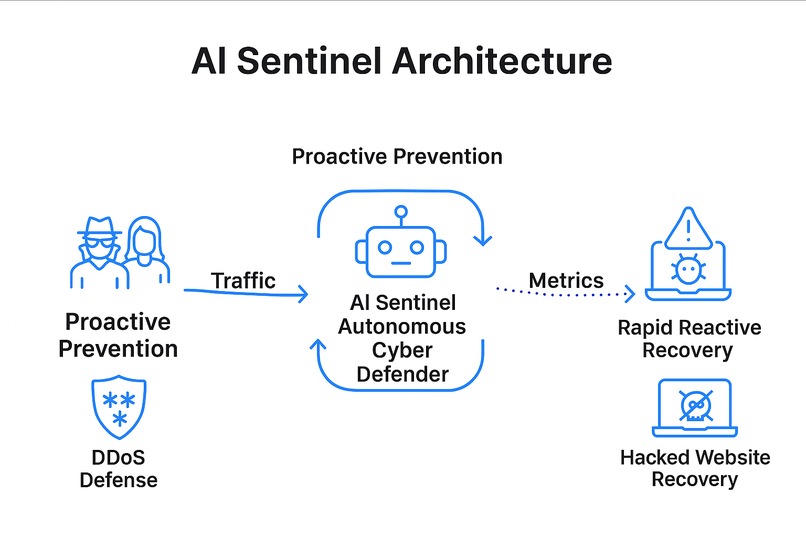
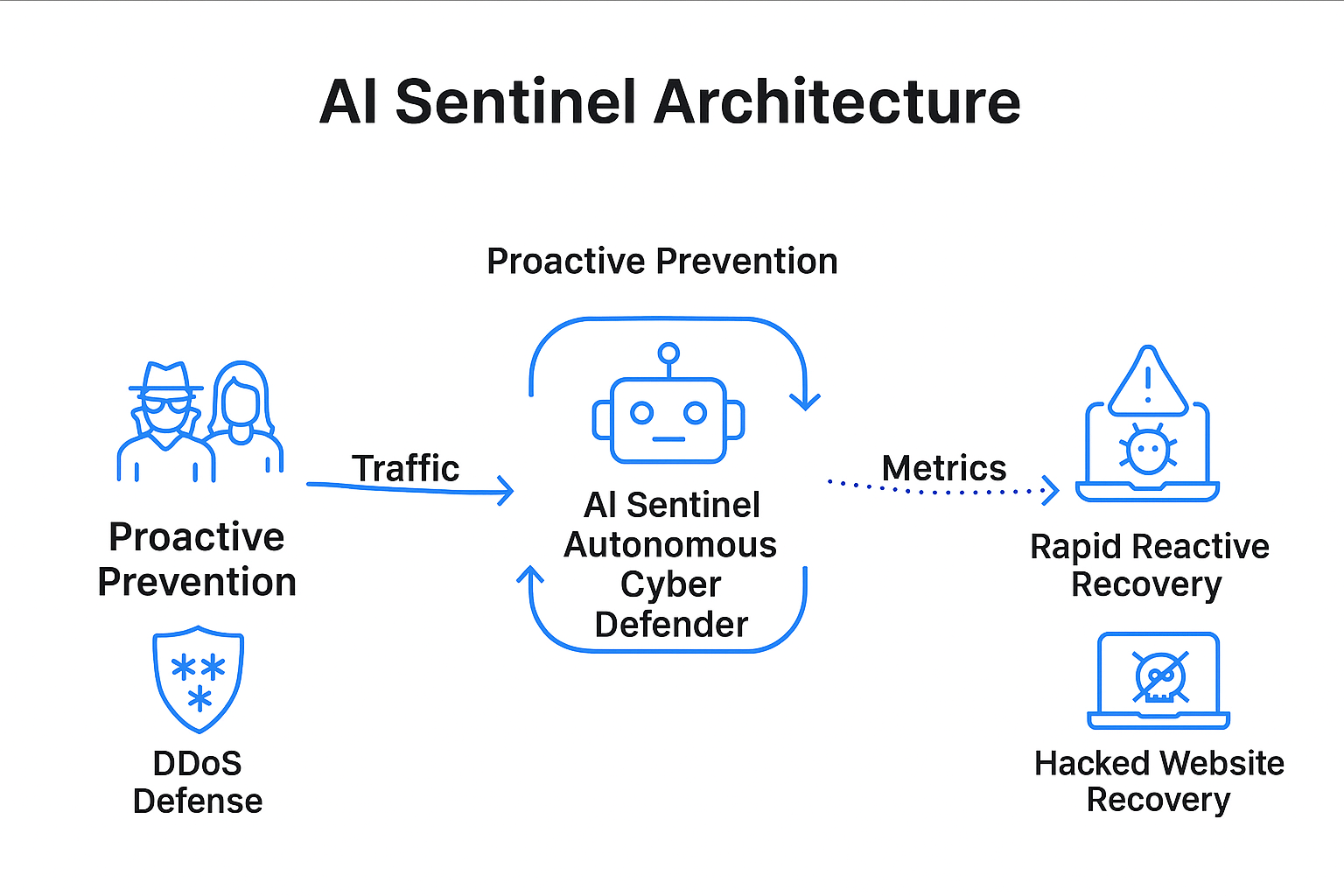
Architecture Diagram
-
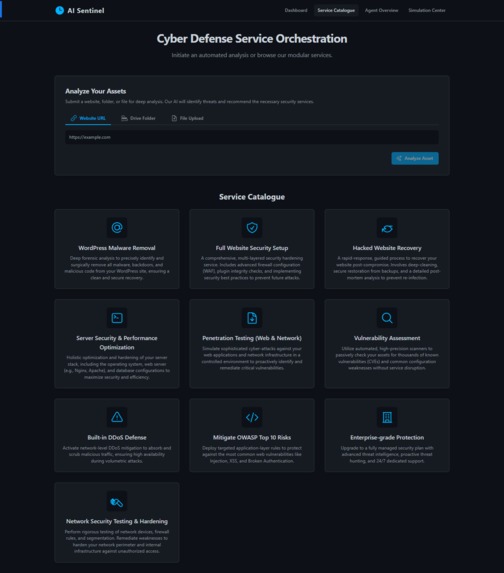
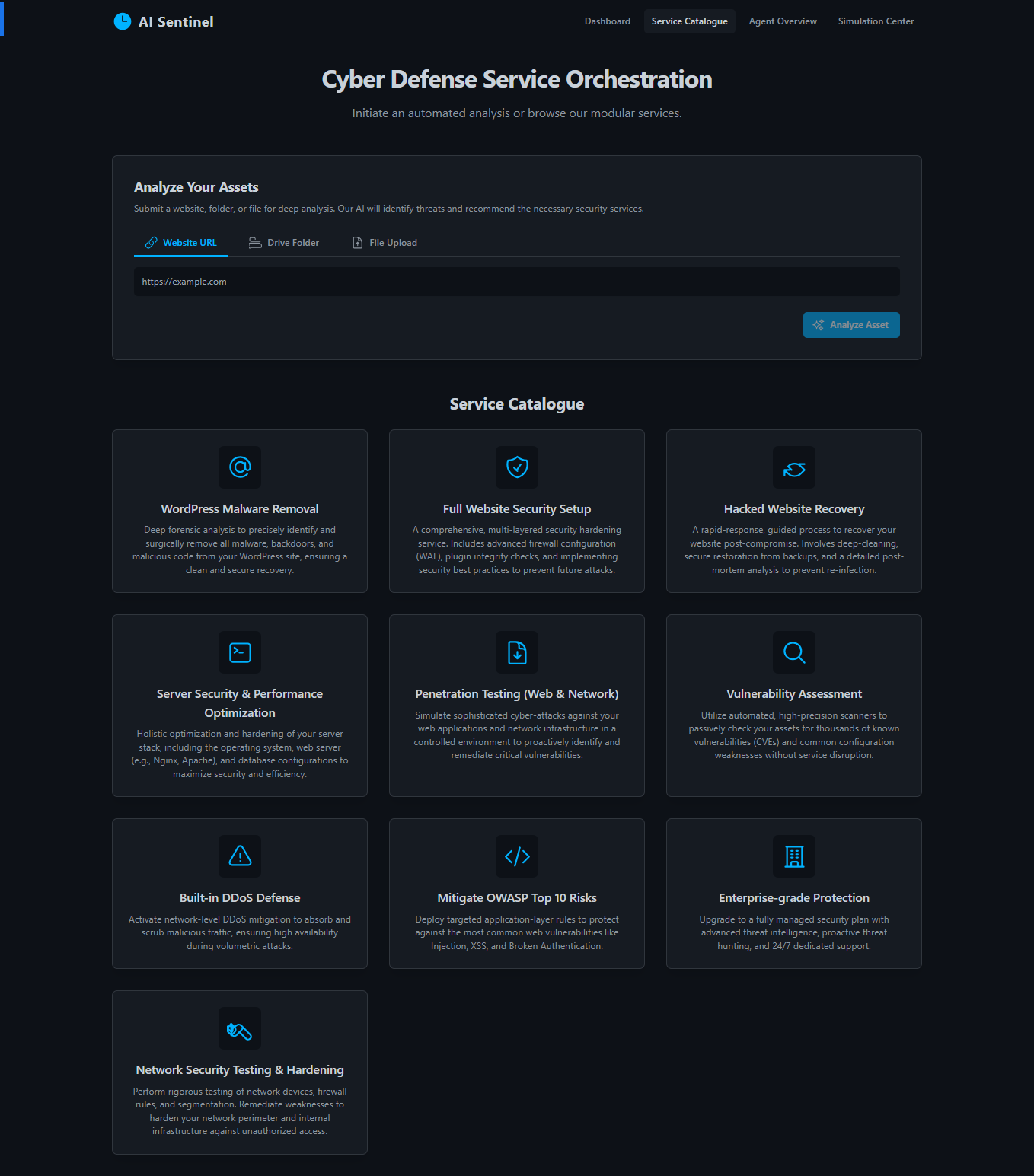
Cyber Defense Service Orchestra_APP
-
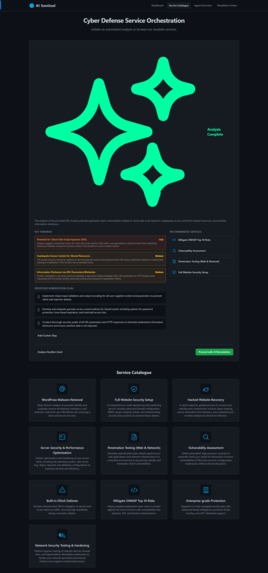
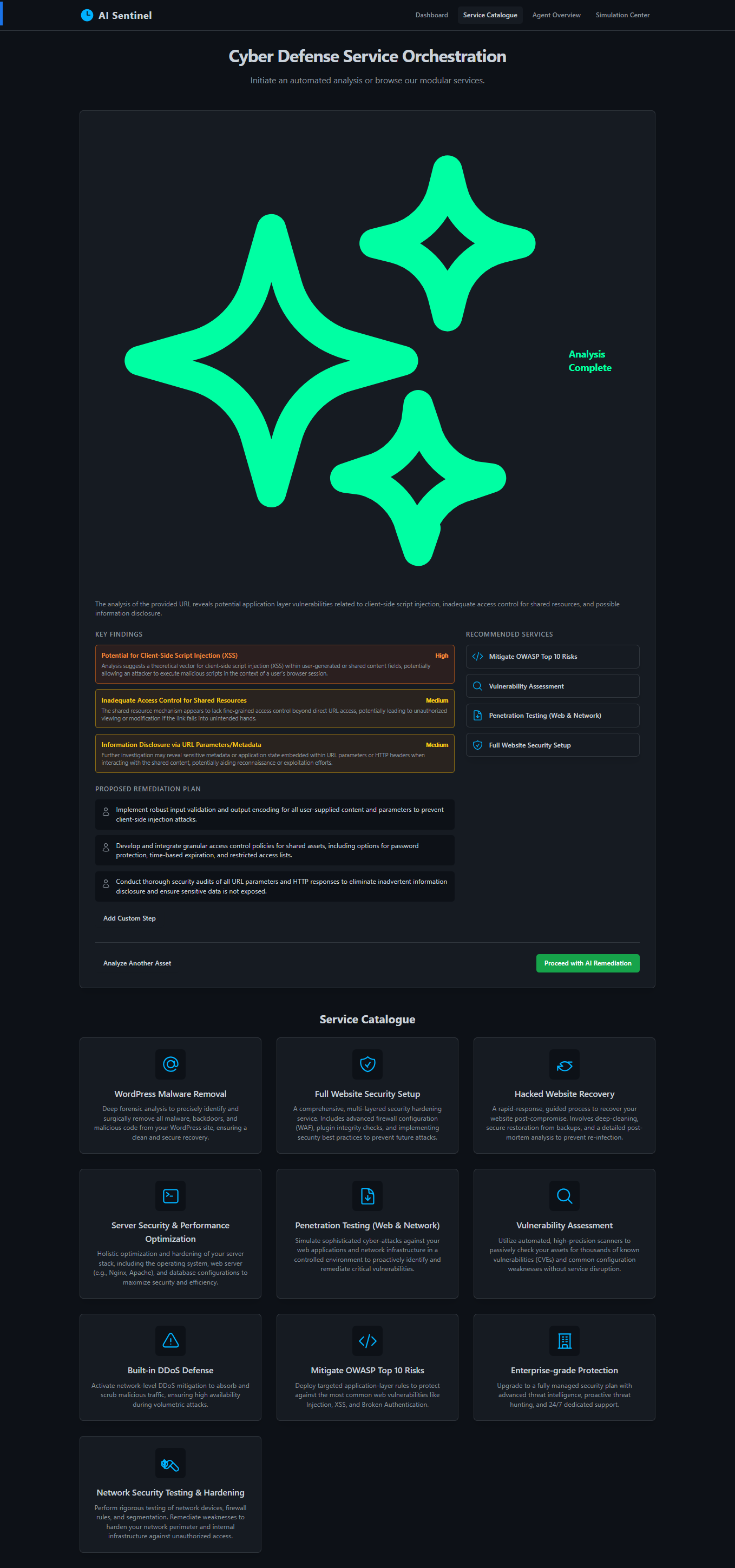
Cyber Defense Service Orchestra_analytics_APP
-
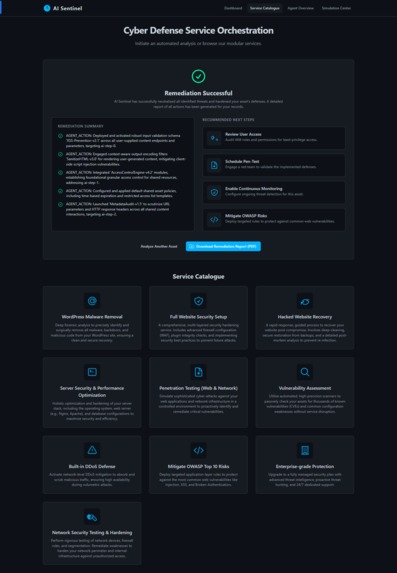
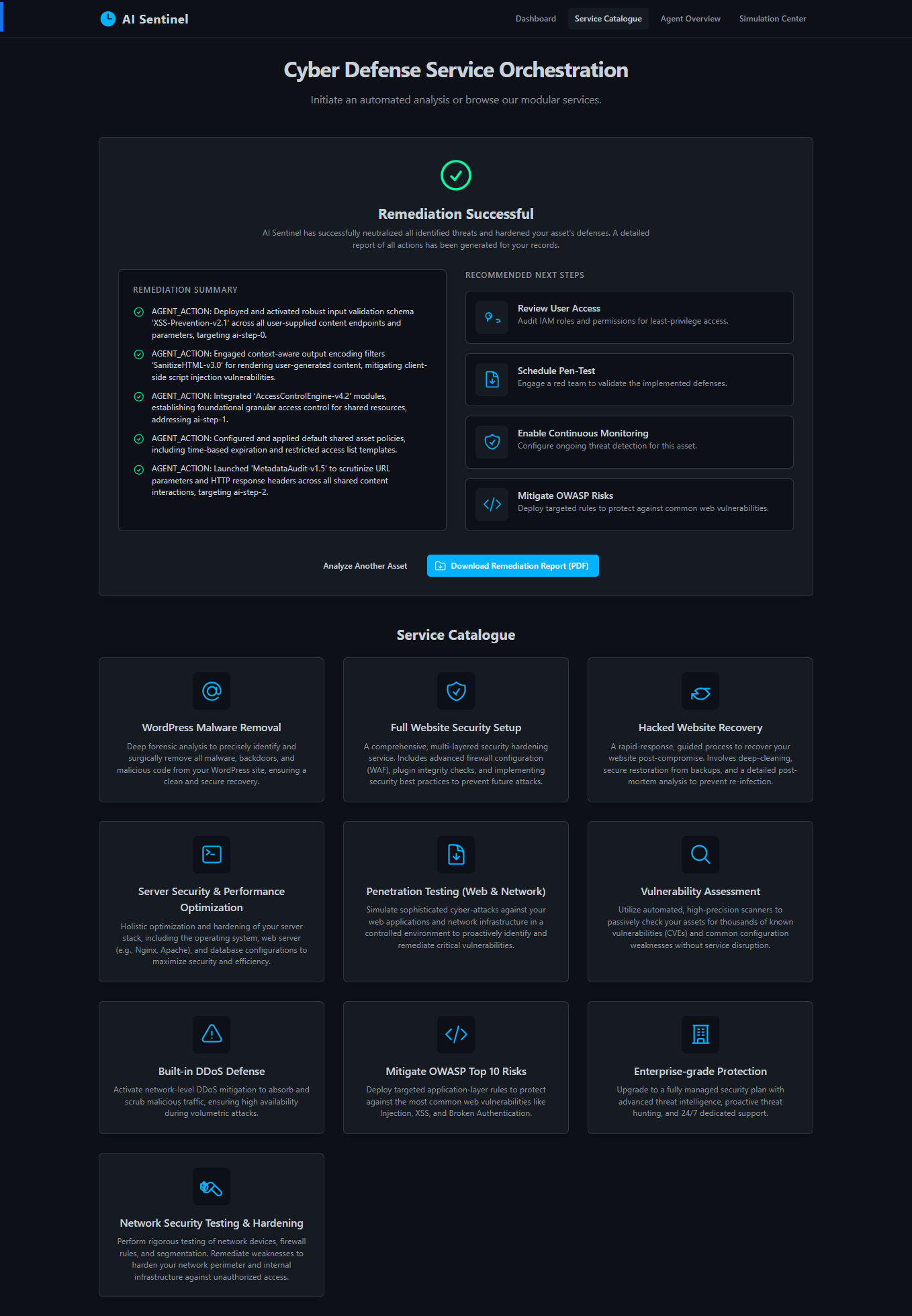
Cyber Defense Service Orchestra_fixing_APP
Inspiration
The ever-increasing sophistication, volume, and velocity of cyber threats have overwhelmed traditional human-centric cybersecurity approaches. Organizations struggle to keep pace with emerging attack vectors, leading to delayed responses and significant breaches. The inspiration behind AI Sentinel was to create a truly autonomous cyber defense system capable of outmaneuvering adversaries by leveraging advanced artificial intelligence to provide proactive and adaptive protection.
What it does
AI Sentinel serves as an Autonomous Cyber Defender, employing advanced AI to identify, analyze, and neutralize cyber threats in real-time. Key functionalities include proactive threat detection, where it identifies emerging threats before they can inflict damage; automated response and neutralization, utilizing AI-driven incident response for rapid threat containment; continuous learning and adaptation, allowing its AI models to evolve and counter new attack vectors; and real-time monitoring and reporting, providing a comprehensive dashboard for insights into the current security posture.
How we built it
AI Sentinel was built by integrating state-of-the-art artificial intelligence and machine learning algorithms, specifically focusing on threat pattern recognition, anomaly detection, and behavioral analytics. The system incorporates a robust data pipeline to collect, process, and analyze vast amounts of network traffic and security event logs. Automated incident response modules were developed to execute rapid containment and neutralization strategies. A continuous learning framework was implemented, allowing the AI models to be regularly updated and retrained with new threat intelligence, ensuring adaptive defense against evolving cyber landscapes. The infrastructure is designed for scalability and real-time processing, likely leveraging cloud-native services.
Challenges we ran into
Developing an autonomous cyber defender presented several significant challenges. One major hurdle was acquiring and labeling vast, diverse, and representative datasets for training the AI models, especially concerning novel and zero-day threats. Ensuring a low false-positive rate while maintaining high detection accuracy was another complex task. We also faced challenges in designing truly autonomous response mechanisms that could act decisively without human oversight, mitigating risks of unintended consequences. Integrating with diverse existing IT infrastructures and ensuring seamless, non-disruptive operation within various enterprise environments also posed architectural and engineering complexities.
Accomplishments that we're proud of
We are particularly proud of successfully developing and demonstrating an AI-driven system capable of autonomous threat identification and neutralization, a significant leap beyond traditional reactive security measures. Achieving proactive defense capabilities that can detect and mitigate threats before they escalate is a major accomplishment. We are also proud of the continuous learning framework, which allows AI Sentinel to adapt and improve its defenses against an ever-changing threat landscape, showcasing a truly resilient and intelligent security solution.
What we learned
Throughout the development of AI Sentinel, we learned the critical importance of a robust, diverse, and constantly updated threat intelligence feed for training and validating AI models in cybersecurity. We gained deep insights into the complexities of designing explainable AI for security decisions, where transparency is paramount. Furthermore, we understood the delicate balance required to achieve true autonomy in security operations, where trust in AI-driven actions must be meticulously built and validated through rigorous testing and performance monitoring.
What's next for AI Sentinel
Next steps for AI Sentinel include expanding its integration capabilities with a wider range of security tools, such as SIEM and SOAR platforms, to offer more comprehensive security orchestration. We plan to develop more sophisticated predictive analytics to anticipate future attack trends and enhance its proactive defense mechanisms further. Additionally, we aim to explore federated learning approaches to leverage distributed threat intelligence more effectively and potentially develop a 'self-healing' network capability where the system can autonomously repair vulnerabilities post-incident.
Built With
- apache-kafka/pubsub)
- api-gateway
- docker
- google-cloud-platform-(gcp)
- kubernetes
- modern-web-framework-(e.g.
- nosql-database
- python
- pytorch
- real-time-data-processing-(e.g.
- scikit-learn
- tensorflow


Log in or sign up for Devpost to join the conversation.