


AI Sentinel
💡 Inspiration: Safeguarding Medical AI Models
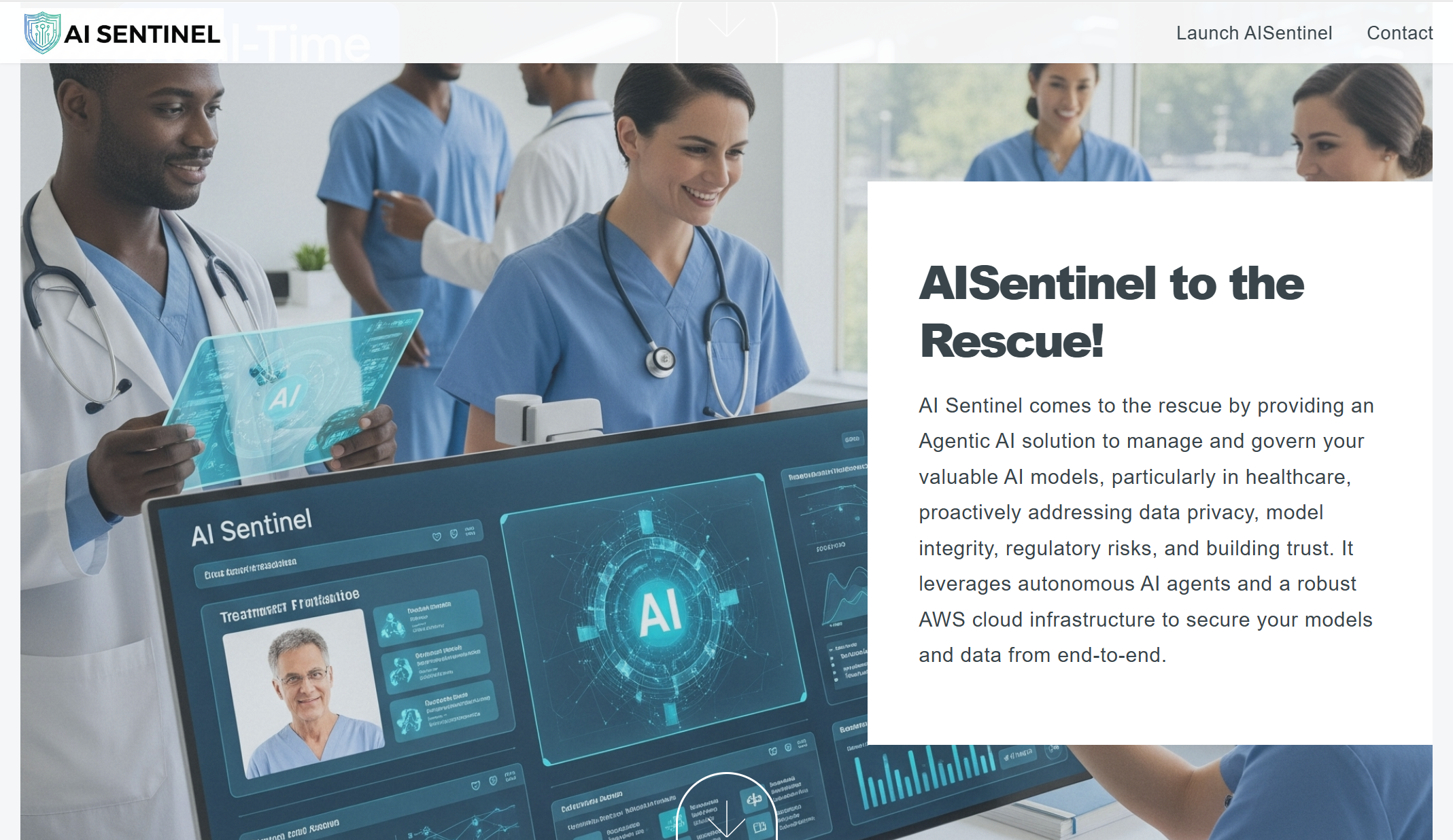
In the critical domain of healthcare, Artificial Intelligence (AI) and Machine Learning (ML) models are revolutionizing diagnostics, treatment planning, and patient care. However, the immense investment in developing these models, often costing millions of dollars, coupled with the highly sensitive nature of patient data, introduces profound security and governance challenges. The inspiration for AI Sentinel directly stems from the urgent need to protect these invaluable assets and ensure their ethical and compliant operation within the medical ecosystem.
🚀 Technical Inspiration: Addressing Unique Challenges in Medical AI
The healthcare sector, while benefiting immensely from AI, presents a unique set of security, privacy, and regulatory hurdles:
- Sensitive Patient Data Protection: Medical AI models are built with and process highly sensitive patient data, including patient history, MRI and X-ray imaging, DNA reports, genome sequences, and prescriptions. Ensuring confidentiality and preventing unauthorized access or disclosure of this data is paramount. Traditional security measures often fall short in dynamically protecting data throughout the entire AI lifecycle.
- Model Integrity and Reliability: The accuracy and reliability of medical AI models are crucial for patient outcomes. Adversarial attacks, data poisoning, or subtle model degradation can lead to incorrect diagnoses or treatment recommendations, with severe consequences. Protecting model integrity from malicious manipulation and ensuring consistent, trustworthy performance is a complex undertaking.
- Regulatory Compliance and Trust: The healthcare industry is heavily regulated (e.g., HIPAA, GDPR, FDA guidelines for AI/ML). Ensuring continuous adherence to these stringent measures, managing consent mechanisms for data usage, and providing transparency into AI decision-making are vital for building and maintaining trust among patients, practitioners, and regulatory bodies.
- The "Black Box" Problem and Ethical AI: Many advanced AI models operate as "black boxes," making their internal workings and decision-making processes opaque. In healthcare, understanding the rationale behind an AI's recommendation is crucial for accountability and ethical considerations. Proactively addressing biases and ensuring fairness in patient outcomes is also a significant ethical concern.
⚠️ Limitations of Traditional Approaches
Traditional programmatic security and governance methods are fundamentally ill-suited to securing and managing the unique characteristics of modern medical AI:
- Rigidity vs. Dynamic Threats: Traditional code is static and requires manual updates, which is a severe limitation against fast-evolving AI threats like sophisticated adversarial attacks or new data leakage vectors.
- Inability to Introspect Opaque Models: Traditional programming cannot "look inside" complex medical AI models to understand their learned representations, detect subtle biases, or identify changes that indicate compromise. It lacks the inherent capability to provide the transparency and explainability needed for high-assurance healthcare applications.
- Manual Policy Enforcement Overhead: Implementing and enforcing intricate security policies, access controls, and data privacy rules across a multitude of AI models and data pipelines with traditional code involves immense manual effort, leading to brittle systems prone to errors and difficult to scale or adapt.
- Reactive Security Paradigm: Most traditional cybersecurity tools are reactive, designed to detect breaches after they occur. They are not built to proactively defend against novel, AI-driven manipulation or to self-heal in the context of dynamic medical AI workflows.
AI Sentinel's technical inspiration directly addresses these shortcomings. By leveraging the power of Agentic AI API, it shifts from a static, reactive, and human-intensive security paradigm to one that is dynamic, autonomous, proactive, and intrinsically tied to the AI's intelligence, providing the robust and adaptive governance required for secure AI deployment in critical medical applications.
❓ What it does
🛡️ AI Sentinel: An Agentic AI Solution for Model Governance and Security
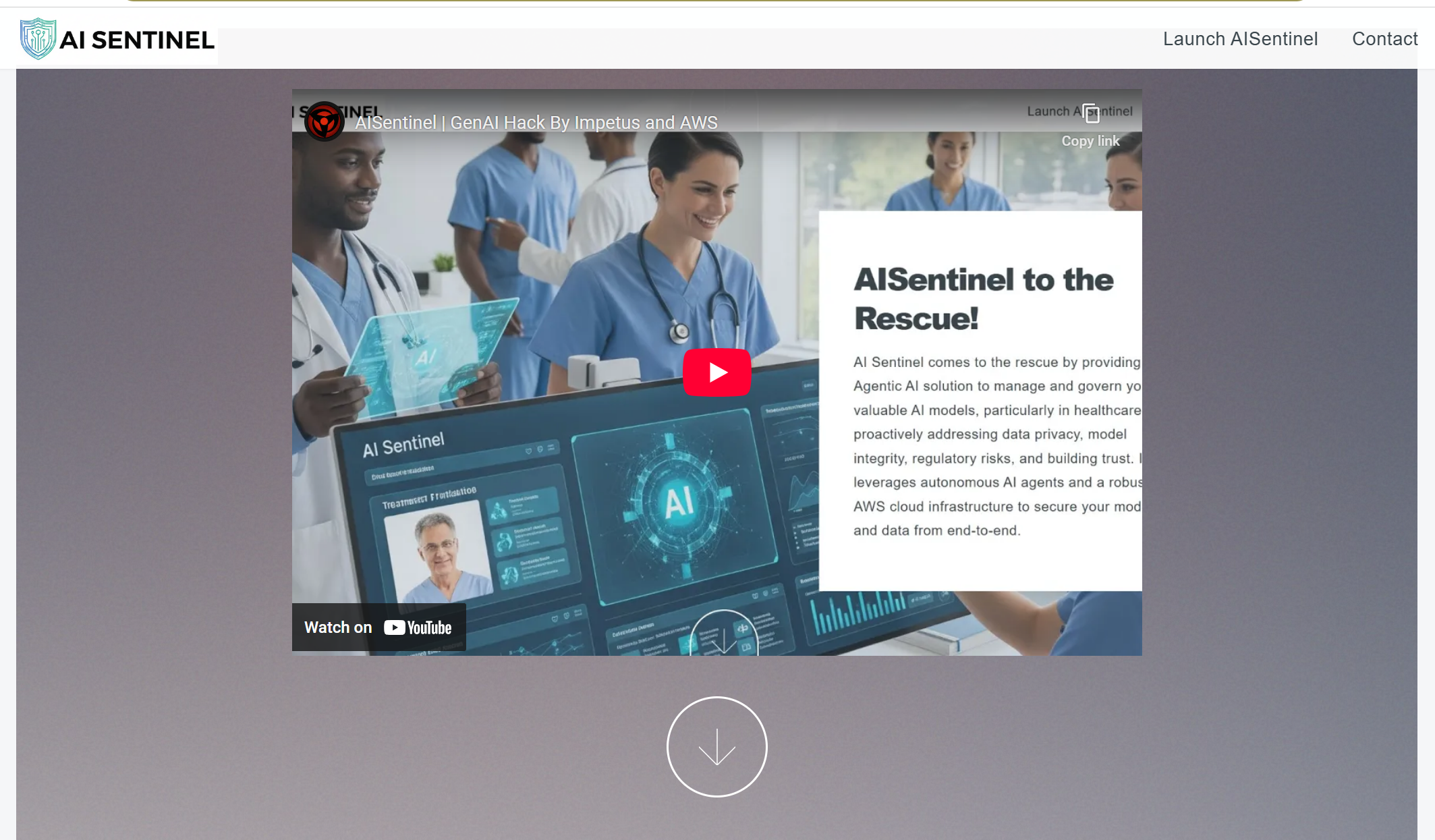
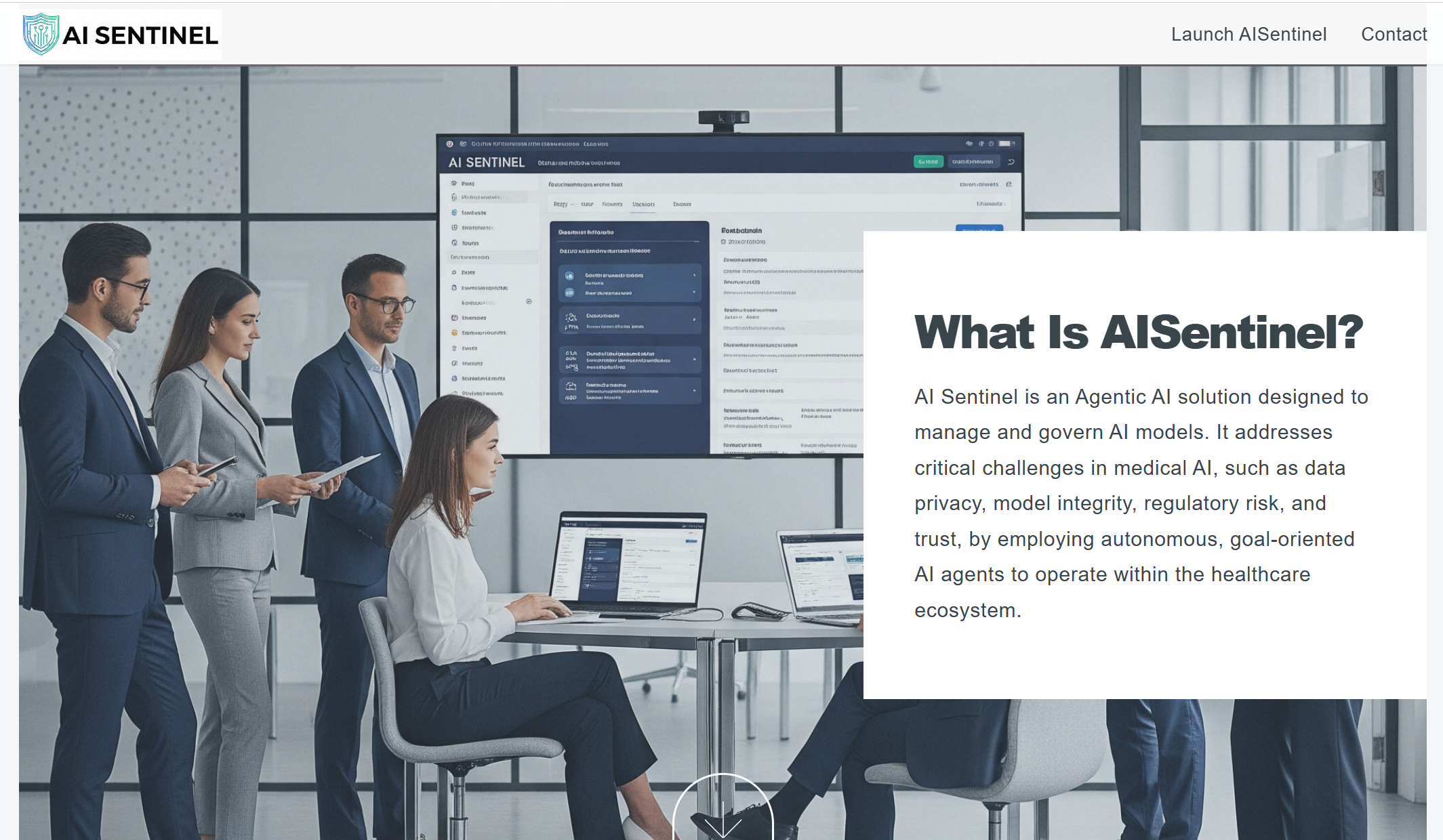
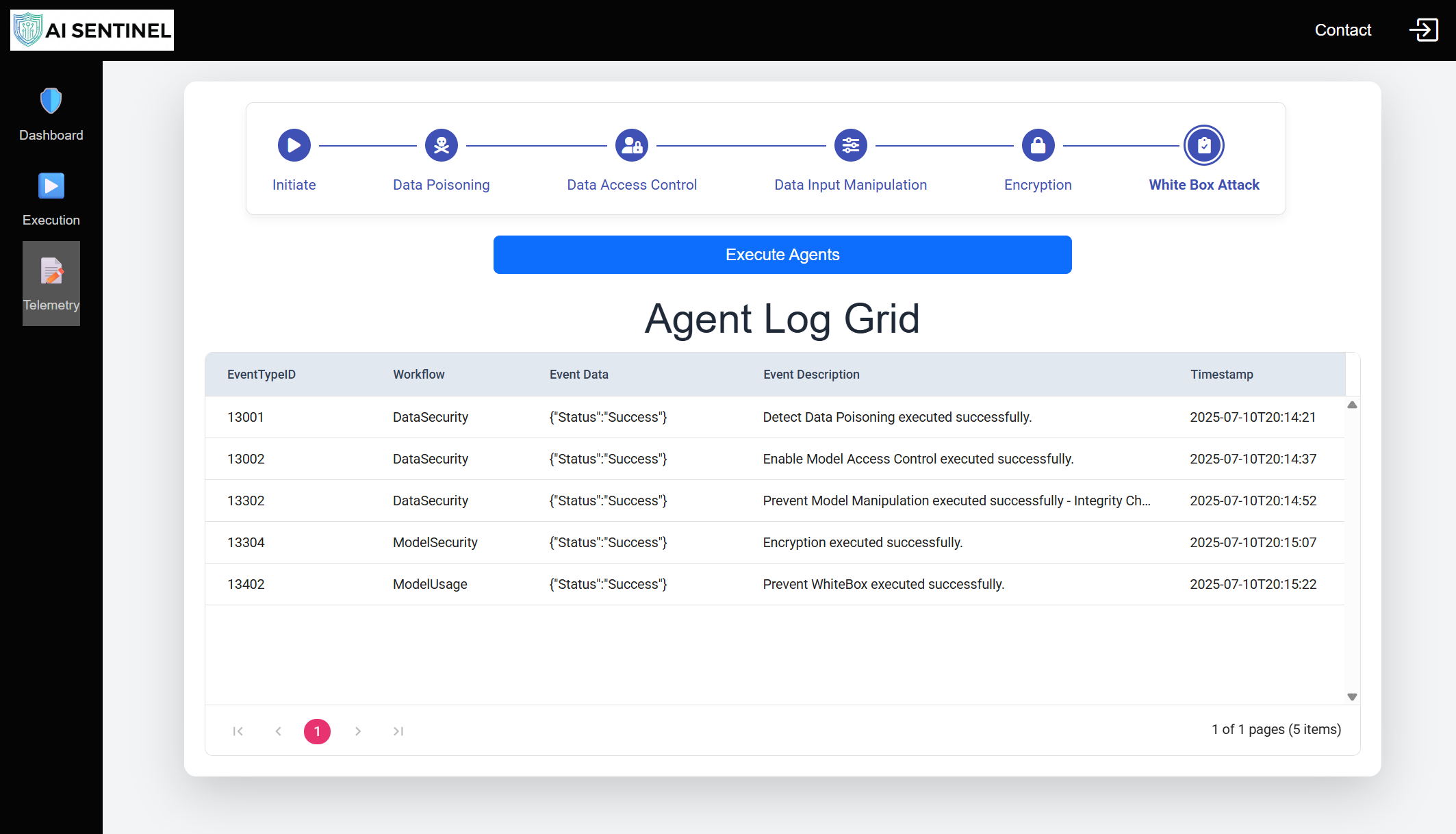
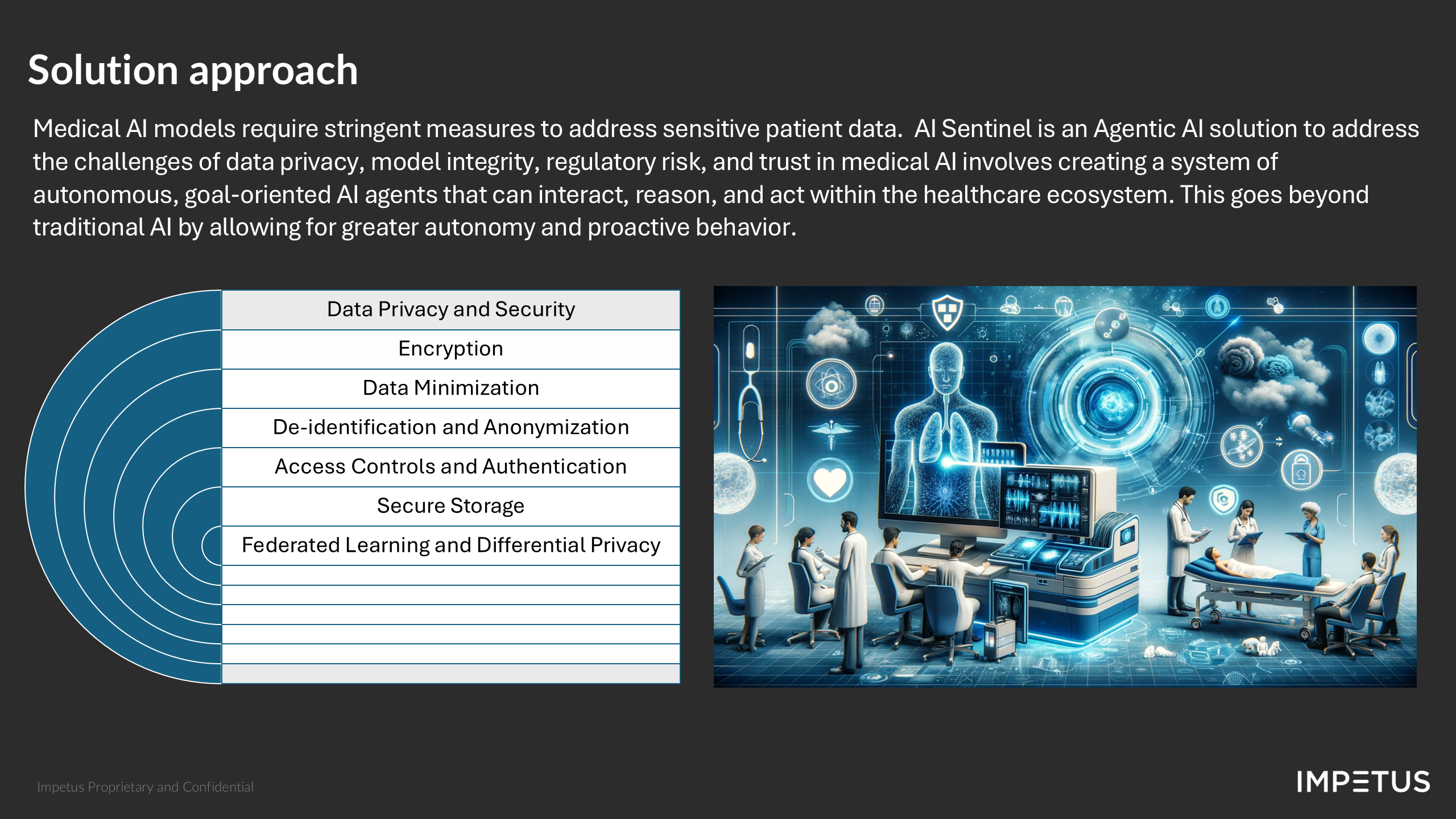
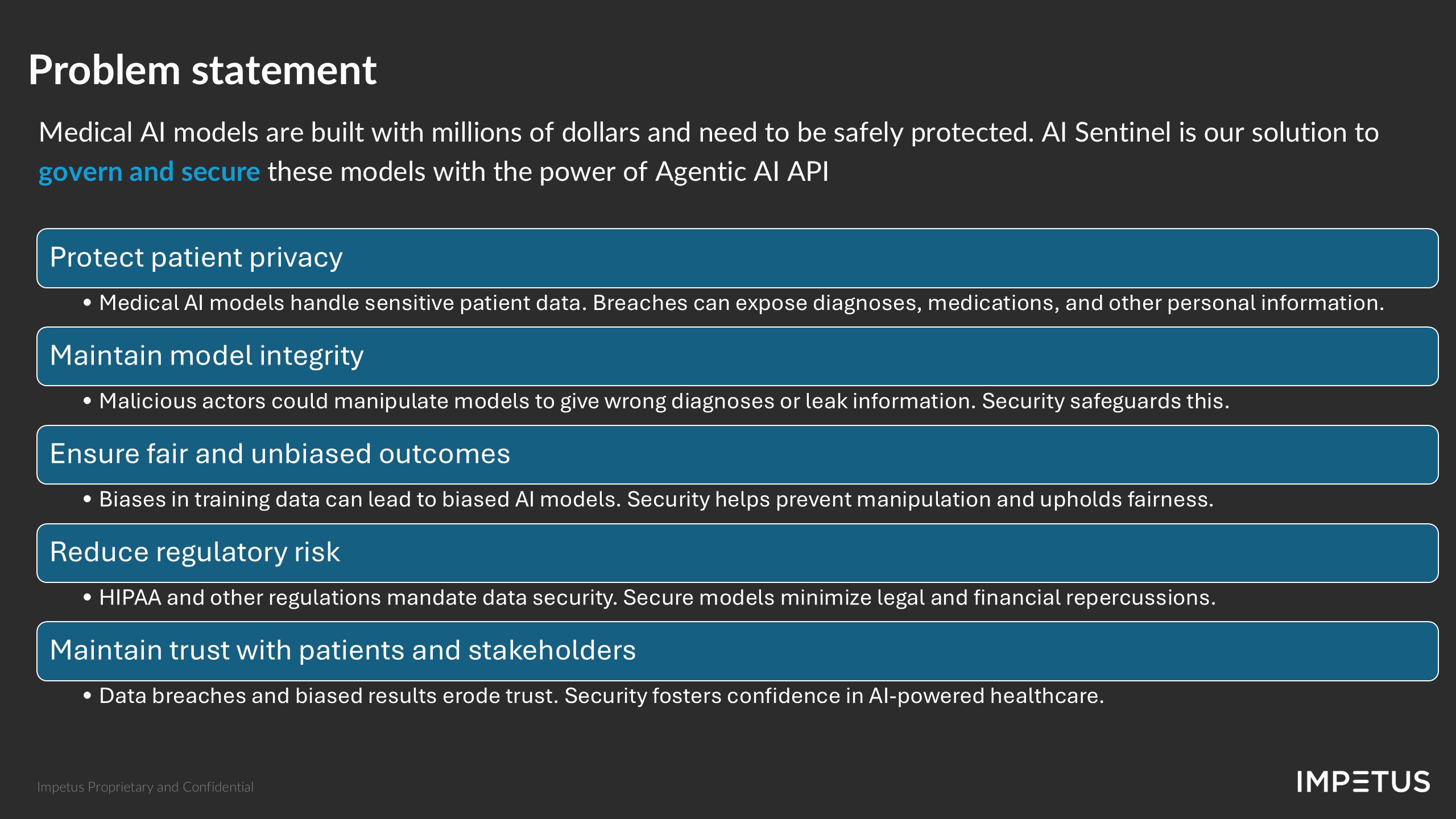
AI Sentinel is our solution to govern and secure medical AI models with the power of Agentic AI API. It addresses the challenges of data privacy, model integrity, regulatory risk, and trust in medical AI by creating a system of autonomous, goal-oriented AI agents that can interact, reason, and act within the healthcare ecosystem. This goes beyond traditional AI by allowing for greater autonomy and proactive behavior.
Some of the major functionalities enabled by AI Sentinel include:
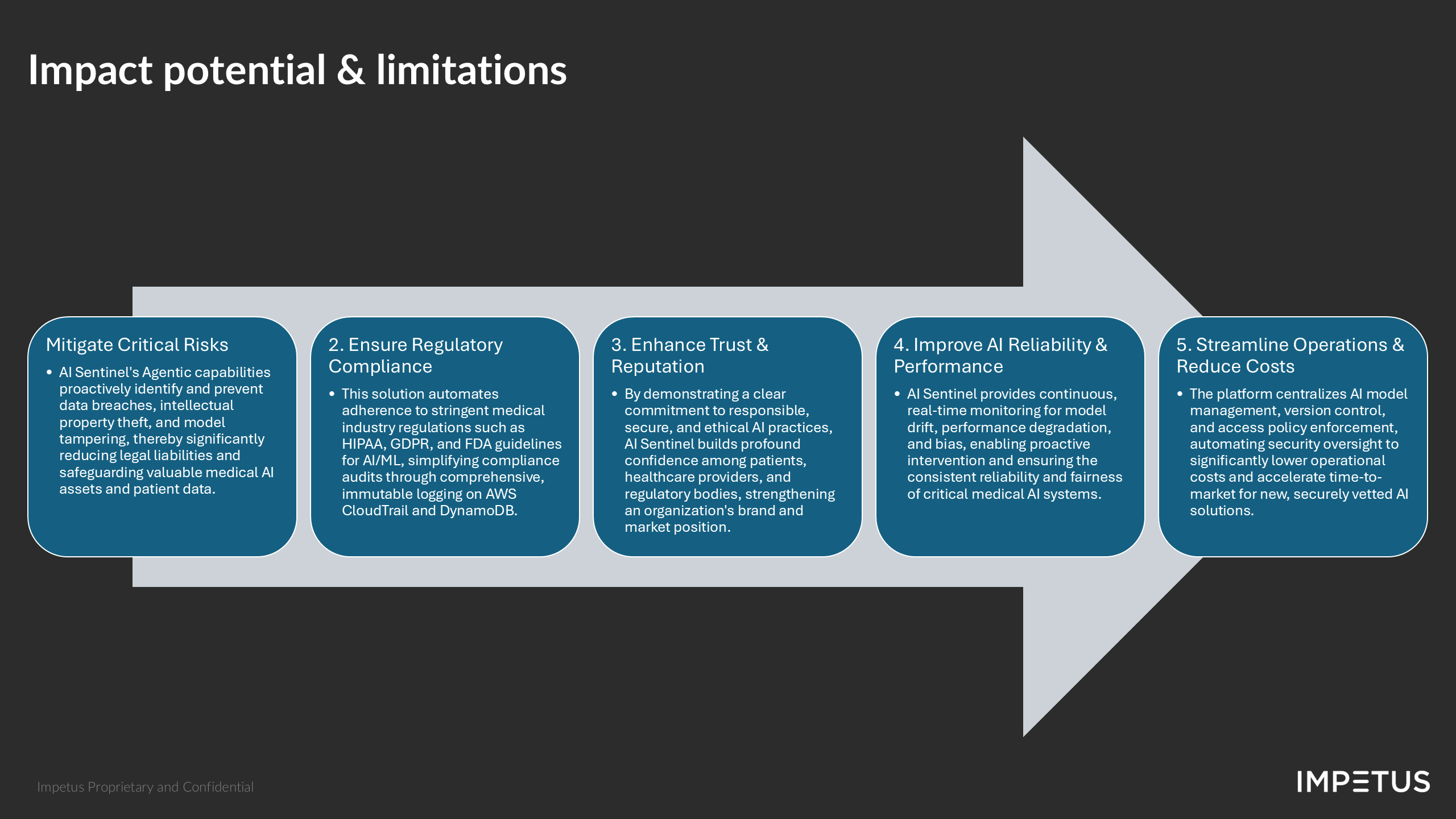
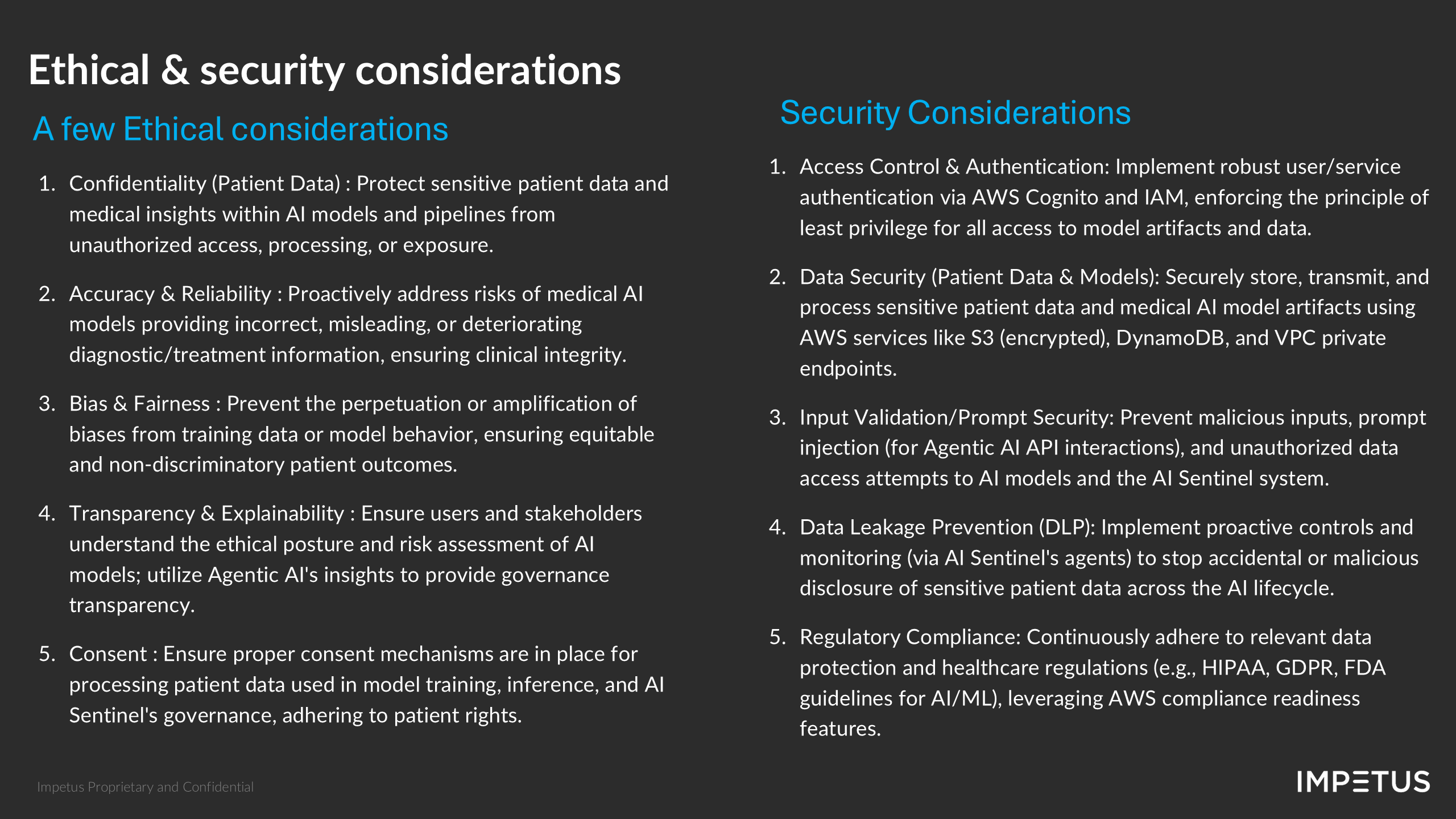
- Confidentiality Protection: Safeguarding sensitive patient data and medical insights within AI models and pipelines from unauthorized access, processing, or exposure.
- Accuracy & Reliability Assurance: Proactively addressing risks of medical AI models providing incorrect, misleading, or deteriorating diagnostic/treatment information, ensuring clinical integrity.
- Bias & Fairness Prevention: Preventing the perpetuation or amplification of biases from training data or model behavior, ensuring equitable and non-discriminatory patient outcomes.
- Transparency & Explainability: Ensuring users and stakeholders understand the ethical posture and risk assessment of AI models, utilizing Agentic AI's insights to provide governance transparency.
- Consent Management: Ensuring proper consent mechanisms are in place for processing patient data used in model training, inference, and AI Sentinel's governance, adhering to patient rights.
- Robust Access Control & Authentication: Implementing strong user/service authentication and granular access controls, enforcing the principle of least privilege for all access to model artifacts and data.
- Input Validation/Prompt Security: Preventing malicious inputs, prompt injection, and unauthorized data access attempts to AI models and the AI Sentinel system.
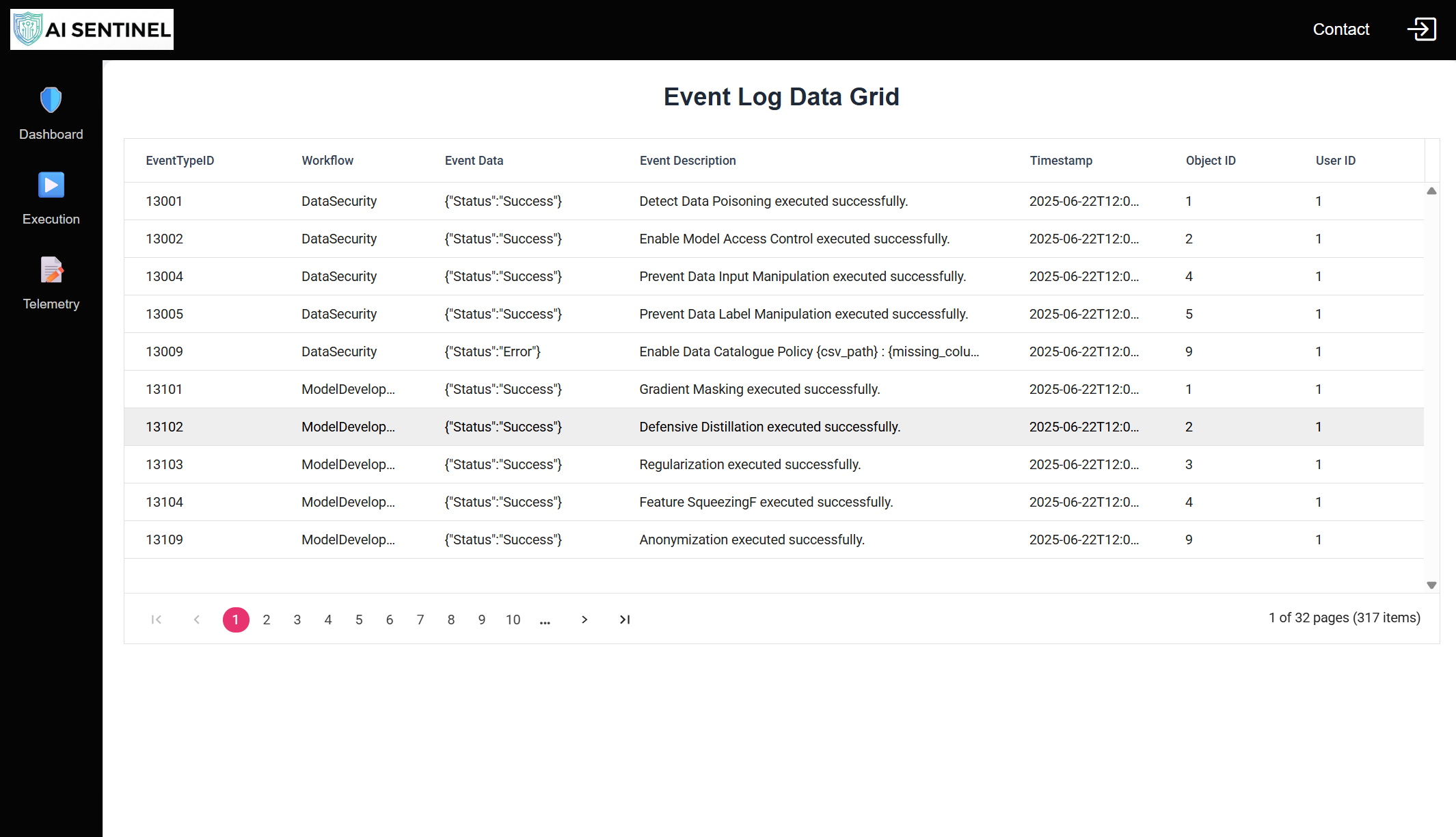
- Data Leakage Prevention (DLP): Implementing proactive controls and monitoring via AI Sentinel's agents to stop accidental or malicious disclosure of sensitive patient data across the AI lifecycle.
- Regulatory Compliance: Continuously adhering to relevant data protection and healthcare regulations (e.g., HIPAA, GDPR, FDA guidelines for AI/ML), leveraging AWS compliance readiness features.
🤖 How Agentic AI Helps!
Agentic AI frameworks provide the foundational capabilities for AI Sentinel's intelligent defense system:
- Autonomous Threat Response: AI Sentinel agents, empowered by these frameworks, proactively hunt threats and neutralize attacks in real-time, reducing response times and mitigating damage.
- Multi-Agent Collaboration: The frameworks enable specialized AI agents to coordinate their defense efforts, allowing for a comprehensive and layered security approach where different agents handle specific aspects of threat detection and response.
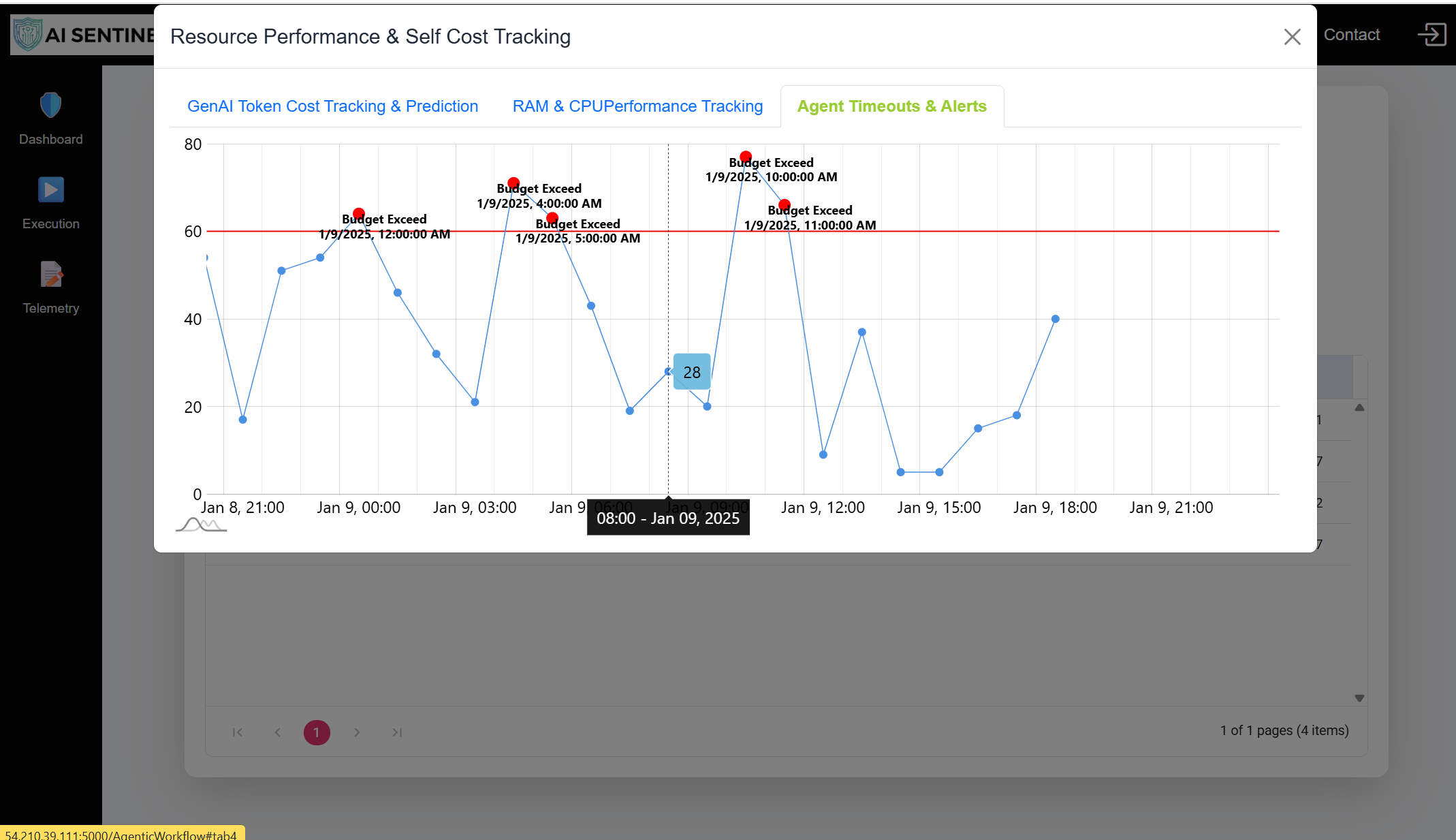
- Continuous Adaptation: Agentic AI allows AI Sentinel to learn and adapt against evolving AI threats dynamically, ensuring the defense system remains effective against new and sophisticated attack vectors.
- Enhanced Explainability: Agentic AI provides insights that contribute to governance transparency, helping users understand the ethical posture and risk assessment of AI models.
By combining AI Sentinel's specialized security agents with the inherent capabilities of Agentic AI, the solution aims to provide a dynamic, scalable, and robust defense against the evolving landscape of AI threats in the medical sector.
🛠️ How we built it
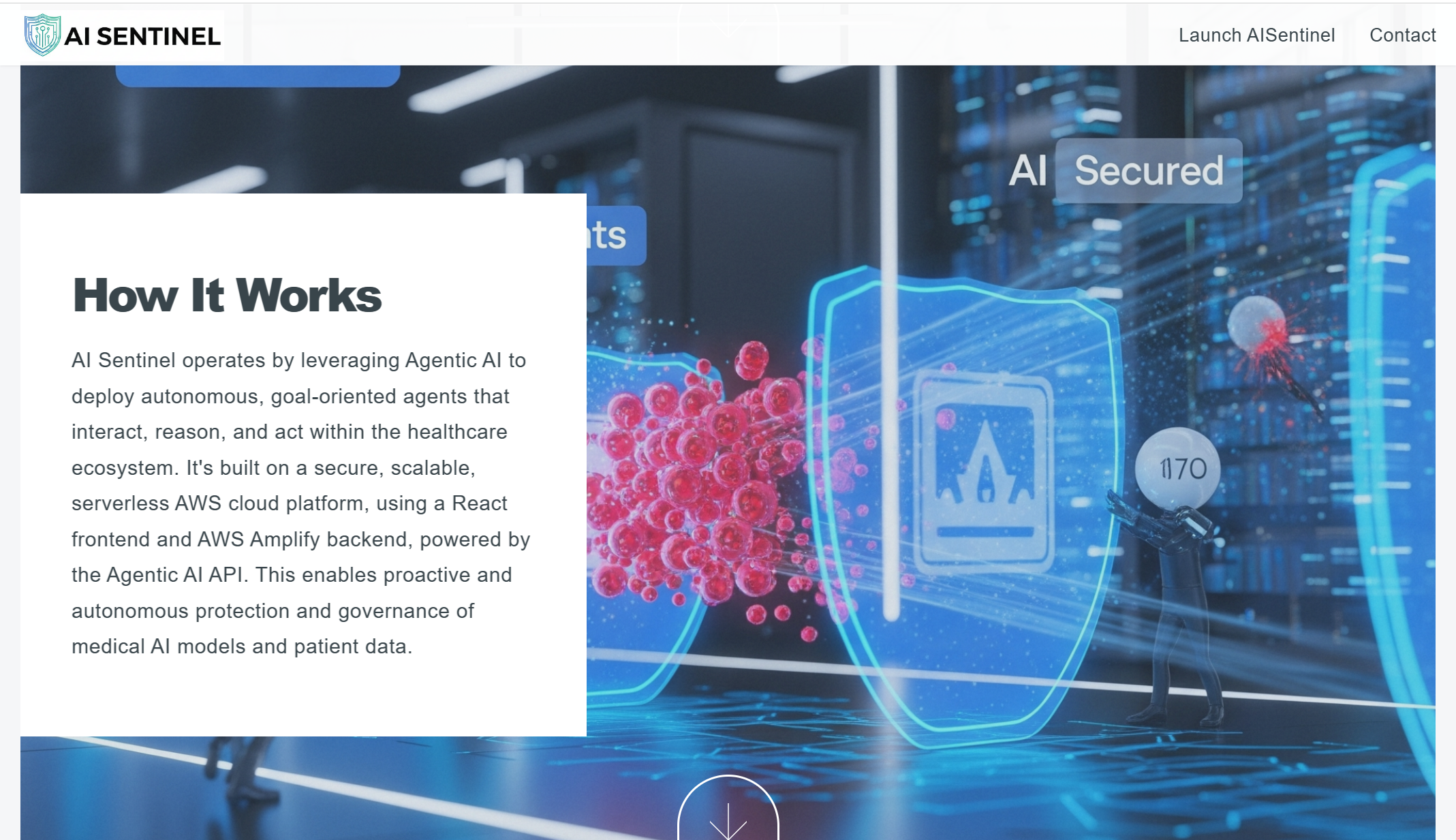
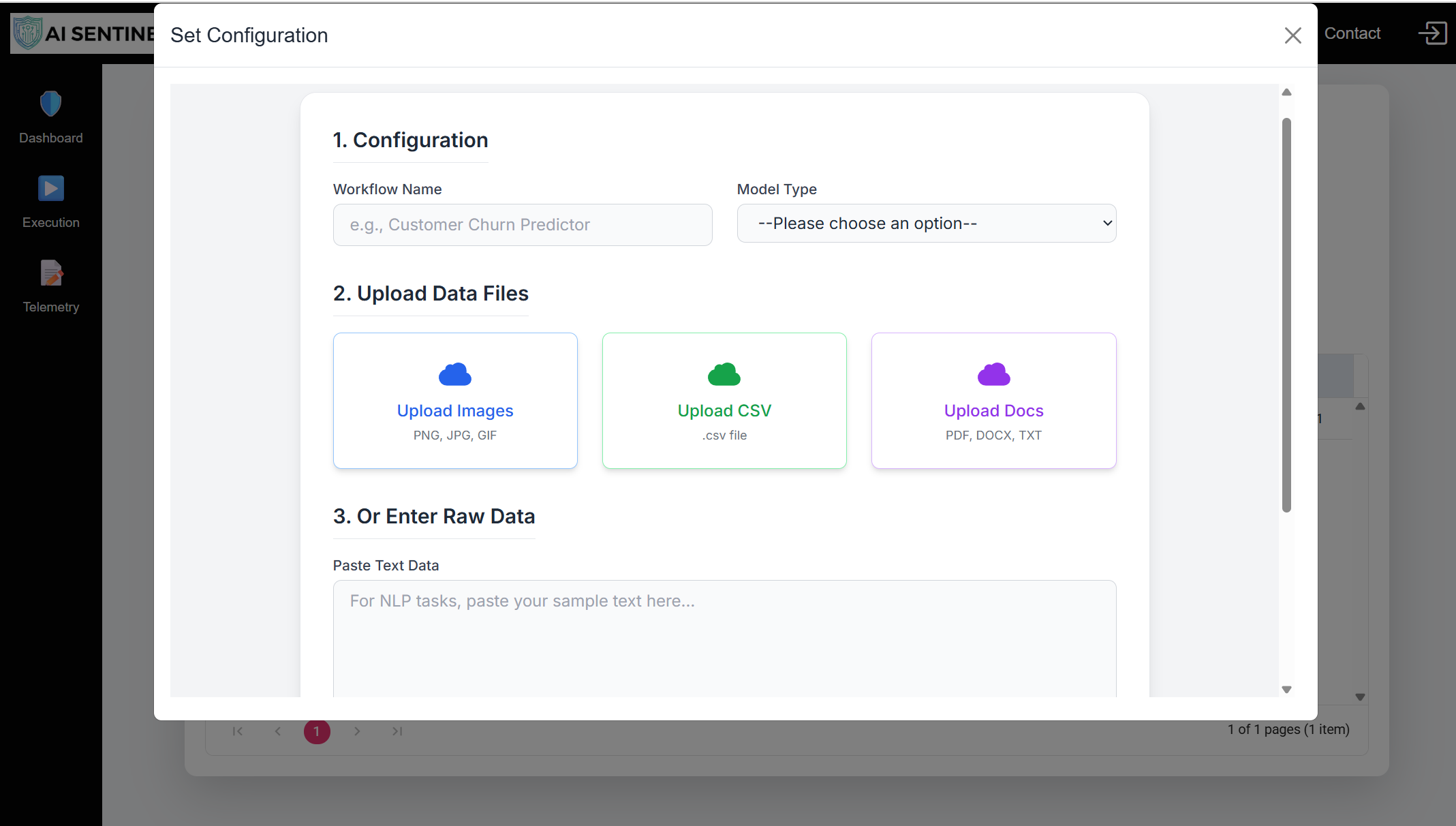
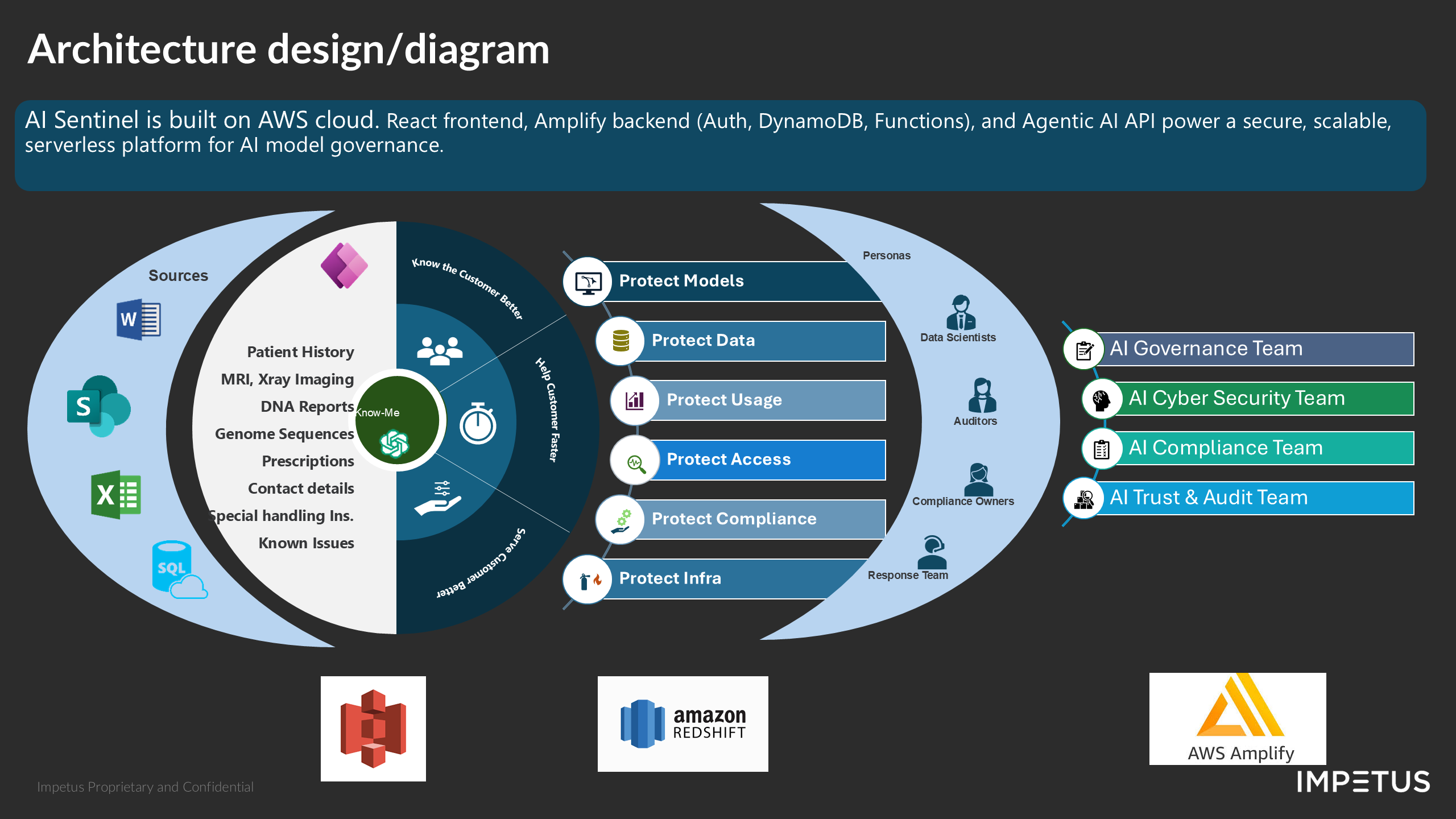
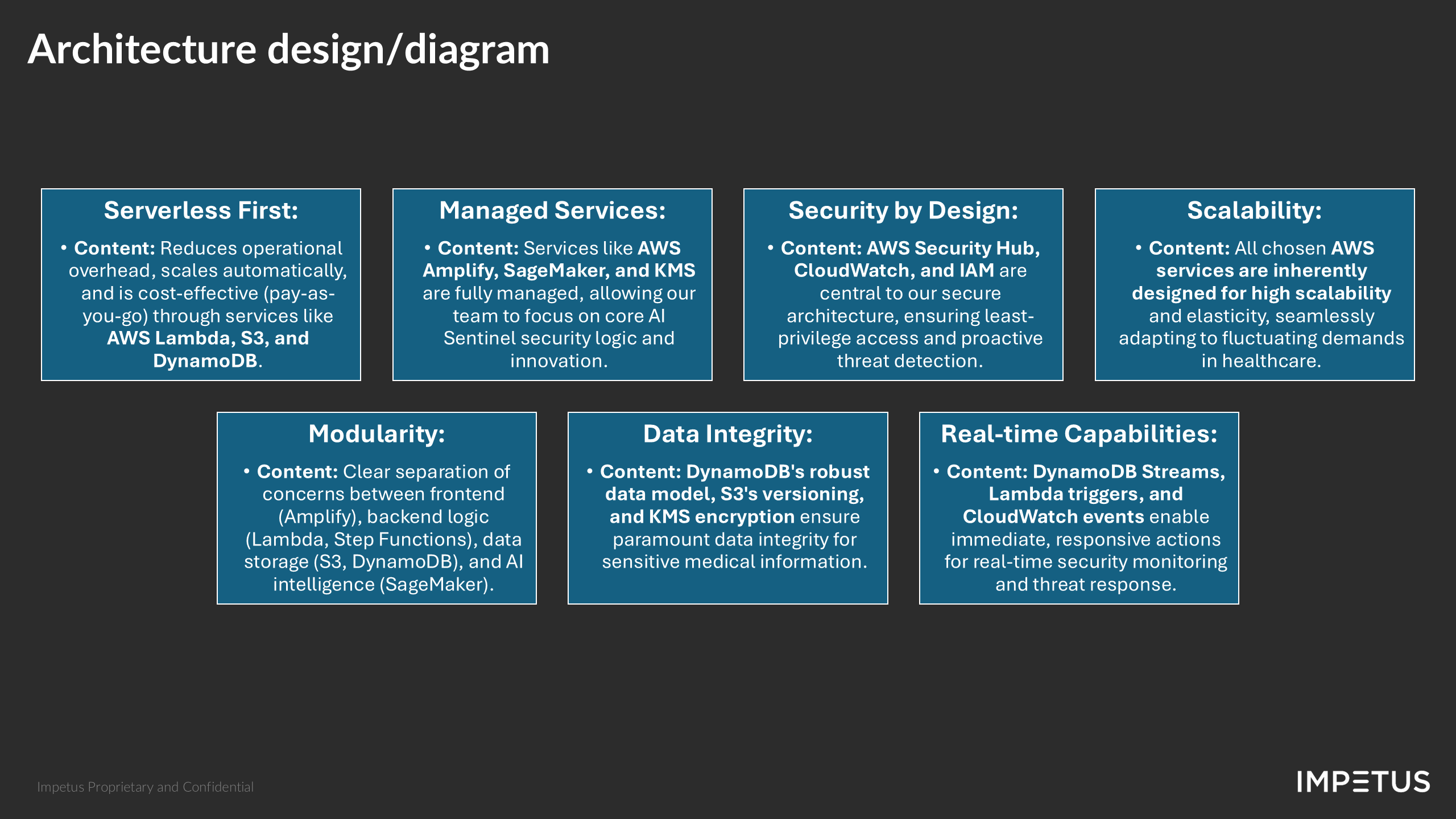
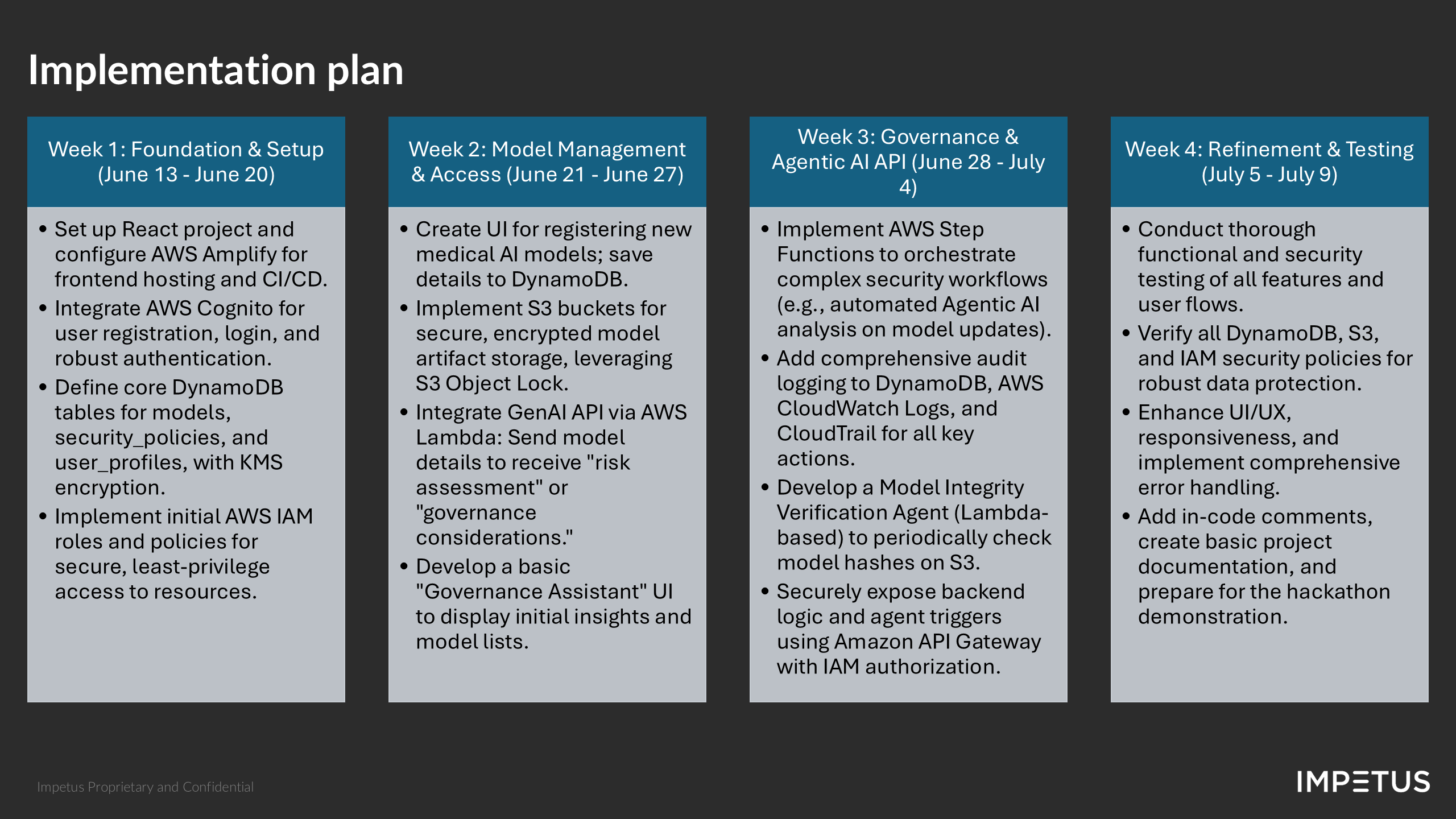
AI Sentinel is built on the AWS cloud, leveraging a React frontend, AWS Amplify backend (Auth, DynamoDB, Functions), and an Agentic AI API to power a secure, scalable, serverless platform for AI
Built With
- agents
- amazon-cloudwatch
- amazon-dynamodb
- amazon-ec2
- amazon-web-services
- amcharts
- flask
- javascript
- python
- syncfusion

Log in or sign up for Devpost to join the conversation.