Inspiration
The inspiration for AI Screening Orchestrator comes from the "last mile" problem in healthcare AI. While many powerful AI models exist for medical imaging, they often sit in silos, disconnected from the clinical workflow. Radiologists and screening coordinators are currently overwhelmed by massive backlogs. We wanted to build an orchestrator that doesn't just "see" an image, but understands the patient context, compares findings with history, and automates the tedious parts of the workflow like drafting reports and creating follow-up tasks so clinicians can focus on the most critical cases first.
What it does
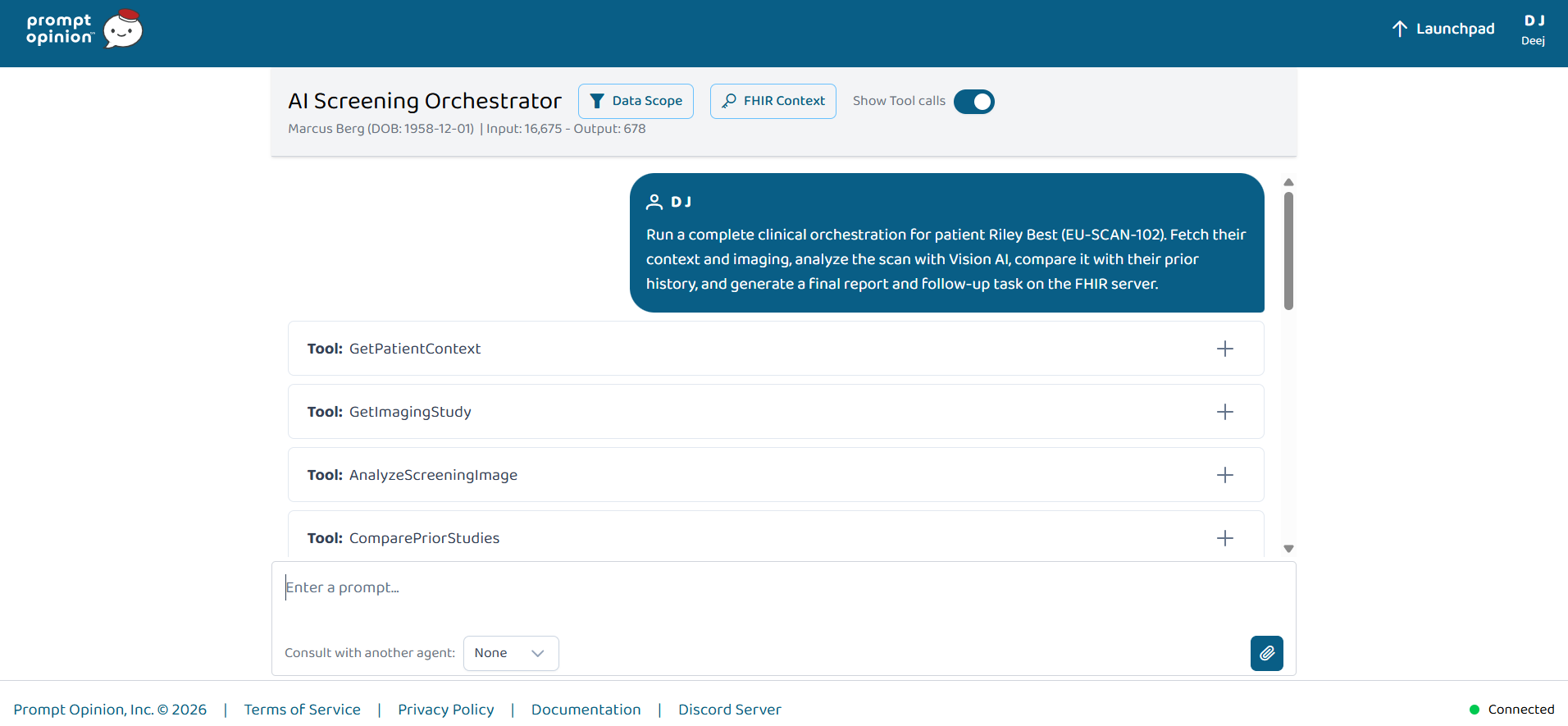
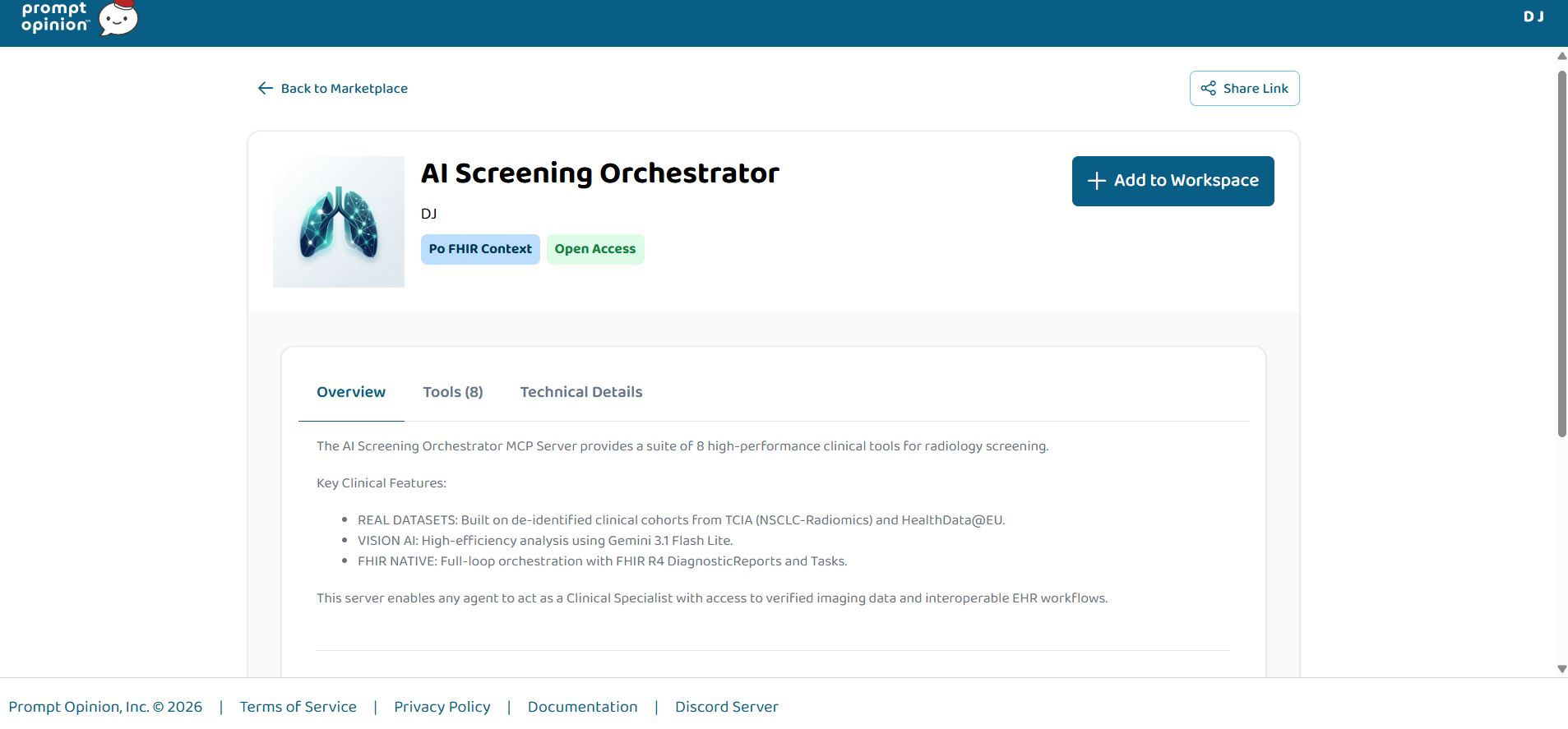
AI Screening Orchestrator is a multi-agent radiology assistant that triages and automates screening workflows. It:
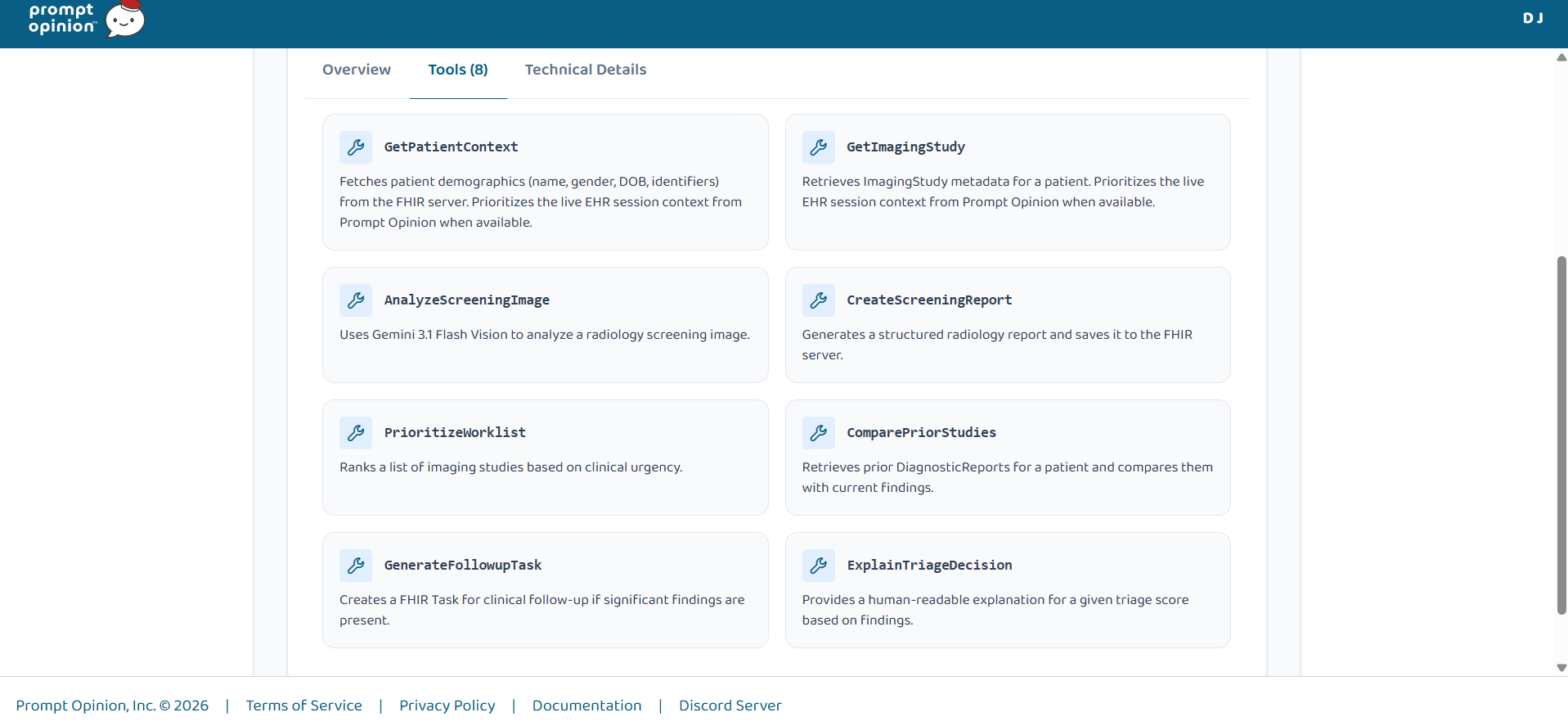
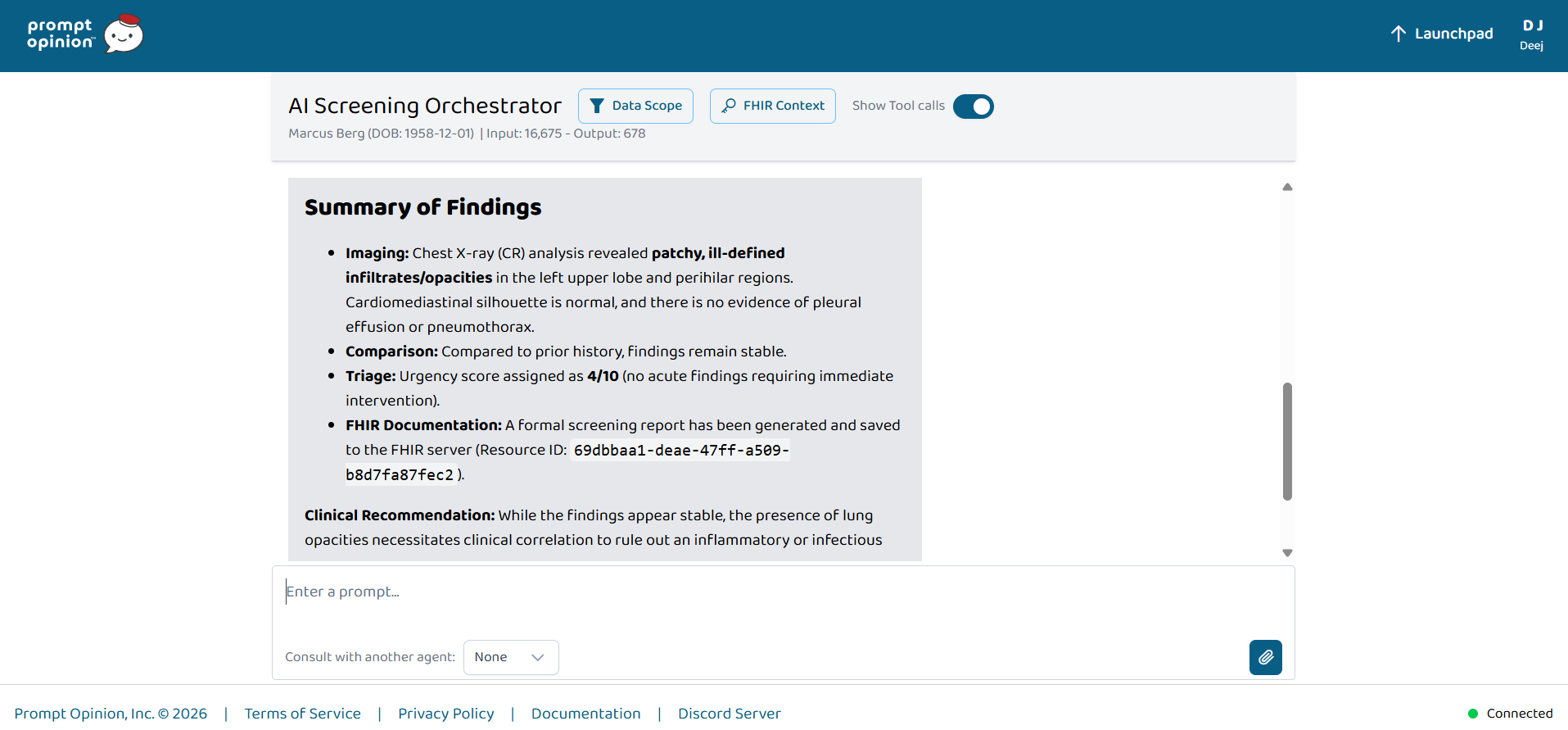
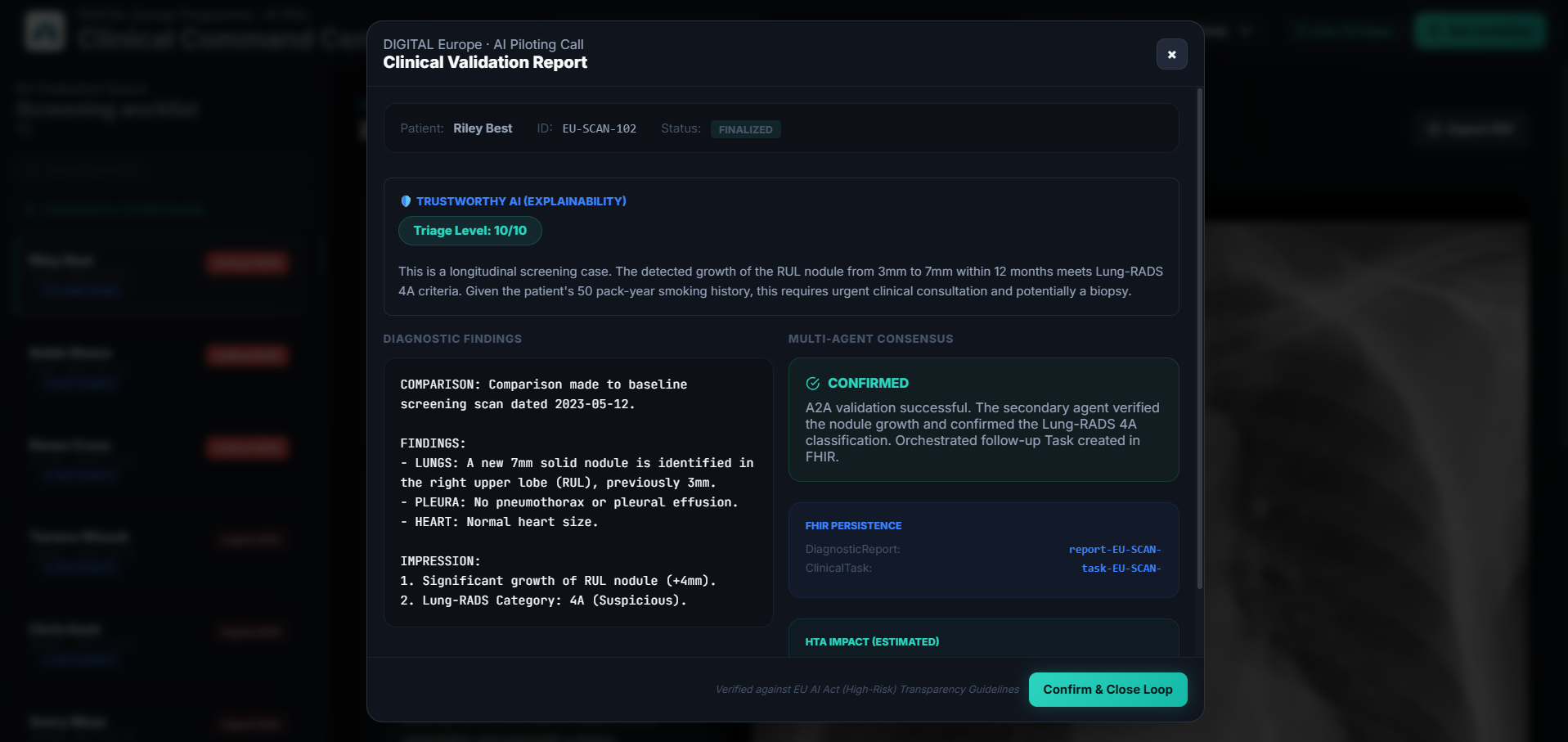
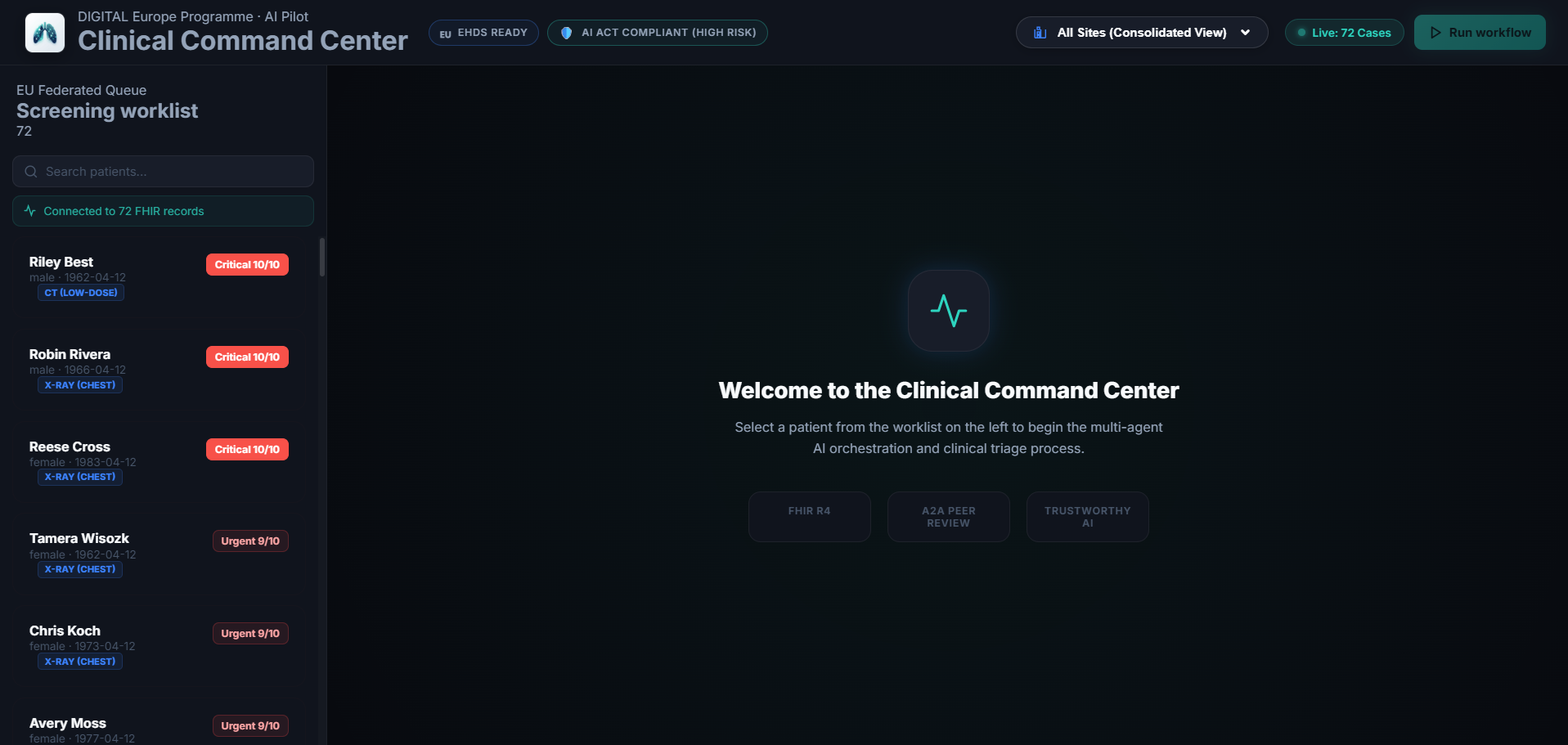
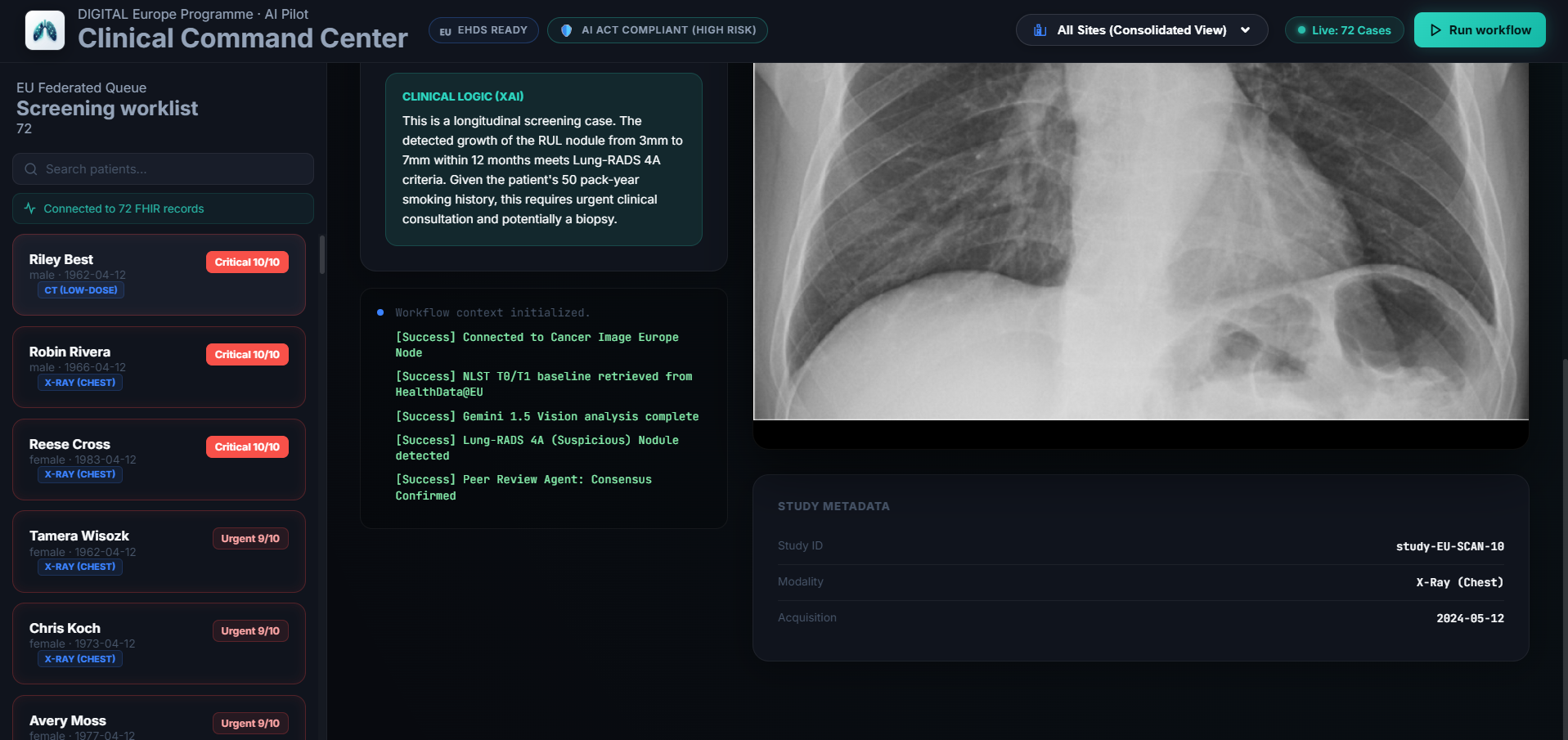
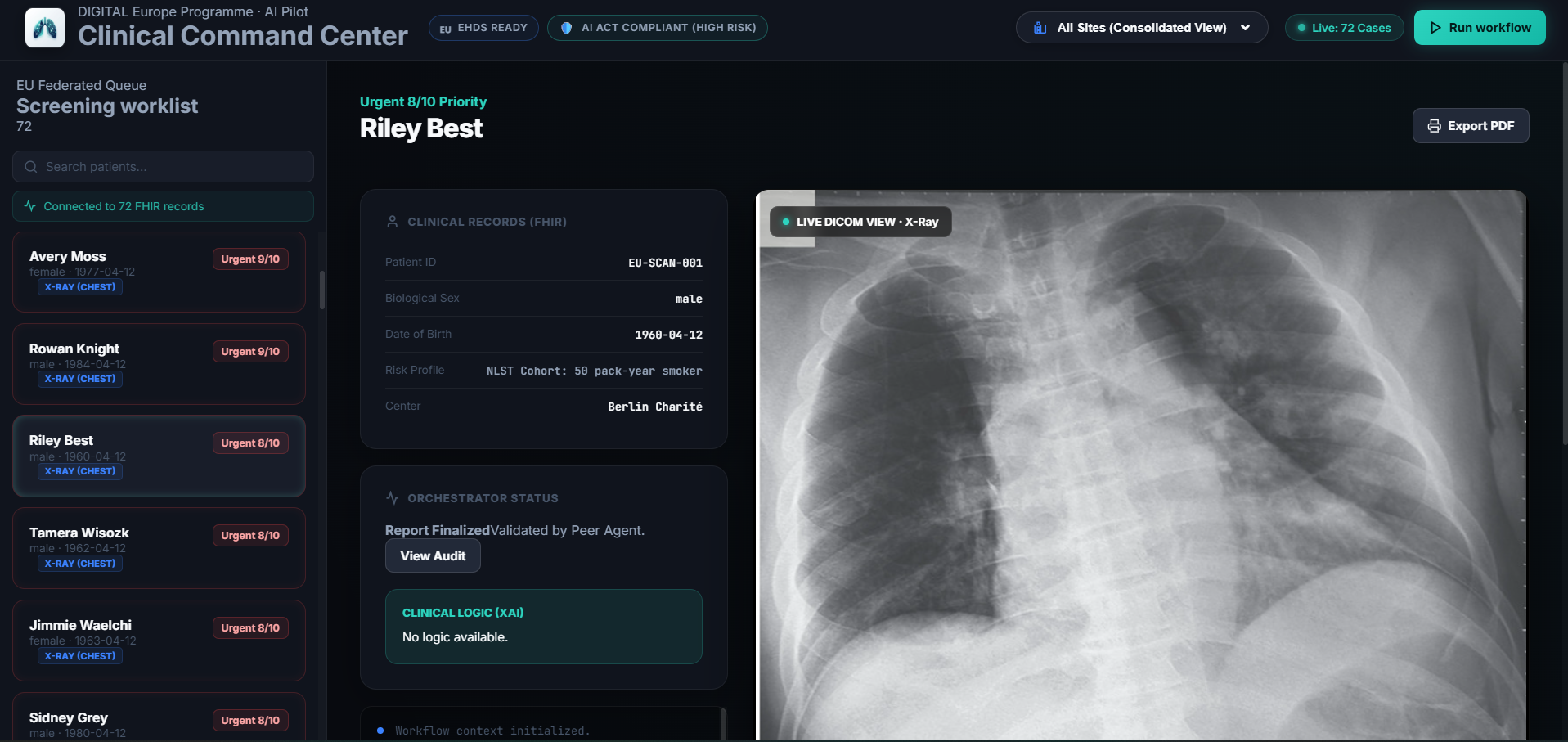
Orchestrates context: Automatically fetches patient demographics and imaging metadata from a live FHIR R4 server. Analyzes with Vision: Uses gemini-3.1-flash-lite-preview to review chest X-ray previews for suspicious findings with high efficiency. Prioritizes the Worklist: Ranks patients by AI-assessed urgency (1-10) so the most critical cases surface immediately. Automates Reporting: Generates structured radiology-style draft reports and compares them with prior history. Closes the Loop: Writes DiagnosticReport and Task resources back to the FHIR server, including clinical rationale for follow-up actions. All 8 capabilities are exposed as modular MCP tools, making them discoverable and usable by any agent in the Prompt Opinion marketplace.
How we built it
The backend is built with FastAPI and Python 3.11, using the FastMCP framework to expose our logic as standardized tools. For intelligence, we integrated the state of the art gemini-3.1-flash-lite-preview for both high-speed vision analysis and complex clinical reasoning. We used httpx for asynchronous FHIR R4 communication. The frontend is a "Clinical Premium" dashboard built with Vanilla JS/CSS, featuring Inter typography, glassmorphism, and real-time SSE (Server-Sent Events) streaming to show the agent's thought process in an audit timeline. The entire stack is production-deployed on Railway.
Challenges we ran into
Ensuring seamless interoperability between MCP and FastAPI required building a custom ASGI routing class to handle the specific HTTP methods and SSE streams required for the MCP protocol. Another hurdle was "data hygiene" filtering through synthetic FHIR records to ensure our dashboard only presented unique patients with actual imaging data available, ensuring a high-impact and realistic demo experience.
Accomplishments that we're proud of
We are incredibly proud of building a zero-clutter, clinical-grade UI that feels like a real medical workspace. Successfully exposing 8 distinct, high-value tools to the MCP marketplace is a major technical milestone. Most importantly, we implemented a full "Closed Loop" workflow: reading from FHIR, analyzing with AI, and writing back actionable resources proving that AI can be a first-class citizen in standardized healthcare data.
What we learned
We learned the transformative power of the Model Context Protocol (MCP) for modularizing healthcare capabilities. Instead of building one rigid app, we built a suite of "Superpowers" that can be reused across different agent scenarios. We also deepened our understanding of the SHARP extension specs and how vital automated context propagation is for reducing clinician burnout and data entry errors.
What's next for AI Screening Orchestrator
Next, we want to integrate A2A (Agent-to-Agent) coordination to allow specialized agents (like a follow-up scheduler) to interact with our orchestrator. We also plan to support full DICOMweb integration for high-fidelity imaging and implement authenticated write-backs for production hospital environments.
Built With
- css3
- fastapi
- fastmcp
- fhir-r4
- gemini-3.1-flash-lite-preview
- javascript
- python
- railway

Log in or sign up for Devpost to join the conversation.