-
-
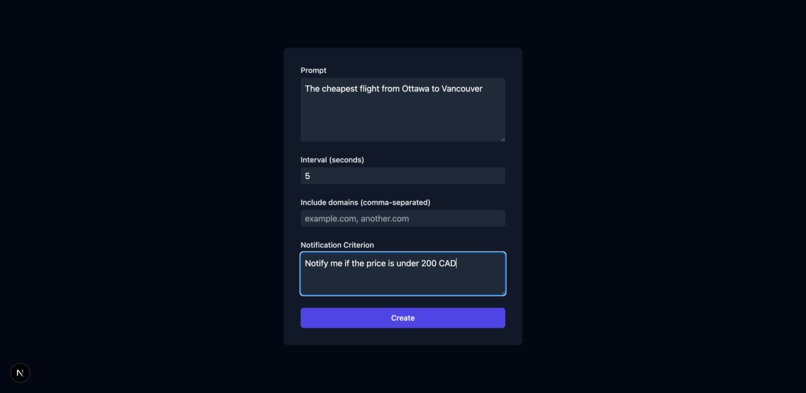
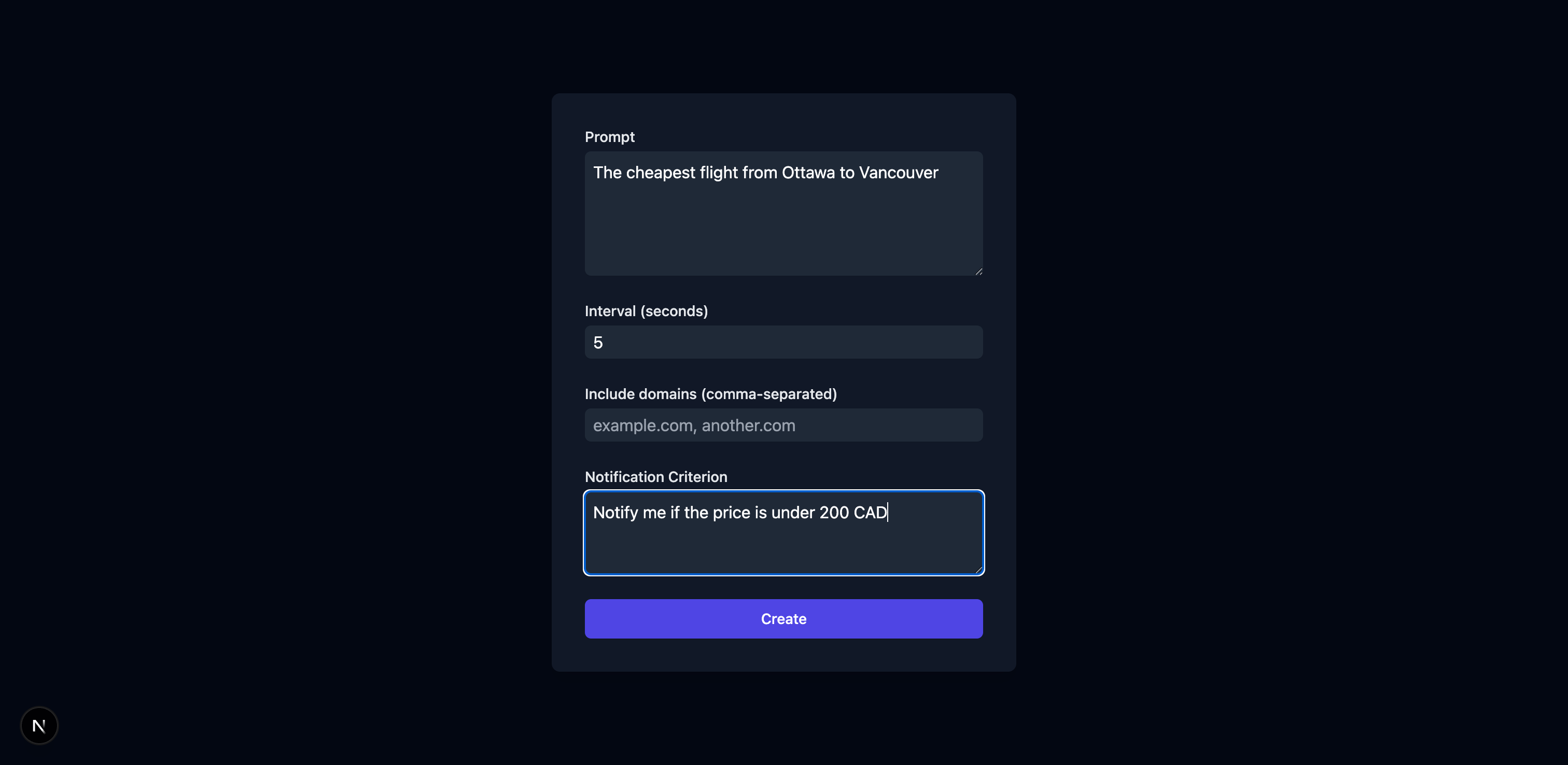
The form to create an AI scout that monitor the cheapest flight from Ottawa to Vancouver.
-
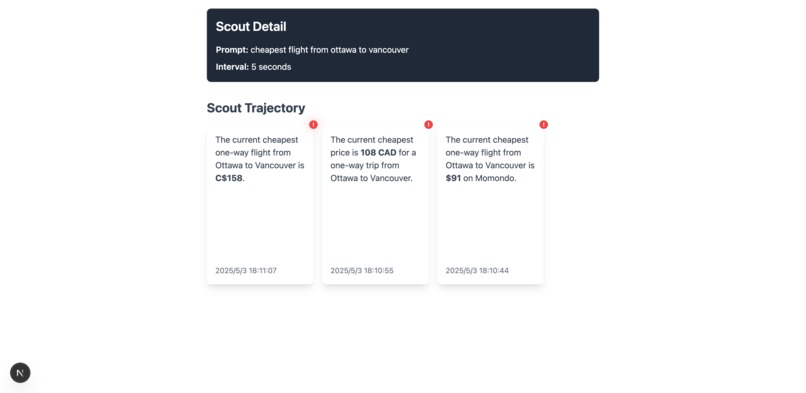
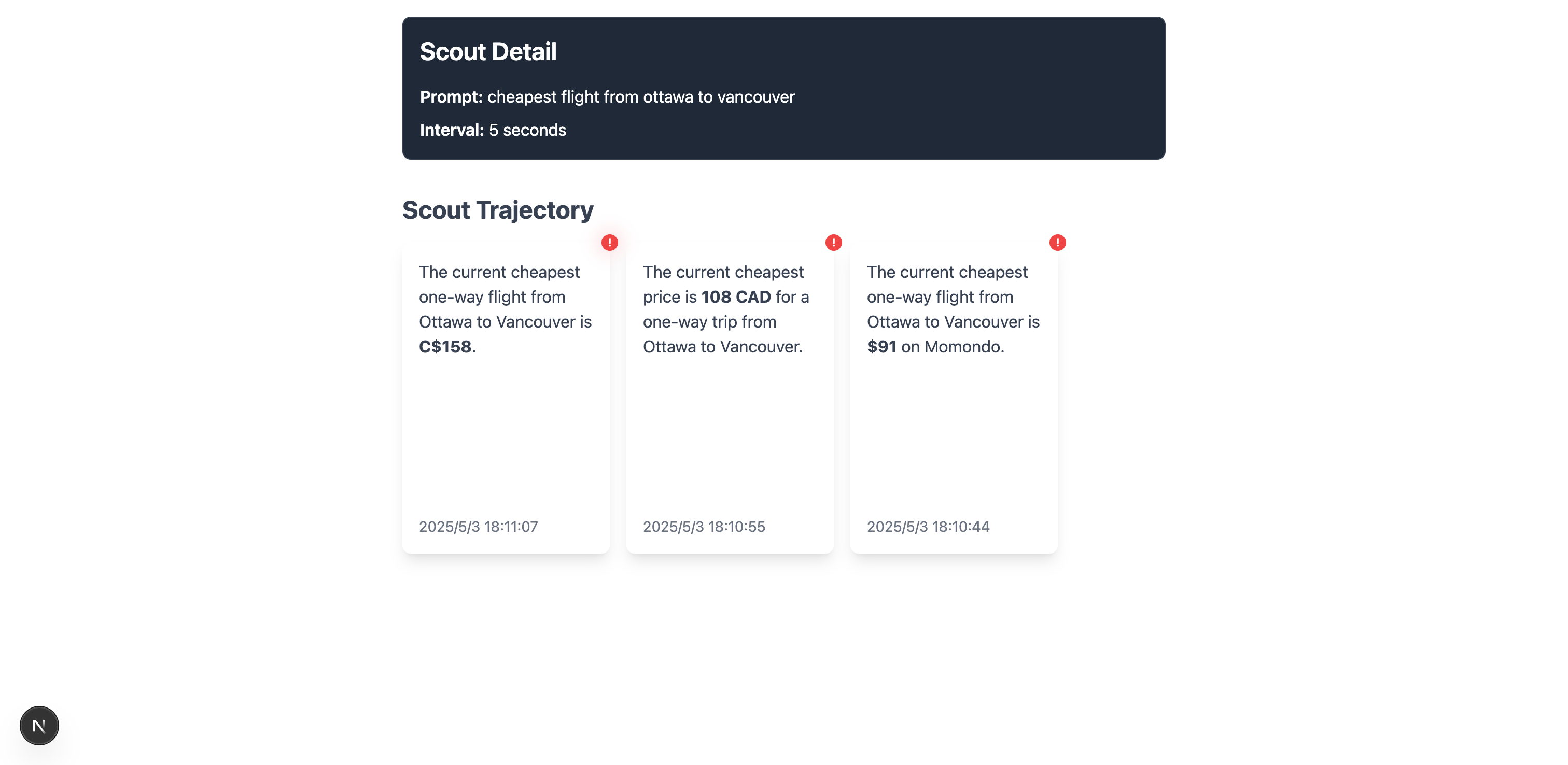
The three trials of the AI scout for monitoring the flight price and show a notification sign when the price is under 200 CAD.
Inspiration
I was inspired by my own needs to have an AI to monitor some information on the internet, e.g. the flight price, new progress on machine learning, and stock price.
What it does
AI Scout is an automated system that continuously scans specified websites and online sources over time, acting as a 24/7 sentry for user-defined topics. Users set persistent queries (e.g., “Tesla stock risks”) and target domains (e.g., SEC filings, financial news), while defining notification rules for when discovered content meets specific criteria. When predefined triggers activate (e.g., a surge in negative sentiment about Tesla stock), the system not only alerts users but also generates a contextual report to explain why the event matters.
For example:
- Notify when sentiment analysis detects negative trends about TSLA stock
- Flag any regulatory document updates from government website containing ‘AI liability’
The system combines scheduled crawling (hourly/daily) with real-time monitoring for high-priority sources. When triggers occur—like a surge in negative keywords or pattern matches in policy texts—it sends prioritized alerts via email or API. Built with adaptability in mind, users can refine rules and adjust crawling depth (e.g., “scan only subpages under /news/”) to balance precision and resource usage.
How we built it
We use LangGraph as the framework and Perplexity as the search engine. We also use ChatGPT-4o as the model to generate formated output.
Challenges we ran into
Accomplishments that we're proud of
What we learned
What's next for AI Scout
Built With
- chatgpt-4o
- langgraph
- perplexity


Log in or sign up for Devpost to join the conversation.