Inspiration
AI School began with my own experience of learning through AI.
Before AI became part of my life, I did not know how to code, build websites, create applications, or do much of anything technical on a computer. Even basic tasks—opening a project correctly, understanding an error message, knowing where a piece of code belonged, or figuring out why something suddenly stopped working—could feel overwhelming.
I had ideas, but I did not have the skills or confidence to turn them into something real.
AI gave me a way to begin before I felt ready.
I could ask questions that might have felt too basic to ask another person. I could request a simpler explanation, ask for an example, break a large problem into smaller steps, and keep working until the pieces began to make sense.
When something failed, AI helped me investigate why. When an explanation was too advanced, I could ask it to explain the same concept differently. When I became stuck, I could ask for a hint instead of a complete solution.
That changed the learning process for me.
Little by little, I went from not understanding how code worked to organizing projects, building websites, creating applications, solving technical problems, and turning ideas into real products—including AI School itself.
I am still learning. I still make mistakes, encounter problems, and sometimes need an idea explained several different ways. But AI gave me something I had never really experienced before: personalized support that could meet me where I was and help me continue moving forward.
The experience was not powerful simply because AI could produce code.
It was powerful because it helped me understand, experiment, correct mistakes, and gradually take ownership of what I was building.
AI did not only give me access to information.
It gave me a learning process.
That experience changed how I thought about education.
I began wondering what this kind of support could mean for children:
- What would happen if every student had a patient learning partner they could turn to when a lesson did not make sense?
- What if a child could ask the same question more than once without feeling embarrassed?
- What if they could say, “I still do not understand,” and receive a different explanation instead of being expected to move forward?
- What if lessons could be broken down from first principles, connected to the child’s interests, demonstrated visually, practiced through real projects, and revisited before the knowledge was forgotten?
Children do not all learn at the same pace or in the same way.
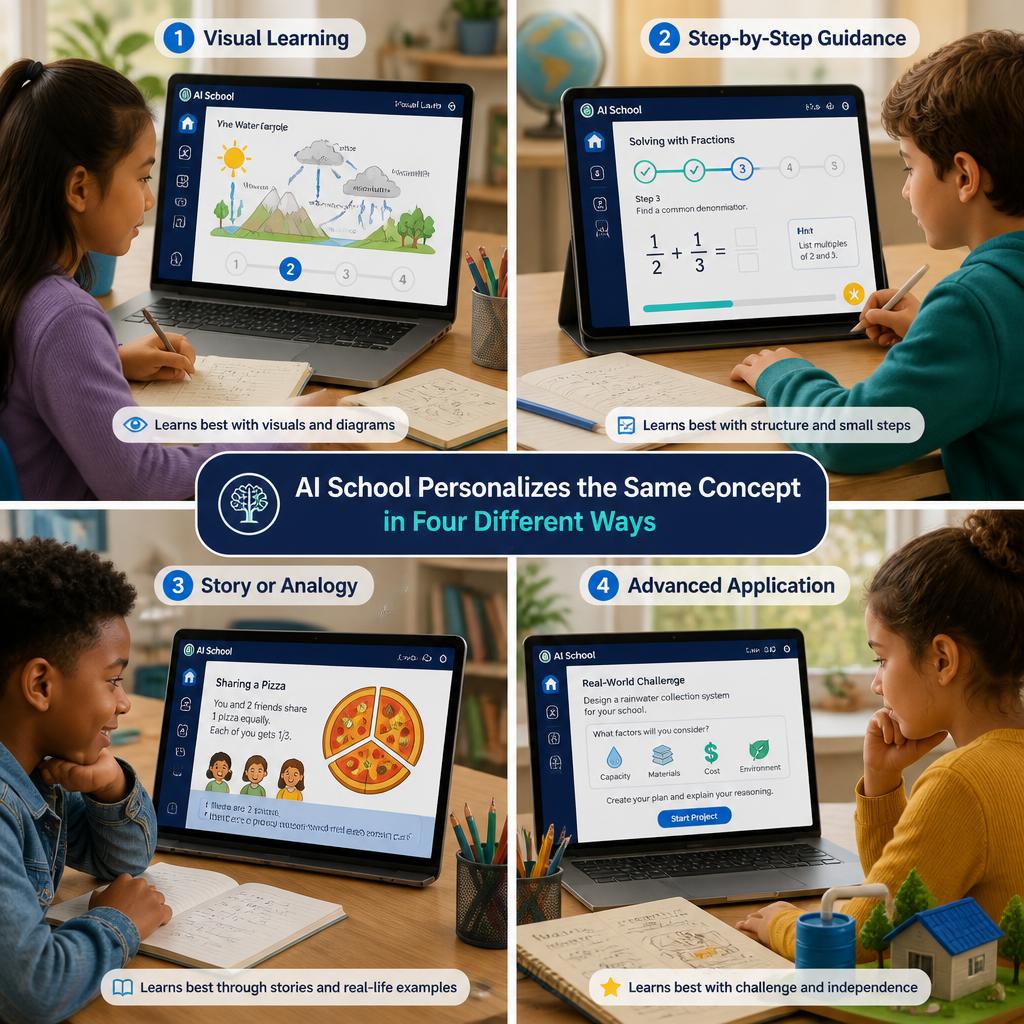
One student may need a clear example. Another may need a story, diagram, analogy, or hands-on activity. Another may be struggling because an earlier concept was never fully understood.
Teachers already know this. They work hard to support every student, but even the most dedicated teacher cannot always stop and create a completely different explanation, practice plan, and learning path for every child in a full classroom.
That is where I believe AI can make a meaningful difference.
Not by replacing teachers.
Not by completing assignments for students.
Not by becoming a shortcut around effort or independent thinking.
AI should help teachers provide the individualized support they already wish they had more time and tools to give.
It should help students understand why something works, recognize where they became confused, practice at the right level, and revisit important knowledge before it disappears.
I wanted AI School to use the same methods that helped me grow:
- First-principles teaching — breaks difficult ideas into their simplest foundations
- Step-by-step scaffolding — makes complex work feel manageable
- Socratic questioning — guides students without immediately giving away the answer
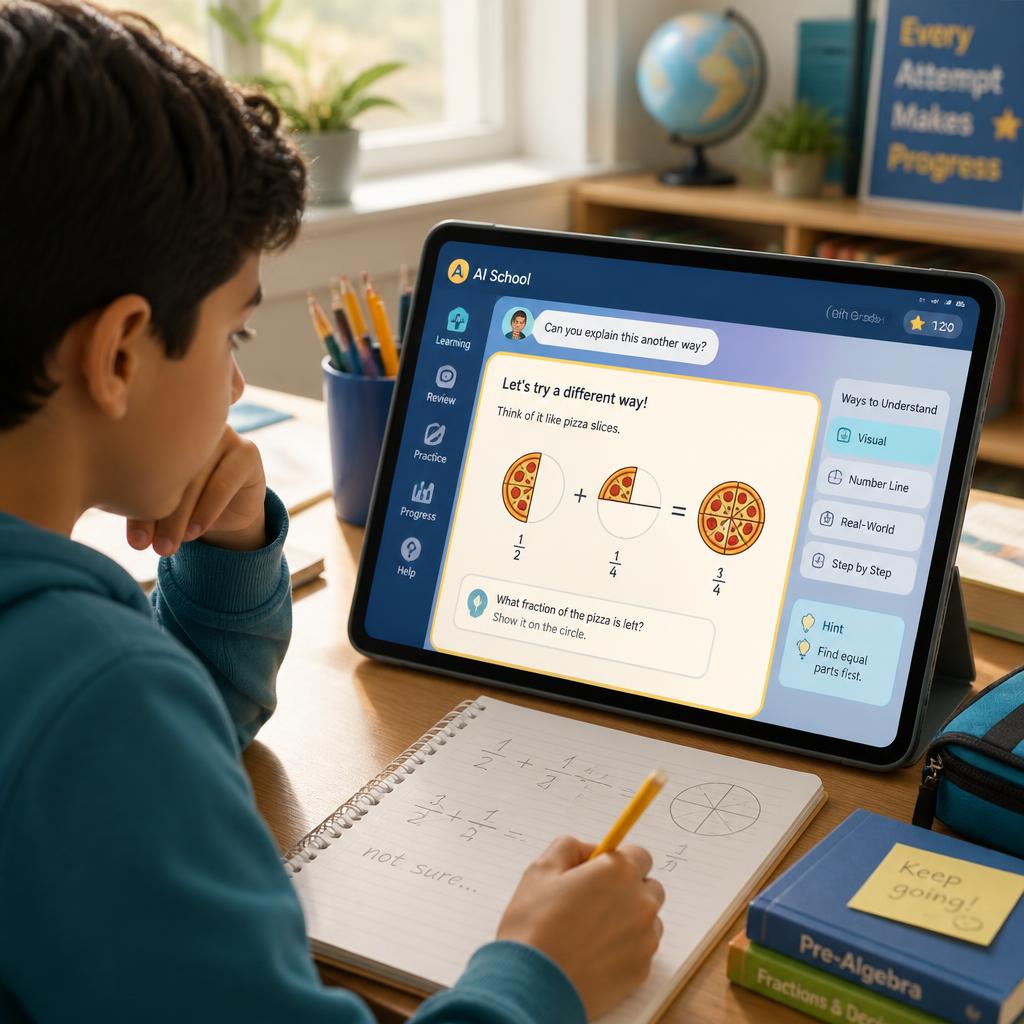
- Multiple explanations — allows learners to approach a concept from different directions
- Immediate feedback — turns mistakes into opportunities to improve
- Mastery-based progression — strengthens weak foundations before moving ahead
- Retrieval practice and spaced review — helps knowledge remain available over time
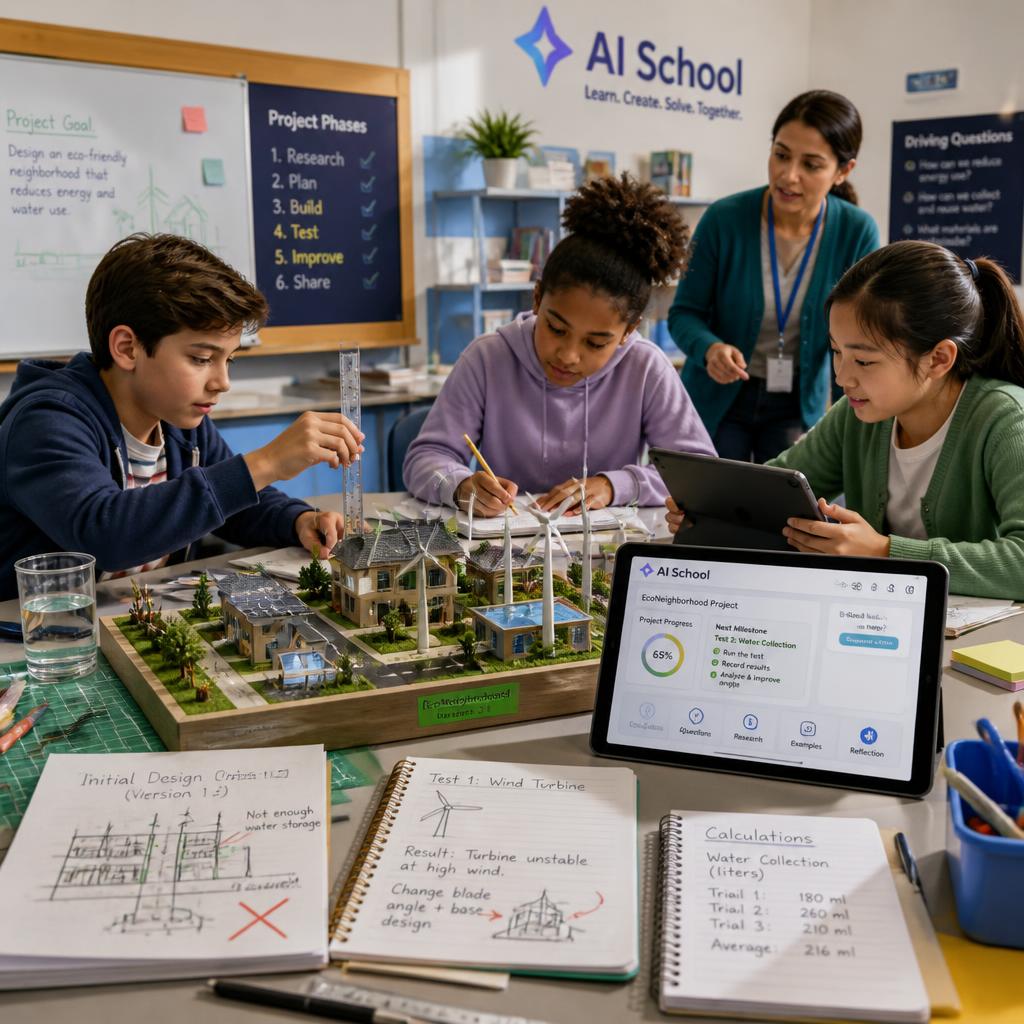
- Project-based learning — allows students to create, explore, and solve real problems
- Reflection and metacognition — helps children understand how they learn
- Creative and interactive activities — makes learning more enjoyable and meaningful
I know what it feels like to believe that a skill is beyond you because you do not know how to begin.
I also know what it feels like when someone—or something—meets you at your current level, helps you take the next step, and gives you enough confidence to keep going.
That is the experience I want AI School to offer children.
Every child deserves the freedom to ask questions without shame, make mistakes without feeling defeated, and receive another explanation when the first one does not work.
They deserve learning that is:
- Patient when they struggle
- Challenging when they are ready
- Memorable enough to last
- Enjoyable enough to keep their curiosity alive
AI helped me discover that I was capable of learning, creating, and building things I once thought were beyond me.
AI School was created to help children make that same discovery about themselves.
What It Does
AI School is not intended to be another digital textbook or general chatbot.
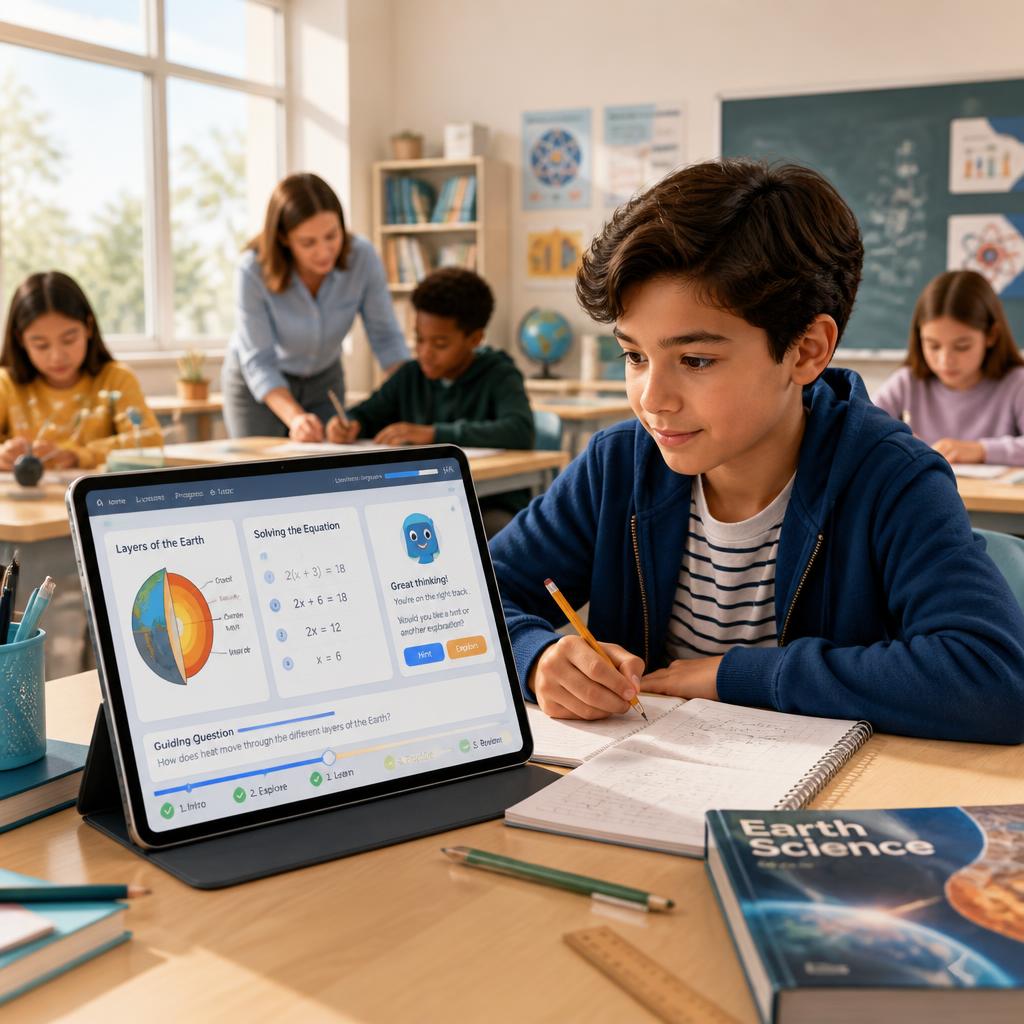
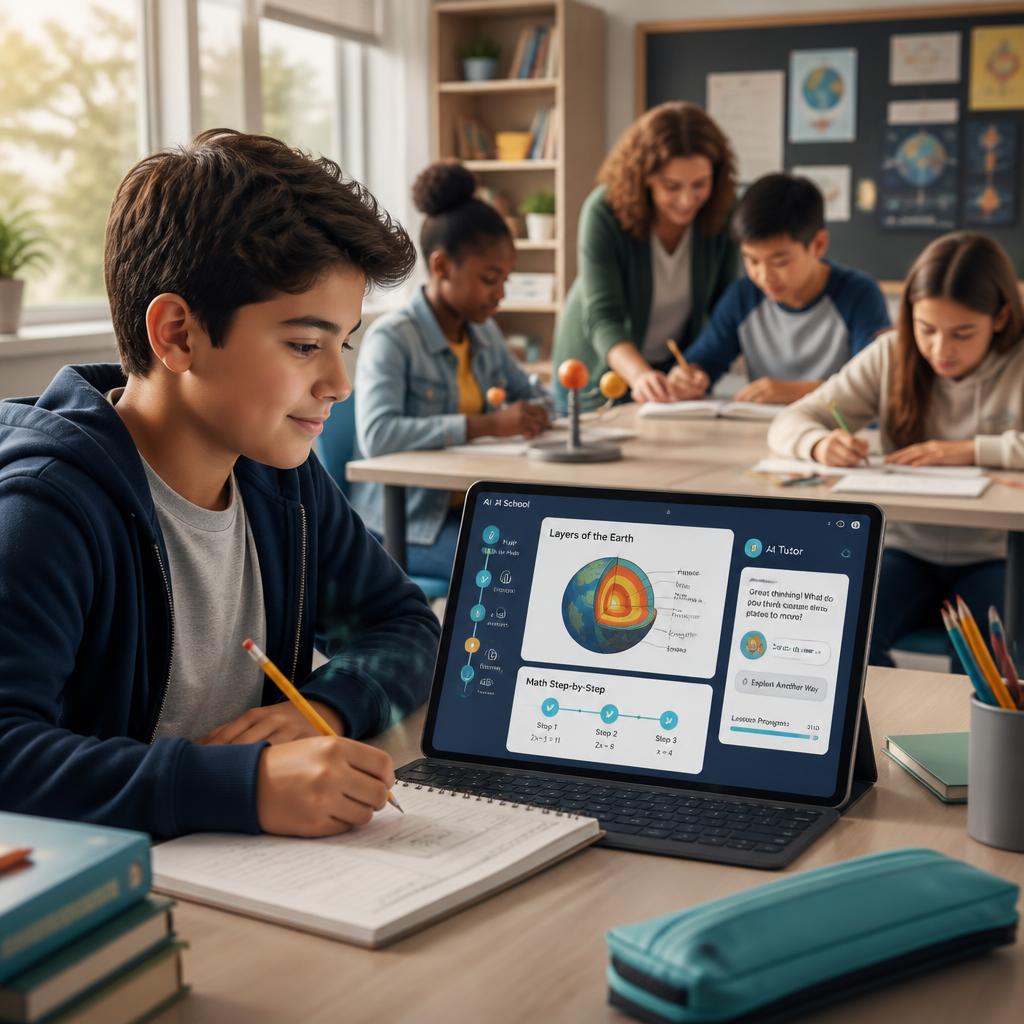
It is being built as a structured learning environment that adapts not only the content a child receives, but also the way that content is taught.
The learning experience changes according to each student’s needs, understanding, and progress:
- A student who is confused may receive a simpler explanation.
- A student who needs support may receive a worked example and guided practice.
- A student who is improving may receive less assistance and more independence.
- A student who has mastered the concept may receive a more difficult challenge or a creative project that requires them to apply what they know.
AI School is designed to help students:
- Understand why something works
- Identify where they became confused
- Strengthen weak foundational knowledge
- Practice at the appropriate difficulty level
- Receive immediate and useful feedback
- Review important knowledge before it is forgotten
- Apply lessons through projects and real-world challenges
- Reflect on how they think, learn, and solve problems
- Become more confident and independent over time
The goal is not to make children dependent on AI.
The goal is to help them become capable, confident, and increasingly independent learners.
Built With
- ai
- api
- authentication
- cloud
- css
- firebase
- firestore
- generative
- node.js
- openai
- react
- tailwind
- typescript
- vite

Log in or sign up for Devpost to join the conversation.