Inspiration
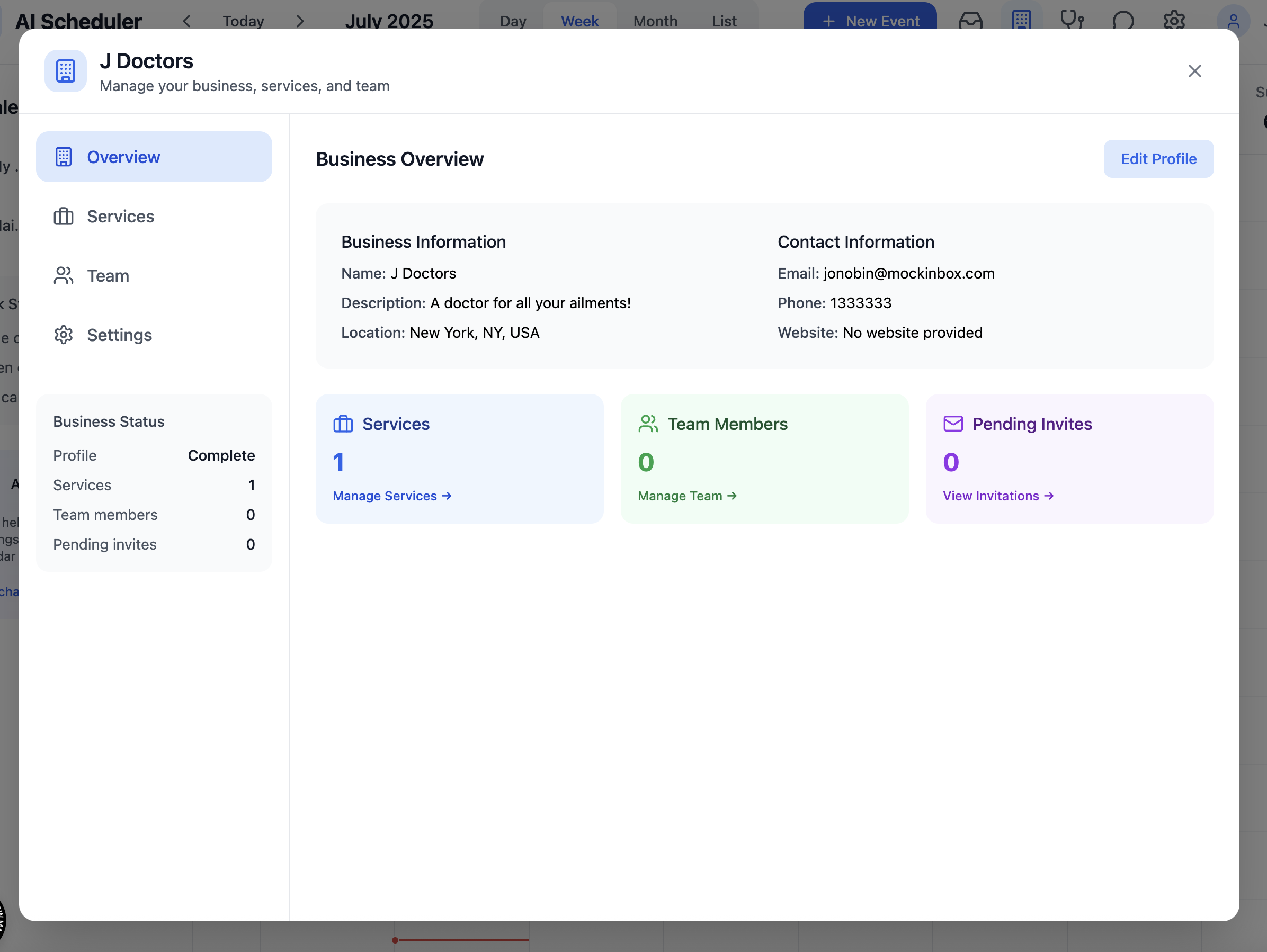
I noticed that moving personal appointments, like doctor visits, is an incredibly hard and manual person-to-person effort. Also, the calendars I've used seemed to be the destination of actions in other apps, and saw the opportunity to centralize many of the external pieces that go into booking appoints, including service discovery, calling to re-schedule, etc. This seemed like the perfect opportunity to automate with the power of AI.
What it does
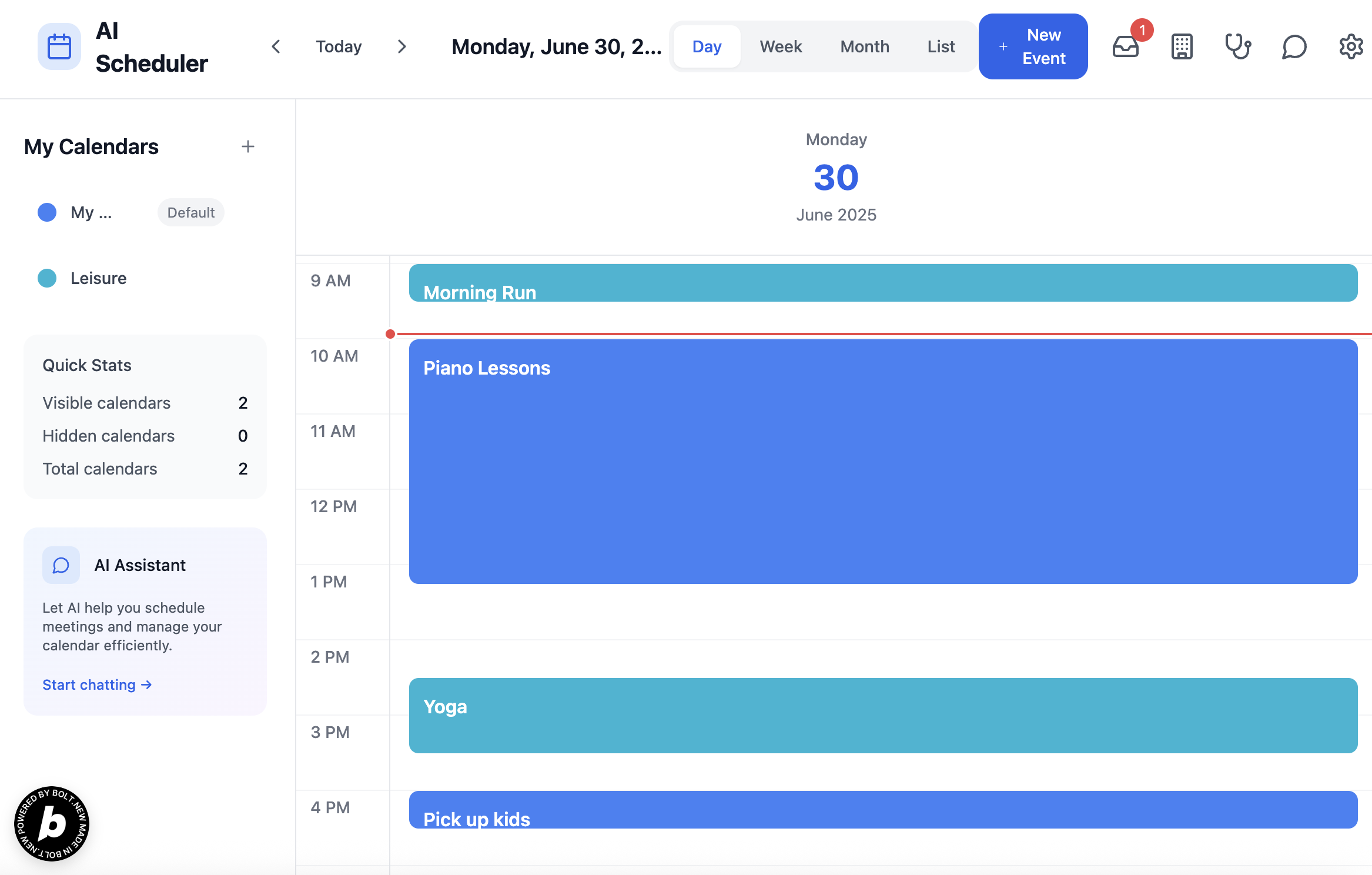
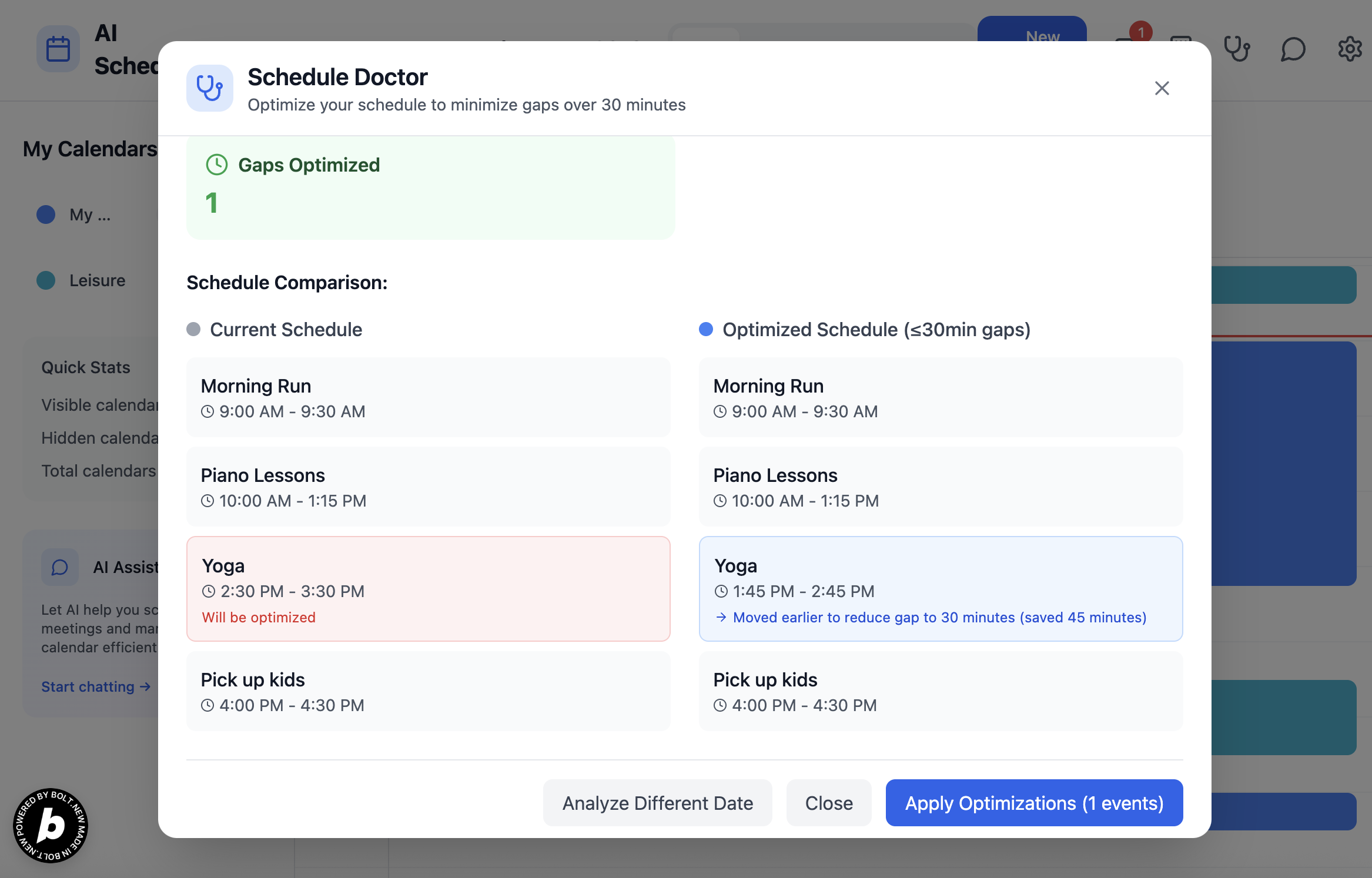
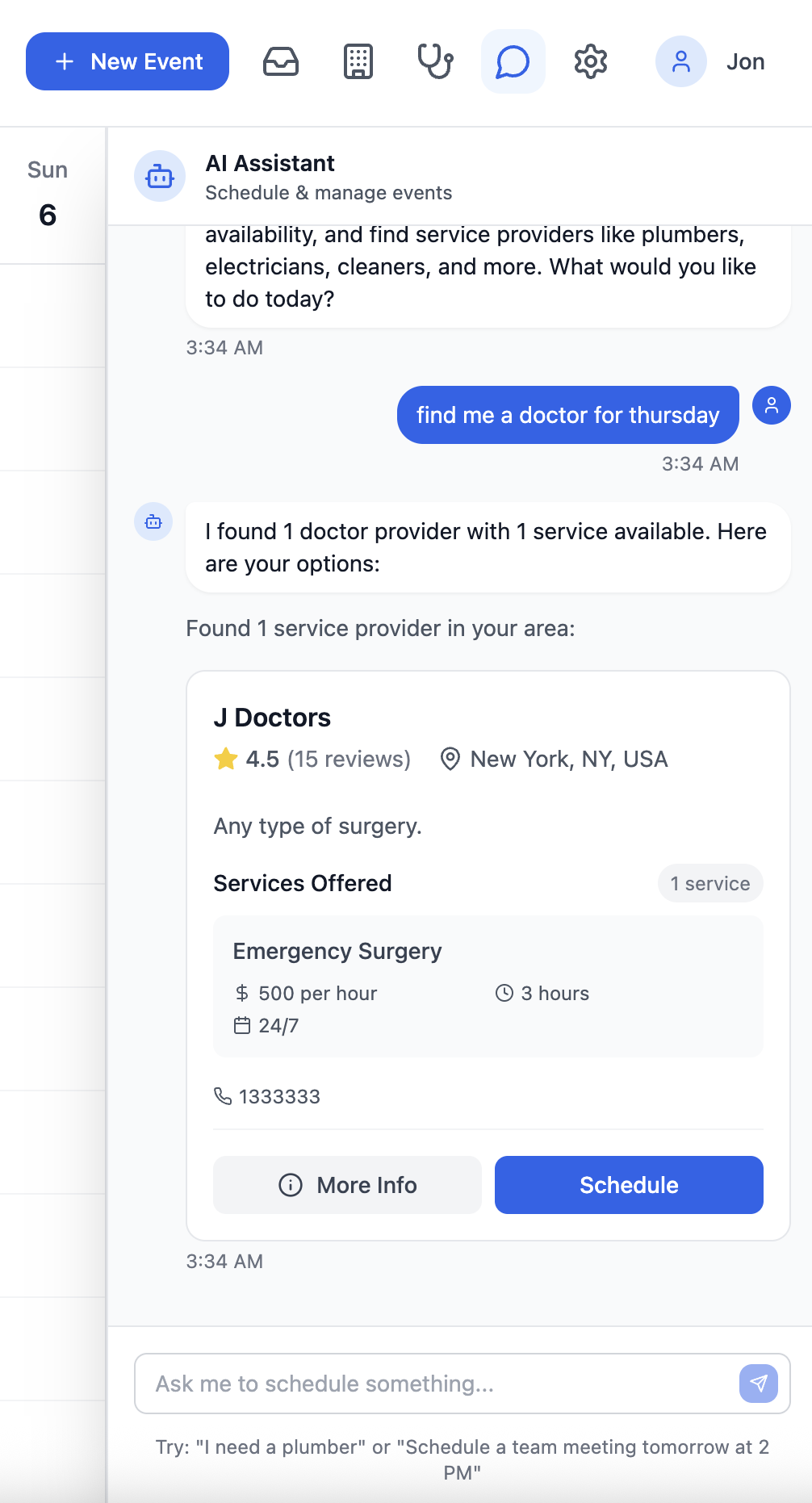
It is a calendar app, that has many of the traditional calendar features, such as event creation, update and deletion. It also has a chat experience that allows users to create events including discover services, through natural language. There is also a schedule doctor that analyzes the calendar events for a particular day, and optimizes the schedule by minimizing gaps between events. Finally, all of this comes together with an event update system that asks required attendees to approve/reject a new proposed time.
How we built it
I built the React-based web application wholly using bolt, including the edge functions that talk to Google Gemini.
Challenges we ran into
As the project grew, token costs also grew accordingly. We needed to manage the growing project to keep token use under control. Timezones were also a large challenge when booking events through the AI scheduler.
Accomplishments that we're proud of
Building of the app itself, given its complexity.
What we learned
Refactoring the application into several small files can optimize token use, but as a project grows, there are not many good methods for minimizing token overuse. Building full agentic systems in Bolt.new is possible but there are challenges in organizing edge functions in a way that feels agentic.
What's next for AI Scheduler
Broader adoption of vendors and services, improving the quality of the AI chat system.
Built With
- gemini
- react
- supabase
- tailwind
- typescript

Log in or sign up for Devpost to join the conversation.