-
-
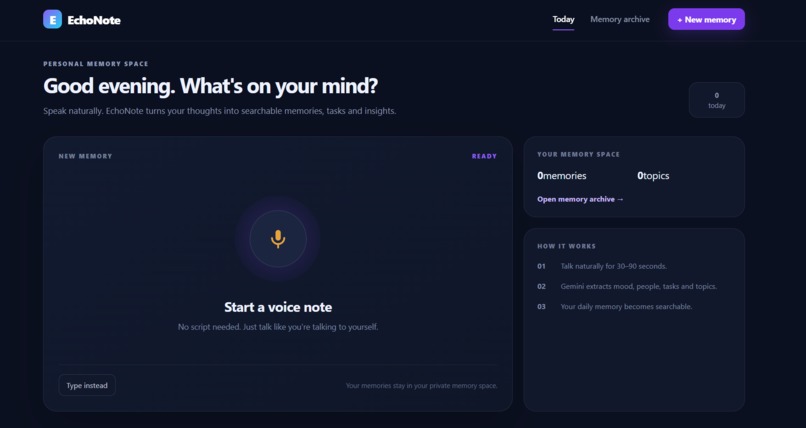
Main page
-
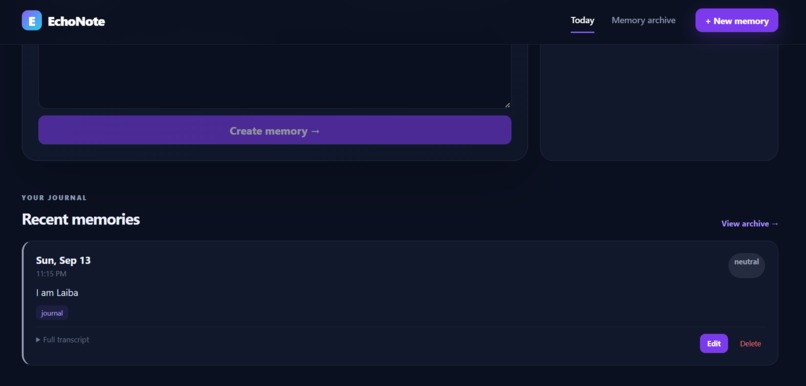
memory
-
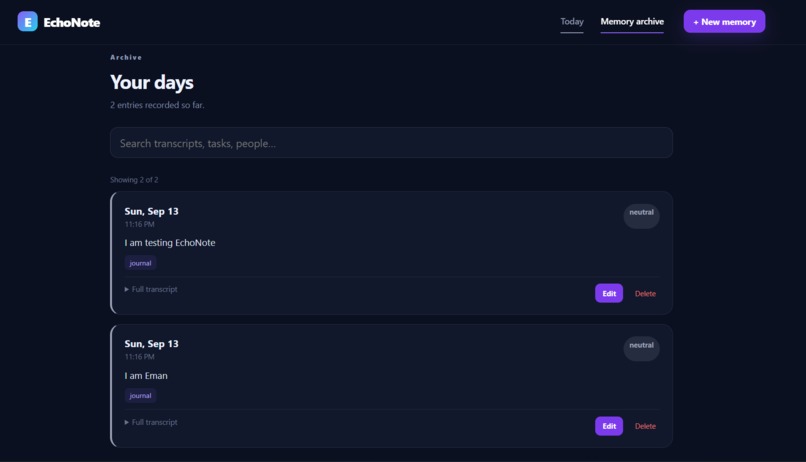
History
-
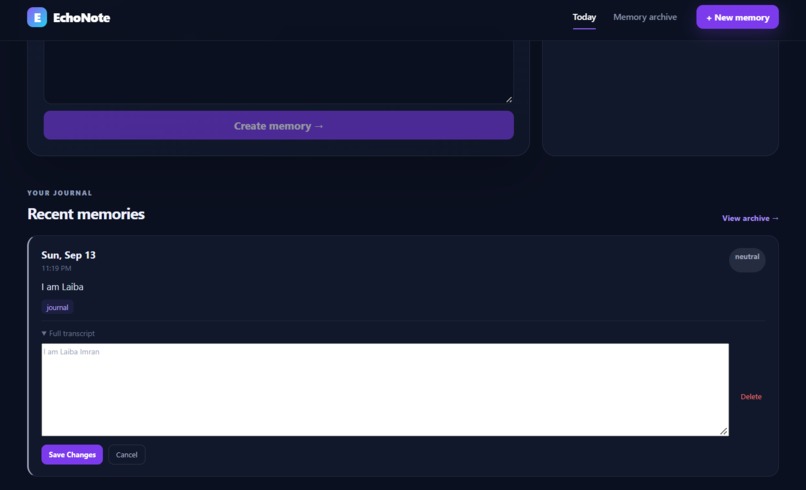
Edit
-
EchoNote
-
Problem
-
Solution
-
Product
-
Architecture
-
Impact
-
Future Roadmap
Inspiration
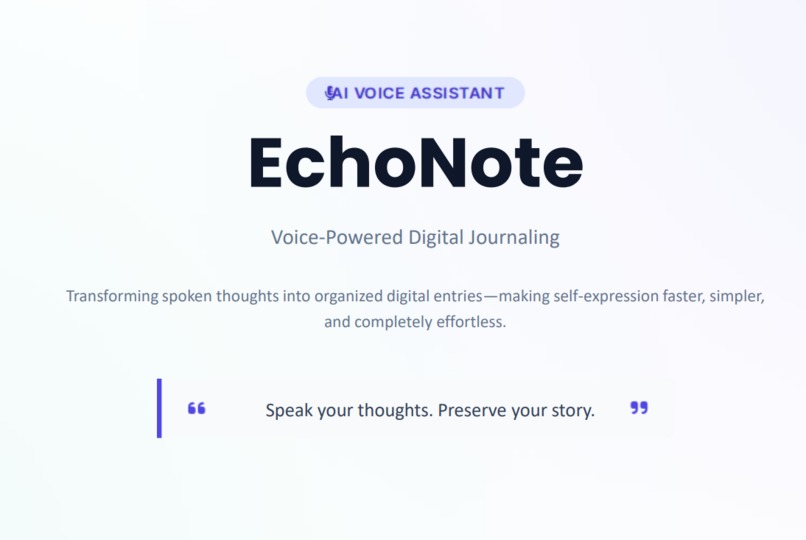
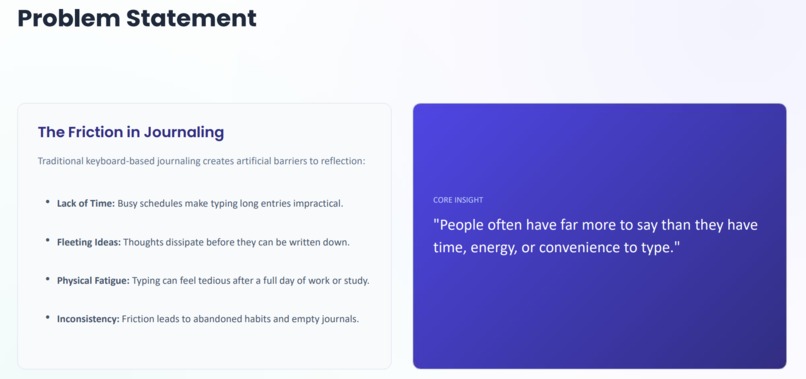
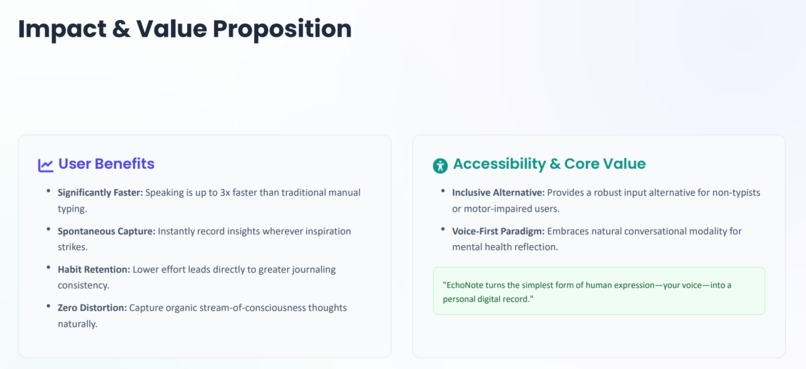
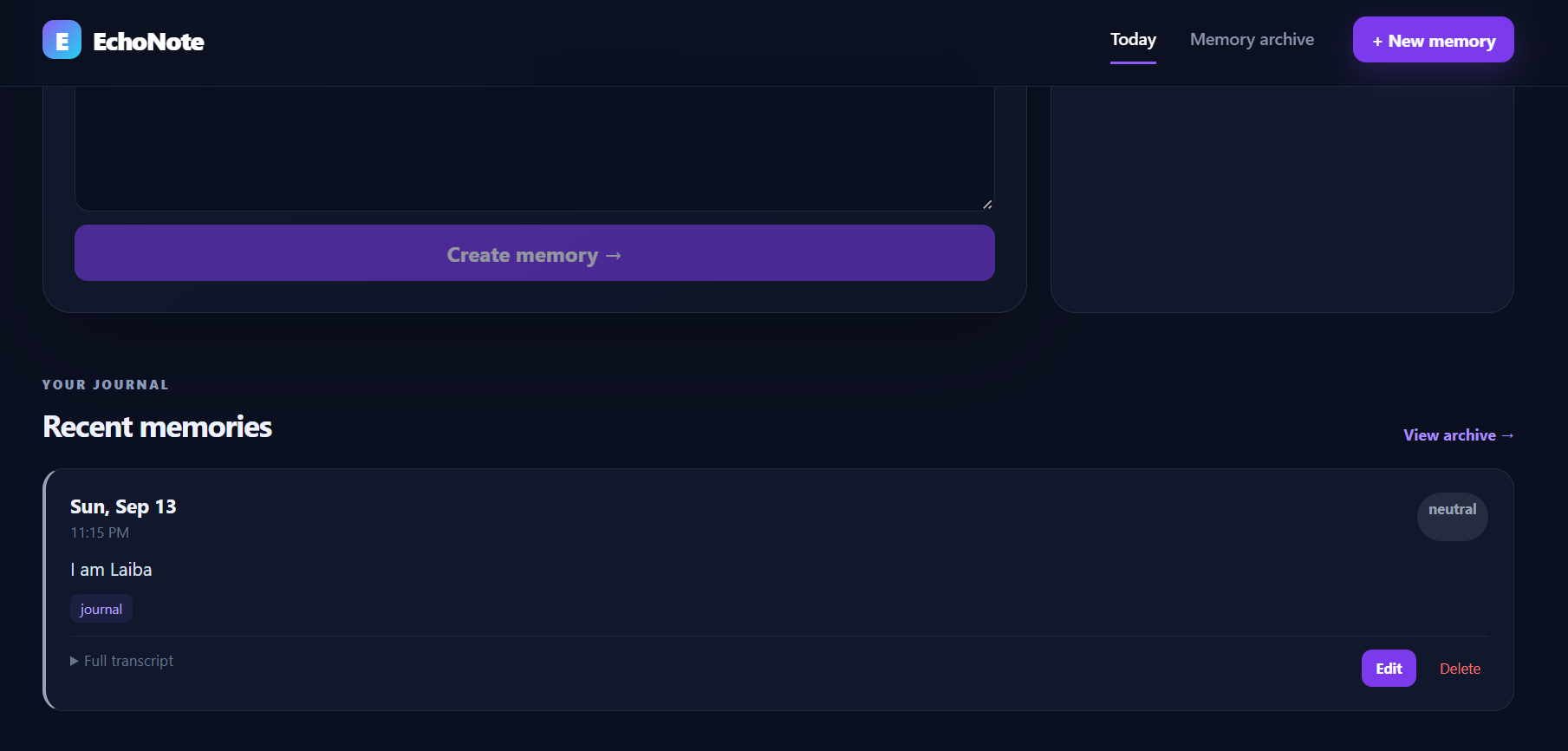
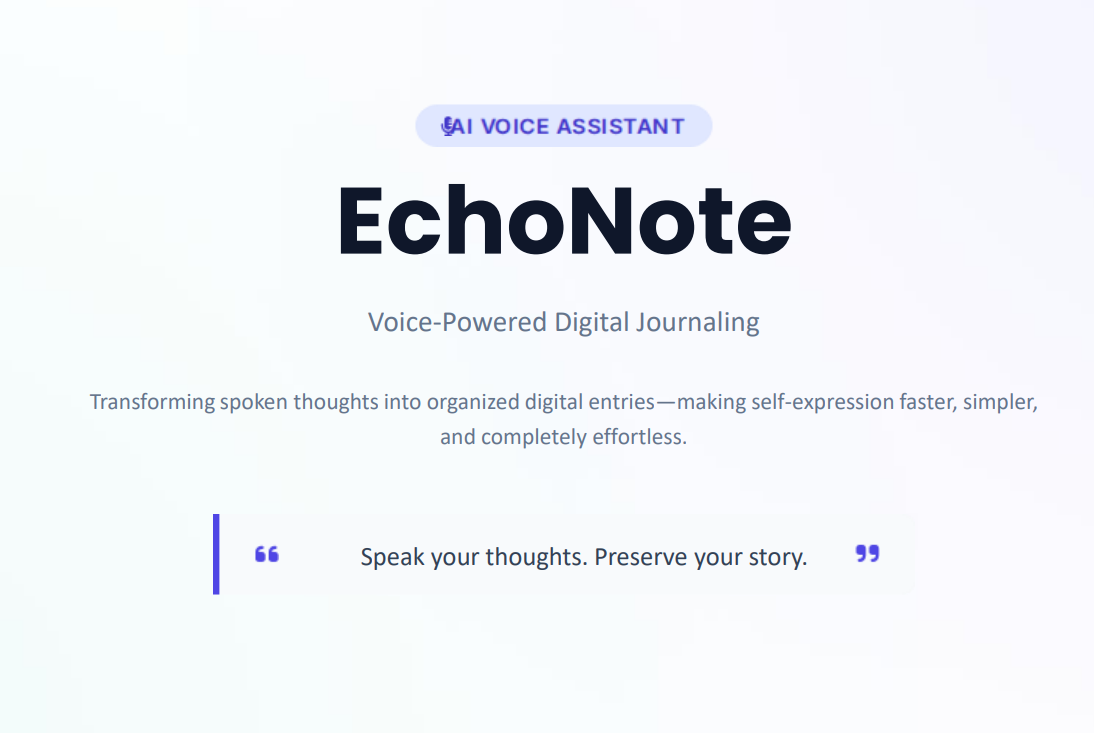
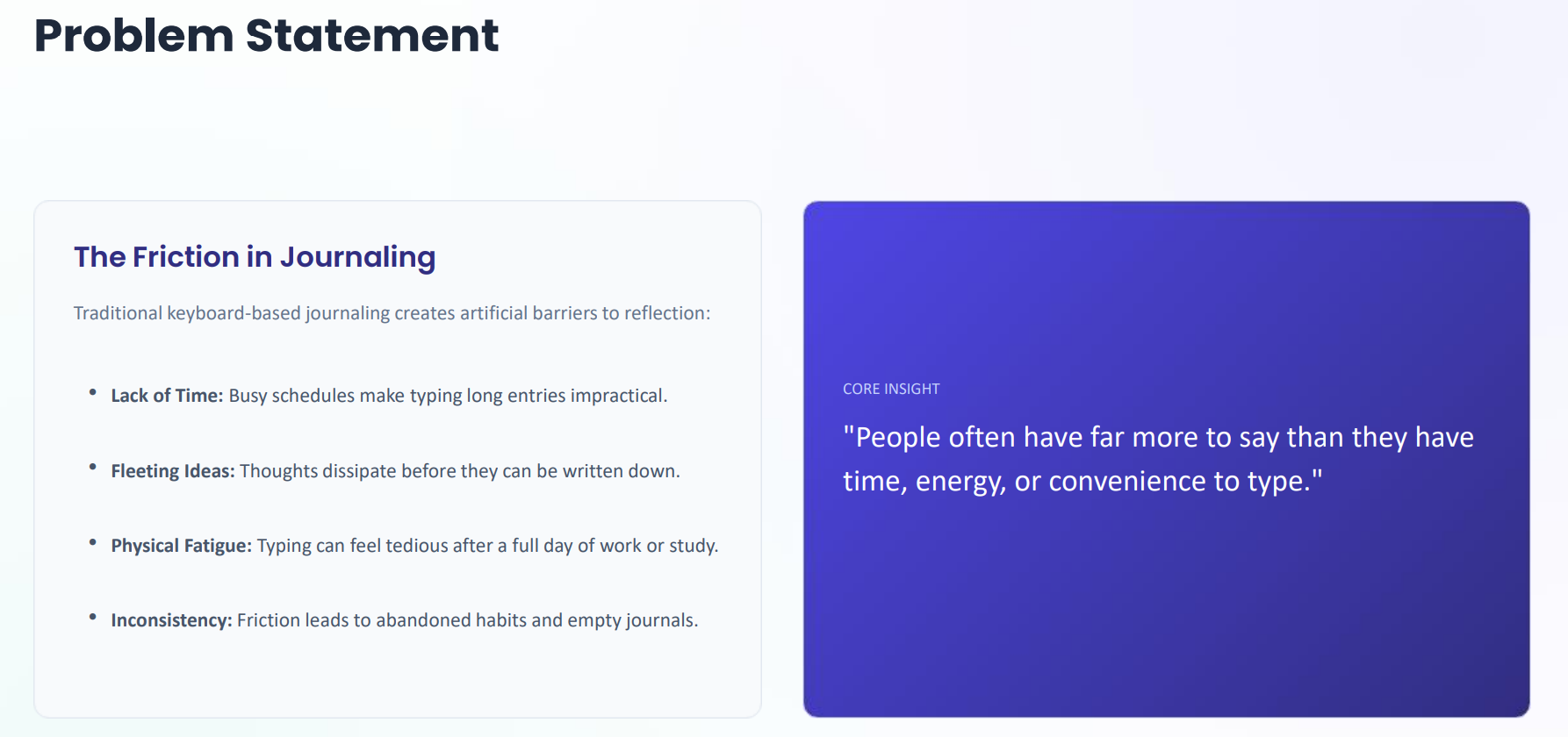
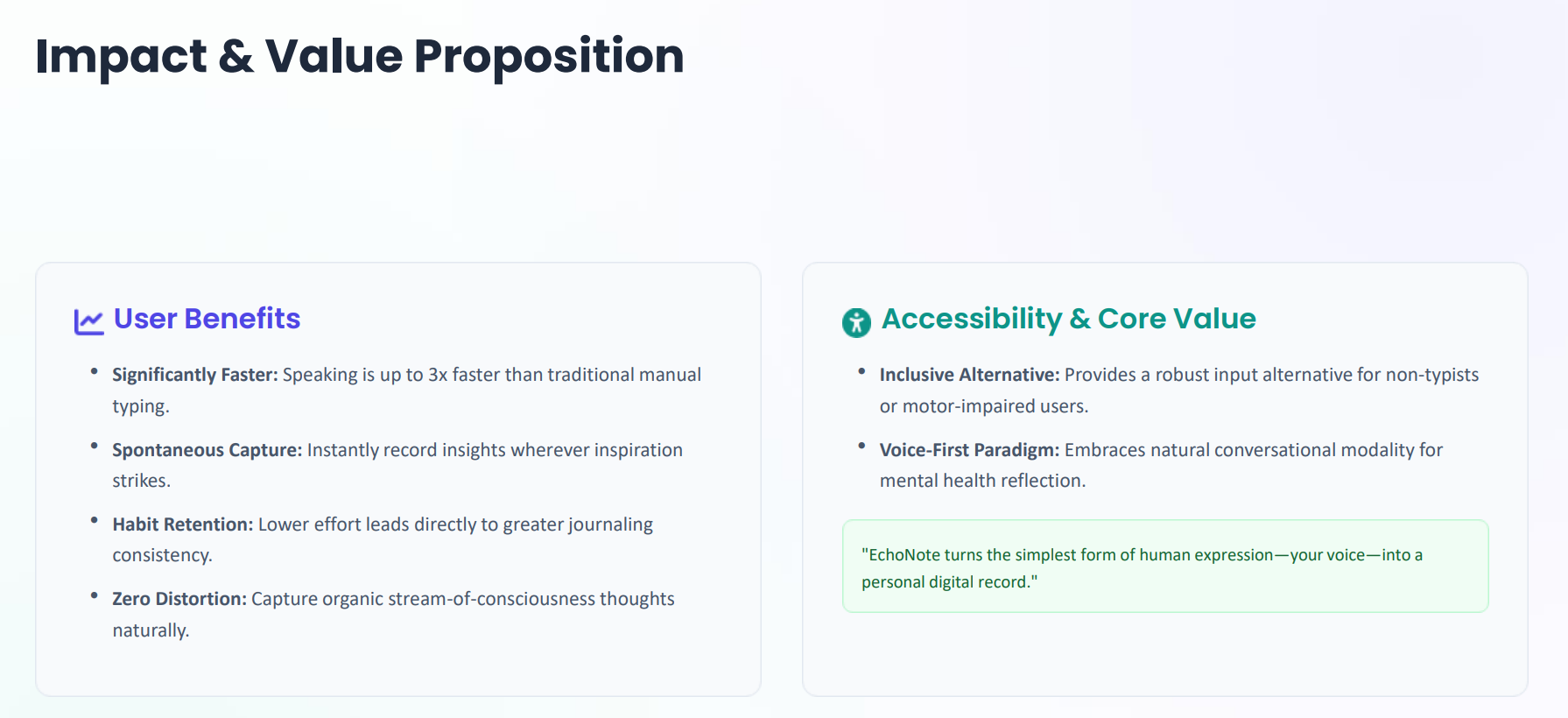
The idea for EchoNote stemmed from an everyday challenge: typing out notes, ideas, or thoughts can be time-consuming, especially when you want to capture something quickly. We wanted to create a tool that allows users to speak naturally and convert their voice into text, rather than typing everything manually. This concept led us to build EchoNote, a voice-to-text web application designed to simplify the note-taking process.
How It Works
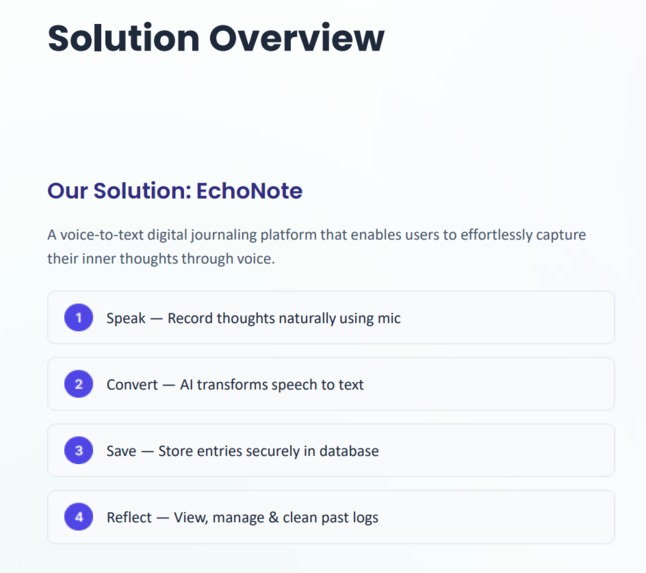
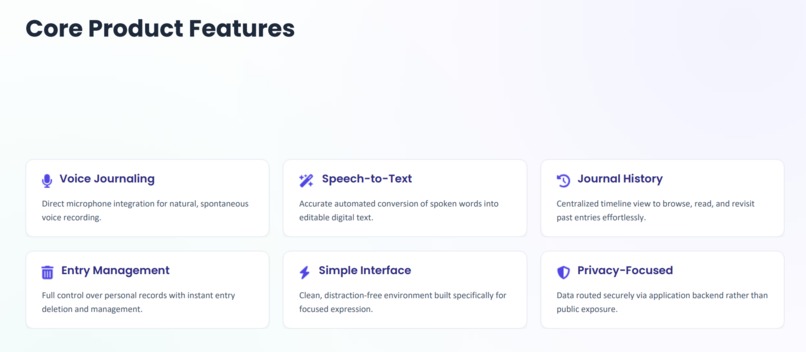
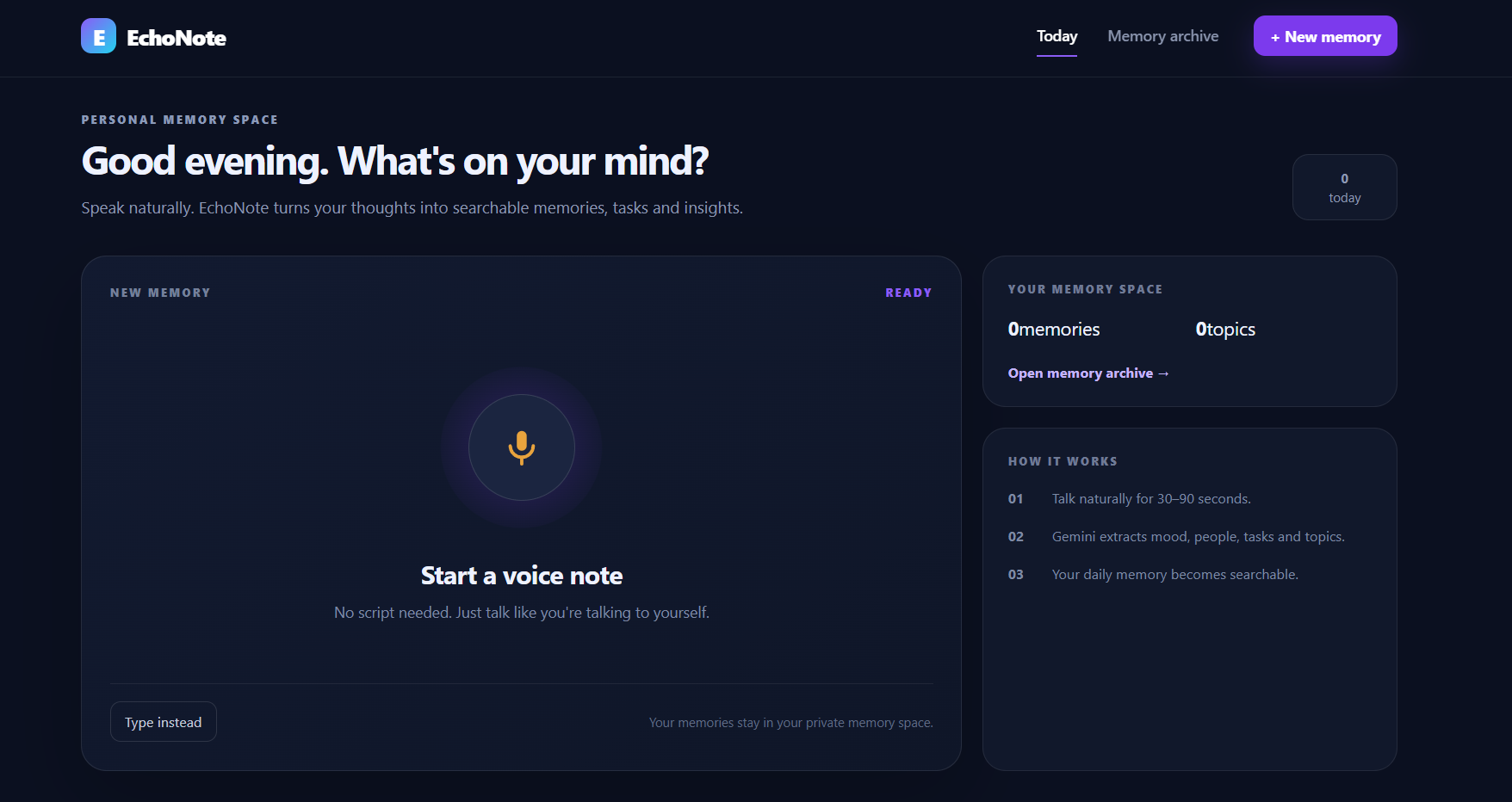
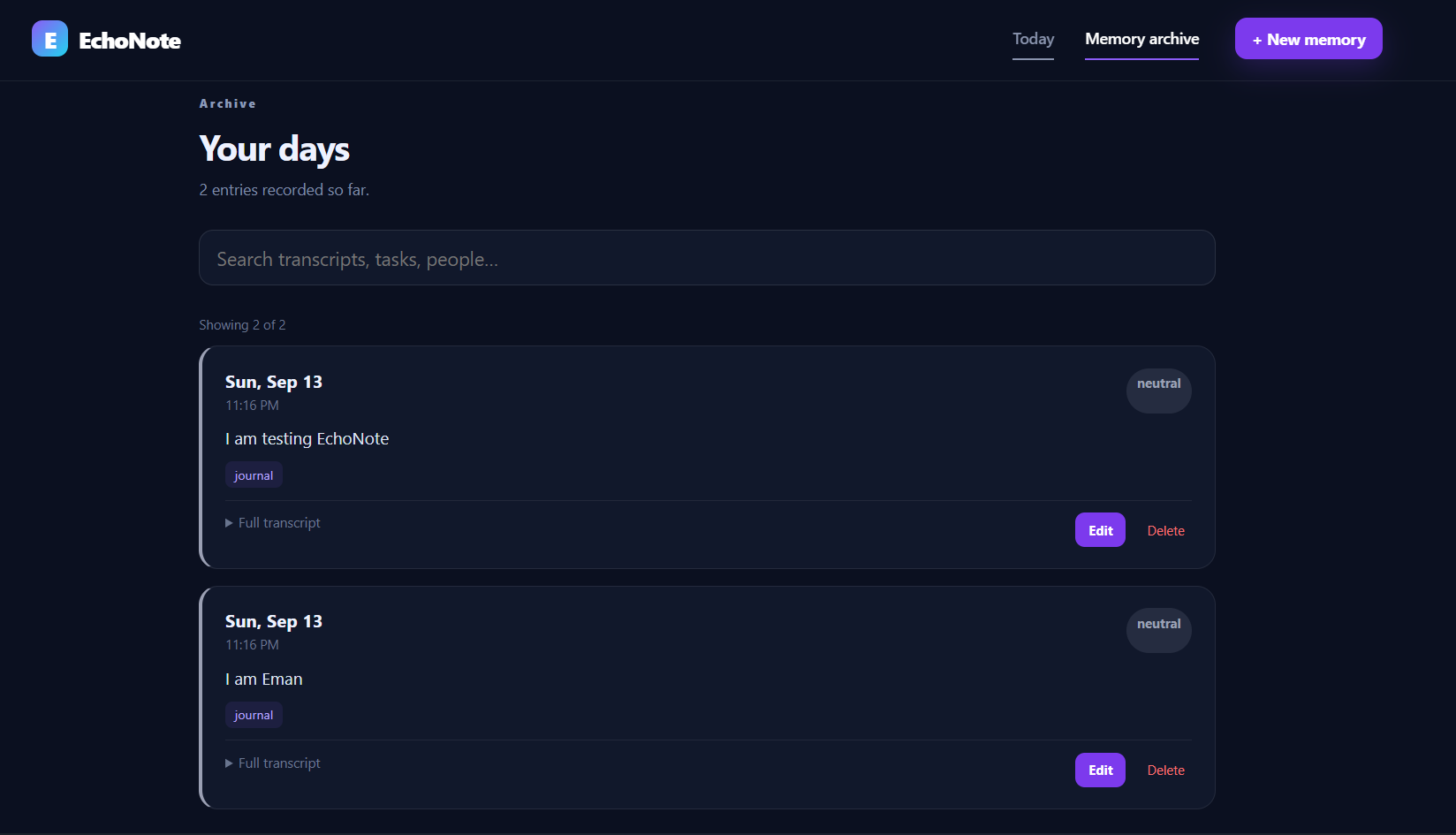
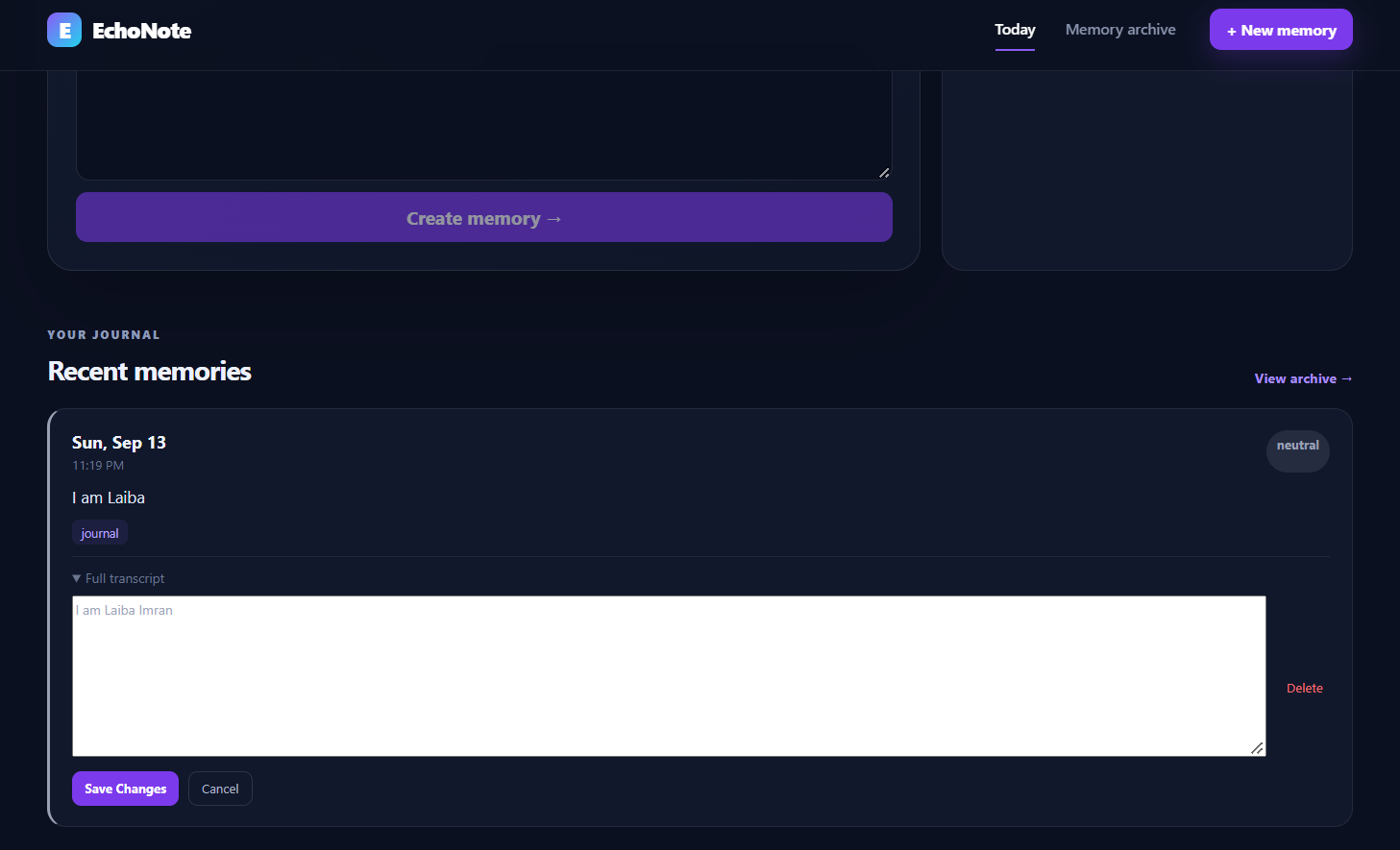
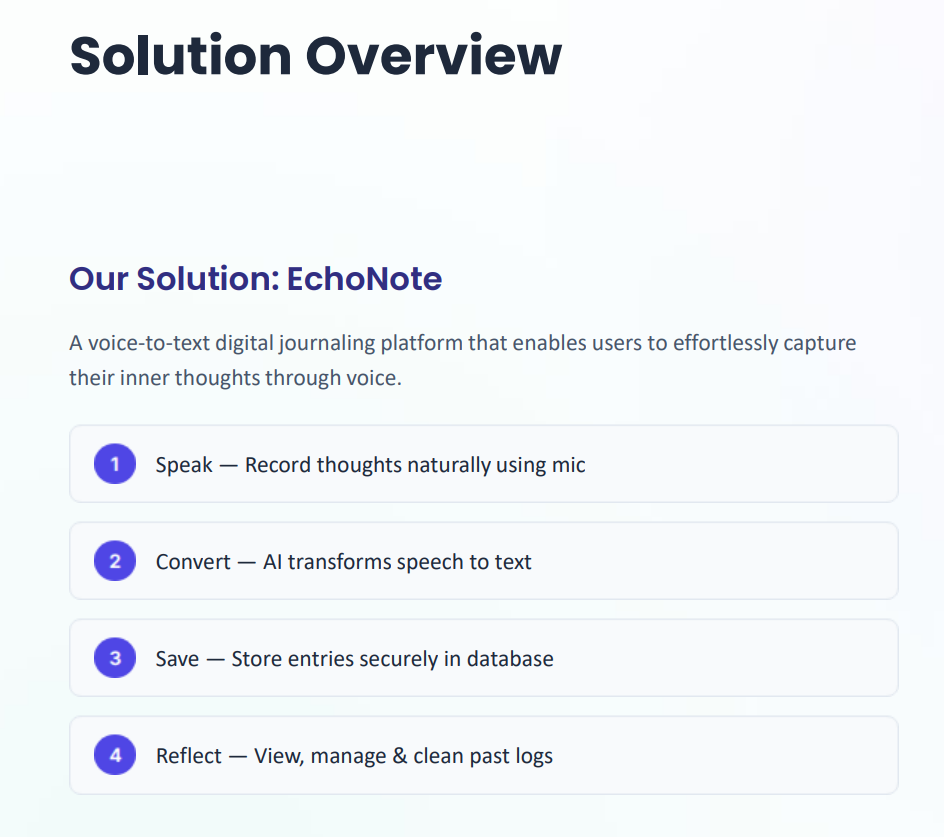
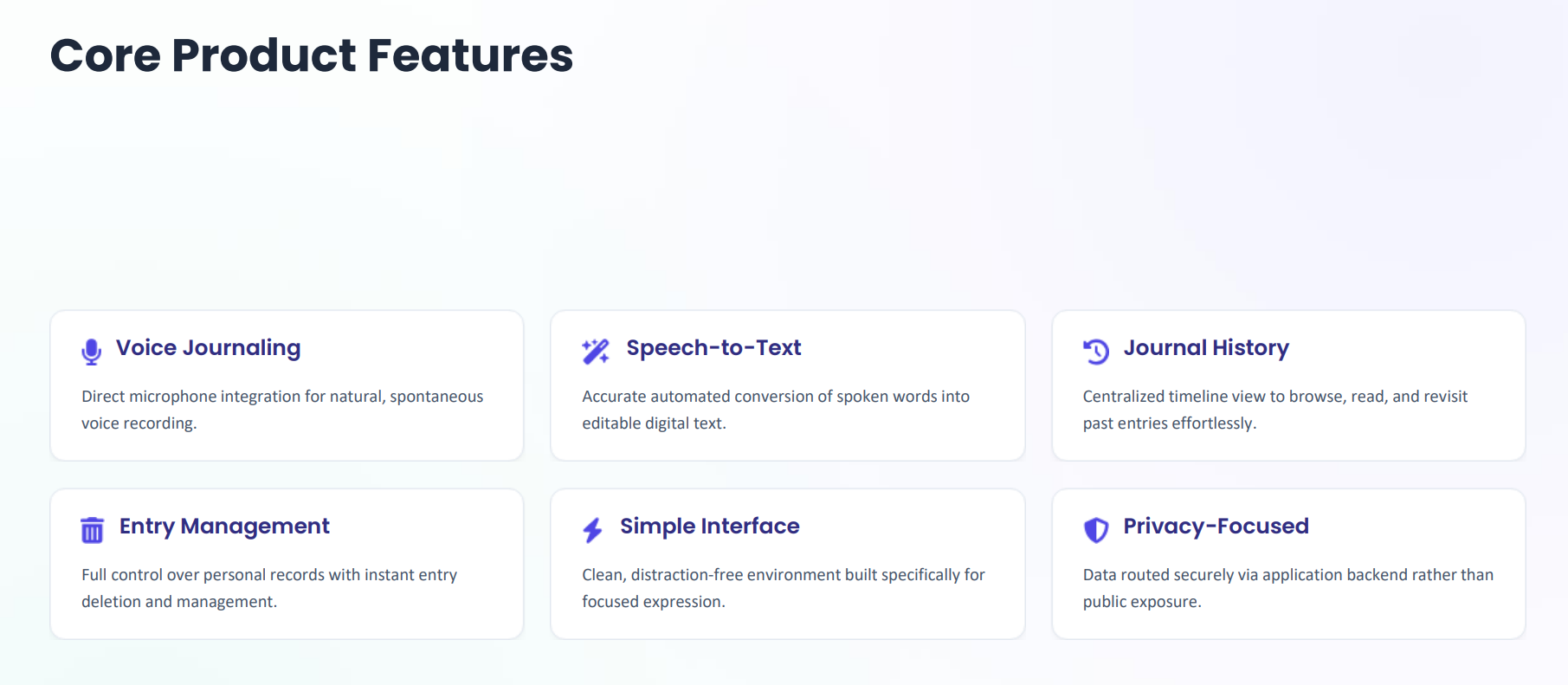
EchoNote is a web-based voice-to-text application that enables users to record their voice and convert it into written text. Users can record their voice directly within the application, submit the recording for processing, and view the generated text via the interface. Its core workflow is as follows: Recording → Submission → Processing → Conversion to Text → Display Our goal was to keep the experience simple so that users could focus on speaking rather than worrying about complex controls.
How We Built It
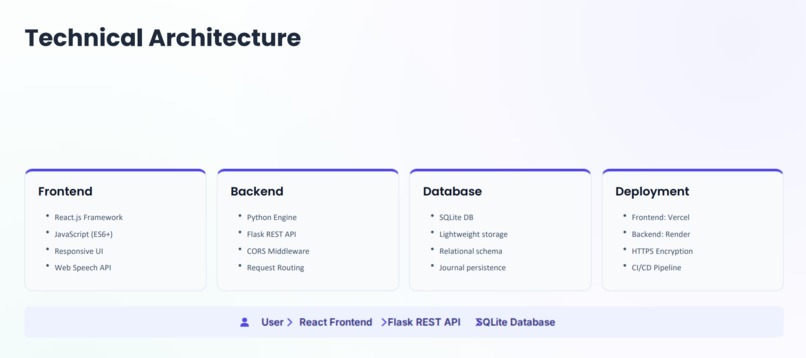
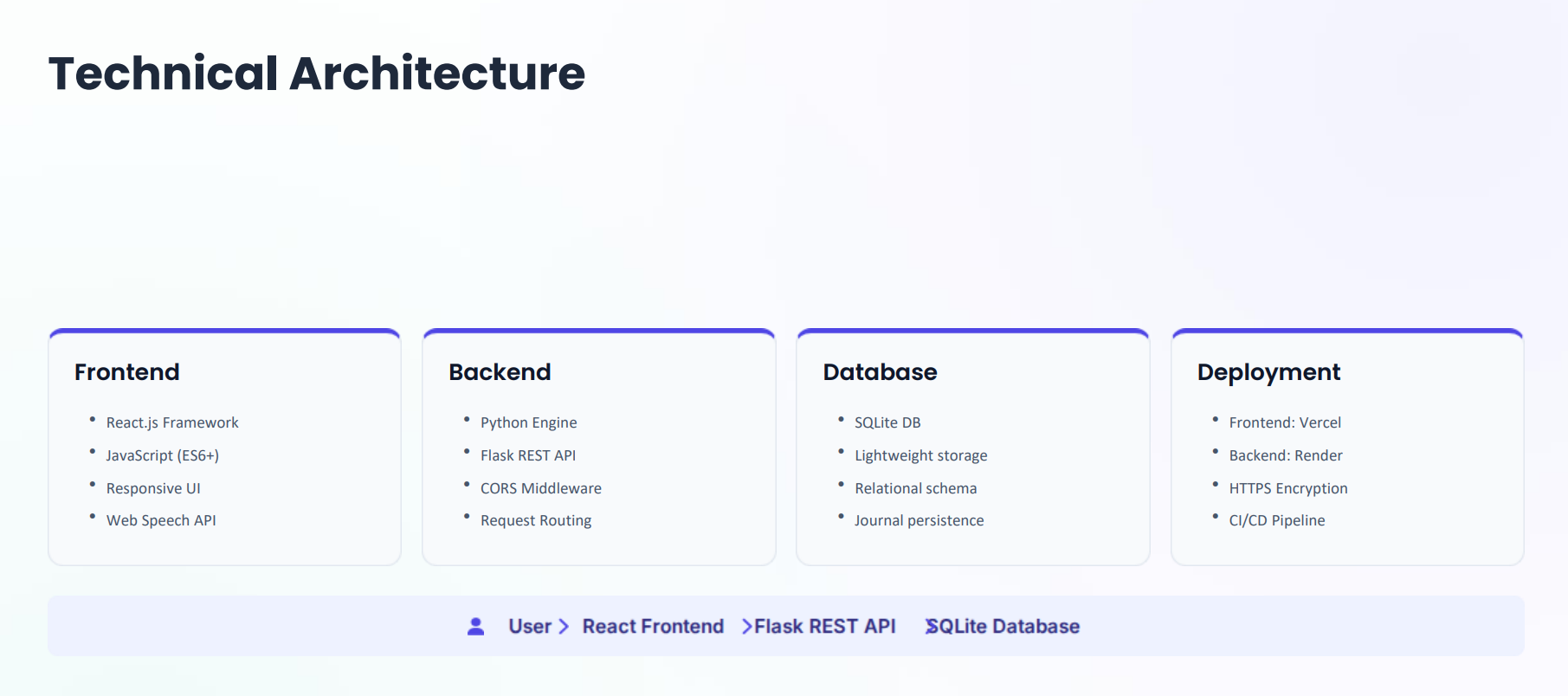
We developed EchoNote as a full-stack web application comprising both front-end and back-end components. The front-end was built using web technologies; it provides the interface for recording audio and displaying the resulting text. The back-end was developed using Python; it handles API requests and voice-to-text processing. The front-end communicates with the back-end via an API. We then deployed the front-end and back-end separately to enable online access to the complete application. Its overall architecture is as follows: User ↓ EchoNote Front-end ↓ Voice Recording ↓ Back-end API ↓ Speech-to-Text Processing ↓ Generated Text ↓ Front-end Display
We used GitHub for source code management, Vercel for front-end deployment, and Render for back-end deployment.
Challenges Faced
One challenge was correctly connecting the front-end and back-end after deployment. The application behaved differently in the deployed version compared to the development environment. We had to troubleshoot issues related to API URLs, back-end configuration, environment variables, ports, and the communication between the two deployed services. Another challenge was ensuring that the recorded audio was accurately transmitted from the front-end to the back-end and processed successfully. The process of resolving these issues (debugging) taught us that building a project involves more than just writing code; it also requires understanding how the different parts of the application interact within a real-world production environment. # Achievements We Are Proud Of We are proud to have successfully transformed an idea into a functional full-stack web application that is accessible online. Some of the achievements we are particularly proud of include:
- Building a voice recording interface
- Connecting the frontend to the Python backend
- Implementing a speech-to-text workflow
- Establishing communication between frontend and backend APIs
- Deploying the frontend and backend separately
- Debugging deployment and connectivity issues
- Taking the project from the development stage to a functional application
Most importantly, we gained practical experience in building something beyond a simple local project.
What We Learned
EchoNote taught us a great deal about the development process. We learned how to:
- Build and connect the frontend and backend
- Work with APIs
- Handle audio recording within a web application
- Integrate speech-to-text functionality
- Configure environment variables
- Deploy web applications
- Debug frontend-backend communication issues
- Work with GitHub and deployment platforms One key lesson was that deployment is an integral part of development; a project that works locally still requires configuration and testing before it can function reliably online.
What's Next for EchoNote
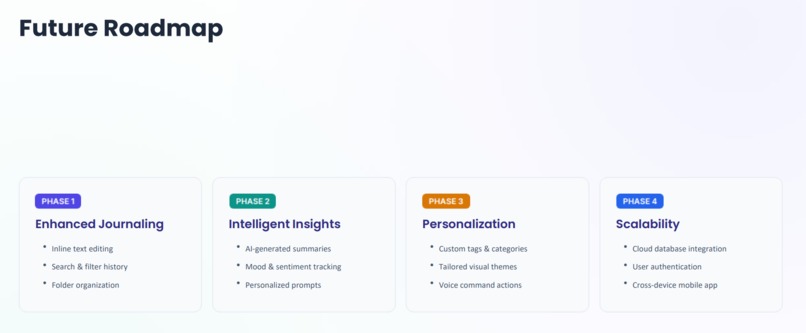
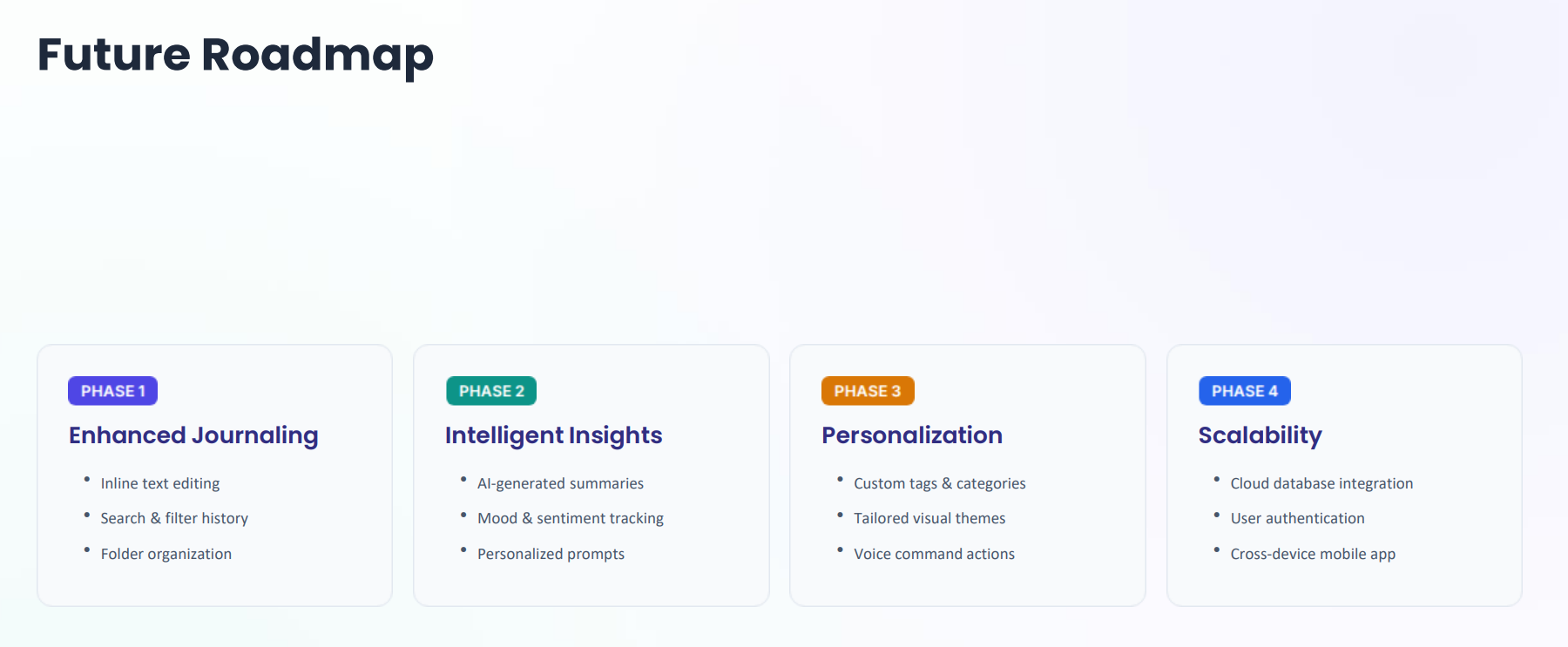
We want to continue expanding EchoNote beyond its current speech-to-text capabilities. Some features we would like to add in the future include:
- User accounts for notes
- Downloading transcripts as TXT or PDF files
- Multi-language support
- Automation Formatting
- AI-powered summaries
- Search functionality for notes
Our long-term goal is to transform EchoNote into a comprehensive AI-powered voice note and productivity platform, where users can not only convert their speech to text but also organize and summarize their ideas with ease.
Built With
- css
- flask
- html
- integration
- javascript
- python
- render
- restapi
- speech-to-text
- vercel
- webdevelopement

Log in or sign up for Devpost to join the conversation.