Inspiration
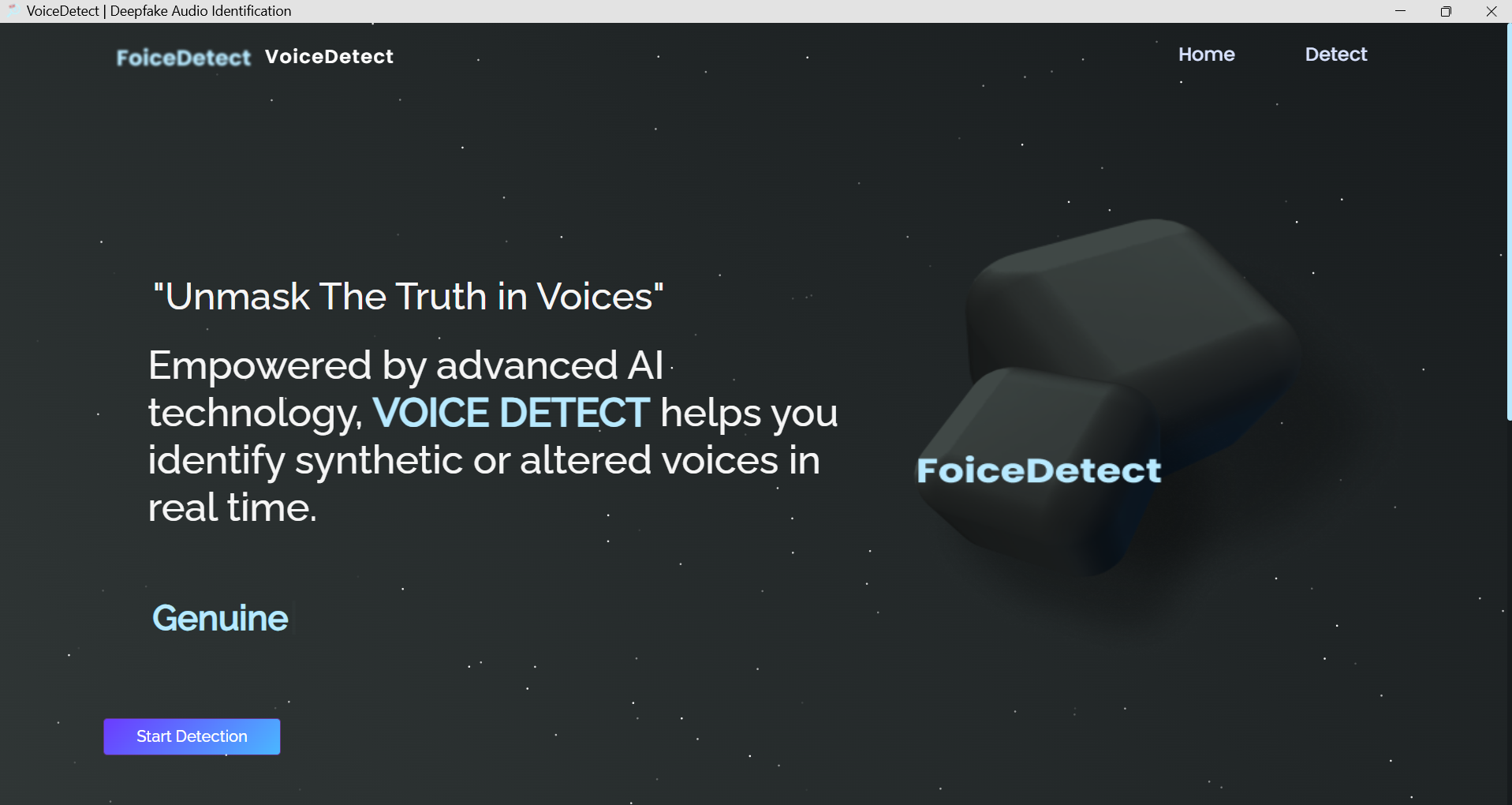
We were inspired by the growing problem of AI-generated voices being used in scams and fraud. As voice cloning technology becomes more advanced, it is becoming harder to distinguish real human voices from synthetic ones. We wanted to build a solution that helps people identify potentially fake voices and makes digital communication safer.
What it does
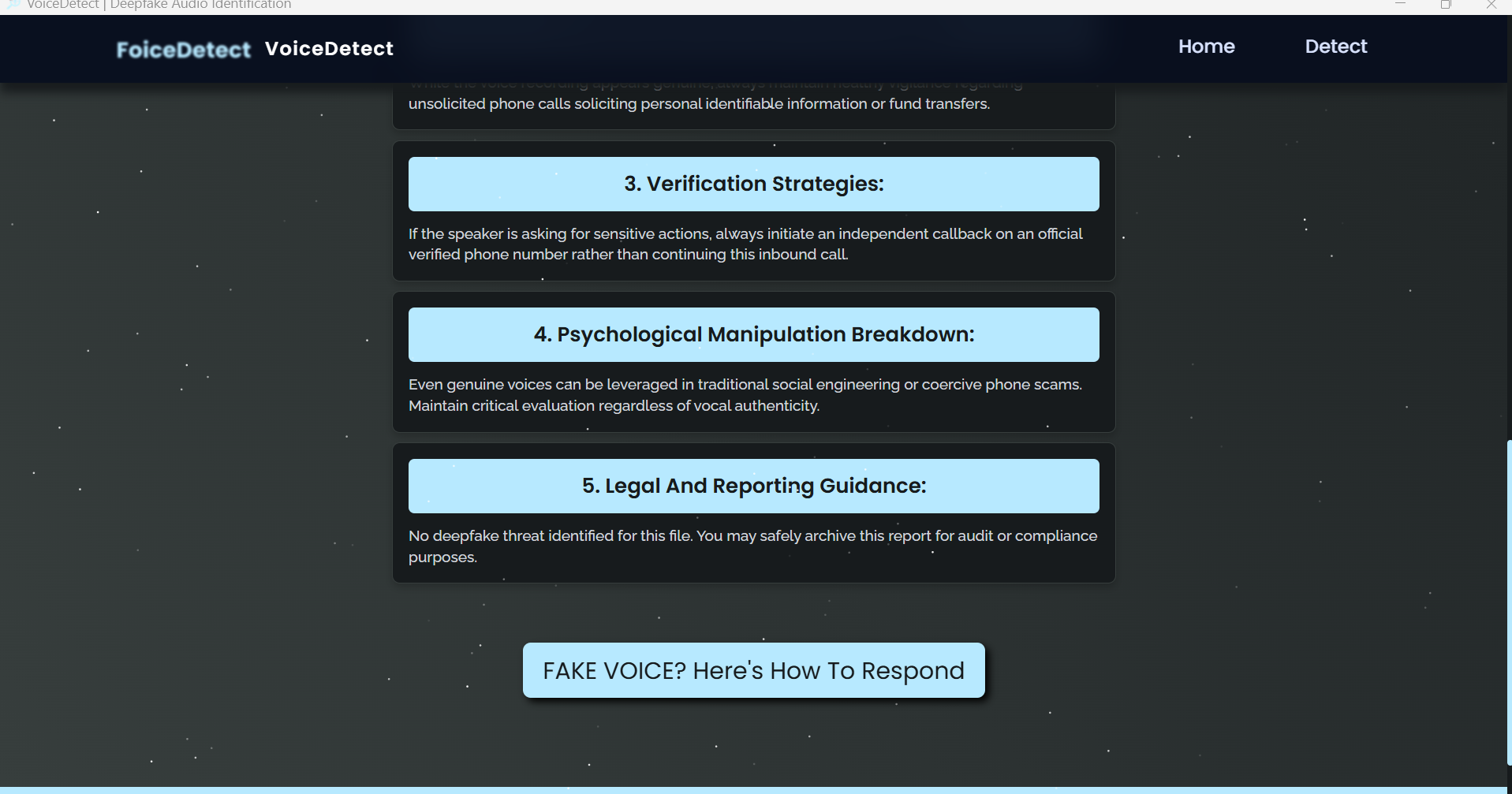
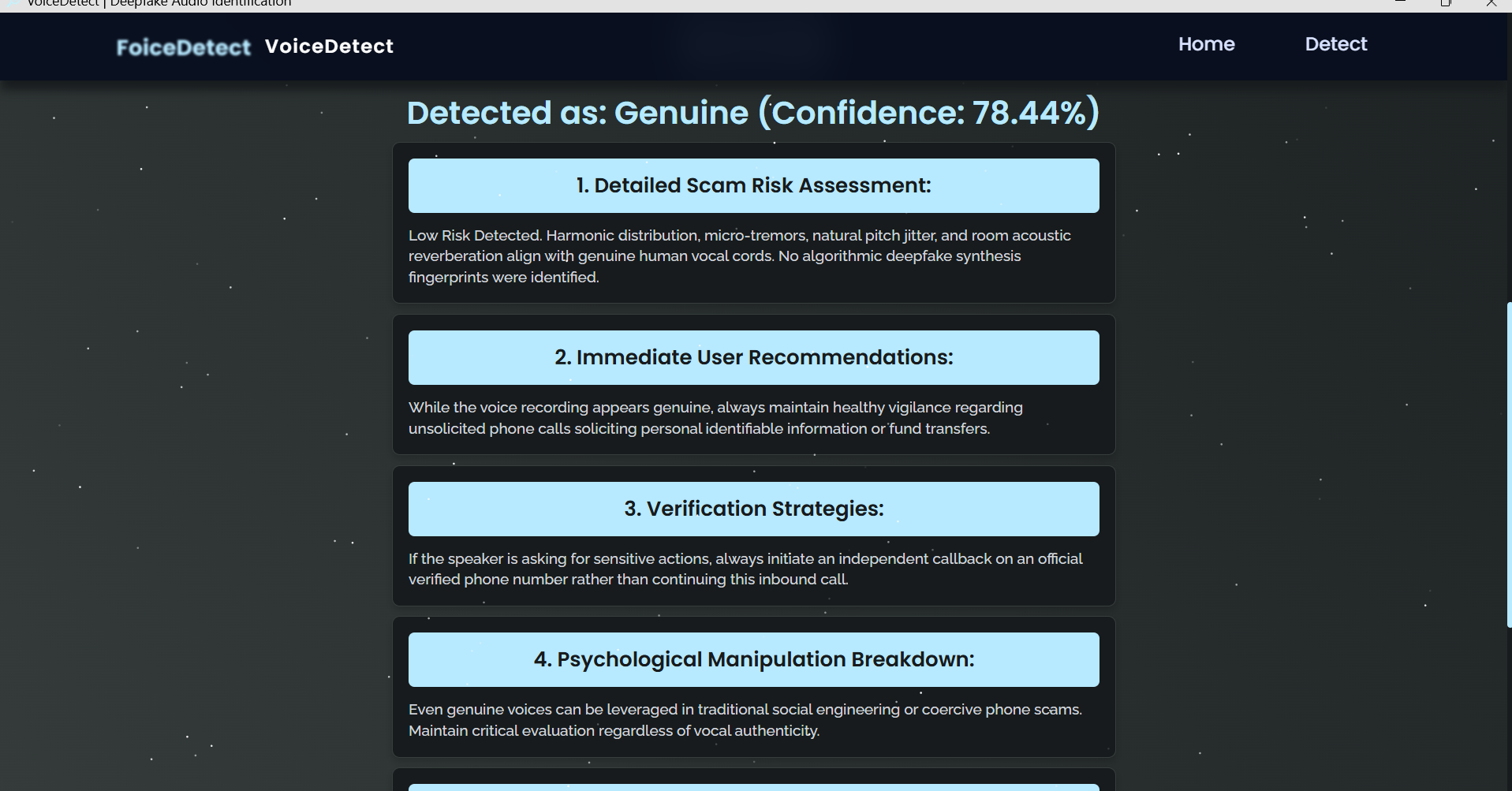
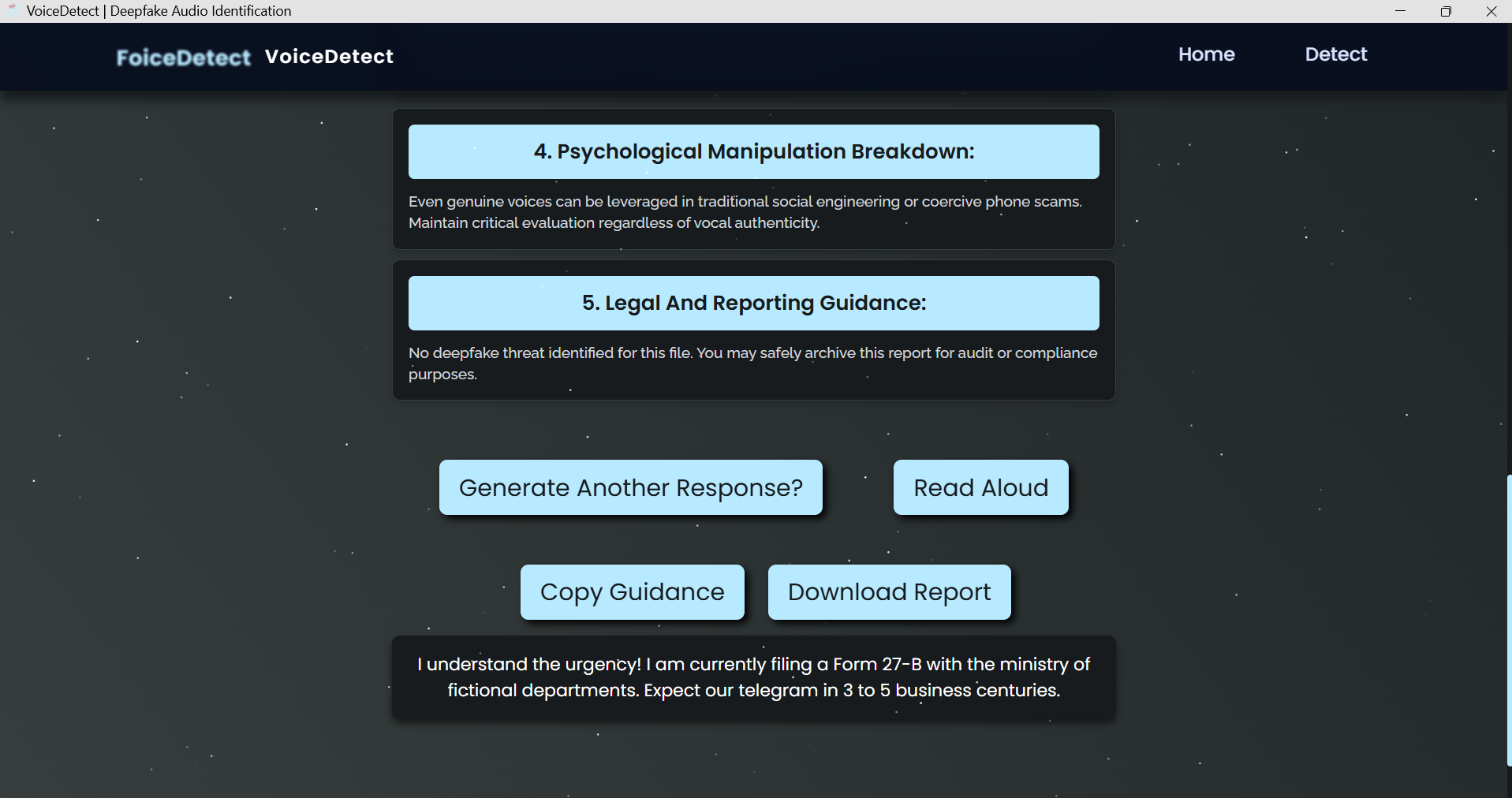
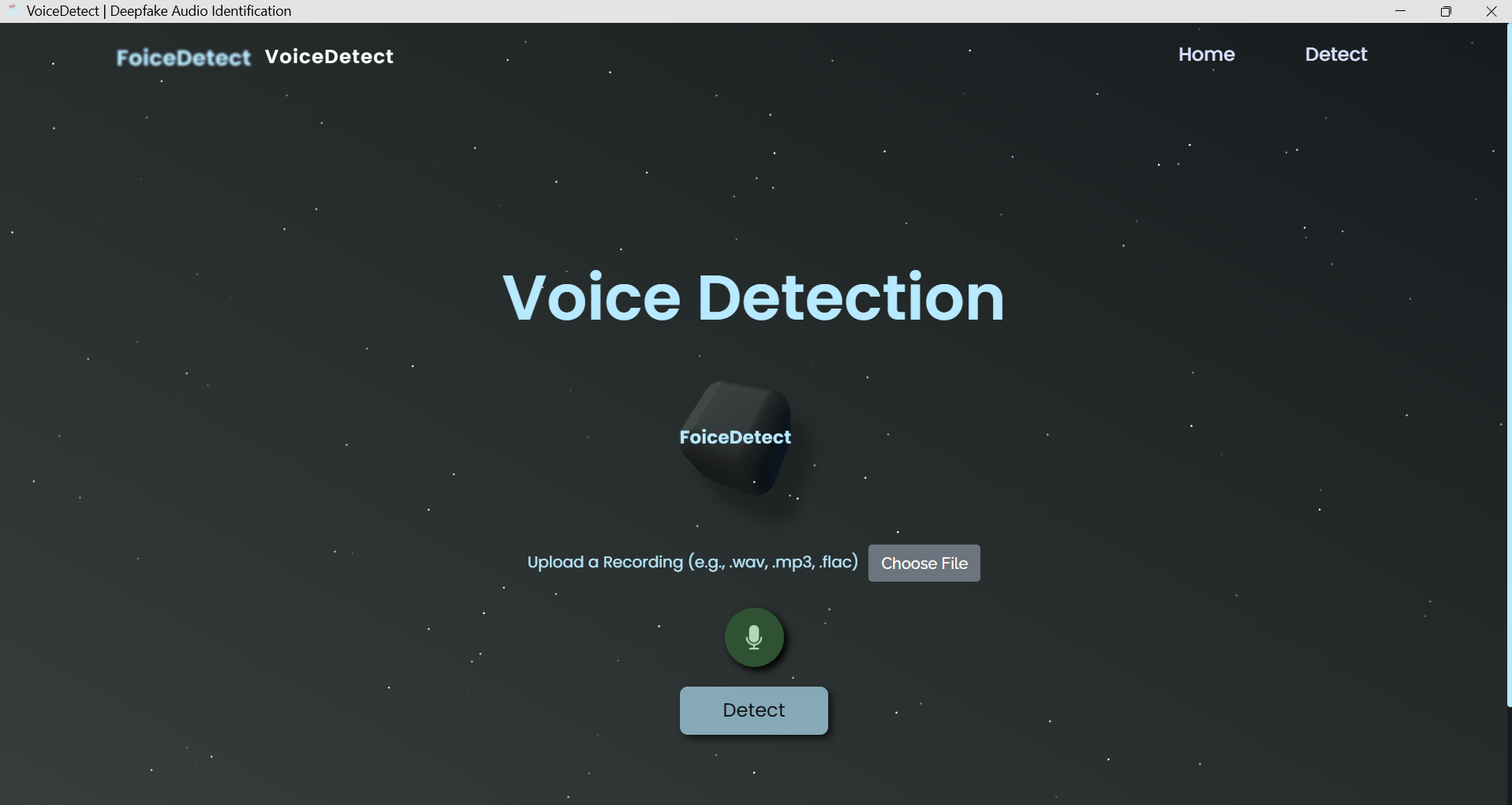
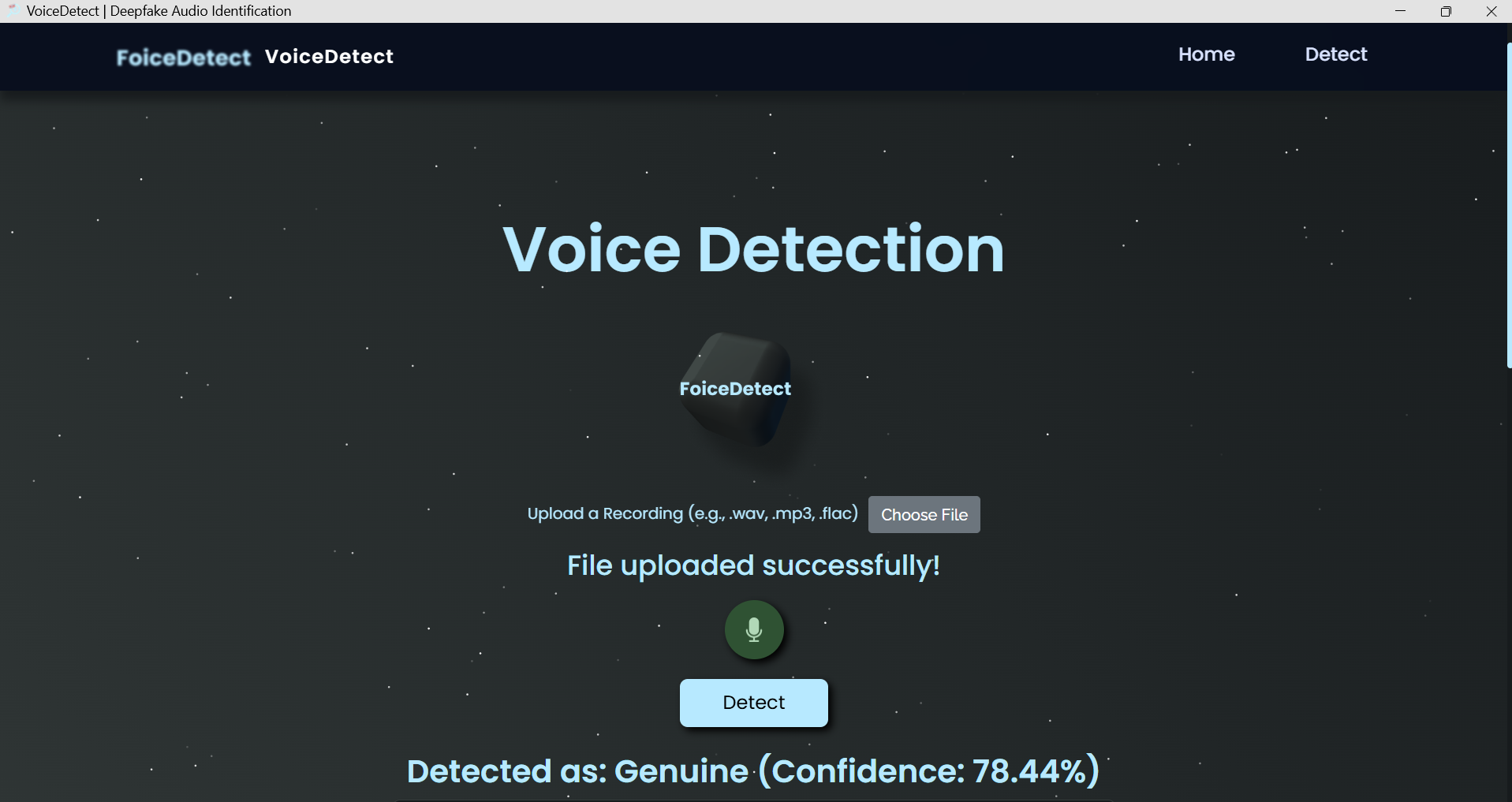
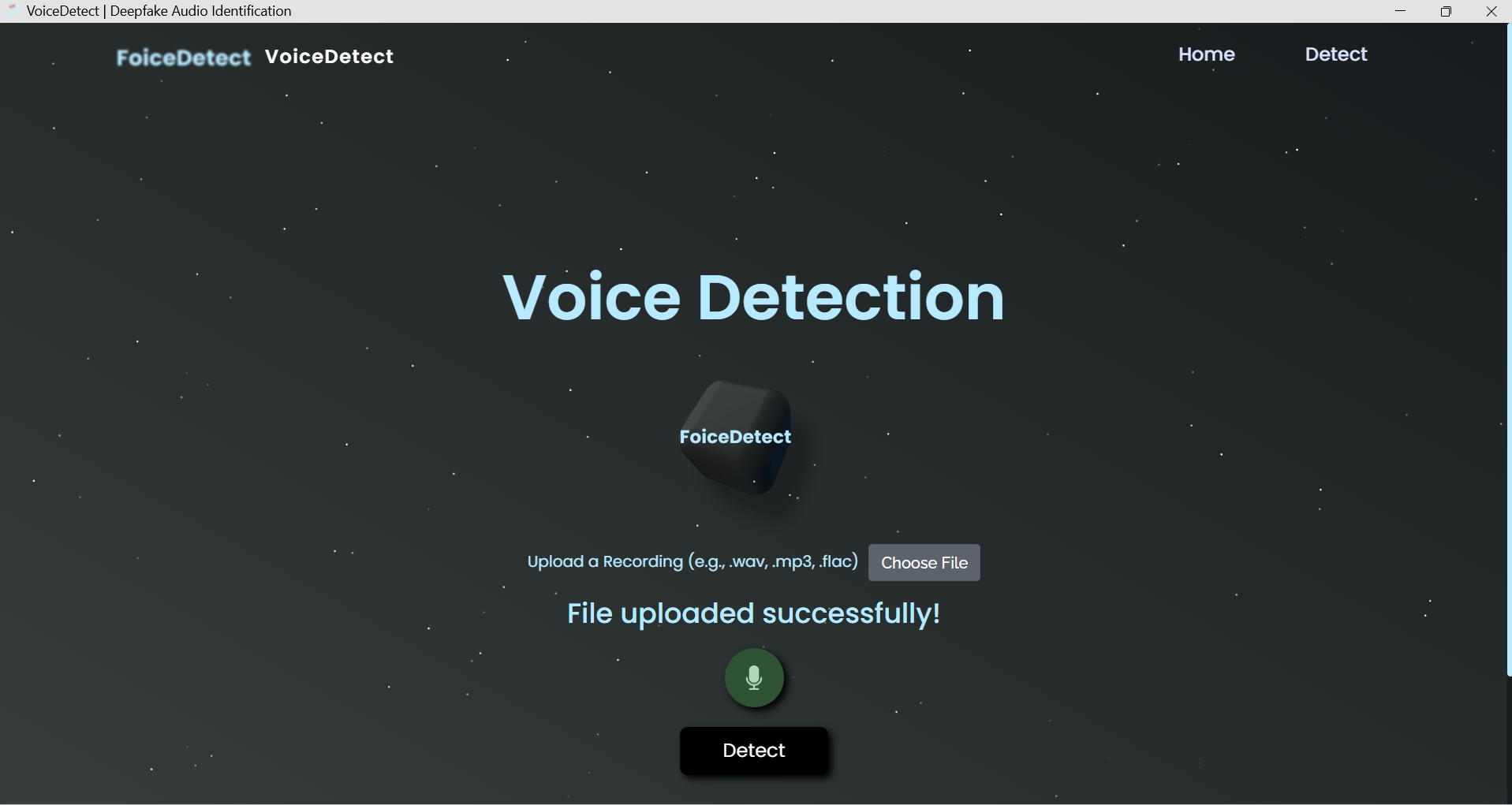
AI Scam Voice Detector, also known as VoiceDetect, is a machine learning application that analyzes audio and predicts whether a voice is real or AI-generated. Users can upload audio files or record their voices through a microphone. The system extracts acoustic features from the audio and uses a Random Forest classifier to make predictions. It also supports offline detection, stores analysis history, and generates reports.
How we built it
We built VoiceDetect using React for the frontend and Django REST Framework for the backend. Python libraries such as Librosa, NumPy, SciPy, and scikit-learn are used for audio processing and machine learning. We extract features such as MFCCs, spectral characteristics, and zero-crossing rate, then use a trained Random Forest model for classification. SQLite stores application data and detection history. Optional online services provide additional analysis capabilities.
Challenges we ran into
One of our main challenges was processing audio files in different formats and extracting useful features for classification. We also had to connect the frontend, backend, and machine learning model into one working application. Supporting offline detection while keeping the application easy to use was another important challenge. We learned that reliable results depend on the quality and diversity of training data, as well as proper model evaluation.
Accomplishments that we're proud of
We are proud of building a complete full-stack AI application that combines audio processing, machine learning, and a user-friendly interface. We implemented audio upload and microphone recording, automated voice classification, detection history, and report generation. We are especially proud of making offline detection a core feature, helping users analyze audio without always depending on online services.
What we learned
Through this project, we learned how to extract audio features, train and use machine learning models, build REST APIs, and integrate a React frontend with a Django backend. We also gained practical experience with audio signal processing, database integration, and designing an application around a real-world security problem. Most importantly, we learned that AI predictions should be evaluated carefully and should not be treated as guaranteed proof that a voice is fake.
What's next for AI SCAM VOICE DETECTOR
Our next goal is to improve detection accuracy by training and testing the model with larger and more diverse datasets, including different AI voice-generation techniques. We plan to explore advanced deep learning models, provide clearer confidence scores and explanations, and strengthen the system against unseen voice-cloning methods. We also aim to improve real-time detection, expand language support, and make VoiceDetect more accessible across devices. Our long-term vision is to create a reliable tool that helps individuals and organizations recognize suspicious audio and reduce the risk of voice-based scams.
Built With
- api
- apis
- assemblyai
- audio
- axios
- bootstrap
- css
- django
- framework
- frameworks
- github
- groq
- html
- javascript
- joblib
- machine-learning
- model
- processing
- python
- react
- rest
- scikit-learn
- sql
- version


Log in or sign up for Devpost to join the conversation.