Inspiration
Online scams and phishing attempts through SMS, emails, WhatsApp messages, fake links, and unknown phone numbers are increasing rapidly. Many users fall for these scams not because of lack of intelligence, but because scam messages are designed to create urgency, fear, or false trust.
Most existing solutions act like black boxes — they label something as “scam” without explaining the reason. This project was inspired by the need for a transparent and explainable system that helps users understand why something is risky, not just that it is risky.
What it does
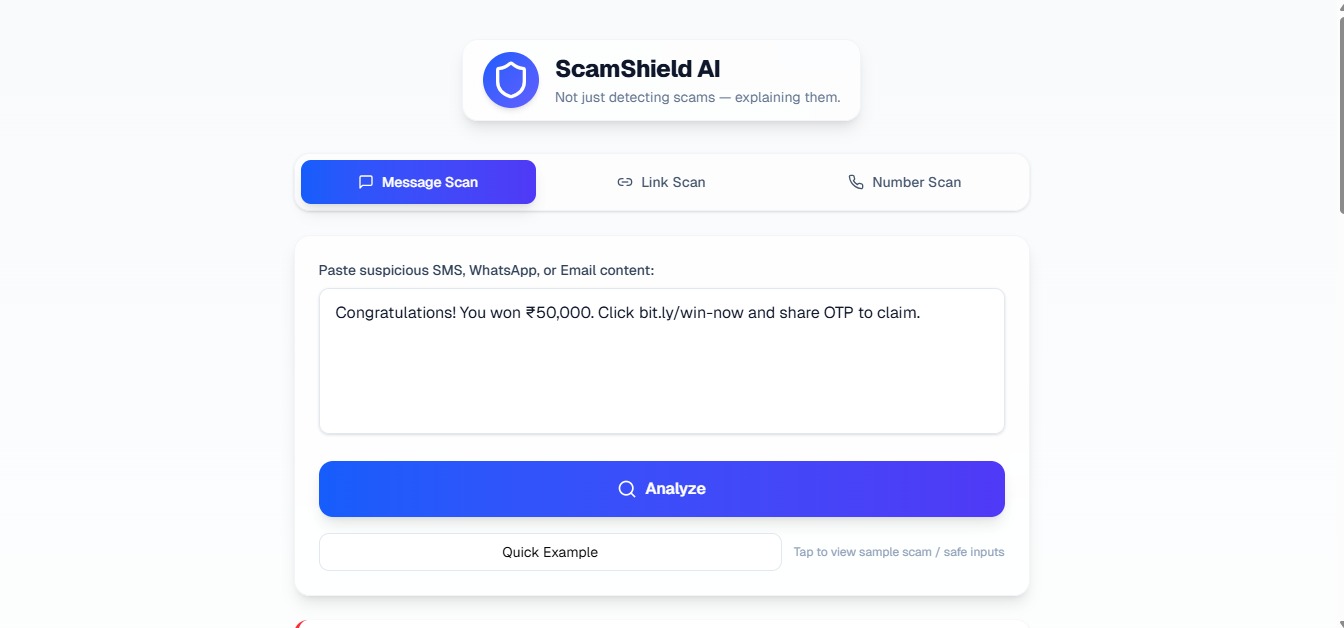
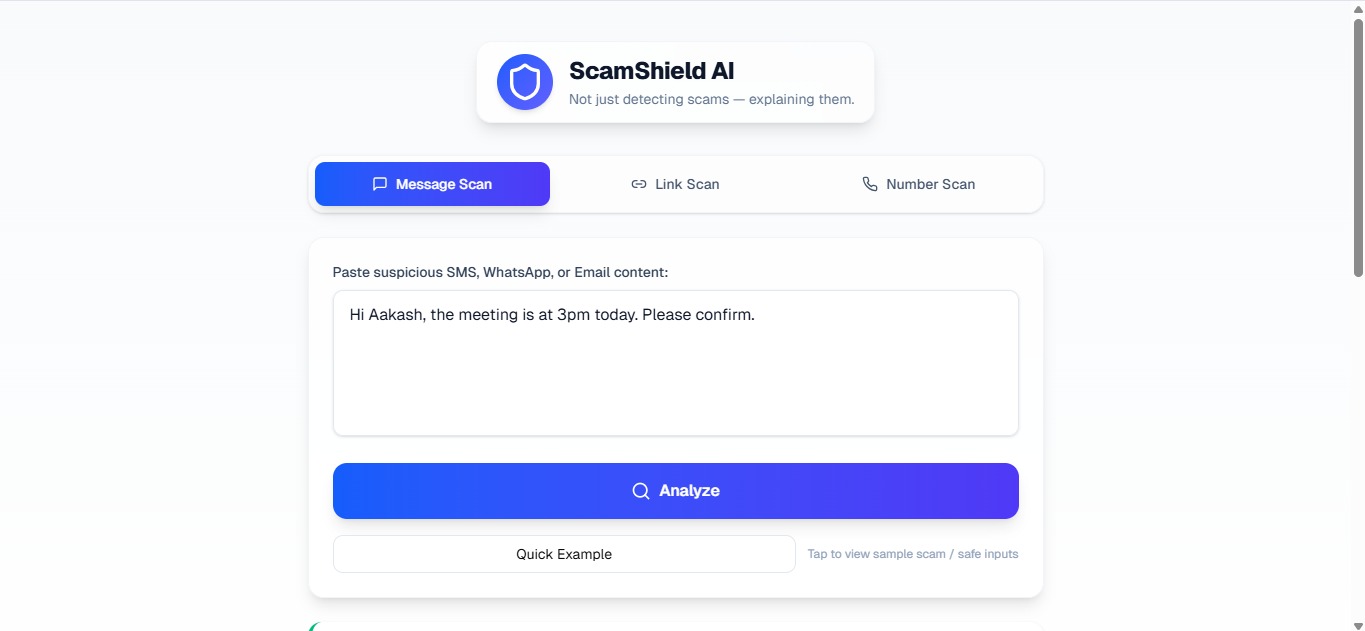
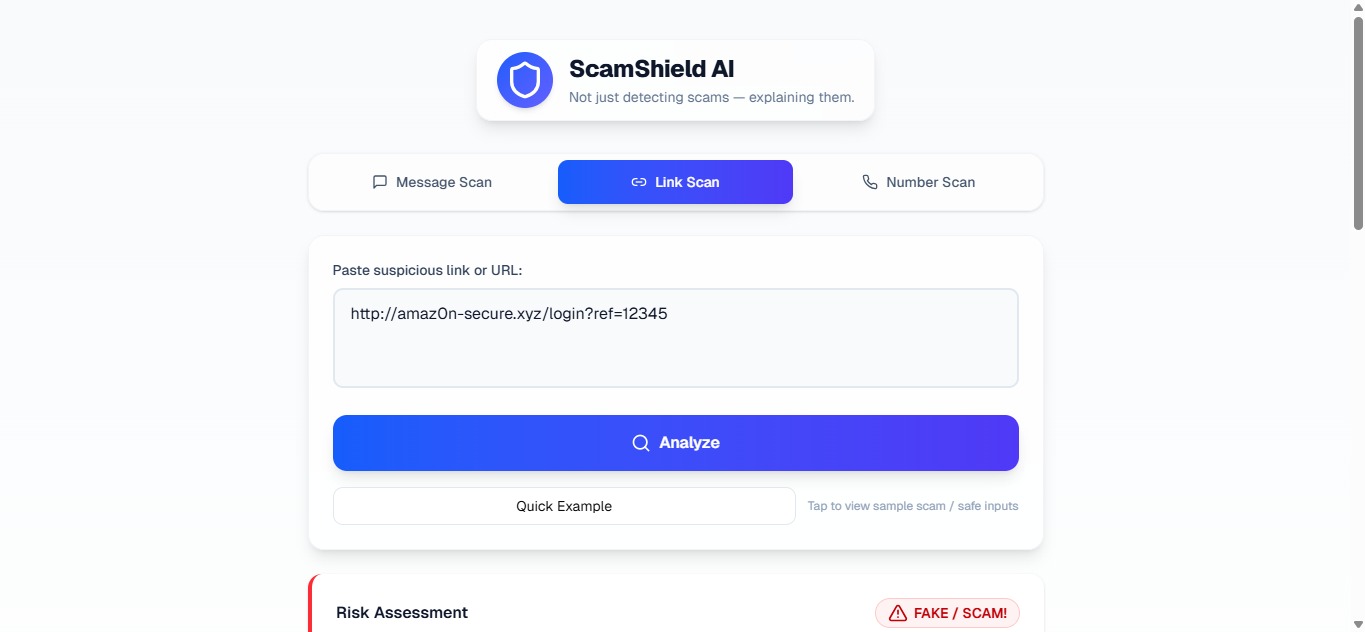
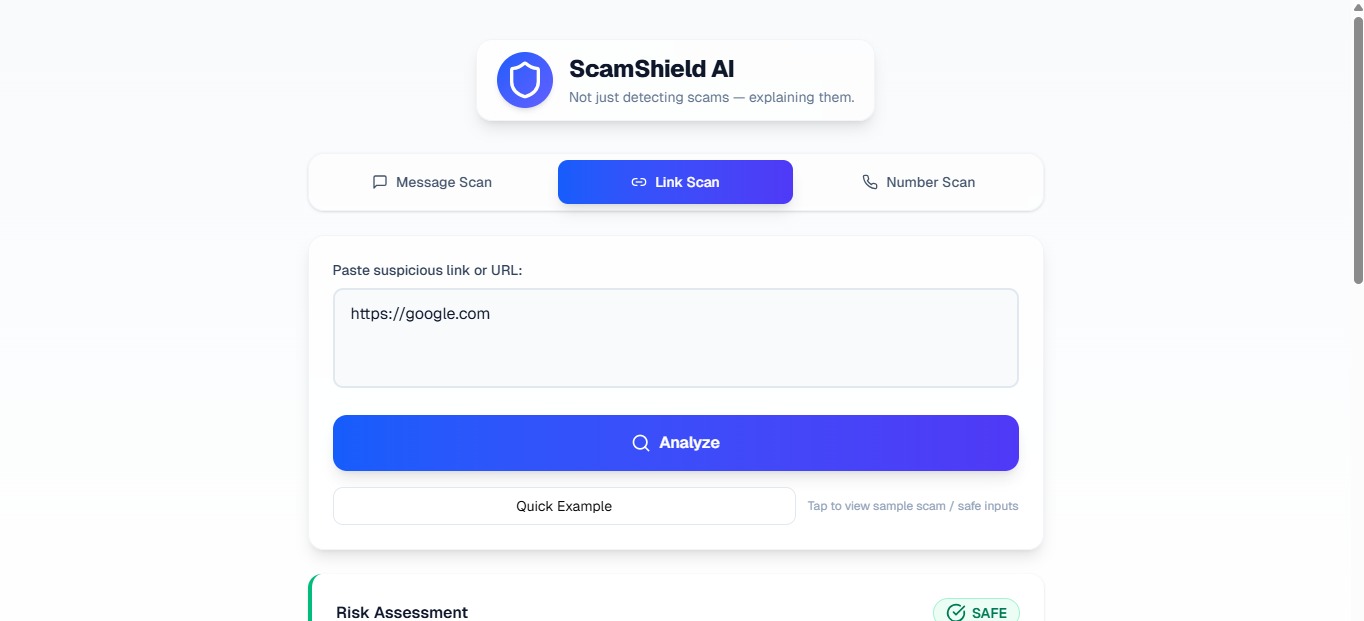
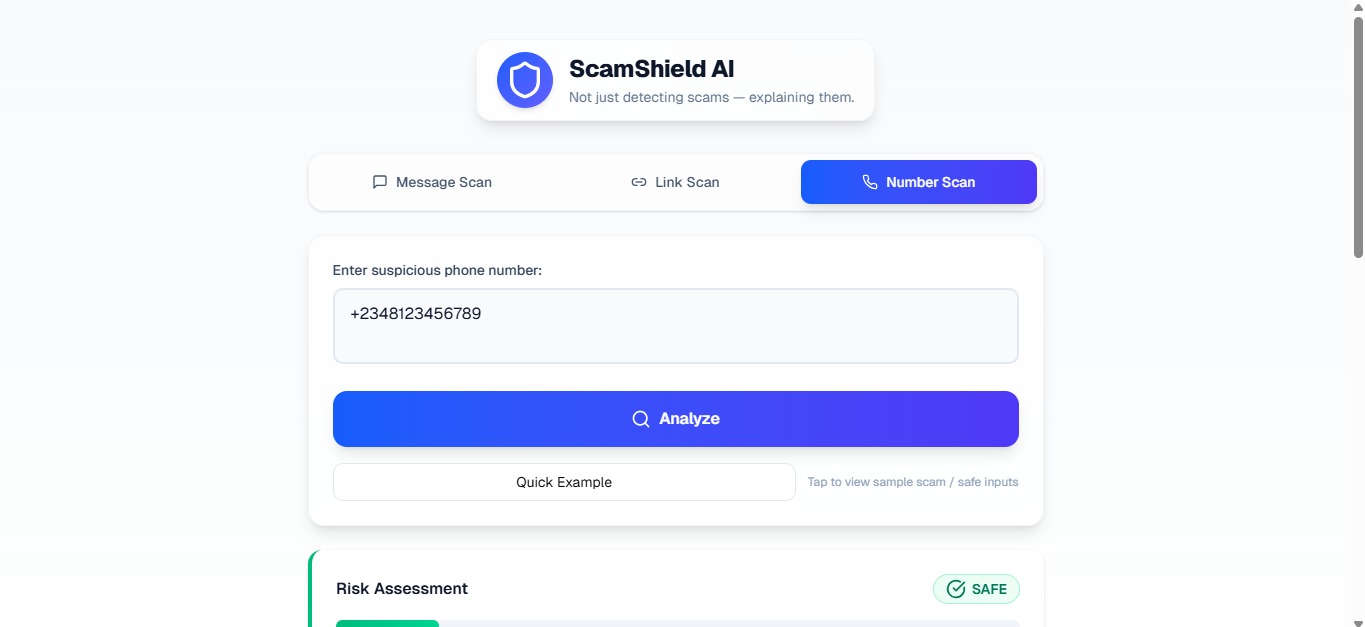
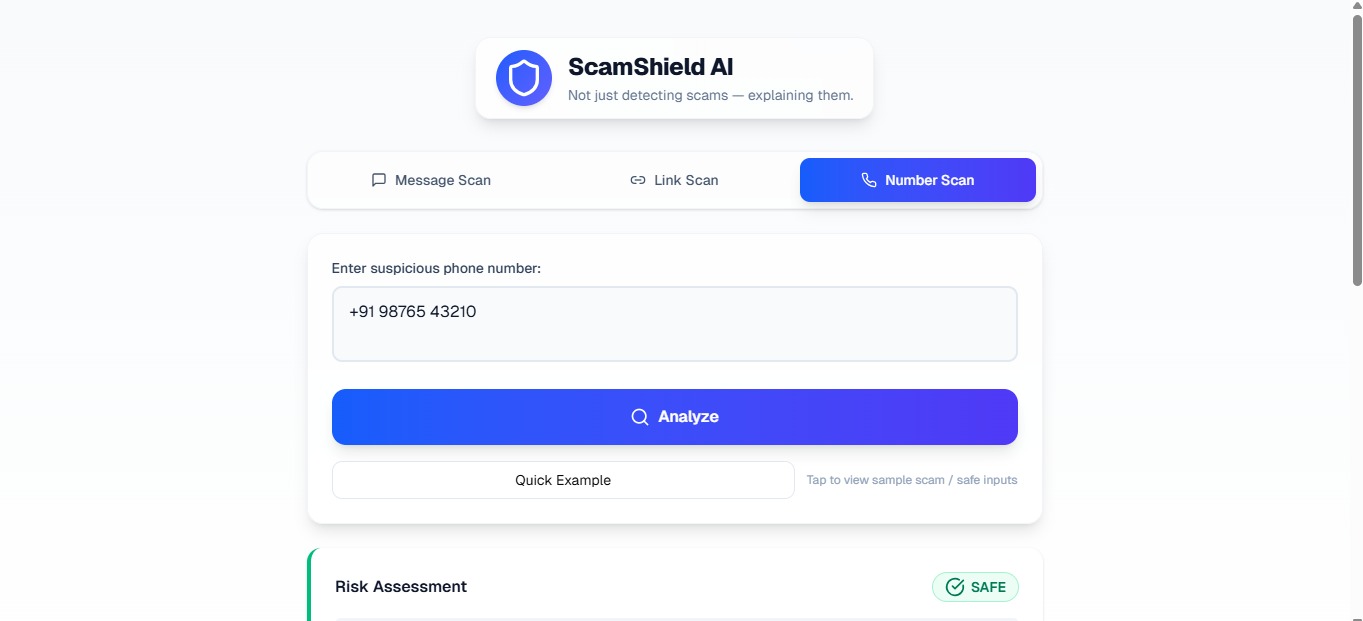
AI Scam & Phishing Detection System analyzes user-provided inputs such as:
- Text messages (SMS, WhatsApp, email content)
- Website links and URLs
- Phone numbers
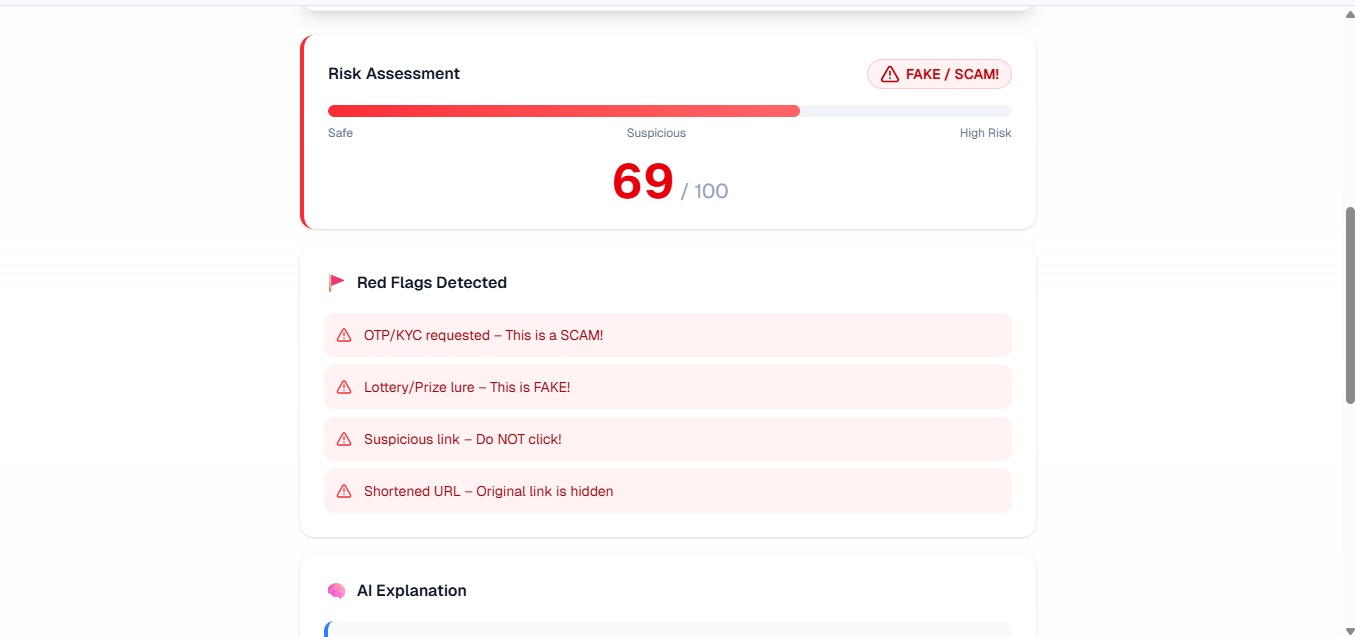
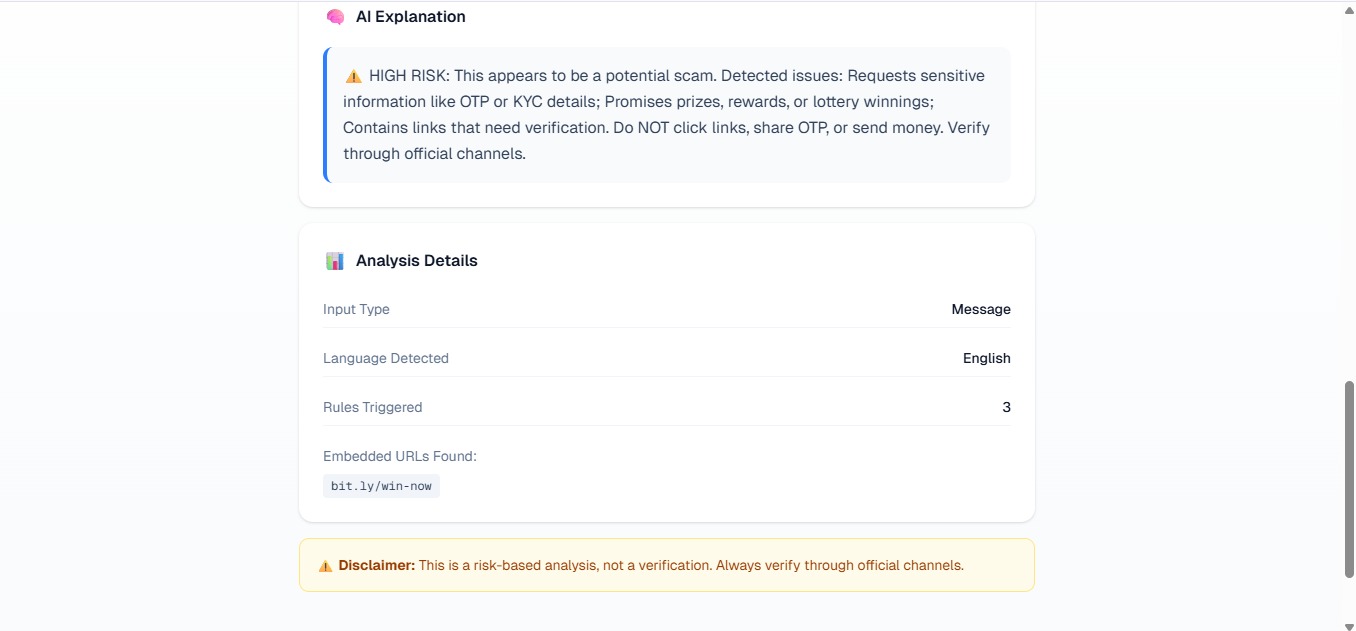
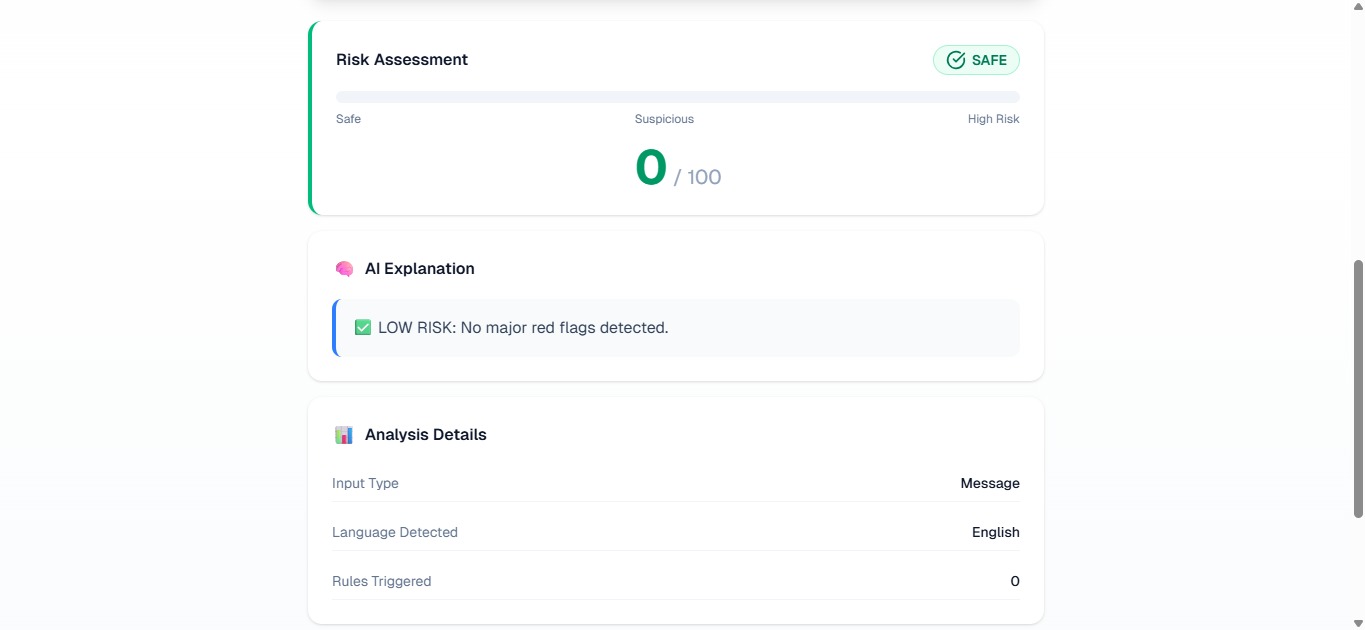
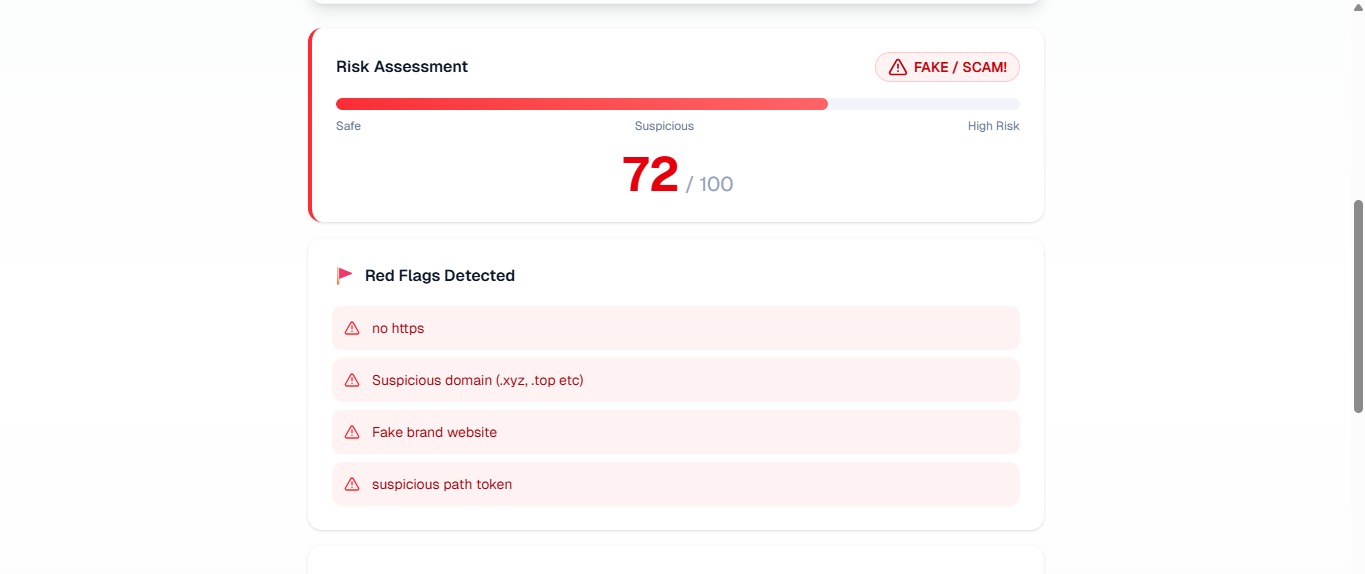
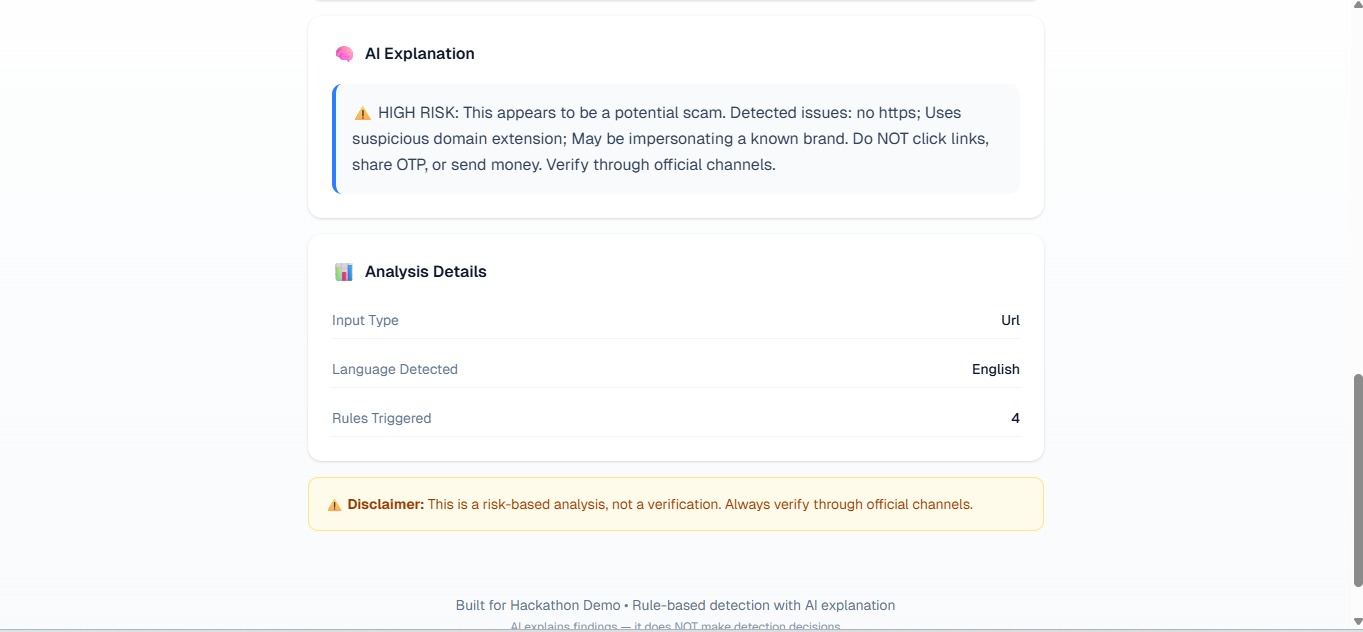
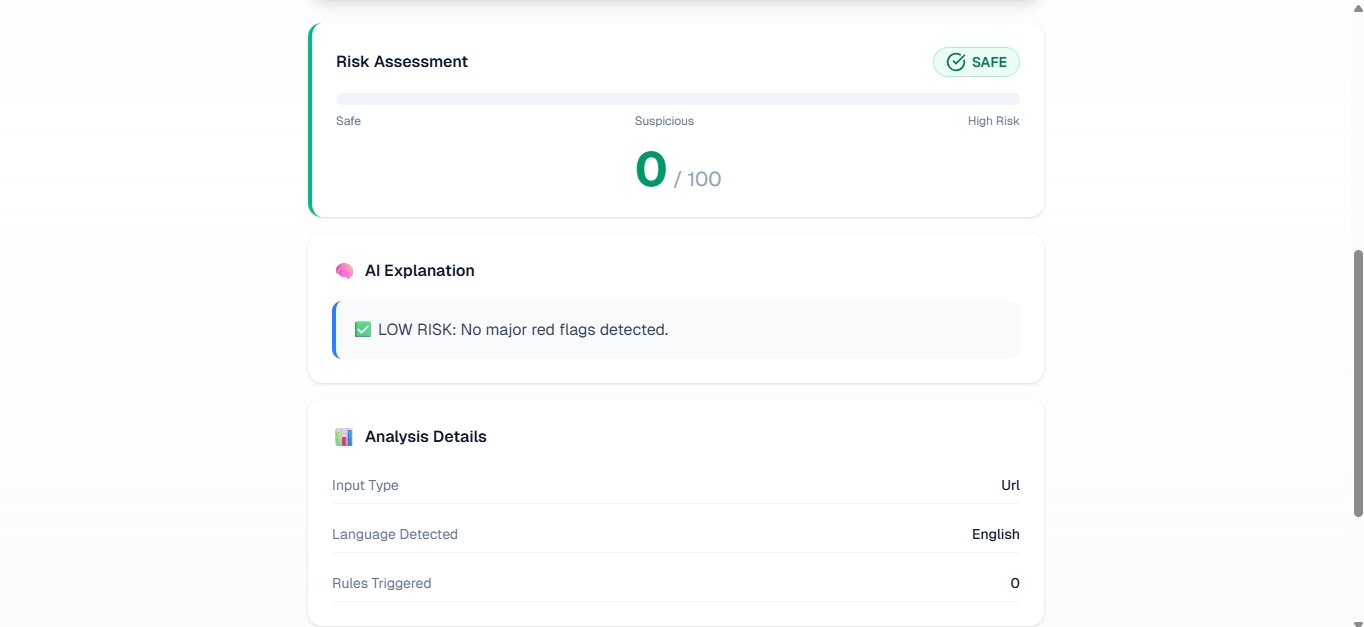
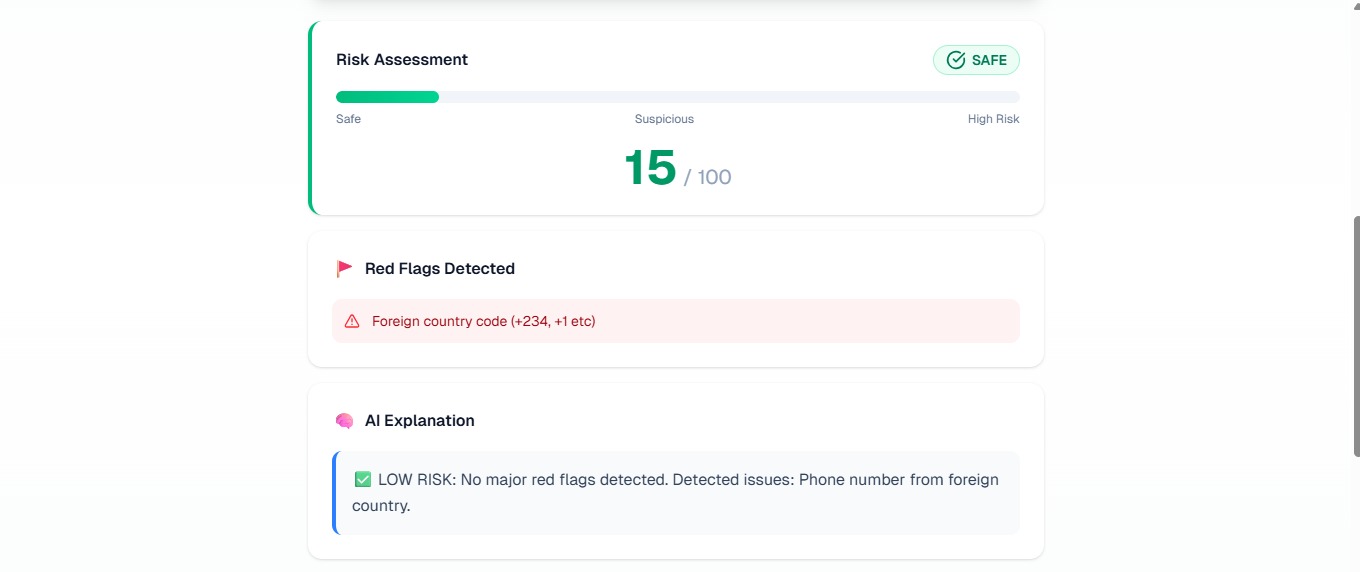
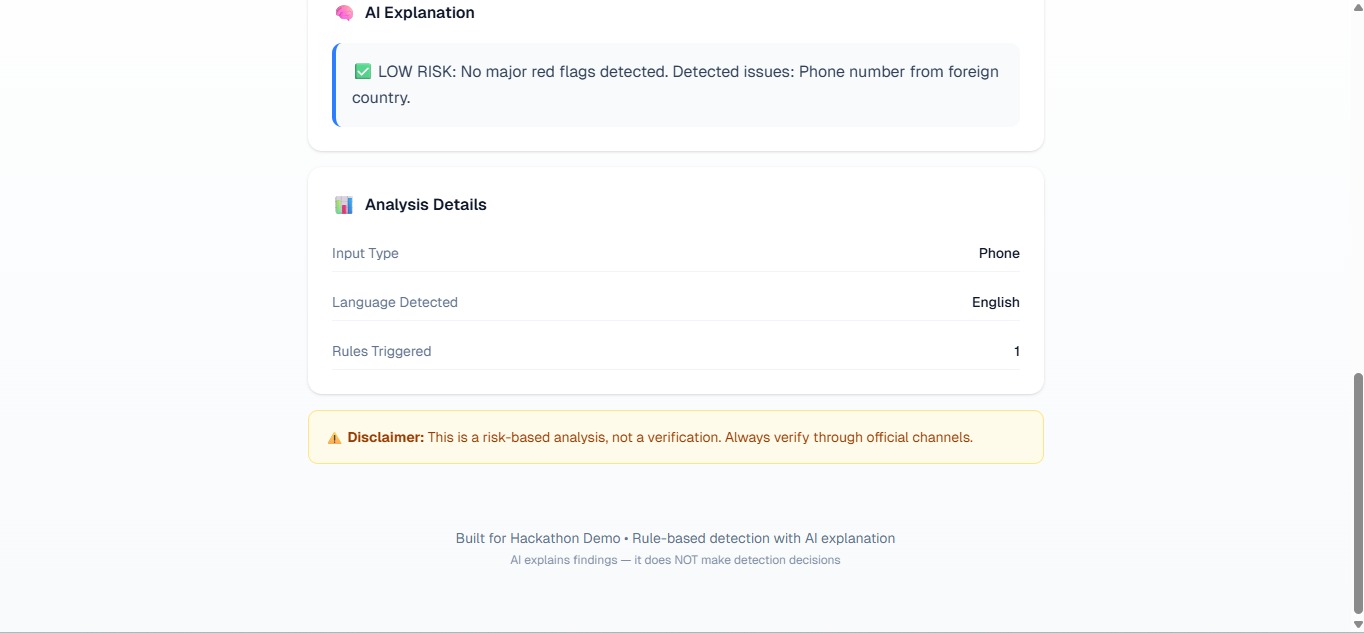
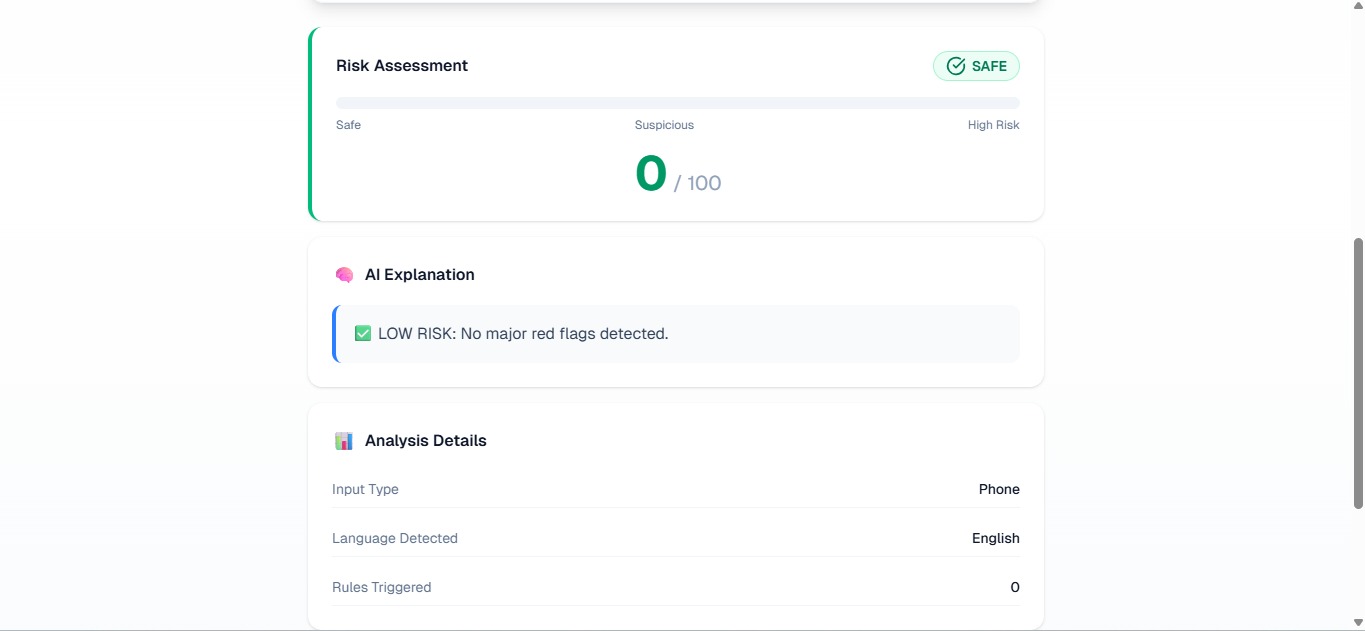
The system evaluates the input using rule-based scam detection logic and assigns a risk score and risk level. It then generates a clear, human-readable explanation of the detected red flags so users can make informed decisions.
The AI does not decide whether something is a scam — it only explains the results produced by deterministic rules.
How we built it
The project is built with a simple, efficient, and privacy-focused architecture:
- A Flask backend handles all analysis requests
- Rule-based logic detects scam patterns such as urgency cues, OTP or KYC requests, suspicious domains, URL shorteners, and phone number anomalies
- A scoring system converts detected red flags into a risk score
- An AI explanation layer (Gemini) converts technical findings into easy-to-understand explanations
- A lightweight frontend allows users to quickly test messages, links, and numbers
No user data is stored; all analysis happens in real time.
Challenges we ran into
One major challenge was avoiding over-reliance on AI. Using AI directly for classification would reduce transparency and increase cost. Designing a system where AI only explains decisions required careful separation of responsibilities.
Another challenge was creating detection rules that are conservative, explainable, and still useful across different scam formats and languages.
Accomplishments that we're proud of
- Built a fully explainable scam detection system
- Kept AI usage minimal and cost-efficient
- Designed a judge-friendly system that is easy to demo and understand
- Ensured user privacy by avoiding data storage
- Delivered a complete, working solution within hackathon constraints
What we learned
This project helped us understand how to build explainable AI systems, design rule-based security logic, and balance automation with human trust. We also learned how to structure systems that prioritize clarity, cost control, and real-world usability over hype.
What's next for AI Scam & Phishing Detection System
Future improvements include:
- Expanding rule coverage for regional scam patterns
- Adding browser and messaging app integrations
- Improving multilingual detection and explanations
- Incorporating community-reported scam signals
- Optional on-device or offline analysis modes for better privacy
Built With
- flask
- google-gemini-api
- javascript
- next.js
- python
- react
- rest-api
- rule-based-heuristics
- tailwind-css
- typescript


Log in or sign up for Devpost to join the conversation.