AI Scam Detector — Message Scam Check
Inspiration
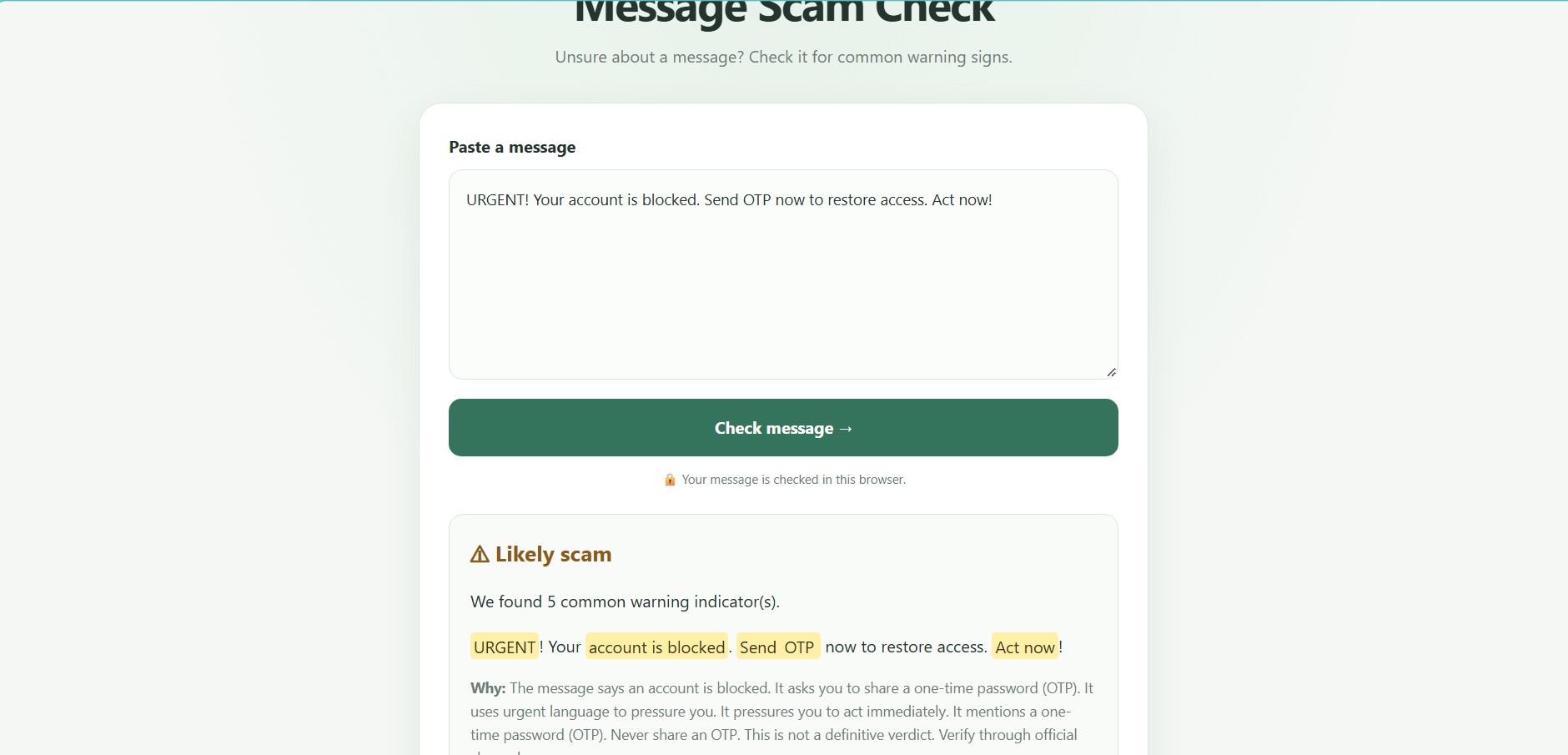
Suspicious messages often use urgent language, account warnings, prize offers, or requests for OTPs to pressure people into acting quickly. I wanted to create a simple tool that helps people notice common warning signs before responding to a message.
What it does
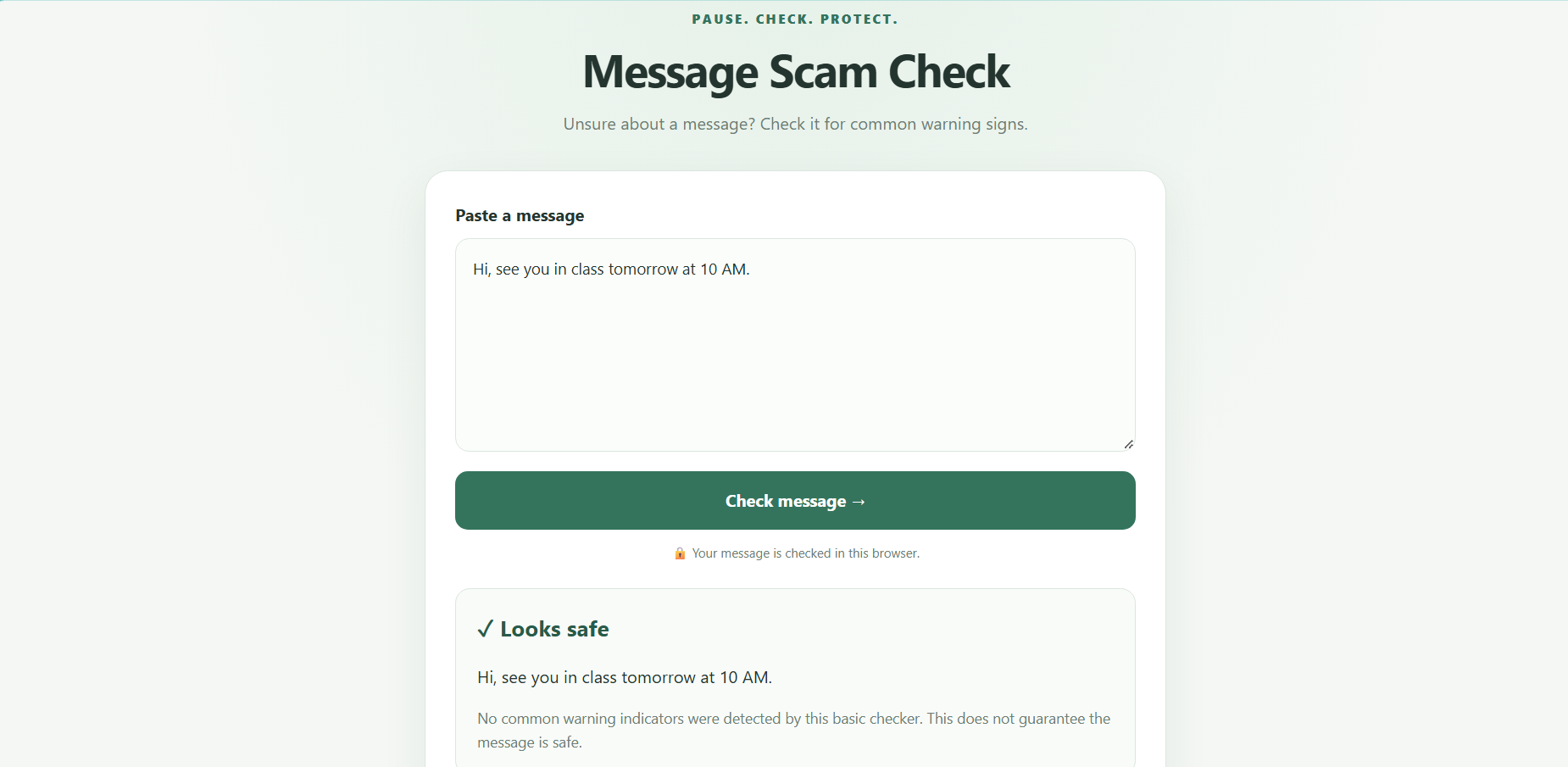
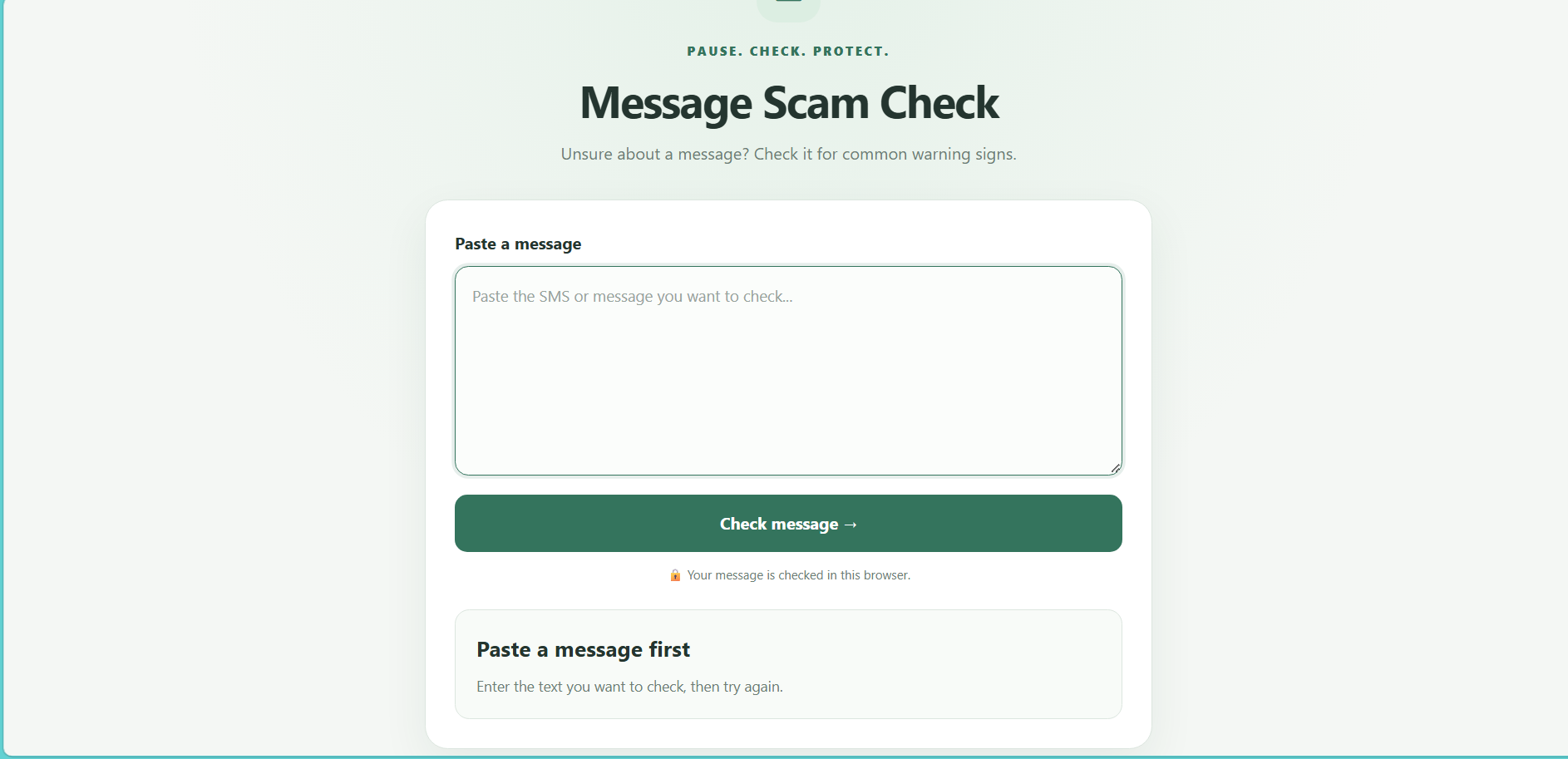
AI Scam Detector, also called Message Scam Check, lets users paste a message and check it for common scam warning signs. It highlights suspicious words and phrases and explains why they may be concerning. It also handles empty input and lets users check multiple messages one at a time.
How we built it
I built this browser-based proof of concept using HTML, CSS, and JavaScript. HTML creates the webpage structure, CSS provides the design, and JavaScript checks messages against a predefined list of warning phrases. The checking happens directly in the browser.
Challenges we ran into
One challenge was making the results easy to understand and highlighting warning phrases without displaying pasted text incorrectly. I also needed to test different types of messages and make sure the website handled empty input properly.
Accomplishments that we're proud of
I'm proud that I built a working website that can identify predefined warning phrases, highlight them in a message, and provide explanations. I successfully tested suspicious messages, ordinary messages, and empty input. As a beginner, getting the complete website working was an important achievement.
What we learned
I gained practical experience using HTML, CSS, and JavaScript together. I learned how to handle user input, apply simple text-matching rules, highlight phrases, display results, and test a web application.
What's next for AI Scam Detector?
The current version is a rule-based proof of concept, not a trained AI model. It can miss scams or flag harmless messages, so its results are not guaranteed. Future improvements could include more comprehensive detection rules, better context analysis, and integration with an AI model to help identify more complex scam patterns.
Built With
- css
- development
- html
- javascript
- web

Log in or sign up for Devpost to join the conversation.