-
-

Home Page
-
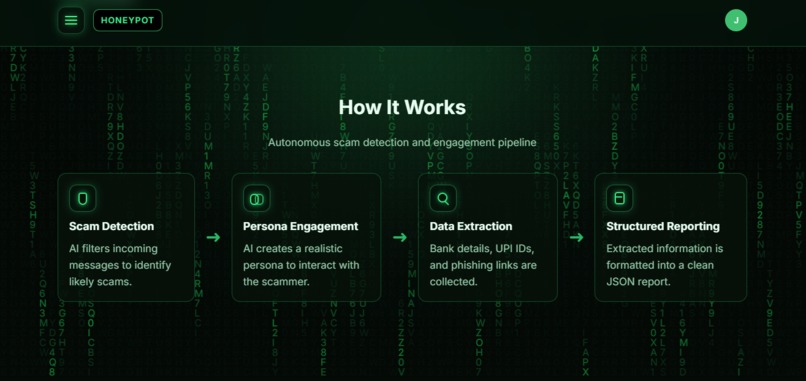
How it Works

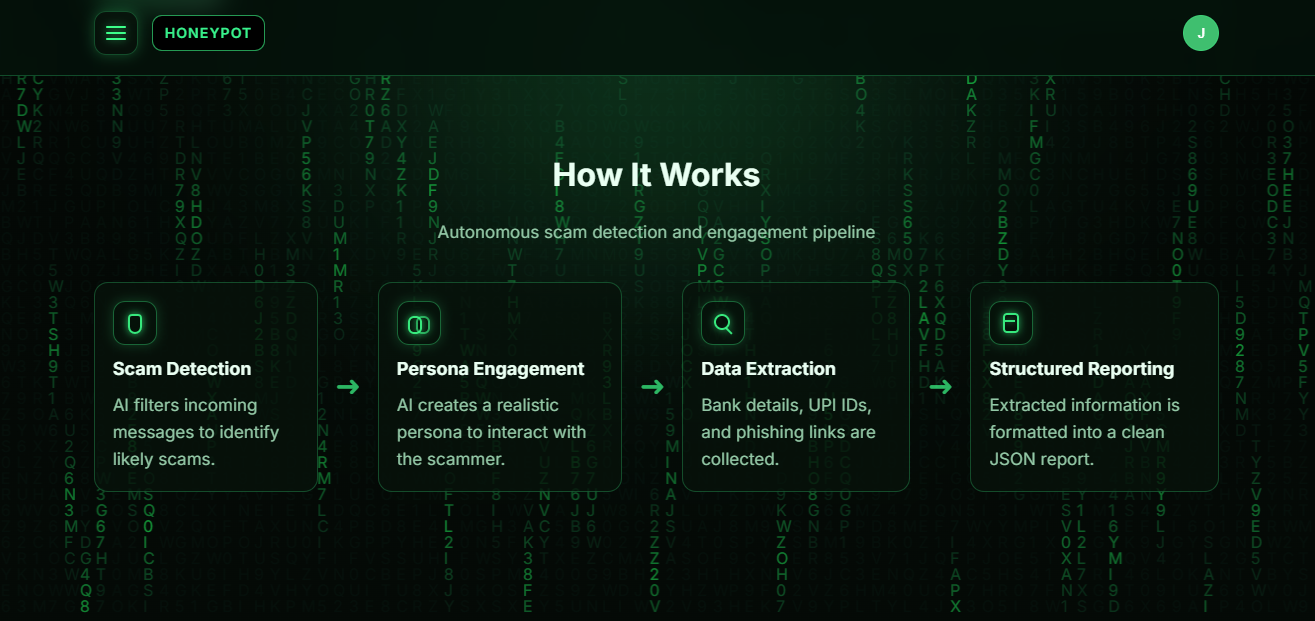
Inspiration
Scam messages are escalating across SMS, WhatsApp, and email. We wanted a safer way to study scam behavior without putting users at risk, so we built an AI honeypot that can engage scammers and extract actionable signals.
What it does
AI Scam Honeypot is a web app that detects scam patterns, simulates engagement, extracts entities (UPI IDs, bank accounts, IFSC, phone numbers, links), and summarizes activity in a dashboard.
How we built it
We used a Node.js + Express backend with a lightweight detection pipeline and Supabase for persistence. The frontend is a responsive HTML/CSS/JS interface with a live simulation feed and analytics view.
Challenges we ran into
Tuning keyword rules to balance false positives vs. missed scams. Keeping the UI responsive while showing live updates. Wiring auth state cleanly without breaking the public demo flow.
What we learned
We learned how to design safer interaction flows for threat analysis, structure extracted intelligence, and ship a clean full‑stack demo quickly.
Accomplishments that we're proud of
Built an end-to-end demo that detects scam signals, extracts entities, and visualizes insights in a clean dashboard. Integrated Supabase to persist scam data and made a live API endpoint for easy testing. Delivered a responsive, polished UI with auth flow and realistic simulation.
What's next for AI Scam Honeypot
Replace the rule-based classifier with an ML/NLP model for higher accuracy. Add multilingual detection and richer entity extraction. Expand the dashboard with trends, heatmaps, and exportable reports. Add role-based access and analyst workflows for real investigations.
Built With
- css
- express.js
- html
- javascript
- node.js
- supabase
- vercel


Log in or sign up for Devpost to join the conversation.