
About the Project: AI Safety Guardian for Women 🌟 Inspiration
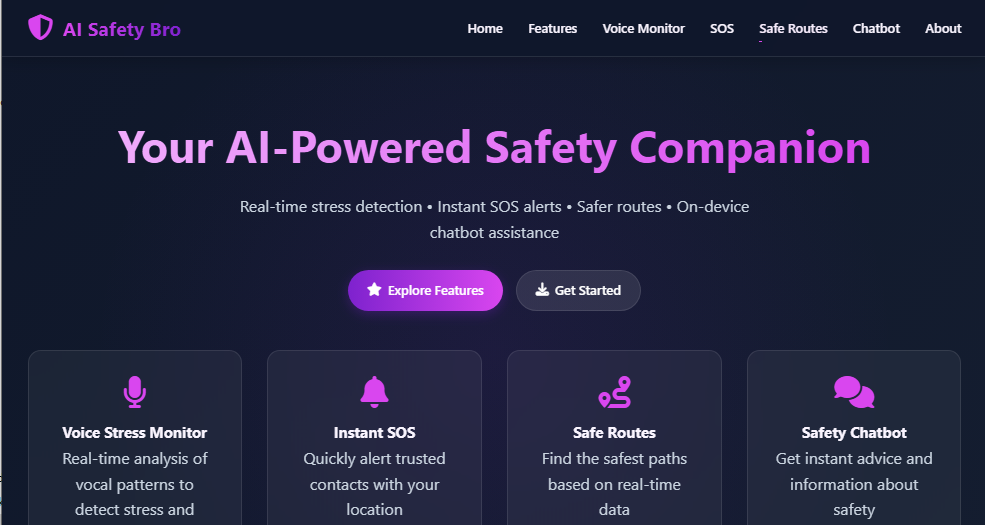
Every day, we read alarming reports of harassment cases, especially during night hours. Many women avoid traveling alone due to safety concerns. As a young innovator, I wanted to build something that empowers women to feel safe by leveraging AI and real-time technology. My inspiration came from imagining: “What if technology could sense fear and proactively protect women before harm occurs?”
🛠️ How We Built It
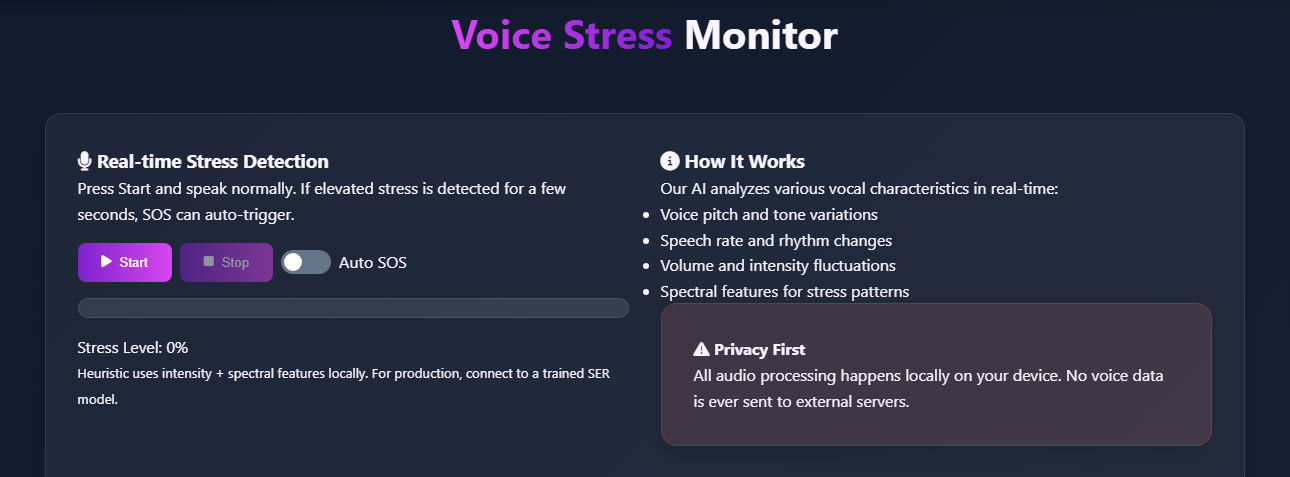
AI Voice Stress Detection: Using TensorFlow + speech recognition, we trained a lightweight model to detect fear/stress from vocal patterns in real-time.
SOS Automation: Integrated Twilio API to send SMS alerts with live GPS to pre-saved emergency contacts whenever distress is detected or the SOS button is pressed.
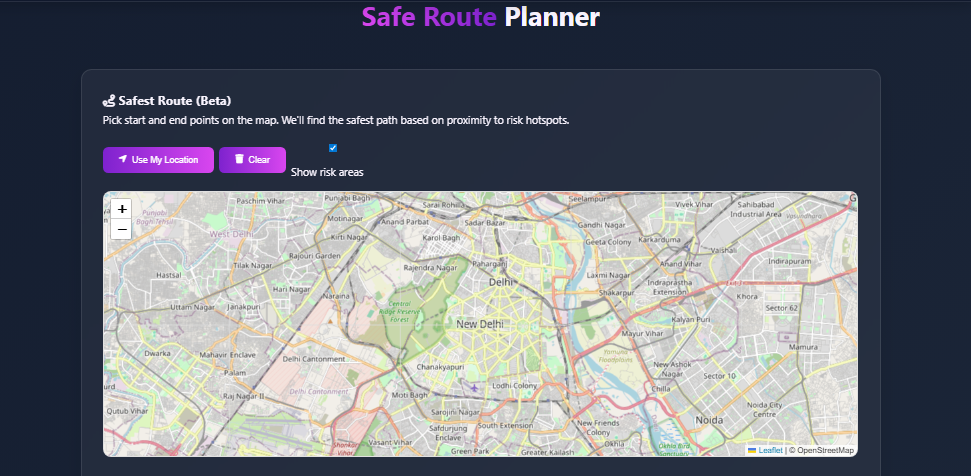
Safe Route Prediction: Connected Google Maps API with crime data + OSRM routing to suggest the safest walking path, not just the shortest.
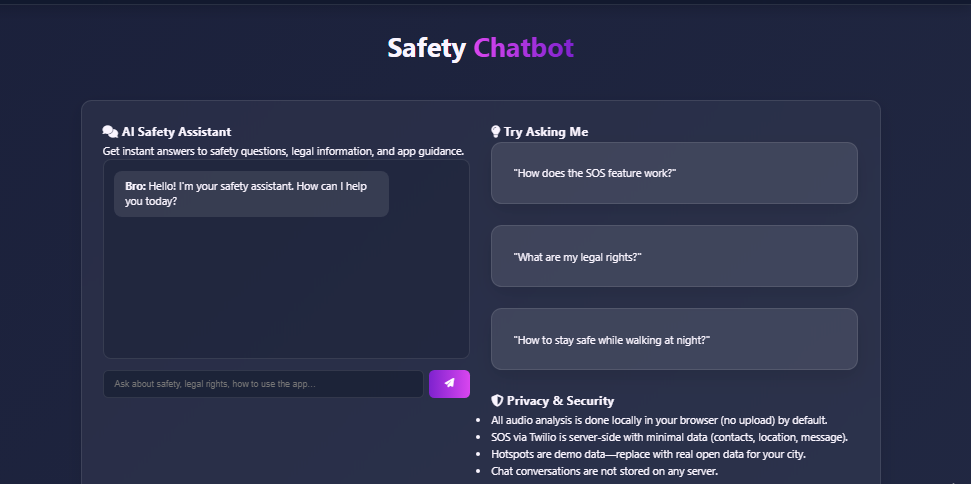
Chatbot Assistant: Added a rule-based chatbot with fallback AI responses to guide users with safety tips, quick access to emergency contacts, and emotional support.
Web App: Built with Flask (Python backend) + HTML/CSS/JavaScript (frontend) + Leaflet.js for map visualization.
📚 What We Learned
How machine learning can be applied beyond research to solve real social problems.
Combining multiple APIs (speech recognition, Google Maps, Twilio) into a seamless user experience.
Designing user-centric safety features that balance accuracy, speed, and privacy.
The importance of ethical AI—we discussed how sensitive safety data like location must be stored and shared responsibly.
🚧 Challenges We Faced
Training the AI model to correctly detect fear vs. normal speech without false alarms.
Managing real-time GPS updates and ensuring Twilio messages don’t lag.
Integrating Google Maps data with crime reports to actually produce a safe-route predictor.
Building a chatbot that doesn’t just answer queries but also calms users in distress.
Limited hackathon time—balancing between building core safety features vs. adding advanced features like chatbot and route prediction.
What’s Next?
Deploying the app as a mobile-first platform (Android/iOS).
Enhancing the AI model with multilingual support for women across regions.
Integrating wearable device triggers (like smart rings or wristbands) to activate SOS silently.
Partnering with NGOs, women’s safety groups, and law enforcement to make the system more impactful.


Log in or sign up for Devpost to join the conversation.